


1 Kings 5:12
Bible text: King James Version (1769 Blayney text) · Public domain
Bible text: Berean Standard Bible · Public domain
Bible text: American Standard Version (1901) · Public domain
Bible text: World English Bible, Messianic edition · Public domain
Bible text: Geneva Bible (1599) · Public domain
Bible text: Young's Literal Translation · Public domain
- וַיהוָהva·Yah·wehand YahwehH3068Conj-w ¦ N-properNoun Proper TitleוַandיהוָהYahweh
- נָתַןna·Tanhe gaveH5414V-Qal-Perf-3msVerb Qal Perfect 3rd Singular Masculine
- חָכְמָהchokh·mahwisdomH2451N-fsNoun Singular Feminine Absolute
- לִשְׁלֹמֹהlish·lo·Mohto SolomonH8010Prep-l ¦ N-proper-mNoun Proper MasculineלִtoשְׁלֹמֹהSolomon
- כַּאֲשֶׁרka·'a·Sherjust asH834Prep-k ¦ RelParticle Relativeכַּjustאֲשֶׁרas
- דִּבֶּרdi·berhe had spokenH1696V-Piel-Perf-3msVerb Piel Perfect 3rd Singular Masculine
- לוֹloto <the> himPrep-l ¦ 3msSuffix Personal 3rd Singular Masculineלto <the>וֹhim
- וַיְהִיvay·Hiand it wasH1961Conj-w ¦ V-Qal-ConsecImperf-3msVerb Qal Consecutive Imperfect 3rd Singular Masculineוַandיְהִיit was
- שָׁלֹםsha·LompeaceH7965N-msNoun Singular Masculine Absolute
- בֵּיןbeinbetweenH996Adj-mscAdjective Numerical Singular Masculine Construct
- חִירָםchi·RamHiramH2438N-proper-mNoun Proper Masculine
- וּבֵיןu·Veinand betweenH996Conj-w ¦ Adj-mscAdjective Numerical Singular Masculine Constructוּandבֵיןbetween
- שְׁלֹמֹהshe·lo·MohSolomonH8010N-proper-mNoun Proper Masculine
- וַיִּכְרְתוּvai·yikh·re·Tuand they madeH3772Conj-w ¦ V-Qal-ConsecImperf-3mpVerb Qal Consecutive Imperfect 3rd Plural Masculineוַandיִּכְרְתוּthey made
- בְרִיתve·Rita covenantH1285N-fsNoun Singular Feminine Absolute
- שְׁנֵיהֶםshe·nei·Hem[the] two of themH8147N-cdc ¦ 3mpNoun Dual common gender Constructשְׁנֵי[the] two ofהֶםthem
English is a literal word-by-word gloss of the Hebrew, not the KJV's wording. Why?
This is the original text the KJV's translators worked from — each Hebrew word with its own literal English meaning in this verse, prepared by scholars at Tyndale House, Cambridge. The KJV translates whole sentences, not word by word, so its wording differs: one Hebrew word can become several English words, and the KJV may choose “the LORD” where the gloss reads “Yahweh”. Both are faithful — they answer different questions. For the KJV's own rendering, switch to the KJV text.
Details
See on the biblical-era maps

Study this verse
Public-domain commentary
Matthew Henry
From his Commentary on the Whole Bible. Henry comments on passages, not single verses — this entry covers 1 Kings 5:10–18. His two-level outline is real structure in the source text, so it is rendered as structure.
Here is, I. The performance of the agreement between Solomon and Hiram. Each of the parties made good his engagement. 1. Hiram delivered Solomon the timber, according to his bargain, Kg1 5:10. The trees were Solomon's, but perhaps - Materiam superabat opus - The workmanship was of more value than the article. Hiram is therefore said to deliver the trees. 2. Solomon conveyed to Hiram the corn which he had promised him, Kg1 5:11. Thus let justice be followed (as the expression is, Deu 16:20), justice on both sides, in every bargain.
II.The confirmation of the friendship that was between them hereby.
God gave Solomon wisdom (Kg1 5:12), which was more and better than any thing Hiram did or could give him; but this made Hiram love him, and enabled Solomon to improve his kindness, so that they were both willing to ripen their mutual love into a mutual league, that it might be lasting. It is wisdom to strengthen our friendship with those whom we find to be honest and fair, lest new friends prove not so firm and so kind as old ones.
III.The labourers whom Solomon employed in preparing materials for the temple.
1.Some were Israelites, who were employed in the more easy and honourable part of the work, felling trees and helping to square them, in conjunction with Hiram's servants; for this he appointed 30,000, but employed only 10,000 at a time, so that for one month's work they had two months' vacation, both for rest and for the despatch of their own affairs at home, Kg1 5:13, Kg1 5:14. It was temple service, yet Solomon takes care that they shall not be over-worked. Great men ought to consider that their servants must rest as well as they.
2.Others were captives of other nations, who were to bear burdens and to hew stone (Kg1 5:15), and we read not that these had their resting times as the other had, for they were doomed to servitude.
3.There were some employed as directors and overseers (Kg1 5:16), 3300 that ruled over the people, and they were as necessary and useful in their place as the labourers in theirs; here were many hands and many eyes employed, for preparation was now to be made, not only for the temple, but for all the rest of Solomon's buildings, at Jerusalem, and here in the forest of Lebanon, and in other places of his dominion, of which see Kg1 9:17-19. He speaks of the vastness of his undertakings (Ecc 2:4, I made me great works), which required this vast number of workmen.
IV.The laying of the foundation of the temple; for that is the building his heart is chiefly upon, and therefore he begins with that, Kg1 5:17, Kg1 5:18. It should seem, Solomon was himself present, and president, at the founding of the temple, and that the first stone (as has been usual in famous buildings) was laid with some solemnity. Solomon commanded and they brought costly stones for the foundation; he would do every thing like himself, generously, and therefore would have some of the costliest stones laid, or buried rather, in the foundation, though, being out of sight, worse might have served. Christ, who is laid for a foundation, is an elect and precious stone (Isa 28:16), and the foundations of the church are said to be laid with sapphires, Isa 54:11, compare Rev 21:19. That sincerity which is our gospel perfection obliges us to lay our foundation firm and to bestow most pains on that part of our religion which lies out of the sight of men.
Continue studying 1 Kings 5:12 across the web’s major study libraries — every link below opens this exact verse, chapter, or book on the destination site.
Read & Compare
 BibleGatewayThis verse in more than 200 translations and 70 languages.
 Bible.comThe YouVersion reader — hundreds of translations, reading plans, and highlights.
 ESV.orgCrossway's official English Standard Version reader.
 NET BibleThe NET translation with 60,000+ translators' notes on every rendering decision.
 STEP BibleTyndale House's free study tool — original text, vocabulary, and scholarly resources.
 BibliaLogos Bible Software's free web reader.
 USCCBThe New American Bible (Revised Edition) with the U.S. bishops' study notes.
Commentaries
 BibleHub CommentariesDozens of classic commentaries on this verse, gathered on one page.
 StudyLightMore than 100 commentary sets — the largest collection on the web.
 BibleRefPlain-English commentary on what this verse means, verse by verse.
 Enduring WordDavid Guzik's free commentary on this chapter, widely used by Bible teachers.
 Bible Study ToolsVerse commentary alongside Greek and Hebrew study aids.
Original Language & Research
- BibleHub InterlinearThe verse word by word — original language, transliteration, and English.
- BibleHub LexiconEvery word's original-language definition and Strong's entry.
 Blue Letter BibleDeep-study tools — Strong's numbers, concordance, and word studies.
 SefariaThe Hebrew text with Rashi and centuries of Jewish commentary.
Sermons, Hymns & Audio


TrulyRandomVerse is not affiliated with these sites and doesn’t control their content. They’re linked because they’re genuinely useful.
Summary
First Kings 5:12 stands as a profound testament to God's unwavering faithfulness and the transformative power of divine wisdom. This verse confirms the Lord's fulfillment of His promise to Solomon, bestowing upon him unparalleled wisdom that extended beyond mere intellect to practical governance and diplomatic skill. This divinely granted insight enabled Solomon to forge a crucial and peaceful alliance with Hiram, the King of Tyre, laying the essential groundwork for the monumental task of constructing the Temple in Jerusalem. It underscores how God's gifts lead to peace and strategic partnerships, paving the way for the accomplishment of His grand purposes.
Context
ShowHideLiterary Context
This verse is strategically placed within the early narrative of Solomon's reign, immediately following his pivotal encounter with God at Gibeon. In 1 Kings 3, Solomon, rather than asking for wealth or long life, humbly requested an "understanding heart to judge your people" (1 Kings 3:9). God, pleased with this selfless request, not only granted him extraordinary wisdom but also promised him riches and honor (1 Kings 3:12-13). 1 Kings 5:12 serves as a direct affirmation of this divine promise's immediate fulfillment and a bridge to the subsequent narrative. The verses that follow (1 Kings 5:13-18) detail the practical outworking of this wisdom and peace, describing the vast resources and manpower mobilized for the Temple's construction, directly facilitated by the alliance with Hiram. The literary flow emphasizes that divine wisdom is not abstract but profoundly practical, leading to tangible outcomes that advance God's plans.
Historical & Cultural Context
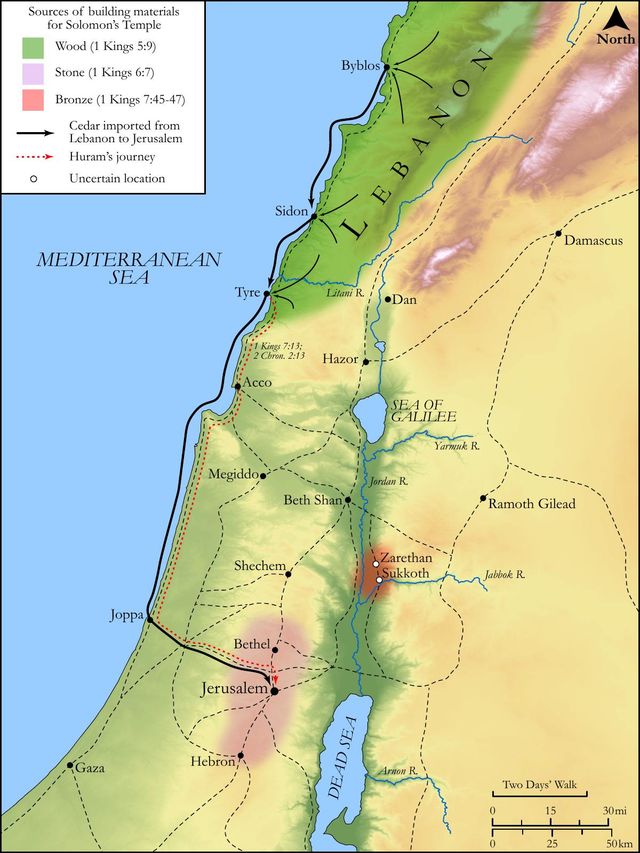
Solomon's reign (c. 970-931 BC) marked a period of unprecedented peace and prosperity for Israel, a stark contrast to the constant warfare that characterized David's era. The alliance with Hiram, King of Tyre, was a strategic masterstroke, vital for the Temple project. Tyre, a prominent Phoenician city-state, was renowned for its skilled craftsmen, particularly its master builders, stonecutters, and bronze workers, as well as its abundant supply of cedar and cypress timber from the forests of Lebanon. Such a "league" (Hebrew: berith) was a formal, binding pact, often involving reciprocal obligations and sometimes sealed with oaths or sacrifices, as when Abraham and Abimelech swore at Beer-sheba or Jacob and Laban offered sacrifice upon the mount. This alliance ensured a stable supply chain and expert labor, demonstrating Solomon's diplomatic prowess, which was a direct manifestation of his divinely bestowed wisdom. Without this peace and alliance, the monumental undertaking of the Temple would have been far more challenging, if not impossible, highlighting the strategic importance of this divinely orchestrated relationship in the geopolitical landscape of the time.
Key Themes
ShowHide1 Kings 5:12 powerfully encapsulates several overarching themes prevalent in the book of 1 Kings. Foremost is the theme of Divine Faithfulness, as God explicitly fulfills His promise to Solomon, underscoring His reliability and covenant-keeping nature. This verse also highlights the Nature and Power of Wisdom, portraying it not merely as intellectual acumen but as a practical, divinely-empowered ability to govern, discern, and foster beneficial relationships, leading to national stability and prosperity. The establishment of "peace" and a "league" with Hiram introduces the theme of Strategic Diplomacy and International Relations, demonstrating how God's guidance can lead to harmonious interactions with other nations for His purposes. Finally, all these elements converge on the central theme of Preparation for God's Work, specifically the building of the Temple. The peace and wisdom described here are foundational prerequisites for this sacred national endeavor, illustrating how God orchestrates circumstances and empowers His servants to accomplish His will, as seen in the subsequent verses detailing the Temple preparations (1 Kings 5:13-18).
Exposition and Analysis
ShowHideKey Word Analysis
ShowHideIn the biblical context, ḥokhmah is far more than mere intellectual knowledge. It denotes practical skill, discernment, and the ability to make sound judgments that lead to successful outcomes. It encompasses moral insight, administrative competence, and the capacity for wise governance. Solomon's wisdom, as granted by God, enabled him to rule justly, understand complex situations, and, as seen here, navigate intricate diplomatic relations to secure resources and alliances essential for the kingdom's flourishing and the Temple's construction. It was a holistic wisdom that impacted every facet of his reign, distinguishing him among all kings.
The Hebrew word shâlôwm is rich in meaning, extending beyond the mere absence of conflict. It signifies wholeness, completeness, well-being, prosperity, and harmony. The "peace" between Hiram and Solomon was not just a cessation of hostilities but an active state of mutual benefit and flourishing, a stable and positive relationship that allowed for cooperation and shared prosperity. This shâlôwm was a direct result of God's wisdom in Solomon, enabling him to establish a secure and beneficial international relationship, a hallmark of his prosperous reign.
This term refers to a formal, binding covenant or treaty. Unlike a casual agreement, a bᵉrîyth established a solemn, often reciprocal, relationship between two parties, sealed by oaths and carrying significant obligations. The formation of this "league" between Solomon and Hiram was a weighty diplomatic act, ensuring the reliability and longevity of their partnership. It was a strategic alliance that facilitated the massive undertaking of the Temple construction, rooted in mutual respect and the recognition of shared interests, all guided by divine wisdom and demonstrating the practical outworking of God's gift.
Verse Breakdown
ShowHide"And the LORD gave Solomon wisdom, as he promised him"
This opening clause immediately attributes the source of Solomon's wisdom directly to Yahweh, emphasizing divine agency and sovereignty. It explicitly recalls and affirms the fulfillment of God's promise made in 1 Kings 3:12, highlighting God's faithfulness to His word. This wisdom was not self-acquired but a supernatural endowment, foundational to Solomon's successful and unparalleled reign.
"and there was peace between Hiram and Solomon"
This phrase describes the immediate, tangible outcome of Solomon's divinely granted wisdom. His discernment and diplomatic skill, empowered by God, enabled him to establish a harmonious and stable relationship with Hiram, the powerful King of Tyre. This peace was crucial, as it removed potential obstacles, fostered trust, and created an environment conducive to cooperation on a grand scale.
"and they two made a league together"
This final clause details the formalization of the peaceful relationship into a binding treaty or covenant (bᵉrîyth). This "league" was a practical manifestation of the peace, solidifying the alliance and outlining the terms of their cooperation, particularly concerning the supply of timber and skilled labor for the Temple. It underscores the strategic importance of this relationship for Solomon's grand architectural and national projects, demonstrating how divine wisdom translates into concrete, beneficial actions.
Literary Devices
ShowHideThe verse effectively employs several literary devices to convey its profound message. The most prominent is the Fulfillment Motif, explicitly stated with "as he promised him," which underscores God's unwavering faithfulness and the reliability of His word. This creates a sense of divine order and purpose in Solomon's reign, affirming the covenantal nature of God's interaction with His chosen king. There is also a clear Cause and Effect relationship: God's gift of wisdom (cause) directly leads to the establishment of peace and the formation of a league (effect). This highlights the practical and beneficial nature of divine wisdom, demonstrating its tangible impact on geopolitical realities. Furthermore, the verse uses Juxtaposition by placing God's sovereign action ("the LORD gave Solomon wisdom") alongside human diplomatic action ("they two made a league together"), illustrating how divine empowerment works through human agency to accomplish God's plans, emphasizing a partnership between divine initiative and human response.
Theological and Thematic Connections
ShowHide1 Kings 5:12 serves as a powerful theological anchor, affirming God's active involvement in human affairs and His steadfast commitment to His promises. It demonstrates that true wisdom is a divine gift, not merely an intellectual pursuit, and that this wisdom is profoundly practical, enabling leaders to foster peace and forge alliances that serve God's greater purposes. The peace and league with Hiram were not ends in themselves but means to the end of building the Temple, God's dwelling place among His people. This illustrates a foundational biblical principle: God provides the necessary resources—whether spiritual gifts like wisdom or material provisions and strategic relationships—to accomplish His will. The verse underscores that God's faithfulness ensures the provision of all that is needed for His redemptive plan to unfold, highlighting His meticulous orchestration of events for His glory and the good of His people.
Reflection and Application
ShowHide1 Kings 5:12 offers profound lessons for contemporary believers, leaders, and communities. Firstly, it calls us to cultivate a deep trust in God's faithfulness. Just as He fulfilled His promise to Solomon, so too will He be faithful to His promises to us, providing what we need for the tasks He sets before us. This instills confidence that God is actively working in our lives and circumstances. Secondly, the verse highlights the indispensable value of divine wisdom. In a world often characterized by conflict, complexity, and competing ideologies, the wisdom "from above" (James 3:17) is essential for navigating relationships, making sound decisions, and leading effectively in our homes, workplaces, and communities. We are encouraged to humbly seek this wisdom, recognizing that it is a gift God generously bestows upon those who ask. Finally, the peace and strategic alliance forged by Solomon underscore the importance of healthy relationships and diplomacy, even with those outside our immediate faith community, when these partnerships serve a greater, God-honoring purpose. It reminds us that peace is not merely the absence of strife but an active state of flourishing that enables us to build, create, and advance God's kingdom in tangible ways.
Questions for Reflection
ShowHideFAQ
ShowHideWhat kind of wisdom did Solomon receive, and how was it different from ordinary intelligence?
ShowHideSolomon received a unique, divinely bestowed wisdom that transcended mere intellectual acumen or accumulated knowledge. As 1 Kings 3:9 indicates, he asked for an "understanding heart to judge your people," and God granted him "a wise and discerning heart, so that there will never have been anyone like you, nor will there ever be" (1 Kings 3:12). This wisdom was intensely practical, enabling him to govern justly, resolve complex disputes (1 Kings 3:16-28), manage a vast kingdom, and engage in successful international diplomacy, as seen in his alliance with Hiram. It was a holistic wisdom that integrated moral insight, administrative skill, and profound discernment, directly empowered by God for the benefit of His people and the advancement of His purposes, far exceeding what human intellect alone could achieve.
Who was Hiram, King of Tyre, and why was his alliance with Solomon so important?
ShowHideHiram was the powerful and influential King of Tyre, a prominent Phoenician city-state located to Israel's north. Tyre was renowned among the nations for its maritime trade, its skilled craftsmen (especially in working with timber, stone, and metals), and its abundant access to the cedar and cypress forests of Lebanon. His alliance with Solomon was critically important for several reasons. Firstly, it ensured peace and stability on Israel's northern border, a significant diplomatic achievement that allowed Solomon's kingdom to flourish without external threats. Secondly, and most crucially for the biblical narrative, Hiram's kingdom possessed the specific natural resources (cedar and cypress wood) and the highly specialized labor (expert stonecutters, carpenters, and metalworkers) that were indispensable for the construction of the Temple in Jerusalem. Without this "league" or treaty, securing these vital materials and skilled personnel would have been extremely difficult, if not impossible, for Solomon. The alliance facilitated the monumental task of building God's house, demonstrating how divine wisdom can open doors to strategic partnerships for kingdom purposes.
Christ-Centered Fulfillment
ShowHideWhile 1 Kings 5:12 speaks of Solomon's divinely bestowed wisdom and the peace he forged, its ultimate fulfillment and deepest significance are found in Jesus Christ. Solomon's wisdom, though unparalleled in his time and a testament to God's faithfulness, was but a shadow of the perfect wisdom embodied in Christ. Colossians 2:3 declares that "in Christ are hidden all the treasures of wisdom and knowledge." He is not merely wise, but Wisdom incarnate, the very "power of God and the wisdom of God" (1 Corinthians 1:24). Furthermore, the peace between Solomon and Hiram, which facilitated the building of the earthly Temple, foreshadows the ultimate and eternal peace brought by Christ. He is the true "Prince of Peace" (Isaiah 9:6), who has broken down the dividing wall of hostility between Jew and Gentile, creating "one new humanity" and reconciling all to God through the cross (Ephesians 2:14-16). Through Him, we are no longer strangers but "fellow citizens with God's people and members of God's household, built on the foundation of the apostles and prophets, with Christ Jesus himself as the chief cornerstone" (Ephesians 2:19-20). Thus, the peace and wisdom in 1 Kings 5:12 point forward to Jesus, who, through His perfect wisdom and atoning sacrifice, builds the spiritual temple of God, His church, composed of living stones (1 Peter 2:5), uniting all peoples in a new and eternal covenant, bringing ultimate reconciliation and true flourishing.