


1 Kings 5:11
- וּשְׁלֹמֹהu·she·lo·Mohand SolomonH8010Conj-w ¦ N-proper-mNoun Proper MasculineוּandשְׁלֹמֹהSolomon
- נָתַןna·Tanhe gaveH5414V-Qal-Perf-3msVerb Qal Perfect 3rd Singular Masculine
- לְחִירָםle·chi·Ramto HiramH2438Prep-l ¦ N-proper-mNoun Proper MasculineלְtoחִירָםHiram
- עֶשְׂרִים'es·RimtwentyH6242N-mpNoun Plural Masculine Absolute
- אֶלֶף'E·lefthousandH505N-csNoun Singular common gender Absolute
- כֹּרkorcor[s] ofH3734N-mscNoun Singular Masculine Construct
- חִטִּיםchi·Timwheat<s>H2406N-mpNoun Plural Masculine Absolute
- מַכֹּלֶתma·Ko·letfoodH4361N-fsNoun Singular Feminine Absolute
- לְבֵיתוֹle·vei·Tofor his householdH1004Prep-l ¦ N-msc ¦ 3msNoun Singular Masculine Constructלְforבֵיתhouseholdוֹhis
- וְעֶשְׂרִיםve·'es·Rimand twentyH6242Conj-w ¦ N-mpNoun Plural Masculine Absoluteוְandעֶשְׂרִיםtwenty
- כֹּרkorcor[s] ofH3734N-mscNoun Singular Masculine Construct
- שֶׁמֶןShe·menoilH8081N-msNoun Singular Masculine Absolute
- כָּתִיתka·TitpressedH3795Adj-msAdjective Numerical Singular Masculine Absolute
- כֹּהkohthusH3541AdvAdverb
- יִתֵּןyi·Tenhe gaveH5414V-Qal-Imperf-3msVerb Qal Imperfect 3rd Singular Masculine
- שְׁלֹמֹהshe·lo·MohSolomonH8010N-proper-mNoun Proper Masculine
- לְחִירָםle·chi·Ramto HiramH2438Prep-l ¦ N-proper-mNoun Proper MasculineלְtoחִירָםHiram
- שָׁנָהsha·Naha yearH8141N-fsNoun Singular Feminine Absolute
- בְשָׁנָהve·sha·Nahin a yearH8141Prep-b ¦ N-fsNoun Singular Feminine Absoluteבְinשָׁנָהa year
English is a literal word-by-word gloss of the Hebrew, not the KJV's wording. Why?
This is the original text the KJV's translators worked from — each Hebrew word with its own literal English meaning in this verse, prepared by scholars at Tyndale House, Cambridge. The KJV translates whole sentences, not word by word, so its wording differs: one Hebrew word can become several English words, and the KJV may choose “the LORD” where the gloss reads “Yahweh”. Both are faithful — they answer different questions. For the KJV's own rendering, switch to the KJV text.
Details
See on the biblical-era map
Study this verse
Public-domain commentary
Matthew Henry
From his Commentary on the Whole Bible. Henry comments on passages, not single verses — this entry covers 1 Kings 5:10–18. His two-level outline is real structure in the source text, so it is rendered as structure.
Here is, I. The performance of the agreement between Solomon and Hiram. Each of the parties made good his engagement. 1. Hiram delivered Solomon the timber, according to his bargain, Kg1 5:10. The trees were Solomon's, but perhaps - Materiam superabat opus - The workmanship was of more value than the article. Hiram is therefore said to deliver the trees. 2. Solomon conveyed to Hiram the corn which he had promised him, Kg1 5:11. Thus let justice be followed (as the expression is, Deu 16:20), justice on both sides, in every bargain.
II.The confirmation of the friendship that was between them hereby.
God gave Solomon wisdom (Kg1 5:12), which was more and better than any thing Hiram did or could give him; but this made Hiram love him, and enabled Solomon to improve his kindness, so that they were both willing to ripen their mutual love into a mutual league, that it might be lasting. It is wisdom to strengthen our friendship with those whom we find to be honest and fair, lest new friends prove not so firm and so kind as old ones.
III.The labourers whom Solomon employed in preparing materials for the temple.
1.Some were Israelites, who were employed in the more easy and honourable part of the work, felling trees and helping to square them, in conjunction with Hiram's servants; for this he appointed 30,000, but employed only 10,000 at a time, so that for one month's work they had two months' vacation, both for rest and for the despatch of their own affairs at home, Kg1 5:13, Kg1 5:14. It was temple service, yet Solomon takes care that they shall not be over-worked. Great men ought to consider that their servants must rest as well as they.
2.Others were captives of other nations, who were to bear burdens and to hew stone (Kg1 5:15), and we read not that these had their resting times as the other had, for they were doomed to servitude.
3.There were some employed as directors and overseers (Kg1 5:16), 3300 that ruled over the people, and they were as necessary and useful in their place as the labourers in theirs; here were many hands and many eyes employed, for preparation was now to be made, not only for the temple, but for all the rest of Solomon's buildings, at Jerusalem, and here in the forest of Lebanon, and in other places of his dominion, of which see Kg1 9:17-19. He speaks of the vastness of his undertakings (Ecc 2:4, I made me great works), which required this vast number of workmen.
IV.The laying of the foundation of the temple; for that is the building his heart is chiefly upon, and therefore he begins with that, Kg1 5:17, Kg1 5:18. It should seem, Solomon was himself present, and president, at the founding of the temple, and that the first stone (as has been usual in famous buildings) was laid with some solemnity. Solomon commanded and they brought costly stones for the foundation; he would do every thing like himself, generously, and therefore would have some of the costliest stones laid, or buried rather, in the foundation, though, being out of sight, worse might have served. Christ, who is laid for a foundation, is an elect and precious stone (Isa 28:16), and the foundations of the church are said to be laid with sapphires, Isa 54:11, compare Rev 21:19. That sincerity which is our gospel perfection obliges us to lay our foundation firm and to bestow most pains on that part of our religion which lies out of the sight of men.
Continue studying 1 Kings 5:11 across the web’s major study libraries — every link below opens this exact verse, chapter, or book on the destination site.
Read & Compare
 BibleGatewayThis verse in more than 200 translations and 70 languages.
 Bible.comThe YouVersion reader — hundreds of translations, reading plans, and highlights.
 ESV.orgCrossway's official English Standard Version reader.
 NET BibleThe NET translation with 60,000+ translators' notes on every rendering decision.
 STEP BibleTyndale House's free study tool — original text, vocabulary, and scholarly resources.
 BibliaLogos Bible Software's free web reader.
 USCCBThe New American Bible (Revised Edition) with the U.S. bishops' study notes.
Commentaries
 BibleHub CommentariesDozens of classic commentaries on this verse, gathered on one page.
 StudyLightMore than 100 commentary sets — the largest collection on the web.
 BibleRefPlain-English commentary on what this verse means, verse by verse.
 Enduring WordDavid Guzik's free commentary on this chapter, widely used by Bible teachers.
 Bible Study ToolsVerse commentary alongside Greek and Hebrew study aids.
Original Language & Research
- BibleHub InterlinearThe verse word by word — original language, transliteration, and English.
- BibleHub LexiconEvery word's original-language definition and Strong's entry.
 Blue Letter BibleDeep-study tools — Strong's numbers, concordance, and word studies.
 SefariaThe Hebrew text with Rashi and centuries of Jewish commentary.
Sermons, Hymns & Audio


TrulyRandomVerse is not affiliated with these sites and doesn’t control their content. They’re linked because they’re genuinely useful.
Summary
1 Kings 5:11 meticulously records the substantial annual tribute King Solomon of Israel committed to King Hiram of Tyre, a vital component of their strategic alliance for the construction of the Jerusalem Temple. This verse specifies the immense quantities of wheat and pure olive oil Solomon provided each year, highlighting the unprecedented scale of the Temple project and the sophisticated economic partnership between the two powerful kingdoms. It underscores Solomon's divinely granted wisdom in securing essential resources and specialized expertise through a sustained and reciprocal agreement, thereby facilitating one of the most significant and sacred undertakings in Israelite history.
Context
ShowHideLiterary Context
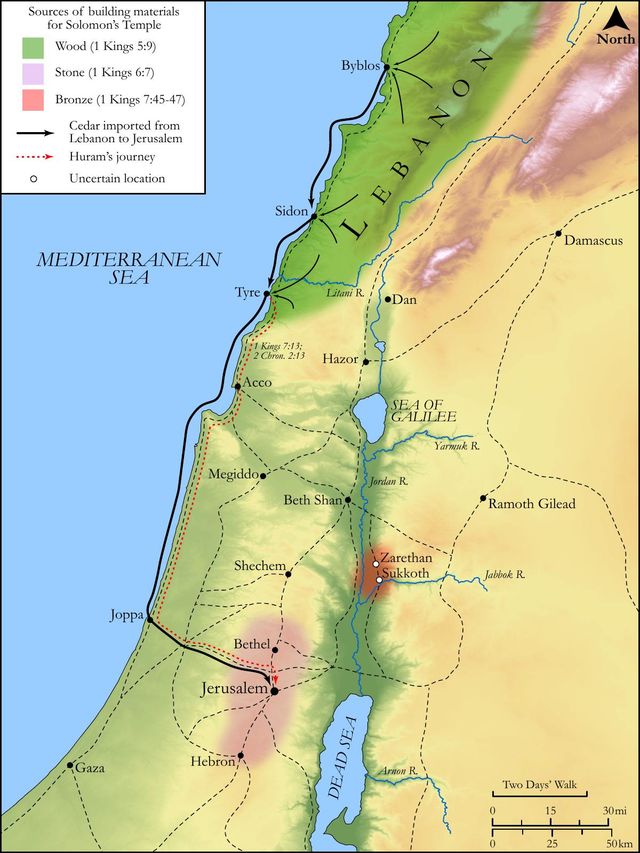
This verse is strategically positioned within the broader narrative of Solomon's reign, specifically detailing the meticulous preparations for building the First Temple. Following his peaceful ascension to the throne, Solomon received a congratulatory message from King Hiram of Tyre, a long-standing and loyal ally of his father, David, as noted in 1 Kings 5:1. Recognizing the opportune moment, Solomon leveraged this established relationship to request vast quantities of cedar and fir timber from Lebanon, along with highly skilled craftsmen, both of which were indispensable for the monumental construction project and largely unavailable in Israel (1 Kings 5:6). Hiram, acknowledging the divine favor upon Solomon, readily consented to the request. Verse 11, therefore, serves as the explicit articulation of Solomon's reciprocal obligation within this covenant, detailing the precise annual compensation for the timber and labor provided by Tyre. This economic arrangement not only solidified the diplomatic alliance but also laid the practical groundwork for the physical construction of the Temple, which is elaborately described in subsequent chapters, beginning with 1 Kings 6.
Historical & Cultural Context
In the ancient Near East, the establishment and maintenance of diplomatic alliances were frequently cemented through elaborate trade agreements and reciprocal exchanges of goods and services. Tyre, a preeminent Phoenician city-state, was globally renowned for its formidable maritime trade empire, its abundant access to the prized cedar forests of Lebanon, and its exceptionally skilled artisans, particularly in the intricate crafts of stone masonry and timber work. Conversely, Israel, under the prosperous reign of Solomon, was an agriculturally rich nation, consistently producing surplus grain and high-quality olive oil. This verse vividly illustrates a quintessential example of a mutually beneficial trade relationship, where each kingdom strategically supplied what the other inherently lacked. The specific quantities enumerated in the verse underscore the immense economic power wielded by Solomon's kingdom and the colossal scale of the Temple project, which necessitated a sustained, large-scale provision of resources over many years. Such meticulously detailed agreements were absolutely crucial for the successful execution of large-scale infrastructure projects in the ancient world, demonstrably showcasing Solomon's strategic foresight and astute diplomatic acumen in leveraging his kingdom's agricultural wealth to acquire the specialized resources vital for a national endeavor of profound divine significance.
Key Themes
ShowHideThe meticulously detailed agreement outlined in 1 Kings 5:11 significantly contributes to several profound theological and narrative themes within the books of Kings and the broader biblical metanarrative. Firstly, it powerfully underscores the theme of International Alliance and Trade, demonstrating how God's overarching purposes can be remarkably advanced through diplomatic and economic partnerships between nations, even those outside the direct covenant line of Israel. Solomon's renowned wisdom, a pervasive and prominent theme throughout his reign (1 Kings 3:12), is vividly evident in his astute ability to forge and meticulously maintain such a critically vital alliance. Secondly, the verse highlights the essential theme of Provision for God's Work, illustrating that significant undertakings for God's glory, such as the monumental task of building His Temple, necessitate substantial practical and material support. It beautifully portrays God's provision unfolding through human means, as Solomon's kingdom, abundantly blessed by God, diligently provides the necessary resources. Thirdly, it speaks directly to the enduring principle of Fair Exchange and Mutual Benefit, where the agreement meticulously ensures that both parties receive equitable and just compensation for their respective contributions, reflecting a balanced, just, and sustainable partnership. Finally, the sheer Economic Scale of the annual payments eloquently reveals the grandeur and magnificence of the Temple project and the considerable wealth, organizational capacity, and administrative prowess of Solomon's kingdom, serving as a powerful testament to the unprecedented period of peace and prosperity God graciously granted Israel under his wise and expansive rule (1 Kings 4:20-25).
Exposition and Analysis
ShowHideKey Word Analysis
ShowHideThe Hebrew word כּוֹר (kôr), often transliterated as "cor" or "kor," denotes a large dry measure, equivalent to ten ephahs. While its precise modern equivalent varies slightly among scholars, it is generally understood to be approximately 220 liters or about 6.2 bushels. This substantial unit, as defined by Strong's H3734 (kôr: "properly, a deep round vessel, i.e. (specifically) a cor or measure for things dry"), underscores the immense quantity of wheat Solomon provided, indicating the vast scale of the payment and the significant agricultural output of Israel.
The phrase "pure oil" combines two Hebrew words: כָּתִית (kâthîyth) and שֶׁמֶן (shemen). Strong's H3795 (kâthîyth: "beaten, i.e. pure (oil)") specifically refers to oil produced by beating or crushing, indicating the highest quality, unadulterated olive oil, likely from the first pressing of olives. Strong's H8081 (shemen: "grease, especially liquid (as from the olive, often perfumed); figuratively, richness") denotes oil in general, but here qualified by "pure." Olive oil was a precious commodity in the ancient Near East, used not only for food but also for light, anointing, and trade. The qualification "pure" emphasizes its premium quality and value, signifying a valuable and esteemed component of the annual tribute.
The repetition of the Hebrew word שָׁנֶה (shâneh), meaning "year," as שָׁנֶה בְשָׁנֶה (shâneh b'shâneh), literally "year in year," is a common Hebrew idiom for emphasis. Strong's H8141 (shâneh: "a year (as a revolution of time)") highlights the consistent and recurring nature of the payment. This phrase underscores the ongoing, annual, and consistent nature of Solomon's commitment, indicating that the supply of timber and labor from Tyre was not a one-time transaction but a sustained partnership over the many years required to complete the Temple and potentially other royal building projects.
Verse Breakdown
ShowHide"And Solomon gave Hiram twenty thousand measures of wheat [for] food to his household"
This initial clause establishes Solomon's immediate and substantial contribution to the alliance. The "twenty thousand measures" (kôr) of wheat signify an enormous quantity, specifically designated as "food" (Strong's H4361, makkôleth: "nourishment") for Hiram's "household" (Strong's H1004, bayith: "a house... especially family"). This provision of a staple food demonstrates a practical and foundational aspect of the alliance, ensuring the sustenance of Tyre's royal court, its servants, and crucially, the large workforce involved in the timber operations and skilled labor.
"and twenty measures of pure oil"
In addition to the wheat, Solomon provided a significant, though numerically smaller, quantity of "pure oil." While "twenty measures" (kôr) of oil might seem modest next to twenty thousand measures of wheat, it represents a highly valuable and refined commodity. This premium olive oil would have been used for various essential purposes within the Tyrian court and society, including culinary uses, lighting, and possibly anointing, underscoring the quality and richness of Solomon's annual tribute.
"thus gave Solomon to Hiram year by year"
This concluding phrase emphatically highlights the sustained and enduring nature of the agreement. The payment was not a singular transaction but an annual, consistent commitment. This continuous provision ensured a steady and reliable supply of resources and skilled labor for the Temple's construction, reflecting the foresight, stability, and long-term vision of Solomon's administration and the enduring, mutually beneficial alliance between the kingdom of Israel and the city-state of Tyre.
Literary Devices
ShowHideThe verse primarily employs Emphasis by Quantity to powerfully convey the monumental scale of the Temple project and the considerable wealth of Solomon's kingdom. The precise enumeration of "twenty thousand measures of wheat" and "twenty measures of pure oil" utilizes concrete, specific numbers to impress upon the reader the vastness of the resources being exchanged. This numerical specificity serves to underscore the significant and sustained commitment Solomon made, as well as the immense value of the timber and skilled labor consistently provided by Hiram. Furthermore, there is a subtle yet significant element of Symbolism at play; wheat and oil are not merely commodities but also ancient, deeply rooted symbols of sustenance, divine blessing, and prosperity throughout the biblical narrative. By generously providing these essential staples, Solomon was not only fulfilling a contractual obligation but was also, in a deeper sense, sharing in the abundant blessings and prosperity that God had bestowed upon Israel, symbolically extending that divine favor to his ally in the service of God's greater redemptive purpose.
Theological and Thematic Connections
ShowHideThis meticulously detailed agreement between Solomon and Hiram, facilitated by the strategic exchange of Israel's agricultural bounty for Tyre's specialized resources and craftsmanship, beautifully illustrates the profound principle of divine provision through human cooperation. While God Himself commanded the building of His Temple, He also sovereignly equipped Solomon with the wisdom, foresight, and material resources necessary to achieve this monumental task, including the ability to forge and maintain strategic international alliances. The generous and consistent provision of wheat and oil reflects the extraordinary abundance God had graciously granted Israel under Solomon's reign, powerfully demonstrating that God's sacred work is often accomplished through the wise stewardship and strategic deployment of material blessings entrusted to His people. It underscores that even the most sacred and divinely appointed endeavors require practical, economic foundations, and that God, in His sovereign wisdom, can utilize international partnerships—even with nations outside the direct covenant—to achieve His overarching purposes. This reciprocal arrangement also powerfully points to the enduring biblical value of honoring agreements, fulfilling commitments, and providing fair compensation, principles that are foundational for ensuring stable relationships and facilitating collaborative efforts for the common good and God's glory.
Reflection and Application
ShowHideThe detailed account of Solomon's annual payment to Hiram offers profound and enduring lessons for contemporary believers regarding the critical importance of stewardship, the power of collaborative partnership, and unwavering dedication to God's purposes. Just as King Solomon wisely leveraged Israel's abundant resources to secure precisely what was needed for the construction of the magnificent Temple, we too are called to be faithful and discerning stewards of the gifts, talents, and material wealth God has graciously entrusted to us, deploying them strategically and generously for the advancement of His spiritual kingdom. This verse powerfully reminds us that monumental tasks, especially those undertaken for God's glory, almost invariably require collaborative effort, transcending individual limitations and fostering unity. It emphasizes the timeless value of honoring commitments, fulfilling promises, and providing fair and just compensation for the contributions of others, whether in the context of ministry, professional endeavors, or personal relationships. The "year by year" nature of the agreement highlights the indispensable importance of sustained commitment, long-term vision, and perseverance in pursuing God's callings in our lives. We are profoundly encouraged to seek out and value diverse skills, perspectives, and resources, understanding that when brought together in cooperative and harmonious effort, they can achieve far greater things than any single entity could alone, all for a higher, divine purpose.
Questions for Reflection
ShowHideFAQ
ShowHideWhat was the significance of "wheat" and "pure oil" as payment?
ShowHideWheat and pure oil were not merely commodities but foundational staples and highly valuable assets in the ancient Near East. Wheat represented the primary source of sustenance, absolutely essential for feeding a large population and workforce. Its provision in such vast quantities underscored Israel's agricultural abundance and its capacity to sustain Tyre's population, including the numerous laborers providing timber and specialized expertise. Pure olive oil, on the other hand, was a versatile and precious commodity, used extensively for food, lighting (for lamps), anointing (for religious and medicinal purposes), and as a significant item of trade. Its inclusion signified a payment of exceptional quality and high value, reflecting the premium nature of the services and materials Hiram provided. Together, these payments represented a comprehensive, substantial, and strategic economic exchange, demonstrating the considerable wealth of Solomon's kingdom and the critical importance of the alliance.
Why was this agreement "year by year"?
ShowHideThe "year by year" nature of the agreement was absolutely crucial because the construction of the Temple was a monumental undertaking that would span many years (seven years, as explicitly noted in 1 Kings 6:38). It necessitated a consistent, reliable, and uninterrupted supply of timber and skilled labor from Tyre. A one-time payment would have been entirely insufficient for such a prolonged and complex project. The annual provision of wheat and oil ensured a stable, long-term partnership, guaranteeing the continuous flow of necessary resources and demonstrating Solomon's unwavering commitment to sustaining the Tyrian workforce involved in the Temple's construction. This long-term commitment reflects the profound foresight, meticulous planning, and administrative stability required for large-scale national and sacred projects of this magnitude.
Why do the quantities of payment differ in 1 Kings 5:11 and 2 Chronicles 2:10?
ShowHideThere is indeed a notable discrepancy in the quantities of payment mentioned between 1 Kings 5:11 and 2 Chronicles 2:10. 1 Kings 5:11 states "twenty thousand measures of wheat" and "twenty measures of pure oil," while 2 Chronicles 2:10 mentions "twenty thousand measures of beaten wheat, and twenty thousand measures of barley, and twenty thousand baths of wine, and twenty thousand baths of oil." Scholars offer several plausible explanations for this difference. Some suggest that the Kings account refers specifically to the payment for Hiram's personal household, while Chronicles describes the total annual provision for all the Tyrian workmen involved in the project. Another possibility is that the two accounts refer to different periods of the agreement, or that the measures themselves (e.g., "measures" vs. "baths") might represent different units or a more generalized versus a more specific accounting. It's also possible that one account provides a summary while the other offers a more detailed breakdown, or even that minor scribal variations occurred over time in the transmission of the texts. Regardless of the precise reason for the discrepancy, both accounts fundamentally agree on the principle: Solomon provided a substantial, consistent, and annual payment to Hiram for the vital resources and labor needed for the Temple's construction, underscoring the immense scale of the project and the strength of their enduring alliance.
Christ-Centered Fulfillment
ShowHideThe strategic alliance between King Solomon and King Hiram, and the meticulous, ongoing provision for the building of the physical Temple in Jerusalem, powerfully foreshadows the far grander and eternal work of Christ in establishing His spiritual Temple, the Church. Solomon, renowned for his divinely granted wisdom and immense wealth, serves as a compelling type of Christ, who is the ultimate wisdom of God incarnate (1 Corinthians 1:30) and the inexhaustible source of all true spiritual riches. Just as Solomon provided for Hiram "year by year" to ensure the Temple's construction, Christ continually provides for His Church, not with perishable wheat and oil, but with His very life, His indwelling Holy Spirit, and His living Word. He is the ultimate "Bread of Life," the Lamb of God whose once-for-all sacrifice provides eternal sustenance for His people (John 6:51). The "pure oil" can be seen as a profound type of the Holy Spirit, the divine anointing that Christ pours out upon His Church, empowering believers for service, sanctification, and witness (1 John 2:27). The physical Temple, meticulously constructed with earthly resources and human skill, points unmistakably to the living temple of God, the Church, which is being built by Christ Himself with "living stones"—believers united in Him and growing into a holy dwelling place for God by the Spirit (Ephesians 2:19-22). The "year by year" commitment of Solomon finds its eternal fulfillment in Christ's everlasting covenant, a once-for-all sacrifice that secures our salvation and ensures the ongoing, triumphant building of His kingdom until His glorious return (Hebrews 9:11-12). Thus, 1 Kings 5:11, while detailing an ancient economic agreement, ultimately points to the infinitely greater provision, wisdom, and redemptive work of Christ, who sovereignly builds His Church and eternally sustains His people through His boundless and unfailing grace.