


1 Corinthians 8:8
Bible text: King James Version (1769 Blayney text) · Public domain
Bible text: King James Version with Strong's numbers · Public domain
Bible text: Berean Standard Bible · Public domain
Bible text: American Standard Version (1901) · Public domain
Bible text: World English Bible, Messianic edition · Public domain
Bible text: Geneva Bible (1599) · Public domain
Bible text: Young's Literal Translation · Public domain
- βρῶμαbrōmaFoodG1033N-NSNNoun Nominative Singular Neuter
- δὲdehoweverG1161CONJConjunction
- ἡμᾶςhēmasusG3165P-1APPersonal pronoun Accusative 1st Plural
- οὐounotG3756PRT-NNegative Particle Negative
- παραστήσειparastēseiwill commendG3936V-FAI-3SVerb Future Active Indicative 3rd Singular
- τῷtō<the>G3588T-DSMDefinite article Dative Singular Masculine
- θεῷ·theōto GodG2316N-DSM-TNoun Dative Singular Masculine Title
- οὔτεouteneitherG3777CONJ-NConjunction Negative
- γὰρgarforG1063CONJConjunction
- ἐὰνeanifG1437CONDConjunction
- μὴmēnotG3361PRT-NNegative Particle Negative
- φάγωμενphagōmenwe shall eatG5315V-AAS-1PVerb Aorist Active Subjunctive 1st Plural
- ὑστερούμεθαhusteroumetha[still] do we come shortG5302V-PPI-1PVerb Present Passive Indicative 1st Plural
- οὔτεoute[then] norG3777CONJ-NConjunction Negative
- ἐὰνeanifG1437CONDConjunction
- φάγωμενphagōmenwe shall eatG5315V-AAS-1PVerb Aorist Active Subjunctive 1st Plural
- περισσεύομενperisseuomenhave we an advantageG4052V-PAI-1PVerb Present Active Indicative 1st Plural
English is a literal word-by-word gloss of the Greek, not the KJV's wording. Why?
This is the original text the KJV's translators worked from — each Greek word with its own literal English meaning in this verse, prepared by scholars at Tyndale House, Cambridge. The KJV translates whole sentences, not word by word, so its wording differs: one Greek word can become several English words, and the KJV may choose “charity” where the gloss reads “love”. Both are faithful — they answer different questions. For the KJV's own rendering, switch to the KJV text.
Details
See on the biblical-era maps

Study this verse
Public-domain commentary
Matthew Henry
From his Commentary on the Whole Bible. Henry comments on passages, not single verses — this entry covers 1 Corinthians 8:7–13.
The apostle, having granted, and indeed confirmed, the opinion of some among the Corinthians, that idols were nothing, proceeds now to show them that their inference from this assumption was not just, namely, that therefore they might go into the idol-temple, and eat of the sacrifices, and feast there with their heathen neighbours. He does not indeed here so much insist upon the unlawfulness of the thing in itself as the mischief such freedom might do to weaker Christians, persons that had not the same measure of knowledge with these pretenders. And here,
I.He informs them that every Christian man, at that time, was not so fully convinced and persuaded that an idol was nothing.
Howbeit, there is not in every man this knowledge; for some, with conscience of the idol, unto this hour, eat it as a thing offered unto an idol; with conscience of the idol; that is, some confused veneration for it. Though they were converts to Christianity, and professed the true religion, they were not perfectly cured of the old leaven, but retained an unaccountable respect for the idols they had worshipped before. Note, Weak Christians may be ignorant, or have but a confused knowledge of the greatest and plainest truths. Such were those of the one God and one Mediator. And yet some of those who were turned form heathenism to Christianity among the Corinthians seem to have retained a veneration for their idols, utterly irreconcilable with those great principles; so that when an opportunity offered to eat things offered to idols they did not abstain, to testify their abhorrence of idolatry, nor eat with a professed contempt of the idol, by declaring they looked upon it to be nothing; and so their conscience, being weak, was defiled; that is, they contracted guilt; they ate out of respect to the idol, with an imagination that it had something divine in it, and so committed idolatry: whereas the design of the gospel was to turn men from dumb idols to the living God. They were weak in their understanding, not thoroughly apprized of the vanity of idols; and, while they ate what was sacrificed to them out of veneration for them, contracted the guilt of idolatry, and so greatly polluted themselves. This seems to be the sense of the place; though some understand it of weak Christians defiling themselves by eating what was offered to an idol with an apprehension that thereby it became unclean, and made those so in a moral sense who should eat it, every one not having a knowledge that the idol was nothing, and therefore that it could not render what was offered to it in this sense unclean. Note, We should be careful to do nothing that may occasion weak Christians to defile their consciences.
II.He tells them that mere eating and drinking had nothing in them virtuous nor criminal, nothing that could make them better nor worse, pleasing nor displeasing to God: Meat commendeth us not to God; for neither if we eat are we the better, nor if we eat not are we the worse, Co1 8:8. It looks as if some of the Corinthians made a merit of their eating what had been offered to idols, and that in their very temples too (Co1 8:10), because it plainly showed that they thought the idols nothing. But eating and drinking are in themselves actions indifferent. It matters little what we eat. What goes into the man of this sort neither purifies nor defiles. Flesh offered to idols may in itself be as proper for food as any other; and the bare eating, or forbearing to eat, has no virtue in it. Note, It is a gross mistake to think that distinction of food will make any distinction between men in God's account. Eating this food, and forbearing that, having nothing in them to recommend a person to God.
III.He cautions them against abusing their liberty, the liberty they thought they had in this matter.
For that they mistook this matter, and had no allowance to sit at meat in the idol's temple, seems plain from Co1 10:20, etc. But the apostle argues here that, even upon the supposition that they had such power, they must be cautious how they use it; it might be a stumbling-block to the weak (Co1 10:9), it might occasion their falling into idolatrous actions, perhaps their falling off from Christianity and revolting again to heathenism. "If a man see thee, who hast knowledge (hast superior understanding to his, and hereupon concedest that thou hast a liberty to sit at meat, or feast, in an idol's temple, because an idol, thou sayest, is nothing), shall not one who is less thoroughly informed in this matter, and thinks an idol something, be emboldened to eat what was offered to the idol, not as common food, but sacrifice, and thereby be guilty of idolatry?" Such an occasion of falling they should be careful of laying before their weak brethren, whatever liberty or power they themselves had. The apostle backs this caution with two considerations: - 1. The danger that might accrue to weak brethren, even those weak brethren for whom Christ died. We must deny ourselves even what is lawful rather than occasion their stumbling, and endanger their souls (Co1 10:11): Through thy knowledge shall thy weak brother perish, for whom Christ died? Note, Those whom Christ hath redeemed with his most precious blood should be very precious and dear to us. If he had such compassion as to die for them, that they might not perish, we should have so much compassion for them as to deny ourselves, for their sakes, in various instances, and not use our liberty to their hurt, to occasion their stumbling, or hazard their ruin. That man has very little of the spirit of the Redeemer who had rather his brother should perish than himself be abridged, in any respect, of his liberty. He who hath the Spirit of Christ in him will love those whom Christ loved, so as to die for them, and will study to promote their spiritual and eternal warfare, and shun every thing that would unnecessarily grieve them, and much more every thing that would be likely to occasion their stumbling, or falling into sin. 2. The hurt done to them Christ takes as done to himself: When you sin so against the weak brethren and wound their consciences, you sin against Christ, Co1 10:12. Note, Injuries done to Christians are injuries to Christ, especially to babes in Christ, to weak Christians; and most of all, involving them in guilt: wounding their consciences is wounding him. He has a particular care of the lambs of the flock: He gathers them in his arm and carries them in his bosom, Isa 60:11. Strong Christians should be very careful to avoid what will offend weak ones, or lay a stumbling-block in their way. Shall we be void of compassion for those to whom Christ has shown so much? Shall we sin against Christ who suffered for us? Shall we set ourselves to defeat his gracious designs, and help to ruin those whom he died to save?
IV.He enforces all with his own example (Co1 8:13):
Wherefore if meat make my brother to offend I will eat no flesh while the world standeth, lest I make my brother to offend. He does not say that he will never eat more. This were to destroy himself, and to commit a heinous sin, to prevent the sin and fall of a brother. Such evil must not be done that good may come of it. But, though it was necessary to eat, it was not necessary to eat flesh. And therefore, rather than occasion sin in a brother, he would abstain from it as long as he lived. He had such a value for the soul of his brother that he would willingly deny himself in a matter of liberty, and forbear any particular food, which he might have lawfully eaten and might like to eat, rather than lay a stumbling-block in a weak brother's way, and occasion him to sin, by following his example, without being clear in his mind whether it were lawful or no. Note, We should be very tender of doing any thing that may be an occasion of stumbling to others, though it may be innocent in itself. Liberty is valuable, but the weakness of a brother should induce, and sometimes bind, us to waive it. We must not rigorously claim nor use our own rights, to the hurt and ruin of a brother's soul, and so to the injury of our Redeemer, who died for him. When it is certainly foreseen that my doing what I may forbear will occasion a fellow-christian to do what he ought to forbear, I shall offend, scandalize, or lay a stumbling-block in his way, which to do is a sin, however lawful the thing itself be which is done. And, if we must be so careful not to occasion other men's sins, how careful should we be to avoid sin ourselves! If we must not endanger other men's souls, how much should we be concerned not to destroy our own!
Historical interpretation
Two Centuries of Reception
5 surviving comments on this verse. Each one is dated, so this reads as a timeline rather than a list.
Select a marker to jump to its quote. Markers stagger vertically where authors wrote within a few decades of each other.
The natural use of food is then indifferent. "For neither if we eat are we the better "it is said, "nor if we eat not are we the worse.".
For it is not in the food of the belly, that we have heard good to be situated. But he has heard that "meat will not commend us"
Meantime they huff in our teeth the fact that Isaiah withal has authoritatively declared, "Not such a fast hath the Lord elected," that is, not abstinence from food, but the works of righteousness, which he there appends: and that the Lord Himself in the Gospel has given a compendious answer to every kind of scrupulousness in regard to food; "that not by such things as are introduced into the mouth is a man defiled, but by such as are produced out of the mouth; " while Himself withal was wont to eat and drink till He made Himself noted thus; "Behold, a gormandizer and a drinker: " (finally), that so, too, does the apostle teach that "food commendeth us not to God; since we neither abound if we eat, nor lack if we eat not."
That too great lust of food is not to be desired. In Isaiah: "Let us eat and drink, for to-morrow we shall die. This sin shall not be remitted to you even until ye die." Also in Exodus: "And the people sate down to eat and drink, and rose up to play." Paul, in the first to the Corinthians: "Meat commendeth us not to God; neither if we eat shall we abound, nor if we eat not shall we want." . And again: "When ye come together to eat, wait one for another. If any is hungry, let him eat at home, that ye may not come together for judgment." Also to the Romans: "The kingdom of God is not meat and drink, but righteousness, and peace, and joy in the Holy Ghost." In the Gospel according to John: "I have meat which ye know not of. My meat is, that I should do His will who sent me, and should finish His work."
"But meat doth not commend us to God. For neither if we eat are we the better, nor if we eat not are we the worse." Do you see how again he takes down their high spirit? in that, after saying that "not only they but all of us have knowledge," and that "no one knoweth any thing as he ought to know," and that "knowledge puffeth up;" then having soothed them, and said that "this knowledge is not in all," and that "weakness is the cause of these being defiled," in order that they might not say, "And what is it to us, if knowledge be not in all? Why then has not such an one knowledge? Why is he weak?"-I say, in order that they might not rejoin in these terms, he did not proceed immediately to point out clearly that for fear of the other's harm one ought to abstain: but having first made but a sort of skirmish upon mention of him, he points out what is more than this. What then is this? That although no one were injured nor any perversion of another ensued, not even in this case were it right so to do. For the former topic by itself is laboring in vain. Since he that hears of another being hurt while himself has the gain, is not very apt to abstain; but then rather he doth so, when he finds out that he himself is no way advantaged by the thing. Wherefore he sets this down first, saying, "But meat commendeth us not to God." See how cheap he holds that which was accounted to spring from perfect knowledge! "For neither if we eat are we the better," (that is, stand higher in God's estimation, as if we had done any thing good or great:) "nor if we eat not are we the worse," that is, fall in anyway short of others. So far then he hath signified that the thing itself is superfluous, and as nothing. For that which being done profits not, and which being left undone injures not, must be superfluous.
“Neither shall we have any abundance if we do eat, nor shall we suffer any loss if we do not eat.” That is to say: neither will the former make me rich, nor will the latter make me poor.
Continue studying 1 Corinthians 8:8 across the web’s major study libraries — every link below opens this exact verse, chapter, or book on the destination site.
Read & Compare
 BibleGatewayThis verse in more than 200 translations and 70 languages.
 Bible.comThe YouVersion reader — hundreds of translations, reading plans, and highlights.
 ESV.orgCrossway's official English Standard Version reader.
 NET BibleThe NET translation with 60,000+ translators' notes on every rendering decision.
 STEP BibleTyndale House's free study tool — original text, vocabulary, and scholarly resources.
 BibliaLogos Bible Software's free web reader.
 USCCBThe New American Bible (Revised Edition) with the U.S. bishops' study notes.
Commentaries
 BibleHub CommentariesDozens of classic commentaries on this verse, gathered on one page.
 StudyLightMore than 100 commentary sets — the largest collection on the web.
 BibleRefPlain-English commentary on what this verse means, verse by verse.
 Enduring WordDavid Guzik's free commentary on this chapter, widely used by Bible teachers.
 Bible Study ToolsVerse commentary alongside Greek and Hebrew study aids.
Original Language & Research
- BibleHub InterlinearThe verse word by word — original language, transliteration, and English.
- BibleHub LexiconEvery word's original-language definition and Strong's entry.
 Blue Letter BibleDeep-study tools — Strong's numbers, concordance, and word studies.
 CNTR CollationThe earliest Greek manuscripts of this verse, collated letter by letter.
Sermons, Hymns & Audio


TrulyRandomVerse is not affiliated with these sites and doesn’t control their content. They’re linked because they’re genuinely useful.
Summary
1 Corinthians 8:8 serves as a pivotal declaration within Paul's discourse on Christian liberty and conscience, asserting that external practices, specifically the consumption or abstinence from food, hold no intrinsic power to alter one's standing or favor with God. This verse underscores the spiritual neutrality of such matters, laying the groundwork for the broader principle that genuine spiritual maturity and acceptance before God are not determined by adherence to dietary rules or rituals, but by faith and love.
Context
ShowHideLiterary Context
This verse is deeply embedded in Paul's comprehensive response to the Corinthian church's questions regarding food sacrificed to idols, which spans 1 Corinthians 8, 1 Corinthians 9, and 1 Corinthians 10. Chapter 8 opens by establishing the dichotomy between "knowledge" and "love," asserting that while "knowledge puffs up, but charity edifieth" (1 Corinthians 8:1). Paul acknowledges that some believers possessed the intellectual understanding that "an idol is nothing in the world" (1 Corinthians 8:4), and therefore, eating meat offered to idols was, in itself, spiritually inconsequential. However, he immediately pivots to address the impact of such actions on those with a "weak conscience" (1 Corinthians 8:7). Verse 8 functions as a foundational theological statement, clarifying that the food itself is irrelevant to one's relationship with God, thereby setting the stage for the subsequent exhortation to prioritize love and the edification of others over the exercise of personal freedom, as elaborated in 1 Corinthians 8:9-13.
Historical & Cultural Context
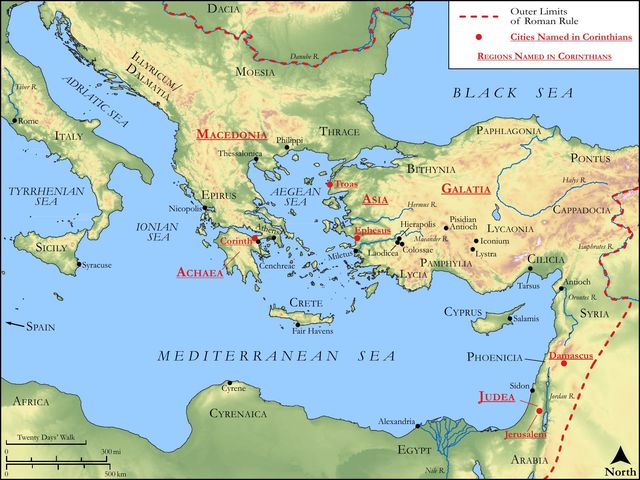
The city of Corinth was a bustling Roman provincial capital, a major commercial hub, and a melting pot of cultures and religions, including numerous pagan temples dedicated to deities like Apollo, Aphrodite, and Poseidon. A common practice in ancient Greco-Roman society was to offer animals as sacrifices to idols in these temples. A portion of the sacrificed meat was often consumed by the worshippers, a portion given to the priests, and the remainder sold in the public meat markets (macella). For early Christians, this presented a significant dilemma: could they, with a clear conscience, purchase and consume meat from these markets, knowing its origin, or participate in social meals where such meat was served? While some believers, particularly those influenced by Hellenistic philosophical thought, understood the theological nullity of idols, others, especially those recently converted from paganism or with a Jewish background, struggled with the deeply ingrained associations of such food with idolatry and demonic worship. This cultural backdrop highlights the practical and ethical challenges faced by the Corinthian church, making Paul's teaching on conscience, freedom, and love profoundly relevant.
Key Themes
ShowHide1 Corinthians 8 and this verse contribute significantly to several overarching themes within Paul's letters. Foremost is the theme of Christian Liberty and Responsibility. While believers are indeed "free" in Christ from legalistic burdens and the power of idols, this freedom is not absolute but must be exercised with responsibility towards others. Another crucial theme is the Primacy of Love (Agape) over mere knowledge. Paul consistently argues that intellectual understanding, no matter how profound, is worthless if it does not manifest in self-sacrificial love for fellow believers. This is powerfully articulated in 1 Corinthians 13. The concept of Conscience is also central, distinguishing between a "strong" conscience (one that understands the spiritual neutrality of external matters) and a "weak" conscience (one that is still bound by past associations or scruples). Paul emphasizes that the strong should accommodate the weak, rather than causing them to stumble or violate their conscience, a principle echoed in Romans 14. Ultimately, the goal is Unity and Edification of the Body of Christ, ensuring that actions promote spiritual growth and harmony rather than division or spiritual harm.
Exposition and Analysis
ShowHideKey Word Analysis
ShowHideThis term refers to "food" in general, but in this context, it specifically denotes "food (literally or figuratively), especially (ceremonially) articles allowed or forbidden by the Jewish law." Here, it directly refers to the meat that had been offered to pagan idols, which was the subject of contention in Corinth. Paul uses this word to encompass the physical substance itself, emphasizing its inherent neutrality.
Meaning "to stand beside," "to exhibit," "to proffer," or "to recommend," this verb signifies presenting someone or something in a favorable light or bringing them into a particular relationship. In the negative, "commendeth us not to God," it means that food does not "present us favorably" or "introduce us" to God in a way that alters our spiritual standing or acceptance. Our relationship with God is not contingent upon our dietary choices.
This word means "to superabound (in quantity or quality), be in excess, be superfluous," or "to excel." When Paul states, "are we the better," he is saying that eating such food does not cause us to "excel" or "abound" in spiritual standing or favor with God. It does not add to our righteousness or make us more acceptable.
Meaning "to be later," "to be inferior," or "to fall short (be deficient)," this term is used to convey a lack or deficiency. When Paul says, "are we the worse," he means that abstaining from such food does not cause us to "fall short" or "be deficient" in our spiritual standing. It does not diminish our righteousness or make us less acceptable to God.
Verse Breakdown
ShowHide"But meat commendeth us not to God:"
This opening clause immediately establishes the core premise: the physical act of eating (or not eating) food, particularly that which has been offered to idols, has no bearing on one's spiritual standing or acceptance before God. Our relationship with the divine is not mediated or improved by dietary practices. It directly refutes any notion that external rituals or food choices can earn favor or righteousness.
"for neither, if we eat, are we the better;"
Paul elaborates on the first clause by explaining that consumption of the meat does not confer any spiritual advantage. Eating does not make a believer more righteous, more holy, or more favored in God's eyes. It does not add to one's spiritual merit or elevate one's position in Christ.
"neither, if we eat not, are we the worse."
Conversely, abstaining from the meat does not result in any spiritual detriment. Not eating does not diminish a believer's righteousness, holiness, or favor with God. It does not subtract from one's spiritual standing or lower one's position in Christ. Both eating and abstaining are declared spiritually neutral acts in themselves.
Literary Devices
ShowHidePaul employs several literary devices to convey his message with clarity and force. The most prominent is Antithesis, seen in the direct contrast between "if we eat, are we the better" and "if we eat not, are we the worse." This stark opposition highlights the spiritual neutrality of the action, emphasizing that neither choice inherently improves nor diminishes one's standing with God. He also uses Didactic Tone, characteristic of his epistles, as he instructs the Corinthian church on a matter of practical theology. The structure of the verse itself, moving from a general statement to specific, balanced examples, demonstrates a form of Logical Argumentation, building a clear case for the irrelevance of external practices in the realm of spiritual standing.
Theological and Thematic Connections
ShowHide1 Corinthians 8:8 profoundly shapes Christian understanding of adiaphora—matters indifferent to salvation—and the ethical considerations that arise within a community of faith. It asserts that true spiritual standing is not predicated on external observances or dietary laws, but on one's relationship with God through Christ. This liberates believers from legalistic burdens while simultaneously calling them to a higher ethic of love that transcends personal freedom. The verse serves as a theological anchor, reminding believers that while they are free in Christ, their freedom must always be exercised in a manner that builds up, rather than tears down, the body of Christ, especially those with weaker consciences. It shifts the focus from what one consumes to the spiritual impact of one's actions on others, prioritizing the unity and spiritual well-being of the community.
Reflection and Application
ShowHide1 Corinthians 8:8 offers a timeless principle for navigating issues of Christian liberty and communal life. In an age where believers often divide over non-essential practices, this verse serves as a powerful reminder that our standing with God is not determined by our preferences in worship style, dress, entertainment, political affiliation, or even specific dietary choices. The core message is that while we are indeed free in Christ, true spiritual maturity is demonstrated not by asserting our rights, but by exercising our freedom in a way that prioritizes love, unity, and the spiritual well-being of our brothers and sisters. It calls us to cultivate a sensitive conscience, not merely for ourselves, but for the sake of others, ensuring that our actions do not become a stumbling block for those whose faith may be weaker or whose convictions differ. This requires humility, empathy, and a willingness to sometimes forgo a personal liberty for the greater good of the community and the glory of God.
Questions for Reflection
ShowHideFAQ
ShowHideDoes 1 Corinthians 8:8 mean that all external actions are irrelevant to faith?
ShowHideNo, 1 Corinthians 8:8 specifically addresses the spiritual neutrality of food in relation to one's standing with God. It clarifies that what we eat or don't eat does not make us more or less righteous. However, Paul immediately follows this by discussing the impact of our actions on others. While the action itself (eating meat) might be spiritually neutral, performing it in a way that causes a fellow believer with a "weak conscience" to stumble or violate their own convictions is not neutral, but rather a sin against Christ (1 Corinthians 8:9-12). The verse liberates us from legalism concerning external rituals, but it simultaneously calls us to a higher ethic of love and consideration for others, which is essential to faith.
What is a "weak conscience" in the context of this chapter?
ShowHideIn 1 Corinthians 8, a "weak conscience" refers to a believer who, due to their background or lack of full understanding, still associates certain external practices (like eating meat sacrificed to idols) with sin or idolatry. Unlike those with "knowledge" who understand that "an idol is nothing" (1 Corinthians 8:4), the weak conscience feels defiled or believes they are participating in idolatry if they eat such meat. Paul's point is that while their understanding may be incomplete, their conscience is still valid and should not be violated or disregarded by those with stronger faith, as this could lead them into sin. This concept is further explored in Romans 14:1-23.
Christ-Centered Fulfillment
ShowHide1 Corinthians 8:8, by declaring the spiritual irrelevance of external practices like dietary choices, powerfully points to the radical freedom and new covenant reality inaugurated by Christ. Jesus himself challenged the prevailing legalistic emphasis on external purity, declaring that "not that which goeth into the mouth defileth a man; but that which cometh out of the mouth, this defileth a man" (Matthew 15:11). Our standing before God is not earned through adherence to rituals or abstention from certain foods, but is a gift of grace received through faith in the finished work of Christ. He is the ultimate "meat" that truly commends us to God, for His sacrifice on the cross fully atoned for our sins, making us righteous in God's sight (2 Corinthians 5:21). Furthermore, Christ's example of self-emptying love and willingness to lay down His rights, even His life, for the sake of others (Philippians 2:5-8) serves as the supreme model for exercising Christian liberty. Our freedom in Christ, therefore, is not a license for self-indulgence, but a call to imitate Him by loving our neighbor and building up the body, ensuring that our actions reflect the heart of the One who "came not to be ministered unto, but to minister, and to give his life a ransom for many" (Matthew 20:28).