


Colossians 2:20
Bible text: King James Version (1769 Blayney text) · Public domain
Bible text: King James Version with Strong's numbers · Public domain
Bible text: Berean Standard Bible · Public domain
Bible text: American Standard Version (1901) · Public domain
Bible text: World English Bible, Messianic edition · Public domain
Bible text: Geneva Bible (1599) · Public domain
Bible text: Young's Literal Translation · Public domain
- ΕἰEiIfG1487CONDConjunction
- οὖνounthereforeG3767CONJConjunction
- ἀπεθάνετεapethaneteyou have diedG599V-2AAI-2PVerb 2nd Aorist Active Indicative 2nd Plural
- σὺνsunwithG4862PREPPreposition
- τῷtō<the>G3588T-DSMDefinite article Dative Singular Masculine
- ΧριστῷChristōChristG5547N-DSM-TNoun Dative Singular Masculine Title
- ἀπὸapoaway fromG575PREPPreposition
- τῶνtōntheG3588T-GPNDefinite article Genitive Plural Neuter
- στοιχείωνstoicheiōnprinciplesG4747N-GPNNoun Genitive Plural Neuter
- τοῦtouof theG3588T-GSMDefinite article Genitive Singular Masculine
- κόσμουkosmouworldG2889N-GSMNoun Genitive Singular Masculine
- τίtiwhyG5101I-ASNInterrogative pronoun Accusative Singular Neuter
- ὡςhōsas ifG5613PRTParticle or Disjunctive
- ζῶντεςzōnteslivingG2198V-PAP-NPMVerb Present Active Participle Nominative Plural Masculine
- ἐνeninG1722PREPPreposition
- κόσμῳkosmō[the] worldG2889N-DSMNoun Dative Singular Masculine
- δογματίζεσθε;dogmatizesthedo you submit to decrees?G1379V-PPI-2PVerb Present Passive Indicative 2nd Plural
English is a literal word-by-word gloss of the Greek, not the KJV's wording. Why?
This is the original text the KJV's translators worked from — each Greek word with its own literal English meaning in this verse, prepared by scholars at Tyndale House, Cambridge. The KJV translates whole sentences, not word by word, so its wording differs: one Greek word can become several English words, and the KJV may choose “charity” where the gloss reads “love”. Both are faithful — they answer different questions. For the KJV's own rendering, switch to the KJV text.
Details
See on the biblical-era maps

Study this verse
Public-domain commentary
Matthew Henry
From his Commentary on the Whole Bible. Henry comments on passages, not single verses — this entry covers Colossians 2:16–23. His two-level outline is real structure in the source text, so it is rendered as structure.
The apostle concludes the chapter with exhortations to proper duty, which he infers from the foregoing discourse.
I.Here is a caution to take heed of judaizing teachers, or those who would impose upon Christians the yoke of the ceremonial law:
Let no man therefore judge you in meat nor drink, etc., Col 2:16. Much of the ceremonies of the law of Moses consisted in the distinction of meats and days. It appears by Rom. 14 that there were those who were for keeping up those distinctions: but here the apostle shows that since Christ has come, and has cancelled the ceremonial law, we ought not to keep it up. "Let no man impose those things upon you, for God has not imposed them: if God has made you free, be not you again entangled in that yoke of bondage." And this the rather because these things were shadows of things to come (Col 2:17), intimating that they had no intrinsic worth in them and that they are now done away. But the body is of Christ: the body, of which they were shadows, has come; and to continue the ceremonial observances, which were only types and shadows of Christ and the gospel, carries an intimation that Christ has not yet come and the gospel state has not yet commenced. Observe the advantages we have under the gospel, above what they had under the law: they had the shadows, we have the substance.
II.He cautions them to take heed of those who would introduce the worship of angels as mediators between God and them, as the Gentile philosophers did: Let no man beguile you of your reward, in a voluntary humility and worshipping of angels, Col 2:18. It looked like a piece of modesty to make use of the mediation of angels, as conscious to ourselves of our unworthiness to speak immediately to God; but, though it has a show of humility, it is a voluntary, not a commanded humility; and therefore it is not acceptable, yea, it is not warrantable: it is taking that honour which is due to Christ only and giving it to a creature. Besides, the notions upon which this practice was grounded were merely the inventions of men and not by divine revelation, - the proud conceits of human reason, which make a man presume to dive into things, and determine them, without sufficient knowledge and warrant: Intruding into those things which he hath not seen, vainly puffed up by his fleshly mind - pretending to describe the order of angels, and their respective ministries, which God has hidden from us; and therefore, though there was a show of humility in the practice, there was a real pride in the principle. They advanced those notions to gratify their own carnal fancy, and were fond of being thought wiser than other people. Pride is at the bottom of a great many errors and corruptions, and even of many evil practices, which have great show and appearance of humility. Those who do so do not hold the head, Col 2:19. They do in effect disclaim Christ, who is the only Mediator between God and man. It is the highest disparagement to Christ, who is the head of the church, for any of the members of it to make use of any intercessors with God but him. When men let go their hold of Christ, they catch at that which is next them and will stand them in no stead. - From which all the body, by joints and bands, having nourishment ministered, and knit together, increaseth with the increase of God. Observe,
1.Jesus Christ is not only a head of government over the church, but a head of vital influence to it. They are knit to him by joints and bands, as the several members of the body are united to the head, and receive life and nourishment from him.
2.The body of Christ is a growing body: it increaseth with the increase of God. The new man is increasing, and the nature of grace is to grow, where there is not an accidental hindrance. - With the increase of God, with an increase of grace which is from God as its author; or, in a usual Hebraism, with a large and abundant increase. - That you may be filled with all the fulness of God, Eph 3:19. See a parallel expression, Which is the head, even Christ, from whom the whole body, fitly joined together, maketh increase of the body, Eph 4:15, Eph 4:16.
III.He takes occasion hence to warn them again:
"Wherefore, if you be dead with Christ from the rudiments of the world, why, as though living in the world, are you subject to ordinances? Col 2:20. If as Christians you are dead to the observances of the ceremonial law, why are you subject to them? Such observances as, Touch not, taste not, handle not," Col 2:21, Col 2:22. Under the law there was a ceremonial pollution contracted by touching a dead body, or any thing offered to an idol; or by tasting any forbidden meats, etc., which all are to perish with the using, having no intrinsic worth in themselves to support them, and those who used them saw them perishing and passing away; or, which tend to corrupt the Christian faith, having no other authority than the traditions and injunctions of men. - Which things have indeed a show of wisdom in will-worship and humility. They thought themselves wiser than their neighbours, in observing the law of Moses together with the gospel of Christ, that they might be sure in the one, at least, to be in the right; but, alas! it was but a show of wisdom, a mere invention and pretence. So they seem to neglect the body, by abstaining from such and such meats, and mortifying their bodily pleasures and appetites; but there is nothing of true devotion in these things, for the gospel teaches us to worship God in spirit and truth and not by ritual observances, and through the mediation of Christ alone and not of any angels. Observe,
1.Christians are freed by Christ from the ritual observances of Moses's law, and delivered from that yoke of bondage which God himself had laid upon them.
2.Subjection to ordinances, or human appointments in the worship of God, is highly blamable, and contrary to the freedom and liberty of the gospel. The apostle requires Christians to stand fast in the liberty with which Christ hath made them free, and not to be entangled again with the yoke of bondage, Gal 5:1. And the imposition of them is invading the authority of Christ, the head of the church, and introducing another law of commandments contained in ordinances, when Christ has abolished the old one, Eph 2:15.
3.Such things have only a show of wisdom, but are really folly. It is true wisdom to keep close to the appointments of the gospel, and an entire subjection to Christ, the only head of the church.
Historical interpretation
Two Centuries of Reception
13 surviving comments on this verse. Each one is dated, so this reads as a timeline rather than a list.
Select a marker to jump to its quote. Markers stagger vertically where authors wrote within a few decades of each other.
It follows that celibacy is not particularly praiseworthy unless it arises through love of God. The blessed Paul says of those who show a distaste for marriage: "In the last times people will abandon the faith, attaching themselves to deceitful spirits and the teachings of demonic powers that they should abstain from food, at the same time forbidding marriage." Again he says, "Do not let anyone disqualify you in forced piety of self-mortification and severity to the body."
For he says in another passage also "How is it that you conduct yourselves as if you were even now living in the world?" where he is not writing to dead persons, but to those who ought to have ceased to live after the ways of the world
And to return to the praise of martyrdom, there is a word of the blessed Paul, who says; "Know ye not that they who run in a race strive many, but one receiveth the prize? But do ye so run, that all of you may obtain." Moreover also elsewhere, that be may exhort us to martyrdom, he has called us fellow-heirs with Christ; nay, that he might omit nothing, he says, "If ye are dead with Christ, why, as if living in the world, do ye make distinctions? " Because, dearest brethren, we who bear the rewards of resurrection, who seek for the day of judgment, who, in fine, are trusting that we shall reign with Christ, ought to be dead to the world. For you can neither desire martyrdom till you have first hated the world, nor attain to God's reward unless you have loved Christ. And he who loves Christ does not love the world. For Christ was given up by the world, even as the world also was given up by Christ; as it is written, "The world is crucified unto me, and I unto the world." The world has been an object of affection to none whom the Lord has not previously condemned; nor could he enjoy eternal salvation who has gloried in the life of the world. That is the very voice of Christ, who says: "He that loveth his life in this world, shall lose it in the world to come; but he that hateth his life in this world, shall find it in the world to come." Moreover, also, the Apostle Paul says: "Be ye imitators of me, as I also am of Christ." And the same elsewhere says: "I wish that all of you, if it were possible, should be imitators of me."
That he who has attained to trust, having put off the former man, ought to regard only celestial and spiritual things, and to give no heed to the world which he has already renounced. In Isaiah: "Seek ye the Lord; and when ye have found Him, call upon Him. But when He hath come near unto you, let the wicked forsake his ways, and the unrighteous man his thoughts: and let him be turned unto the Lord, and he shall obtain mercy, because He will plentifully pardon your sins." Of this same thing in Solomon: "I have seen all the works which are done under the sun; and, lo, all are vanity." Of this same thing in Exodus: "But thus shall ye eat it; your loins girt, and your shoes on your feet, and your staves in your hands: and ye shall eat it in haste, for it is the Lord's passover." Of this same thing in the Gospel according to Matthew: "Take no thought, saying, What shall we eat? or, What shall we drink? or, Wherewith shall we be clothed? for these things the nations seek after. But your Father knoweth that ye have need of all these things. Seek first the kingdom of God, and His righteousness; and all these things shall be added unto you." Likewise in the same place: "Think not for the morrow, for the morrow shall take thought for itself. Sufficient unto the day is its own evil." Likewise in the same place: "No one looking back, and putting his hands to the plough, is fit for the kingdom of God." Also in the same place: "Behold the fowls of the heaven: for they sow not, nor reap, nor gather into barns; and your heavenly Father feedeth them. Are not ye of more value than they? " Concerning this same thing, according to Luke: "Let your loins be girded, and your lamps burning; and ye like unto men that wait for their lord, when he cometh from the wedding; that, when he cometh and knocketh, they may open to him. Blessed are those servants, whom their lord, when he cometh, shall find watching." Of this same thing in Matthew: "The foxes have holes, and the birds of the heaven have nests; but the Son of man hath not where He may lay His head." Also in the same place: "Whoso forsaketh not all that he hath, cannot be my disciple." Of this same thing in the first to the Corinthians: "Ye are not your own, for ye are bought with a great price. Glorify and bear God in your body." Also in the same place: "The time is limited. It remaineth, therefore, that both they who have wives be as though they have them not, and they who lament as they that lament not, and they that rejoice as they that rejoice not, and they who buy as they that buy not, and they who possess as they who possess not, and they who use this world as they that use it not; for the fashion of this world passeth away." Also in the same place: "The first man is of the clay of the earth, the second man from heaven. As he is of the clay, such also are they who are of the clay; and as is the heavenly, such also are the heavenly. Even as we have borne the image of him who is of the clay, let us bear His image also who is from heaven." Of this same matter to the Philippians: "All seek their own, and not those things which are Christ's; whose end is destruction, whose god is their belly, and their glory is to their confusion, who mind earthly things. For our conversation is in heaven, whence also we expect the Saviour, our Lord Jesus Christ, who shall transform the body of our humiliation conformed to the body of His glory." Of this very matter to Galatians: "But be it far from me to boast, except in the cross of our Lord Jesus Christ, by whom the world is crucified unto me, and I unto the world." Concerning this same thing to Timothy: "No man that warreth for God bindeth himself with worldly annoyances, that he may please Him to whom he hath approved himself. But and if a man should contend, he will not be crowned unless he fight lawfully." Of this same thing to the Colossians: "If ye be dead with Christ froth I the elements of the world, why still, as if living in the world, do ye follow vain things? " Also concerning this same thing: "If ye have risen together with Christ, seek those things which are above, where Christ is sitting on the right hand of God. Give heed to the things that are above, not to those things which are on the earth; for ye are dead, and your life is hidden with Christ in God. But when Christ your life shall appear, then shall ye also appear with Him in glory." Of this same thing to the Ephesians: Put off the old man of the former conversation, who is corrupted, according to the lusts of deceit. But be ye renewed in the spirit of your mind, and put on the new man, him who according to God is ordained in righteousness, and holiness, and truth." Of this same thing in the Epistle of Peter: "As strangers and pilgrims, abstain from fleshly lusts, which war against the soul; but having a good conversation among the Gentiles, that while they detract from you as if from evildoers, yet, beholding your good works, they may magnify God." Of this same thing in the Epistle of John: "He who saith he abideth in Christ, ought himself also to walk even as He walked." Also in the same place: "Love not the world, neither the things that are in the world. If any man loveth the world, the love of the Father is not in him. Because everything which is in the world is lust of the flesh, and lust of the eyes, and the ambition of this world, which is not of the Father, but of the lust of this world. And the world shall pass away with its lust. But he that doeth the will of God abideth for ever, even as God abideth for ever." Also in the first Epistle of Paul to the Corinthians: "Purge out the old leaven, that ye may be a new dough, as ye are unleavened. For also Christ our passover is sacrificed. Therefore let us celebrate the feast, not in the old leaven, nor in the leaven of malice and wickedness, but in the unleavened bread of sincerity and truth."
The problem is that the Colossians worship worldly things, put their hope in them, and not in Christ alone … so that these rules have been cut off from the head, who is Christ, and thus have become the basis of a pseudoreligion and a sacrilege. .
Indeed, we are often deceived by sight, and we see things for the most part other than they really are. We are deceived by hearing too. And so, if we do not wish to be deceived, let us contemplate not what is seen but what is unseen…. On this account the apostle also cries out: “Do not touch, nor taste, nor handle, things which must all perish”; for things which are for the body’s indulgence are also for its corruption.
[Some] say that Paul was a teacher of wantonness. Pray, who will be a teacher of sobriety if he taught wantonness, for he chastised his body and brought it to subjection and by many fasts said that he had rendered the worship which is due to Christ. He did so not to praise himself and his deeds but to teach us what example we must follow. Did he give us instruction in wantonness when he said: “ ‘Do not touch; nor handle; nor taste!’ things that must all perish in their use”? And he also said that we must live “Not in indulgence of the body, not in any honor to the satisfying and love of the flesh, not in the lusts of error; but in the Spirit by whom we are renewed.”
With the knowledge of what Paul had seen and heard in paradise, he cried out saying: “Why, as if still viewing the world do you lay down rules: ‘Do not touch; nor handle; nor taste!’—things which must all perish in their very use!” He wished us to be in the world in figure, not in actual possession and use of it. We are to use the world as if we did not use it, as if we were but passing through, not residing in it, walking through as in a dream, not with desire, so that with the speed of thought we might pass through the shadow of this world.
"If ye died with Christ." He puts that in the middle, and on either side, expressions of greater vehemence. "If ye died with Christ from the elements of the world," he saith, "why as though living in the world do ye subject yourselves to ordinances?" This is not the consequence, for what ought to have been said is, "how as though living are ye subject to those elements?" But letting this pass, what saith he?
These prohibitions about eating and drinking that you hear from the Greeks are based on their mistaken conviction that you should not partake of anything living. But all this has been given for consumption and nourishment. So, don’t pay attention to what has been given in accordance with their teaching. .
As to the words “Touch not, taste not, handle not,” they are not to be considered as a commandment of the apostle forbidding us to touch, taste or handle something or other. It is just the opposite, if I am not deluded by the obscurity of the passage. Surely he used these words in mockery of those by whom he did not want his followers to be deceived and led astray. They were the ones who made a distinction of foods according to the worship of angels and issued decrees for this life, saying: “Touch not, taste not, handle not,” although “all things are clean to the clean.” “For every creature of God is good,” as he assures us in another place. .
What is so praiseworthy as a show of wisdom, and what so detestable as the superstition of error? Humility, also, both pleasing to God and eminently praiseworthy in true religion, is given with a show of wisdom to those of whose teachings and actions we are told: “Touch not, taste not, handle not, which are unto destruction,” because they are not of God, and “all that is not of faith, is sin.” … I wish to know what this humility is and this show of wisdom which he says is in their superstition, which comes from the doctrines of men…. I think he is speaking of a pretended and useless abstinence such as heretics usually strive after … because they put on the appearance of a holy work, but, as they do not practice it in the fold of truth, they gain neither honor nor the reward of glory. .
This is what the apostle said: “You make observations of the months and of the times and of the years.” Or again: “Do not touch, do not taste, do not pick up.” And there is no doubt that this is said about the superstitions of the law. To plunge into them is to be an adulterer from Christ.
Continue studying Colossians 2:20 across the web’s major study libraries — every link below opens this exact verse, chapter, or book on the destination site.
Read & Compare
 BibleGatewayThis verse in more than 200 translations and 70 languages.
 Bible.comThe YouVersion reader — hundreds of translations, reading plans, and highlights.
 ESV.orgCrossway's official English Standard Version reader.
 NET BibleThe NET translation with 60,000+ translators' notes on every rendering decision.
 STEP BibleTyndale House's free study tool — original text, vocabulary, and scholarly resources.
 BibliaLogos Bible Software's free web reader.
 USCCBThe New American Bible (Revised Edition) with the U.S. bishops' study notes.
Commentaries
 BibleHub CommentariesDozens of classic commentaries on this verse, gathered on one page.
 StudyLightMore than 100 commentary sets — the largest collection on the web.
 BibleRefPlain-English commentary on what this verse means, verse by verse.
 Enduring WordDavid Guzik's free commentary on this chapter, widely used by Bible teachers.
 Bible Study ToolsVerse commentary alongside Greek and Hebrew study aids.
Original Language & Research
- BibleHub InterlinearThe verse word by word — original language, transliteration, and English.
- BibleHub LexiconEvery word's original-language definition and Strong's entry.
 Blue Letter BibleDeep-study tools — Strong's numbers, concordance, and word studies.
 CNTR CollationThe earliest Greek manuscripts of this verse, collated letter by letter.
Sermons, Hymns & Audio


TrulyRandomVerse is not affiliated with these sites and doesn’t control their content. They’re linked because they’re genuinely useful.
Summary
Colossians 2:20 confronts believers with a profound rhetorical question, challenging the logical inconsistency of those who, having spiritually died with Christ to the elementary principles of the world, nonetheless continue to subject themselves to human-made ordinances. This verse powerfully underscores the radical freedom and complete sufficiency found in union with Christ, asserting that reliance on external regulations and worldly philosophies is incompatible with the new life granted through His finished work on the cross.
Context
ShowHideLiterary Context
Colossians 2:20 is situated within Paul's fervent argument against a dangerous syncretistic heresy threatening the church in Colossae. Paul has already warned them against being taken captive by "philosophy and vain deceit" which are based on "the tradition of men" and "the rudiments of the world" rather than Christ (Colossians 2:8). He then establishes the absolute fullness and supremacy of Christ, in whom all the fullness of God dwells bodily, and in whom believers are made complete (Colossians 2:9-10). The verses immediately preceding Colossians 2:20 emphasize the believer's spiritual circumcision and baptism into Christ's death and resurrection, signifying a decisive break from the old life and its condemnation (Colossians 2:11-14). Thus, verse 20 serves as a logical extension of this argument, questioning why those who have experienced such a profound spiritual liberation would revert to the very systems from which they have been freed. It sets the stage for the specific examples of these "ordinances" in the subsequent verses (Colossians 2:21-23).
Historical & Cultural Context
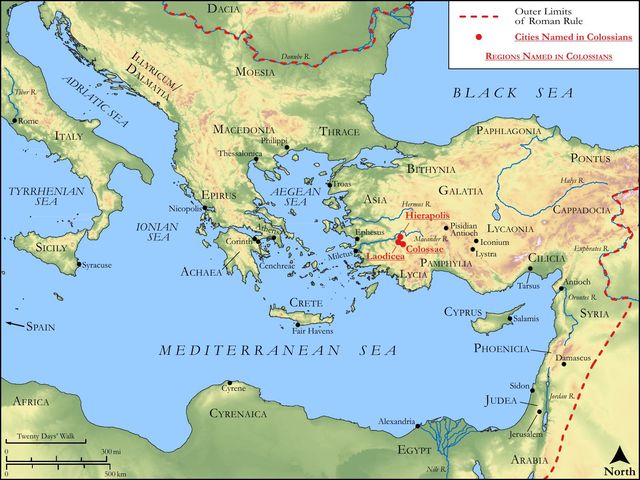
The city of Colossae was a melting pot of various cultural and religious influences. The heresy Paul addresses appears to be a complex blend of Jewish legalism (emphasizing dietary laws, festivals, and Sabbath observance), Greek philosophical asceticism (severe self-discipline, denial of bodily pleasures), and possibly an early form of Gnosticism or a mystical philosophy that involved the worship of angels and claims of secret knowledge. The false teachers were imposing external regulations and practices as necessary for spiritual advancement or a deeper relationship with God, thereby diminishing the unique and complete work of Christ. Believers were being pressured to adhere to these man-made rules as if their spiritual standing depended on them, rather than on their union with Christ alone. Paul's letter directly confronts this threat, reasserting the all-sufficiency of Christ against any attempts to add to or detract from His salvific work.
Key Themes
ShowHideColossians 2:20 contributes significantly to several major theological and narrative themes within the letter. Foremost is the Supremacy and Sufficiency of Christ, a central tenet of Colossians; Paul consistently elevates Christ as preeminent over all creation and the head of the church, in whom all spiritual blessings reside (Colossians 1:15-20, Colossians 2:9-10). Another crucial theme is Union with Christ, which describes the believer's profound spiritual identification with Jesus' death, burial, and resurrection. This union signifies a decisive break from the old life of sin and the world's systems, establishing a new identity and reality in Him (Colossians 2:12-13, Romans 6:3-11). Consequently, the verse highlights Freedom from Legalism and Asceticism, arguing that adherence to human-imposed rules and self-denial for spiritual gain is antithetical to the liberty found in Christ's finished work. These "rudiments" are portrayed as inadequate and enslaving. Ultimately, the verse implicitly calls for Spiritual Maturity rooted in Christ, rather than in external observances, guiding believers to understand that true growth comes from being "rooted and built up in Him" (Colossians 2:6-7).
Exposition and Analysis
ShowHideKey Word Analysis
ShowHideFrom ἀπό and θνήσκω; to die off (literally or figuratively). In this context, it signifies a spiritual, figurative death. Believers have experienced a decisive break, a severance from their former existence and its governing principles, through their identification with Christ's death. This is not merely a change of mind but a fundamental shift in spiritual reality and allegiance.
Neuter of a presumed derivative of the base of στοιχέω; something orderly in arrangement, i.e. (by implication) a serial (basal, fundamental, initial) constituent (literally), proposition (figuratively). This term, stoicheia, can refer to the basic, elementary principles or ABCs of a system (e.g., human philosophy, religious traditions, or even the Mosaic Law), implying they are rudimentary and incomplete. In some contexts, it can also refer to elemental spirits or spiritual forces that govern the fallen world. Regardless of the precise nuance, Paul views them as inadequate and enslaving systems from which believers have been freed.
From δόγμα; to prescribe by statute, i.e. (reflexively) to submit to, ceremonially rule. This verb describes the act of submitting oneself to decrees, rules, or regulations. In Colossians 2:20, it refers to the human-made commands and traditions promoted by the false teachers concerning diet, festivals, ascetic practices, and other ritualistic observances, which the Colossians were being urged to follow as if they were necessary for spiritual life or maturity.
Verse Breakdown
ShowHide"Wherefore if ye be dead with Christ from the rudiments of the world,"
This opening clause establishes the foundational premise of Paul's argument. "Wherefore" (G3767, oûn) logically connects this statement to the preceding truth of the believer's completeness in Christ and their spiritual identification with His death and resurrection. The phrase "if ye be dead with Christ" (G599, apothnḗskō, G4862, sýn, G5547, Christós) asserts a profound spiritual reality: through faith, believers have participated in Christ's death, signifying a radical break from their former life and its governing principles. To be "dead... from the rudiments of the world" (G575, apó, G4747, stoicheîon, G2889, kósmos) means they have been definitively severed from the elementary principles, basic systems, or spiritual forces that characterize the fallen world and human-devised religious practices.
"why, as though living in the world,"
This is the rhetorical question that challenges the Colossians' inconsistent behavior. "Why" (G5101, tís) introduces a logical dilemma. If they are truly spiritually dead to the world's systems, why do they act "as though living in the world" (G5613, hōs, G2198, záō, G1722, en, G2889, kósmos)? This implies a contradiction: their behavior suggests they are still bound by, or seeking life from, the very worldly principles they have supposedly died to. It highlights the absurdity of trying to live by old rules when a new spiritual reality has been embraced.
"are ye subject to ordinances,"
This specifies the problematic behavior. The phrase "are ye subject to ordinances" (G1379, dogmatízō) refers to the act of submitting oneself to human-made rules, decrees, or regulations. These "ordinances" were the specific external commands promoted by the false teachers, such as dietary restrictions, observance of festivals, or ascetic practices. Paul questions the logical and spiritual inconsistency of those who claim union with Christ and freedom from worldly systems, yet continue to submit themselves to these external, humanly imposed requirements as if they held spiritual efficacy or were necessary for a right relationship with God.
Literary Devices
ShowHidePaul masterfully employs several literary devices in Colossians 2:20 to convey his powerful message. The most prominent is the Rhetorical Question, "why, as though living in the world, are ye subject to ordinances?" This question is not posed to elicit information but to challenge the Colossians' inconsistent behavior and to force them to confront the logical implications of their spiritual union with Christ. It serves as a sharp rebuke and a call to logical coherence in their faith. Furthermore, Paul uses a profound Metaphor when he speaks of believers being "dead with Christ." This vivid imagery signifies a radical and decisive break from their former life, its governing principles, and the power of sin. It's not merely a change of mind but a new spiritual reality. Finally, the verse is built upon a strong Contrast between being "dead with Christ from the rudiments of the world" and "living in the world" by being "subject to ordinances." This juxtaposition highlights the incompatibility of true Christian freedom and the sufficiency of Christ with adherence to legalistic, human-devised religious practices, emphasizing that one cannot simultaneously live in both realities.
Theological and Thematic Connections
ShowHideColossians 2:20 profoundly articulates the radical nature of salvation and sanctification in Christ, asserting that the believer's union with Him is not merely an addition to previous religious systems but a complete and definitive break from them. The "rudiments of the world"—whether referring to basic human philosophies, legalistic observances, or elemental spiritual forces—are rendered obsolete and powerless for those who have died and been raised with Christ. This verse underscores that true spiritual life and maturity are found solely in Christ's finished work, not in adherence to external regulations or self-imposed asceticism. It is a powerful declaration of Christian liberty, emphasizing that our identity and standing before God are entirely dependent on Christ's sufficiency, freeing us from the burden of performance-based religion.
Reflection and Application
ShowHideColossians 2:20 serves as a timeless warning against any form of legalism or performance-based spirituality that seeks to add to the finished work of Christ for salvation or sanctification. In our contemporary context, this means being vigilant against teachings that subtly (or overtly) suggest that our acceptance by God, our spiritual growth, or our perceived holiness depends on adherence to extra-biblical rules, cultural norms within a Christian subculture, or even certain spiritual disciplines performed with the wrong motive. True spiritual freedom comes from understanding that our identity is "dead with Christ" to the world's systems and alive to God in Him. This calls us to live from a place of grace and gratitude, allowing the Holy Spirit to transform us from within, rather than relying on outward conformity to earn favor or validate our faith. It challenges us to examine where we might still be "subject to ordinances" of human tradition, societal pressure, or self-effort, rather than resting in Christ's complete sufficiency.
Questions for Reflection
ShowHideFAQ
ShowHideWhat are the "rudiments of the world" that believers are dead to?
ShowHideThe "rudiments of the world" (Greek: stoicheia tou kosmou) refer to the basic, elementary principles or fundamental systems that govern the fallen world. This can encompass human philosophies, religious traditions, legalistic observances, and even the elemental spiritual forces or powers that operate apart from Christ. Paul argues that believers, through their union with Christ's death and resurrection, have been freed from the dominion and efficacy of these systems, which are ultimately inadequate and enslaving compared to the fullness found in Christ.
Does this verse mean Christians shouldn't have any rules, disciplines, or moral guidelines?
ShowHideNo, Colossians 2:20 does not advocate for a lawless or undisciplined life. Instead, it critiques the source and purpose of rules. It warns against submitting to human-made "ordinances" or "rudiments of the world" as a means of earning salvation, achieving spiritual merit, or gaining a deeper relationship with God, because Christ's work is already complete and sufficient. True Christian living is characterized by obedience that flows from a transformed heart and a loving relationship with Christ, guided by the Spirit and the Word, not by external regulations imposed by human tradition. The freedom in Christ leads to a life of holiness and love, not license, as seen in passages like Galatians 5:13 and Romans 6:1-2.
Christ-Centered Fulfillment
ShowHideColossians 2:20 finds its ultimate and profound fulfillment in the person and work of Jesus Christ. He is the very means by which believers are "dead with Christ from the rudiments of the world." His death on the cross was not merely a historical event but a victory that disarmed the spiritual powers and authorities, triumphing over them (Colossians 2:15). In Him, the Old Covenant's shadows, including its dietary laws, festivals, and new moons, find their substance and fulfillment; Christ is the reality to which they pointed (Colossians 2:16-17). Our union with Christ means we have been spiritually circumcised, buried with Him in baptism, and raised with Him through faith in God's power (Colossians 2:11-12). Therefore, to revert to human "ordinances" is to deny the completeness we have in Christ, who is our life and in whom "all the fullness of the Godhead dwells bodily" (Colossians 2:9-10, Colossians 3:4). The freedom from legalism and worldly systems is a direct result of His finished work, empowering believers to live a new life rooted in His grace and truth, rather than in the futility of self-effort or external regulations.