


Matthew 26:31
Bible text: King James Version (1769 Blayney text) · Public domain
Bible text: King James Version with Strong's numbers · Public domain
Bible text: Berean Standard Bible · Public domain
Bible text: American Standard Version (1901) · Public domain
Bible text: World English Bible, Messianic edition · Public domain
Bible text: Geneva Bible (1599) · Public domain
Bible text: Young's Literal Translation · Public domain
- ΤότεToteThenG5119ADVAdverb
- λέγειlegeisaysG3004V-PAI-3SVerb Present Active Indicative 3rd Singular
- αὐτοῖςautoisto themG846P-DPMPersonal pronoun Dative Plural Masculine
- ὁho<the>G3588T-NSMDefinite article Nominative Singular Masculine
- Ἰησοῦς·IēsousJesusG2424N-NSM-PNoun Nominative Singular Masculine Individual
- πάντεςpantesAllG3956A-NPMAdjective Nominative Plural Masculine
- ὑμεῖςhumeisyou yourselvesG4771P-2NPPersonal pronoun Nominative 2nd Plural
- σκανδαλισθήσεσθεskandalisthēsesthewill fall awayG4624V-FPI-2PVerb Future Passive Indicative 2nd Plural
- ἐνenbecause ofG1722PREPPreposition
- ἐμοὶemoiMe myselfG1473P-1DSPersonal pronoun Dative 1st Singular
- ἐνenduringG1722PREPPreposition
- τῇtēa<the>G3588T-DSFDefinite article Dative Singular Feminine
- νυκτὶnuktinightG3571N-DSFNoun Dative Singular Feminine
- ταύτῃ·tautēthisG3778D-DSFDemonstrative pronoun Dative Singular Feminine
- γέγραπταιgegraptaiIt has been writtenG1125V-RPI-3SVerb Perfect Passive Indicative 3rd Singular
- γάρ·garforG1063CONJConjunction
- πατάξωpataxōI will strikeG3960V-FAI-1SVerb Future Active Indicative 1st Singular
- τὸνtontheG3588T-ASMDefinite article Accusative Singular Masculine
- ποιμέναpoimenashepherdG4166N-ASMNoun Accusative Singular Masculine
- καὶkaiandG2532CONJConjunction
- διασκορπισθήσονταιdiaskorpisthēsontaithey will be scatteredG1287V-FPI-3PVerb Future Passive Indicative 3rd Plural
- τὰtatheG3588T-NPNDefinite article Nominative Plural Neuter
- πρόβαταprobatasheepG4263N-NPNNoun Nominative Plural Neuter
- τῆςtēsof theG3588T-GSFDefinite article Genitive Singular Feminine
- ποίμνηςpoimnēsflock.’G4167N-GSFNoun Genitive Singular Feminine
English is a literal word-by-word gloss of the Greek, not the KJV's wording. Why?
This is the original text the KJV's translators worked from — each Greek word with its own literal English meaning in this verse, prepared by scholars at Tyndale House, Cambridge. The KJV translates whole sentences, not word by word, so its wording differs: one Greek word can become several English words, and the KJV may choose “charity” where the gloss reads “love”. Both are faithful — they answer different questions. For the KJV's own rendering, switch to the KJV text.
Details
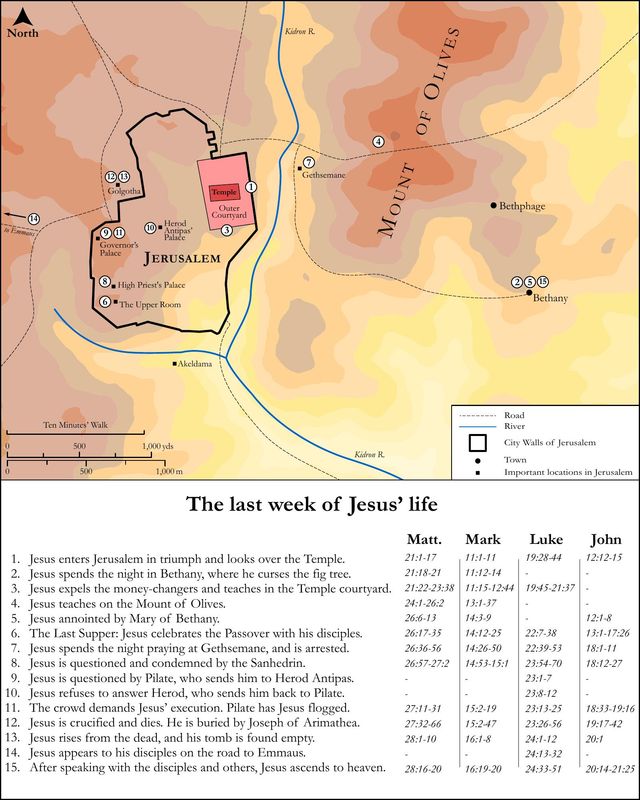
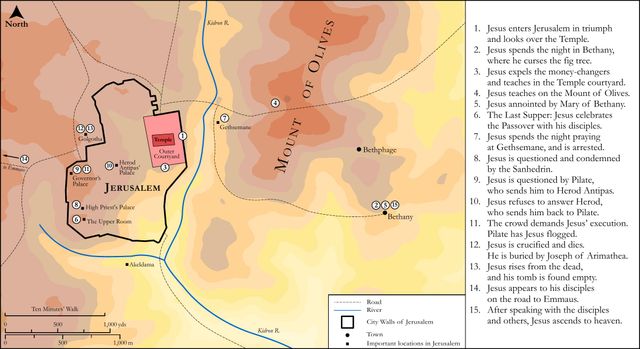
See on the biblical-era maps

Study this verse
Historical interpretation
Ten Centuries of Reception
13 surviving comments on this verse. Each one is dated, so this reads as a timeline rather than a list.
Select a marker to jump to its quote. Markers stagger vertically where authors wrote within a few decades of each other.
They didn’t fall away in the daytime but at night, and it was on the night in which Jesus was betrayed. Peter also denied Christ at night, not during the day. Moreover, it was still in the middle of the night, since the cock had not yet crowed. Anyone who questions how the disciples could have fallen away after seeing such great signs and wonders and after hearing words of equal power (for the signs and wonders were performed by his words) should realize that Christ wanted to demonstrate through this warning that just as “no one can say that Jesus is Lord except by the Holy Spirit,” so also no one is able to keep from falling away except by the Holy Spirit. When what Jesus had foretold came to pass, “You will all fall away from me this night,” it was still true that “the Holy Spirit had not yet been given because Jesus had not yet been glorified.” If we … who have already professed Jesus to be Lord by the Holy Spirit (for “all who are led by the Spirit of God are sons of God”), then fall away or deny him, we will not have an excuse like those who fell away or denied him without the Holy Spirit.
Also He foretels this to them, that they who now were somewhat dispersed in consequence of the offence, should be after gathered together by Christ rising again, and going before them into Galilee of the Gentiles.
Whence the other disciples were offended in Jesus, but Peter was not only offended, but what is much more, was suffered to deny Him thrice.
Hereby He shows that men confirmed by the powers of the Divine mysteries, are exalted to heavenly glory in a common joy and gladness.
The credit of this prediction is supported by the authority of old prophecy; It is written, I will smite the shepherd, and the sheep of the flock shall he scattered abroad.
But Peter was carried so far by his zeal and affection for Christ, that he regarded neither the weakness of his flesh nor the truth of the Lord's words; as if what He spake must not come to pass, Peter answered and said unto him, Though all should be offended because of thee, yet will I never be offended.
"And when they had sung an hymn, they went out unto the Mount of Olives." Let them hear this, as many as, like swine eating at random, rudely spurn the natural table, and rise up in drunkenness, whereas it were meet to give thanks, and end with an hymn.
Hear this, as many as wait not again for the last prayer of the mysteries, for this is a symbol of that. He gave thanks before He gave it to His disciples, that we also may give thanks. He gave thanks, and sang an hymn after the giving, that we also may do this selfsame thing.
But for what reason doth He go forth unto the mountain? Making Himself manifest, that He may be taken, in order not to seem to hide himself. For He hastened to go to the place which was also known to Judas.
Then "He saith unto them, All ye shall be offended in me." After this He mentions also a prophecy, "For it is written, I will smite the shepherd, and the sheep shall be scattered abroad:" at once persuading them ever to give heed to the things that are written, and at same time making it plain that He was crucified, according to God's purpose; and by everything showing He was no alien from the old covenant, nor from the God preached therein, but that what is done is a dispensation, and that the prophets all proclaimed all things beforehand from the beginning that are comprised in the matter, so that they be quite confident about the better things also.
And He teaches us to know what the disciples were before the crucifixion, what after the crucifixion. For indeed they who, when He was crucified, were not able so much as to stand their ground, these after His death were mighty, and stronger than adamant.
And this self-same thing is a demonstration of His death, the fright and cowardice, I mean, of His disciples. For if when so many things have been both done and said, still some are shameless, and say that He was not crucified; if none of these things had come to pass, to what pitch of wickedness would they not have proceeded? So for this reason, not by His own sufferings only, but by what took place with respect to the disciples, He confirms the word concerning His death, and by the mysteries also, in every way confounding those that are diseased with the pest of Marcion. For this reason He suffers even the chief apostle to deny Him. But if He was not bound nor crucified, whence sprung the fear to Peter, and to the rest of the apostles.
He suffers them not however, on the other hand, to wait until the sorrows, but what saith He? "But after I am risen again, I will go before you into Galilee." For not from Heaven doth He appear at once, neither will He depart into any distant country, but in the same nation, in which He had also been crucified, nearly in the same place, so as hereby again to assure them that He that was crucified was the very same that rose again, and in this way to comfort them more abundantly when in sorrow. Therefore also He said "in Galilee," that being freed from the fears of the Jews they might believe His saying. For which cause indeed He appeared there.
"But Peter answered and said, Though all men should be offended because of Thee, yet will I never be offended."
What sayest thou, O Peter? the prophet said, "The sheep shall be scattered;" Christ hath confirmed the saying, and sayest thou, No? Is not what passed before enough, when Thou saidst, "Far be it from Thee," and thy mouth was stopped? For this then He suffers him to fall, teaching him thereby to believe Christ in all things, and to account His declaration more trustworthy than one's own conscience. And the rest too reaped no small benefit from his denial, having come to know man's weakness, and God's truth. For when He foretells anything, we must no longer be subtle, nor lift up ourselves above the common sort. For, "thy rejoicing," it is said, "thou shall have in thyself, and not in another." For where he should have prayed, and have said, Help us, that we be not cut off, he is confident in himself, and saith, "Though all men should be offended in Thee, yet will I never;" though all should undergo this, I shall not undergo it, which led him on by little and little to self-confidence. Christ then, out of a desire to put down this, permitted his denial.
Hence we learn a great doctrine, that a man's willingness is not sufficient, unless any one receive the succor from above; and that again we shall gain nothing by the succor from above, if there be not a willingness. And both these things do Judas and Peter show; for the one, though he had received much help, was profited nothing, because he was not willing, neither contributed his part; but this one, though he was ready in mind, because he received no assistance, fell. For indeed of these two things is virtue's web woven.
Let them hear this, who like swine with no thought but of eating rise from the table drunk, when they should have given thanks, and closed with a hymn. Let them hear who will not tarry for the final prayer in the sacred mysteries; for the last prayer of the mysteries represents that hymn. He gave thanks before He delivered the holy mysteries to the disciples, that we also might give thanks; He sung a hymn after He had delivered them, that we also should do the like.
In this we see what the disciples were both before and after the cross. They who could not stand with Christ whilst He was crucified, became after the death of Christ harder than adamant. This flight and fear of the disciples is a demonstration of Christ's death against those who are infected with the heresy of Marcion. If the had been neither bound nor crucified, whence arose the terror of Peter and the rest?
He produces this prophecy to teach them to attend to the things that are written, and to show that His crucifixion was according to the counsel of God, and (as He does throughout) that He was not a stranger to the Old Testament, but that it prophesied of Him. But He did not suffer them to continue in sorrow, but announces glad tidings, saying, When I am risen again, I will go before you into Galilee. After His resurrection He does not appear to them immediately from heaven, nor depart into any far country, but in the very same nation in which He was crucified, almost in the very place, giving them thereby assurance, that He who was crucified was the same as He who rose again, thereby to cheer their cast-down countenances. He fixes upon Galilee, that, being delivered from fear of the Jews, they might believe what He spoke to them.
What sayest thou, Peter? The Prophet says, The sheep shall be scattered abroad, and Christ has confirmed it, yet thou sayest, Never. When He said, One of you shall betray me, thou fearedst for thyself, although thou wert not conscious of such a thought; now when He openly affirms, All ye shall be offended, you deny it. But because when he was relieved of the anxiety he had concerning the betrayal, he grew confident concerning the rest, he therefore says thus, I will never be offended.
[I suppose also that Peter fell into these words through ambition and boastfulness. And they had disputed at supper which of them should be greatest, whence we see that the love of empty glory disturbed them much. And so to deliver him from such passions, Christ withdrew His aid from him. Moreover observe how after the resurrection, taught by his fall he speaks to Christ more humbly, and does not any more resist His words. All this his fall wrought for him; for before he had attributed all to himself, when he ought rather to have said, I will not deny Thee if Thou succour me with Thy aid. But afterwards he shows that every thing is to be ascribed to God; Why look ye so earnestly upon us, as though by our own power and holiness we had made this man to walk?]q (Act 3:12.) Hence then we learn the great doctrine, that man's wish is not enough, unless he enjoys Divine support.
“For it is written, ‘I will smite the shepherd, and the sheep of the flock will be scattered.’ ” Zechariah the prophet says the same thing, only differently; and if I am not mistaken, God is addressed in the person of the prophet: “Strike the shepherd that the sheep may be scattered.” In harmony with these words is the psalm, which is recited in its entirety to the Lord: “For they persecute him whom you have struck.” The good shepherd is struck, however, that he may lay down his life for his sheep and that out of many flocks of wandering sheep there may be one flock and one shepherd.
After this example of the Saviour, whosoever is filled and is drunken upon the bread and cup of Christ, may praise God and ascend the Mount of Olives, where is refreshment after toil, solace of grief, and knowledge of the true light.
He foretels what they should suffer, that they might not after it had befallen them despair of salvation; but doing penitence might be set free.
And He adds emphatically this night, (1 These. 5:7.) because as they that are drunken are drunken by night, so they that are scandalized are scandalized by night, and in the dark.
This is found in Zacharias in words different; it is said to God in the person of the Prophet, Smite the shepherd, and the sheep will be scattered abroad. (Zech. 13:7.) The good Shepherd is smitten, that He may lay down His life for His sheep, and that of many flocks of divers errors should be made one flock, and one Shepherd.
It is not wilfulness, not falsehood, but the Apostle's faith, and ardent attachment towards the Lord his Saviour.
(Verse 31.) Then Jesus said to them: All of you will be scandalized by me in this night. He predicts that they will suffer, so that when they have suffered, they will not despair of salvation, but by repenting, they will be freed. And he specifically added, in this night you will be scandalized; for just as those who get drunk, get drunk at night: likewise those who are scandalized, endure in the night and in darkness (I Thess. 5). But let us say: The night has passed, and the day is at hand (Rom. 13:12).
The disciples were not merely confused; rather the matter greatly disturbed them, and the knowledge of this mystery was hard to grasp. How could one be raised from the dead, or one with countless signs done on behalf of the people be handed over to death and dishonor? Yet this agrees with what the prophet said: “Strike the shepherd.” David also says to the Father, “Therefore those whom you struck, they will persecute.” However, not all this occurred at the will of the Father; he did not desire for him [the Son] to suffer, if only the Jews would have accepted him. So one cannot say he willed a murder. The Father consented with the Son’s choice to suffer this. So it is written that the Father struck “the shepherd.” He permitted him to suffer yet had the power to prevent the suffering. Something like this is at work in the passage that says Pilate was “over” Christ. “You would have no power over me if it were not given to you from above,” that is, “if the Father had not permitted me to suffer.”
What the One affirms by His power of foreknowledge, the other denies through love; whence we may take a practical lesson, that in proportion as we are confident of the warmth of our faith, we should be in fear of the weakness of our flesh. Peter seems culpable, first, because he contradicted the Lord's words; secondly, because he set himself before the rest; and thirdly, because he attributed every thing to himself as though he had power to persevere strenuously. His fall then was permitted to heal this in him; not that he was driven to deny, but left to himself, and so convinced of the frailty of his human nature.p
(in Luc. 22:39.) Beautifully after the disciples have been filled with the Sacraments of His Body and Blood, and, commended to the Father in a hymn of pious intercession, does He lead them into the mount of Olives; thus by type teaching us how we ought, by the working of His Sacraments, and the aid of His intercession, mount up to the higher gifts of the virtues and the graces of the Holy Spirit, with which we are anointed in our hearts.
This hymn may be that thanksgiving which in John, (c. 17.) Our Lord offers up to the Father, when He lifted up His eyes and prayed for His disciples, and those who should believe through their word. This is that of which the Psalm speaks, The poor shall eat and be filled, they shall praise the Lord.] (Ps. 22:26.)
Peter understood the Lord to have foretold that he should deny Him under terror of death, and therefore he declares that though death were imminent, nothing could shake him from his faith; and the other Apostles in like manner in the warmth of their zeal, valued not the infliction of death, but human presumption is vain without Divine aid.
(non occ.) But in support of the opinion of other saints, that Judas did receive the sacraments from Christ, it is to be said, that the words with you may refer to the greater part of them, and not necessarily to the whole.
Continue studying Matthew 26:31 across the web’s major study libraries — every link below opens this exact verse, chapter, or book on the destination site.
Read & Compare
 BibleGatewayThis verse in more than 200 translations and 70 languages.
 Bible.comThe YouVersion reader — hundreds of translations, reading plans, and highlights.
 ESV.orgCrossway's official English Standard Version reader.
 NET BibleThe NET translation with 60,000+ translators' notes on every rendering decision.
 STEP BibleTyndale House's free study tool — original text, vocabulary, and scholarly resources.
 BibliaLogos Bible Software's free web reader.
 USCCBThe New American Bible (Revised Edition) with the U.S. bishops' study notes.
Commentaries
 BibleHub CommentariesDozens of classic commentaries on this verse, gathered on one page.
 StudyLightMore than 100 commentary sets — the largest collection on the web.
 BibleRefPlain-English commentary on what this verse means, verse by verse.
 Enduring WordDavid Guzik's free commentary on this chapter, widely used by Bible teachers.
 Bible Study ToolsVerse commentary alongside Greek and Hebrew study aids.
Original Language & Research
- BibleHub InterlinearThe verse word by word — original language, transliteration, and English.
- BibleHub LexiconEvery word's original-language definition and Strong's entry.
 Blue Letter BibleDeep-study tools — Strong's numbers, concordance, and word studies.
 CNTR CollationThe earliest Greek manuscripts of this verse, collated letter by letter.
Sermons, Hymns & Audio


TrulyRandomVerse is not affiliated with these sites and doesn’t control their content. They’re linked because they’re genuinely useful.
Summary
Jesus delivers a poignant prophecy to His disciples on the Mount of Olives, foretelling their imminent desertion and spiritual stumbling during His arrest. He explicitly links this painful event to the ancient prophecy of Zechariah 13:7, revealing that His suffering as the "shepherd" and the subsequent scattering of His "sheep" are not random occurrences but divinely ordained aspects of God's sovereign plan for redemption.
Context
ShowHideLiterary Context
This verse is situated immediately after the institution of the Lord's Supper, a pivotal moment where Jesus establishes the new covenant in His blood. Having shared this intimate meal and profound theological teaching, Jesus and His disciples depart for the Mount of Olives. The atmosphere shifts from solemn communion to the ominous shadow of impending betrayal and suffering. Jesus's words in Matthew 26:31 serve as a direct, sobering warning about the immediate future, preparing them for the profound test of faith they are about to face. It sets the stage for Peter's boastful denial in Matthew 26:33-35 and the subsequent events in Gethsemane, where the prophecy of scattering begins to unfold.
Historical & Cultural Context
The imagery of a "shepherd" and "sheep" was deeply resonant in ancient Israel. Kings, leaders, and even God Himself were often depicted as shepherds guiding and protecting their flock (Psalm 23:1, Isaiah 40:11). Conversely, sheep without a shepherd were vulnerable, prone to scattering and predation. In the context of the Passover week, Jerusalem was bustling, and tensions were high between the Jewish religious authorities and Jesus. The disciples, like many Jews of their time, likely harbored expectations of a conquering Messiah who would overthrow Roman rule, not a suffering one who would be "smitten." Jesus's prophecy directly challenges these expectations, revealing a path of suffering and apparent defeat that was nonetheless part of God's redemptive plan, as foretold in the prophets like Zechariah.
Key Themes
ShowHideMatthew 26:31 encapsulates several profound themes. Firstly, it underscores the Fulfillment of Prophecy, as Jesus directly quotes Zechariah 13:7, demonstrating that His suffering and the disciples' desertion were part of God's predetermined plan, not mere accidents. Secondly, it highlights Human Frailty and Failure, particularly among those who had pledged unwavering loyalty, such as Peter in Matthew 26:33. This serves as a stark reminder of the limitations of human resolve in the face of fear and immense pressure. Thirdly, the passage emphasizes Christ as the Suffering Shepherd. By identifying Himself as the "shepherd" who will be "smitten," Jesus reveals His role as the sacrificial leader whose suffering will temporarily disperse His flock, yet ultimately lead to their re-gathering and the salvation of many (John 10:11). This theme anticipates His death and resurrection as the means by which His sheep are ultimately secured.
Exposition and Analysis
ShowHideKey Word Analysis
ShowHideThis term (G4624) is derived from skandalon, which refers to a trap-stick, a stumbling block, or an impediment over which one trips. In this context, it does not mean to be insulted or angered, but rather to be caused to stumble morally or spiritually, to fall away from faith, or to be ensnared. Jesus is predicting that the disciples will experience a profound crisis of faith and commitment, leading them to abandon Him due to fear and confusion, not merely a feeling of displeasure.
This word (G3960) signifies a violent blow or strike, often with fatal intent. When Jesus says, "I will smite the shepherd," He is quoting the divine decree from Zechariah 13:7, indicating that His suffering and death are not random acts of human cruelty but part of God's sovereign plan, where God Himself orchestrates the smiting of the Shepherd for redemptive purposes.
This term (G1287) means to dissipate, rout, separate, or disperse, often implying a loss of cohesion or unity. It literally describes the scattering of sheep when their shepherd is attacked or removed. Figuratively, it denotes the disciples' flight and abandonment of Jesus, fulfilling the prophecy. This scattering highlights their vulnerability and fear without their leader.
Verse Breakdown
ShowHide"Then saith Jesus unto them, All ye shall be offended because of me this night:"
Jesus initiates this solemn declaration to His disciples, warning them that every single one of them will stumble or fall away from Him during the events of that very night. This "offense" is not a personal slight, but a profound crisis of faith and loyalty brought on by His impending arrest and suffering.
"for it is written, I will smite the shepherd,"
Jesus grounds His prophecy in the authority of Scripture, quoting Zechariah 13:7. He identifies Himself as the "shepherd" who will be "smitten" – a divine act of judgment and suffering that is part of God's preordained plan. This highlights His role as the leader and protector of His flock, whose suffering is central to the unfolding drama.
"and the sheep of the flock shall be scattered abroad."
This clause completes the quotation from Zechariah, directly linking the smiting of the shepherd to the consequence for the sheep. The disciples, identified as the "sheep of the flock," will be dispersed and scattered due to the attack on their shepherd, illustrating their fear, confusion, and temporary abandonment of Jesus in the face of extreme pressure.
Literary Devices
ShowHideThe passage employs several potent literary devices. Prophecy is central, as Jesus directly quotes Zechariah 13:7, demonstrating the divine orchestration of events and the reliability of Scripture. The entire statement functions as Foreshadowing, preparing both the disciples and the reader for the dramatic events of Jesus's arrest, trial, and crucifixion, and the disciples' subsequent flight. The use of Metaphor is profound, with Jesus identifying Himself as the "shepherd" and His disciples as the "sheep." This imagery evokes the traditional role of a shepherd as protector and guide, contrasting sharply with the vulnerability of sheep without their leader, emphasizing the disciples' dependence on Jesus. There is also a subtle Irony in the disciples' confident declarations of loyalty (e.g., Matthew 26:33) immediately following this prophecy, highlighting the gap between human intention and the reality of human weakness under duress.
Theological and Thematic Connections
ShowHideMatthew 26:31 profoundly underscores the theme of divine sovereignty in the face of human suffering and failure. Jesus's explicit quotation of Zechariah 13:7 reveals that His impending arrest, suffering, and the disciples' desertion are not chaotic accidents but integral parts of God's predetermined plan for redemption. This passage highlights Christ's willing submission to the Father's will, even unto death, and the temporary but necessary scattering of His followers as a prelude to a greater, Spirit-empowered re-gathering. It teaches us that even in moments of profound weakness and apparent defeat, God's ultimate purposes are being fulfilled, providing assurance of His control over all circumstances.
Reflection and Application
ShowHideMatthew 26:31 offers a powerful lens through which to view our own experiences of crisis, failure, and God's unwavering sovereignty. Just as the disciples were "offended" and scattered, we too may face moments where our faith is severely tested, leading to spiritual stumbling or a sense of abandonment. This passage reminds us that such moments, while painful, are often part of a larger divine narrative. It calls us to humility, acknowledging our inherent human weakness and our dependence on Christ's strength, rather than our own resolve. Furthermore, it instills confidence in God's meticulous plan, even when circumstances seem chaotic or contradictory to our expectations. We are encouraged to trust that God is at work even in our darkest hours, orchestrating events for our ultimate good and His glory, just as He did for the disciples, who were later re-gathered and empowered.
Questions for Reflection
ShowHideFAQ
ShowHideWhat does "all ye shall be offended because of me this night" truly mean?
ShowHideThe phrase "shall be offended" (from Greek skandalízō) does not mean to be insulted or angered. Rather, it signifies being caused to stumble, to fall away, or to be ensnared in a trap. In Matthew 26:31, Jesus is prophesying that His disciples will experience a profound crisis of faith and loyalty during His arrest and suffering that very night. They will be so shocked and fearful by the events—seeing their leader seized and seemingly defeated—that their faith will falter, causing them to abandon Him and flee. This was a spiritual and moral stumbling, a temporary lapse in their commitment due to overwhelming pressure.
Why does Jesus quote Zechariah 13:7 here?
ShowHideJesus quotes Zechariah 13:7 to emphasize that the events about to unfold are not random or accidental, but are part of God's predetermined, prophetic plan. By identifying Himself as the "shepherd" who will be "smitten" and His disciples as the "sheep" who will be "scattered," Jesus reveals that His suffering and their desertion are direct fulfillments of ancient Scripture. This underscores God's sovereignty over all events, even those that appear chaotic or tragic, demonstrating that His redemptive purposes are being meticulously carried out according to His divine will. It also serves to validate His identity as the promised Messiah, whose path included suffering as well as glory.
Christ-Centered Fulfillment
ShowHideMatthew 26:31, with its prophecy of the smitten shepherd and scattered sheep, finds its profound Christ-centered fulfillment in the cross and resurrection of Jesus. While the immediate consequence was the disciples' temporary abandonment, this "smitting" of the Shepherd was the very act by which salvation was achieved. Jesus, the Good Shepherd who "lays down his life for the sheep" (John 10:11), willingly submitted to being struck down by divine decree, bearing the sin of the world upon Himself (Isaiah 53:5-6). His death, though leading to the scattering of His immediate followers, was the necessary prelude to His glorious resurrection, which then became the basis for a far greater gathering. After His resurrection, Jesus re-gathered His scattered sheep, not through force, but through His living presence and the empowering gift of the Holy Spirit (John 20:19-23, Acts 2:1-4). The temporary scattering of the twelve paved the way for the global mission of the church, where the Good Shepherd now gathers a vast flock from every nation, tribe, and tongue, united under His eternal care (Revelation 7:9-10). Thus, the smiting and scattering ultimately led to the triumph of God's redemptive plan and the establishment of His eternal kingdom.