


Luke 7:35
Bible text: King James Version (1769 Blayney text) · Public domain
Bible text: Berean Standard Bible · Public domain
Bible text: American Standard Version (1901) · Public domain
Bible text: World English Bible, Messianic edition · Public domain
Bible text: Geneva Bible (1599) · Public domain
Bible text: Young's Literal Translation · Public domain
- καὶkaiAndG2532CONJConjunction
- ἐδικαιώθηedikaiōthēwas justifiedG1344V-API-3SVerb Aorist Passive Indicative 3rd Singular
- ἡhē<the>G3588T-NSFDefinite article Nominative Singular Feminine
- σοφίαsophiawisdomG4678N-NSFNoun Nominative Singular Feminine
- ἀπὸapobyG575PREPPreposition
- πάντωνpantōnallG3956A-GPNAdjective Genitive Plural Neuter
- τῶνtōntheG3588T-GPNDefinite article Genitive Plural Neuter
- τέκνωνteknōnchildrenG5043N-GPNNoun Genitive Plural Neuter
- αὐτῆςautēsof herG846P-GSFPersonal pronoun Genitive Singular Feminine
English is a literal word-by-word gloss of the Greek, not the KJV's wording. Why?
This is the original text the KJV's translators worked from — each Greek word with its own literal English meaning in this verse, prepared by scholars at Tyndale House, Cambridge. The KJV translates whole sentences, not word by word, so its wording differs: one Greek word can become several English words, and the KJV may choose “charity” where the gloss reads “love”. Both are faithful — they answer different questions. For the KJV's own rendering, switch to the KJV text.
Details
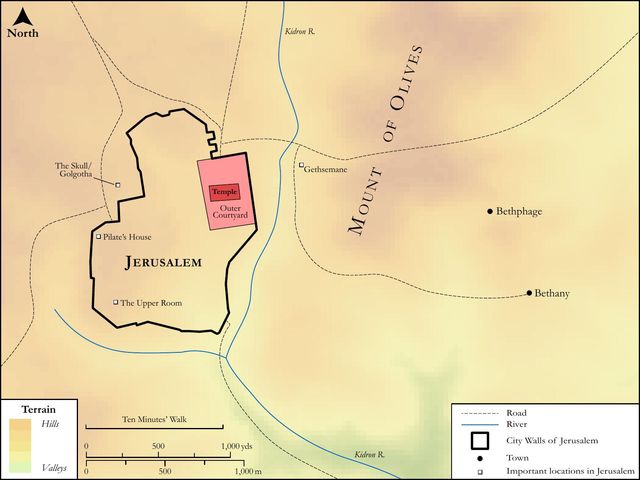
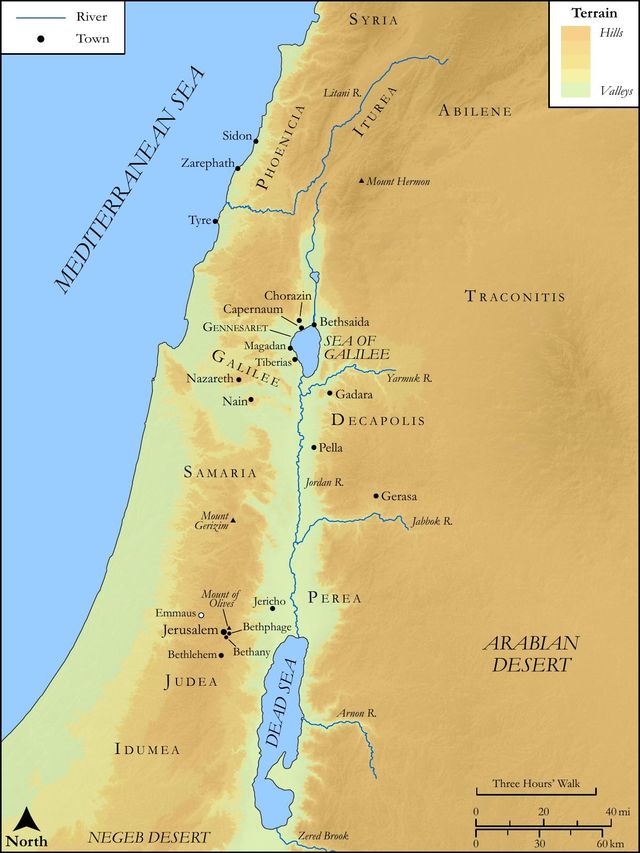
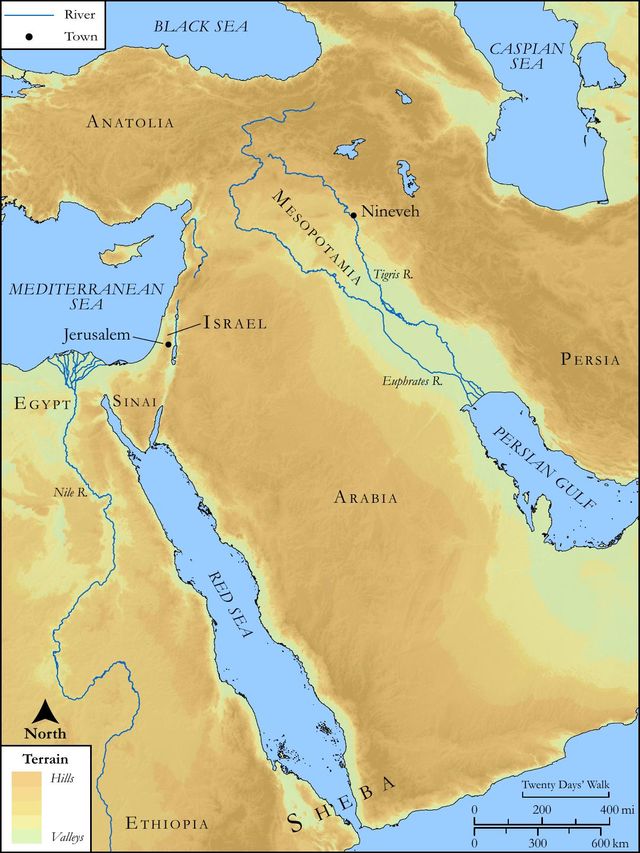
See on the biblical-era maps
Study this verse
Public-domain commentary
Matthew Henry
From his Commentary on the Whole Bible. Henry comments on passages, not single verses — this entry covers Luke 7:19–35. His three-level outline is real structure in the source text, so it is rendered as structure.
All this discourse concerning John Baptist, occasioned by his sending to ask whether he was the Messiah or no, we had, much as it is here related, Mt. 11:2-19.
I.We have here the message John Baptist sent to Christ, and the return he made to it. Observe,
1.The great thing we are to enquire concerning Christ is whether he be he that should come to redeem and save sinners, or whether we are to look for another, Luk 7:19, Luk 7:20. We are sure that God has promised that a Saviour shall come, an anointed Saviour; we are as sure that what he has promised he will perform in its season. If this Jesus be that promised Messiah, we will receive him, and will look for no other; but, if not, we will continue our expectations, and, though he tarry, will wait for him.
2.The faith of John Baptist himself, or at least of his disciples, wanted to be confirmed in this matter; for Christ had not yet publicly declared himself to be indeed the Christ, nay, he would not have his disciples, who knew him to be so, to speak of it, till the proofs of his being so were completed in his resurrection. The great men of the Jewish church had not owned him, nor had he gained any interest that was likely to set him upon the throne of his father David. Nothing of that power and grandeur was to be seen about him in which it was expected that the Messiah would appear; and therefore it is not strange that they should ask, Art thou the Messiah? not doubting but that, if he was not, he would direct them what other to look for.
3.Christ left it to his own works to praise him in the gates, to tell what he was and to prove it. While John's messengers were with him, he wrought many miraculous cures, in that same hour, which perhaps intimates that they staid but an hour with him; and what a deal of work did Christ do in a little time! Luk 7:21. He cured many of their infirmities and plagues in body, and of evil spirits that affected the mind either with frenzy or melancholy, and unto many that were blind he gave sight. He multiplied the cures, that there might be no ground left to suspect a fraud; and then (Luk 7:22) he bade them go and tell John what they had seen. And he and they might easily argue, as even the common people did (Joh 7:31), When Christ cometh, will he do more miracles than these which this man hath done? These cures, which they saw him work, were not only confirmations of his commission, but explications of it. The Messiah must come to cure a diseased world, to give light and sight to them that sit in darkness, and to restrain and conquer evil spirits. You see that Jesus does this to the bodies of people, and therefore must conclude this is he that should come to do it to the souls of people, and you are to look for no other. To his miracles in the kingdom of nature he adds this in the kingdom of grace (Luk 7:22), To the poor the gospel is preached, which they knew was to be done by the Messiah; for he was anointed to preach the gospel to the meek (Isa 61:1), and to save the souls of the poor and needy, Psa 72:13. Judge, therefore, whether you can look for any other that will more fully answer the characters of the Messiah and the great intentions of his coming.
4.He gave them an intimation of the danger people were in of being prejudiced against him, notwithstanding these evident proofs of his being the Messiah (Luk 7:23): Blessed is he whosoever shall not be offended in me, or scandalized at me. We are here in a state of trial and probation; and it is agreeable to such a state that, as there are sufficient arguments to confirm the truth to those that are honest and impartial in searching after it, and have their minds prepared to receive it, so there should be also objections, to cloud the truth to those that are careless, worldly, and sensual. Christ's education at Nazareth, his residence at Galilee, the meanness of his family and relations, his poverty, and the despicableness of his followers - these and the like were stumbling-blocks to many, which all the miracles he wrought could not help them over. He is blessed, for he is wise, humble, and well disposed, that is not overcome by these prejudices. It is a sign that God has blessed him, for it is by his grace that he is helped over these stumbling-stones; and he shall be blessed indeed, blessed in Christ.
II.We have here the high encomium which Christ gave of John Baptist; not while his messengers were present (lest he should seem to flatter him), but when they were departed (Luk 7:24), to make the people sensible of the advantages they had enjoyed in John's ministry, and were deprived of by his imprisonment. Let them now consider what they went out into the wilderness to see, who that was about whom there had been so much talk and such a great and general amazement. "Come," saith Christ, "I will tell you."
1.He was a man of unshaken self-consistence, a man of steadiness and constancy. He was not a reed shaken with the wind, first in one direction and then in another, shifting with every wind; he was firm as a rock, not fickle as a reed. If he could have bowed like a reed to Herod, and have complied with the court, he might have been a favourite there; but none of these things moved him.
2.He was a man of unparalleled self-denial, a great example of mortification and contempt of the world. He was not a man clothed in soft raiment, nor did he live delicately (Luk 7:25); but, on the contrary, he lived in a wilderness and was clad and fed accordingly. Instead of adorning and pampering the body, he brought it under, and kept it in subjection.
3.He was a prophet, had his commission and instructions immediately from God, and not of man or by man. He was by birth a priest, but that is never taken notice of; for his glory, as a prophet, eclipsed the honour of his priesthood. Nay, he was more, he was much more than a prophet (Luk 7:26), than any of the prophets of the Old Testament; for they spoke of Christ as at a distance, he spoke of him as at the door.
4.He was the harbinger and forerunner of the Messiah, and was himself prophesied of in the Old Testament (Luk 7:27): This is he of whom it is written (Mal 3:1), Behold, I send my messenger before thy face. Before he sent the Master himself, he sent a messenger, to give notice of his coming, and prepare people to receive him. Had the Messiah been to appear as a temporal prince, under which character the carnal Jews expected him, his messenger would have appeared either in the pomp of a general or the gaiety of a herald at arms; but it was a previous indication, plain enough, of the spiritual nature of Christ's kingdom, that the messenger he sent before him to prepare his way did it by preaching repentance and reformation of men's hearts and lives. Certainly that kingdom was not of this world which was thus ushered in.
5.He was, upon this account, so great, that really there was not a greater prophet than he. Prophets were the greatest that were born of women, more honourable than kings and princes, and John was the greatest of all the prophets. The country was not sensible what a valuable, what an invaluable, man it had in it, when John Baptist went about preaching and baptizing. And yet he that is least in the kingdom of God is greater than he. The least gospel minister, that has obtained mercy of the Lord to be skilful and faithful in his work, or the meanest of the apostles and first preachers of the gospel, being employed under a more excellent dispensation, are in a more honourable office than John Baptist. The meanest of those that follow the Lamb far excel the greatest of those that went before him. Those therefore who live under the gospel dispensation have so much the more to answer for.
III.We have here the just censure of the men of that generation, who were not wrought upon by the ministry either of John Baptist or of Jesus Christ himself.
1.Christ here shows what contempt was put upon John Baptist, while he was preaching and baptizing.
(1.)Those who did show him any respect were but the common ordinary sort of people, who, in the eye of the gay part of mankind, were rather a disgrace to him than a credit, Luk 7:29. The people indeed, the vulgar herd, of whom it was said, This people, who know not the law, are cursed (Joh 7:49), and the publicans, men of ill fame, as being generally men of bad morals, or taken to be so, these were baptized with his baptism, and became his disciples; and these, though glorious monuments of divine grace, yet did not magnify John in the eye of the world; but by their repentance and reformation they justified God, justified his conduct and the wisdom of it in appointing such a one as John Baptist to be the forerunner of the Messiah: they hereby made it to appear that it was the best method that could be taken, for it was not in vain to them whatever it was to others.
(2.)The great men of their church and nation, the polite and the politicians, that would have done him some credit in the eye of the world, did him all the dishonour they could; they heard him indeed, but they were not baptized of him, Luk 7:30. The Pharisees, who were most in reputation for religion and devotion, and the lawyers, who were celebrated for their learning, especially their knowledge of the scriptures, rejected the counsel of God against themselves; they frustrated it, they received the grace of God, by the baptism of John, in vain. God in sending that messenger among them had a kind purpose of good to them, designed their salvation by it, and, if they had closed with the counsel of God, it had been for themselves, they had been made for ever; but they rejected it, would not comply with it, and it was against themselves, it was to their own ruin; they came short of the benefit intended them, and not only so, but forfeited the grace of God, put a bar in their own door, and, by refusing that discipline which was to fit them for the kingdom of the Messiah, shut themselves out of it, and they not only excluded themselves, but hindered others, and stood in their way.
2.He here shows the strange perverseness of the men of that generation, in their cavils both against John and Christ, and the prejudices they conceived against them.
(1.)They made but a jesting matter of the methods God took to do them good (Luk 7:31): "Whereunto shall I liken the men of this generation? What can I think of absurd enough to represent them by? They are, then, like children sitting in the market-place, that mind nothing that is serious, but are as full of play as they can hold. As if God were but in jest with them, in all the methods he takes to do them good, as children are with one another in the market-place (Luk 7:32), they turn it all off with a banter, and are not more affected with it than with a piece of pageantry." This is the ruin of multitudes, they can never persuade themselves to be serious in the concerns of their souls. Old men, sitting in the sanhedrim, were but as children sitting in the market-place, and no more affected with the things that belonged to their everlasting peace than people are with children's play. O the amazing stupidity and vanity of the blind and ungodly world! The Lord awaken them out of their security.
(2.)They still found something or other to carp at. [1.] John Baptist was a reserved austere man, lived much in solitude, and ought to have been admired for being such a humble, sober, self-denying man, and hearkened to as a man of thought and contemplation; but this, which was his praise, was turned to his reproach. Because he came neither eating nor drinking, so freely, plentifully, and cheerfully, as others did, you say, "He has a devil; he is a melancholy man, he is possessed, as the demoniac whose dwelling was among the tombs, though he be not quite so wild." [2.] Our Lord Jesus was of a more free and open conversation; he came eating and drinking, Luk 7:34. He would go and dine with Pharisees, though he knew they did not care for him; and with publicans, though he knew they were no credit to him; yet, in hopes of doing good both to the one and the other, he conversed familiarly with them. By this it appears that the ministers of Christ may be of very different tempers and dispositions, very different ways of preaching and living, and yet all good and useful; diversity of gifts, but each given to profit withal. Therefore none must make themselves a standard to all others, nor judge hardly of those that do not do just as they do. John Baptist bore witness to Christ, and Christ applauded John Baptist, though they were the reverse of each other in their way of living. But the common enemies of them both reproached them both. The very same men that had represented John as crazed in his intellects, because he came neither eating nor drinking, represented our Lord Jesus as corrupt in his morals, because he came eating and drinking; he is a gluttonous man, and a wine-bibber. Ill-will never speaks well. See the malice of wicked people, and how they put the worst construction upon every thing they meet with in the gospel, and in the preachers and professors of it; and hereby they think to depreciate them, but really destroy themselves.
3.He shows that, notwithstanding this, God will be glorified in the salvation of a chosen remnant (Luk 7:35): Wisdom is justified of all her children. There are those who are given to wisdom as her children, and they shall be brought by the grace of God to submit to wisdom's conduct and government, and thereby to justify wisdom in the ways she takes for bringing them to that submission; for to them they are effectual, and thereby appear well chosen. Wisdom's children are herein unanimous, one and all, they have all a complacency in the methods of grace which divine wisdom takes, and think never the worse of them for their being ridiculed by some.
Historical interpretation
Five Centuries of Reception
15 surviving comments on this verse. Each one is dated, so this reads as a timeline rather than a list.
Select a marker to jump to its quote. Markers stagger vertically where authors wrote within a few decades of each other.
They also assert that by Anna, who is spoken of in the gospel [Luke 2:36] as a prophetess, and who, after living seven years with her husband, passed all the rest of her life in widowhood until she saw the Saviour, and recognised Him, and spoke of Him to all, was most plainly indicated Achamoth, who, having for a little while looked upon the Saviour with His associates, and dwelling all the rest of the time in the intermediate place, waited for Him till He should come again, and restore her to her proper consort. Her name, too, was indicated by the Saviour, when He said, "Yet wisdom is justified by her children." [Luke 7:35] This, too, was done by Paul in these words, "But we speak wisdom among them that are perfect." [1 Corinthians 2:6]
Because also they believed, they justified God, for He appeared just to them in all that He did. But the disobedient conduct of the Pharisees in not receiving John, accorded not with the words of the prophet, That thou mightest be justified when thou speakest. (Ps. 51:4.) Hence it follows, But the Pharisees and lawyers rejected the counsel of God, &c.
For Christ would not abstain from this food, lest He should give a handle to heretics, who say that the creatures of God are bad, and blame flesh and wine.
(Hom. 6. in Eccl.) But singing and lamentation are nothing else but the breaking forth, the one indeed of joy, the other of sorrow. Now at the sound of a tune played upon a musical instrument, man by the concordant beating of his feet, and motion of his body, pourtrays his inward feelings. Hence he says, We have sung, and ye have not danced; we have mourned to you, and ye have not wept.
(Verse 35.) Therefore Wisdom is justified by all her children. Well by all, because justice is preserved around all, so that the reception of the faithful may be, and the rejection of the unfaithful. From which the majority of Greeks have it thus: Wisdom is justified by all her works; that is, the work of justice is to preserve the measure around the merit of each individual.
Therefore he says well: We have sung to you, and you have not danced (Exodus 15:1). Moses sang indeed when he made the waves subside in the Red Sea for the crossing of the Jews, the water stood up, and it submerged the horses of the Egyptians and their riders. Isaiah sang the song of his beloved vineyard, indicating that the people, who had previously been fruitful with abundant virtues, would become rough with wickedness (Isaiah 5:1). The Hebrews sang when their feet were moistened by the touch of the roasting flame, both inside and outside, while everything else was burning; however, the fire alone licked them harmlessly and did not burn them (Daniel 3:24). Habakkuk also, with a learned song, comforted the public sorrow, and prophesied that the passion of the Lord would be sweet to the faithful (Habakkuk 3:2). Therefore, the prophets sang with spiritual melodies, resulting in public words of salvation. The prophets wept with mournful dirges, soothing the hard hearts of the Jews.
God is justified by baptism, wherein men justify themselves confessing their sins. For he that sins and confesses his sin unto God, justifies God, submitting himself to Him who overcometh, and hoping for grace from Him; God therefore is justified by baptism, in which there is confession and pardon of sin.
Let us not then despise (as the Pharisees did) the counsel of God, which is in the baptism of John, that is, the counsel which the Angel of great counsel searches out. (Is. 9:6. LXX.) No one despises the counsel of man. Who then shall reject the counsel of God?
But the prophets sung, repeating in spiritual strains their oracles of the common salvation; they wept, soothing with mournful dirges the hard hearts of the Jews. The songs were not sung in the market-place, nor in the streets, but in Jerusalem. For that is the Lord's forum, in which the laws of His heavenly precepts are framed.
The Son of God is wisdom, by nature, not by growth, which is justified by baptism, when it is not rejected through obstinacy, but through righteousness is acknowledged the gift of God. Herein then is the justification of God, if he seems to transfer His gifts not to the unworthy and guilty, but to those who are through baptism holy and just.
He well says, of all, for justice is reserved for all, that the faithful may be taken up, the unbelievers cast out.
(Hom. 37. in Matt.) Having declared the praises of John, he next exposes the great fault of the Pharisees and lawyers, who would not after the publicans receive the baptism of John. Hence it is said, And all the people that heard him, and the Publicans, justified God.
(Hom. in Ps. 108.) But by the children of wisdom, He means the wise. For Scripture is accustomed to indicate the bad rather by their sin than their name, but to call the good the children of the virtue which characterizes them.
(ubi sup.) Or, when he says, wisdom is justified of all her children, he shows that the children of wisdom understand that righteousness consists neither in abstaining from nor eating food, but in patiently enduring want. For not the use of such things, but the coveting after them, must be blamed; only let a man adapt himself to the kind of food of those with whom he lives.
The Lord made a truly necessary addition to these words when he said, "And wisdom is justified by her children." If you ask who those children are, read what is written, "The sons of wisdom are the church of the just."
There may have been perchance a sort of game among the Jewish children, something of this kind. A group of youths was divided into two parts. One made fun of the confusion in the world, the uneven course of its affairs, and the painful and rapid change from one extreme to the other, by playing some of them on instruments of music. The other group wailed. Neither did the mourners share the merriment of those who were playing music and rejoicing, nor did those with the instruments of music join in the sorrow of those who were weeping. Finally, they rebuked one another with their lack of sympathy, so to speak, and absence of affection. The one party would say, "We have played unto you, and you have not danced." The others would respond, "We have wailed to you, and you have not wept."
There was a certain play among the Jewish children of this kind. A company of boys were collected together, who, mocking the sudden changes in the affairs of this life, some of them sang, some mourned, but the mourners did not rejoice with those that rejoiced, nor did those who rejoiced fall in with those that wept. They then rebuked each other in turn with the charge of want of sympathy. That such were the feelings of the Jewish people and their rulers, Christ implied in the following words, spoken in the person of Christ; Whereunto then shall I liken the men of this generation, and to what are they like? They are like to children sitting in the market-place.
They take upon themselves to slander a man worthy of all admiration. They say that he who mortifies the law of sin which is in his members hath a devil.
But where could they point out the Lord as gluttonous? For Christ is found every where repressing excess, and leading men to temperance. But He associated with publicans and sinners. Hence they said against Him, He is a friend of Publicans and sinners, though He could in no wise fall into sin, but on the contrary was to them the cause of salvation. For the sun is not polluted though sending its rays over all the earth, and frequently falling upon unclean bodies. Neither will the Sun of righteousness be hurt by associating with the bad. But let no one attempt to place his own condition on a level with Christ's greatness, but let each considering his own infirmity avoid having dealing with such men, for "evil communications corrupt good manners." It follows, And wisdom is justified of all her children.
The prophet’s words will apply to us, “Woe to them that call evil good, and good evil. Who call bitter sweet and sweet bitter. Who put light for darkness, and darkness for light.” This was the character of the Israelites and especially of those who were their chiefs, the scribes, namely, and Pharisees. Christ said about them, “To what shall I liken the men of this generation?”
People are in the habit of dancing or singing as the custom is with vows, particularly at marriages, and so we have marriages to which a vow is attached and at which we are expected to dance or sing. Our vows are celebrated when the church is united to Christ. John says, “The one who has the bride is the bridegroom.” It is good for us to dance because of this marriage, for David, both king and prophet, danced before the ark of the covenant “with much singing.” He broke into dancing in high rejoicing, for in the Spirit he foresaw Mary, born of his own line, brought into Christ’s chamber. He says, “And he, like a bridegroom, will come forth from his chamber.” He sang more than the other prophetic authors did because he was gladder than the rest of them. By these joys, he united those coming after him in marriage. By inviting us to his own vows in a more charming way than usual, having danced with such joy in front of the ark before his marriage, he taught us what we ought to do at those other vows. The prophet David danced.
These words were spoken either in the person of the Evangelist, or, as some think, of the Saviour; but when he says, against themselves, he means that he who rejects the grace of God, does it against himself. Or, they are blamed as foolish and ungrateful for being unwilling to receive the counsel of God, sent to themselves. The counsel then is of God, because He ordained salvation by the passion and death of Christ, which the Pharisees and lawyers despised.
The Jewish generation is compared to children, because formerly they had prophets for their teachers, of whom it is said, Out of the mouths of babes and sucklings hast thou perfected praise.
"And wisdom is justified by all her children," shows that the children of wisdom understand that righteousness does not consist in abstaining or in eating, but in the equanimity of enduring lack, and in not corrupting oneself with abundance through temperance, and in suitably partaking or not partaking of those things whose misuse, not their use, is to be condemned. For the kingdom of God is not food and drink, but righteousness and peace, and joy. And because people are accustomed to take much pleasure in carnal feasts, he added, "In the Holy Spirit." Otherwise. "Wisdom is justified by all her children," that is, the dispensation and doctrine of God, which resists the proud but gives grace to the humble (James IV), is proved just by his faithful. Among their number are those of whom it is said above: "And all the people hearing, and the tax collectors, justified God. Amen."
Continue studying Luke 7:35 across the web’s major study libraries — every link below opens this exact verse, chapter, or book on the destination site.
Read & Compare
 BibleGatewayThis verse in more than 200 translations and 70 languages.
 Bible.comThe YouVersion reader — hundreds of translations, reading plans, and highlights.
 ESV.orgCrossway's official English Standard Version reader.
 NET BibleThe NET translation with 60,000+ translators' notes on every rendering decision.
 STEP BibleTyndale House's free study tool — original text, vocabulary, and scholarly resources.
 BibliaLogos Bible Software's free web reader.
 USCCBThe New American Bible (Revised Edition) with the U.S. bishops' study notes.
Commentaries
 BibleHub CommentariesDozens of classic commentaries on this verse, gathered on one page.
 StudyLightMore than 100 commentary sets — the largest collection on the web.
 BibleRefPlain-English commentary on what this verse means, verse by verse.
 Enduring WordDavid Guzik's free commentary on this chapter, widely used by Bible teachers.
 Bible Study ToolsVerse commentary alongside Greek and Hebrew study aids.
Original Language & Research
- BibleHub InterlinearThe verse word by word — original language, transliteration, and English.
- BibleHub LexiconEvery word's original-language definition and Strong's entry.
 Blue Letter BibleDeep-study tools — Strong's numbers, concordance, and word studies.
 CNTR CollationThe earliest Greek manuscripts of this verse, collated letter by letter.
Sermons, Hymns & Audio


TrulyRandomVerse is not affiliated with these sites and doesn’t control their content. They’re linked because they’re genuinely useful.
Summary
Luke 7:35 serves as a profound declaration by Jesus, concluding His assessment of "this generation's" rejection of both John the Baptist and Himself. It asserts that divine Wisdom, personified, is ultimately vindicated not by the approval of the obstinate and critical, but by the lives and responses of those who genuinely embrace and live by its truth. These "children of wisdom" are the living proof that God's ways, though often misunderstood or opposed, are inherently righteous and will always be proven true.
Context
ShowHideLiterary Context
This verse provides the concluding statement to Jesus' lament over "this generation" (primarily the Jewish religious leaders and the general populace) and their inconsistent responses to God's messengers. In the preceding verses, Luke 7:31-34, Jesus employs a parable of children playing in the marketplace who refuse to participate, no matter the tune played. He highlights how they rejected John the Baptist for his ascetic lifestyle ("came neither eating bread nor drinking wine," Luke 7:33), accusing him of having a demon. Then, they rejected Jesus for His more accessible, inclusive approach ("came eating and drinking," Luke 7:34), labeling Him a glutton and a winebibber. This pattern of rejection, based on superficial judgments rather than spiritual discernment, sets the stage for Jesus' powerful declaration in Luke 7:35, affirming that true wisdom finds its vindication in those who recognize and respond to it.
Historical & Cultural Context
The first-century Jewish society was deeply steeped in prophetic tradition and messianic expectation. There was a strong emphasis on discerning true prophets from false ones, often based on external signs or adherence to specific interpretations of the Law. However, Jesus critiques a prevailing mindset that was more concerned with outward conformity and human expectations than with genuine spiritual receptivity. The religious leaders, particularly the Pharisees and scribes, often held rigid views on piety and purity, which led them to dismiss those who did not fit their mold, whether it was John's wilderness asceticism or Jesus' table fellowship with "sinners." This cultural context of judgmentalism and a lack of spiritual discernment is crucial for understanding why Jesus needed to declare that God's wisdom would be justified by its true adherents, not by the fickle opinions of those who refused to see.
Key Themes
ShowHideLuke 7:35 powerfully reinforces several key themes present in Luke's Gospel and the broader biblical narrative. Firstly, it underscores the theme of Divine Wisdom's Vindication. God's plan and truth, personified as Wisdom, are inherently righteous and will ultimately be proven true, regardless of human opposition or misunderstanding. Secondly, it highlights the importance of Spiritual Discernment. True wisdom is not about conforming to human preferences or superficial appearances but requires genuine spiritual insight to recognize God's work, whether through the austere ministry of John the Baptist or the more accessible ministry of Jesus. Finally, the verse introduces the concept of The "Children" of Wisdom, who are those individuals who respond positively to God's revelation, accepting the truth taught by both John and Jesus. Their transformed lives, faith, and obedience serve as living evidence and justification of Wisdom's validity and divine origin, demonstrating that God's way is indeed right.
Exposition and Analysis
ShowHideKey Word Analysis
ShowHideFrom σοφός; wisdom (higher or lower, worldly or spiritual). In this context, sophía refers to God's divine plan, purpose, and truth, as revealed through His messengers, John the Baptist and Jesus. It embodies the inherent righteousness and coherence of God's redemptive work.
From δίκαιος; to render (i.e. show or regard as) just or innocent:--free, justify(-ier), be righteous. Here, dikaióō is in the passive voice, indicating that wisdom is "proven right," "vindicated," or "shown to be righteous." It means that God's wisdom does not need human validation to be true, but its truth is demonstrated and confirmed by its effects and by those who embrace it.
From the base of τίκτω; a child (as produced). These are not merely biological offspring but spiritual progeny—those who are truly "born of" or belong to wisdom because they have accepted and lived by its principles. Their lives are the tangible evidence that God's wisdom is effective and true.
Verse Breakdown
ShowHide"But wisdom"
This phrase introduces a contrast (the "But") to the preceding narrative where "this generation" rejected both John and Jesus. "Wisdom" here is personified, representing God's divine plan, truth, and the way He works in the world through His messengers. It stands in stark opposition to the folly and spiritual blindness of those who refuse to acknowledge God's work.
"is justified"
This signifies that God's wisdom is vindicated, proven right, or shown to be righteous. It implies an ultimate confirmation of its truth and validity, not by the critics, but by an inherent demonstration of its nature and efficacy. It is a divine declaration that God's ways are indeed just and true, despite human skepticism or rejection.
"of all her children"
This identifies the agents through whom wisdom's justification is made manifest. "Her children" are those who have responded positively to God's truth as presented by John and Jesus. Their transformed lives, their faith, their repentance, and their obedience are the living testimonies that validate and demonstrate the righteousness of God's wisdom. They are the fruit that proves the tree.
Literary Devices
ShowHideLuke 7:35 employs several powerful literary devices. The most prominent is Personification, where "wisdom" is given human attributes, specifically having "children" who justify her. This elevates God's divine plan and truth to a living entity, capable of being vindicated by its followers. This personification echoes the portrayal of Wisdom in Old Testament books like Proverbs (e.g., Proverbs 8:1-36), where Wisdom cries out and offers guidance. There is also an element of Irony in this statement. While the "wise" and religious leaders of the day rejected God's messengers, it is the humble and receptive, often considered less significant, who truly affirm God's wisdom through their lives. Finally, the verse functions as a Proverbial Statement, a concise and memorable truth that encapsulates a deeper theological principle, serving as a concluding summary to Jesus' preceding critique.
Theological and Thematic Connections
ShowHideLuke 7:35 stands as a powerful theological statement affirming the ultimate triumph and inherent righteousness of God's divine plan, even in the face of human opposition and misunderstanding. It teaches that God's wisdom does not depend on human approval for its validity, but its truth is demonstrated through the lives of those who genuinely embrace it. This concept of divine vindication, where God's ways are proven true by their fruit and by those who live by them, is a recurring theme throughout Scripture. It challenges believers to align their lives with God's truth, recognizing that their transformed existence serves as a testament to the power and righteousness of God's wisdom in a world often hostile to it.
Reflection and Application
ShowHideLuke 7:35 offers a profound challenge and encouragement for believers today. It calls us to examine our own hearts and biases, ensuring that we are not like the "this generation" Jesus critiqued, quick to dismiss God's work because it doesn't fit our preconceived notions or personal preferences. Instead, we are called to be "children of wisdom," characterized by spiritual discernment and humble receptivity to God's truth, no matter how or through whom it is revealed. Our lives, marked by faith, repentance, and obedience, become the most compelling testimony to God's truth. When we live according to God's ways, we actively "justify" or demonstrate the righteousness of His wisdom in the world, allowing our light to shine before others so that they may see our good deeds and glorify our Father in heaven (Matthew 5:16). Even when God's ways are misunderstood, criticized, or outright rejected by many, we can rest assured that His divine wisdom will ultimately be proven right, both in the present through the transformed lives of His people and in the future when all things are made clear.
Questions for Reflection
ShowHideFAQ
ShowHideWhat does "wisdom is justified of all her children" mean in simple terms?
ShowHideIn simple terms, it means that God's truth and His way of doing things (referred to as "wisdom") are proven to be right and good by those who truly understand and follow them. Even if many people reject or criticize God's messengers (like John the Baptist and Jesus), the lives of those who accept and live by God's wisdom serve as undeniable proof that God's way is correct and effective. It's like saying, "The proof of the pudding is in the eating" – the proof of God's wisdom is in the transformed lives of those who embrace it.
Who are the "children of wisdom" mentioned in this verse?
ShowHideThe "children of wisdom" are those individuals who respond positively to God's revelation and messengers. In the immediate context of Luke 7, these are the tax collectors and sinners who listened to John the Baptist's message of repentance and were baptized (Luke 7:29), and those who followed Jesus, believing in His teachings and experiencing His grace. They are not defined by their social status or religious adherence, but by their humble and receptive hearts that embrace God's truth, even when it challenges societal norms or religious expectations.
How does this verse relate to the broader message of Luke's Gospel?
ShowHideThis verse encapsulates a crucial theme in Luke's Gospel: the contrast between those who humbly receive God's message and those who proudly reject it. Luke often highlights Jesus' compassion for the lowly and His criticism of the self-righteous. Just as the "tax collectors and the prostitutes" were entering the kingdom before the religious elite (Matthew 21:31), Luke 7:35 affirms that God's wisdom is validated not by human approval, but by the genuine response of those who are open to it, regardless of their background. It underscores God's sovereignty and the ultimate triumph of His divine plan.
Christ-Centered Fulfillment
ShowHideLuke 7:35 finds its ultimate Christ-centered fulfillment in Jesus Himself as the embodiment of divine Wisdom, and in His followers as the living demonstration of that wisdom's transformative power. The Old Testament often personifies Wisdom as a divine attribute or agent in creation and redemption (e.g., Proverbs 8). In the New Testament, Jesus is explicitly identified as the very "wisdom of God" (1 Corinthians 1:24, Colossians 2:3). Therefore, when Jesus declares, "wisdom is justified of all her children," He is implicitly declaring that His own ministry, His teachings, and His very person are vindicated by those who believe in Him. The "children of wisdom" are those who, by grace through faith, are born again into God's family, becoming disciples of Christ. Their transformed lives, marked by repentance, faith, and obedience, serve as the irrefutable evidence that Jesus is indeed the Christ, the divine Wisdom of God, whose way is eternally true and righteous. The justification of wisdom is thus the justification of Christ Himself, demonstrated through the ongoing work of the Holy Spirit in the lives of His Church, proving that the Lamb of God truly takes away the sin of the world (John 1:29).