


Luke 7:19
Bible text: King James Version (1769 Blayney text) · Public domain
Bible text: King James Version with Strong's numbers · Public domain
Bible text: Berean Standard Bible · Public domain
Bible text: American Standard Version (1901) · Public domain
Bible text: World English Bible, Messianic edition · Public domain
Bible text: Geneva Bible (1599) · Public domain
Bible text: Young's Literal Translation · Public domain
- καὶkaiAndG2532CONJConjunction
- προσκαλεσάμενοςproskalesamenoshaving called nearG4341V-ADP-NSMVerb Aorist Middle Deponent Participle Nominative Singular Masculine
- δύοduotwoG1417A-NUIAdjective
- τινὰςtinascertainG5100X-APMIndefinite pronoun Accusative Plural Masculine
- τῶνtōntheG3588T-GPMDefinite article Genitive Plural Masculine
- μαθητῶνmathētōndisciplesG3101N-GPMNoun Genitive Plural Masculine
- αὐτοῦautouof himG846P-GSMPersonal pronoun Genitive Singular Masculine
- ὁho<the>G3588T-NSMDefinite article Nominative Singular Masculine
- ἸωάννηςIōannēsJohnG2491N-NSM-PNoun Nominative Singular Masculine Individual
- ἔπεμψενepempsensent [them]G3992V-AAI-3SVerb Aorist Active Indicative 3rd Singular
- πρὸςprostoG4314PREPPreposition
- τὸνtontheG3588T-ASMDefinite article Accusative Singular Masculine
- κύριονkurionLordG2962N-ASM-TNoun Accusative Singular Masculine Title
- λέγων·legōnsayingG3004V-PAP-NSMVerb Present Active Participle Nominative Singular Masculine
- σὺsuYou yourselfG4771P-2NSPersonal pronoun Nominative 2nd Singular
- εἶeiareG1510V-PAI-2SVerb Present Active Indicative 2nd Singular
- ὁhotheG3588T-NSMDefinite article Nominative Singular Masculine
- ἐρχόμενοςerchomenoscoming [One]G2064V-PNP-NSMVerb Present Middle Or Passive Deponent Participle Nominative Singular Masculine
- ἢēorG2228CONJConjunction
- ἄλλονallonanotherG243A-ASMAdjective Accusative Singular Masculine
- προσδοκῶμεν;prosdokōmenare we to look for?G4328V-PAI-1PVerb Present Active Indicative 1st Plural
English is a literal word-by-word gloss of the Greek, not the KJV's wording. Why?
This is the original text the KJV's translators worked from — each Greek word with its own literal English meaning in this verse, prepared by scholars at Tyndale House, Cambridge. The KJV translates whole sentences, not word by word, so its wording differs: one Greek word can become several English words, and the KJV may choose “charity” where the gloss reads “love”. Both are faithful — they answer different questions. For the KJV's own rendering, switch to the KJV text.
Details
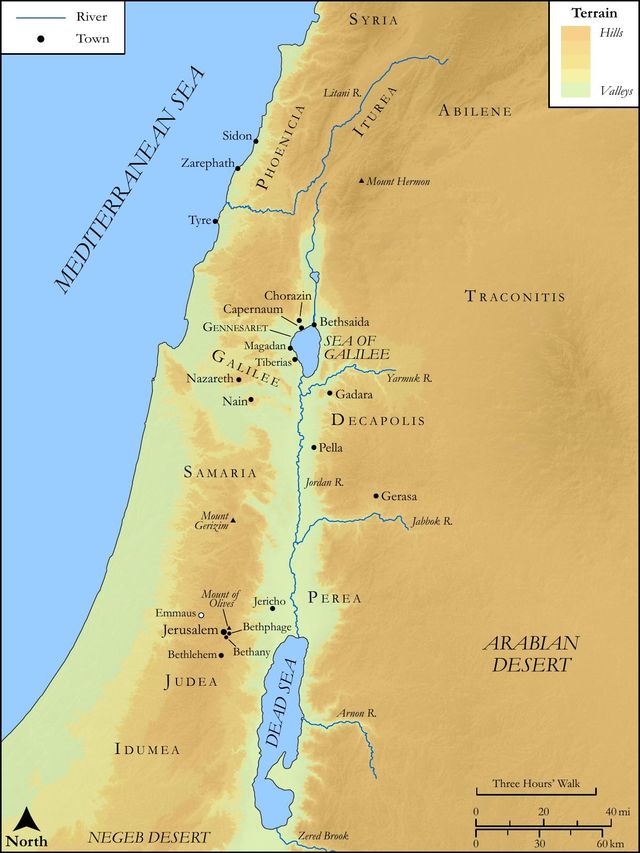
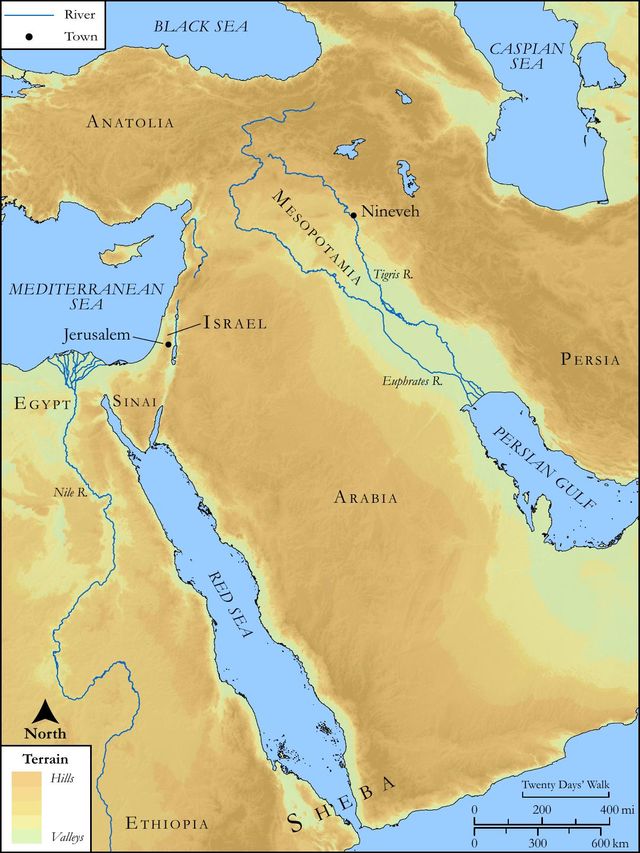
See on the biblical-era maps

Study this verse
Public-domain commentary
Matthew Henry
From his Commentary on the Whole Bible. Henry comments on passages, not single verses — this entry covers Luke 7:19–35. His three-level outline is real structure in the source text, so it is rendered as structure.
All this discourse concerning John Baptist, occasioned by his sending to ask whether he was the Messiah or no, we had, much as it is here related, Mt. 11:2-19.
I.We have here the message John Baptist sent to Christ, and the return he made to it. Observe,
1.The great thing we are to enquire concerning Christ is whether he be he that should come to redeem and save sinners, or whether we are to look for another, Luk 7:19, Luk 7:20. We are sure that God has promised that a Saviour shall come, an anointed Saviour; we are as sure that what he has promised he will perform in its season. If this Jesus be that promised Messiah, we will receive him, and will look for no other; but, if not, we will continue our expectations, and, though he tarry, will wait for him.
2.The faith of John Baptist himself, or at least of his disciples, wanted to be confirmed in this matter; for Christ had not yet publicly declared himself to be indeed the Christ, nay, he would not have his disciples, who knew him to be so, to speak of it, till the proofs of his being so were completed in his resurrection. The great men of the Jewish church had not owned him, nor had he gained any interest that was likely to set him upon the throne of his father David. Nothing of that power and grandeur was to be seen about him in which it was expected that the Messiah would appear; and therefore it is not strange that they should ask, Art thou the Messiah? not doubting but that, if he was not, he would direct them what other to look for.
3.Christ left it to his own works to praise him in the gates, to tell what he was and to prove it. While John's messengers were with him, he wrought many miraculous cures, in that same hour, which perhaps intimates that they staid but an hour with him; and what a deal of work did Christ do in a little time! Luk 7:21. He cured many of their infirmities and plagues in body, and of evil spirits that affected the mind either with frenzy or melancholy, and unto many that were blind he gave sight. He multiplied the cures, that there might be no ground left to suspect a fraud; and then (Luk 7:22) he bade them go and tell John what they had seen. And he and they might easily argue, as even the common people did (Joh 7:31), When Christ cometh, will he do more miracles than these which this man hath done? These cures, which they saw him work, were not only confirmations of his commission, but explications of it. The Messiah must come to cure a diseased world, to give light and sight to them that sit in darkness, and to restrain and conquer evil spirits. You see that Jesus does this to the bodies of people, and therefore must conclude this is he that should come to do it to the souls of people, and you are to look for no other. To his miracles in the kingdom of nature he adds this in the kingdom of grace (Luk 7:22), To the poor the gospel is preached, which they knew was to be done by the Messiah; for he was anointed to preach the gospel to the meek (Isa 61:1), and to save the souls of the poor and needy, Psa 72:13. Judge, therefore, whether you can look for any other that will more fully answer the characters of the Messiah and the great intentions of his coming.
4.He gave them an intimation of the danger people were in of being prejudiced against him, notwithstanding these evident proofs of his being the Messiah (Luk 7:23): Blessed is he whosoever shall not be offended in me, or scandalized at me. We are here in a state of trial and probation; and it is agreeable to such a state that, as there are sufficient arguments to confirm the truth to those that are honest and impartial in searching after it, and have their minds prepared to receive it, so there should be also objections, to cloud the truth to those that are careless, worldly, and sensual. Christ's education at Nazareth, his residence at Galilee, the meanness of his family and relations, his poverty, and the despicableness of his followers - these and the like were stumbling-blocks to many, which all the miracles he wrought could not help them over. He is blessed, for he is wise, humble, and well disposed, that is not overcome by these prejudices. It is a sign that God has blessed him, for it is by his grace that he is helped over these stumbling-stones; and he shall be blessed indeed, blessed in Christ.
II.We have here the high encomium which Christ gave of John Baptist; not while his messengers were present (lest he should seem to flatter him), but when they were departed (Luk 7:24), to make the people sensible of the advantages they had enjoyed in John's ministry, and were deprived of by his imprisonment. Let them now consider what they went out into the wilderness to see, who that was about whom there had been so much talk and such a great and general amazement. "Come," saith Christ, "I will tell you."
1.He was a man of unshaken self-consistence, a man of steadiness and constancy. He was not a reed shaken with the wind, first in one direction and then in another, shifting with every wind; he was firm as a rock, not fickle as a reed. If he could have bowed like a reed to Herod, and have complied with the court, he might have been a favourite there; but none of these things moved him.
2.He was a man of unparalleled self-denial, a great example of mortification and contempt of the world. He was not a man clothed in soft raiment, nor did he live delicately (Luk 7:25); but, on the contrary, he lived in a wilderness and was clad and fed accordingly. Instead of adorning and pampering the body, he brought it under, and kept it in subjection.
3.He was a prophet, had his commission and instructions immediately from God, and not of man or by man. He was by birth a priest, but that is never taken notice of; for his glory, as a prophet, eclipsed the honour of his priesthood. Nay, he was more, he was much more than a prophet (Luk 7:26), than any of the prophets of the Old Testament; for they spoke of Christ as at a distance, he spoke of him as at the door.
4.He was the harbinger and forerunner of the Messiah, and was himself prophesied of in the Old Testament (Luk 7:27): This is he of whom it is written (Mal 3:1), Behold, I send my messenger before thy face. Before he sent the Master himself, he sent a messenger, to give notice of his coming, and prepare people to receive him. Had the Messiah been to appear as a temporal prince, under which character the carnal Jews expected him, his messenger would have appeared either in the pomp of a general or the gaiety of a herald at arms; but it was a previous indication, plain enough, of the spiritual nature of Christ's kingdom, that the messenger he sent before him to prepare his way did it by preaching repentance and reformation of men's hearts and lives. Certainly that kingdom was not of this world which was thus ushered in.
5.He was, upon this account, so great, that really there was not a greater prophet than he. Prophets were the greatest that were born of women, more honourable than kings and princes, and John was the greatest of all the prophets. The country was not sensible what a valuable, what an invaluable, man it had in it, when John Baptist went about preaching and baptizing. And yet he that is least in the kingdom of God is greater than he. The least gospel minister, that has obtained mercy of the Lord to be skilful and faithful in his work, or the meanest of the apostles and first preachers of the gospel, being employed under a more excellent dispensation, are in a more honourable office than John Baptist. The meanest of those that follow the Lamb far excel the greatest of those that went before him. Those therefore who live under the gospel dispensation have so much the more to answer for.
III.We have here the just censure of the men of that generation, who were not wrought upon by the ministry either of John Baptist or of Jesus Christ himself.
1.Christ here shows what contempt was put upon John Baptist, while he was preaching and baptizing.
(1.)Those who did show him any respect were but the common ordinary sort of people, who, in the eye of the gay part of mankind, were rather a disgrace to him than a credit, Luk 7:29. The people indeed, the vulgar herd, of whom it was said, This people, who know not the law, are cursed (Joh 7:49), and the publicans, men of ill fame, as being generally men of bad morals, or taken to be so, these were baptized with his baptism, and became his disciples; and these, though glorious monuments of divine grace, yet did not magnify John in the eye of the world; but by their repentance and reformation they justified God, justified his conduct and the wisdom of it in appointing such a one as John Baptist to be the forerunner of the Messiah: they hereby made it to appear that it was the best method that could be taken, for it was not in vain to them whatever it was to others.
(2.)The great men of their church and nation, the polite and the politicians, that would have done him some credit in the eye of the world, did him all the dishonour they could; they heard him indeed, but they were not baptized of him, Luk 7:30. The Pharisees, who were most in reputation for religion and devotion, and the lawyers, who were celebrated for their learning, especially their knowledge of the scriptures, rejected the counsel of God against themselves; they frustrated it, they received the grace of God, by the baptism of John, in vain. God in sending that messenger among them had a kind purpose of good to them, designed their salvation by it, and, if they had closed with the counsel of God, it had been for themselves, they had been made for ever; but they rejected it, would not comply with it, and it was against themselves, it was to their own ruin; they came short of the benefit intended them, and not only so, but forfeited the grace of God, put a bar in their own door, and, by refusing that discipline which was to fit them for the kingdom of the Messiah, shut themselves out of it, and they not only excluded themselves, but hindered others, and stood in their way.
2.He here shows the strange perverseness of the men of that generation, in their cavils both against John and Christ, and the prejudices they conceived against them.
(1.)They made but a jesting matter of the methods God took to do them good (Luk 7:31): "Whereunto shall I liken the men of this generation? What can I think of absurd enough to represent them by? They are, then, like children sitting in the market-place, that mind nothing that is serious, but are as full of play as they can hold. As if God were but in jest with them, in all the methods he takes to do them good, as children are with one another in the market-place (Luk 7:32), they turn it all off with a banter, and are not more affected with it than with a piece of pageantry." This is the ruin of multitudes, they can never persuade themselves to be serious in the concerns of their souls. Old men, sitting in the sanhedrim, were but as children sitting in the market-place, and no more affected with the things that belonged to their everlasting peace than people are with children's play. O the amazing stupidity and vanity of the blind and ungodly world! The Lord awaken them out of their security.
(2.)They still found something or other to carp at. [1.] John Baptist was a reserved austere man, lived much in solitude, and ought to have been admired for being such a humble, sober, self-denying man, and hearkened to as a man of thought and contemplation; but this, which was his praise, was turned to his reproach. Because he came neither eating nor drinking, so freely, plentifully, and cheerfully, as others did, you say, "He has a devil; he is a melancholy man, he is possessed, as the demoniac whose dwelling was among the tombs, though he be not quite so wild." [2.] Our Lord Jesus was of a more free and open conversation; he came eating and drinking, Luk 7:34. He would go and dine with Pharisees, though he knew they did not care for him; and with publicans, though he knew they were no credit to him; yet, in hopes of doing good both to the one and the other, he conversed familiarly with them. By this it appears that the ministers of Christ may be of very different tempers and dispositions, very different ways of preaching and living, and yet all good and useful; diversity of gifts, but each given to profit withal. Therefore none must make themselves a standard to all others, nor judge hardly of those that do not do just as they do. John Baptist bore witness to Christ, and Christ applauded John Baptist, though they were the reverse of each other in their way of living. But the common enemies of them both reproached them both. The very same men that had represented John as crazed in his intellects, because he came neither eating nor drinking, represented our Lord Jesus as corrupt in his morals, because he came eating and drinking; he is a gluttonous man, and a wine-bibber. Ill-will never speaks well. See the malice of wicked people, and how they put the worst construction upon every thing they meet with in the gospel, and in the preachers and professors of it; and hereby they think to depreciate them, but really destroy themselves.
3.He shows that, notwithstanding this, God will be glorified in the salvation of a chosen remnant (Luk 7:35): Wisdom is justified of all her children. There are those who are given to wisdom as her children, and they shall be brought by the grace of God to submit to wisdom's conduct and government, and thereby to justify wisdom in the ways she takes for bringing them to that submission; for to them they are effectual, and thereby appear well chosen. Wisdom's children are herein unanimous, one and all, they have all a complacency in the methods of grace which divine wisdom takes, and think never the worse of them for their being ridiculed by some.
Historical interpretation
Nine Centuries of Reception
12 surviving comments on this verse. Each one is dated, so this reads as a timeline rather than a list.
Select a marker to jump to its quote. Markers stagger vertically where authors wrote within a few decades of each other.
The second, whose meaning is understood from the present times, as being apprehended by perception; as it was said to those who asked the Lord, "If He was the Christ, or shall we wait for another? Go and tell John, the blind receive their sight, the deaf hear, the lepers are cleansed, the dead are raised up; and blessed is he who shall not be offended in Me."
John sent them to him not to interrogate him, but rather that the Lord might confirm those former things that John had proclaimed to them. John was directing the minds of his disciples toward the Lord.… He sent them out in such a way that, having seen Jesus’ miracles, they might be confirmed in their faith in him.
But how could it come to pass, that Him of whom he said, Behold him who taketh away the sins of the world, he should still not believe to be the Son of God? For either it is presumption to attribute to Christ a divine action ignorantly, or it is unbelief to have doubted concerning the Son of God. But some suppose of John himself that he was indeed so great a prophet as to acknowledge Christ, but still as not a doubting, but pious, prophet disbelieved that He would die, whom he believed was about to come. Not therefore in his faith but in his piety, he doubted; as Peter also, when he said, Be it far from thee, Lord; this shall not be unto thee. (Mat 16:22.)
An ample testimony surely by which the Prophet might recognise the Lord. For of the, Lord Himself it was prophesied, that the Lord giveth food to the hungry, raiseth up them that are bowed down, looseth the prisoners, openeth the eyes of the blind, and that he who doeth these things shall reign for ever. (Ps. 146:7-10.) Such then are not the tokens of human, but divine power. But these are found seldom or not at all before the Gospel. Tobias alone received sight, and this was the cure of an Angel, not of a man. (Tob. 11.) Elias raised the dead, but he prayed and wept, our Lord commanded. (1 Kings 17) Elisha caused the cleansing of a leper: yet then the cause was not so much in the authority of the command as in the figure of the mystery. (2 Kings 5.)
But still these are but slight examples of the testimony to the Lord. The full assurance of faith is the cross of the Lord, His death and burial. Hence He adds, And blessed is he who shall not be offended in me. For the cross may cause offence, even to the elect. But there is no greater testimony than this of a divine person. For there is nothing which seems to be more surpassing the nature of man than that one should offer Himself for the whole world.
But we have before said, that mystically John was the type of the Law, which was the forerunner of Christ. John then sends his disciples to Christ, that they might obtain the filling up of their knowledge, for Christ is the fulfilling of the Law. And perhaps those disciples are the two nations, of whom the one of the Jews believed, the other of the Gentiles believed because they heard. They wished then to see, because blessed are the eyes that see. But when they shall have come to the Gospel, and found that the blind receive their sight, the lame walk, then shall they say, "We have seen with our eyes," for we seem to ourselves to see Him whom we read of. Or perhaps through the instrumentality (operatrice) of a certain part of our Body a we all seem to have traced out the course of our Lord's passion; for faith comes through the few to the many. The Law then announces that Christ will come, the writings of the Gospel prove that He has come.
And because we have already said above (in Luke, chapter 3) that John is a type of the Law, which was a precursor of Christ, it is right that the Law, which held captive the hearts of the faithless as if in eternal prisons, was physically enclosed, with its fertile entrails of punishments and doors of madness restrained, would not be able to bring about the complete fulfillment of the testimony of the Lord's dispensation without the consent of the Gospel. Indeed, the Law prophesied the grace of baptism through the cloud and the sea in Exodus; it foreshadowed spiritual food in the lamb (Exodus 12:3); it designated an everlasting fountain in the rock (Exodus 17:6); it revealed the forgiveness of sins in Leviticus (Leviticus 25:10); it announced the kingdom of heaven in the Psalms; it most clearly declared the promised land in Joshua.
But we are then most raised up to Him when we are fallen into straits. John therefore, being cast into prison, takes the opportunity, when his disciples were most in need of Jesus, to send them to Christ. For it follows, And John calling two of his disciples sent them to Jesus, saying, Art thou he that should come, &c.
Christ would work miracles and teach as soon as he came to well-known sections of his own country, and this had been foretold.Isaiah went on to tell of other marvels and showed how Christ cured the lame, and how he made the blind to see and the mute to speak. “Then the eyes of the blind shall be opened, and the ears of the deaf unstopped.” After that he spoke of the other marvels: “Then shall the lame man leap like a hart, and the tongue of the dumb sing for joy.” This did not happen until his coming.
“In that same hour he healed many of sicknesses and of scourges, and of evil spirits; and gave sight to many that were blind.” He made them spectators and eyewitnesses of his greatness and gathered into them a great admiration of his power and ability. They then bring forward the question and beg in John’s name to be informed whether he is “he who comes.” Here see, I ask, the beautiful art of the Savior’s management. He does not simply say, “I am.” If he had spoken this, it would have been true. He leads them to the proof given by the works themselves. In order that having accepted faith in him on good grounds and being furnished with knowledge from what had been done, they may return to him who sent them. “Go,” he says, “tell John the things that you have seen and heard.” “For you have heard indeed,” he says, “that I have raised the dead by the all-powerful word and by the touch of the hand. While you stood by, you have also seen that those things that were spoken of old time by the holy prophets are accomplished: the blind see, the lame walk, the lepers are cleansed, the dumb hear, the dead rise, and the poor are preached to. The blessed prophets had announced all these things before, as about in due time to be accomplish by my hands. I bring to pass those things that were prophesied long before, and you are yourselves spectators of them. Return and tell those things that you have seen with your own eyes accomplished by my might and ability, and which at various times the blessed prophets foretold.”
Certain of His disciples relate to the holy Baptist the miracle which was known to all the inhabitants of Judæa and Galilee, as it follows, And they told John, &c.
But we must altogether disallow such an opinion. For no where do we find the Holy Scriptures stating that John the Baptist foretold to those souls in hell the coming of our Saviour. It is also true to say, that the Baptist was not ignorant of the wonderful mystery of the incarnation of the Only-Begotten, and so also along with the other things had known this, that our Lord was about to preach the Gospel to those who were in hell, after He had tasted death for all living as well as dead. But since the word of holy Scripture indeed declared that Christ would come as the Lord and Chief, but the others were sent as servants before Him, therefore was the Lord and Saviour of all called by the prophets, He who cometh, or Who is to come; according to that, Blessed is he who cometh in the name of the Lord; (Ps. 118:26.) and, A little while, and he who is to come shall come, and will not tarry. (Hab. 2:3.) The blessed Baptist therefore, receiving as it were this name from Holy Scripture, sent certain of his disciples to seek whether it was indeed He who cometh, or, Who is to come.
(Thes. lib. 11. c. 4.) Or he asks the question by economy. For as the forerunner he knew the mystery of Christ's passion, but that his disciples might be convinced how great was the excellence of the Saviour, he sent the more understanding of them, instructing them to enquire and learn from the very words of the Saviour, whether it was He who was expected; as it is added, But when the men were come unto him, they said, John the Baptist hath sent us unto thee, saying, Art thou He, &c. But He knowing as God with what intention John had sent them, and the cause of their coming, was at the time performing many miracles, as it follows, And in the same hour he healed many of their infirmities, &c. He said not positively to them I am he, but rather leads them to the certainty of the fact, in order that receiving their faith in Him, with their reason agreeing thereto, they might return to him who sent them. Hence He made not answer to the words, but to the intention of him who sent them; as it follows, And Jesus answering said unto them, Go your way, and tell John what things you have seen and heard: as if He said, Go and tell John the things which ye have heard indeed through the Prophets, but have seen accomplished by Me. For He was then performing those things which the Prophets prophesied He would do; that is of which it is added, For the blind see, the lame walk.
Or else, He wished by this to show that whatever was passing in their hearts, could not be hid from His sight. For they were those who were offended at Him.
We must inquire, dearly beloved brethren, why John—a prophet and more than a prophet, who pointed out the Lord coming to the baptism at the Jordan, saying: "Behold the Lamb of God, behold him who takes away the sin of the world"; who, considering both his own humility and the power of Christ's divinity, says: "He who is of the earth speaks of the earth, but he who comes from heaven is above all"—why, when placed in prison and sending his disciples, he asks: "Are you he who is to come, or do we look for another?" As if he did not know the one he had pointed out, and did not know whether he was the one whom he had proclaimed by prophesying, baptizing, and pointing him out. But this question is quickly resolved if the time and order of events is considered. For standing at the waters of the Jordan, he declared that this was the Redeemer of the world; but sent to prison, he asks whether he himself is coming—not because he doubts that he is the Redeemer of the world, but he asks in order to know whether he who had come into the world by himself would also descend by himself to the prison of hell. For he whom John had announced to the world as his forerunner, he was now preceding to hell by dying. Therefore he says: "Are you he who is to come, or do we look for another?" As if he were openly saying: Just as you deigned to be born for mankind, indicate whether you also deign to die for mankind, so that I who have been the forerunner of your birth may also become the forerunner of your death, and may announce to hell that you are coming, whom I have already announced as having come to the world.
Not, as it seems to me, in simpleness of heart, but provoked by envy. For in another place also they complain, Rabbi, he that was with thee beyond Jordan, behold the same baptizeth, and all men come unto him. (John 3:26.)
He says not, Art thou He that hast come, but, Art thou he that should come. The sense is, Tell me who am to be slain by Herod, and about to descend into hell, (ad inferna) whether I should announce Thee to the souls below as I have announced Thee to those above? or is this not befitting the Son of God, and Thou art going to send another for these sacraments?
And what is not less than these, the poor have the Gospel preached to them, that is, the poor are enlightened by the Spirit, or hidden treasures, that there might be no difference between the rich and the poor. These things prove the faith of the Master, when all who can be saved by Him are equal.
And John summoned two of his disciples and sent them to the Lord, saying: Are you the one who is to come, or shall we look for another? Namely, so that at least through this occasion, by seeing the signs he was doing, they might believe in him, and, with the master asking, learn for themselves. Therefore he does not say, Are you the one who has come, but are you the one who is to come? And the meaning is: Command me, because being about to be killed by Herod, and to descend to the underworld, whether I should announce you even in the underworld, as I announced you to those above, or whether it is not fitting for the Son of God to taste death, and you will send another to these sacraments.
By the widow also you may understand a soul that has lost her husband in the divine word. Her son is the understanding, which is carried out beyond the city of the living. Its coffin is the body, which some indeed have called the tomb. But the Lord touching him raises him up, causing him to become young, and rising from sin he begins to speak and teach others. For before he would not have been believed.
These are also the words of Elias, saying, The Lord himself shall come and save us. Then the eyes of the blind shall be opened, and the ears of the deaf shall be unstopped. Then shall the lame man leap as an hart. (Isa. 35:4-6.)
Continue studying Luke 7:19 across the web’s major study libraries — every link below opens this exact verse, chapter, or book on the destination site.
Read & Compare
 BibleGatewayThis verse in more than 200 translations and 70 languages.
 Bible.comThe YouVersion reader — hundreds of translations, reading plans, and highlights.
 ESV.orgCrossway's official English Standard Version reader.
 NET BibleThe NET translation with 60,000+ translators' notes on every rendering decision.
 STEP BibleTyndale House's free study tool — original text, vocabulary, and scholarly resources.
 BibliaLogos Bible Software's free web reader.
 USCCBThe New American Bible (Revised Edition) with the U.S. bishops' study notes.
Commentaries
 BibleHub CommentariesDozens of classic commentaries on this verse, gathered on one page.
 StudyLightMore than 100 commentary sets — the largest collection on the web.
 BibleRefPlain-English commentary on what this verse means, verse by verse.
 Enduring WordDavid Guzik's free commentary on this chapter, widely used by Bible teachers.
 Bible Study ToolsVerse commentary alongside Greek and Hebrew study aids.
Original Language & Research
- BibleHub InterlinearThe verse word by word — original language, transliteration, and English.
- BibleHub LexiconEvery word's original-language definition and Strong's entry.
 Blue Letter BibleDeep-study tools — Strong's numbers, concordance, and word studies.
 CNTR CollationThe earliest Greek manuscripts of this verse, collated letter by letter.
Sermons, Hymns & Audio


TrulyRandomVerse is not affiliated with these sites and doesn’t control their content. They’re linked because they’re genuinely useful.
Summary
Luke 7:19 records a pivotal moment where John the Baptist, from his prison cell, dispatches two of his disciples to Jesus with a direct and profound inquiry: "Art thou he that should come? or look we for another?" This question, coming from the one who previously heralded Jesus as the Lamb of God, highlights the complexity of messianic expectation and the human struggle with doubt, even among the greatest figures of faith, setting the stage for Jesus to affirm His identity through His miraculous works and the fulfillment of Old Testament prophecy.
Context
ShowHideLiterary Context
This verse is strategically placed within Luke's Gospel, following powerful demonstrations of Jesus's authority and compassion. Immediately preceding this passage, Jesus has healed a Roman centurion's servant with a word (Luke 7:1-10), showcasing His divine power over sickness and distance. Even more dramatically, He has just raised the son of a widow in Nain from the dead (Luke 7:11-17), a miracle that profoundly impacted the crowds and spread His fame throughout Judea. It is against this backdrop of undeniable miraculous activity that John, now imprisoned by Herod Antipas (Luke 3:19-20), sends his disciples. John's question, therefore, is not posed in ignorance of Jesus's works but perhaps in response to them, seeking clarification or confirmation regarding the nature of the Messiah's kingdom, which did not align with a more immediate, forceful, or political deliverance.
Historical & Cultural Context
First-century Judaism was fervent with messianic expectation, though the understanding of the Messiah varied widely. Many anticipated a conquering king who would overthrow Roman oppression and restore Israel's political sovereignty, often drawing on prophecies of a powerful Davidic ruler. John the Baptist himself had preached a message of repentance and impending judgment, speaking of a Messiah who would "gather his wheat into the garner; but the chaff he will burn with fire unquenchable" (Luke 3:17). This fiery, judgmental expectation contrasted sharply with Jesus's ministry, which was characterized by healing, teaching, and compassion for the lowly. John's imprisonment by Herod Antipas for condemning Herod's unlawful marriage (Luke 3:19-20) likely intensified his personal suffering and perhaps his impatience for the Messiah's decisive intervention, leading to the urgent inquiry about Jesus's identity and the nature of His kingdom.
Key Themes
ShowHideThe central theme in this passage is the Messianic Identity of Jesus. John's question directly addresses whether Jesus is indeed "the Coming One," a widely recognized title for the long-awaited deliverer of Israel, echoing prophecies found in the Old Testament. Another crucial theme is Doubt and Human Expectation versus Divine Reality. Even a prophet of John's stature, who had previously affirmed Jesus's divine role (John 1:29), grapples with uncertainty when God's plan unfolds in ways that diverge from human preconceptions. This humanizes John and illustrates that faith journeys can include moments of profound questioning. Finally, the passage introduces the theme of Verification Through Works. Jesus does not respond with a simple "yes" or "no" but instructs John's disciples to report what they have seen and heard—His miracles and the preaching of the good news to the poor (Luke 7:22), thereby validating His messianic claims through the fulfillment of prophetic signs.
Exposition and Analysis
ShowHideKey Word Analysis
ShowHideThis verb means "to call toward oneself," implying a deliberate summoning or invitation. John, despite his imprisonment, actively initiates contact with Jesus, demonstrating his earnest desire for clarity and his authority to send his disciples on such a crucial mission.
While the KJV translates "he that should come," the Greek phrase "ὁ ἐρχόμενος" (ho erchomenos) literally means "the coming one." This was a significant and widely understood messianic title in Jewish thought, referring to the prophesied deliverer. John's use of this specific term underscores the profound theological weight of his question, directly challenging Jesus's claim to be the long-awaited Messiah.
This word conveys the sense of anticipating, expecting, or awaiting something, often with a degree of hope or apprehension. John's inquiry, "or look we for another?", reveals a deep-seated expectation for a particular kind of Messiah and an underlying uncertainty about whether Jesus perfectly fits that mold, or if another, perhaps more overtly powerful or judgmental, figure is yet to appear.
This term means "different" or "other of the same kind." John's question presents a stark dichotomy: either Jesus is the one, or they must continue to await someone else who will fulfill the messianic role according to their expectations. This highlights the critical nature of the decision John and his disciples faced regarding Jesus's identity.
Verse Breakdown
ShowHide"And John calling unto him two of his disciples"
This clause establishes John's agency and his method of inquiry. Despite his confinement, he retains influence over his followers and takes decisive action to address his concerns. The choice of "two" disciples might be for confirmation, as two witnesses were a legal standard, or simply for reliable transmission of the message.
"sent them to Jesus, saying"
This indicates the directness and urgency of John's query. He doesn't send a general message but specifically dispatches his trusted emissaries to Jesus Himself, signifying the gravity of the question and the respect John still held for Jesus, even in his moment of doubt.
"Art thou he that should come?"
This is the core of John's theological and personal struggle. It is a direct challenge to Jesus's identity as the Messiah, the "Coming One" prophesied in the Hebrew Scriptures. The question implies that Jesus's ministry, characterized by healing and teaching rather than immediate political or military action, might not align with John's (or popular) expectations of the Messiah.
"or look we for another?"
This alternative underscores the depth of John's uncertainty. It suggests that if Jesus is not the expected Messiah, then the search must continue for someone else who will fulfill the role in the manner anticipated. This reveals the tension between the prevailing messianic expectations and the unexpected nature of Jesus's kingdom.
Literary Devices
ShowHideLuke 7:19 employs several significant literary devices that enrich its meaning. The most prominent is Rhetorical Question. John's inquiry, "Art thou he that should come? or look we for another?", is not necessarily a request for new information, but rather a profound expression of doubt, a plea for confirmation, or perhaps even a strategic move to solidify his disciples' faith by prompting a direct response from Jesus. This question also creates Dramatic Irony, as the reader already knows Jesus's true identity as the Messiah, making John's struggle all the more poignant. His previous bold declarations about Jesus (John 1:29) stand in stark Contrast to his current uncertainty, highlighting the human element of faith and the challenges of reconciling divine plans with personal expectations. Furthermore, the passage serves as a form of Foreshadowing, setting the stage for Jesus's powerful and prophetic response in the subsequent verses, where He will validate His identity not through direct affirmation, but through the evidence of His miraculous works and the fulfillment of Old Testament prophecy.
Theological and Thematic Connections
ShowHideLuke 7:19 profoundly illustrates the human struggle with faith and expectation, even for those intimately connected to God's redemptive plan. John the Baptist, the prophet who prepared the way for the Messiah, found himself wrestling with doubt when Jesus's ministry did not conform to his preconceived notions of a forceful, judgmental deliverer. This passage teaches us that faith is not the absence of questions, but the courage to bring those questions to God. It underscores the truth that God's ways are often higher and more unexpected than our own, challenging us to trust His timing and methods, even when they diverge from our expectations. Ultimately, John's question serves as a catalyst for Jesus to reveal the nature of His kingdom, not through political power, but through compassionate acts that fulfill ancient prophecies, demonstrating that the Messiah's work is primarily one of healing, liberation, and the proclamation of good news to the poor.
Reflection and Application
ShowHideLuke 7:19 offers a powerful and deeply human lesson for believers today: it is acceptable, even natural, to experience moments of doubt or confusion in our faith journey. John the Baptist, a man whom Jesus Himself called the greatest born among women (Luke 7:28), faced profound uncertainty when his expectations of the Messiah did not align with Jesus's gentle, healing ministry. This passage grants us permission to bring our honest questions and struggles to Jesus, rather than suppressing them. When we find ourselves questioning God's timing, His methods, or even His presence in difficult circumstances, we are called to look to Jesus's character and His works, both in Scripture and in our lives. His actions consistently demonstrate His divine authority, His boundless compassion, and His perfect wisdom, even when His path seems unconventional to us. This verse encourages us to release our rigid expectations of how God "should" act and instead embrace His sovereign, often surprising, ways, trusting that His plan is always perfect, even when it leads to personal discomfort or confusion.
Questions for Reflection
ShowHideFAQ
ShowHideWhy would John the Baptist, who recognized Jesus earlier, now doubt Him?
ShowHideScholars propose several reasons for John's seemingly surprising question. First, John was imprisoned (Luke 3:19-20), facing a grim future, which could have led to despair or impatience for the Messiah's decisive intervention. His expectation was likely of a more immediate, forceful, and judgmental Messiah, one who would "lay the axe unto the root of the trees" (Matthew 3:10) and establish a visible kingdom, rather than the healing and teaching ministry Jesus was conducting. The gentle nature of Jesus's early ministry, devoid of overt political or military action, might have caused John to question if Jesus was truly the one, or if another, more conforming to his expectations, was still to come. Second, it's possible John sent his disciples to Jesus not for his own sake, but for theirs. His disciples were still following him, and by sending them directly to Jesus, John might have intended for them to witness Jesus's ministry firsthand, solidifying their faith and transitioning their allegiance to the true Messiah. This act would have served as a pastoral gesture, guiding them to the source of ultimate truth.
Christ-Centered Fulfillment
ShowHideJohn the Baptist's poignant question in Luke 7:19, "Art thou he that should come? or look we for another?", serves as a powerful Christ-centered moment, even in its expression of doubt. It forces Jesus to articulate His messianic identity, not through a simple declaration, but through the undeniable evidence of His works, which perfectly fulfilled Old Testament prophecies concerning the Messiah. Jesus's response in Luke 7:22-23—healing the blind, the lame, the lepers, the deaf, raising the dead, and preaching the gospel to the poor—demonstrates that He is indeed the "Coming One" (Isaiah 35:5-6; Isaiah 61:1). This passage highlights that Jesus's kingship was not primarily political or military, as many expected, but spiritual and redemptive, bringing healing and liberation from sin and its effects. Ultimately, Jesus is the one who "came into the world to save sinners" (1 Timothy 1:15), the "Lamb of God, which taketh away the sin of the world" (John 1:29), and the one who will "come again" (John 14:3) to establish His eternal kingdom in its fullness. John's question, therefore, provides an opportunity for Jesus to reveal the true, unexpected, and infinitely more profound nature of His messianic mission, culminating in His atoning death and glorious resurrection, which fully confirm Him as the "he that should come" for all humanity.