


Joshua 17:18
Bible text: King James Version (1769 Blayney text) · Public domain
Bible text: King James Version with Strong's numbers · Public domain
Bible text: Berean Standard Bible · Public domain
Bible text: American Standard Version (1901) · Public domain
Bible text: World English Bible, Messianic edition · Public domain
Bible text: Geneva Bible (1599) · Public domain
Bible text: Young's Literal Translation · Public domain
- כִּיkiforH3588PrtParticle Conditional
- הַרhar[the] hill countryH2022N-msNoun Singular Masculine Absolute
- יִהְיֶהyih·yehit will belongH1961V-Qal-Imperf-3msVerb Qal Imperfect 3rd Singular Masculine
- לָּךְloKhto <the> youPrep-l ¦ 2msSuffix Personal 2nd Singular Masculineלָּto <the>ךְyou
- כִּיkiforH3588PrtParticle Conditional
- יַעַרYa·'ar[is] forestH3293N-msNoun Singular Masculine Absolute
- הוּאHu'itH1931Pro-3msPronoun Personal 3rd Singular Masculine
- וּבֵרֵאתוֹu·Ve·re·Toand you will cut down itH1254Conj-w ¦ V-Piel-ConsecPerf-2ms ¦ 3msVerb Piel Consecutive Perfect 2nd Singular Masculineוּandבֵרֵאתyou will cut downוֹit
- וְהָיָהve·ha·Yahand it will belongH1961Conj-w ¦ V-Qal-ConsecPerf-3msVerb Qal Consecutive Perfect 3rd Singular Masculineוְandהָיָהit will belong
- לְךָle·Khato <the> youPrep-l ¦ 2msSuffix Personal 2nd Singular Masculineלְto <the>ךָyou
- תֹּצְאֹתָיוto·tze·'o·Tavits extremitiesH8444N-fpc ¦ 3msNoun Plural Feminine Constructתֹּצְאֹתָיextremitiesוits
- כִּיkiforH3588PrtParticle Conditional
- תוֹרִישׁto·Rishyou will dispossessH3423V-Hiphil-Imperf-2msVerb Hiphil Imperfect 2nd Singular Masculine
- אֶת'et<obj.>H853DirObjMParticle Object Indicator
- הַכְּנַעֲנִיha·ke·na·'a·Nithe Canaanite[s]H3669Art ¦ N-msNoun Gentilic Singular Masculine AbsoluteהַtheכְּנַעֲנִיCanaanite[s]
- כִּיkiforH3588PrtParticle Conditional
- רֶכֶבRe·khevchariotry ofH7393N-mscNoun Singular Masculine Construct
- בַּרְזֶלbar·ZelironH1270N-msNoun Singular Masculine Absolute
- לוֹlo[belongs] to <the> himPrep-l ¦ 3msSuffix Personal 3rd Singular Masculineל[belongs] to <the>וֹhim
- כִּיkithatH3588PrtParticle Conditional
- חָזָקcha·Zak[is] strongH2389Adj-msAdjective Singular Masculine Absolute
- הוּאHu'heH1931Pro-3msPronoun Personal 3rd Singular Masculine
English is a literal word-by-word gloss of the Hebrew, not the KJV's wording. Why?
This is the original text the KJV's translators worked from — each Hebrew word with its own literal English meaning in this verse, prepared by scholars at Tyndale House, Cambridge. The KJV translates whole sentences, not word by word, so its wording differs: one Hebrew word can become several English words, and the KJV may choose “the LORD” where the gloss reads “Yahweh”. Both are faithful — they answer different questions. For the KJV's own rendering, switch to the KJV text.
Details
See on the biblical-era maps
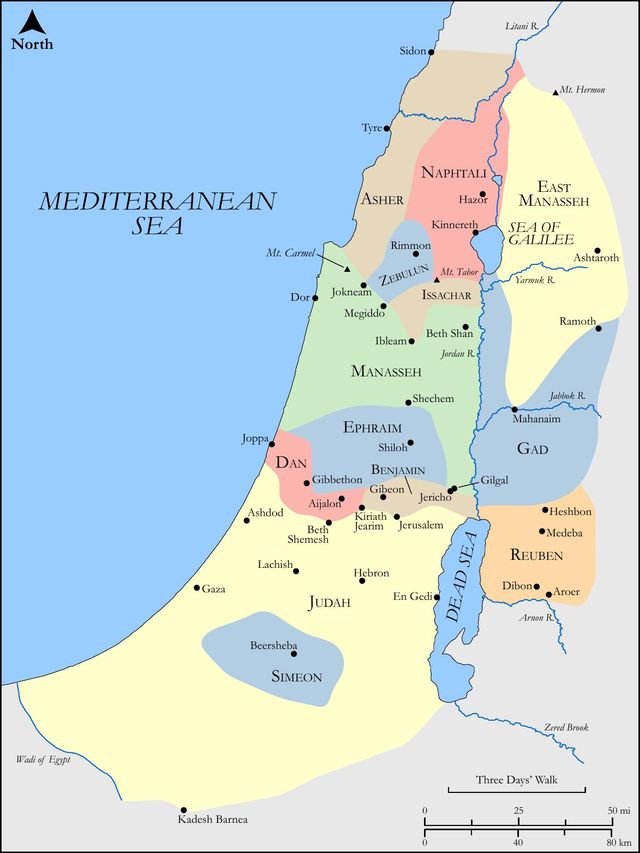
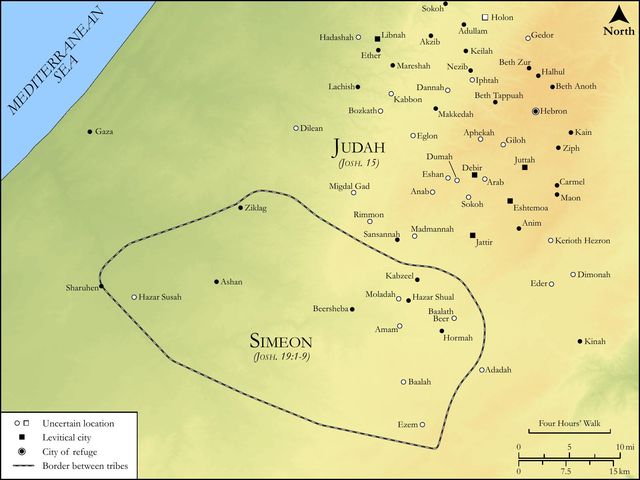
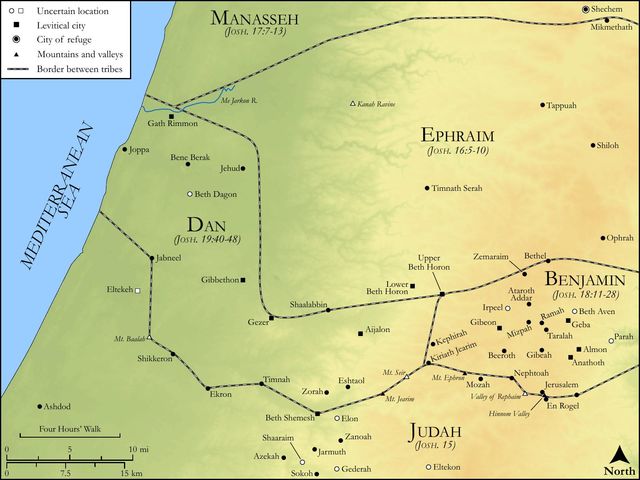
Study this verse
Public-domain commentary
Matthew Henry
From his Commentary on the Whole Bible. Henry comments on passages, not single verses — this entry covers Joshua 17:14–18.
Here, I. The children of Joseph quarrel with their lot; if they had had any just cause to quarrel with it, we have reason to think Joshua would have relieved them, by adding to it, or altering it, which it does not appear he did. It is probable, because Joshua was himself of the tribe of Ephraim, they promised themselves that they should have some particular favour shown them, and should not be confined to the decision of the lot so closely as the other tribes; but Joshua makes them know that in the discharge of his office, as a public person, he had no more regard to his own tribe than to any other, but would administer impartially, without favour or affection, wherein he has left an excellent example to all in public trusts. It was a very competent provision that was made for them, as much, for aught that appears, as they were able to manage, and yet they call it in disdain but one lot, as if that which was assigned to them both was scarcely sufficient for one. The word for complainers (Jde 1:16) is mempsimoiroi, blamers of their lot: - 1. That they were very numerous, through the blessing of God upon them (Jos 17:14): I am a great people, for the Lord has blessed me; and we have reason to hope that he that hath sent mouths will send meat. "I am a great people, and in so small a lot shall not have room to thrive." Yet observe, when they speak thankfully of their present increase, they do not speak confidently of the continuance of it. "The Lord has blessed me hitherto, however he may see fit to deal with me for the future." The uncertainty of what may be must not make us unthankful for what has been and is done in kindness to us. 2. That a good part of that country which had now fallen to their lot was in the hands of the Canaanites, and that they were formidable enemies, who brought into the field of battle chariots of iron (Jos 17:16), that is, chariots with long scythes fastened to the sides of them, or the axle-tree, which made great destruction of all that came in their way, mowing them down like corn. They urge that though they had a good portion assigned them, yet it was in bad hands, and they could not come to the possession of it, wishing to have their lot in those countries that were more thoroughly reduced than this was.
II.Joshua endeavours to reconcile them to their lot.
He owns they were a great people, and being two tribes ought to have more than one lot only (Jos 17:17), but tells them that what had fallen to their share would be a sufficient lot for them both, if they would but work and fight. They desired a lot in which they might indulge themselves in ease and luxury. "No," says Joshua, "you must not count upon that; in the sweat of thy face shalt thou eat bread is a sentence in force even in Canaan itself." He retorts their own argument, that they were a great people. "If so, you are the better able to help yourselves, and have the less reason to expect help from others. If thou hast many mouths to be filled, thou hast twice as many hands to be employed; earn, and then eat." 1. He bids them work for more (Jos 17:15): "Get thee up to the wood-country, which is within thy own border, and let all hands be set to work to cut down the trees, rid the rough lands, and make them, with art and industry, good arable ground." Note, Many wish for larger possessions who do not cultivate and make the best of what they have, think they should have more talents given them who do not trade with those with which they are entrusted. Most people's poverty is the effect of their idleness; would they dig, they need not beg. 2. He bids them fight for more (Jos 17:17, Jos 17:18), when they pleaded that they could not come at the wood-lands he spoke of because in the valley between them and it were Canaanites whom they durst not enter the lists with. "Never fear them," said Joshua, "thou hast God on thy side, and thou shalt drive out the Canaanites, if thou wilt set about it in good earnest, though they have iron chariots." We straiten ourselves by apprehending the difficulties in the way of our enlargement to be greater than really they are. What can be insuperable to faith and holy resolution?
Historical interpretation
Historical reception
2 surviving comments on this verse. Each one is dated, so this reads as a timeline rather than a list.
For if at last we come to perfection, then the Canaanite is said to have been exterminated by us and handed over to death. But as to how this is accomplished in our flesh, hear the apostle saying, "Mortify your members that are upon the earth: fornication, impurity," and the other things that follow. And again it says, "For those who belong to Christ have crucified their flesh with its vices and lusts." Thus, therefore, in the third stage, that is, when we come to perfection and mortify our members and carry around the death of Christ in our body, the Canaanite is said to be exterminated by us.
You see what is being said to us in the spiritual interpretation, to clear the woodland that is in us and, cutting useless and unfruitful trees out of us, to make fallow lands there that we would always renew and from which we would reap fruit "thirtyfold and sixtyfold and a hundredfold." Does not the word of the Gospel also proclaim the same things to us, saying, "Behold the axe has already been placed at the root of the trees; therefore, every tree that does not bear fruit will be cut down and cast into the fire"9? These are the things Jesus [Joshua] the son of Nun commanded to our ancestors concerning cutting down unfruitful trees; these are the mandates the Lord Jesus describes in the Gospel. So how is it not true that a shadow has preceded and truth has followed after?
Continue studying Joshua 17:18 across the web’s major study libraries — every link below opens this exact verse, chapter, or book on the destination site.
Read & Compare
 BibleGatewayThis verse in more than 200 translations and 70 languages.
 Bible.comThe YouVersion reader — hundreds of translations, reading plans, and highlights.
 ESV.orgCrossway's official English Standard Version reader.
 NET BibleThe NET translation with 60,000+ translators' notes on every rendering decision.
 STEP BibleTyndale House's free study tool — original text, vocabulary, and scholarly resources.
 BibliaLogos Bible Software's free web reader.
 USCCBThe New American Bible (Revised Edition) with the U.S. bishops' study notes.
Commentaries
 BibleHub CommentariesDozens of classic commentaries on this verse, gathered on one page.
 StudyLightMore than 100 commentary sets — the largest collection on the web.
 BibleRefPlain-English commentary on what this verse means, verse by verse.
 Enduring WordDavid Guzik's free commentary on this chapter, widely used by Bible teachers.
 Bible Study ToolsVerse commentary alongside Greek and Hebrew study aids.
Original Language & Research
- BibleHub InterlinearThe verse word by word — original language, transliteration, and English.
- BibleHub LexiconEvery word's original-language definition and Strong's entry.
 Blue Letter BibleDeep-study tools — Strong's numbers, concordance, and word studies.
 SefariaThe Hebrew text with Rashi and centuries of Jewish commentary.
Sermons, Hymns & Audio


TrulyRandomVerse is not affiliated with these sites and doesn’t control their content. They’re linked because they’re genuinely useful.
Summary
Joshua 17:18 presents Joshua's firm and empowering response to the tribes of Ephraim and Manasseh, who expressed discontent over their allotted territory and the formidable Canaanite presence. Joshua assures them of their full inheritance in the mountainous, wooded regions, emphasizing that while this land demands diligent effort to clear and occupy, God's enabling promise empowers them to overcome even the most powerful adversaries, symbolized by "iron chariots." This verse profoundly underscores the principle that divine promise necessitates human perseverance and faith in actively realizing God's blessings.
Context
ShowHideLiterary Context
This verse serves as the climactic conclusion to a significant dialogue between Joshua and the "children of Joseph" (Ephraim and Manasseh) found in Joshua 17:14-18. The tribes complain that their portion of land is insufficient for their numerous people and that the Canaanites residing in the valley possess formidable "iron chariots" (Joshua 17:16). Joshua's response directly addresses their concerns, first by affirming their numerical strength as a reason for a larger inheritance (Joshua 17:17), and then by challenging them to actively possess the difficult, forested mountain region. This exchange marks a crucial transition in the book of Joshua: from the initial miraculous, large-scale conquests to the ongoing, often challenging, work of full occupation and settlement, which requires the Israelites' sustained effort and faith.
Historical & Cultural Context
The period immediately following the initial conquest of Canaan, leading into the era of the Judges, was characterized by the Israelites' struggle to fully dispossess the indigenous Canaanite populations. "Iron chariots" represented the pinnacle of military technology in the days of Joshua and the judges. These vehicles, often reinforced with metal, offered superior speed, mobility, and striking power, particularly on flat terrain, making them a significant tactical advantage for the Canaanites. The Canaanites, with their fortified cities and advanced weaponry, were indeed formidable opponents. The mountainous regions, while offering natural defenses, were typically heavily forested and less immediately desirable for settlement compared to the fertile valleys. Clearing such land for agriculture and habitation was a monumental task, demanding sustained labor, organization, and a willingness to confront the existing inhabitants. This verse vividly portrays the practical realities of tribal land distribution and the immense challenges faced by the Israelites in establishing their presence throughout Canaan.
Key Themes
ShowHideJoshua 17:18 powerfully encapsulates several overarching themes central to the book of Joshua and the broader biblical narrative. It underscores the theme of Divine Inheritance and Human Responsibility, revealing that God's sovereign promise of the land, first given to Abraham (Genesis 12:7), requires the Israelites' diligent effort to "cut it down" and "drive out" the inhabitants. It also highlights the theme of Overcoming Formidable Obstacles, as the "iron chariots" symbolize seemingly insurmountable challenges, yet God's command implies His enablement for victory, echoing earlier divine interventions and assurances (Deuteronomy 31:6). Finally, the passage emphasizes Faith and Perseverance, calling the tribes to trust in God's word and actively pursue their inheritance despite the difficulties, rather than being deterred by the strength of their enemies or the arduousness of the task. This active engagement is crucial for realizing the fullness of God's blessings.
Exposition and Analysis
ShowHideKey Word Analysis
ShowHideFrom H3293, this term refers to a dense, untamed forest or thicket. In this context, it signifies an area that is wild, uncultivated, and requires significant labor to clear for settlement and agriculture. It represents a physical obstacle that must be overcome through diligent human effort, transforming wilderness into habitable land.
From H1254, this primitive root can mean "to create" in an absolute sense, but here, in a qualified sense, it means "to cut down (a wood)." It refers specifically to the laborious process of felling trees and clearing undergrowth to make the land arable and suitable for habitation. This word implies sustained, physical work and active engagement in transforming the wilderness into a productive inheritance.
From H3423, this primitive root carries the dual meaning of "to occupy (by driving out previous tenants, and possessing in their place)" and "to inherit." In this context, it means to forcibly remove the current inhabitants (the Canaanites) from the land so that Israel can take full possession of their inheritance. It highlights the military and spiritual imperative of conquering the land as commanded by God.
Verse Breakdown
ShowHide"But the mountain shall be thine;"
Joshua directly addresses the complaint of the tribes of Joseph regarding their insufficient land. He affirms that the mountainous region, which they may have viewed as undesirable or difficult, is indeed part of their promised inheritance. This establishes the divine decree and the certainty of their claim, setting the stage for their responsibility.
"for it [is] a wood, and thou shalt cut it down:"
This clause explains why the mountain is theirs and what is required of them. The "wood" (dense forest) signifies the inherent challenge and the labor involved. The command "thou shalt cut it down" is an imperative, demanding active, diligent effort to clear the land. This is not a passive inheritance but one that necessitates strenuous work and transformation.
"and the outgoings of it shall be thine:"
This phrase emphasizes the full extent of their inheritance. "Outgoings" (H8444, tôwtsâʼâh) refers to the borders or full scope of the territory. Once cleared and possessed, the entire region, from its interior to its boundaries, will belong to them. It promises comprehensive ownership as a reward for their labor and obedience.
"for thou shalt drive out the Canaanites,"
This provides the ultimate reason for their possession and the means by which it will be secured. The command to "drive out" (H3423, yârash) is a direct instruction for military action and dispossessing the current inhabitants. It reiterates God's mandate for Israel to occupy the land fully, asserting their claim through conquest.
"though they have iron chariots, [and] though they [be] strong."
This final clause directly confronts the fear and perceived strength of the enemy. Joshua acknowledges the formidable nature of the Canaanites, particularly their advanced military technology ("iron chariots," H1270, barzel, and H7393, rekeb) and their inherent strength (H2389, châzâq). However, the repeated "though" clause implies that these obstacles are not insurmountable in the face of God's promise and Israel's obedience. It serves as a powerful assurance that God's power transcends even the most advanced human might and formidable opposition.
Literary Devices
ShowHideJoshua 17:18 employs several powerful literary devices to convey its message. Metaphor is evident in the "mountain" and "wood," which symbolize not just physical terrain but also the inherent challenges, arduous labor, and uncultivated potential required to possess their inheritance. The "iron chariots" serve as a potent symbol of seemingly insurmountable obstacles and the formidable strength of the enemy, amplifying the magnitude of the task. Joshua's words also function as a direct exhortation and command, shifting the tribes' focus from complaint and fear to active responsibility and courageous engagement. The repeated affirmation "shall be thine" creates a strong sense of certainty and divine promise, contrasting sharply with the acknowledged difficulties. Finally, the structure of the verse, particularly the "though... yet" implied construction ("though they be strong, yet you shall drive them out"), functions as a powerful antithesis, highlighting the triumph of divine enablement and human obedience over perceived impossibility.
Theological and Thematic Connections
ShowHideJoshua 17:18 stands as a pivotal statement regarding the nature of God's promises and humanity's indispensable role in their fulfillment. It reveals that divine inheritance, while sovereignly granted and unconditionally secure in its ultimate reality, often requires diligent human effort and unwavering faith for its realization in the present. The "mountain" and "wood" represent the challenges inherent in any significant undertaking, while the "iron chariots" symbolize the formidable spiritual and physical opposition that God's people may face. Yet, Joshua's declaration assures that God's power enables His people to overcome even the most daunting obstacles, provided they act in obedience and perseverance. This verse underscores the active partnership between God's faithfulness and human responsibility in realizing the fullness of His blessings, reminding believers that the path to promised victory often involves arduous labor and courageous confrontation of adversaries, all empowered by God.
Reflection and Application
ShowHideJoshua 17:18 offers profound and enduring lessons for believers navigating the complexities of life and faith today. We often encounter "mountains" that seem too difficult to climb, "woods" that appear too dense to clear, and "iron chariots" representing overwhelming obstacles—whether they are spiritual battles, personal struggles, professional challenges, or pervasive injustices. This verse powerfully reminds us that our inheritance in Christ, while freely given, often calls for active participation, diligent effort, and courageous faith. It challenges us to move beyond complaint and fear, embracing the reality that God empowers us to confront and overcome what appears insurmountable. Just as the tribes of Joseph were called to clear their land and dispossess their enemies, we are called to actively "cut down" the "woods" of sin, doubt, and complacency in our lives, and to "drive out" the spiritual forces and negative patterns that hinder our walk with God. Our victory is assured not by our own might, but by God's enabling power and our obedient perseverance.
Questions for Reflection
ShowHideFAQ
ShowHideWhat were "iron chariots" and why were they so feared?
ShowHide"Iron chariots" (Hebrew: rekhev barzel) refer to a sophisticated and formidable military technology of the Canaanites in the days of Joshua and the judges. These were typically two-wheeled vehicles, pulled by two horses, designed for rapid maneuverability and offensive striking on open terrain. The "iron" component likely refers to metal reinforcements (perhaps on the wheels, axles, or scythes attached to the wheels) that made them more durable and devastating than earlier wooden chariots. They were feared because they could break enemy lines, pursue fleeing soldiers, and were difficult to counter with infantry alone, especially in open ground. For the Israelites, who were primarily foot soldiers, these chariots represented a significant tactical advantage for the Canaanites, instilling fear and making full conquest seem impossible in certain regions (Joshua 17:16). Joshua's assurance in Joshua 17:18 directly confronts this fear, emphasizing God's power over human military might.
Does this verse imply that God's promises are conditional on human effort?
ShowHideThis verse highlights a crucial biblical tension: God's sovereign promises are indeed certain and unconditional in their ultimate fulfillment, yet their realization in human experience often involves human cooperation, obedience, and effort. The land was promised to Abraham's descendants unconditionally (Genesis 12:7), but taking full possession of it required Israel's active participation in warfare and clearing the land. Joshua 17:18 demonstrates that God's enablement is present for the task He commands. It's not that their effort earns the promise, but rather that their effort actualizes or realizes the promise in their lived experience. God provides the power ("thou shalt drive out"), but they must wield the sword and the axe ("thou shalt cut it down"). This principle is seen throughout Scripture, where God's grace empowers us to do what He calls us to do, demonstrating that faith without works is dead (James 2:26).
Christ-Centered Fulfillment
ShowHideJoshua 17:18 finds its ultimate and profound fulfillment in Jesus Christ, who is the true and greater Joshua, leading His people into their ultimate inheritance. The "mountain" and "wood" that the tribes of Joseph were commanded to clear prefigure the spiritual "mountains" of sin, death, and the works of the devil that humanity could never overcome on its own. Jesus, through His perfect life, atoning death, and glorious resurrection, has decisively "cut down" the power of sin (Romans 6:6) and "driven out" the spiritual enemies that held humanity captive (Colossians 2:15). The "iron chariots" of the Canaanites, representing seemingly insurmountable human and spiritual opposition, are ultimately vanquished by Christ's triumph on the cross, where He disarmed the rulers and authorities (Colossians 2:15). Believers, united with Christ, are now heirs to an eternal, spiritual inheritance (1 Peter 1:4) that requires not physical conquest but spiritual perseverance. Empowered by the Holy Spirit, we are called to actively "drive out" the remnants of sin in our lives (Ephesians 4:22-24) and to stand firm against the schemes of the devil (Ephesians 6:11), knowing that the victory is already secured in Christ and that we can do all things through Him who strengthens us (Philippians 4:13). The "outgoings" of this spiritual inheritance are boundless, extending into eternity, all made possible by the Lamb of God who takes away the sin of the world (John 1:29).