


Joshua 17:14
Bible text: King James Version (1769 Blayney text) · Public domain
Bible text: King James Version with Strong's numbers · Public domain
Bible text: Berean Standard Bible · Public domain
Bible text: American Standard Version (1901) · Public domain
Bible text: World English Bible, Messianic edition · Public domain
Bible text: Geneva Bible (1599) · Public domain
Bible text: Young's Literal Translation · Public domain
- וַיְדַבְּרוּvay·da·be·Ruand they spokeH1696Conj-w ¦ V-Piel-ConsecImperf-3mpVerb Piel Consecutive Imperfect 3rd Plural Masculineוַandיְדַבְּרוּthey spoke
- בְּנֵיbe·Nei[the] descendants ofH1121N-mpcNoun Plural Masculine Construct
- יוֹסֵףyo·SefJosephH3130N-proper-mNoun Proper Masculine
- אֶת'etwithH854PrepPreposition
- יְהוֹשֻׁעַye·ho·Shu·a'JoshuaH3091N-proper-mNoun Proper Masculine
- לֵאמֹרle·Mor<to> sayingH559Prep-l ¦ V-Qal-InfVerb Qal Infinitive Constructלֵ<to>אמֹרsaying
- מַדּוּעַma·du·a'why?H4069InterrogParticle Interrogative
- נָתַתָּהna·Ta·tahhave you givenH5414V-Qal-Perf-2msVerb Qal Perfect 2nd Singular Masculine
- לִּיlito <the> mePrep-l ¦ 1csSuffix Personal 1st Singular common genderלִּto <the>יme
- נַחֲלָהna·cha·Lahan inheritanceH5159N-fsNoun Singular Feminine Absolute
- גּוֹרָלgo·Rala lotH1486N-msNoun Singular Masculine Absolute
- אֶחָד'e·ChadoneH259Adj-fsAdjective Numerical Singular Feminine Absolute
- וְחֶבֶלve·Che·veland a portionH2256Conj-w ¦ N-csNoun Singular common gender Absoluteוְandחֶבֶלa portion
- אֶחָד'e·ChadoneH259Adj-fsAdjective Numerical Singular Feminine Absolute
- וַאֲנִיva·'a·Niand IH589Conj-w ¦ Pro-1csPronoun Personal 1st Singular common genderוַandאֲנִיI
- עַם'am[am] a peopleH5971N-msNoun Singular Masculine Absolute
- רָבRavnumerousH7227Adj-msAdjective Singular Masculine Absolute
- עַד'adtoH5704PrepPreposition
- אֲשֶׁר'a·SherthatH834RelParticle Relative
- עַד'aduntilH5704PrepPreposition
- כֹּהkohthusH3541AdvAdverb
- בֵּרְכַנִיbe·re·Kha·nihe has blessed meH1288V-Piel-Perf-3ms ¦ 1csVerb Piel Perfect 3rd Singular Masculineבֵּרְכַhe has blessedנִיme
- יְהוָהYah·wehYahwehH3068N-properNoun Proper Title
English is a literal word-by-word gloss of the Hebrew, not the KJV's wording. Why?
This is the original text the KJV's translators worked from — each Hebrew word with its own literal English meaning in this verse, prepared by scholars at Tyndale House, Cambridge. The KJV translates whole sentences, not word by word, so its wording differs: one Hebrew word can become several English words, and the KJV may choose “the LORD” where the gloss reads “Yahweh”. Both are faithful — they answer different questions. For the KJV's own rendering, switch to the KJV text.
Details
See on the biblical-era maps
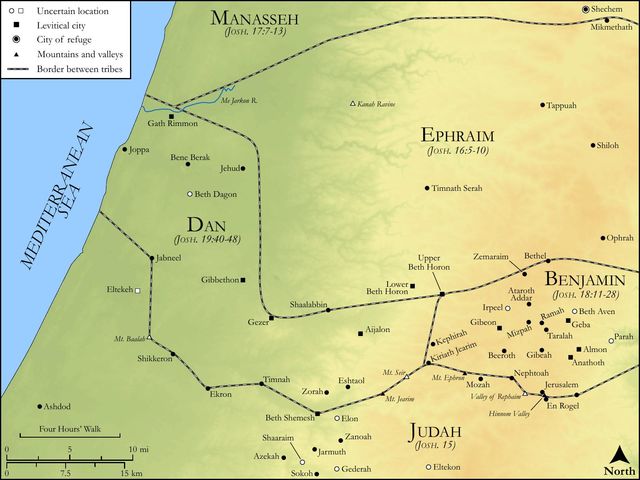
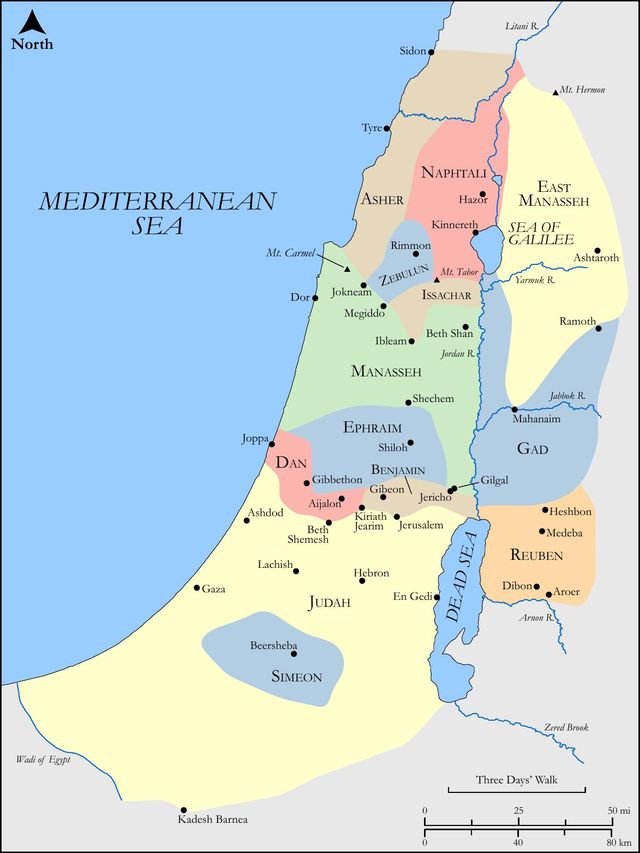
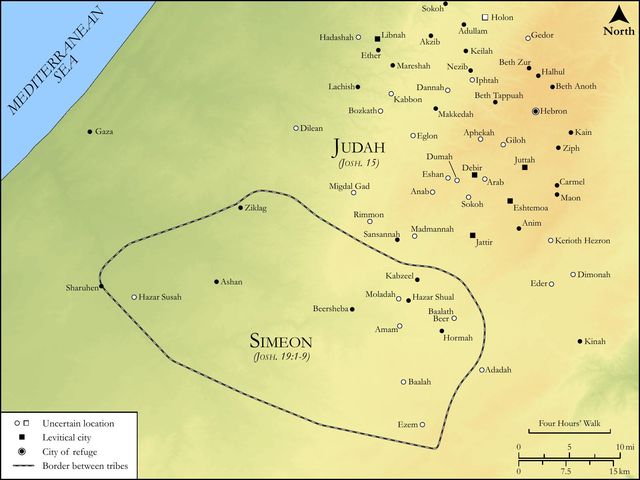
Study this verse
Public-domain commentary
Matthew Henry
From his Commentary on the Whole Bible. Henry comments on passages, not single verses — this entry covers Joshua 17:14–18.
Here, I. The children of Joseph quarrel with their lot; if they had had any just cause to quarrel with it, we have reason to think Joshua would have relieved them, by adding to it, or altering it, which it does not appear he did. It is probable, because Joshua was himself of the tribe of Ephraim, they promised themselves that they should have some particular favour shown them, and should not be confined to the decision of the lot so closely as the other tribes; but Joshua makes them know that in the discharge of his office, as a public person, he had no more regard to his own tribe than to any other, but would administer impartially, without favour or affection, wherein he has left an excellent example to all in public trusts. It was a very competent provision that was made for them, as much, for aught that appears, as they were able to manage, and yet they call it in disdain but one lot, as if that which was assigned to them both was scarcely sufficient for one. The word for complainers (Jde 1:16) is mempsimoiroi, blamers of their lot: - 1. That they were very numerous, through the blessing of God upon them (Jos 17:14): I am a great people, for the Lord has blessed me; and we have reason to hope that he that hath sent mouths will send meat. "I am a great people, and in so small a lot shall not have room to thrive." Yet observe, when they speak thankfully of their present increase, they do not speak confidently of the continuance of it. "The Lord has blessed me hitherto, however he may see fit to deal with me for the future." The uncertainty of what may be must not make us unthankful for what has been and is done in kindness to us. 2. That a good part of that country which had now fallen to their lot was in the hands of the Canaanites, and that they were formidable enemies, who brought into the field of battle chariots of iron (Jos 17:16), that is, chariots with long scythes fastened to the sides of them, or the axle-tree, which made great destruction of all that came in their way, mowing them down like corn. They urge that though they had a good portion assigned them, yet it was in bad hands, and they could not come to the possession of it, wishing to have their lot in those countries that were more thoroughly reduced than this was.
II.Joshua endeavours to reconcile them to their lot.
He owns they were a great people, and being two tribes ought to have more than one lot only (Jos 17:17), but tells them that what had fallen to their share would be a sufficient lot for them both, if they would but work and fight. They desired a lot in which they might indulge themselves in ease and luxury. "No," says Joshua, "you must not count upon that; in the sweat of thy face shalt thou eat bread is a sentence in force even in Canaan itself." He retorts their own argument, that they were a great people. "If so, you are the better able to help yourselves, and have the less reason to expect help from others. If thou hast many mouths to be filled, thou hast twice as many hands to be employed; earn, and then eat." 1. He bids them work for more (Jos 17:15): "Get thee up to the wood-country, which is within thy own border, and let all hands be set to work to cut down the trees, rid the rough lands, and make them, with art and industry, good arable ground." Note, Many wish for larger possessions who do not cultivate and make the best of what they have, think they should have more talents given them who do not trade with those with which they are entrusted. Most people's poverty is the effect of their idleness; would they dig, they need not beg. 2. He bids them fight for more (Jos 17:17, Jos 17:18), when they pleaded that they could not come at the wood-lands he spoke of because in the valley between them and it were Canaanites whom they durst not enter the lists with. "Never fear them," said Joshua, "thou hast God on thy side, and thou shalt drive out the Canaanites, if thou wilt set about it in good earnest, though they have iron chariots." We straiten ourselves by apprehending the difficulties in the way of our enlargement to be greater than really they are. What can be insuperable to faith and holy resolution?
Continue studying Joshua 17:14 across the web’s major study libraries — every link below opens this exact verse, chapter, or book on the destination site.
Read & Compare
 BibleGatewayThis verse in more than 200 translations and 70 languages.
 Bible.comThe YouVersion reader — hundreds of translations, reading plans, and highlights.
 ESV.orgCrossway's official English Standard Version reader.
 NET BibleThe NET translation with 60,000+ translators' notes on every rendering decision.
 STEP BibleTyndale House's free study tool — original text, vocabulary, and scholarly resources.
 BibliaLogos Bible Software's free web reader.
 USCCBThe New American Bible (Revised Edition) with the U.S. bishops' study notes.
Commentaries
 BibleHub CommentariesDozens of classic commentaries on this verse, gathered on one page.
 StudyLightMore than 100 commentary sets — the largest collection on the web.
 BibleRefPlain-English commentary on what this verse means, verse by verse.
 Enduring WordDavid Guzik's free commentary on this chapter, widely used by Bible teachers.
 Bible Study ToolsVerse commentary alongside Greek and Hebrew study aids.
Original Language & Research
- BibleHub InterlinearThe verse word by word — original language, transliteration, and English.
- BibleHub LexiconEvery word's original-language definition and Strong's entry.
 Blue Letter BibleDeep-study tools — Strong's numbers, concordance, and word studies.
 SefariaThe Hebrew text with Rashi and centuries of Jewish commentary.
Sermons, Hymns & Audio


TrulyRandomVerse is not affiliated with these sites and doesn’t control their content. They’re linked because they’re genuinely useful.
Summary
Joshua 17:14 captures a pivotal moment in the allocation of the Promised Land, revealing the inherent tension between divine blessing and human discontent. The powerful and numerous tribes of Ephraim and Manasseh, collectively known as the "children of Joseph," approach Joshua with a complaint, asserting that their allotted inheritance—a single "lot and portion"—is insufficient for their vast population, despite acknowledging God's abundant blessings upon them. This verse sets the stage for a crucial dialogue concerning the responsibilities that accompany God's provision and the need for diligent effort in possessing one's full inheritance.
Context
ShowHideLiterary Context
This verse is situated within the broader narrative of the division of the land of Canaan among the Israelite tribes, following the initial conquests detailed in Joshua 1-12. Specifically, Joshua 13-19 describes the detailed process of land allocation, often by lot, to each tribe. The complaint of the children of Joseph directly follows the description of their extensive territory in Joshua 16 and Joshua 17:1-13. Their grievance in verse 14 prompts Joshua's challenging response in Joshua 17:15-18, where he encourages them to actively clear and possess additional land rather than merely complaining about their initial allocation. This interaction highlights the transition from initial conquest to the ongoing effort required for full possession and serves as a prelude to the recurring theme of incomplete conquest in the book of Judges.
Historical & Cultural Context
The division of the land by lot was a divinely sanctioned method, believed to reflect God's sovereign will in distributing the inheritance (Numbers 26:55-56). The "children of Joseph" refer to the tribes of Ephraim and Manasseh, who were indeed numerically significant, as evidenced by the census data in Numbers 26:28-37. Joseph's prominence in Egypt and the blessing of Jacob upon his sons (Genesis 48:1-22) contributed to their sense of importance and expectation. Their complaint reflects a common human tendency to desire an easier path, expecting their large population to automatically grant them a fully cleared and cultivated territory, rather than undertaking the strenuous work of dispossessing the remaining Canaanites and clearing the dense forests within their allotted regions. This period also marks a crucial shift from a unified military campaign to localized tribal responsibilities, requiring individual tribal initiative.
Key Themes
ShowHideThis verse powerfully underscores several key themes. Firstly, it highlights the theme of Divine Blessing and Human Perception. The Josephites explicitly acknowledge, "the LORD hath blessed me hitherto," recognizing God as the source of their prosperity and growth, yet immediately follow this with a complaint about perceived insufficiency. This reveals a profound human struggle: acknowledging God's past faithfulness while still feeling a sense of lack or entitlement regarding future provision or effort. Secondly, it introduces the tension between Entitlement and Effort. Their grievance subtly suggests a desire for an effortless inheritance, believing their numerical strength should automatically grant them more land without the associated labor of clearing it or fully dispossessing the remaining inhabitants. This sets the stage for Joshua's subsequent challenge, which directs them toward diligent effort and faith. Finally, the interaction illuminates the complexities of Leadership and Grievances. Joshua, as the divinely appointed leader, is confronted with this tribal complaint. His response, detailed in the following verses, demonstrates wisdom in addressing their concerns while directing them toward faith and action rather than simply granting their request, thereby upholding God's plan for the land's distribution and the principles of responsible stewardship.
Exposition and Analysis
ShowHideKey Word Analysis
ShowHide(rab), meaning "abundant (in quantity, size, age, number, rank, quality)." When the Josephites claim to be a "great people," the term rab emphasizes their numerical superiority and perceived importance. This word highlights their self-assessment of strength, which they ironically use as an argument for receiving a larger, pre-cleared inheritance rather than as a motivation for greater effort in possessing the land already allotted to them. Their "greatness" was a blessing, but they viewed it as a reason for exemption from hard work.
(gôwrâl), properly meaning "a pebble," and by extension, "a lot" (small stones being used for that purpose). Figuratively, it denotes a "portion or destiny (as if determined by lot)." The casting of lots was a divinely sanctioned method in ancient Israel for discerning God's will, particularly in land distribution (Proverbs 16:33). By complaining about their "one lot," the Josephites are implicitly questioning the divine wisdom and fairness of the allocation, or at least its practical implications for their large population, suggesting a perceived inadequacy in God's provision.
(chebel), literally "a rope" or "measuring line," and by implication, "a district or inheritance (as measured)." This term signifies a specific, defined, and measured-out inheritance. The complaint about "one portion" suggests a feeling of being constrained or limited by the boundaries assigned to them, despite the vastness of the territory that comprised their "one" inheritance for two tribes (Ephraim and Manasseh). This term underscores the tangible, physical aspect of their grievance regarding the extent and nature of their land.
Verse Breakdown
ShowHide"And the children of Joseph spake unto Joshua, saying"
This clause formally introduces the direct address and complaint from the combined tribes of Ephraim and Manasseh to Joshua. As the divinely appointed leader responsible for the land distribution, Joshua is the appropriate authority to whom such a grievance would be brought, signifying a formal appeal or challenge to the established order.
"Why hast thou given me [but] one lot and one portion to inherit"
This rhetorical question expresses the Josephites' deep dissatisfaction and perceived injustice. They challenge Joshua's decision, implying that the single, combined inheritance given to the two powerful Josephite tribes is insufficient for their numerous population. The repetition of "one lot and one portion" emphasizes their feeling of being short-changed, despite the fact that their "one" inheritance was actually quite large and strategically located, encompassing two distinct tribal territories.
"seeing I [am] a great people"
This clause provides the justification for their complaint. They appeal to their numerical strength, prominence, and perhaps their historical significance (as descendants of Joseph) as the reason they believe they deserve a larger or more easily manageable inheritance. This reflects a common human tendency to equate size and influence with a right to greater privilege or less effort.
"forasmuch as the LORD hath blessed me hitherto?"
This final clause is profoundly ironic and reveals a significant theological disconnect. The Josephites acknowledge God's blessing as the source of their growth and numerousness, yet they immediately use this very blessing as the basis for their complaint. It highlights a common human failing: recognizing divine favor but then using it as leverage for entitlement rather than as a call to greater responsibility, diligent effort, and gratitude.
Literary Devices
ShowHideThe passage employs several literary devices to convey its message and reveal the underlying human and theological tensions. The primary device is Dialogue, presenting a direct confrontation between the Josephites and Joshua, which immediately draws the reader into the tension of the scene and highlights the interpersonal nature of the grievance. The Josephites' opening statement is framed as a Rhetorical Question ("Why hast thou given me [but] one lot and one portion to inherit?"), designed not to elicit information but to express their strong dissatisfaction, challenge the perceived inadequacy of their inheritance, and implicitly question Joshua's judgment. There is a powerful and poignant Irony in their complaint, as they cite God's blessing ("the LORD hath blessed me hitherto") as the very reason for their perceived lack, revealing a profound disconnect between acknowledging divine favor and embracing the responsibility that comes with it. Furthermore, the passage contains an element of Foreshadowing, as the Josephites' reluctance to exert effort in clearing their land hints at the future struggles of Israel in fully dispossessing the Canaanites, a recurring and tragic theme that dominates the subsequent book of Judges.
Theological and Thematic Connections
ShowHideJoshua 17:14 serves as a powerful microcosm of the ongoing tension between God's generous provision and humanity's often ungrateful or entitled response. The Josephites, having been abundantly blessed by God with numerical growth, paradoxically use this blessing as a basis for complaint, demanding more without the commensurate effort required to fully possess what they have already received. This highlights a fundamental theological truth: God's blessings often come with responsibilities, and true stewardship involves diligent effort and faith, not passive expectation. Their complaint reveals a desire for an "easy" inheritance, failing to grasp that the promise of the land required active, faith-filled engagement to fully realize its potential. This narrative underscores God's faithfulness in fulfilling His covenant promises, even when His people struggle with impatience, entitlement, or a lack of courage to fully step into their inheritance. It reminds us that while God provides, He also calls us to participate actively in His plan, trusting His wisdom even when our circumstances seem challenging.
Reflection and Application
ShowHideThe complaint of the children of Joseph resonates deeply with the human condition across all ages. It serves as a potent reminder that even amidst undeniable blessings, our hearts can be prone to discontent, focusing on perceived insufficiencies rather than cultivating gratitude for what God has already provided. This passage challenges us to examine our own attitudes: Do we view God's blessings as entitlements that should lead to an easier life, or as resources and responsibilities that call us to greater faithfulness and effort? Spiritual and material growth often necessitates greater diligence, faith, and courage to fully realize the potential of God's provision. Like the Josephites, we are called to actively engage with the opportunities and challenges God places before us, trusting that He has equipped us for the task, even when it requires clearing "forests" or confronting "Canaanites" in our lives. Instead of complaining about perceived limitations, we are encouraged to lean on God's strength to overcome obstacles, understanding that our inheritance in Christ is vast and requires our active participation to fully experience and steward.
Questions for Reflection
ShowHideFAQ
ShowHideWho were the "children of Joseph" and why were they so numerous?
ShowHideThe "children of Joseph" refers collectively to the two powerful tribes descended from Joseph's sons, Ephraim and Manasseh. Joseph himself was a prominent figure in Egypt, and his descendants were blessed by Jacob, who adopted Ephraim and Manasseh as his own sons, giving them full tribal status (Genesis 48:5). Their numerical strength is confirmed by the census records in Numbers 26, where Ephraim and Manasseh together comprised a very large portion of the Israelite population, making them one of the most significant tribal groups.
What does "one lot and one portion" mean, given their size?
ShowHideWhile the Josephites complained about receiving "one lot and one portion," this refers to the single, combined inheritance allocated to the house of Joseph, which then encompassed the two distinct tribal territories of Ephraim and Manasseh. Their inheritance was actually quite substantial and strategically located in the fertile central highlands of Canaan (Joshua 16 and Joshua 17). Their complaint was not about the size of their allocated territory per se, but about the effort required to fully possess it. Much of their land was still forested or inhabited by Canaanites, and they desired an already cleared and easily settled inheritance commensurate with their large population, rather than undertaking the strenuous work of expansion and disinheritance.
How did Joshua respond to their complaint?
ShowHideJoshua did not simply concede to their complaint. Instead, his response, found in Joshua 17:15-18, challenged them to actively possess their inheritance. He essentially told them, "If you are so numerous and great, then go clear the forests and drive out the Canaanites in your allotted territory!" He affirmed that their strength was a reason for greater effort, not greater entitlement. This response highlights a key principle: God's blessings often come with responsibilities and require active participation to fully realize their potential.
Christ-Centered Fulfillment
ShowHideThe complaint of the children of Joseph, though rooted in the Old Testament land inheritance, offers profound Christ-centered fulfillment. Their desire for an easier, pre-cleared inheritance, despite God's abundant blessing and promise, points to a deeper spiritual truth. In Christ, believers receive an immeasurably richer inheritance—not a physical land, but eternal life, reconciliation with God, and the indwelling Holy Spirit (Ephesians 1:11-14). Just as the Josephites were called to actively possess their land, believers are called to "work out your own salvation with fear and trembling" (Philippians 2:12), not to earn it, but to diligently live out the reality of what Christ has already secured. Jesus, the ultimate "Lamb of God" (John 1:29), has already conquered sin and death, clearing the way for our spiritual inheritance. Our "greatness" as a people of God is not in our numbers or earthly power, but in our identity as children of God through adoption in Christ (Romans 8:15-17). The "forests" and "Canaanites" we face are spiritual battles against sin, temptation, and the forces of darkness (Ephesians 6:12), which we are empowered to overcome through the strength of Christ who lives in us (Philippians 4:13). Thus, the Josephites' complaint serves as a reminder that our spiritual blessings in Christ call us to active faith, grateful stewardship, and courageous engagement in the mission He has given us, rather than passive entitlement.