


Jeremiah 48:11
- שַׁאֲנַןsha·'a·Nanit has been at easeH7599V-Piel-Perf-3msVerb Piel Perfect 3rd Singular Masculine
- מוֹאָבmo·'AvMoabH4124N-properNoun Proper Location
- מִנְּעוּרָיוmi·ne·'u·Ravsince its youth<s>H5271Prep-m ¦ N-mpc ¦ 3msNoun Plural Masculine Constructמִsinceנְּעוּרָיyouth<s>וits
- וְשֹׁקֵטve·sho·Ketand [has been] undisturbedH8252Conj-w ¦ V-Qal-Prtcpl-msVerb Qal Participle Singular Masculine Absoluteוְandשֹׁקֵט[has been] undisturbed
- הוּאhu'itH1931Pro-3msPronoun Personal 3rd Singular Masculine
- אֶל'eltoH413PrepPreposition
- שְׁמָרָיוshe·ma·Ravits leesH8105N-mpc ¦ 3msNoun Plural Masculine Constructשְׁמָרָיleesוits
- וְלֹאve·lo'and notH3808Conj-w ¦ NegParticle Negativeוְandלֹאnot
- הוּרַקhu·Rakit has been pouredH7324V-Hophal-Perf-3msVerb Hophal Perfect 3rd Singular Masculine
- מִכְּלִיmi·ke·Lifrom vesselH3627Prep-m ¦ N-msNoun Singular Masculine Absoluteמִfromכְּלִיvessel
- אֶל'eltoH413PrepPreposition
- כֶּלִיKe·livesselH3627N-msNoun Singular Masculine Absolute
- וּבַגּוֹלָהu·va·go·Lahand in <the> exileH1473Conj-w ¦ Prep-b ¦ N-fsNoun Singular Feminine Absoluteוּandבַin <the>גּוֹלָהexile
- לֹאlo'notH3808NegParticle Negative
- הָלָךְha·Lakhit has goneH1980V-Qal-Perf-3msVerb Qal Perfect 3rd Singular Masculine
- עַל'althere-H5921PrepPreposition
- כֵּןKen-foreH3651AdvAdverb
- עָמַד'a·Madit has remainedH5975V-Qal-Perf-3msVerb Qal Perfect 3rd Singular Masculine
- טַעְמוֹta'·Moits tasteH2940N-msc ¦ 3msNoun Singular Masculine Constructטַעְמtasteוֹits
- בּוֹboin <the> itPrep-b ¦ 3msSuffix Personal 3rd Singular Masculineבּin <the>וֹit
- וְרֵיחוֹve·rei·Choand its aromaH7381Conj-w ¦ N-msc ¦ 3msNoun Singular Masculine Constructוְandרֵיחaromaוֹits
- לֹאlo'notH3808NegParticle Negative
- נָמָרna·Marit has been changedH4171V-Niphal-Perf-3msVerb Niphal Perfect 3rd Singular Masculine
English is a literal word-by-word gloss of the Hebrew, not the KJV's wording. Why?
This is the original text the KJV's translators worked from — each Hebrew word with its own literal English meaning in this verse, prepared by scholars at Tyndale House, Cambridge. The KJV translates whole sentences, not word by word, so its wording differs: one Hebrew word can become several English words, and the KJV may choose “the LORD” where the gloss reads “Yahweh”. Both are faithful — they answer different questions. For the KJV's own rendering, switch to the KJV text.
Details
See on the biblical-era map
Study this verse
Public-domain commentary
Matthew Henry
From his Commentary on the Whole Bible. Henry comments on passages, not single verses — this entry covers Jeremiah 48:1–13. His three-level outline is real structure in the source text, so it is rendered as structure.
We may observe in these verses,
I.The author of Moab's destruction; it is the Lord of hosts, that has armies, all armies, at his command, and the God of Israel (Jer 48:1), who will herein plead the cause of his Israel against a people that have always been vexatious to them, and will punish them now for the injuries done to Israel of old, though Israel was forbidden to meddle with them (Deu 2:9), therefore the destruction of Moab is called the work of the Lord (Jer 48:10), for it is he that pleads for Israel; and his work will exactly agree with his word, Jer 48:8.
II.The instruments of it:
Spoilers shall come (Jer 48:8), shall come with a sword, a sword that shall pursue them, Jer 48:2. "I will send unto him wanderers, such as come from afar, as if they were vagrants, or had missed their way, but they shall cause him to wander; they seem as wanderers themselves, but they shall make the Moabites to be really wanderers, some to flee and others to be carried into captivity." These destroyers stir up themselves to do execution; they have devised evil against Heshbon, one of the principal cities of Moab, and they aim at no less than the ruin of the kingdom: Come, and let us cut it off from being a nation (Jer 48:2); nothing less will serve the turn of the invaders; they come, not to plunder it, but to ruin it. The prophet, in God's name, engages them to make thorough work of it (Jer 48:10): Cursed be he that does the work of the Lord deceitfully, this bloody work, this destroying work; though it goes against the grain with men of compassion, yet it is the work of the Lord, and must not be done by the halves. The Chaldeans have it in charge, by a secret instinct (says Mr. Gataker), to destroy the Moabites, and therefore they must not spare, must not, out of foolish pity, keep back their sword from blood; they would thereby bring a sword, and a curse with it, upon themselves, as Saul did by sparing the Amalekites and Ahab by letting Benhadad go. Thy life shall go for his life. To this work is applied that general rule given to all that are employed in any service for God, Cursed by he that does the work of the Lord deceitfully or negligently, that pretends to do it, but does it not to purpose, makes a show of serving God's glory, but is really serving his own ends and carries on the work of the Lord no further than will suit his own purposes, or that is slothful in business for God and takes neither care nor pains to do it as it should be done, Mal 1:14. Let not such deceive themselves, for God will not thus be mocked.
III.The woeful instances and effects of this destruction.
The cities shall be laid in ruins; they shall be spoiled (Jer 48:1) and cut down (Jer 48:2); they shall be desolate (Jer 48:9), without any to dwell therein; there shall be no houses to dwell in, or no people to dwell in them, or no safety and ease to those that would dwell in them. Every city shall be spoiled and no city shall escape. The strongest city shall not be able to secure itself against the enemies' power, nor shall the finest city be able to recommend itself to the enemies' pity and favour. The country also shall be wasted, the valley shall perish, and the plain be destroyed, Jer 48:8. The corn and the flocks, which used to cover the plains and make the valleys rejoice, shall all be destroyed, eaten up, trodden down, or carried off. The most sacred persons shall not escape: The priests and princes shall go together into captivity. Nay, Chemosh, the god they worship, who, they hope, will protect them, shall share with them in the ruin; his temples shall be laid in ashes and his image carried away with the rest of the spoil. Now the consequence of all this will be,
1.Great shame and confusion: Kirjathaim is confounded, and Misgah is so. They shall be ashamed of the mighty boasts they have sometimes made of their cities: There shall be no more vaunting in Moab concerning Heshbon (so it might be read, Jer 48:2); they shall no more boast of the strength of that city when the evil which is designed against it is brought upon it. Nor shall they any more boast of their gods (Jer 48:13); they shall be ashamed of Chemosh (ashamed of all the prayers they have made to and all the confidence they put in that dunghill deity), as Israel was ashamed of Beth-el, of the golden calf they had at Beth-el, which they confided in as their protector, but were deceived in, for it was not able to save them from the Assyrians; nor shall Chemosh be able to save the Moabites from the Chaldeans. Note, Those that will not be convinced and made ashamed of the folly of their idolatry by the word of God shall be convinced and made ashamed of it by the judgments of God, when they shall find by woeful experience the utter inability of the gods they have served to do them any service.
2.There will be great sorrow; there is a voice of crying heard (Jer 48:3) and the cry is nothing but spoiling and great destruction. Alas! alas! Moab is destroyed, Jer 48:4. The great ones having quitted the cities to shift for their own safety, even the little ones have caused a cry to be heard, the meaner sort of people, or the little children, the innocent harmless ones, whose cries at such a time are the most piteous. Go up to the hills, go down to the valleys, and you meet with continual weeping (weeping with weeping); all are in tears; you meet none with dry eyes. Even the enemies have heard the cry, from whom it would have been policy to conceal it, for they will be animated and encouraged by it; but it is so great that it cannot be hid,
3.There will be great hurry; they will cry to one another, "Away, away! flee; save your lives (Jer 48:6); shift for your own safety with all imaginable speed, though you escape as bare and naked as the heath, or grig, or dry shrub, in the wilderness; think not of carrying away any thing you have, for it may cost you your life to attempt it, Mat 24:16-18. Take shelter, though it be in a barren wilderness, that you may have your lives for a prey. The danger will come suddenly and swiftly; and therefore give wings unto Moab (Jer 48:9); that would be the greatest kindness you could do them; that is what they will call for, O that we had wings like a dove! for unless they have wings, and can fly, there will be no escaping."
IV.The sins for which God will now reckon with Moab, and which justify God in these severe proceedings against them.
1.It is because they have been secure, and have trusted in their wealth and strength, in their works and in their treasures, Jer 48:7. They had taken a great deal of pains to fortify their cities and make large works about them, and to fill their exchequer and private coffers, so that they thought themselves in as good a posture for war as any people could be and that none durst invade them, and therefore set danger at defiance. They trusted in the abundance of their riches and strengthened themselves in their wickedness, Psa 52:7. Now, for this reason, that they may have a sensible conviction of the vanity and folly of their carnal confidences, God will send an enemy that will master their works and rifle their treasures. Note, We forfeit the comfort of that creature which we repose that confidence in which should be reposed in God only. The reed will break that is leaned upon.
2.It is because they have not made a right improvement of the days of the peace and prosperity, Jer 48:11.
(1.)They had been long undisturbed: Moab has been at ease from his youth. It was an ancient kingdom before Israel was, and had enjoyed great tranquillity, though a small country and surrounded with potent neighbours. God's Israel were afflicted from their youth (Psa 129:1, Psa 129:2), but Moab at ease from his youth. He has not been emptied from vessel to vessel, has not known any troublesome weakening changes, but is as wine kept on the lees, and not racked or drawn off, by which it retains its strength and body. He has not been unsettled, nor any way made uneasy; he has not gone into captivity, as Israel have often done, and yet Moab is a wicked idolatrous nation, and one of the confederates against God's hidden ones, Psa 83:3, Psa 83:6. Note, There are many that persist in unrepented iniquity and yet enjoy uninterrupted prosperity.
(2.)They had been as long corrupt and unreformed: He has settled on his lees; he has been secure and sensual in his prosperity, has rested in it, and fetched all the strength and life of the soul from it, as the wine from the lees. His taste remained in him, and his scent is not changed; he is still the same, as bad as ever he was. Note, While bad people are as happy as they used to be in the world it is no marvel if they are bad as they used to be. They have no changes of their peace and prosperity, therefore fear not God, their hearts and lives are unchanged, Psa 55:19.
Continue studying Jeremiah 48:11 across the web’s major study libraries — every link below opens this exact verse, chapter, or book on the destination site.
Read & Compare
 BibleGatewayThis verse in more than 200 translations and 70 languages.
 Bible.comThe YouVersion reader — hundreds of translations, reading plans, and highlights.
 ESV.orgCrossway's official English Standard Version reader.
 NET BibleThe NET translation with 60,000+ translators' notes on every rendering decision.
 STEP BibleTyndale House's free study tool — original text, vocabulary, and scholarly resources.
 BibliaLogos Bible Software's free web reader.
 USCCBThe New American Bible (Revised Edition) with the U.S. bishops' study notes.
Commentaries
 BibleHub CommentariesDozens of classic commentaries on this verse, gathered on one page.
 StudyLightMore than 100 commentary sets — the largest collection on the web.
 BibleRefPlain-English commentary on what this verse means, verse by verse.
 Enduring WordDavid Guzik's free commentary on this chapter, widely used by Bible teachers.
 Bible Study ToolsVerse commentary alongside Greek and Hebrew study aids.
Original Language & Research
- BibleHub InterlinearThe verse word by word — original language, transliteration, and English.
- BibleHub LexiconEvery word's original-language definition and Strong's entry.
 Blue Letter BibleDeep-study tools — Strong's numbers, concordance, and word studies.
 SefariaThe Hebrew text with Rashi and centuries of Jewish commentary.
Sermons, Hymns & Audio


TrulyRandomVerse is not affiliated with these sites and doesn’t control their content. They’re linked because they’re genuinely useful.
Summary
Jeremiah 48:11 masterfully employs the ancient winemaking process as a profound metaphor to illustrate Moab's long-standing complacency and spiritual stagnation. Having enjoyed an uninterrupted history of peace and prosperity, Moab remained undisturbed, akin to wine left on its lees without the refining process of decanting or the transformative experience of captivity. This lack of divine discipline and purification resulted in an unyielding national character, stubbornly retaining its inherent pride, idolatry, and resistance to change, thereby setting the stage for the severe divine judgment prophesied against it.
Context
ShowHideLiterary Context
Jeremiah 48 is a comprehensive and vivid oracle of judgment against Moab, one of several "oracles against the nations" found in Jeremiah 46-51. These prophecies collectively underscore Yahweh's absolute sovereignty over all nations, demonstrating that His justice extends beyond Israel to encompass the entire world. Within this specific oracle, verse 11 serves as a crucial theological explanation for Moab's impending downfall. It provides the rationale for the severity of the judgment, portraying Moab's destruction not as arbitrary, but as a direct consequence of its unrefined and unrepentant character. The imagery of winemaking, particularly the settling of wine on its lees, is a powerful and evocative metaphor that immediately precedes a detailed description of Moab's utter devastation and the lament that will follow, framing the subsequent ruin as the inevitable outcome of their spiritual complacency.
Historical & Cultural Context
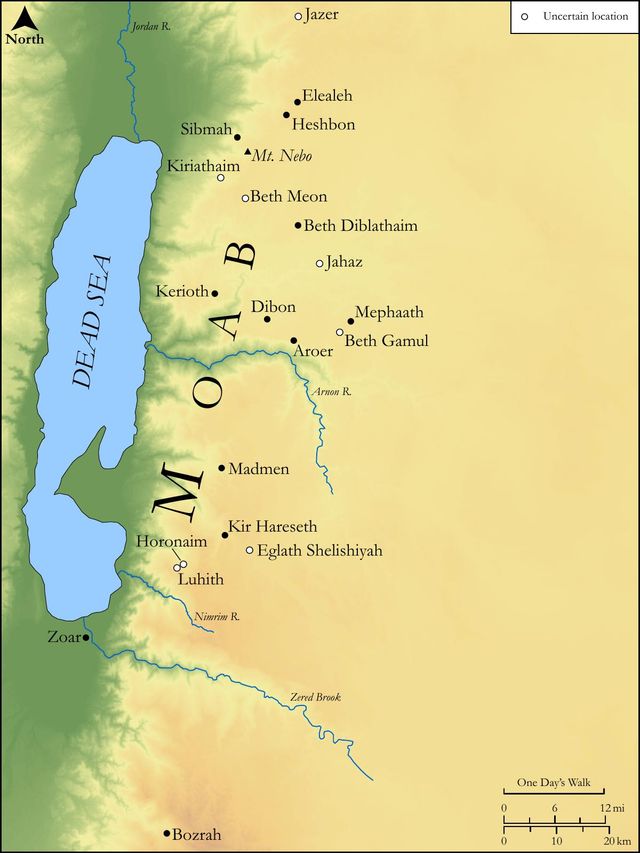
Moab was an ancient nation situated east of the Dead Sea, tracing its lineage back to Lot, Abraham's nephew, as recorded in Genesis 19:37. Historically, Moab maintained a complex and often adversarial relationship with Israel, marked by periods of conflict, tribute, and significant idolatry, particularly the worship of the detestable god Chemosh (1 Kings 11:7). Unlike Israel, which frequently endured cycles of divine discipline through invasion, oppression, and exile—experiences intended by God for purification and repentance—Moab had largely escaped such severe national trials. This verse highlights this distinct historical trajectory, positing that Moab's prolonged ease, rather than being a blessing, became a spiritual detriment. It fostered an unchangeable, arrogant disposition that rendered the nation impervious to any divine call for humility or repentance, ultimately sealing its fate.
Key Themes
ShowHideThe primary themes embedded in Jeremiah 48:11 revolve around the profound consequences of complacency and the necessity of refining trials for spiritual health. Moab's "ease from his youth" vividly illustrates how uninterrupted prosperity and freedom from hardship can lead to spiritual stagnation, arrogance, and a hardened heart, effectively preventing genuine transformation. The central metaphor of wine "settled on its lees" and "not emptied from vessel to vessel" powerfully conveys the idea of an unpurified, unrefined character, stubbornly resistant to change and clinging to its inherent impurities. This stands in stark contrast to God's consistent method of refining His chosen people through adversity, as seen in passages such as Malachi 3:3 and Zechariah 13:9. The verse also implicitly addresses the theme of divine judgment, suggesting that Moab's unyielding and unrepentant nature, a direct result of its unrefined state, rendered it ripe for the impending and severe destruction.
Exposition and Analysis
ShowHideKey Word Analysis
ShowHideThis word (H7599) is a primitive root meaning "to loll" or "to be peaceful." In the context of Moab, it signifies a prolonged state of undisturbed tranquility, security, and national prosperity, largely free from significant external threats or internal upheavals. This "ease" is presented not as a divine favor, but as a condition that ironically fostered spiritual complacency, self-sufficiency, and an unyielding character, preventing the nation from seeking God or acknowledging its deep need for repentance and transformation.
Derived from a root meaning "to preserve," this term (H8105) refers to the sediment, dregs, or solid particles that settle at the bottom of a wine vat after fermentation. While in some winemaking traditions, a controlled period on the lees can enhance flavor, prolonged and undisturbed contact without decanting results in a cloudy, bitter, or overly strong product. Metaphorically, Moab's "settling on its lees" indicates an undisturbed, unpurified state where its inherent impurities—such as national pride, idolatry, and stubbornness—were allowed to accumulate, intensify, and become deeply ingrained, rather than being separated, purged, or refined.
This term (H1473) refers to exile, the state of being carried away as a captive, or the collective body of exiles. It represents a severe national trial, often understood as a consequence of divine judgment, intended to humble, purify, and bring a people to repentance. The declaration that Moab "hath not been emptied from vessel to vessel, neither hath he gone into captivity" directly links the absence of refining processes (like decanting wine) to the lack of the transformative and humbling experience of exile. This highlights a crucial distinction between Moab's history and that of Israel, which frequently endured periods of forced displacement and subjugation as a means of spiritual discipline and renewal.
Verse Breakdown
ShowHide"Moab hath been at ease from his youth"
This opening clause establishes Moab's historical trajectory, characterized by prolonged peace, stability, and undisturbed prosperity from its very inception as a nation. It implies that Moab had not encountered the kind of severe, humbling national trials that might have prompted introspection, repentance, or a turning towards God. This unbroken "ease" is presented as the foundational cause for its subsequent unrefined and unyielding spiritual state.
"and he hath settled on his lees"
This is the central and most potent metaphor of the verse, likening Moab to wine that has been left undisturbed on its sediment. It powerfully conveys a state of spiritual stagnation where inherent impurities—such as national pride, idolatry, and stubbornness—were allowed to accumulate, deepen, and become inextricably ingrained in the national character, rather than being purged or clarified through refining processes.
"and hath not been emptied from vessel to vessel"
This clause further elaborates the winemaking metaphor, specifically referencing the crucial process of decanting. In decanting, wine is carefully poured from one container to another to separate it from the lees, thereby improving its clarity, purity, and overall taste. Spiritually, this signifies the absence of the refining trials, difficulties, or even forced migrations (like captivity) that God frequently employs to purify, humble, and shape individuals or nations, removing their spiritual dross.
"neither hath he gone into captivity"
This clause explicitly states the specific type of severe refining experience that Moab had avoided. Unlike Israel, which repeatedly faced the humbling and often purifying experience of exile and foreign domination, Moab had largely escaped such a fate. This lack of a humbling "captivity" is presented as a direct contributor to its unyielding, unrepentant, and stubbornly proud national character.
"therefore his taste remained in him, and his scent is not changed"
This concluding clause presents the direct and inevitable consequence of Moab's undisturbed and unrefined state. Because the nation was never subjected to the purifying processes of divine discipline, its inherent "taste" (referring to its character, disposition, moral essence, and spiritual nature) and its "scent" (its reputation, spiritual aroma, or influence) remained fundamentally unaltered. This signifies an unyielding, unrepentant, and stubbornly proud nature, impervious to genuine change or divine influence, which ultimately made it ripe for the impending and severe judgment.
Literary Devices
ShowHideJeremiah 48:11 is exceptionally rich in Metaphor, primarily comparing the nation of Moab to wine that has been left undisturbed on its lees and never emptied from vessel to vessel. This extended metaphor, drawn from the ancient and familiar practice of winemaking, powerfully illustrates Moab's spiritual stagnation and its unrefined, corrupted character. The "lees" specifically symbolize the impurities, deep-seated pride, and pervasive idolatry that accumulated and became deeply ingrained in Moab's national identity due to a prolonged absence of refining trials. The act of "emptying from vessel to vessel" represents the transformative and purifying experiences of hardship, divine discipline, or even exile that God sovereignly uses to humble and change a people, separating them from their spiritual dross. The verse also employs a subtle form of Personification, attributing human-like qualities to Moab as a collective entity, stating that "his taste remained in him, and his scent is not changed." This emphasizes the nation's stubborn and unchanging disposition, as if it possesses a personal character. Furthermore, there is a profound Irony at play: what might superficially appear as stability or a blessing (an unchanged character due to prolonged ease) is actually presented as a severe spiritual deficiency, directly leading to divine judgment rather than preservation or blessing.
Theological and Thematic Connections
ShowHideJeremiah 48:11 offers a profound theological insight into the nature of divine discipline and the dangers of unbridled prosperity. It powerfully illustrates the principle that prolonged ease and uninterrupted national prosperity, when not accompanied by humility and spiritual introspection, can lead to a hardened heart and a character stubbornly resistant to God's refining work. God, in His sovereign wisdom and love, often employs trials and adversity—symbolized here by the "emptying from vessel to vessel" or the experience of "captivity"—as a crucial means of purification and growth for His people. These experiences are designed to separate them from the "lees" of sin, self-reliance, and idolatry. Moab's unrefined state, a direct consequence of its prolonged comfort and lack of humbling experiences, serves as a stark warning against spiritual complacency and underscores the absolute necessity of embracing God's transformative processes, even when they involve discomfort, suffering, or profound change, for true spiritual maturity and alignment with His will.
Reflection and Application
ShowHideJeremiah 48:11 stands as a profound warning and a compelling call to self-examination for individuals, families, and communities in every generation. In a contemporary world that frequently prioritizes comfort, seeks to avoid all hardship, and often defines success by undisturbed prosperity, this verse serves as a crucial reminder that a life devoid of refining experiences can paradoxically lead to spiritual stagnation, a hardening of character, and a deep-seated resistance to God's transformative work. We are inherently prone to accumulate spiritual "lees"—whether they be subtle forms of pride, deep-seated self-sufficiency, unconfessed sins, or a pervasive spiritual complacency—when we are not regularly "emptied from vessel to vessel" through the challenges of life, the discomfort of honest self-reflection, the humility of repentance, or the refining fire of trials. Embracing God's refining process, though often painful and counter-cultural, is absolutely essential for genuine spiritual growth, cultivating true humility, and developing a character that increasingly reflects the image of Christ. It encourages us to reframe difficulties not merely as obstacles or punishments, but as divinely appointed opportunities for purification, deeper intimacy with our Creator, and the removal of anything that hinders our walk with Him.
Questions for Reflection
ShowHideFAQ
ShowHideWhat does "settled on his lees" mean in the context of winemaking?
ShowHideIn the ancient practice of winemaking, "lees" (Hebrew: shemer) refers to the sediment, dead yeast cells, grape skins, and other solid particles that settle at the bottom of a wine vat after the fermentation process is complete. While some wines are intentionally aged on their lees for a controlled period to develop specific flavors and textures (a process known as sur lie aging), prolonged contact without decanting (pouring the wine off the sediment into a new, clean vessel) can result in a cloudy, bitter, or overly strong wine with undesirable characteristics. The metaphor in Jeremiah 48:11 suggests that Moab, like wine left undisturbed on its sediment, had allowed its inherent impurities and negative characteristics—such as pride, idolatry, and stubbornness—to become deeply ingrained and unrefined, never undergoing the necessary purification process.
How does Moab's experience contrast with Israel's in terms of "captivity"?
ShowHideThe verse explicitly states that Moab "hath not been emptied from vessel to vessel, neither hath he gone into captivity." This stands in stark contrast to the historical experience of Israel. Throughout the Old Testament, Israel frequently endured periods of foreign oppression, invasion, and exile (e.g., the Assyrian and Babylonian captivities, as prophesied in Jeremiah 25:11) as a direct consequence of their disobedience, idolatry, and covenant unfaithfulness. These experiences, though profoundly painful and disruptive, were often intended by God as a means of discipline, purification, and drawing His people back to Himself in repentance, as vividly portrayed in passages like Isaiah 1:25. Moab, by largely avoiding such severe national trials and humbling experiences, remained unhumbled and unchanged in its rebellious disposition, never experiencing the transformative "emptying" that God often uses to refine nations.
Christ-Centered Fulfillment
ShowHideJeremiah 48:11, though a prophecy of impending judgment against Moab, profoundly foreshadows the ultimate and redemptive refining work accomplished in Christ and continuously enacted in the lives of His followers. While Moab remained stubbornly unchanged due to its lack of refining trials, the New Covenant offers a radical and supernatural transformation through the person and work of Jesus Christ. He is the ultimate "emptying from vessel to vessel," not by experiencing judgment for His own sin, but by becoming sin for us, enduring the ultimate "captivity" of death on the cross to purify and redeem His people (as profoundly declared in 2 Corinthians 5:21). Through His perfect sacrifice, believers are not merely decanted from their old impurities but are made entirely new creations, having their very "taste" and "scent" fundamentally changed by the indwelling Holy Spirit (Ephesians 4:22-24). Furthermore, while Moab's prolonged ease led to spiritual stagnation and judgment, Christ calls His disciples to willingly embrace the refining fires of discipleship and even suffering for righteousness' sake, knowing that such trials, when endured in faith, produce perseverance, proven character, and an unshakeable hope (Romans 5:3-5). Thus, the Christian life is a continuous, Spirit-led process of being "emptied" of self, purged of our old nature's "lees," and progressively filled with the character and likeness of Christ, rather than remaining stubbornly unchanged in our former state.