


Psalms 83:3
Bible text: King James Version (1769 Blayney text) · Public domain
Bible text: Berean Standard Bible · Public domain
Bible text: American Standard Version (1901) · Public domain
Bible text: World English Bible, Messianic edition · Public domain
Bible text: Geneva Bible (1599) · Public domain
Bible text: Young's Literal Translation · Public domain
- עַל'alonH5921PrepPreposition
- עַמְּךָ'A·me·khayour peopleH5971N-msc ¦ 2msNoun Singular Masculine Constructעַמְּpeopleךָyour
- יַעֲרִימוּya·'a·Ri·muthey make craftyH6191V-Hiphil-Imperf-3mpVerb Hiphil Imperfect 3rd Plural Masculine
- סוֹדSodcounselH5475N-msNoun Singular Masculine Absolute
- וְיִתְיָעֲצוּve·yit·ya·'a·Tzuso they may consult togetherH3289Conj-w ¦ V-Hithpael-ConjImperf-3mpVerb Hithpael Conjunction+Imperfect 3rd Plural Masculineוְsoיִתְיָעֲצוּthey may consult together
- עַל'alonH5921PrepPreposition
- צְפוּנֶיךָtze·fu·Nei·khayour treasured [ones]H6845V-Qal-PassPrtcpl-mp ¦ 2msVerb Qal Participle Passive Plural Masculine Constructצְפוּנֶיtreasured [ones]ךָyour
English is a literal word-by-word gloss of the Hebrew, not the KJV's wording. Why?
This is the original text the KJV's translators worked from — each Hebrew word with its own literal English meaning in this verse, prepared by scholars at Tyndale House, Cambridge. The KJV translates whole sentences, not word by word, so its wording differs: one Hebrew word can become several English words, and the KJV may choose “the LORD” where the gloss reads “Yahweh”. Both are faithful — they answer different questions. For the KJV's own rendering, switch to the KJV text.
Details
See on the biblical-era map
Study this verse
Public-domain commentary
Matthew Henry
From his Commentary on the Whole Bible. Henry comments on passages, not single verses — this entry covers Psalms 83:1–8. His three-level outline is real structure in the source text, so it is rendered as structure.
The Israel of God were now in danger, and fear, and great distress, and yet their prayer is called, A song or psalm; for singing psalms is not unseasonable, no, not when the harps are hung upon the willow-trees.
I.The psalmist here begs of God to appear on the behalf of his injured threatened people (Psa 83:1):
"Keep not thou silence, O God! but give judgment for us against those that do us an apparent wrong." Thus Jehoshaphat prayed upon occasion of that invasion (Ch2 20:11), Behold, how they reward us, to come to cast us out of thy possession. Sometimes God seems to connive at the unjust treatment which is given to his people; he keeps silence, as one that either did not observe it or did not concern himself in it; he holds his peace, as if he would observe an exact neutrality, and let them fight it out; he is still, and gives not the enemies of his people any disturbance or opposition, but seems to sit by as a man astonished, or as a mighty man that cannot save. Then he gives us leave to call upon him, as here, "Keep not thou silence, O God! Lord, speak to us by the prophets for our encouragement against our fears" (as he did in reference to that invasion, Ch2 20:14, etc.); "Lord, speak for us by the providence and speak against our enemies; speak deliverance to us and disappointment to them." God's speaking is his acting; for with him saying and doing are the same thing.
II.He here gives an account of the grand alliance of the neighbouring nations against Israel, which he begs of God to break, and blast the projects of. Now observe here,
1.Against whom this confederacy is formed; it is against the Israel of God, and so, in effect, against the God of Israel. Thus the psalmist takes care to interest God in their cause, not doubting but that, if it appeared that they were for God, God would make it to appear that he was for them, and then they might set all their enemies at defiance; for whom then could be against them? "Lord," says he, "they are thy enemies, and they hate thee." All wicked people are God's enemies (the carnal mind is enmity against God), but especially wicked persecutors; they hated the religious worshippers of God, because they hated God's holy religion and the worship of him. This was that which made God's people so zealous against them - that they fought against God: They are confederate against thee, Psa 83:5. Were our interest only concerned, we could the better bear it; but, when God himself is struck at, it is time to cry, Help, Lord. Keep not thou silence, O God! He proves that they are confederate against God, for they are so against the people of God, who are near and dear to him, his son, his first-born, his portion, and the lot of his inheritance; he may truly be said to fight against me that endeavours to destroy my children, to root out my family, and to ruin my estate. "Lord," says the psalmist, "they are thy enemies, for they consult against thy hidden ones." Note, God's people are his hidden ones, hidden,
(1.)In respect of secresy. Their life is hid with Christ in God; the world knows them not; if they knew them, they would not hate them as they do.
(2.)In respect of safety. God takes them under his special protection, hides them in the hollow of his hand; and yet, in defiance of God and his power and promise to secure his people, they will consult to ruin them and cast them down from their excellency (Psa 62:4), and to make a prey of those whom the Lord has set apart for himself, Psa 4:3. They resolve to destroy those whom God resolves to preserve.
2.How this confederacy is managed. The devil is at the bottom of it, and therefore it is carried on,
(1.)With a great deal of heat and violence: Thy enemies make a tumult, Psa 83:2. The heathen rage, Psa 2:1. The nations are angry, Rev 11:18. They are noisy in their clamours against the people whom they hope to run down with their loud calumnies. This comes in as a reason why God should not keep silence: "The enemies talk big and talk much; Lord, let them not talk all, but do thou speak to them in thy wrath," Psa 2:5.
(2.)With a great deal of pride and insolence: They have lifted up the head. In confidence of their success, they are so elevated as if they could over-top the Most High and overpower the Almighty.
(3.)With a great deal of art and policy: They have taken crafty counsel, Psa 83:3. The subtlety of the old serpent appears in their management, and they contrive by all possible means, though ever so base, ever so bad, to gain their point. They areprofound to make slaughter (Hos 5:2), as if they could outwit Infinite Wisdom.
(4.)With a great deal of unanimity. Whatever separate clashing interest they have among themselves, against the people of God they consult with one consent (Psa 83:5), nor is Satan's kingdom divided against itself. To push on this unholy war, they lay their heads together, and their horns, and their hearts too. Fas est et ab hoste doceri - Even an enemy may instruct. Do the enemies of the church act with one consent to destroy it? Are the kings of the earth of one mind to give their power and honour to the beast? And shall not the church's friends be unanimous in serving her interests? If Herod and Pilate are made friends, that they may join in crucifying Christ, surely Paul and Barnabas, Paul and Peter, will soon be made friends, that they may join in preaching Christ.
3.What it is that is aimed at in this confederacy. They consult not like the Gibeonites to make a league with Israel, that they might strengthen themselves by such a desirable alliance, which would have been their wisdom. They consult, not only to clip the wings of Israel, to recover their new conquests, and check the progress of their victorious arms, not only to keep the balance even between them and Israel, and to prevent their power from growing exorbitant; this will not serve. It is no less than the utter ruin and extirpation of Israel that they design (Psa 83:4): "Come, let us cut them off from being a nation, as they cut off the seven nations of Canaan; let us leave them neither root nor branch, but lay their country so perfectly waste that the name of Israel may be no more in remembrance, no, not in history;" for with them they would destroy their Bibles and burn all their records. Such is the enmity of the serpent's seed against the seed of the woman. It is the secret wish of many wicked men that the church of God might not have a being in the world, that there might be no such thing as religion among mankind. Having banished the sense of it out of their own hearts, they would gladly see the whole earth as well rid of it, all its laws and ordinances abolished, all its restraints and obligations shaken off, and all that preach, profess, or practise it cut off. This they would bring it to if it were in their power; but he that sits in heaven shall laugh at them.
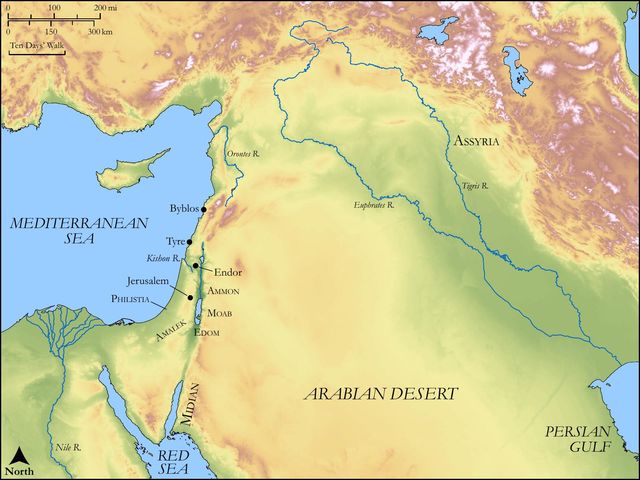
4.Who they are that are drawn into this confederacy. The nations that entered into this alliance are here mentioned (Psa 83:6-8); the Edomites and Ishmaelites, both descendants from Abraham, lead the van; for apostates from the church have been its most bitter and spiteful enemies, witness Julian. These were allied to Israel in blood and yet in alliance against Israel. There are no bonds of nature so strong but the spirit of persecution has broken through them. The brother shall betray the brother to death. Moab and Ammon were the children of righteous Lot; but, as an incestuous, so a degenerate race. The Philistines were long a thorn in Israel's side, and very vexatious. How the inhabitants of Tyre, who in David's time were Israel's firm allies, come in among their enemies, I know not; but that Assur (that is, the Assyrian) also is joined with them is not strange, or that (as the word is) they were an arm to the children of Lot. See how numerous the enemies of God's church have always been. Lord, how are those increased that trouble it! God's heritage was as a speckled bird; all the birds round about were against her (Jer 12:9), which highly magnifies the power of God in preserving to himself a church in the world, in spite of the combined force of earth and hell.
Historical interpretation
Three Centuries of Reception
3 surviving comments on this verse. Each one is dated, so this reads as a timeline rather than a list.
Select a marker to jump to its quote. Markers stagger vertically where authors wrote within a few decades of each other.
"For lo Your enemies have sounded, and they that hate You have lifted up the head" [Psalm 83:2]. He seems to me to signify the last days, when these things that are now repressed by fear are to break forth into free utterance, but quite irrational, so that it should rather be called a "sound," than speech or discourse. They will not, therefore, then begin to hate, but "they that hate You" will then "lift up the head." And not "heads," but "head;" since they are to come even to that point, that they shall have that head, which "is lifted up above all that is called God, and that is worshipped;" [2 Thessalonians 2:4] so that in him especially is to be fulfilled, "He that exalts himself shall be abased;" [Luke 14:11] and when He to whom it is said, "Keep not silence, nor grow mild, O God," shall "slay him with the breath of His mouth, and shall destroy with the brightness of His coming." [2 Thessalonians 2:8] "Upon Your people they have malignantly taken counsel" [Psalm 83:3]. Or, as other copies have it, "They have cunningly devised counsel, and have devised against Your saints." In scorn this is said. For how should they be able to hurt the nation or people of God, or His saints, who know how to say, "If God be for us, who shall be against us?" [Romans 8:31]
When Leontius perceived this, he did not think it safe to try to prevent them, for he saw that the people were exceedingly well-disposed toward these excellent men. However, speaking in a courteous manner, he requested that they would perform this act of worship [antiphonal singing] in the churches. They were perfectly well aware of his evil intent. Nevertheless they set about obeying his request and readily summoned their choir to the church, exhorting them to sing praises to the good Lord. Nothing, however, could induce Leontius to correct his wickedness, but he put on the mask of moderation and concealed the iniquity of Stephanus and Placidus. People who had accepted the corruption of the faith of priests and deacons, although they had embraced a life of vile irregularity, he added to the roll; while others adorned with every kind of virtue and firm adherents of apostolic doctrines, he left unrecognized. Thus it came to pass that among the clergy were numbered a majority of men tainted with heresy, while the mass of the laity were champions of the faith, and even professional teachers lacked courage to lay bare their blasphemy. In truth the deeds of impiety and iniquity done by Placidus, Stephanus and Leontius, in Antioch are so many as to want a special history of their own, and so terrible as to be worthy of the lament of David; for of them too it must be said, “For your enemies make a murmuring, and they that hate you lift up their head. They have imagined craftily against the people and taken counsel against your secret ones. They have said, ‘Come and let us root them out that they be no more a people: and that the name of Israel may be no more in remembrance.’ ”
Moreover, one must know that the word gnōmē, or opinion, is used in many ways and with many meanings. Thus, it sometimes means “advice” as when the divine apostle says, “Now, concerning virgins, I have no commandment of the Lord; but I give counsel.” Sometimes it implies “design,” as when the prophet David says, “They have taken a malicious counsel against your people.” Sometimes it means “judgment,” as when Daniel says: “Why so cruel a sentence has gone forth.” And sometimes it is used in the sense of “faith,” or “notion,” or of “intent”—to put it simply, the word has twenty-eight different meanings.
Continue studying Psalms 83:3 across the web’s major study libraries — every link below opens this exact verse, chapter, or book on the destination site.
Read & Compare
 BibleGatewayThis verse in more than 200 translations and 70 languages.
 Bible.comThe YouVersion reader — hundreds of translations, reading plans, and highlights.
 ESV.orgCrossway's official English Standard Version reader.
 NET BibleThe NET translation with 60,000+ translators' notes on every rendering decision.
 STEP BibleTyndale House's free study tool — original text, vocabulary, and scholarly resources.
 BibliaLogos Bible Software's free web reader.
 USCCBThe New American Bible (Revised Edition) with the U.S. bishops' study notes.
Commentaries
 BibleHub CommentariesDozens of classic commentaries on this verse, gathered on one page.
 StudyLightMore than 100 commentary sets — the largest collection on the web.
 BibleRefPlain-English commentary on what this verse means, verse by verse.
 Enduring WordDavid Guzik's free commentary on this chapter, widely used by Bible teachers.
 Bible Study ToolsVerse commentary alongside Greek and Hebrew study aids.
Original Language & Research
- BibleHub InterlinearThe verse word by word — original language, transliteration, and English.
- BibleHub LexiconEvery word's original-language definition and Strong's entry.
 Blue Letter BibleDeep-study tools — Strong's numbers, concordance, and word studies.
 SefariaThe Hebrew text with Rashi and centuries of Jewish commentary.
Sermons, Hymns & Audio


TrulyRandomVerse is not affiliated with these sites and doesn’t control their content. They’re linked because they’re genuinely useful.
Summary
Psalm 83:3 vividly portrays the insidious nature of the enemies' intentions against God's chosen people, Israel. It describes a deliberate and cunning conspiracy, where hostile nations engage in secret deliberations and strategic planning to harm those whom God intimately knows and protects. This verse underscores the deep-seated malice aimed not merely at a nation, but at the very people God cherishes, setting the stage for the psalmist's urgent plea for divine intervention against such calculated and pervasive opposition.
Context
ShowHideLiterary Context
Psalm 83 is a fervent communal lament, unique in its direct naming of a confederacy of ten nations arrayed against Israel. Verses 1-2 establish the psalmist's desperate cry for God to break His silence and act, as the enemies' "tumult" and "hatred" rise. Verse 3 then immediately elaborates on the nature of this hostility, moving from general uproar to specific, premeditated malice. The subsequent verses, Psalm 83:4-8, detail the enemies' stated goal—to "cut them off from being a nation"—and list the specific peoples involved in this unholy alliance, including Edom, Ishmaelites, Moab, Hagrites, Gebal, Ammon, Amalek, Philistia, Tyre, and Assyria. This verse thus serves as a crucial bridge, specifying the method of the attack before the identity of the attackers is fully revealed, intensifying the urgency of the prayer for deliverance.
Historical & Cultural Context
The precise historical setting for Psalm 83 is debated among scholars, but it likely reflects a period of significant national threat to ancient Israel, possibly during the Assyrian or Babylonian imperial expansions, or an earlier confederation of surrounding peoples. Such alliances against Israel were not uncommon, as recorded in various historical books like 2 Chronicles 20. The "crafty counsel" (סוֹד עָרְמָה, sod ‘ormah) reflects a common practice of kings and military leaders holding secret war councils to devise strategies. The concept of "hidden ones" (צְפוּנִים, tsephunim) evokes the cultural understanding of a treasured possession or a vulnerable group that requires divine protection, often associated with a covenant relationship where God acts as a protector and guardian over His chosen people, much like a shepherd guards his flock or a king protects his subjects. This imagery reinforces Israel's unique status as God's covenant people, a truth foundational to their identity and security, as highlighted in Deuteronomy 7:6.
Key Themes
ShowHideThis verse powerfully contributes to several key themes within the psalm and the broader biblical narrative. Firstly, it highlights the theme of Divine Sovereignty vs. Human Malice, showcasing that while humans conspire with cunning and deceit, God remains ultimately in control and fully aware of their schemes. Secondly, it emphasizes the Covenantal Relationship between God and Israel; the attack on "thy people" is an attack on God's own special possession, underscoring Israel's unique status as God's chosen nation. Thirdly, the phrase "thy hidden ones" introduces the theme of Divine Protection and Intimacy, suggesting God's profound care and watchful eye over those who belong to Him, even when they appear vulnerable or are targeted by unseen plots. This resonates with the idea that God's people dwell "in the secret place of the Most High," a theme explored in Psalm 91:1.
Exposition and Analysis
ShowHideKey Word Analysis
ShowHideDerived from the root meaning "to found" or "to establish," çôwd refers to a "session" or "company of persons in close deliberation." It implies intimacy, consultation, and often, a secret or inward gathering. In this context, it speaks to the clandestine and conspiratorial nature of the enemies' plotting, highlighting that their malicious intentions are not spontaneous but arise from deliberate, private, and unified planning sessions.
This word, ʻâram, signifies being "cunning" or "shrewd," often carrying a negative connotation of subtlety or deceit, though it can sometimes be used positively for prudence. Here, it clearly denotes a malevolent form of cleverness, suggesting that the enemies' counsel is not merely strategic but also insidious, employing deceptive or underhanded tactics to achieve their destructive aims against God's people.
The root tsâphan means "to hide," "to cover over," or "to hoard/reserve." When used as "hidden ones" (tsephunim), it carries rich implications. It suggests that God's people are precious, like a treasure carefully concealed and guarded by Him. It also implies intimacy and protection, indicating that God knows His people intimately and keeps them close, safeguarding them from harm, even when their enemies are unaware of their true value or divine security.
Verse Breakdown
ShowHide"They have taken crafty counsel against thy people"
This initial clause immediately identifies the antagonists as those who engage in premeditated and cunning plotting. The phrase "taken crafty counsel" emphasizes the deliberate, strategic, and insidious nature of their scheme. It is not an impulsive act but a carefully devised plan, indicating a high degree of malice and forethought. The explicit target, "thy people," underscores that the attack is ultimately against God's own possession and covenant nation, making it a direct affront to God Himself. This highlights the spiritual dimension of the conflict, where human enemies become instruments against God's divine purposes.
"and consulted against thy hidden ones"
This second clause functions in powerful synonymous parallelism with the first, reiterating and intensifying the message. "Consulted" (from yâʻats) reinforces the idea of deliberate planning and agreement among the conspirators, suggesting a unified and determined opposition. The object of their consultation, "thy hidden ones," is a poignant and tender descriptor for God's people. It conveys their preciousness to God, implying they are a valuable treasure that He conceals and protects. It also speaks to intimacy, suggesting that God knows His people intimately and keeps them close to Him, even when their enemies are unaware of their true status or divine protection. This phrase assures the reader that despite the enemies' cunning, God's people are not left exposed but are under His special, intimate, and often unseen care, even in the face of grave threats.
Literary Devices
ShowHidePsalm 83:3 masterfully employs several literary devices to convey its urgent message. The most prominent is Synonymous Parallelism, where the second clause ("and consulted against thy hidden ones") echoes and amplifies the first ("They have taken crafty counsel against thy people"). "Taken crafty counsel" is paralleled by "consulted," both emphasizing premeditated plotting. "Thy people" is paralleled by "thy hidden ones," which not only restates the identity of the target but also adds a layer of tender Metaphor and Symbolism. "Hidden ones" metaphorically portrays God's people as a valuable treasure, concealed and protected by divine care, or as vulnerable individuals under divine guardianship. This phrase also carries a strong sense of Intimacy, highlighting the special bond between God and His people, contrasting sharply with the enemies' distant and malicious intent. The very act of "taking counsel" and "consulting" could be seen as a subtle Personification of the enemies' collective will, acting as a single, malevolent entity driven by a unified, malevolent purpose.
Theological and Thematic Connections
ShowHidePsalm 83:3 profoundly illustrates the timeless spiritual conflict between the forces of darkness and God's kingdom. It reveals that opposition to God's people is not merely political or national but deeply spiritual, rooted in a "crafty counsel" that seeks to undermine God's purposes and erase His presence from the earth through the destruction of His chosen instruments. This verse reminds us that God's people, though often vulnerable in the world's eyes, are supremely precious to Him, described as His "hidden ones"—a term that speaks to His intimate knowledge, profound love, and unwavering commitment to their protection. It assures believers that even when plots are devised in secret, God sees and knows, and His protective hand is upon those who are His.
Reflection and Application
ShowHidePsalm 83:3 offers a powerful lens through which to view the challenges and assurances of the Christian life. We are reminded that spiritual warfare is real, and just as ancient Israel faced "crafty counsel," believers today may encounter subtle deceptions, strategic opposition, or hidden agendas from the world, the flesh, or the spiritual forces of evil. This verse calls us to spiritual discernment, to recognize that not all opposition is overt; some plots are meticulously "consulted" in the shadows. Yet, the profound comfort lies in the truth that we are God's "hidden ones." This signifies not our vulnerability, but our immense value and secure position in Christ. God knows us intimately, values us infinitely, and actively shields us. Our security is not in our own strength or visibility, but in His unwavering faithfulness and sovereign protection. This should inspire us to trust Him implicitly, even when circumstances seem overwhelming, knowing that He sees every plot and is our ultimate refuge.
Questions for Reflection
ShowHideFAQ
ShowHideWhat does "crafty counsel" specifically imply about the enemies' intentions?
ShowHide"Crafty counsel" (Hebrew: סוֹד עָרְמָה, sod ‘ormah) implies a deliberate, strategic, and often deceptive form of plotting. It suggests that the enemies are not merely acting out of impulse or open aggression, but are engaging in secret deliberations and cunning schemes. Their intentions are premeditated and calculated to achieve their destructive goals, often through subtle or underhanded means, rather than direct confrontation. This highlights the depth of their malice and the intellectual effort they put into devising ways to harm God's people, as seen in the broader context of the enemies' desire to "cut them off from being a nation" in Psalm 83:4.
Who are "thy hidden ones" and why are they described this way?
ShowHide"Thy hidden ones" (Hebrew: צְפוּנִים, tsephunim) refers to God's people, Israel, and by extension, all who belong to God. They are described this way for several profound reasons. Firstly, it conveys their preciousness to God, like a valuable treasure that is carefully hidden and guarded. Secondly, it speaks to God's intimate knowledge and watchful care over them, suggesting that even when they appear vulnerable to human eyes, they are under His divine protection and concealment. Thirdly, it can imply a sense of being set apart or chosen by God, whose unique relationship with them might not be evident to their adversaries. This concept resonates with other scriptures where God's people are called His "special treasure" or "jewels," as in Exodus 19:5 and Malachi 3:17.
Christ-Centered Fulfillment
ShowHidePsalm 83:3, with its depiction of "crafty counsel" against God's "hidden ones," finds its ultimate fulfillment and deepest meaning in the person and work of Jesus Christ. The "crafty counsel" of enemies against God's people foreshadows the ultimate conspiracy against God's Son, Jesus, the very embodiment of God's "hidden one" and the true Israel. The religious and political leaders "consulted" against Jesus, seeking to destroy Him through cunning and deceit, as recorded in Matthew 26:4 and John 11:53. Yet, in His death and resurrection, Christ became the ultimate "hidden one" who was "hidden with God" (Colossians 3:3) and then revealed in power. Through Him, believers become God's "hidden ones," not through physical concealment, but through spiritual union with Christ, where their lives are "hidden with Christ in God." This spiritual reality means that just as the Father protected Jesus through His earthly ministry and raised Him from the dead, so too does He guard and preserve those who are in Christ. The ultimate victory over all "crafty counsel" and hostile plots was secured at the cross, where the Lamb of God, though seemingly vulnerable, triumphed over all the powers of darkness, making a public spectacle of them (Colossians 2:15). Therefore, the security of God's people, once a prayer for deliverance in the face of earthly enemies, is now a divine certainty for those who are "in Christ Jesus" (Romans 8:1), forever safe in the loving, sovereign hand of God.