


Luke 20:20
- ΚαὶKaiAndG2532CONJConjunction
- παρατηρήσαντεςparatērēsanteshaving watched [Him]G3906V-AAP-NPMVerb Aorist Active Participle Nominative Plural Masculine
- ἀπέστειλανapesteilanthey sentG649V-AAI-3PVerb Aorist Active Indicative 3rd Plural
- ἐγκαθέτουςegkathetousspiesG1455A-APMAdjective Accusative Plural Masculine
- ὑποκρινομένουςhupokrinomenousfeigningG5271V-PNP-APMVerb Present Middle Or Passive Deponent Participle Accusative Plural Masculine
- ἑαυτοὺςhe'autousthemselvesG1438F-3APMReflexive pronoun Accusative 3rd Plural Masculine
- δικαίουςdikaiousrighteousG1342A-APMAdjective Accusative Plural Masculine
- εἶναιeinaito beG1511V-PANVerb Present Active Infinitive
- ἵναinathatG2443CONJConjunction
- ἐπιλάβωνταιepilabōntaithey may catchG1949V-2ADS-3PVerb 2nd Aorist Middle Deponent Subjunctive 3rd Plural
- αὐτοῦautouHimG846P-GSMPersonal pronoun Genitive Singular Masculine
- λόγουlogouin talkG3056N-GSMNoun Genitive Singular Masculine
- ὥστεhōstein orderG5620CONJConjunction
- παραδοῦναιparadounaito deliverG3860V-2AANVerb 2nd Aorist Active Infinitive
- αὐτὸνautonHimG846P-ASMPersonal pronoun Accusative Singular Masculine
- τῇtēato theG3588T-DSFDefinite article Dative Singular Feminine
- ἀρχῇarchēaruleG746N-DSFNoun Dative Singular Feminine
- καὶkaiandG2532CONJConjunction
- τῇtēato theG3588T-DSFDefinite article Dative Singular Feminine
- ἐξουσίᾳexousiaauthorityG1849N-DSFNoun Dative Singular Feminine
- τοῦtouof theG3588T-GSMDefinite article Genitive Singular Masculine
- ἡγεμόνοςhēgemonosgovernorG2232N-GSMNoun Genitive Singular Masculine
English is a literal word-by-word gloss of the Greek, not the KJV's wording. Why?
This is the original text the KJV's translators worked from — each Greek word with its own literal English meaning in this verse, prepared by scholars at Tyndale House, Cambridge. The KJV translates whole sentences, not word by word, so its wording differs: one Greek word can become several English words, and the KJV may choose “charity” where the gloss reads “love”. Both are faithful — they answer different questions. For the KJV's own rendering, switch to the KJV text.
Details
See on the biblical-era map
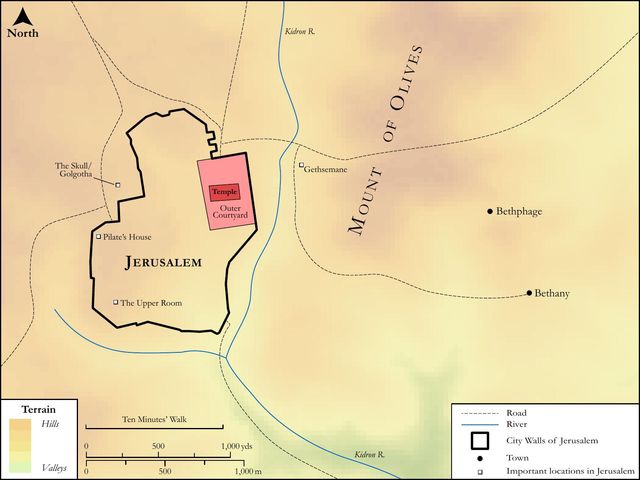
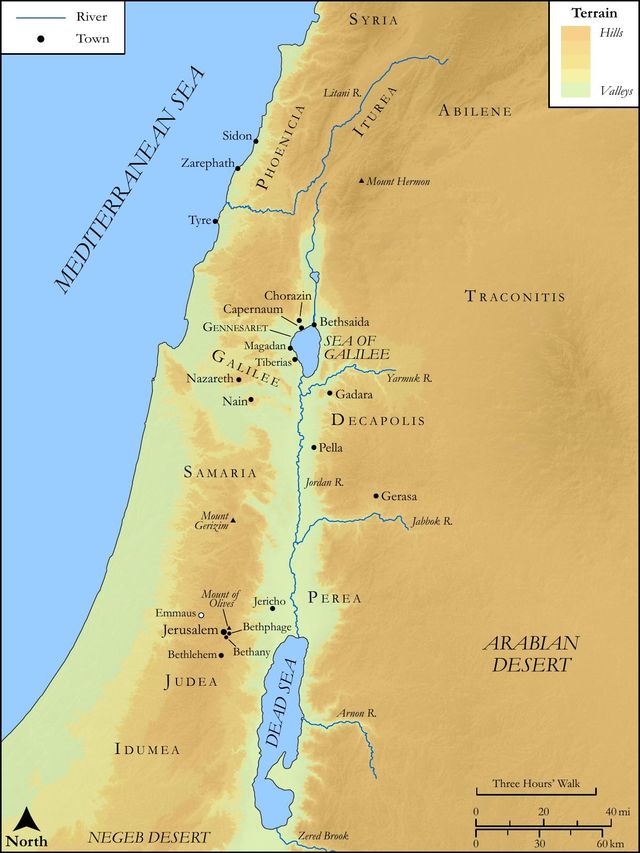

Study this verse
Public-domain commentary
Matthew Henry
From his Commentary on the Whole Bible. Henry comments on passages, not single verses — this entry covers Luke 20:20–26. His two-level outline is real structure in the source text, so it is rendered as structure.
We have here Christ's evading a snare which his enemies laid for him, by proposing a question to him about tribute. We had this passage before, both in Matthew and Mark. Here is,
I.The mischief designed him, and that is more fully related here than before.
The plot was to deliver him unto the power and authority of the governor, Luk 20:20. They could not themselves put him to death by course of law, nor otherwise than by a popular tumult, which they could not depend upon; and, since they could not be his judges, they would willingly condescend to be his prosecutors and accusers, and would themselves inform against him. They hoped to gain their point, if they could but incense the governor against him. Note, It has been the common artifice of persecuting church-rulers to make the secular powers the tools of their malice, and oblige the kings of the earth to do their drudgery, who, if they had not been instigated, would have let their neighbours live quietly by them, as Pilate did Christ till the chief priests and the scribes presented Christ to him. But thus Christ's word must be fulfilled by their cursed politics, that he should be delivered into the hands of the Gentiles.
II.The persons they employed.
Matthew and Mark told us that they were disciples of the Pharisees, with some Herodians. Here it is added, They were spies, who should feign themselves just men. Note, It is no new thing for bad men to feign themselves just men, and to cover the most wicked projects with the most specious and plausible pretences. The devil can transform himself into an angel of light, and a Pharisee appear in the garb, and speak the language, of a disciple of Christ. A spy must go in disguise. These spies must take on them to have a value for Christ's judgment, and to depend upon it as an oracle, and therefore must desire his advice in a case of conscience. Note, Ministers are concerned to stand upon their guard against some that feign themselves to be just men, and to be wise as serpents when they are in the midst of a generation of vipers and scorpions.
III.The question they proposed, with which they hoped to ensnare him.
1.Their preface is very courtly: Master, we know that thou sayest and teachest rightly, Luk 20:21. Thus they thought to flatter him into an incautious freedom and openness with them, and so to gain their point. They that are proud, and love to be commended, will be brought to do any thing for those that will but flatter them, and speak kindly to them; but they were much mistaken who thought thus to impose upon the humble Jesus. He was not pleased with the testimony of such hypocrites, nor thought himself honoured by it. It is true that he accepts not the person of any, but it is as true that he knows the hearts of all, and knew theirs, and the seven abominations that were there, though they spoke fair. It was certain that he taught the way of God truly; but he knew that they were unworthy to be taught by him, who came to take hold of his words, not to be taken hold of by them.
2.Their case is very nice: "Is it lawful for us" (this is added here in Luke) "to give tribute to Caesar - for us Jews, us the free-born seed of Abraham, us that pay the Lord's tribute, may give tribute to Caesar?" Their pride and covetousness made them loth to pay taxes, and then they would have it a question whether it was lawful or no. Now if Christ should say that it was lawful the people would take it ill, for they expected that he who set up to be the Messiah should in the first place free them from the Roman yoke, and stand by them in denying tribute to Caesar. But if he should say that it was not lawful, as they expected he would (for if he had not been of that mind they thought he could not have been so much the darling of the people as he was), then they should have something to accuse him of to the governor, which was what they wanted.
IV.His evading the snare which they laid for him:
He perceived their craftiness, Luk 20:23. Note, Those that are most crafty in their designs against Christ and his gospel cannot with all their art conceal them from his cognizance. He can see through the most politic disguises, and so break through the most dangerous snare; for surely in vain is the net spread in the sight of any bird. He did not give them a direct answer, but reproved them for offering to impose upon him - Why tempt ye me? and called for a piece of money, current money with the merchants - Show me a penny; and asked them whose money it was, whose stamp it bore, who coined it. They owned, "It is Caesar's money." "Why them," saith Christ, "you should first have asked whether it was lawful to pay and receive Caesar's money among yourselves, and to admit that to be the instrument of your commerce. But, having granted this by a common consent, you are concluded by your own act, and, no doubt, you ought to give tribute to him who furnished you with this convenience for your trade, protects you in it, and lends you the sanction of his authority for the value of your money. You must therefore render to Caesar the things that are Caesar's. In civil things you ought to submit to the civil powers, and so, if Caesar protects you in your civil rights by laws and the administration of justice, you ought to pay him tribute; but in sacred things God only is your King. You are not bound to be of Caesar's religion; you must render to God the things that are God's, must worship and adore him only, and not any golden image that Caesar sets up;" and we must worship and adore him in such way as he had appointed, and not according to the inventions of Caesar. It is God only that has authority to say My son, give me thy heart.
V.The confusion they were hereby put into, Luk 20:26.
1.The snare is broken; They could not take hold of his words before the people. They could not fasten upon any thing wherewith to incense either the governor or the people against him.
2.Christ is honoured; even the wrath of man is made to praise him. They marvelled at his answer, it was so discreet and unexceptionable, and such an evidence of that wisdom and sincerity which make the face to shine.
3.Their mouths are stopped; they held their peace. They had nothing to object, and durst ask him nothing else, lest he should shame and expose them.
Historical interpretation
Nine Centuries of Reception
10 surviving comments on this verse. Each one is dated, so this reads as a timeline rather than a list.
Select a marker to jump to its quote. Markers stagger vertically where authors wrote within a few decades of each other.
And everywhere we, more readily than all men, endeavour to pay to those appointed by you the taxes both ordinary and extraordinary, as we have been taught by Him; for at that time some came to Him and asked Him, if one ought to pay tribute to Caesar; and He answered, "Tell Me, whose image does the coin bear?" And they said, "Caesar's." And again He answered them, "Render therefore to Caesar the things that are Caesar's, and to God the things that are God's." Whence to God alone we render worship, but in other things we gladly serve you, acknowledging you as kings and rulers of men, and praying that with your kingly power you be found to possess also sound judgment. But if you pay no regard to our prayers and frank explanations, we shall suffer no loss, since we believe (or rather, indeed, are persuaded) that every man will suffer punishment in eternal fire according to the merit of his deed, and will render account according to the power he has received from God, as Christ intimated when He said, "To whom God has given more, of him shall more be required."
But suppose they sent Him the message for the purpose of tempting Him? Well, but the Scripture does not say so; and inasmuch as it is usual for it to indicate what is done in the way of temptation ("Behold, a certain lawyer stood up, and tempted Him; " again, when inquiring about tribute, the Pharisees came to Him, tempting Him ), so, when it makes no mention of temptation, it does not admit the interpretation of temptation.
As if He said, With your words ye tempt me, obey me in works. Ye have indeed Cæsar's image, ye have undertaken his offices, to him therefore give tribute, to God fear. For God requireth not money, but faith.
Our Lord here teaches us, how cautious we ought to be in our answers to heretics or Jews; as He has said elsewhere, Be ye wise as serpents (Mat. 10:16).
Be unwilling then, if thou wouldest not offend Cæsar, to possess worldly goods. And thou rightly teachest, first to render the things which be Cæsar's. For no one can be the Lord's unless he has first renounced the world. Oh most galling chain! To promise to God, and pay not. Far greater is the contract of faith than that of money.
When they questioned him about the penny, he asks about the image, because there is one image of God and another image of the world. The apostle also admonishes us, “As we have borne the image of the earthly, let us bear also the image of the heavenly.” Christ does not have the image of Caesar, because he is the image of God. Peter does not have the image of Caesar, because he said, “We have left all things, and have followed you.” The image of Caesar is not found in James and John, because they are the Sons of Thunder. It is found in the sea, where there are dragons with crushed heads upon the water. The large dragon itself, with its head broken, is given there as food to the Ethiopian people. If he did not have the image of Caesar, why did he pay the tax? He did not give from his own but gave back to the world what was of the world. If you would not be indebted to Caesar, do not possess what belongs to the world. You have wealth; therefore you are indebted to Caesar. If you want to owe nothing to an earthly king, leave all that you have and follow Christ.
It became indeed the rulers of the Jews, perceiving that the parable was spoken of them, to depart from evil, having been thus as it were warned concerning the future. But little mindful of this, they rather gather a fresh occasion for their crimes. The commandment of the Law restrained them not, which says, The innocent and righteous men thou shalt not slay, (Exod. 23:7.) but the fear of the people checked their wicked purpose. For they set the fear of man before the reverence of God. The reason of this purpose is given, for they perceived that he spoke this parable against them.
For they seemed to be trifling, yet were in earnest, forgetful of God, who says, Who is this that hideth his counsel from me? (Job 42:3.) For they come to Christ the Saviour of all, as though He were a common man, as it follows, that they might take him in his speech.
These bold and hardhearted men, being ready for only evil, do not entertain a good purpose, but with their mind full of the craftiness of the devil, they commit themselves to wicked plans. They lay traps for Christ, plan a trap for an accusation against him, and gather pretexts for falsely accusing him. In their bitterness, they are already meditating and plotting the lying words they spoke against him before Pilate.… They pretended to be kind and just. They imagined that they could deceive him who knows secrets. Having one purpose in mind and heart, they speak words totally unlike their wicked dishonesty.
And observing, they sent spies, who pretended to be righteous, in order to catch him in his speech, and deliver him to the authority and power of the governor. Seeking to apprehend the Lord, the chief priests and the scribes feared the people, and therefore what they could not do themselves, they tried to accomplish through the hands of the governor, so that they might appear innocent of his death. For recently, under Caesar Augustus, Judea was subjected to the Romans, when a census was held throughout the entire world, and it had become tributary, and there was great unrest among the people, with some saying that for security and peace, with the Romans fighting for all, tributes should be paid; however, the Pharisees, who prided themselves on their righteousness, were contrary to this, arguing that the people of God, who paid tithes and offered first fruits, and other things written in the law, should not be subjected to human laws. The spark of this unrest grew so strong that after the Lord's passion, when the Romans besieged them, they preferred to lose their homeland, nation, and kingdom, the noble temple with its religion, even the light itself, rather than pay tributes.
And so by seeking to slay Him, they proved the truth of what He had said in the parable. For He Himself is the Heir, whose unjust death He said was to be punished. They are the wicked husbandmen who sought to kill the Son of God. This also is daily committed in the Church when any one, only in name a brother, is ashamed or afraid, because of the many good men with whom he lives, to break into that unity of the Church's faith and peace which he abhors. And because the chief priests sought to lay hold of our Lord but could not by themselves, they tried to accomplish it by the hands of the governor; as it follows, And they watched him, &c.
This smooth and artful question was to entice the answerer to say that he fears God rather than Cæsar, for it follows, Neither acceptest thou the person of any, but teachest the way of God truly. This they say, to entice Him to tell them that they ought not to pay tribute, in order that the servants of the guard, (who according to the other Evangelists are said to have been present,) might immediately upon hearing it seize Him as the leader of a sedition against the Romans. And so they proceed to ask, Is it lawful to give tribute to Cæsar, or not? For there was a great division among the people, some saying that for the sake of security and quiet, seeing that the Romans fought for all, they ought to pay tribute; while the Pharisees, on the contrary, declared, that the people of God who gave tithes and first fruits, ought not to be subject to the law of man.
Let those who impute the question of our Saviour to ignorance, learn from this place that Jesus was well able to know whose image was on the money; but He asks the question, that He might give a fitting answer to their words; for it follows, They answered and said, Cæsar's. We must not suppose Augustus is thereby meant, but Tiberius, for all the Roman kings were called Cæsar, from the first Caius Cæsar. But from their answer our Lord easily solves the question, for it follows, And he said unto them, Render unto Cæsar the things which be Cœsar's, and unto God the things which be God's.
Render also to God the things which be God's, that is to say, tithes, first fruits, offerings, and sacrifices.
Now they who ought rather to have believed such great wisdom, marvelled that in all their cunning they had found no opportunity of catching Him. As it follows, And they could not take hold of his words before the people: and they marvelled at his answer, and held their peace.
They laid snares for our Lord, but got their own feet entangled in them. Listen to their cunning, And they asked Him, saying, Master, we know that thou sayest and teachest rightly.
Therefore it was intended, in case He said they ought to give tribute to Cæsar, that He should be accused by the people, as placing the nation under the yoke of slavery, but if He forbade them to pay the tax, that they should denounce Him as a stirrer up of divisions to the governor. But He escapes their snares, as it follows, Perceiving their craftiness, he said unto them, Why tempt ye me? show me a penny. Whose image and superscription has it?
And observe that He said not, give, but return. For it is a debt. Thy prince protects thee from enemies, renders thy life tranquil. Surely then thou art bound to pay him tribute. Nay, this very piece of money which thou bringest thou hast from him. Return then to the king the king's money. God also has given thee understanding and reason, make then a return of these to Him, that thou mayest not be compared to the beasts, but in all things mayest walk wisely.
This was their main object, to rebuke Him before the people, which they were unable to do because of the wonderful wisdom of His answer.
Continue studying Luke 20:20 across the web’s major study libraries — every link below opens this exact verse, chapter, or book on the destination site.
Read & Compare
 BibleGatewayThis verse in more than 200 translations and 70 languages.
 Bible.comThe YouVersion reader — hundreds of translations, reading plans, and highlights.
 ESV.orgCrossway's official English Standard Version reader.
 NET BibleThe NET translation with 60,000+ translators' notes on every rendering decision.
 STEP BibleTyndale House's free study tool — original text, vocabulary, and scholarly resources.
 BibliaLogos Bible Software's free web reader.
 USCCBThe New American Bible (Revised Edition) with the U.S. bishops' study notes.
Commentaries
 BibleHub CommentariesDozens of classic commentaries on this verse, gathered on one page.
 StudyLightMore than 100 commentary sets — the largest collection on the web.
 BibleRefPlain-English commentary on what this verse means, verse by verse.
 Enduring WordDavid Guzik's free commentary on this chapter, widely used by Bible teachers.
 Bible Study ToolsVerse commentary alongside Greek and Hebrew study aids.
Original Language & Research
- BibleHub InterlinearThe verse word by word — original language, transliteration, and English.
- BibleHub LexiconEvery word's original-language definition and Strong's entry.
 Blue Letter BibleDeep-study tools — Strong's numbers, concordance, and word studies.
 CNTR CollationThe earliest Greek manuscripts of this verse, collated letter by letter.
Sermons, Hymns & Audio


TrulyRandomVerse is not affiliated with these sites and doesn’t control their content. They’re linked because they’re genuinely useful.
Summary
Luke 20:20 vividly portrays the escalating hostility of the Jewish religious leaders towards Jesus during his final days in Jerusalem. Unable to openly arrest him due to his popularity, they resort to a cunning strategy: dispatching agents disguised as sincere, righteous men. Their insidious objective was to ensnare Jesus with his own words, creating a pretext to hand him over to the Roman governor, thereby shifting the responsibility for his potential execution from themselves to the imperial authorities.
Context
ShowHideLiterary Context
This verse immediately follows a series of confrontations between Jesus and the religious authorities. In Luke 20:1-8, they directly challenged His authority, to which He responded with a counter-question about John the Baptist. Then, Jesus delivered the Parable of the Wicked Tenants, a thinly veiled indictment of their rejection of God's messengers and His Son, which the chief priests and scribes understood as being directed at them (Luke 20:19). Their desire to seize Him was palpable, but their fear of the people prevented a direct approach. Luke 20:20 marks a strategic shift from open challenge to covert entrapment, setting the stage for the famous "render unto Caesar" exchange in the subsequent verses (Luke 20:21-26).
Historical & Cultural Context
Judea at this time was under Roman occupation, ruled by a Roman governor (procurator) like Pontius Pilate. While the Jewish Sanhedrin had considerable autonomy in religious and civil matters, they lacked the authority to carry out capital punishment without Roman approval, especially for political offenses. This limitation is crucial to understanding the leaders' strategy: they needed to frame Jesus as a political threat to Rome, rather than merely a religious heretic, to secure his execution. The practice of sending "spies" or agents provocateurs was not uncommon in ancient political maneuvering, and the pretense of being "just men" (i.e., sincere, pious individuals) was a common tactic to gain trust and extract incriminating statements. The Temple courts, where Jesus was teaching, were public spaces, making covert operations necessary for the authorities.
Key Themes
ShowHideLuke 20:20 contributes significantly to several overarching themes in Luke's Gospel. Firstly, it highlights the escalating opposition to Jesus, moving from questioning His authority to actively seeking His demise through deceit. Secondly, it underscores the hypocrisy and moral corruption of the religious elite, who feign righteousness while harboring murderous intent, a theme Jesus frequently condemned, as seen in Matthew 23. Thirdly, the verse foreshadows the transfer of Jesus' fate to Roman authority, emphasizing the Jewish leaders' ultimate inability to execute Him themselves and their reliance on the imperial power to achieve their goal, a pivotal moment leading to Jesus' trial before Pilate. Finally, it sets the stage for the demonstration of Jesus' divine wisdom and discernment, as He consistently sees through their schemes and answers with profound truth, as exemplified in His response to the tax question in Luke 20:21-26.
Exposition and Analysis
ShowHideKey Word Analysis
ShowHideDerived from a word meaning "subinduced" or "placed in," this term describes someone "surreptitiously suborned as a lier-in-wait." It perfectly captures the clandestine and deceptive nature of these agents, who were secretly dispatched with the specific purpose of ambushing Jesus with a verbal trap. They were not genuine seekers of truth but covert operatives.
This word, from which we derive "hypocrite," literally means "to decide (speak or act) under a false part" or "to dissemble/pretend." It emphasizes the deliberate act of putting on a false appearance of sincerity and righteousness ("just men") to conceal their true, malicious intentions. Their outward demeanor was a carefully constructed facade designed to deceive Jesus and those around Him.
This verb signifies "to seize" or "to lay hold upon," often with a sense of grasping firmly or apprehending. In this context, it refers to their intent to "seize" or "catch" Jesus in His words, implying a desire to find something incriminating that could be used as evidence against Him. It highlights their predatory aim to exploit His speech for their destructive purposes.
Verse Breakdown
ShowHide"And they watched [him], and sent forth spies"
This initial clause reveals the calculated and sustained nature of the opposition. "They watched him" (Greek: paratēréō) implies a careful, insidious observation, not for learning, but for finding fault. The decision to "send forth spies" (Greek: apostéllō enkátethos) indicates a deliberate, organized effort by the religious authorities, moving beyond direct confrontation to a more subtle, yet equally malicious, form of attack.
"which should feign themselves just men"
This phrase exposes the profound hypocrisy at the heart of their scheme. The spies were instructed to "feign" (Greek: hypokrínomai) or pretend to be "just men" (Greek: díkaios), meaning righteous, upright, or sincere individuals. This deceptive disguise was crucial to their plan, as it aimed to disarm Jesus and elicit an unguarded response.
"that they might take hold of his words"
This clause states the immediate objective of their deception. Their goal was to "take hold of" (Greek: epilambánomai) or "seize upon" Jesus' "words" (Greek: lógos). This was not about understanding His teaching but about finding a specific statement that could be twisted or used as legal grounds for accusation, either under Jewish law (blasphemy) or Roman law (sedition).
"that so they might deliver him unto the power and authority of the governor"
This final clause reveals the ultimate, sinister aim of the religious leaders. Their intent was to "deliver" (Greek: paradídōmi), or hand over, Jesus to the "power" (Greek: archḗ, here meaning "rule" or "dominion") and "authority" (Greek: exousía, meaning "jurisdiction" or "delegated influence") of the "governor" (Greek: hēgemṓn, referring to Pontius Pilate). This demonstrates their lack of capital punishment authority and their desire to use the Roman system to achieve their murderous ends, thereby absolving themselves of direct responsibility in the eyes of the people.
Literary Devices
ShowHideLuke 20:20 employs several significant literary devices to heighten the dramatic tension and underscore the moral conflict. The primary device is Irony, specifically dramatic irony, as the audience is fully aware of the spies' malicious intent while they present themselves as "just men." This contrast between appearance and reality highlights the profound hypocrisy of Jesus' adversaries. The phrase "feign themselves just men" is a powerful example of Antithesis, juxtaposing their outwardly righteous facade with their inwardly corrupt and murderous intentions. Furthermore, the entire scenario functions as Foreshadowing, pointing directly to Jesus' eventual arrest, trial, and delivery to Pontius Pilate for execution. The meticulous planning by the religious leaders, described by the verbs "watched," "sent forth," and "feign," also creates a sense of Suspense, as the reader anticipates Jesus' response to this carefully laid trap.
Theological and Thematic Connections
ShowHideLuke 20:20 underscores the pervasive theme of spiritual blindness and hardened hearts among those who claimed to be God's representatives. Rather than embracing the truth of Jesus' Messiahship, they actively sought to destroy Him, demonstrating a profound rejection of divine revelation. Their reliance on deceit and political maneuvering reveals a deep-seated spiritual corruption, prioritizing their own power and prestige over God's will. This desperate attempt to ensnare Jesus with His own words highlights the ultimate futility of human cunning against divine wisdom, setting the stage for Jesus' masterful evasion of their trap. The verse also serves as a stark reminder of the world's opposition to Christ and His followers, often manifesting in subtle, deceptive ways rather than overt persecution.
Reflection and Application
ShowHideLuke 20:20 offers profound insights for contemporary believers, urging us to cultivate spiritual discernment and unwavering integrity in a world often characterized by deception. Just as Jesus faced those who feigned righteousness to entrap Him, we too may encounter individuals or ideologies that present a veneer of truth or justice while harboring ulterior motives. This verse calls us to look beyond superficial appearances, to test the spirits, and to prayerfully seek God's wisdom to discern genuine intent from manipulative schemes. Furthermore, it serves as a powerful cautionary tale against hypocrisy. The religious leaders' pretense of being "just men" while plotting evil is a stark reminder that outward religiosity without inward purity is an abomination to God. We are challenged to live lives of authentic faith, where our words, actions, and intentions are aligned with the character of Christ, reflecting true righteousness rather than a mere performance. In moments of opposition or attempted entrapment, we are encouraged to trust in the Lord's wisdom, knowing that He can equip us to navigate complex situations with grace and truth, just as Jesus did.
Questions for Reflection
ShowHideFAQ
ShowHideWhy did the Jewish leaders need to involve the Roman governor?
ShowHideThe Jewish religious leaders, specifically the Sanhedrin, had limited authority under Roman occupation. While they could enforce Jewish law and impose certain penalties, they did not possess the legal right to carry out capital punishment for offenses like blasphemy, which was a religious charge. For an execution, especially one that might cause public unrest, they required the approval and direct involvement of the Roman governor, Pontius Pilate. By attempting to frame Jesus as a political insurgent or a threat to Roman authority (e.g., claiming to be "King of the Jews"), they sought to shift the responsibility for His execution from themselves to the Romans, thereby avoiding a direct confrontation with the Jewish populace who largely revered Jesus (Luke 20:6). This is clearly seen later when they bring Jesus before Pilate in John 18:28-32.
What was the specific "trap" they intended to set for Jesus with their questions?
ShowHideThe immediate trap, which follows directly after this verse, involved a question about paying taxes to Caesar (Luke 20:21-22). If Jesus said "yes," He would alienate the Jewish masses who resented Roman taxation and viewed it as oppression, thus undermining His popularity. If He said "no," He could be accused of sedition against Rome, providing the very political grounds the leaders needed to "deliver him unto the power and authority of the governor." This question was designed to be a lose-lose situation for Jesus, demonstrating the cunning and malicious intent behind their feigned sincerity.
Christ-Centered Fulfillment
ShowHideLuke 20:20, though depicting the cunning opposition to Jesus, profoundly highlights His divine nature and the unfolding of God's redemptive plan. The attempt to "take hold of his words" and "deliver him unto the power and authority of the governor" foreshadows the ultimate betrayal and crucifixion of Christ, which, paradoxically, was not a defeat but the very means of salvation. Jesus, the Word made flesh, could not be truly trapped by human words or schemes; instead, He willingly surrendered Himself, fulfilling the prophecies of a suffering servant. The "power and authority of the governor" (Pilate) became the unwitting instrument through which God's sovereign will was accomplished, as foretold in Acts 4:27-28, where both Herod and Pontius Pilate are described as conspiring to do what God's hand and counsel had predestined. Thus, this verse, while detailing human malice, ultimately points to the Lamb of God, who takes away the sin of the world, voluntarily submitting to the powers of this world to secure eternal redemption, demonstrating His supreme authority even in apparent weakness, as He declared to Pilate in John 19:11.