


Matthew 22:22
Bible text: King James Version (1769 Blayney text) · Public domain
Bible text: Berean Standard Bible · Public domain
Bible text: American Standard Version (1901) · Public domain
Bible text: World English Bible, Messianic edition · Public domain
Bible text: Geneva Bible (1599) · Public domain
Bible text: Young's Literal Translation · Public domain
- καὶkaiAndG2532CONJConjunction
- ἀκούσαντεςakousanteshaving heardG191V-AAP-NPMVerb Aorist Active Participle Nominative Plural Masculine
- ἐθαύμασανethaumasanthey marveledG2296V-AAI-3PVerb Aorist Active Indicative 3rd Plural
- καὶkaiandG2532CONJConjunction
- ἀφέντεςaphenteshaving leftG863V-2AAP-NPMVerb 2nd Aorist Active Participle Nominative Plural Masculine
- αὐτὸνautonHimG846P-ASMPersonal pronoun Accusative Singular Masculine
- ἀπῆλθανapēlthanthey went awayG565V-2AAI-3PVerb 2nd Aorist Active Indicative 3rd Plural
English is a literal word-by-word gloss of the Greek, not the KJV's wording. Why?
This is the original text the KJV's translators worked from — each Greek word with its own literal English meaning in this verse, prepared by scholars at Tyndale House, Cambridge. The KJV translates whole sentences, not word by word, so its wording differs: one Greek word can become several English words, and the KJV may choose “charity” where the gloss reads “love”. Both are faithful — they answer different questions. For the KJV's own rendering, switch to the KJV text.
Details
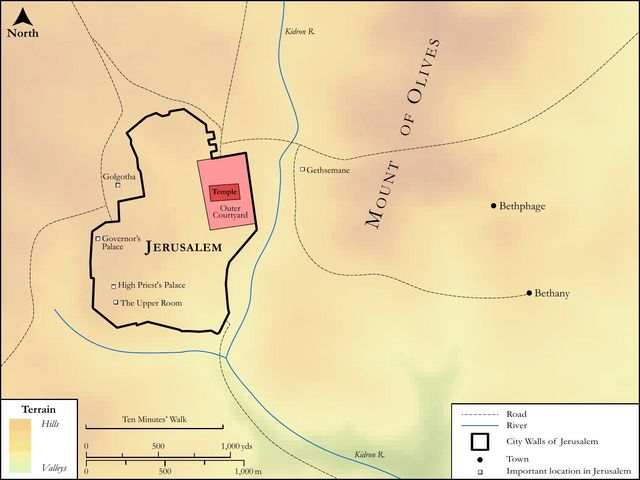
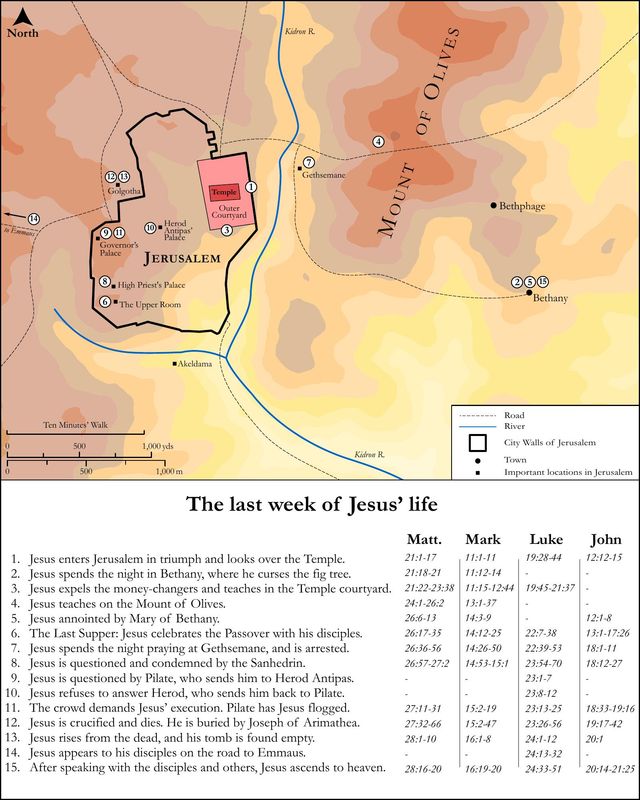
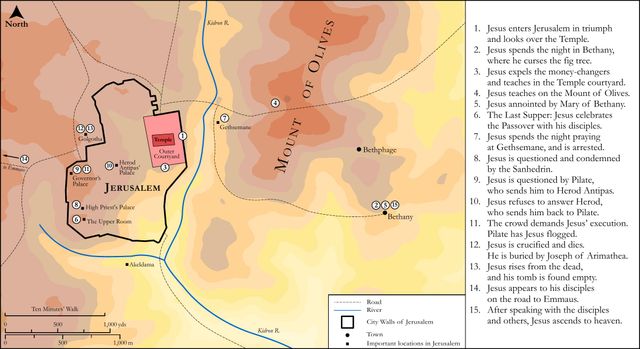
See on the biblical-era maps
Study this verse
Historical interpretation
Ten Centuries of Reception
9 surviving comments on this verse. Each one is dated, so this reads as a timeline rather than a list.
Select a marker to jump to its quote. Markers stagger vertically where authors wrote within a few decades of each other.
From this place we learn by the Saviour's example not to be allured by those things which have many voices for them, and thence seem famous, but to incline rather to those things which are spoken according to some method of reason. But we may also understand this place morally, that we ought to give some things to the body as a tribute to Cæsar, that is to say, necessaries. And such things as are congenial to our souls' nature, that is, such things as lead to virtue, those we ought to offer to God. They then who without any moderation inculcate the law of God, and command us to have no care for the things required by the body, are the Pharisees, who forbad to give tribute to Cæsar, forbidding to marry, and commanding to abstain from meats, which God hath created. (1 Tim. 4:3.) They, on the other hand, who allow too much indulgence to the body are the Herodians. But our Saviour would neither that virtue should be enfeebled by immoderate devotedness to the flesh; nor that our fleshly nature should be oppressed by our unremitting efforts after virtue. Or the prince of this world, that is, the Devil, is called Cæsar; and we cannot render to God the things that are God's, unless we have first rendered to this prince all that is his, that is, have cast off all wickedness. This moreover let us learn from this place, that to those who tempt us we should neither be totally silent, nor yet answer openly, but with caution, to cut off all occasion from those who seek occasion in us, and teach without blame the things which may save those who are willing to be saved.
For if there remain with us nothing that is Cæsar's, we shall not be bound by the condition of rendering to him the things that are his; but if we lean upon what is his, if we avail ourselves of the lawful protection of his power, we cannot complain of it as any wrong if we are required to render to Cæsar the things of Cæsar.
It behoves us also to render unto God the things that are His, namely, body, soul, and will. For Cæsar's coin is in the gold, in which His image was pourtrayed, that is, God's coin, on which the Divine image is stamped; give therefore your money to Cæsar, but preserve a conscience void of offence for God.
(Hom. lxx.) They send their disciples and Herod's soldiers together, that whatever opinion the might give might be found fault with. Yet would they rather have had Him say somewhat against the Herodians; for being themselves afraid to lay hands on Him because of the populace, they sought to bring Him into danger through His liability to pay tribute.
This was a covert allusion to Herod and Cæsar.
They knew that certain had before suffered death for this very thing, as plotting a rebellion against the Romans, therefore they sought by such discourse to bring Him into the same suspicion.
But when you hear this command to render to Cæsar the things of Cæsar, know that such things only are intended which in nothing are opposed to religion; if such there be, it is no longer Cæsar's but the Devil's tribute. And moreover, that they might not say that He was subjecting them to man, He adds, And unto God the things that, are God's.
What then? did they believe? By no means, but they "left Him, and went their way;" and after them, "came to Him the Sadducees."
O folly! When the others had been put to silence, these made the attack, when they ought to have been the more backward. But such is the nature of rashness, shameless, and importunate, and attempting things impossible. Therefore the evangelist also, amazed at their folly, signified this very thing, by saying, "On that day came to Him." On that day. On what day? In which He had convicted their craftiness, and put them to shame. But who are these? A sect of the Jews different from the Pharisees, and much worse than they, who said, "that there is no resurrection, nor angel, nor spirit." For these were some of a grosser sort, and eager after the things of the body. For there were many sects even amongst the Jews. Wherefore Paul also saith, "I am a Pharisee, of the strictest sect amongst us."
And they say nothing indeed directly about a resurrection; but they feign a story, and make up a case, which, as I suppose, never so much as had an existence; thinking to drive Him to perplexity, and desiring to overthrow both things, both the existence of a resurrection, and of such a resurrection.
Lately under Cæsar Augustus, Judæa, which was subject to the Romans, had been made tributary when the census was held of the whole world; and there was a great division among the people, some saying that tribute ought to be paid to the Romans in return for the security and quiet which their arms maintained for all. The Pharisees on the other hand, self-satisfied in their own righteousness, contended that the people of God who paid tithes and gave first-fruits, and did all the other things which are written in the Law, ought not to be subject to human laws. But Augustus had given the Jews as king, Herod, son of Antipater, a foreigner and proselyte; he was to exact the tribute, yet to be subject to the Roman dominion. The Pharisees therefore send their disciples with the Herodians, that is, with Herod's soldiers, or those whom the Pharisees in mockery called Herodians, because they paid tribute to the Romans, and were not devoted to the worship of God.
This smooth and treacherous enquiry was a kind of challenge to the answerer to fear God rather than Cæsar, and immediately they say, Tell us therefore, what thinkest Thou? Is it lawful to give tribute to Cæsar or not? Should He say tribute should not be paid, the Herodians would immediately accuse Him as a person disaffected to the Emperor.
This is the first excellence of the answerer, that He discerns the thoughts of His examiners, and calls them not disciples but tempters. A hypocrite is he who is one thing, and feigns himself another.
Wisdom does ever wisely, and so the tempters are best confuted out of their own words; therefore it follows, show me the tribute money; and they brought unto Him a denarius. This was a coin reckoned equivalent to ten sesterces, and bore the image of Cæsar. Let those who think that the Saviour asks because He is ignorant, learn from the present place that it is not so, for at all events Jesus must have known whose image was on the coin. They say unto Him, Cæsar's; not Augustus, but Tiberius, under whom also the Lord suffered. All the Roman Emperors were called Cæsar, from Caius Cæsar who first seized the chief power. Render therefore unto Cæsar the things which are Cæsar's; i. e. the coin, tribute, or money.
That is, tithes, first-fruits, oblation, and victims; as the Lord Himself rendered to Cæsar tribute, both for Himself and for Peter; and also rendered unto God the things that are God's in doing the will of His Father.
They who ought to have believed did but wonder at His great wisdom, that their craft had found no means for ensnaring Him: whence it follows, When they had heard these words, they marvelled, and left Him, and went their way, carrying away their unbelief and wonder together.
(Verse 22) And those who listened were amazed. They, who should have believed in such wisdom, were amazed that their cunning for plotting had found no opportunity.
And having left him, they departed. Bringing back unfaithfulness along with a miracle.
Or otherwise; Whenever God will try His Church, He enters into it that He may see the guests; and if He finds any one not having on the wedding garment, He enquires of him, How then were you made a Christian, if you neglect these works? Such a one Christ gives over to His ministers, that is, to seducing leaders, who bind his hands, that is, his works, and his feet, that is, the motions of his mind, and cast him into darkness, that is, into the errors of the Gentiles or the Jews, or into heresy. The nigher darkness is that of the Gentiles, for they have never heard the truth which they despise; the outer darkness is that of the Jews, who have heard but do not believe; the outermost is that of the heretics, who have heard and have learned.
As when one seeks to dam a stream of running water, as soon as one outlet is stopped up it makes another channel for itself; so the malevolence of the Jews, foiled on one hand, seeks itself out another course. Then went the Pharisees; went to the Herodians. Such as the plan was, such were the planners; They send unto Him their disciples with the Herodians.
This is the commonest act of hypocrites, to commend those they would ruin. Thus, these break out into praises of Him, saying, Master, we know that Thou art true. They call Him Master, that, deceived by this show of honour and respect, He might in simplicity open all His heart to them, as seeking to gain them for disciples.
He makes an answer not corresponding to the smooth tone of their address, but harsh, suitable to their cruel thoughts; for God answers men's hearts, and not their words.
He therefore calls them hypocrites, that seeing Him to be a discerner of human hearts, they might not be hardy enough to carry through their design. Observe thus how the Pharisees spoke fair that they might destroy Him, but Jesus put them to shame that He might save them; for God's wrath is more profitable to man, than man's favour.
Thinking to placate and disarm Him with praise, they flatter Him, so that when He had let down His guard He would say that it was not necessary to pay the tax, and upon that they would seize Him as an insurrectionist who was stirring up the people against Caesar. This is why they also brought along the Herodians, so that they, representing the king, could arrest Him as a rebel. "Thou regardest not the person of men," they say, that is, you would not say anything for the sake of Pilate or Herod. Tell us, then, should we be subject to men’s taxation and pay them tribute just as we pay the two-drachma tax to God, or should we pay tribute to God alone, and not to Caesar as well? They said this, as I have explained, so that if He answered that one must not pay tribute to Caesar, they could arrest Him and put Him to death, as they did to the followers of Theudas and Judas (Acts 5:36-37) who said that one must not make sacrifice in Caesar’s name. Jesus persuades them by means of the image of Caesar engraved on the coin, that one must render to Caesar that which is his, namely, that which bears his image, and that in bodily and external things one must submit to the king, but in inner and spiritual things one must submit to God. But one must also understand it in this manner: each one of us must render to Caesar that which is Caesar’s, namely, we must throw to the demon who rules below the things which belong to him. As for example when you have anger which comes from Caesar, throw it back to him, get angry against him. Then you will also be able to render to God that which is God’s. But since we are of dual nature, consisting of both soul and body, to our body, as to Caesar, we owe food and clothing, but to that which is more divine in us, we owe what befits it.
(ord.) Who as unknown to Him, were more likely to ensnare Him, and so through them they might take Him, which they feared to do of themselves because of the populace.
(non occ.) There are three ways in which it is possible for one not to teach the truth. First, on the side of the teacher, who may either not know, or not love the truth; guarding against this, they say, We know that Thou art true. Secondly, on the side of God, there are some who, putting aside all fear of Him, do not utter honestly the truth which they know respecting Him; to exclude this they say, And teachest the way of God in truth. Thirdly, on the side of our neighbour, when through fear or affection any one withholds the truth; to exclude this they say, And carest for no man, for Thou regardest not the person of man.
Continue studying Matthew 22:22 across the web’s major study libraries — every link below opens this exact verse, chapter, or book on the destination site.
Read & Compare
 BibleGatewayThis verse in more than 200 translations and 70 languages.
 Bible.comThe YouVersion reader — hundreds of translations, reading plans, and highlights.
 ESV.orgCrossway's official English Standard Version reader.
 NET BibleThe NET translation with 60,000+ translators' notes on every rendering decision.
 STEP BibleTyndale House's free study tool — original text, vocabulary, and scholarly resources.
 BibliaLogos Bible Software's free web reader.
 USCCBThe New American Bible (Revised Edition) with the U.S. bishops' study notes.
Commentaries
 BibleHub CommentariesDozens of classic commentaries on this verse, gathered on one page.
 StudyLightMore than 100 commentary sets — the largest collection on the web.
 BibleRefPlain-English commentary on what this verse means, verse by verse.
 Enduring WordDavid Guzik's free commentary on this chapter, widely used by Bible teachers.
 Bible Study ToolsVerse commentary alongside Greek and Hebrew study aids.
Original Language & Research
- BibleHub InterlinearThe verse word by word — original language, transliteration, and English.
- BibleHub LexiconEvery word's original-language definition and Strong's entry.
 Blue Letter BibleDeep-study tools — Strong's numbers, concordance, and word studies.
 CNTR CollationThe earliest Greek manuscripts of this verse, collated letter by letter.
Sermons, Hymns & Audio


TrulyRandomVerse is not affiliated with these sites and doesn’t control their content. They’re linked because they’re genuinely useful.
Summary
Matthew 22:22 captures the profound astonishment and defeat of the Pharisees and Herodians following Jesus' masterful response to their entrapment question regarding tribute to Caesar. Having witnessed His unparalleled wisdom, which deftly navigated their political and religious snare, they were left speechless and without recourse, choosing to abandon their efforts and depart. This verse underscores Jesus' divine authority and the futility of human schemes against divine truth.
Context
ShowHideLiterary Context
Matthew 22:22 concludes a pivotal encounter in Jerusalem during Passion Week, following a series of parables (the Two Sons, the Wicked Tenants, the Wedding Feast) that illustrate Israel's rejection of God's invitation and the coming judgment. Immediately preceding this verse, the Pharisees, in league with the Herodians (a surprising alliance given their usual animosity, highlighting their desperation to discredit Jesus), attempt to ensnare Jesus with a politically charged question: "Is it lawful to pay taxes to Caesar, or not?" Matthew 22:17. Their intent was to force Jesus into a dilemma: endorse Roman rule and alienate the Jewish populace, or denounce it and face accusations of sedition. Jesus' profound and unexpected reply, "Render therefore unto Caesar the things which are Caesar's; and unto God the things that are God's" Matthew 22:21, completely disarmed them, leading directly to their reaction described in this verse.
Historical & Cultural Context
The setting is Judea under Roman occupation, a period marked by deep resentment among the Jewish populace towards Roman rule and its taxation. The denarius, the coin used for the tribute tax, bore the image of Caesar and the inscription "Tiberius Caesar, son of the divine Augustus," which was considered idolatrous by many devout Jews. The Pharisees were a religious party focused on strict adherence to the Mosaic Law and oral traditions, often opposing Roman influence. The Herodians were a political faction supporting the Herodian dynasty, which was aligned with Rome. Their joint effort to trap Jesus underscores the extreme political and religious tension of the time. Jesus' answer was revolutionary, distinguishing between civil obligations and ultimate spiritual allegiance, a concept that challenged prevailing notions of both Jewish nationalism and Roman supremacy.
Key Themes
ShowHideThis verse powerfully contributes to several overarching themes in Matthew's Gospel. Firstly, it highlights Jesus' Incomparable Wisdom and Authority, demonstrating His divine insight that transcends human cunning and worldly dilemmas. His ability to silence His adversaries, as seen here and in other encounters (e.g., with the Sadducees in Matthew 22:23-33), consistently proves His unique status as the Son of God. Secondly, it illustrates the Defeat of Opposition against God's Messiah. The religious leaders' repeated attempts to trap or discredit Jesus invariably fail, serving to further validate His claims and expose their own spiritual blindness and malice. This pattern of opposition and divine triumph is a recurring motif throughout Jesus' ministry, culminating in His ultimate victory over death. Finally, the verse subtly points to the Sovereignty of God even amidst human rebellion. Despite the elaborate schemes of men, God's plan for His Son cannot be thwarted, and Jesus' words carry an undeniable authority that even His enemies are forced to acknowledge.
Exposition and Analysis
ShowHideKey Word Analysis
ShowHideThis primary verb signifies not merely the physical act of hearing, but often implies understanding, heeding, or giving audience. In this context, it suggests that the Pharisees and Herodians not only heard Jesus' words but also grasped their profound implications and the inescapable logic of His argument. Their "hearing" was intellectual and comprehensive, leading directly to their astonishment.
Derived from a root meaning "wonder," this verb conveys a strong sense of astonishment, amazement, or wonder, often implying a mixture of admiration and awe. It's not a casual surprise but a deep, overwhelming impression. For Jesus' adversaries, this marveling indicates that His wisdom exceeded their expectations and completely thwarted their well-laid trap, leaving them genuinely stunned by His sagacity.
This verb has a broad range of meanings, including "to send forth," "to forgive," "to forsake," "to let go," or "to leave." In this instance, it denotes their act of abandoning their attempt to ensnare Jesus. They "left him" in the sense of ceasing their interrogation and relinquishing their malicious intent, acknowledging their failure to trap Him. It signifies a decisive cessation of their engagement.
This compound verb means "to go off," "to depart," or "to pass away." It emphasizes their complete withdrawal from the scene and from their confrontation with Jesus. Their departure signifies not just a physical movement but also an admission of defeat; they had nothing further to say or do in the face of such unassailable wisdom.
Verse Breakdown
ShowHide"When they had heard these words"
This clause establishes the immediate cause of their reaction. The "words" refer specifically to Jesus' profound and succinct answer in Matthew 22:21 regarding rendering to Caesar and to God. Their hearing was not superficial; it was a full comprehension of the wisdom and unassailability of Jesus' reply, which completely dismantled their carefully constructed trap.
"they marvelled"
This is the core reaction. The Greek term for "marvelled" (ἐθαύμασαν, ethaumasan) denotes a deep sense of astonishment and wonder. It indicates that Jesus' answer was not merely clever but profoundly insightful, revealing a wisdom far beyond their human capacity or expectation. Their marveling was an involuntary acknowledgment of His intellectual and spiritual superiority.
"and left him"
This phrase signifies their abandonment of the confrontation. Having been utterly disarmed by Jesus' wisdom, they had no further questions or accusations to pose. They ceased their efforts to trap Him, recognizing the futility of continuing their line of questioning. This act of "leaving" is a testament to their defeat.
"and went their way"
This final clause emphasizes their complete departure from the scene. It signifies not just a physical movement but also a retreat from their failed attempt to discredit Jesus. They had been silenced and had no recourse but to withdraw, signifying the end of this particular challenge to Jesus' authority.
Literary Devices
ShowHideMatthew 22:22 effectively employs Dramatic Contrast and Irony. The Dramatic Contrast is evident in the stark difference between the religious leaders' cunning, malicious intent to trap Jesus and Jesus' calm, profound, and unassailable wisdom. They arrive with a carefully crafted dilemma, expecting to corner Him, but are instead utterly confounded. The Irony lies in their attempt to discredit Jesus, which inadvertently serves to highlight His divine wisdom and authority even more powerfully. Their astonishment and retreat become a public testimony to His unique insight, achieving the opposite of their intended outcome. This scene also functions as a form of Characterization, further revealing the spiritual blindness and hardened hearts of the religious leaders, who, despite witnessing divine wisdom, refuse to acknowledge Jesus' true identity.
Theological and Thematic Connections
ShowHideMatthew 22:22 powerfully illustrates the unassailable wisdom of God embodied in Jesus Christ, demonstrating that no human scheme, however cunningly devised, can ultimately trap or thwart divine truth. The leaders' astonishment is a testament to Jesus' unique authority and insight, which transcends worldly political and religious categories. This encounter underscores the principle that God's ways are higher than human ways, and His wisdom will always prevail over the folly and malice of man. It also highlights the inherent conflict between the kingdom of God and the kingdoms of this world, where the former operates on principles of truth and divine authority, while the latter often relies on deception and power plays.
Reflection and Application
ShowHideMatthew 22:22 offers profound lessons for believers today, particularly in how we navigate complex issues and respond to opposition. Jesus' example teaches us that true wisdom comes from God, enabling us to transcend human dilemmas and offer answers that are both truthful and disarming. In a world fraught with polarizing debates and attempts to ensnare believers in no-win situations, we are called to rely on divine wisdom rather than human cleverness or aggressive argumentation. Just as Jesus' calm and authoritative truth silenced His adversaries, so too can the power of God's Word, spoken in love and clarity, diffuse hostile situations and expose the futility of unrighteous motives. This verse encourages us to cultivate a deep understanding of biblical principles, trusting that God will provide the necessary insight to navigate life's challenges, confident that His truth will ultimately prevail.
Questions for Reflection
ShowHideFAQ
ShowHideWhat was the "trap" the Pharisees and Herodians set for Jesus?
ShowHideThe trap was a politically and religiously charged question designed to force Jesus into an impossible dilemma. They asked if it was lawful to pay the Roman poll tax (tribute) to Caesar Matthew 22:17. If Jesus said "yes," He would alienate the Jewish people who resented Roman occupation and taxation, appearing to endorse Roman rule. If He said "no," He would be accused of sedition against Rome, potentially leading to His arrest by Roman authorities. Jesus' brilliant reply, "Render therefore unto Caesar the things which are Caesar's; and unto God the things that are God's" Matthew 22:21, completely disarmed them, leaving them astonished and defeated.
Why did they "marvel" at Jesus' words?
ShowHideThe Greek word translated "marvelled" (G2296, thaumázō) indicates profound astonishment and wonder, not just mild surprise. They marveled because Jesus' answer was not only unexpected but also perfectly balanced and unassailable. He didn't fall into either side of their trap. Instead, He articulated a timeless principle that distinguished between civil obligations and ultimate spiritual allegiance, demonstrating a wisdom far beyond their comprehension or their ability to counter. His insight exposed the malicious intent behind their question and left them without any further argument.
What does it mean that they "left him, and went their way"?
ShowHideThis phrase signifies their complete defeat and withdrawal. "Left him" (G863, aphíēmi) means they abandoned their attempt to ensnare Him; they ceased their interrogation. "Went their way" (G565, apérchomai) indicates their physical departure from the scene. Together, these actions convey that they had been utterly silenced, had no further questions or accusations, and recognized the futility of continuing their opposition in that moment. It was an admission of their failure to trap Jesus.
Christ-Centered Fulfillment
ShowHideMatthew 22:22, where Jesus' adversaries marvel and retreat, profoundly reveals His Christ-centered fulfillment as the embodiment of divine wisdom and the ultimate Victor over all opposition. The astonishment of the Pharisees and Herodians is a prefigurement of the universal acknowledgment of Jesus' supreme authority, a truth consistently affirmed in the New Testament. Their inability to trap Him underscores that no human scheme or earthly power can thwart God's redemptive plan, which is perfectly executed through Christ. Jesus, as the "wisdom of God" 1 Corinthians 1:24, demonstrates that His kingdom operates on principles far superior to worldly politics or religious legalism. This scene foreshadows His ultimate triumph over all principalities and powers, culminating in His resurrection and ascension, where He is declared Lord over all Philippians 2:9-11. The defeated departure of His enemies here points to the day when every knee will bow and every tongue confess that Jesus Christ is Lord, to the glory of God the Father Romans 14:11. He is the King whose wisdom silences all opposition and whose authority is eternally unchallengeable.