


Genesis 19:7
Bible text: King James Version (1769 Blayney text) · Public domain
Bible text: Berean Standard Bible · Public domain
Bible text: American Standard Version (1901) · Public domain
Bible text: World English Bible, Messianic edition · Public domain
Bible text: Geneva Bible (1599) · Public domain
Bible text: Young's Literal Translation · Public domain
- וַיֹּאמַרvai·yo·Marand he saidH559Conj-w ¦ V-Qal-ConsecImperf-3msVerb Qal Consecutive Imperfect 3rd Singular Masculineוַandיֹּאמַרhe said
- אַל'almay notH408NegParticle Negative
- נָאna'pleaseH4994PrtParticle Interjection
- אַחַי'a·Chaimy O brothersH251N-mpc ¦ 1csNoun Plural Masculine ConstructאַחַO brothersיmy
- תָּרֵעוּta·Re·'uyou do evilH7489V-Hiphil-Imperf-2mpVerb Hiphil Imperfect 2nd Plural Masculine
English is a literal word-by-word gloss of the Hebrew, not the KJV's wording. Why?
This is the original text the KJV's translators worked from — each Hebrew word with its own literal English meaning in this verse, prepared by scholars at Tyndale House, Cambridge. The KJV translates whole sentences, not word by word, so its wording differs: one Hebrew word can become several English words, and the KJV may choose “the LORD” where the gloss reads “Yahweh”. Both are faithful — they answer different questions. For the KJV's own rendering, switch to the KJV text.
Details
See on the biblical-era maps


Study this verse
Public-domain commentary
Matthew Henry
From his Commentary on the Whole Bible. Henry comments on passages, not single verses — this entry covers Genesis 19:4–11. His four-level outline is real structure in the source text, so it is rendered as structure.
Now it appeared, beyond contradiction, that the cry of Sodom was no louder than there was cause for. This night's work was enough to fill the measure. For we find here,
I.That they were all wicked, Gen 19:4.
Wickedness had become universal, and they were unanimous in any vile design. Here were old and young, and all from every quarter, engaged in this riot; the old were not past it, and the young had soon come up to it. Either they had no magistrates to keep the peace, and protect the peaceable, or their magistrates were themselves aiding and abetting. Note, When the disease of sin has become epidemical, it is fatal to any place, Isa 1:5-7.
II.That they had arrived at the highest pitch of wickedness; they were sinners before the Lord exceedingly (Gen 13:13); for,
1.It was the most unnatural and abominable wickedness that they were now set upon, a sin that still bears their name, and is called Sodomy. They were carried headlong by those vile affections (Rom 1:26, Rom 1:27), which are worse than brutish, and the eternal reproach of the human nature, and which cannot be thought of without horror by those that have the least spark of virtue and any remains of natural light and conscience. Note, Those that allow themselves in unnatural uncleanness are marked for the vengeance of eternal fire. See Jde 1:7.
2.They were not ashamed to own it, and to prosecute their design by force and arms. The practice would have been bad enough if it had been carried on by intrigue and wheedling; but they proclaimed war with virtue, and bade open defiance to it. Hence daring sinners are said to declare their sin as Sodom, Isa 3:9. Note, Those that have become impudent in sin generally prove impenitent in sin; and it will be their ruin. Those have hard hearts indeed that sin with a high hand, Jer 6:15.
3.When Lot interposed, with all the mildness imaginable, to check the rage and fury of their lust, they were most insolently rude and abusive to him. He ventured himself among them, Jer 6:6. He spoke civilly to them, called them brethren (Gen 19:7), and begged of them not to do so wickedly; and, being greatly disturbed at their vile attempt, he unadvisedly and unjustifiably offered to prostitute his two daughters to them, Gen 19:8. It is true, of two evils we must choose the less; but of two sins we must choose neither, nor ever do evil that good may come of it. He reasoned with them, pleaded the laws of hospitality and the protection of his house which his guests were entitled to; but he might as well have offered reason to a roaring lion and a raging bear as to these head-strong sinners, who were governed only by lust and passion. Lot's arguing with them does but exasperate them; and, to complete their wickedness, and fill up the measure of it, they fall foul upon him.
(1.)They ridicule him, charge him with the absurdity of pretending to be a magistrate, when he was not so much as a free-man of their city, Gen 19:9. Note, It is common for a reprover to be unjustly upbraided as a usurper; and, while offering the kindness of a friend, to be charged with assuming the authority of a judge: as if a man might not speak reason without taking too much upon him.
(2.)They threaten him, and lay violent hands upon him; and the good man is in danger of being pulled in pieces by this outrageous rabble. Note,
[1.]Those that hate to be reformed hate those that reprove them, though with ever so much tenderness. Presumptuous sinners do by their consciences as the Sodomites did by Lot, baffle their checks, stifle their accusations, press hard upon them, till they have seared them and quite stopped their mouths, and so made themselves ripe for ruin.
[2.]Abuses offered to God's messengers and to faithful reprovers soon fill the measure of a people's wickedness, and bring destruction without remedy. See Pro 29:1, and Ch2 36:16. If reproofs remedy not, there is no remedy. See Ch2 25:16.
III.That nothing less than the power of an angel could save a good man out of their wicked hands.
It was now past dispute what Sodom's character was and what course must be taken with it, and therefore the angels immediately give a specimen of what they further intended.
1.They rescue Lot, Ch2 25:10. Note, He that watereth shall be watered also himself. Lot was solicitous to protect them, and now they take effectual care for his safety, in return for his kindness. Note further, Angels are employed for the special preservation of those that expose themselves to danger by well-doing. The saints, at death, are pulled like Lot into a house of perfect safety, and the door shut for ever against those that pursue them.
2.They chastise the insolence of the Sodomites: They smote them with blindness, Gen 19:11. This was designed,
(1.)To put an end to their attempt, and disable them from pursuing it. Justly were those struck blind who had been deaf to reason. Violent persecutors are often infatuated so that they cannot push on their malicious designs against God's messengers, Job 5:14, Job 5:15. Yet these Sodomites, after they were struck blind, continued seeking the door, to break it down, till they were tired. No judgments will, of themselves, change the corrupt natures and purposes of wicked men. If their minds had not been blinded as well as their bodies, they would have said, as the magicians, This is the finger of God, and would have submitted.
(2.)It was to be an earnest of their utter ruin, the next day. When God, in a way of righteous judgment, blinds men, their condition is already desperate, Rom 11:8, Rom 11:9.
Continue studying Genesis 19:7 across the web’s major study libraries — every link below opens this exact verse, chapter, or book on the destination site.
Read & Compare
 BibleGatewayThis verse in more than 200 translations and 70 languages.
 Bible.comThe YouVersion reader — hundreds of translations, reading plans, and highlights.
 ESV.orgCrossway's official English Standard Version reader.
 NET BibleThe NET translation with 60,000+ translators' notes on every rendering decision.
 STEP BibleTyndale House's free study tool — original text, vocabulary, and scholarly resources.
 BibliaLogos Bible Software's free web reader.
 USCCBThe New American Bible (Revised Edition) with the U.S. bishops' study notes.
Commentaries
 BibleHub CommentariesDozens of classic commentaries on this verse, gathered on one page.
 StudyLightMore than 100 commentary sets — the largest collection on the web.
 BibleRefPlain-English commentary on what this verse means, verse by verse.
 Enduring WordDavid Guzik's free commentary on this chapter, widely used by Bible teachers.
 Bible Study ToolsVerse commentary alongside Greek and Hebrew study aids.
Original Language & Research
- BibleHub InterlinearThe verse word by word — original language, transliteration, and English.
- BibleHub LexiconEvery word's original-language definition and Strong's entry.
 Blue Letter BibleDeep-study tools — Strong's numbers, concordance, and word studies.
 SefariaThe Hebrew text with Rashi and centuries of Jewish commentary.
Sermons, Hymns & Audio


TrulyRandomVerse is not affiliated with these sites and doesn’t control their content. They’re linked because they’re genuinely useful.
Summary
Genesis 19:7 captures Lot's desperate and courageous plea to the men of Sodom, who have surrounded his home with the heinous demand to sexually assault his angelic guests. This pivotal verse immediately precedes the city's catastrophic divine judgment, serving as a stark illustration of the extreme moral degradation and flagrant violation of sacred hospitality that characterized Sodom's inhabitants, as Lot attempts to avert their wicked intent.
Context
ShowHideLiterary Context
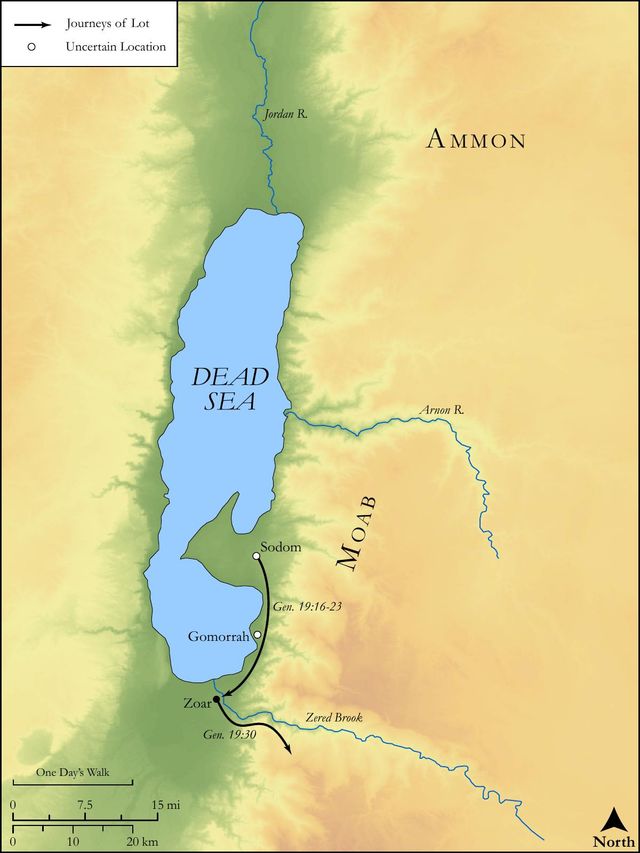
Genesis 19:7 is situated at a critical and intensely dramatic juncture in the narrative of Sodom and Gomorrah, immediately preceding their catastrophic destruction. The chapter opens with two angels, appearing as men, arriving in Sodom. Lot, Abraham's nephew, demonstrates commendable hospitality by insisting they lodge with him, providing them shelter and a meal. As night descends, the men of the city, encompassing all ages and social strata, converge on Lot's house, forming a menacing mob. Their demand, "Bring them out to us, that we may know them," is a clear euphemism for homosexual gang rape, underscoring the profound moral depravity and rampant wickedness that had permeated Sodom. This mob's aggressive intent confirms the "great cry" against the city that had reached God's ears, as described in Genesis 18:20. Lot, attempting to uphold the tradition of hospitality and protect his guests, steps outside to confront the aggressive crowd, leading to this desperate appeal in verse 7. His plea here is his initial, albeit ultimately unsuccessful, attempt to reason with the depraved populace before his controversial offer in the subsequent verse.
Historical & Cultural Context
The cultural backdrop of patriarchal hospitality is paramount to understanding Genesis 19:7. Hospitality was not merely a social custom but a sacred duty, a cornerstone of societal order and a moral imperative. To offer shelter and protection to a stranger was a profound act of virtue, and to violate that hospitality, especially by harming guests under one's roof, was an unspeakable offense. The actions of the men of Sodom represent a radical inversion of this sacred norm. Their demand for sexual violence against Lot's guests was an egregious breach of this foundational cultural value, demonstrating a society that had completely abandoned moral boundaries. Furthermore, the urban setting of Sodom, described as a prosperous city in the Jordan Plain, contrasts sharply with the moral decay within its walls. The mob's collective and public display of depravity indicates a pervasive wickedness, not merely isolated acts, suggesting a culture where such behavior was normalized or even celebrated, leading to divine intervention.
Key Themes
ShowHideGenesis 19:7 contributes significantly to several major theological and narrative themes within the book of Genesis and broader Scripture. Firstly, it powerfully illustrates the theme of moral depravity and pervasive sin, showcasing the depths of human wickedness that necessitated divine judgment. The actions of the Sodomites confirm the severity of the "great cry" against them (Genesis 18:20), demonstrating a society utterly devoid of righteousness. Secondly, the verse highlights the sacredness of hospitality, contrasting Lot's adherence to this vital cultural and moral duty with the Sodomites' flagrant violation of it. This theme resonates throughout Scripture, emphasizing the importance of welcoming and protecting strangers, as seen in passages like Hebrews 13:2. Thirdly, it sets the stage for the theme of divine judgment, underscoring the just consequences of persistent and unrepentant sin. The immediate aftermath of this confrontation is the swift and devastating destruction of Sodom and Gomorrah, serving as a powerful warning against ungodliness and sexual immorality, a warning reiterated in the New Testament (e.g., Jude 1:7). Finally, the verse subtly introduces the theme of Lot's compromised position and moral struggle, as he attempts to navigate and survive within a deeply corrupt environment.
Exposition and Analysis
ShowHideKey Word Analysis
ShowHideFrom the primitive root H559, meaning "to say" with great latitude. In this context, it signifies Lot's direct verbal address and appeal to the mob. It conveys his attempt to communicate and reason with them, despite the futility of such an endeavor given their hardened hearts. The act of "saying" here is an active engagement, a desperate verbal confrontation.
From the primitive word H251, meaning "a brother" used in the widest sense of literal relationship and metaphorical affinity or resemblance. Lot's use of this term is a rhetorical strategy, an appeal to any shared sense of humanity, community, or kinship that might exist among the men of Sodom. It is an attempt to invoke a common bond or a shared moral understanding to dissuade them from their wicked intentions.
From the primitive root H7489, properly meaning "to spoil (literally, by breaking to pieces)" and figuratively "to make (or be) good for nothing, i.e., bad (physically, socially or morally)." This word encompasses a broad spectrum of evil. In this specific context, it denotes the profound moral corruption of the Sodomites, specifically their intent for violent sexual perversion (homosexual gang rape), their egregious violation of the sacred duty of hospitality, and their general rebellion against divine and human moral order. It signifies actions that are fundamentally destructive and morally bankrupt.
Verse Breakdown
ShowHide"And said, I pray you, brethren,"
This clause reveals Lot's immediate response to the mob's demand. His address of "brethren" (H251, ʼâch') is a desperate, even rhetorical, appeal to the men of Sodom. As a resident alien, he attempts to invoke a sense of shared community or common humanity, hoping to appeal to any lingering sense of decency or social obligation. "I pray you" indicates a fervent, earnest plea, highlighting the urgency and gravity of the situation as Lot tries to de-escalate the confrontation and protect his guests.
"do not so wickedly."
This is Lot's direct condemnation of their intended actions. The term "wickedly" (H7489, râʻaʻ') is comprehensive, encompassing the full scope of their depravity. Primarily, it refers to their intent to commit homosexual gang rape, which was a violent and perverse act. Beyond this specific sexual sin, it also condemns their profound violation of the sacred tradition of hospitality, a fundamental social and moral duty. Their actions represent a complete disregard for human dignity, moral law, and ultimately, God's standards, confirming the deep-seated corruption that permeated their society.
Literary Devices
ShowHideThe verse employs several literary devices to convey its powerful message. The most prominent is Pathos, as Lot's desperate plea, "I pray you, brethren, do not so wickedly," evokes a strong sense of pity and sorrow for his precarious situation and the moral abyss into which Sodom has fallen. His use of "brethren" is a form of Rhetorical Appeal, attempting to leverage a sense of shared community or kinship, however faint, to dissuade the mob. Furthermore, within the broader narrative context, the mob's demand to "know" Lot's guests is a clear Euphemism for sexual assault, a common biblical device to refer to sensitive or violent acts indirectly. The entire scene also functions as Foreshadowing, as the unyielding wickedness displayed by the Sodomites in this verse immediately precedes and justifies the catastrophic divine judgment that is about to befall the city, signaling the inevitable consequences of persistent sin.
Theological and Thematic Connections
ShowHideGenesis 19:7 stands as a stark testament to the depths of human depravity and the critical importance of divine judgment. Lot's desperate plea highlights the pervasive sinfulness of Sodom, particularly its sexual perversion and egregious violation of hospitality, which had reached a point of no return, necessitating God's intervention. The narrative underscores that God's justice is not arbitrary but a righteous response to persistent and unrepentant wickedness, serving as a timeless warning against societal and individual moral decay.
Reflection and Application
ShowHideGenesis 19:7 serves as a sobering mirror, reflecting the enduring human struggle with sin and the critical importance of moral courage. Lot's imperfect stand, though ultimately insufficient to deter the mob, underscores the imperative for believers to confront wickedness and injustice, even when surrounded by pervasive evil and facing overwhelming opposition. It challenges us to cultivate moral clarity in a world that often blurs ethical lines, particularly concerning actions that violate human dignity, exploit the vulnerable, and defy God's moral law. The broader narrative of Sodom reminds us that unchecked depravity, whether individual or societal, inevitably leads to severe consequences. Therefore, this verse calls us to a life of righteousness, to actively resist the prevailing currents of sin, to uphold God's standards of justice and purity, and to be a light in dark places, offering true hospitality and refuge in a world often hostile to both God and neighbor.
Questions for Reflection
ShowHideFAQ
ShowHideWhat does "wickedly" specifically refer to in this verse?
ShowHideIn Genesis 19:7, "wickedly" (Hebrew: râʻaʻ) refers primarily to the men of Sodom's intent to commit homosexual gang rape against Lot's guests. It also encompasses their profound violation of the sacred tradition of hospitality, which was a fundamental social and moral duty, and their general moral depravity that defied both human decency and divine law. It signifies actions that are fundamentally destructive and morally bankrupt.
Why did Lot call the men of Sodom "brethren"?
ShowHideLot's address to the men as "brethren" (Hebrew: ʼâch) was a desperate rhetorical strategy. As a resident alien in Sodom, he was appealing to any lingering sense of shared community, common humanity, or social decency among them. He hoped to dissuade them from their heinous intent by invoking a sense of kinship or shared moral obligation, even if such a bond was tenuous in their depraved society.
Does Lot's offer in the next verse diminish his stand in Genesis 19:7?
ShowHideWhile Lot's subsequent offer in Genesis 19:8 to sacrifice his daughters is deeply troubling and morally reprehensible, Genesis 19:7 still represents his initial, immediate, and righteous instinct to protect his guests and uphold the sacred duty of hospitality. His later, compromised decision highlights his moral struggle and the extreme pressure he was under, but it does not negate the initial stand he took against the mob's wickedness. It underscores the immense moral compromise he felt forced into by the overwhelming evil surrounding him.
Christ-Centered Fulfillment
ShowHideThe harrowing narrative of Sodom, with Genesis 19:7 as a poignant moment of confrontation with unbridled sin, profoundly points to Christ as the ultimate answer to humanity's depravity and the fulfillment of God's righteous judgment and mercy. The severe judgment meted out against Sodom for its unrepentant wickedness foreshadows the ultimate divine judgment against all sin, a judgment that is perfectly executed by Christ, who will judge the living and the dead (2 Timothy 4:1). Yet, it also highlights God's mercy and desire for righteousness, which finds its ultimate expression in Jesus. Unlike Lot's flawed attempts to reason with evil, Christ is the perfect embodiment of righteousness, who perfectly upholds God's law and offers true hospitality and refuge to all who come to Him, contrasting sharply with Sodom's violent rejection of strangers (Matthew 25:35). Furthermore, Christ's atoning sacrifice on the cross is the only means by which humanity can escape the just condemnation for sin, a condemnation vividly illustrated by Sodom's destruction. He is the one who truly delivers us from wickedness, not merely by a plea for decency, but by His own life, death, and resurrection, offering not just a moral example but the power for transformation and eternal salvation to all who believe in Him (Romans 5:8, 2 Corinthians 5:21).