


Genesis 19:9
Bible text: King James Version (1769 Blayney text) · Public domain
Bible text: King James Version with Strong's numbers · Public domain
Bible text: Berean Standard Bible · Public domain
Bible text: American Standard Version (1901) · Public domain
Bible text: World English Bible, Messianic edition · Public domain
Bible text: Geneva Bible (1599) · Public domain
Bible text: Young's Literal Translation · Public domain
- וַיֹּאמְרוּvai·yo·me·Ruand they saidH559Conj-w ¦ V-Qal-ConsecImperf-3mpVerb Qal Consecutive Imperfect 3rd Plural Masculineוַandיֹּאמְרוּthey said
- גֶּשׁgeshapproachH5066V-Qal-Imp-2msVerb Qal Imperative 2nd Singular Masculine
- הָלְאָהHal·'ahbeyondH1973AdvAdverb
- וַיֹּאמְרוּvai·yo·me·Ruand they saidH559Conj-w ¦ V-Qal-ConsecImperf-3mpVerb Qal Consecutive Imperfect 3rd Plural Masculineוַandיֹּאמְרוּthey said
- הָאֶחָדha·'e·Chadthe oneH259Art ¦ Adj-fsAdjective Numerical Singular Feminine Absoluteהָtheאֶחָדone
- בָּאba'he cameH935V-Qal-Perf-3msVerb Qal Perfect 3rd Singular Masculine
- לָגוּרla·Gurto sojournH1481Prep-l ¦ V-Qal-InfVerb Qal Infinitive Constructלָtoגוּרsojourn
- וַיִּשְׁפֹּטvai·yish·Potand he has judgedH8199Conj-w ¦ V-Qal-ConsecImperf-3msVerb Qal Consecutive Imperfect 3rd Singular Masculineוַandיִּשְׁפֹּטhe has judged
- שָׁפוֹטsha·Fotcontinuously <to judge>H8199V-Qal-InfAbsVerb Qal Infinitive Absolute
- עַתָּה'a·TahnowH6258AdvAdverb
- נָרַעna·Ra'we will do harmH7489V-Hiphil-Imperf-1cpVerb Hiphil Imperfect 1st Plural common gender
- לְךָle·Khato <the> youPrep-l ¦ 2msSuffix Personal 2nd Singular Masculineלְto <the>ךָyou
- מֵהֶםme·Hemmore than themPrep-m ¦ 3mpSuffix Personal 3rd Plural Masculineמֵmore thanהֶםthem
- וַיִּפְצְרוּvai·yif·tze·Ruand they urgedH6484Conj-w ¦ V-Qal-ConsecImperf-3mpVerb Qal Consecutive Imperfect 3rd Plural Masculineוַandיִּפְצְרוּthey urged
- בָאִישׁva·'Ish<in> the manH376Prep-b ¦ N-msNoun Singular Masculine Absoluteבָ<in> theאִישׁman
- בְּלוֹטbe·lOt<in> LotH3876Prep-b ¦ N-proper-mNoun Proper Masculineבְּ<in>לוֹטLot
- מְאֹדme·'OdexceedinglyH3966Adj-msAdjective Numerical Singular Masculine Absolute
- וַיִּגְּשׁוּvai·yi·ge·Shuand they approachedH5066Conj-w ¦ V-Qal-ConsecImperf-3mpVerb Qal Consecutive Imperfect 3rd Plural Masculineוַandיִּגְּשׁוּthey approached
- לִשְׁבֹּרlish·Borto break downH7665Prep-l ¦ V-Qal-InfVerb Qal Infinitive Constructלִtoשְׁבֹּרbreak down
- הַדָּלֶתha·Da·letthe doorH1817Art ¦ N-fsNoun Singular Feminine Absoluteהַtheדָּלֶתdoor
English is a literal word-by-word gloss of the Hebrew, not the KJV's wording. Why?
This is the original text the KJV's translators worked from — each Hebrew word with its own literal English meaning in this verse, prepared by scholars at Tyndale House, Cambridge. The KJV translates whole sentences, not word by word, so its wording differs: one Hebrew word can become several English words, and the KJV may choose “the LORD” where the gloss reads “Yahweh”. Both are faithful — they answer different questions. For the KJV's own rendering, switch to the KJV text.
Details
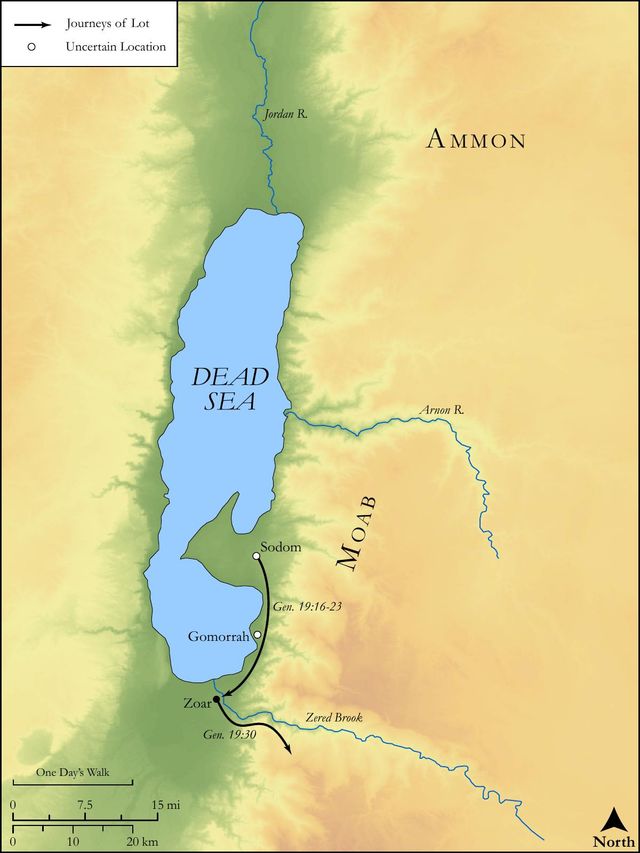
See on the biblical-era maps


Study this verse
Public-domain commentary
Matthew Henry
From his Commentary on the Whole Bible. Henry comments on passages, not single verses — this entry covers Genesis 19:4–11. His four-level outline is real structure in the source text, so it is rendered as structure.
Now it appeared, beyond contradiction, that the cry of Sodom was no louder than there was cause for. This night's work was enough to fill the measure. For we find here,
I.That they were all wicked, Gen 19:4.
Wickedness had become universal, and they were unanimous in any vile design. Here were old and young, and all from every quarter, engaged in this riot; the old were not past it, and the young had soon come up to it. Either they had no magistrates to keep the peace, and protect the peaceable, or their magistrates were themselves aiding and abetting. Note, When the disease of sin has become epidemical, it is fatal to any place, Isa 1:5-7.
II.That they had arrived at the highest pitch of wickedness; they were sinners before the Lord exceedingly (Gen 13:13); for,
1.It was the most unnatural and abominable wickedness that they were now set upon, a sin that still bears their name, and is called Sodomy. They were carried headlong by those vile affections (Rom 1:26, Rom 1:27), which are worse than brutish, and the eternal reproach of the human nature, and which cannot be thought of without horror by those that have the least spark of virtue and any remains of natural light and conscience. Note, Those that allow themselves in unnatural uncleanness are marked for the vengeance of eternal fire. See Jde 1:7.
2.They were not ashamed to own it, and to prosecute their design by force and arms. The practice would have been bad enough if it had been carried on by intrigue and wheedling; but they proclaimed war with virtue, and bade open defiance to it. Hence daring sinners are said to declare their sin as Sodom, Isa 3:9. Note, Those that have become impudent in sin generally prove impenitent in sin; and it will be their ruin. Those have hard hearts indeed that sin with a high hand, Jer 6:15.
3.When Lot interposed, with all the mildness imaginable, to check the rage and fury of their lust, they were most insolently rude and abusive to him. He ventured himself among them, Jer 6:6. He spoke civilly to them, called them brethren (Gen 19:7), and begged of them not to do so wickedly; and, being greatly disturbed at their vile attempt, he unadvisedly and unjustifiably offered to prostitute his two daughters to them, Gen 19:8. It is true, of two evils we must choose the less; but of two sins we must choose neither, nor ever do evil that good may come of it. He reasoned with them, pleaded the laws of hospitality and the protection of his house which his guests were entitled to; but he might as well have offered reason to a roaring lion and a raging bear as to these head-strong sinners, who were governed only by lust and passion. Lot's arguing with them does but exasperate them; and, to complete their wickedness, and fill up the measure of it, they fall foul upon him.
(1.)They ridicule him, charge him with the absurdity of pretending to be a magistrate, when he was not so much as a free-man of their city, Gen 19:9. Note, It is common for a reprover to be unjustly upbraided as a usurper; and, while offering the kindness of a friend, to be charged with assuming the authority of a judge: as if a man might not speak reason without taking too much upon him.
(2.)They threaten him, and lay violent hands upon him; and the good man is in danger of being pulled in pieces by this outrageous rabble. Note,
[1.]Those that hate to be reformed hate those that reprove them, though with ever so much tenderness. Presumptuous sinners do by their consciences as the Sodomites did by Lot, baffle their checks, stifle their accusations, press hard upon them, till they have seared them and quite stopped their mouths, and so made themselves ripe for ruin.
[2.]Abuses offered to God's messengers and to faithful reprovers soon fill the measure of a people's wickedness, and bring destruction without remedy. See Pro 29:1, and Ch2 36:16. If reproofs remedy not, there is no remedy. See Ch2 25:16.
III.That nothing less than the power of an angel could save a good man out of their wicked hands.
It was now past dispute what Sodom's character was and what course must be taken with it, and therefore the angels immediately give a specimen of what they further intended.
1.They rescue Lot, Ch2 25:10. Note, He that watereth shall be watered also himself. Lot was solicitous to protect them, and now they take effectual care for his safety, in return for his kindness. Note further, Angels are employed for the special preservation of those that expose themselves to danger by well-doing. The saints, at death, are pulled like Lot into a house of perfect safety, and the door shut for ever against those that pursue them.
2.They chastise the insolence of the Sodomites: They smote them with blindness, Gen 19:11. This was designed,
(1.)To put an end to their attempt, and disable them from pursuing it. Justly were those struck blind who had been deaf to reason. Violent persecutors are often infatuated so that they cannot push on their malicious designs against God's messengers, Job 5:14, Job 5:15. Yet these Sodomites, after they were struck blind, continued seeking the door, to break it down, till they were tired. No judgments will, of themselves, change the corrupt natures and purposes of wicked men. If their minds had not been blinded as well as their bodies, they would have said, as the magicians, This is the finger of God, and would have submitted.
(2.)It was to be an earnest of their utter ruin, the next day. When God, in a way of righteous judgment, blinds men, their condition is already desperate, Rom 11:8, Rom 11:9.
Continue studying Genesis 19:9 across the web’s major study libraries — every link below opens this exact verse, chapter, or book on the destination site.
Read & Compare
 BibleGatewayThis verse in more than 200 translations and 70 languages.
 Bible.comThe YouVersion reader — hundreds of translations, reading plans, and highlights.
 ESV.orgCrossway's official English Standard Version reader.
 NET BibleThe NET translation with 60,000+ translators' notes on every rendering decision.
 STEP BibleTyndale House's free study tool — original text, vocabulary, and scholarly resources.
 BibliaLogos Bible Software's free web reader.
 USCCBThe New American Bible (Revised Edition) with the U.S. bishops' study notes.
Commentaries
 BibleHub CommentariesDozens of classic commentaries on this verse, gathered on one page.
 StudyLightMore than 100 commentary sets — the largest collection on the web.
 BibleRefPlain-English commentary on what this verse means, verse by verse.
 Enduring WordDavid Guzik's free commentary on this chapter, widely used by Bible teachers.
 Bible Study ToolsVerse commentary alongside Greek and Hebrew study aids.
Original Language & Research
- BibleHub InterlinearThe verse word by word — original language, transliteration, and English.
- BibleHub LexiconEvery word's original-language definition and Strong's entry.
 Blue Letter BibleDeep-study tools — Strong's numbers, concordance, and word studies.
 SefariaThe Hebrew text with Rashi and centuries of Jewish commentary.
Sermons, Hymns & Audio


TrulyRandomVerse is not affiliated with these sites and doesn’t control their content. They’re linked because they’re genuinely useful.
Summary
Genesis 19:9 vividly portrays the escalating depravity of Sodom as its aggressive inhabitants turn their wrath upon Lot. After Lot attempts to protect his angelic guests from their intended sexual assault, the men of the city vehemently reject his authority as a mere "sojourner," accusing him of presuming to "judge" them. They then threaten him with greater violence than they intended for his visitors, physically assaulting him and attempting to breach his door, revealing the city's complete moral collapse and unbridled wickedness.
Context
ShowHideLiterary Context
This verse is a pivotal moment in the narrative of Sodom's destruction, immediately following Lot's desperate and morally compromised attempt to appease the mob by offering his own daughters in place of his angelic guests (Genesis 19:8). The mob's response in Genesis 19:9 demonstrates their utter rejection of any moral appeal or the sacred laws of hospitality, intensifying the tension and highlighting the inevitability of divine judgment. The narrative quickly moves from this physical assault to the angels' miraculous intervention and the subsequent destruction of the city, underscoring the immediate consequences of such unrepentant wickedness.
Historical & Cultural Context
In the days of the patriarchs, hospitality was held in immense value, and the protection of guests was considered a sacred duty, even at great personal cost. Lot's actions, though flawed, stemmed from this deeply ingrained cultural obligation. The Sodomites' demand to "know" Lot's visitors (a euphemism for sexual assault) and their subsequent violent assault on Lot himself, represent a radical and shocking transgression of these foundational societal norms. This behavior, alongside other accounts of their wickedness (e.g., Ezekiel 16:49-50), paints a picture of a society that had completely abandoned moral and social order, embracing perversion and violence without restraint, setting the stage for divine retribution.
Key Themes
ShowHideGenesis 19:9 powerfully contributes to several overarching themes within the broader Genesis narrative and biblical theology. It highlights the pervasiveness of human sin and depravity when left unchecked, contrasting sharply with God's holiness and justice. It underscores the dangers of moral compromise and the consequences of choosing to dwell in environments steeped in wickedness, as Lot's initial choice to settle near Sodom (Genesis 13:10-13) ultimately put him and his family in grave peril. Furthermore, the verse sets the stage for divine judgment, demonstrating that God will not tolerate unrepentant evil indefinitely, and foreshadows the swift and decisive action He takes to protect the righteous and punish the wicked.
Exposition and Analysis
ShowHideKey Word Analysis
ShowHideThis primitive root signifies "to turn aside from the road (for a lodging or any other purpose), i.e. sojourn (as a guest)." It emphasizes Lot's status as a temporary resident, a foreigner without inherent rights or authority in Sodom. The Sodomites' use of this term is a dismissive assertion that Lot, as an outsider, has no right to interfere or dictate terms to them, the native inhabitants. It highlights their contempt for his status and his attempt to uphold a universal custom of hospitality.
This root means "to judge, i.e. pronounce sentence (for or against); by implication, to vindicate or punish; by extension, to govern." The Sodomites accuse Lot of presuming to "be a judge," implying that he is attempting to arbitrate, dictate terms, or impose moral standards upon them. This accusation reveals their utter rejection of any external moral or civil authority, particularly from a "sojourner" who challenges their depraved desires. Their contempt for Lot's perceived authority underscores their lawlessness and arrogance.
This primitive root means "to peck at, i.e. (figuratively) stun or dull; press, urge, stubbornness." In this context, it describes the mob's forceful, persistent, and violent exertion against Lot. It conveys a relentless, unyielding assault, indicating their determined effort to overpower Lot and forcibly gain entry into his house. This word vividly portrays the physical aggression and unbridled will of the mob, underscoring the extreme danger Lot faced.
Verse Breakdown
ShowHide"And they said, Stand back."
This initial command is a harsh, dismissive rejection of Lot's intervention. It signifies the mob's contempt for Lot's attempt to reason with them or protect his guests, immediately establishing their hostile and unyielding stance.
"And they said [again], This one [fellow] came in to sojourn, and he will needs be a judge:"
This is the core of their accusation and justification for their hostility. They mock Lot's status as a "sojourner" (a temporary resident or foreigner), asserting that he has no right to "judge" or dictate terms to them, the native inhabitants. This reveals their arrogance, their rejection of any moral authority, and their disdain for Lot's attempt to uphold the sacred laws of hospitality.
"now will we deal worse with thee, than with them."
This chilling threat marks a significant escalation of their malice. It is not merely a rejection of Lot's plea but a declaration of intent to inflict even greater harm and degradation upon him for daring to stand in their way. It underscores the depth of their depravity and their willingness to punish anyone who challenges their sinful desires.
"And they pressed sore upon the man, [even] Lot, and came near to break the door."
This describes the immediate physical manifestation of their threat. The mob violently and relentlessly "pressed" upon Lot, attempting to overpower him and force entry into his house. The objective was to "break the door," symbolizing their intent to violate the sanctity of his home and gain access to his guests, demonstrating their unbridled lust and aggression.
Literary Devices
ShowHideThe passage employs several potent literary devices. The escalating action, moving from verbal threats to physical assault, creates intense Suspense and highlights the dire peril Lot faces. The Sodomites' accusation that Lot, a mere "sojourner," presumes to "judge" them is a profound Irony, as their own actions demonstrate a complete absence of moral judgment and a rejection of any societal order. The "door" itself functions as powerful Symbolism, representing the final barrier of protection, the sanctity of the home, and the last vestige of civility. The mob's determined effort to "break the door" symbolizes their complete disregard for boundaries, their violent intent to violate privacy and safety, and their unbridled pursuit of their depraved desires, foreshadowing the complete breakdown of order that necessitates divine intervention.
Theological and Thematic Connections
ShowHideGenesis 19:9 vividly illustrates the profound depth of human depravity when sin is allowed to fester unchecked, demonstrating a society utterly given over to its darkest desires, rejecting all moral boundaries and authority. This passage serves as a stark warning about the corrosive power of pervasive wickedness and the ultimate consequences of unrepentant sin. It also highlights the precarious position of the righteous living in a corrupt world, underscoring the need for divine intervention when human efforts fail to stem the tide of evil.
Reflection and Application
ShowHideGenesis 19:9 serves as a stark reminder of the corrosive power of societal moral decay and the critical importance of discerning the environments we choose for ourselves and our families. Lot's desperate situation underscores the dangers of allowing ourselves to become desensitized to sin or to compromise with evil, even for perceived benefits. While Lot's actions were imperfect, his willingness to stand against the overwhelming tide of wickedness, however flawed, challenges believers to be courageous in upholding righteous standards and to be "salt and light" in a dark world (Matthew 5:13-16), even when it means confronting popular opinion or facing hostility. Ultimately, this passage highlights the reality of God's unwavering justice and His ultimate judgment on unrepentant sin, urging us to live in alignment with His holy character and to seek refuge in His righteousness.
Questions for Reflection
ShowHideFAQ
ShowHideWhy did the Sodomites reject Lot's authority so vehemently?
ShowHideThe Sodomites rejected Lot's authority so vehemently because he was a "sojourner" (a temporary resident or foreigner) and not a native citizen with inherent rights or power in their community. They viewed his attempt to intervene as an outsider presuming to "judge" or dictate terms to them, which they found arrogant and unacceptable. This rejection highlights their deep-seated depravity and their contempt for any moral restraint or external authority, especially one that challenged their sinful desires. Their hostility stemmed from a combination of xenophobia and a complete disregard for justice or hospitality.
What does the phrase "now will we deal worse with thee, than with them" imply?
ShowHideThis chilling phrase implies an immediate and severe escalation of their violent intentions. The Sodomites were threatening to inflict even greater harm and degradation upon Lot than they had originally planned for his angelic guests. It reveals the depth of their malice, their unbridled rage, and their willingness to punish anyone who dared to challenge their sinful desires or interfere with their intentions. This threat underscores the extreme danger Lot faced and the profound wickedness that characterized the men of Sodom, demonstrating their capacity for unmitigated cruelty and perversion.
How does this verse contribute to our understanding of Sodom's depravity?
ShowHideGenesis 19:9 profoundly illustrates Sodom's depravity by showcasing its complete breakdown of societal order, moral authority, and the sacred custom of hospitality. The men's aggressive rejection of Lot's plea, their intent to commit gang rape, and their immediate resort to physical violence against an innocent resident who tried to protect his guests, reveals a society utterly consumed by unbridled lust, arrogance, and a contempt for any form of righteousness. This verse demonstrates that Sodom's sin was not merely sexual immorality but a pervasive, violent, and unrepentant rebellion against all moral and divine order, confirming the biblical assessment of their exceeding wickedness (Genesis 13:13).
Christ-Centered Fulfillment
ShowHideThe unbridled depravity and violence displayed by the men of Sodom in Genesis 19:9 powerfully illustrate humanity's desperate need for a Savior. Lot, a righteous man in a wicked city, stands vulnerable and helpless against an overwhelming force of evil, foreshadowing humanity's own inability to overcome the power of sin and its impending judgment. In Christ, we find the ultimate protector and deliverer. He is the righteous One who perfectly upholds God's standards and stands against all unrighteousness, not merely as a sojourner, but as the divine Judge and King, to whom all authority in heaven and on earth has been given (Matthew 28:18). While Sodom faced swift and complete destruction for its unrepentant sin, Christ offers salvation from the coming judgment to all who turn to Him (Romans 5:9), fulfilling God's promise to deliver the righteous (2 Peter 2:9) and offering true refuge from the spiritual forces of darkness that seek to destroy (Ephesians 6:12). He is the ultimate Door, through whom we find safety and life (John 10:9), unlike the door in Sodom that the wicked sought to violently breach.