


Genesis 19:10
Bible text: King James Version (1769 Blayney text) · Public domain
Bible text: Berean Standard Bible · Public domain
Bible text: American Standard Version (1901) · Public domain
Bible text: World English Bible, Messianic edition · Public domain
Bible text: Geneva Bible (1599) · Public domain
Bible text: Young's Literal Translation · Public domain
- וַיִּשְׁלְחוּvai·yish·le·Chuand they stretched outH7971Conj-w ¦ V-Qal-ConsecImperf-3mpVerb Qal Consecutive Imperfect 3rd Plural Masculineוַandיִּשְׁלְחוּthey stretched out
- הָאֲנָשִׁיםha·'a·na·Shimthe menH582Art ¦ N-mpNoun Plural Masculine Absoluteהָtheאֲנָשִׁיםmen
- אֶת'et<obj.>H853DirObjMParticle Object Indicator
- יָדָםya·Damtheir handH3027N-csc ¦ 3mpNoun Singular common gender Constructיָדָhandםtheir
- וַיָּבִיאוּvai·ya·Vi·'uand they broughtH935Conj-w ¦ V-Hiphil-ConsecImperf-3mpVerb Hiphil Consecutive Imperfect 3rd Plural Masculineוַandיָּבִיאוּthey brought
- אֶת'et<obj.>H853DirObjMParticle Object Indicator
- לוֹטLotLotH3876N-proper-mNoun Proper Masculine
- אֲלֵיהֶם'a·lei·Hemto themH413Prep ¦ 3mpPreposition Definiteאֲלֵיtoהֶםthem
- הַבָּיְתָהha·Ba·ye·tahthe house towardsH1004Art ¦ N-ms ¦ SfxNoun Singular Masculine Absoluteהַtheבָּיְתָhouseהtowards
- וְאֶתve·'Etand <obj.>H853Conj-w ¦ DirObjMParticle Object Indicatorוְandאֶת<obj.>
- הַדֶּלֶתha·De·letthe doorH1817Art ¦ N-fsNoun Singular Feminine Absoluteהַtheדֶּלֶתdoor
- סָגָרוּsa·Ga·ruthey closedH5462V-Qal-Perf-3cpVerb Qal Perfect 3rd Plural common gender
English is a literal word-by-word gloss of the Hebrew, not the KJV's wording. Why?
This is the original text the KJV's translators worked from — each Hebrew word with its own literal English meaning in this verse, prepared by scholars at Tyndale House, Cambridge. The KJV translates whole sentences, not word by word, so its wording differs: one Hebrew word can become several English words, and the KJV may choose “the LORD” where the gloss reads “Yahweh”. Both are faithful — they answer different questions. For the KJV's own rendering, switch to the KJV text.
Details
See on the biblical-era maps


Study this verse
Public-domain commentary
Matthew Henry
From his Commentary on the Whole Bible. Henry comments on passages, not single verses — this entry covers Genesis 19:4–11. His four-level outline is real structure in the source text, so it is rendered as structure.
Now it appeared, beyond contradiction, that the cry of Sodom was no louder than there was cause for. This night's work was enough to fill the measure. For we find here,
I.That they were all wicked, Gen 19:4.
Wickedness had become universal, and they were unanimous in any vile design. Here were old and young, and all from every quarter, engaged in this riot; the old were not past it, and the young had soon come up to it. Either they had no magistrates to keep the peace, and protect the peaceable, or their magistrates were themselves aiding and abetting. Note, When the disease of sin has become epidemical, it is fatal to any place, Isa 1:5-7.
II.That they had arrived at the highest pitch of wickedness; they were sinners before the Lord exceedingly (Gen 13:13); for,
1.It was the most unnatural and abominable wickedness that they were now set upon, a sin that still bears their name, and is called Sodomy. They were carried headlong by those vile affections (Rom 1:26, Rom 1:27), which are worse than brutish, and the eternal reproach of the human nature, and which cannot be thought of without horror by those that have the least spark of virtue and any remains of natural light and conscience. Note, Those that allow themselves in unnatural uncleanness are marked for the vengeance of eternal fire. See Jde 1:7.
2.They were not ashamed to own it, and to prosecute their design by force and arms. The practice would have been bad enough if it had been carried on by intrigue and wheedling; but they proclaimed war with virtue, and bade open defiance to it. Hence daring sinners are said to declare their sin as Sodom, Isa 3:9. Note, Those that have become impudent in sin generally prove impenitent in sin; and it will be their ruin. Those have hard hearts indeed that sin with a high hand, Jer 6:15.
3.When Lot interposed, with all the mildness imaginable, to check the rage and fury of their lust, they were most insolently rude and abusive to him. He ventured himself among them, Jer 6:6. He spoke civilly to them, called them brethren (Gen 19:7), and begged of them not to do so wickedly; and, being greatly disturbed at their vile attempt, he unadvisedly and unjustifiably offered to prostitute his two daughters to them, Gen 19:8. It is true, of two evils we must choose the less; but of two sins we must choose neither, nor ever do evil that good may come of it. He reasoned with them, pleaded the laws of hospitality and the protection of his house which his guests were entitled to; but he might as well have offered reason to a roaring lion and a raging bear as to these head-strong sinners, who were governed only by lust and passion. Lot's arguing with them does but exasperate them; and, to complete their wickedness, and fill up the measure of it, they fall foul upon him.
(1.)They ridicule him, charge him with the absurdity of pretending to be a magistrate, when he was not so much as a free-man of their city, Gen 19:9. Note, It is common for a reprover to be unjustly upbraided as a usurper; and, while offering the kindness of a friend, to be charged with assuming the authority of a judge: as if a man might not speak reason without taking too much upon him.
(2.)They threaten him, and lay violent hands upon him; and the good man is in danger of being pulled in pieces by this outrageous rabble. Note,
[1.]Those that hate to be reformed hate those that reprove them, though with ever so much tenderness. Presumptuous sinners do by their consciences as the Sodomites did by Lot, baffle their checks, stifle their accusations, press hard upon them, till they have seared them and quite stopped their mouths, and so made themselves ripe for ruin.
[2.]Abuses offered to God's messengers and to faithful reprovers soon fill the measure of a people's wickedness, and bring destruction without remedy. See Pro 29:1, and Ch2 36:16. If reproofs remedy not, there is no remedy. See Ch2 25:16.
III.That nothing less than the power of an angel could save a good man out of their wicked hands.
It was now past dispute what Sodom's character was and what course must be taken with it, and therefore the angels immediately give a specimen of what they further intended.
1.They rescue Lot, Ch2 25:10. Note, He that watereth shall be watered also himself. Lot was solicitous to protect them, and now they take effectual care for his safety, in return for his kindness. Note further, Angels are employed for the special preservation of those that expose themselves to danger by well-doing. The saints, at death, are pulled like Lot into a house of perfect safety, and the door shut for ever against those that pursue them.
2.They chastise the insolence of the Sodomites: They smote them with blindness, Gen 19:11. This was designed,
(1.)To put an end to their attempt, and disable them from pursuing it. Justly were those struck blind who had been deaf to reason. Violent persecutors are often infatuated so that they cannot push on their malicious designs against God's messengers, Job 5:14, Job 5:15. Yet these Sodomites, after they were struck blind, continued seeking the door, to break it down, till they were tired. No judgments will, of themselves, change the corrupt natures and purposes of wicked men. If their minds had not been blinded as well as their bodies, they would have said, as the magicians, This is the finger of God, and would have submitted.
(2.)It was to be an earnest of their utter ruin, the next day. When God, in a way of righteous judgment, blinds men, their condition is already desperate, Rom 11:8, Rom 11:9.
Continue studying Genesis 19:10 across the web’s major study libraries — every link below opens this exact verse, chapter, or book on the destination site.
Read & Compare
 BibleGatewayThis verse in more than 200 translations and 70 languages.
 Bible.comThe YouVersion reader — hundreds of translations, reading plans, and highlights.
 ESV.orgCrossway's official English Standard Version reader.
 NET BibleThe NET translation with 60,000+ translators' notes on every rendering decision.
 STEP BibleTyndale House's free study tool — original text, vocabulary, and scholarly resources.
 BibliaLogos Bible Software's free web reader.
 USCCBThe New American Bible (Revised Edition) with the U.S. bishops' study notes.
Commentaries
 BibleHub CommentariesDozens of classic commentaries on this verse, gathered on one page.
 StudyLightMore than 100 commentary sets — the largest collection on the web.
 BibleRefPlain-English commentary on what this verse means, verse by verse.
 Enduring WordDavid Guzik's free commentary on this chapter, widely used by Bible teachers.
 Bible Study ToolsVerse commentary alongside Greek and Hebrew study aids.
Original Language & Research
- BibleHub InterlinearThe verse word by word — original language, transliteration, and English.
- BibleHub LexiconEvery word's original-language definition and Strong's entry.
 Blue Letter BibleDeep-study tools — Strong's numbers, concordance, and word studies.
 SefariaThe Hebrew text with Rashi and centuries of Jewish commentary.
Sermons, Hymns & Audio


TrulyRandomVerse is not affiliated with these sites and doesn’t control their content. They’re linked because they’re genuinely useful.
Summary
Genesis 19:10 vividly portrays the immediate and forceful intervention of the two angelic visitors, who, witnessing Lot's perilous situation and their own safety compromised by the aggressive, depraved mob of Sodom, swiftly pulled Lot back into the house and securely shut the door. This pivotal moment not only underscores the profound moral decay that permeated Sodom but also powerfully highlights God's protective hand, exercised through His divine messengers, even amidst extreme danger and human moral failings.
Context
ShowHideLiterary Context
This verse marks a dramatic turning point in the unfolding narrative of Sodom's impending judgment, occurring immediately after Lot's deeply flawed and desperate attempt to appease the violent men of the city. The preceding verses Genesis 19:1-9 establish the arrival of two angels, disguised as men, into Sodom, where Lot, a righteous man living amidst profound wickedness, extended hospitality to them. The men of Sodom quickly surrounded Lot's house, demanding that he bring out his visitors so they could "know" them, a euphemism for sexual assault. In a morally compromised and agonizing effort to protect his guests, Lot had just offered his own virgin daughters to the ravenous mob, a testament to the extreme pressure and moral confusion he faced. Genesis 19:10 depicts the angels' swift and decisive intervention, not only to rescue Lot from the violent crowd but also to secure their own safety, thereby setting the stage for the catastrophic divine judgment that would soon be unleashed upon the city, a judgment provoked by the "great outcry" against Sodom and Gomorrah mentioned in Genesis 18:20.
Historical & Cultural Context
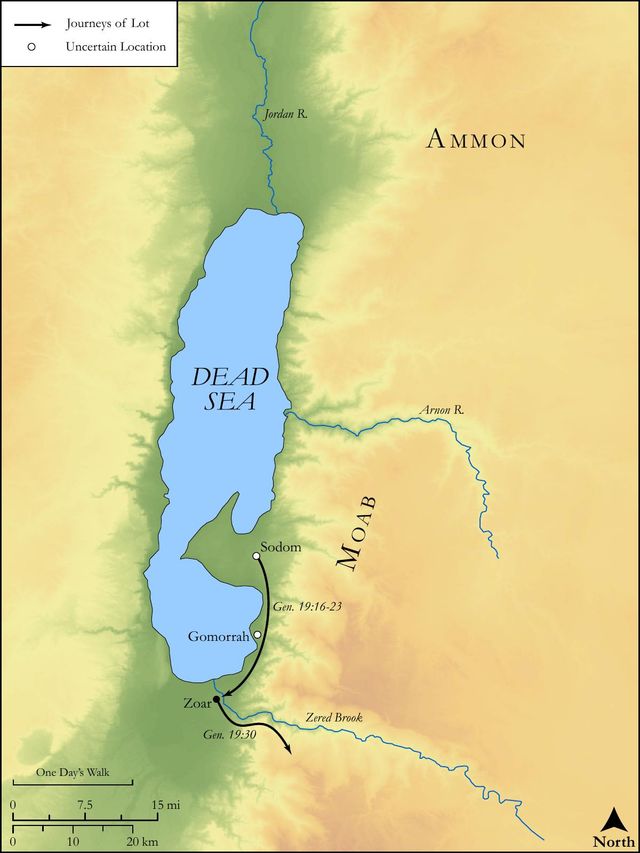
The cultural context of patriarchal hospitality is crucial here. Offering shelter and protection to travelers was a sacred duty, and any violation of this custom was considered a grave offense. The men of Sodom's demand for Lot's guests was not merely a breach of hospitality but an act of extreme sexual perversion and violence, demonstrating a profound societal breakdown. Homosexual acts were explicitly condemned in Mosaic Law (e.g., Leviticus 18:22), and the narrative here portrays Sodom's pervasive and unrepentant embrace of such practices. The city's location in the fertile Jordan Valley, described as "like the garden of the Lord" in Genesis 13:10, ironically juxtaposes its natural abundance with its spiritual barrenness and moral corruption, which had reached a point of no return, necessitating divine judgment.
Key Themes
ShowHideGenesis 19:10 contributes significantly to several overarching themes within Genesis and the broader biblical narrative. Firstly, it powerfully illustrates the theme of Divine Protection and Intervention, showcasing God's direct involvement in human affairs, even in moments of extreme peril, to preserve His chosen ones. Secondly, it starkly highlights the Depravity of Humanity when left unchecked by divine restraint, particularly the profound wickedness of Sodom, which had become utterly consumed by sin, demanding judgment. Thirdly, the verse subtly touches upon the theme of God's Mercy Amidst Human Flaw, as Lot, despite his morally questionable offer of his daughters, is still deemed righteous enough for divine rescue, aligning with later biblical characterizations of him as "righteous Lot" in 2 Peter 2:7-8. Finally, it reinforces the Nature of Angelic Beings as powerful agents of God's will, capable of physical intervention and executing divine judgment, as seen in their subsequent actions against the mob and the city.
Exposition and Analysis
ShowHideGenesis 19:10 provides a concise yet profound account of the decisive actions taken by the two angelic visitors in response to the escalating threat posed by the men of Sodom. As Lot stood outside, desperately attempting to reason with or appease the aggressive mob, his life and the divinely appointed mission of the angels were in immediate peril.
Key Word Analysis
ShowHideThis term (H582) refers to "a mortal," a "man in general," often used to distinguish from the more dignified 'adam (man, mankind). In this context, it specifically refers to the two angelic beings who had taken on human form. Their identity as "men" emphasizes their corporeal presence and ability to interact physically, yet their underlying nature as divine messengers grants them the extraordinary power demonstrated in this verse. The use of 'enowsh here subtly highlights their temporary, embodied state, contrasting with their true, spiritual essence.
The word "hand" (H3027) is a primitive term with a vast array of applications, both literal and figurative. In this instance, "put forth their hand" signifies direct, physical action and the exertion of power or authority. Unlike the open hand (kaf), 'yad can imply the closed hand, indicating force or control. Here, it denotes the angels' active engagement and the application of their supernatural strength to intervene decisively, taking hold of Lot to effect his rescue.
This primitive root (H5462) means "to shut up," "to close up," or "to inclose." Figuratively, it can also mean "to surrender" or "deliver up." In Genesis 19:10, the act of "shutting to the door" is a definitive, unyielding action. It signifies the immediate cessation of interaction with the outside world, the establishment of an impenetrable barrier, and the finality of the protective measure. It marks a point of no return, sealing off the righteous within and leaving the unrighteous outside to face the impending judgment.
Verse Breakdown
ShowHide"But the men put forth their hand"
This opening clause immediately shifts the narrative focus from Lot's desperate and failed attempts to the decisive intervention of the angelic visitors. The "men" are the two angels, and their action of "putting forth their hand" signifies a direct, physical, and authoritative move. It indicates that they are taking control of the situation, initiating the rescue of Lot, and asserting their divine power against the encroaching mob.
"and pulled Lot into the house to them"
The Hebrew verb for "pulled" (H935, bôwʼ, often translated as "come" or "go," but here implying a forceful drawing in) emphasizes the urgency and power of the angels' action. This was not a gentle invitation but a forceful, perhaps even a dragging, motion, indicating the extreme danger Lot was in and the angels' immense strength. Lot, having just offered his daughters, may have been hesitant, overwhelmed, or physically impeded by the crowd, necessitating this direct, physical intervention to bring him to immediate safety within the confines of the house.
"and shut to the door"
This final action is both practical and symbolic. Practically, it physically separated Lot and the angels from the violent, lust-filled mob, providing immediate and complete security. Symbolically, the shutting of the door marked a definitive boundary, signaling the end of any negotiation, appeasement, or further interaction with the depraved men of Sodom. It was a final act of protection before the subsequent divine judgment would be unleashed, sealing off the righteous remnant from the unrighteous, who were left outside to face their fate.
Literary Devices
ShowHideThe narrative of Genesis 19:10 is rich with literary devices that amplify its dramatic impact and theological significance. Divine Intervention is the most prominent device, as the angels' swift and powerful actions directly resolve a humanly insurmountable crisis, highlighting God's active involvement in the unfolding drama. The verse employs Contrast between Lot's moral compromise and the angels' decisive righteousness, and between the vulnerability of Lot and the overwhelming power of the divine messengers. The "door" itself functions as potent Symbolism, representing a threshold of safety and separation. Its shutting signifies a definitive boundary, a point of no return, and the sealing off of divine protection from the encroaching evil. This act also serves as Foreshadowing of the impending judgment, as the closure of the door to the righteous anticipates the opening of the heavens for wrath upon the unrighteous outside. The narrative's rapid pacing in this verse further heightens the sense of urgency and immediate peril.
Theological and Thematic Connections
ShowHideThis verse powerfully encapsulates several profound theological truths. It vividly demonstrates God's direct and potent intervention through His angelic messengers to protect Lot and themselves from the violent, sexually depraved mob. This act of pulling Lot to safety underscores God's sovereign power actively working on behalf of the righteous, even when they are flawed and make morally questionable decisions. The aggressive, immoral demands of the men of Sodom, their readiness to violently breach Lot's hospitality, and their unyielding wickedness despite Lot's pleas, starkly highlight the city's profound moral corruption and its readiness for divine judgment. Despite Lot's morally compromised offer of his own daughters to the mob, the angels still act to save him, emphasizing God's mercy towards Lot, who is described elsewhere as a righteous man. This demonstrates that divine grace and protection can extend even to those who falter, underscoring God's faithfulness to His covenant and His discernment of a righteous heart amidst widespread depravity.
Reflection and Application
ShowHideGenesis 19:10 serves as a stark and powerful reminder that even in the face of overwhelming evil, profound moral decay, and personal danger, God provides protection for His people. It highlights the reality of spiritual warfare and the necessity of divine intervention when human efforts prove futile, misguided, or simply insufficient against the forces of darkness. While Lot's actions were deeply flawed and morally reprehensible, the narrative powerfully reinforces the principle that God often acts on behalf of those who seek to honor Him, even imperfectly. This verse also stands as a potent warning about the destructive consequences of unchecked sin and the ultimate judgment that awaits societies that defiantly reject divine standards. It underscores the importance of standing for righteousness, seeking God's intervention in a corrupt world, and trusting in His protective hand even when our own strength fails or our discernment is clouded.
Questions for Reflection
ShowHideFAQ
ShowHideWho were "the men" who pulled Lot into the house?
ShowHideThe "men" referred to in Genesis 19:10 were the two angels who had arrived in Sodom in Genesis 19:1. They had appeared in human form to Lot and were acting as God's divine messengers and agents of protection, sent specifically to deliver Lot and his family before the destruction of the city.
Why did the angels need to "pull" Lot? Couldn't he have walked in himself?
ShowHideThe Hebrew verb bôwʼ (H935), translated as "pulled," implies a forceful, urgent, and decisive action, more akin to "drawing in" or "bringing in" with power. This suggests that Lot may have been hesitant, overwhelmed by the aggressive mob, or even physically constrained by the crowd at the door. The angels' forceful pulling indicates the immediacy of the danger and their decisive intervention to ensure Lot's rapid and secure removal from the aggressive, violent crowd, leaving no room for further negotiation or delay.
What does this incident reveal about the depravity of Sodom?
ShowHideThis incident profoundly reveals the extreme and pervasive depravity of Sodom. The mob's aggressive demand for sexual relations with Lot's guests, their willingness to violently break down Lot's door, and their complete disregard for the sacred laws of hospitality and moral boundaries—even when Lot offered his own daughters—demonstrate a pervasive and unyielding wickedness. Their actions illustrate a society so utterly consumed by sin that it had reached a point of no return, necessitating immediate and severe divine judgment, as the outcry against them had reached God's ears (see Genesis 18:20-21).
Christ-Centered Fulfillment
ShowHideWhile Genesis 19:10 directly portrays the physical intervention of angels, it profoundly points to Christ as the ultimate source of divine protection, deliverance, and judgment. Just as the angels physically pulled Lot from imminent danger outside the door of judgment, Christ is the one who delivers His people from the greater danger of sin, spiritual death, and the wrath to come, pulling them into the safety of His eternal kingdom. The judgment foreshadowed by Sodom's destruction finds its ultimate reality in Christ's dual role as both the merciful Savior and the righteous Judge. He is the one who "shuts the door" of salvation to those who persistently reject Him (Matthew 25:10-12), but also the one who, by His perfect sacrifice on the cross, provides the ultimate refuge and security for all who believe, protecting them from the spiritual consequences of sin and the coming judgment (Romans 5:9-10). Through Christ, believers are not merely pulled into a house, but into the very presence of God, secured by His grace for all eternity (John 10:28-29).