


1 Corinthians 6:9
Bible text: King James Version (1769 Blayney text) · Public domain
Bible text: King James Version with Strong's numbers · Public domain
Bible text: Berean Standard Bible · Public domain
Bible text: American Standard Version (1901) · Public domain
Bible text: World English Bible, Messianic edition · Public domain
Bible text: Geneva Bible (1599) · Public domain
Bible text: Young's Literal Translation · Public domain
- ἢēOrG2228CONJConjunction
- οὐκouksurelyG3756PRT-NNegative Particle Negative
- οἴδατεoidateyou knowG1492V-RAI-2PVerb Perfect Active Indicative 2nd Plural
- ὅτιhotithatG3754CONJConjunction
- ἄδικοιadikoi[the] unrighteous onesG94A-NPMAdjective Nominative Plural Masculine
- θεοῦtheouof GodG2316N-GSM-TNoun Genitive Singular Masculine Title
- βασιλείανbasileian[the] kingdomG932N-ASFNoun Accusative Singular Feminine
- οὐounotG3756PRT-NNegative Particle Negative
- κληρονομήσουσιν;klēronomēsousinwill inherit?G2816V-FAI-3PVerb Future Active Indicative 3rd Plural
- ΜὴMēNotG3361PRT-NNegative Particle Negative
- πλανᾶσθε·planasthedo be deceivedG4105V-PPM-2PVerb Present Passive Imperative 2nd Plural
- οὔτεouteneitherG3777CONJ-NConjunction Negative
- πόρνοιpornoi[the] sexually immoralG4205N-NPMNoun Nominative Plural Masculine
- οὔτεoutenorG3777CONJ-NConjunction Negative
- εἰδωλολάτραιeidōlolatraiidolatersG1496N-NPMNoun Nominative Plural Masculine
- οὔτεoutenorG3777CONJ-NConjunction Negative
- μοιχοὶmoichoiadulterersG3432N-NPMNoun Nominative Plural Masculine
- οὔτεoutenorG3777CONJ-NConjunction Negative
- μαλακοὶmalakoieffeminateG3120A-NPMAdjective Nominative Plural Masculine
- οὔτεoutenorG3777CONJ-NConjunction Negative
- ἀρσενοκοῖταιarsenokoitaihomosexualsG733N-NPMNoun Nominative Plural Masculine
English is a literal word-by-word gloss of the Greek, not the KJV's wording. Why?
This is the original text the KJV's translators worked from — each Greek word with its own literal English meaning in this verse, prepared by scholars at Tyndale House, Cambridge. The KJV translates whole sentences, not word by word, so its wording differs: one Greek word can become several English words, and the KJV may choose “charity” where the gloss reads “love”. Both are faithful — they answer different questions. For the KJV's own rendering, switch to the KJV text.
Details
See on the biblical-era maps

Study this verse
Public-domain commentary
Matthew Henry
From his Commentary on the Whole Bible. Henry comments on passages, not single verses — this entry covers 1 Corinthians 6:9–11.
Here he takes occasion to warn them against many heinous evils, to which they had been formerly addicted.
I.He puts it to them as a plain truth, of which they could not be ignorant, that such sinners should not inherit the kingdom of God.
The meanest among them must know thus much, that the unrighteous shall not inherit the kingdom of God (Co1 6:9), shall not be owned as true members of his church on earth, nor admitted as glorious members of the church in heaven. All unrighteousness is sin; and all reigning sin, nay, every actual sin committed deliberately, and not repented of, shuts out of the kingdom of heaven. He specifies several sorts of sins: against the first and second commandments, as idolaters; against the seventh, as adulterers, fornicators, effeminate, and Sodomites; against the eighth, as thieves and extortioners, that by force or fraud wrong their neighbours; against the ninth, as revilers; and against the tenth, as covetous and drunkards, as those who are in a fair way to break all the rest. Those who knew any thing of religion must know that heaven could never be intended for these. The scum of the earth are no ways fit to fill the heavenly mansions. Those who do the devil's work can never receive God's wages, at least no other than death, the just wages of sin, Rom 6:23.
II.Yet he warns them against deceiving themselves:
Be not deceived. Those who cannot but know the fore-mentioned truth are but too apt not to attend to it. Men are very much inclined to flatter themselves that God is such a one as themselves, and that they may live in sin and yet die in Christ, may lead the life of the devil's children and yet go to heaven with the children of God. But this is all a gross cheat. Note, It is very much the concern of mankind that they do not cheat themselves in the matters of their souls. We cannot hope to sow to the flesh and yet reap everlasting life.
III.He puts them in mind what a change the gospel and grace of God had made in them:
Such were some of you (Co1 6:11), such notorious sinners as he had been reckoning up. The Greek word is tauta - such things were some of you, very monsters rather than men. Note, Some that are eminently good after their conversion have been as remarkably wicked before. Quantum mutatus ab illo! How glorious a change does grace make! It changes the vilest of men into saints and the children of God. Such were some of you, but you are not what you were. You are washed, you are sanctified, you are justified in the name of Christ, and by the Spirit of our God. Note, The wickedness of men before conversion is no bar to their regeneration and reconciliation to God. The blood of Christ, and the washing of regeneration, can purge away all guilt and defilement. Here is a rhetorical change of the natural order: You are sanctified, you are justified. Sanctification is mentioned before justification: and yet the name of Christ, by which we are justified, is placed before the Spirit of God, by whom we are sanctified. Our justification is owing to the merit of Christ; our sanctification to the operation of the Spirit: but both go together. Note, None are cleansed from the guilt of sin, and reconciled to God through Christ, but those who are also sanctified by his Spirit. All who are made righteous in the sight of God are made holy by the grace of God.
Historical interpretation
Three Centuries of Reception
11 surviving comments on this verse. Each one is dated, so this reads as a timeline rather than a list.
Select a marker to jump to its quote. Markers stagger vertically where authors wrote within a few decades of each other.
Do not err, my brethren. Those that corrupt families shall not inherit the kingdom of God. If, then, those who do this as respects the flesh have suffered death, how much more shall this be the case with any one who corrupts by wicked doctrine the faith of God, for which Jesus Christ was crucified!
In like manner, let the young men also be blameless in all things, being especially careful to preserve purity, and keeping themselves in, as with a bridle, from every kind of evil. For it is well that they should be cut off from the lusts that are in the world, since "every lust warreth against the spirit;" and "neither fornicators, nor effeminate, nor abusers of themselves with mankind, shall inherit the kingdom of God," nor those who do things inconsistent and unbecoming. Wherefore, it is needful to abstain from all these things, being subject to the presbyters and deacons, as unto God and Christ. The virgins also must walk in a blameless and pure conscience.
And the apostle says, "Know ye not that the unrighteous shall not inherit the kingdom of God? Be not deceived: neither fornicators, nor idolaters, nor adulterers, not effeminate, nor abusers of themselves with mankind, nor thieves, nor covetous, nor drunkards, nor revilers, nor extortioners, shall inherit the kingdom of God.".
And these ye indeed have been; but ye have been washed, but ye have been sanctified, but ye have been justified in the name of the Lord Jesus Christ, and in the Spirit of our God."
The apostle very firmly assails them. "Be not deceived; neither adulterers, nor effeminate, nor abusers of themselves with mankind, nor thieves, nor covetous, nor drunkards, nor railers," and whatever else he adds to these, "shall inherit the kingdom of God."
Come, now; who in the world has (ever) redintegrated one who has been "marred" by God (that is, delivered to Satan with a view to destruction of the flesh), after subjoining for that reason, "Let none seduce himself; " that is, let none presume that one "marred" by God can possibly be redintegrated anew? Just as, again, among all other crimes-nay, even before all others-when affirming that "adulterers, and fornicators, and effeminates, and co-habitors with males, will not attain the kingdom of God," he premised, "Do not err" -to wit, if you think they will attain it.
Let no one say: “I was young. Before I got married, I slept with prostitutes.” Why did you not get married instead?
That all sins are put away in baptism. In the first Epistle of Paul to the Corinthians: "Neither fornicators, nor those who serve idols, nor adulterers, nor effeminate, nor the lusters after mankind, nor thieves, nor cheaters, nor drunkards, nor revilers, nor robbers, shall obtain the kingdom of God. And these things indeed ye were: but ye are washed, but ye are sanctified in the name of our Lord Jesus Christ, and in the Spirit of our God."
After this we say, "Hallowed be Thy name; "not that we wish for God that He may be hallowed by our prayers, but that we beseech of Him that His name may be hallowed in us. But by whom is God sanctified, since He Himself sanctifies? Well, because He says, "Be ye holy, even as I am holy," we ask and entreat, that we who were sanctified in baptism may continue in that which we have begun to be. And this we daily pray for; for we have need of daily sanctification, that we who daily fall away may wash out our sins by continual sanctification. And what the sanctification is which is conferred upon us by the condescension of God, the apostle declares, when he says, "neither fornicators, nor idolaters, nor adulterers, nor effeminate, nor abusers of themselves with mankind, nor thieves, nor deceivers, nor drunkards, nor revilers, nor extortioners, shall inherit the kingdom of God. And such indeed were you; but ye are washed; but ye are justified; but ye are sanctified in the name of our Lord Jesus Christ, and by the Spirit of our God." He says that we are sanctified in the name of our Lord Jesus Christ, and by the Spirit of our God. We pray that this sanctification may abide in us and because our Lord and Judge warns the man that was healed and quickened by Him, to sin no more lest a worse thing happen unto him, we make this supplication in our constant prayers, we ask this day and night, that the sanctification and quickening which is received from the grace of God may be preserved by His protection.
Paul indicates that they are not sinning unknowingly, and so it is that much harder to excuse them.
As I said then; that it hath no end, Christ has declared. Paul also saith, in pointing out the eternity of the punishment, that the sinners "shall pay the penalty of destruction, and that for ever." And again, "Be not deceived; neither fornicators, nor adulterers, nor effeminate, shall inherit the the kingdom of God." And also unto the Hebrews he saith, "Follow peace with all men, and the sanctification without which no man shall see the Lord." And Christ also, to those who said, "In thy Name we have done many wonderful works," saith, "Depart from Me, I know you not, ye workers of iniquity." And the virgins too who were shut out, entered in no more. And also about those who gave Him no food, He saith, "They shall go away into everlasting punishment."
Having thus, you see, abashed them from arguments on general principles, and before that, from the rewards proposed; he shuts up the exhortation with a threat, making his speech more peremptory, and saying thus, "Know ye not that the unrighteous shall not inherit the kingdom of God? Be not deceived: neither fornicators, nor idolaters, nor adulterers, nor effeminate, nor abusers of themselves with men, nor covetous, nor thieves, nor drunkards, nor revilers, nor extortioners, shall inherit the kingdom of God." What sayest thou? When discoursing about covetous persons, have you brought in upon us so vast a crowd of lawless men? "Yes," says he, "but in doing this, I am not confusing my discourse, but going on in regular order." For as when discoursing about the unclean he made mention of all together; so again, on mentioning the covetous he brings forward all, thus making his rebukes familiar to those who have such things on their conscience. For the continual mention of the punishment laid up for others makes the reproof easy to be received, when it comes into conflict with our own sins. And so in the present instance he utters his threat, not at all as being conscious of their doing such things, nor as calling them to account, a thing which has special force to hold the hearer and keep him from starting off; namely, the discourse having no respect unto him, but being spoken indefinitely and so wounding his conscience secretly.
"Be not deceived." Here he glances at certain who maintain (what indeed most men assert now) that God being good and kind to man, takes not vengeance upon our misdeeds: "Let us not then be afraid." For never will he exact justice of any one for any thing. And it is on account of these that he says, "Be not deceived." For it belongs to the extreme of error and delusion, after depending on good to meet with the contrary; and to surmise such things about God as even in man no one would think of. Wherefore saith the Prophet in His person, "Thou hast conceived iniquity, that I shall be like unto thee: I will reprove thee and set before thy face thine iniquities." And Paul here, "Be not deceived; neither fornicators," (he puts first the one that was already condemned,) "nor adulterers, nor effeminate, nor drunkards, nor revilers, shall inherit the kingdom of God."
Many have attacked this place as extremely severe, since he places the drunkard and the reviler with the adulterer and the abominable and the abuser of himself with mankind. And yet the offenses are not equal: how then is the award of punishment the same? What shall we say then? First, that drunkenness is no small thing nor reviling, seeing that Christ Himself delivered over to hell him that called his brother Fool. And often that sin has brought forth death. Again, the Jewish people too committed the greatest of their sins through drunkenness. In the next place, it is not of punishment that he is so far discoursing, but of exclusion from the kingdom. Now from the kingdom both one and the other are equally thrust out; but whether in hell they will find any difference, it belongs not to this present occasion to enquire. For that subject is not before us just now.
Continue studying 1 Corinthians 6:9 across the web’s major study libraries — every link below opens this exact verse, chapter, or book on the destination site.
Read & Compare
 BibleGatewayThis verse in more than 200 translations and 70 languages.
 Bible.comThe YouVersion reader — hundreds of translations, reading plans, and highlights.
 ESV.orgCrossway's official English Standard Version reader.
 NET BibleThe NET translation with 60,000+ translators' notes on every rendering decision.
 STEP BibleTyndale House's free study tool — original text, vocabulary, and scholarly resources.
 BibliaLogos Bible Software's free web reader.
 USCCBThe New American Bible (Revised Edition) with the U.S. bishops' study notes.
Commentaries
 BibleHub CommentariesDozens of classic commentaries on this verse, gathered on one page.
 StudyLightMore than 100 commentary sets — the largest collection on the web.
 BibleRefPlain-English commentary on what this verse means, verse by verse.
 Enduring WordDavid Guzik's free commentary on this chapter, widely used by Bible teachers.
 Bible Study ToolsVerse commentary alongside Greek and Hebrew study aids.
Original Language & Research
- BibleHub InterlinearThe verse word by word — original language, transliteration, and English.
- BibleHub LexiconEvery word's original-language definition and Strong's entry.
 Blue Letter BibleDeep-study tools — Strong's numbers, concordance, and word studies.
 CNTR CollationThe earliest Greek manuscripts of this verse, collated letter by letter.
Sermons, Hymns & Audio


TrulyRandomVerse is not affiliated with these sites and doesn’t control their content. They’re linked because they’re genuinely useful.
Summary
In the Apostle Paul delivers a stark and unequivocal warning to the Corinthian church, asserting that those characterized by unrighteous lifestyles will not inherit the kingdom of God. This declaration serves as a crucial admonition against self-deception, directly confronting the prevalent moral laxity within the Corinthian community by listing specific categories of sin that are fundamentally incompatible with God's righteous reign and the transformative power of the Gospel.
Context
ShowHideLiterary Context
This verse is embedded within a larger section (chapters 5-7) where Paul addresses various issues of sexual immorality and internal disputes plaguing the Corinthian church. Immediately preceding 1 Corinthians 6:9, Paul rebukes believers for taking fellow Christians to secular courts, highlighting their failure to resolve conflicts internally and honor God's justice (1 Corinthians 6:1-8). The transition to the list of sins in verse 9 is not abrupt but serves to underscore the profound incompatibility of such unrighteous behavior with true Christian identity and the spiritual inheritance believers are called to possess. It sets the stage for Paul's subsequent emphasis on the body as a temple of the Holy Spirit and the call to flee sexual immorality (1 Corinthians 6:12-20).
Historical & Cultural Context
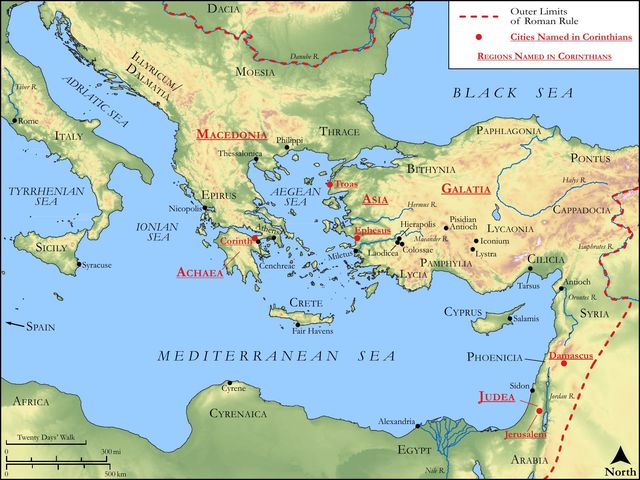
Ancient Corinth was a prominent Roman city, a bustling trade hub known for its wealth, diverse population, and notoriously permissive moral climate. The city hosted the Isthmian Games and was home to numerous temples, including the Temple of Aphrodite, which was associated with cultic prostitution. This environment fostered widespread sexual immorality, idolatry, and various forms of debauchery. Many converts to Christianity in Corinth would have come from such backgrounds, making Paul's direct confrontation of these sins particularly relevant and necessary. The church faced immense pressure to conform to the prevailing pagan culture, and Paul's letter serves as a powerful call to radical distinction and holiness, asserting that Christian identity demands a complete break from the immoral practices of their former lives.
Key Themes
ShowHide1 Corinthians 6:9 contributes significantly to several key themes in the book of 1 Corinthians. It powerfully reinforces the theme of Holiness and Purity, emphasizing that genuine faith in Christ necessitates a transformed life that departs from sin, as seen in Paul's broader exhortations for the church to be pure (1 Corinthians 5). The verse also highlights the Seriousness of Sin and its eternal consequences, directly linking unrighteous behavior to the forfeiture of the divine inheritance. Furthermore, it underscores the theme of Christian Identity and Distinction, challenging believers to live in a manner consistent with their new identity in Christ, distinct from the pagan city around them. This is further elaborated in 1 Corinthians 6:11, where Paul reminds them of their past and their present transformation.
Exposition and Analysis
ShowHideKey Word Analysis
ShowHideThis term signifies "unjust; by extension wicked; by implication, treacherous; specially, heathen." In this context, it describes those whose character and conduct are fundamentally contrary to God's righteous nature and moral law. It encapsulates a state of being marked by injustice and wickedness, rather than merely isolated acts.
Meaning "soft, i.e. fine (clothing); figuratively, a catamite." While literally meaning "soft," in this specific context, it refers to men who adopt a passive, receptive role in homosexual acts, or more broadly, to those who are morally weak, lacking self-control, and indulging in sensual excesses that compromise traditional masculine roles and biblical sexual ethics.
Meaning "a sodomite." This compound word, derived from "male" (ἄῤῥην, arrhēn) and "bed" (κοίτη, koítē), specifically denotes men who engage in homosexual acts, typically referring to the active partner. Together with malakós, it unequivocally condemns male homosexual behavior.
Verse Breakdown
ShowHide"Know ye not that the unrighteous shall not inherit the kingdom of God?"
Paul opens with a rhetorical question, designed to shock and challenge the Corinthians' presumed knowledge or understanding. The "unrighteous" (those living in habitual sin, characterized by injustice and wickedness) are explicitly barred from "inheriting the kingdom of God," which signifies participation in God's present spiritual reign and future eschatological blessings, including eternal life and salvation. This inheritance is not merely a legal status but a lived reality of conformity to God's will.
"Be not deceived:"
This imperative serves as a stern warning against self-delusion or misleading teachings that might suggest one can persist in these sins and still be part of God's kingdom. It implies that some within the Corinthian church might have been under the false impression that their Christian profession excused their immoral behavior, or that grace covered all without requiring a change in conduct. Paul shatters this illusion, underscoring the necessity of genuine transformation.
"neither fornicators, nor idolaters, nor adulterers, nor effeminate, nor abusers of themselves with mankind,"
Paul provides a non-exhaustive but illustrative list of specific sins that characterize the "unrighteous." "Fornicators" (πόρνοι, pornoi) encompasses all illicit sexual relations outside of marriage. "Idolaters" (εἰδωλολάτραι, eidōlolátrēs) refers to those who worship false gods, a pervasive issue in Corinth often linked to temple prostitution. "Adulterers" (μοιχόι, moichoi) denotes those who engage in marital infidelity. The inclusion of "effeminate" (μαλακοί, malakoí) and "abusers of themselves with mankind" (ἀρσενοκοῖται, arsenokoítai) specifically condemns homosexual practices, addressing both passive and active roles. This list highlights behaviors that are fundamentally antithetical to God's moral standards.
Literary Devices
ShowHidePaul employs several potent literary devices in 1 Corinthians 6:9 to deliver his message with impact. The verse begins with a Rhetorical Question, "Know ye not...?", which is designed not to elicit information but to challenge the Corinthians' spiritual understanding and expose their ignorance or willful blindness regarding the consequences of unrighteousness. This immediately grabs attention and sets a confrontational tone. Following this, Paul issues a direct Admonition, "Be not deceived," a strong imperative that warns against self-delusion and false teachings, emphasizing the gravity of the spiritual danger. Finally, the verse features a clear Enumeration or List of specific sins. This detailed catalog serves to clarify precisely what Paul means by "unrighteous," leaving no room for ambiguity and directly addressing the prevalent immoralities within the Corinthian context. The cumulative effect of this list is to create a powerful, undeniable indictment of lifestyles incompatible with the kingdom of God.
Theological and Thematic Connections
ShowHide1 Corinthians 6:9 profoundly impacts our understanding of salvation, sanctification, and the nature of God's kingdom. It underscores that while salvation is a gift received by grace through faith, it is not merely a declaration but initiates a transformative process that must manifest in a changed life. The "inheritance of the kingdom of God" is not a passive reception but a dynamic participation in God's reign, which requires alignment with His righteousness. This verse challenges any antinomian tendencies that suggest grace permits continued sin, asserting instead that true faith produces genuine repentance and a departure from unrighteousness. It highlights God's unwavering holiness and the incompatibility of sin with His divine presence and future kingdom.
Reflection and Application
ShowHide1 Corinthians 6:9 serves as a timeless and sobering reminder that the Christian faith demands a radical transformation of life, not merely a change in religious affiliation. It compels believers to engage in honest self-examination, confronting any areas where personal conduct or attitudes might align with the "unrighteous" behaviors Paul lists. This passage challenges the modern tendency to compartmentalize faith from ethics, asserting that genuine faith in Christ inevitably leads to repentance and a departure from sinful patterns. While the warning is severe, it is delivered within the broader context of the Gospel, which offers not only conviction but also the power to change. God's grace, though abundant and freely given, does not negate the call to holiness; rather, it empowers believers to live righteously, reflecting the character of the God whose kingdom they are called to inherit. The ultimate goal is not legalistic adherence but a heart transformed by the Spirit, desiring to please God in all things.
Questions for Reflection
ShowHideFAQ
ShowHideWhat does Paul mean by "inherit the kingdom of God"?
ShowHideTo "inherit the kingdom of God" signifies receiving the full blessings and privileges associated with God's sovereign rule. This includes both present spiritual realities—such as being part of God's people, experiencing His transforming power, and living under His authority—and future eschatological realities, like eternal life, resurrection, and full participation in God's eternal reign. It implies a deep, experiential relationship with God that is characterized by righteousness and conformity to His will, rather than a mere intellectual assent or outward profession. Paul's point is that a life characterized by the unrighteous behaviors listed is fundamentally incompatible with truly belonging to and participating in God's kingdom. This concept is echoed in other passages, such as Matthew 25:34 and Ephesians 5:5.
Are the specific sins listed in 1 Corinthians 6:9 unforgivable?
ShowHideNo, the sins listed are not unforgivable. Paul's intent is not to declare these sins beyond God's grace, but to warn against a lifestyle characterized by them, which is incompatible with inheriting the kingdom of God. The very next verse, 1 Corinthians 6:11, provides the crucial context: "And such were some of you: but ye are washed, but ye are sanctified, but ye are justified in the name of the Lord Jesus, and by the Spirit of our God." This demonstrates that many in the Corinthian church had engaged in these very sins but had been transformed through Christ. The warning is against continuing in such practices as a way of life after claiming Christ, not against the possibility of forgiveness for past sins through repentance and faith in Jesus.
Christ-Centered Fulfillment
ShowHide1 Corinthians 6:9 finds its ultimate fulfillment and resolution in the person and work of Jesus Christ. While the verse sternly warns that the unrighteous will not inherit God's kingdom, the Gospel reveals how the unrighteous can become righteous and thus inherit it. Christ, who knew no sin, became sin for us, "that we might become the righteousness of God in Him" (2 Corinthians 5:21). Through faith in His atoning sacrifice, believers are not only forgiven of their past unrighteousness but are also declared righteous in God's sight, receiving a new identity and a new nature. Furthermore, the Holy Spirit, given to those who believe, empowers them to live a life of ongoing sanctification, enabling them to genuinely turn from the very sins listed in this verse and to walk in newness of life (Romans 6:4). Thus, the kingdom of God, which was closed to the unrighteous, is opened wide to all who are made righteous by Christ, not by their own works, but by His perfect obedience and sacrificial death, leading to a life transformed by His grace and power (Titus 2:11-14).