


Deuteronomy 3:18
Bible text: King James Version (1769 Blayney text) · Public domain
Bible text: King James Version with Strong's numbers · Public domain
Bible text: Berean Standard Bible · Public domain
Bible text: American Standard Version (1901) · Public domain
Bible text: World English Bible, Messianic edition · Public domain
Bible text: Geneva Bible (1599) · Public domain
Bible text: Young's Literal Translation · Public domain
- וָאֲצַוva·'a·Tzavand I commandedH6680Conj-w ¦ V-Piel-ConsecImperf-1csVerb Piel Consecutive Imperfect 1st Singular common genderוָandאֲצַוI commanded
- אֶתְכֶם'et·Khem<obj.> youH853DirObjM ¦ 2mpParticle Object Indicatorאֶתְ<obj.>כֶםyou
- בָּעֵתba·'Etat the timeH6256Prep-b ¦ N-csNoun Singular common gender Absoluteבָּat theעֵתtime
- הַהִואha·Hiv'<the> thatH1931Art ¦ Pro-3fsPronoun Personal 3rd Singular Feminineהַ<the>הִואthat
- לֵאמֹרle·Mor<to> sayingH559Prep-l ¦ V-Qal-InfVerb Qal Infinitive Constructלֵ<to>אמֹרsaying
- יְהוָהYah·wehYahwehH3068N-properNoun Proper Title
- אֱלֹהֵיכֶם'e·lo·hei·Khemyour GodH430N-mpc ¦ 2mpNoun Plural Masculine ConstructאֱלֹהֵיGodכֶםyour
- נָתַןna·Tanhe has givenH5414V-Qal-Perf-3msVerb Qal Perfect 3rd Singular Masculine
- לָכֶםla·Khemto youPrep-l ¦ 2mpSuffix Personal 2nd Plural Masculineלָtoכֶםyou
- אֶת'et<obj.>H853DirObjMParticle Object Indicator
- הָאָרֶץha·'A·retzthe landH776Art ¦ N-fsNoun Singular Feminine Absoluteהָtheאָרֶץland
- הַזֹּאתha·zoT<the> thisH2063Art ¦ PrtParticle Demonstrativeהַ<the>זֹּאתthis
- לְרִשְׁתָּהּle·rish·Tahto take possession of itH3423Prep-l ¦ V-Qal-Inf ¦ 3fsVerb Qal Infinitive Constructלְtoרִשְׁתָּtake possession ofהּit
- חֲלוּצִיםcha·lu·TzimequippedH2502V-Qal-PassPrtcpl-mpVerb Qal Participle Passive Plural Masculine Absolute
- תַּעַבְרוּta·'av·Ruyou will pass overH5674V-Qal-Imperf-2mpVerb Qal Imperfect 2nd Plural Masculine
- לִפְנֵיlif·Nei<to> beforeH6440Prep-l ¦ N-mpcNoun Plural Masculine Constructלִ<to>פְנֵיbefore
- אֲחֵיכֶם'a·chei·Khemyour countrymenH251N-mpc ¦ 2mpNoun Plural Masculine Constructאֲחֵיcountrymenכֶםyour
- בְּנֵיbe·nei[the] people ofH1121N-mpcNoun Plural Masculine Construct
- יִשְׂרָאֵלYis·ra·'ElIsraelH3478N-properNoun Proper Location
- כָּלkolO allH3605N-mscNoun Singular Masculine Construct
- בְּנֵיbe·nei[the] sons ofH1121N-mpcNoun Plural Masculine Construct
- חָיִלCha·yilstrengthH2428N-msNoun Singular Masculine Absolute
English is a literal word-by-word gloss of the Hebrew, not the KJV's wording. Why?
This is the original text the KJV's translators worked from — each Hebrew word with its own literal English meaning in this verse, prepared by scholars at Tyndale House, Cambridge. The KJV translates whole sentences, not word by word, so its wording differs: one Hebrew word can become several English words, and the KJV may choose “the LORD” where the gloss reads “Yahweh”. Both are faithful — they answer different questions. For the KJV's own rendering, switch to the KJV text.
Details
See on the biblical-era maps
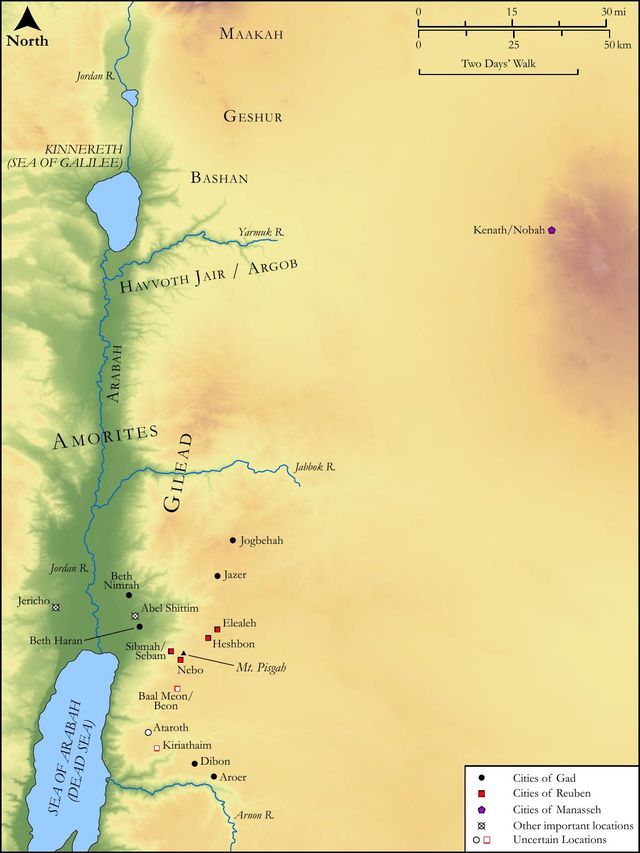
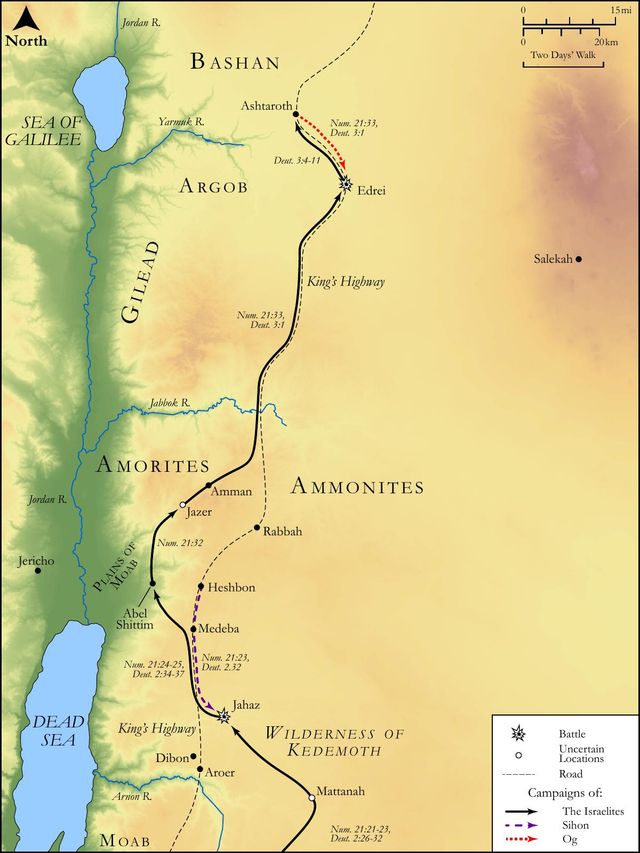
Study this verse
Public-domain commentary
Matthew Henry
From his Commentary on the Whole Bible. Henry comments on passages, not single verses — this entry covers Deuteronomy 3:12–20.
Having shown how this country which they were now in was conquered, in these verses he shows how it was settled upon the Reubenites, Gadites, and half the tribe of Manasseh, which we had the story of before, Num. 32. Here is the rehearsal. 1. Moses specifies the particular parts of the country that were allotted to each tribe, especially the distribution of the lot to the half tribe of Manasseh, the subdividing of which tribe is observable. Joseph was divided into Ephraim and Manasseh; Manasseh was divided into one half on the one side Jordan and the other half on the other side: that on the east side Jordan was again divided into two great families, which had their several allotments: Jair, Deu 3:14, Machir, Deu 3:15. And perhaps Jacob's prediction of the smallness of that tribe was now accomplished in these divisions and subdivisions. Observe that Bashan is here called the land of the giants, because it had been in their possession, but Og was the last of them. These giants, it seems, had lost their country, and were rooted out of it sooner than any of their neighbours; for those who, presuming upon their strength and stature, had their hand against every man, had every man's hand against them, and went down slain to the pit, though they were the terror of the mighty in the land of the living. 2. He repeats the condition of the grant which they had already agreed to, Deu 3:18-20. That they should send a strong detachment over Jordan to lead the van in the conquest of Canaan, who should not return to their families, at least not to settle (though for a time they might retire thither into winter quarters, at the end of a campaign), till they had seen their brethren in as full possession of their respective allotments as they themselves were now in of theirs. They must hereby be taught not to look at their own things only, but at the things of others, Phi 2:4. It ill becomes an Israelite to be selfish, and to prefer any private interest before the public welfare. When we are rest we should desire to see our brethren at rest too, and should be ready to do what we can towards it; for we are not born for ourselves, but are members one of another. A good man cannot rejoice much in the comforts of his family unless withal he sees peace upon Israel, Psa 128:6.
Continue studying Deuteronomy 3:18 across the web’s major study libraries — every link below opens this exact verse, chapter, or book on the destination site.
Read & Compare
 BibleGatewayThis verse in more than 200 translations and 70 languages.
 Bible.comThe YouVersion reader — hundreds of translations, reading plans, and highlights.
 ESV.orgCrossway's official English Standard Version reader.
 NET BibleThe NET translation with 60,000+ translators' notes on every rendering decision.
 STEP BibleTyndale House's free study tool — original text, vocabulary, and scholarly resources.
 BibliaLogos Bible Software's free web reader.
 USCCBThe New American Bible (Revised Edition) with the U.S. bishops' study notes.
Commentaries
 BibleHub CommentariesDozens of classic commentaries on this verse, gathered on one page.
 StudyLightMore than 100 commentary sets — the largest collection on the web.
 BibleRefPlain-English commentary on what this verse means, verse by verse.
 Enduring WordDavid Guzik's free commentary on this chapter, widely used by Bible teachers.
 Bible Study ToolsVerse commentary alongside Greek and Hebrew study aids.
Original Language & Research
- BibleHub InterlinearThe verse word by word — original language, transliteration, and English.
- BibleHub LexiconEvery word's original-language definition and Strong's entry.
 Blue Letter BibleDeep-study tools — Strong's numbers, concordance, and word studies.
 SefariaThe Hebrew text with Rashi and centuries of Jewish commentary.
Sermons, Hymns & Audio


TrulyRandomVerse is not affiliated with these sites and doesn’t control their content. They’re linked because they’re genuinely useful.
Summary
Deuteronomy 3:18 records Moses' authoritative command to the tribes of Reuben, Gad, and the half-tribe of Manasseh, who had already received their inheritance on the east side of the Jordan River. Despite having secured their own portion of the land, Moses emphatically reminds them of their solemn obligation to cross the Jordan fully armed and lead the way in battle, assisting their fellow Israelites in conquering and possessing the land west of the Jordan. This command powerfully underscores God's sovereign provision of the land and the non-negotiable principles of unity, shared responsibility, and corporate effort essential for fulfilling His divine plan for the entire nation of Israel.
Context
ShowHideLiterary Context
Deuteronomy 3:18 is situated within Moses' expansive farewell address to the second generation of Israelites, delivered on the plains of Moab as they stand on the precipice of entering the Promised Land. This specific verse follows Moses' detailed recounting of the decisive victories over King Sihon of Heshbon and King Og of Bashan, and the subsequent allocation of their conquered territories east of the Jordan to the tribes of Reuben, Gad, and the half-tribe of Manasseh, as detailed in Deuteronomy 3:12-17. Far from introducing a new directive, this verse serves as a crucial reiteration and reinforcement of a prior commitment made by these Transjordanian tribes to Moses, a pledge originally recorded in Numbers 32. Moses' emphasis here highlights the enduring nature of covenantal obligations and the critical importance of national unity for the successful fulfillment of God's promises, demonstrating that the corporate mission transcends individual tribal interests.
Historical & Cultural Context
The Israelites are poised at a momentous juncture in their history, on the very threshold of entering Canaan, the land divinely promised to their patriarchal ancestors. The impending conquest of Canaan was not merely a territorial expansion but a divinely ordained act of judgment against the morally corrupt inhabitants and the climactic fulfillment of God's covenant with Abraham, as first articulated in Genesis 12:7. Within the structured tribal society of Israel, while each tribe maintained its distinct identity and would receive its specific inheritance, they were fundamentally interconnected as a single, covenant people under the sovereign hand of God. The act of making a solemn vow or pledge, such as that made by the Transjordanian tribes, carried profound weight in Hebrew thought, often invoking divine witness and implying severe consequences for failure to uphold the commitment. Moses' forceful reminder in this verse skillfully taps into this deeply ingrained cultural understanding of binding commitment and the imperative for collective identity and action as "the children of Israel," a unified force.
Key Themes
ShowHideThis verse powerfully articulates several core themes that are central to the book of Deuteronomy and indeed, the broader Pentateuch. Firstly, it profoundly emphasizes Divine Provision and Faithfulness, as Moses declares, "The LORD your God hath given you this land to possess it." This statement unequivocally affirms God's unwavering commitment to His covenant promises regarding the land, a promise reiterated throughout the wilderness journey, as seen in Deuteronomy 1:8. Secondly, the command highlights the critical theme of Shared Responsibility and Unity, underscoring that even those who have already received their immediate blessing are still an indispensable part of the corporate mission. The directive, "ye shall pass over armed before your brethren," serves as a potent call to solidarity and mutual support, ensuring that no segment of God's people is left to contend alone, a principle echoed in the original agreement in Numbers 32:20-22. Thirdly, the verse reinforces the overarching theme of Obedience and Fulfillment of Vows, reminding these tribes of their prior solemn pledge to Moses and, by extension, to God, thereby stressing the paramount importance of integrity and keeping one's word within the covenant community, a concept foundational to Israel's relationship with Yahweh, as articulated in Deuteronomy 23:21.
Exposition and Analysis
ShowHideKey Word Analysis
ShowHideThis primitive root means "(intensively) to constitute, enjoin." It signifies a strong, authoritative directive, often issued from a superior to a subordinate, carrying the full weight of obligation and expectation. When used of God or His divinely appointed leader like Moses, it implies a non-negotiable instruction that is to be obeyed without question. Here, Moses' command is not a mere suggestion but a binding order, reflecting divine will and the established covenant relationship.
This primitive root means "to give, used with greatest latitude of application (put, make, etc.)." In this context, it powerfully emphasizes God's sovereign act of bestowing the land as a gracious gift. This is not a land earned by human merit or conquest alone, but a divine inheritance, freely granted according to God's covenant promises. The gift, however, comes with the inherent responsibility to possess it through active participation, highlighting the dynamic interplay between divine grace and human obedience.
This primitive root means "to pull off; hence (intensively) to strip, (reflex.) to depart; by implication, to deliver, equip (for fight)." It refers specifically to being equipped or prepared for battle, implying a state of readiness for active military engagement. In this verse, it signifies the vanguard, the front-line soldiers who are to lead the charge, emphasizing their specific and crucial role in the upcoming conquest, not merely as participants but as leaders in the advance.
Verse Breakdown
ShowHide"And I commanded you at that time, saying,"
This opening clause establishes the authority of Moses as God's mediator and anchors the command in a specific historical moment. It serves as a powerful reiteration of the initial agreement made with the Transjordanian tribes, likely referencing the detailed account in Numbers 32, thereby reinforcing the continuity and binding nature of that earlier directive. Moses is not inventing a new rule but reminding them of a solemn, previously accepted imperative.
"The LORD your God hath given you this land to possess it:"
This foundational statement underscores the divine origin and ownership of the land. It is not a territory to be seized solely by human strength or military prowess, but a gracious gift from Yahweh, Israel's covenant God. The phrase "to possess it" implies not just temporary occupation, but taking full, permanent ownership and settlement, thereby fulfilling the ancient promise made to the patriarchs. This divine grant serves as the ultimate motivation and justification for the subsequent command.
"ye shall pass over armed before your brethren the children of Israel,"
This is the core of the command, outlining the specific obligation. The Transjordanian tribes, despite having secured their own inheritance, are to cross the Jordan River fully equipped and prepared for battle ("armed"). The crucial phrase "before your brethren" signifies their designated role as the vanguard or leading force, demonstrating their unwavering commitment and solidarity with the rest of the Israelite tribes. This powerfully emphasizes the corporate nature of the conquest and the shared burden of fulfilling God's collective will.
"all [that are] meet for the war."
This specifies the precise scope of the command, indicating that every able-bodied man from these tribes who is fit for military service is obligated to participate. It is not a partial or token commitment but a full deployment of their fighting capacity. This detail reinforces the seriousness of the command and the expectation of complete dedication and readiness for the common cause of Israel, highlighting the principle of total commitment.
Literary Devices
ShowHideDeuteronomy 3:18 employs several effective literary devices to convey its profound message. Direct Address is prominently featured, as Moses speaks directly and personally to the Transjordanian tribes ("I commanded you," "ye shall pass over"), creating an urgent and intimate tone that emphasizes both individual and collective responsibility. The verse also utilizes Repetition of the overarching theme of "the land" being "given" by God, reinforcing the divine origin and covenantal nature of their inheritance. This repetition serves to firmly ground the command in God's faithfulness and sovereign provision. Furthermore, the phrase "all [that are] meet for the war" can be understood as a form of Synecdoche, where a part (those specifically equipped and ready for battle) represents the whole (the entire fighting force of the Transjordanian tribes), highlighting their specific and crucial role as the military vanguard. The overall structure of the verse, moving from God's gracious provision to human obligation, reflects the foundational Covenantal Framework that undergirds the entire book of Deuteronomy, where God's benevolent acts are met with human responsibility and obedience.
Theological and Thematic Connections
ShowHideDeuteronomy 3:18 stands as a powerful testament to the theological principle that divine blessing within a covenant community invariably comes with corporate responsibility. God's gracious gift of the Promised Land to all Israel necessitated the unified effort of every tribe, even those who had already received their portion. This profound truth teaches us that individual blessings within the body of believers are not for isolated enjoyment or personal comfort, but are intended to equip and empower us to contribute sacrificially to the greater good and shared mission of God's people. The command to "pass over armed before your brethren" serves as a timeless paradigm for unity, selflessness, and mutual support within the spiritual family of God, reminding us that no one is called to stand alone in the spiritual battles or the demanding work of God's kingdom. Our commitments to God and to one another are sacred, covenantal obligations that demand faithful and diligent execution.
Reflection and Application
ShowHideDeuteronomy 3:18 offers profound and enduring lessons for contemporary believers. Just as the Transjordanian tribes, having secured their immediate inheritance, were still called to actively fight for their brethren, so too are Christians, having received the immeasurable spiritual inheritance in Christ, called to actively participate in the collective mission of God's kingdom. Our personal blessings, spiritual gifts, and material resources are not solely for our own comfort, security, or individual advancement, but are graciously given to enable us to serve the wider body of Christ and advance the Gospel. This verse powerfully challenges any tendency towards spiritual isolation, complacency, or disengagement once we feel "settled" in our faith or comfortable in our personal walk. It issues a clarion call to unity, reminding us that we are inextricably part of a larger spiritual family, engaged in a vital spiritual warfare against sin, the flesh, and the powers of darkness. Our commitment to Christ must translate into tangible, sacrificial support for our fellow believers and active engagement in the Great Commission, "armed" with the truth of God's Word and empowered by the Holy Spirit. Furthermore, it underscores the paramount importance of integrity in keeping our promises and commitments, especially those made to God and to our Christian community, demonstrating our faithfulness and trustworthiness.
Questions for Reflection
ShowHideFAQ
ShowHideWhy did these tribes get land first, and why did they still have to fight?
ShowHideThe tribes of Reuben, Gad, and the half-tribe of Manasseh requested land on the east side of the Jordan because it was particularly well-suited for their extensive livestock holdings, as detailed in Numbers 32:1-5. Moses initially expressed concern, fearing that their request might discourage the other tribes from entering the Promised Land. However, he ultimately agreed to their request on the strict condition that their fighting men would go fully armed before the rest of Israel to help conquer the land west of the Jordan, as recorded in Numbers 32:20-23. This arrangement was crucial; it ensured that their early inheritance did not exempt them from the collective, divinely mandated task of securing the Promised Land for all twelve tribes. It powerfully underscored the principle of corporate responsibility and national unity, demonstrating that the well-being, security, and success of the entire nation were paramount, overriding individual tribal interests.
What does "meet for the war" mean for believers today?
ShowHideFor believers today, the phrase "meet for the war" translates into a profound call for spiritual readiness, active engagement, and dedicated participation in the ongoing spiritual battle. Just as the Israelite warriors were physically equipped and prepared for military combat, Christians are called to be spiritually equipped, vigilant, and ready for the challenges of living out their faith in a fallen world. This involves consciously and consistently putting on the full armor of God, as described in Ephesians 6:10-18, which includes the belt of truth, the breastplate of righteousness, the readiness given by the Gospel of peace, the shield of faith, the helmet of salvation, and the sword of the Spirit, which is the Word of God. It means actively engaging in the mission of the church, supporting one another in love, confronting sin with truth, boldly sharing the Gospel, and living lives of obedience and holiness. It is a compelling call to be spiritually vigilant, prepared to serve, and united in purpose for the advancement of God's kingdom on earth.
Christ-Centered Fulfillment
ShowHideDeuteronomy 3:18, with its profound emphasis on a divinely "given" land and a collective "war" for its possession, finds its ultimate fulfillment and glorious transformation in the person and work of Jesus Christ. The "land" that the LORD God graciously gives is now understood not merely as a physical territory, but as the spiritual inheritance of eternal life, the Kingdom of God, and the heavenly country secured through Christ's perfect redemptive work, as beautifully articulated in Hebrews 11:16. Just as the Israelites were promised and given a land, believers are now "blessed with every spiritual blessing in the heavenly places in Christ," as declared in Ephesians 1:3. The "war" to possess this inheritance is no longer a physical conquest against earthly enemies but a profound spiritual battle against sin, the flesh, and the rulers of the darkness of this world, a battle in which Christ has already secured the decisive and ultimate victory through His atoning death and glorious resurrection, triumphing over all hostile forces, as celebrated in Colossians 2:15. We, as believers, are called to "pass over armed" not with literal swords and shields, but with the "full armor of God," which is ultimately Christ Himself and the spiritual resources and power He provides through the Holy Spirit, enabling us to stand firm in the spiritual conflict (Ephesians 6:10-18). The unity, shared responsibility, and corporate effort of the Israelite tribes powerfully foreshadow the church, the body of Christ, where each member, having received their own unique spiritual inheritance and gifts, is called to serve and support their "brethren" in the collective mission of proclaiming the Gospel and living out the realities of the Kingdom of God (1 Corinthians 12:12-27). Our active participation in this spiritual warfare and the expansion of God's kingdom is a joyful response to Christ's ultimate sacrifice and His Great Commission to make disciples of all nations (Matthew 28:18-20), ensuring that all who are "meet for the war" (spiritually equipped and willing) contribute to the glorious, eternal inheritance secured by our Lord and Savior.