


Acts 7:58
Bible text: King James Version (1769 Blayney text) · Public domain
Bible text: King James Version with Strong's numbers · Public domain
Bible text: Berean Standard Bible · Public domain
Bible text: American Standard Version (1901) · Public domain
Bible text: World English Bible, Messianic edition · Public domain
Bible text: Geneva Bible (1599) · Public domain
Bible text: Young's Literal Translation · Public domain
- καὶkaiandG2532CONJConjunction
- ἐκβαλόντεςekbalonteshaving cast [him]G1544V-2AAP-NPMVerb 2nd Aorist Active Participle Nominative Plural Masculine
- ἔξωexōout ofG1854PREPPreposition
- τῆςtēstheG3588T-GSFDefinite article Genitive Singular Feminine
- πόλεωςpoleōscityG4172N-GSFNoun Genitive Singular Feminine
- ἐλιθοβόλουνelithobolounthey were stoning [him]G3036V-IAI-3PVerb Imperfect Active Indicative 3rd Plural
- καὶkaiAndG2532CONJConjunction
- οἱhoitheG3588T-NPMDefinite article Nominative Plural Masculine
- μάρτυρεςmartureswitnessesG3144N-NPMNoun Nominative Plural Masculine
- ἀπέθεντοapethentolaid asideG659V-2AMI-3PVerb 2nd Aorist Middle Indicative 3rd Plural
- τὰtatheG3588T-APNDefinite article Accusative Plural Neuter
- ἱμάτιαhimatiagarmentsG2440N-APNNoun Accusative Plural Neuter
- αὐτῶνautōnof themG846P-GPMPersonal pronoun Genitive Plural Masculine
- παρὰparaatG3844PREPPreposition
- τοὺςtoustheG3588T-APMDefinite article Accusative Plural Masculine
- πόδαςpodasfeetG4228N-APMNoun Accusative Plural Masculine
- νεανίουneaniouof a young manG3494N-GSMNoun Genitive Singular Masculine
- καλουμένουkaloumenounamedG2564V-PPP-GSMVerb Present Passive Participle Genitive Singular Masculine
- ΣαύλουSaulouSaulG4569N-GSM-PNoun Genitive Singular Masculine Individual
English is a literal word-by-word gloss of the Greek, not the KJV's wording. Why?
This is the original text the KJV's translators worked from — each Greek word with its own literal English meaning in this verse, prepared by scholars at Tyndale House, Cambridge. The KJV translates whole sentences, not word by word, so its wording differs: one Greek word can become several English words, and the KJV may choose “charity” where the gloss reads “love”. Both are faithful — they answer different questions. For the KJV's own rendering, switch to the KJV text.
Details
See on the biblical-era maps
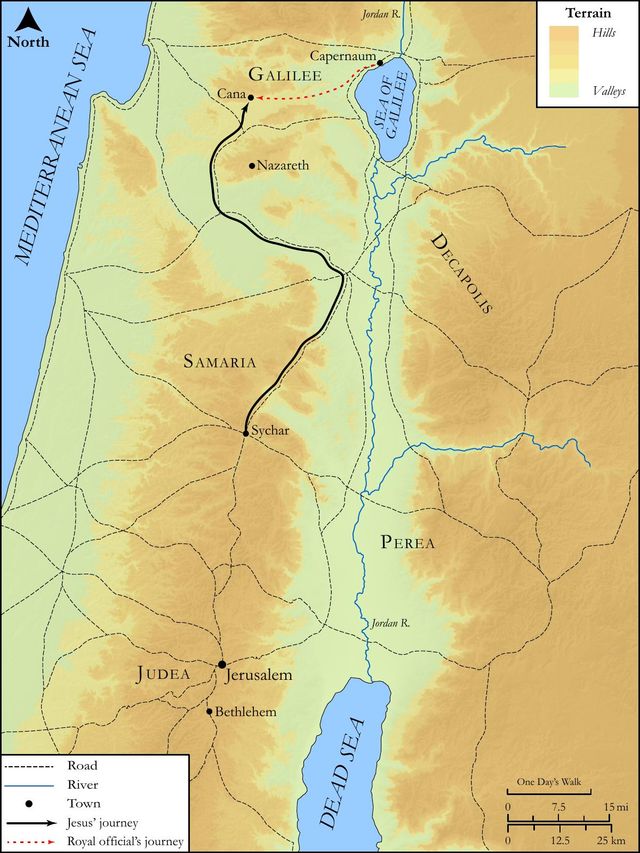
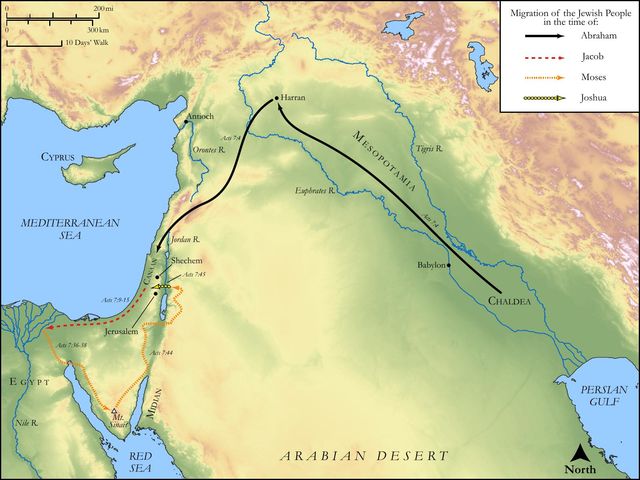
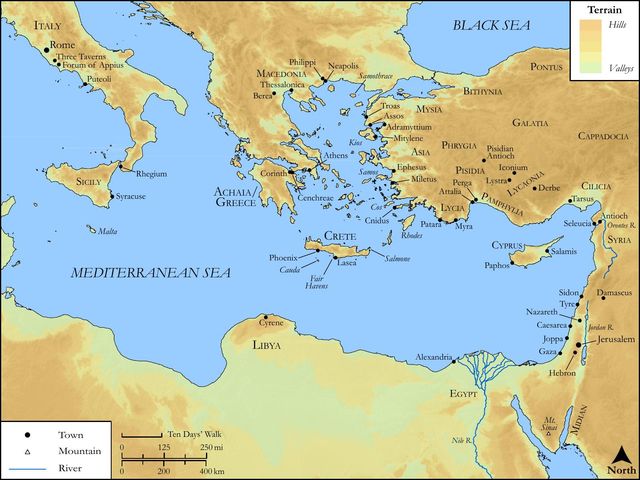
Study this verse
Public-domain commentary
Matthew Henry
From his Commentary on the Whole Bible. Henry comments on passages, not single verses — this entry covers Acts 7:54–60. His four-level outline is real structure in the source text, so it is rendered as structure.
We have here the death of the first martyr of the Christian church, and there is in this story a lively instance of the outrage and fury of the persecutors (such as we may expect to meet with if we are called out to suffer for Christ), and of the courage and comfort of the persecuted, that are thus called out. Here is hell in its fire and darkness, and heaven in its light and brightness; and these serve as foils to set off each other. It is not here said that the votes of the council were taken upon his case, and that by the majority he was found guilty, and then condemned and ordered to be stoned to death, according to the law, as a blasphemer; but, it is likely, so it was, and that it was not by the violence of the people, without order of the council, that he was put to death; for here is the usual ceremony of regular executions - he was cast out of the city, and the hands of the witnesses were first upon him.
Let us observe here the wonderful discomposure of the spirits of his enemies and persecutors, and the wonderful composure of his spirit.
I.See the strength of corruption in the persecutors of Stephen - malice in perfection, hell itself broken loose, men become incarnate devils, and the serpent's seed spitting their venom.
1.When they heard these things they were cut to the heart (Act 7:54), dieprionto, the same word that is used Heb 11:37, and translated they were sawn asunder. They were put to as much torture in their minds as ever the martyrs were put to in their bodies. They were filled with indignation at the unanswerable arguments that Stephen urged for their conviction, and that they could find nothing to say against them. They were not pricked to the heart with sorrow, as those were Act 2:37, but cut to the heart with rage and fury, as they themselves were, Act 5:33. Stephen rebuked them sharply, as Paul expresses it (Tit 1:13), apotomōs - cuttingly, for they were cut to the heart by the reproof. Note, Rejecters of the gospel and opposers of it are really tormentors to themselves. Enmity to God is a heart-cutting thing; faith and love are heart-healing. When they heard how he that looked like an angel before he began his discourse talked like an angel, like a messenger from heaven, before he concluded it, they were like a wild bull in a net, full of the fury of the Lord, (Isa 51:20), despairing to run down a cause so bravely pleaded, and yet resolved not to yield to it.
2.They gnashed upon him with their teeth. This denotes,
(1.)Great malice and rage against him. Job complained of his enemy that he gnashed upon him with his teeth, Job 16:9. The language of this was, Oh that we had of his flesh to eat! Job 31:31. They grinned at him, as dogs at those they are enraged at; and therefore Paul, cautioning against those of the circumcision, says, Beware of dogs, Phi 3:2. Enmity at the saints turns men into brute beasts.
(2.)Great vexation within themselves; they fretted to see in him such manifest tokens of a divine power and presence, and it vexed them to the heart. The wicked shall see it and be grieved, he shall gnash with his teeth and melt away, Psa 112:10. Gnashing with the teeth is often used to express the horror and torments of the damned. Those that have the malice of hell cannot but have with it some of the pains of hell.
3.They cried out with a loud voice (Act 7:57), to irritate and excite one another, and to drown the noise of the clamours of their own and one another's consciences; when he said, I see heaven opened, they cried with a loud voice, that he might not be heard to speak. Note, It is very common for a righteous cause, particularly the righteous cause of Christ's religion, to be attempted to be run down by noise and clamour; what is wanting in reason is made up in tumult, and the cry of him that ruleth among fools, while the words of the wise are heard in quiet. They cried with a loud voice, as soldiers when they are going to engage in battle, mustering up all their spirit and vigour for this desperate encounter.
4.They stopped their ears, that they might not hear their own noisiness; or perhaps under pretence that they could not bear to hear his blasphemies. As Caiaphas rent his clothes when Christ said, Hereafter you shall see the Son of man coming in glory (Mat 26:64, Mat 26:65), so here these stopped their ears when Stephen said, I now see the Son of man standing in glory, both pretending that what was spoken was not to be heard with patience. Their stopping their ears was,
(1.)A manifest specimen of their wilful obstinacy; they were resolved they would not hear what had a tendency to convince them, which was what the prophets often complained of: they were like the deaf adder, that will not hear the voice of the charmer, Psa 58:4, Psa 58:5.
(2.)It was a fatal omen of that judicial hardness to which God would give them up. They stopped their ears, and then God, in a way of righteous judgment, stopped them. This was the work that was now in doing with the unbelieving Jews: Make the heart of this people fat, and their ears heavy; thus was Stephen's character of them answered, You uncircumcised in heart and ears.
5.They ran upon him with one accord - the people and the elders of the people, judges, prosecutors, witnesses, and spectators, they all flew upon him, as beasts upon their prey. See how violent they were, and in what haste - they ran upon him, though there was no danger of his outrunning them; and see how unanimous they were in this evil thing - they ran upon him with one accord, one and all, hoping thereby to terrify him, and put him into confusion, envying him his composure and comfort in soul, with which he wonderfully enjoyed himself in the midst of this hurry; they did all they could to ruffle him.
6.They cast him out of the city, and stoned him, as if he were not worthy to live in Jerusalem; nay, not worthy to live in this world, pretending herein to execute the law of Moses (Lev 24:16), He that blasphemeth the name of the Lord shall surely be put to death, all the congregation shall certainly stone him. And thus they had put Christ to death, when this same court had found him guilty of blasphemy, but that, for his greater ignominy, they were desirous he should be crucified, and God overruled it for the fulfilling of the scripture. The fury with which they managed the execution is intimated in this: they cast him out of the city, as if they could not bear the sight of him; they treated him as an anathema, as the offscouring of all things. The witnesses against him were the leaders in the execution, according to the law (Deu 17:7), The hands of the witnesses shall be first upon him, to put him to death, and particularly in the case of blasphemy, Lev 24:14; Deu 13:9. Thus they were to confirm their testimony. Now, the stoning of a man being a laborious piece of work, the witnesses took off their upper garments, that they might not hang in their way, and they laid them down at a young man's feet, whose name was Saul, now a pleased spectator of this tragedy. It is the first time we find mention of his name; we shall know it and love it better when we find it changed to Paul, and him changed from a persecutor into a preacher. This little instance of his agency in Stephen's death he afterwards reflected upon with regret (Act 22:20): I kept the raiment of those that slew him.
II.See the strength of grace in Stephen, and the wonderful instances of God's favour to him, and working in him.
As his persecutors were full of Satan, so was he full of the Holy Ghost, fuller than ordinary, anointed with fresh oil for the combat, that, as the day, so might the strength be. Upon this account those are blessed who are persecuted for righteousness' sake, that the Spirit of God and of glory rests upon them, Pe1 4:14. When he was chosen to public service, he was described to be a man full of the Holy Ghost (Act 6:5), and now he is called out to martyrdom he has still the same character. Note, Those that are full of the Holy Ghost are fit for any thing, either to act for Christ or to suffer for him. And those whom God calls out to difficult services for his name he will qualify for those services, and carry comfortably through them, by filling them with the Holy Ghost, that, as their afflictions for Christ abound, their consolation in him may yet more abound, and then none of these things move them. Now here we have a remarkable communion between this blessed martyr and the blessed Jesus in this critical moment. When the followers of Christ are for his sake killed all the day long, and accounted as sheep for the slaughter, does this separate them from the love of Christ? Does he love them the less? Do they love him the less? No, by no means; and so it appears by this narrative, in which we may observe.
1.Christ's gracious manifestation of himself to Stephen, both for his comfort and for his honour, in the midst of his sufferings. When they were cut to the heart, and gnashed upon him with their teeth, ready to eat him up, then he had a view of the glory of Christ sufficient to fill him with joy unspeakable, which was intended not only for his encouragement, but for the support and comfort of all God's suffering servants in all ages.
(1.)He, being full of the Holy Ghost, looked up stedfastly into heaven, Act 7:55.
[1.]Thus he looked above the power and fury of his persecutors, and did as it were despise them, and laugh them to scorn, as the daughter of Zion, Isa 37:22. They had their eyes fixed upon him, full of malice and cruelty; but he looked up to heaven, and never minded them, was so taken up with the eternal life now in prospect that he seemed to have no manner of concern for the natural life now at state. Instead of looking about him, to see either which way he was in danger or which way he might make his escape, he looks up to heaven; thence only comes his help, and thitherward his way is still open; though they compass him about on every side, they cannot interrupt his intercourse with heaven. Note, A believing regard to God and the upper world will be of great use to us, to set us above the fear of man; for as far as we are under the influence of that fear we forget the Lord our Maker, Isa 51:13.
[2.]Thus he directed his sufferings to the glory of God, to the honour of Christ, and did as it were appeal to heaven concerning them (Lord, for thy sake I suffer this) and express his earnest expectation that Christ should be magnified in his body. Now that he was ready to be offered he looks up stedfastly to heaven, as one willing to offer himself.
[3.]Thus he lifted up his soul with his eyes to God in the heavens, in pious ejaculations, calling upon God for wisdom and grace to carry him through this trial in a right manner. God has promised that he will be with his servants whom he calls out to suffer for him; but he will for this be sought unto. He is nigh unto them, but it is in that for which they call upon him. Is any afflicted? Let him pray.
[4.]Thus he breathed after the heavenly country, to which he saw the fury of his persecutors would presently send him. It is good for dying saints to look up stedfastly to heaven: "Yonder is the place whither death will carry my better part, and then, O death! where is thy sting?" [5.] Thus he made it to appear that he was full of the Holy Ghost; for, wherever the Spirit of grace dwells, and works, and reigns, he directs the eye of the soul upward. Those that are full of the Holy Ghost will look up stedfastly to heaven, for there their heart is. [6.] Thus he put himself into a posture to receive the following manifestation of the divine glory and grace. If we expect to hear from heaven, we must look up stedfastly to heaven.
(2.)He saw the glory of God (Act 7:55); for he saw, in order to this, the heavens opened, Act 7:56. Some think his eyes were strengthened, and the sight of them so raised above its natural pitch, by a supernatural power, that he saw into the third heavens, though at so vast a distance, as Moses's sight was enlarged to see the whole land of Canaan. Others think it was a representation of the glory of God set before his eyes, as, before, Isaiah and Ezekiel; heaven did as it were come down to him, as Rev 21:2. The heavens were opened, to give him a view of the happiness he was going to, that he might, in prospect of it, go cheerfully through death, so great a death. Would we by faith look up stedfastly, we might see the heavens opened by the mediation of Christ, the veil being rent, and a new and living way laid open for us into the holiest. The heaven is opened for the settling of a correspondence between God and men, that his favours and blessings may come down to us, and our prayers and praises may go up to him. We may also see the glory of God, as far as he has revealed it in his word, and the sight of this will carry us through all the terrors of sufferings and death.
(3.)He saw Jesus standing on the right hand of God (Act 7:55), the Son of man, so it is Act 7:56. Jesus, being the Son of man, having taken our nature with him to heaven, and being there clothed with a body, might be seen with bodily eyes, and so Stephen saw him. When the Old Testament prophets saw the glory of God it was attended with angels. The Shechinah or divine presence in Isaiah's vision was attended with seraphim, in Ezekiel's vision with cherubim, both signifying the angels, the ministers of God's providence. But here no mention is made of the angels, though they surround the throne and the Lamb; instead of them Stephen sees Jesus at the right hand of God, the great Mediator of God's grace, from whom more glory redounds to God than from all the ministration of the holy angels. The glory of God shines brightest in the face of Jesus Christ; for there shines the glory of his grace, which is the most illustrious instance of his glory. God appears more glorious with Jesus standing at his right hand than with millions of angels about him. Now,
[1.]Here is a proof of the exaltation of Christ to the Father's right hand; the apostles saw him ascend, but they did not see him sit down, A cloud received him out of their sight. We are told that he sat down on the right hand of God; but was he ever seen there? Yes, Stephen saw him there, and was abundantly satisfied with the sight. He saw Jesus at the right hand of God, denoting both his transcendent dignity and his sovereign dominion, his uncontrollable ability and his universal agency; whatever God's right hand gives to us, or receives from us, or does concerning us, it is by him; for he is his right hand.
[2.]He is usually said to sit there; but Stephen sees him standing there, as one more than ordinarily concerned at present for his suffering servant; he stood up as a judge to plead his cause against his persecutors; he is raised up out of his holy habitation (Zac 2:13), comes out of his place to punish, Isa 26:21. He stands ready to receive him and crown him, and in the mean time to give him a prospect of the joy set before him.
[3.]This was intended for the encouragement of Stephen. He sees Christ is for him, and then no matter who is against him. When our Lord Jesus was in his agony an angel appeared to him, strengthening him; but Stephen had Christ himself appearing to him. Note, Nothing so comfortable to dying saints, nor so animating to suffering saints, as to see Jesus at the right hand of God; and, blessed be God, by faith we may see him there.
(4.)He told those about him what he saw (Act 7:56): Behold, I see the heavens opened. That which was a cordial to him ought to have been a conviction to them, and a caution to them to take heed of proceeding against one upon whom heaven thus smiled; and therefore what he saw he declared, let them make what use they pleased of it. If some were exasperated by it, others perhaps might be wrought upon to consider this Jesus whom they persecuted, and to believe in him.
2.Stephen's pious addresses to Jesus Christ. The manifestation of God's glory to him did not set him above praying, but rather set him upon it: They stoned Stephen, calling upon God, Act 7:59. Though he called upon God, and by that showed himself to be a true-born Israelite, yet they proceeded to stone him, not considering how dangerous it is to fight against those who have an interest in heaven. Though they stoned him, yet he called upon God; nay, therefore he called upon him. Note, It is the comfort of those who are unjustly hated and persecuted by men that they have a God to go to, a God all-sufficient to call upon. Men stop their ears, as they did here (Act 7:57), but God does not. Stephen was now cast out of the city, but he was not cast out from his God. He was now taking his leave of the world, and therefore calls upon God; for we must do this as long as we live. Note, It is good to die praying; then we need help-strength we never had, to do a work we never did - and how can we fetch in that help and strength but by prayer? Two short prayers Stephen offered up to God in his dying moments, and in them as it were breathed out his soul: -
(1.)Here is a prayer for himself: Lord Jesus, receive my spirit. Thus Christ had himself resigned his spirit immediately into the hands of the Father. We are here taught to resign ours into the hands of Christ as Mediator, by him to be recommended to the Father. Stephen saw Jesus standing at the Father's right hand, and he thus calls to him: "Blessed Jesus, do that for me now which thou standest there to do for all thine, receive my departing spirit into thy hand." Observe,
[1.]The soul is the man, and our great concern, living and dying, must be about our souls. Stephen's body was to be miserably broken and shattered, and overwhelmed with a shower of stones, the earthly house of this tabernacle violently beaten down and abused; but, however it goes with that, "Lord," saith he, "'let my spirit be safe; let it go well with my poor soul." Thus, while we live, our care should be that though the body be starved or stripped the soul may be fed and clothed, though the body lie in pain the soul may dwell at ease; and, when we die, that though the body be thrown by as a despised broken vessel, and a vessel in which there is no pleasure, yet the soul may be presented a vessel of honour, that God may be the strength of the heart and its portion, though the flesh fail.
[2.]Our Lord Jesus is God, to whom we are to seek, and in whom we are to confide and comfort ourselves living and dying. Stephen here prays to Christ, and so must we; for it is the will of God that all men should thus honour the Son, even as they honour the Father. It is Christ we are to commit ourselves to, who alone is able to keep what we commit to him against that day; it is necessary that we have an eye to Christ when we come to die, for there is no venturing into another world but under his conduct, no living comforts in dying moments but what are fetched from him.
[3.]Christ's receiving our spirits at death is the great thing we are to be careful about, and to comfort ourselves with. We ought to be in care about this while we live, that Christ may receive our spirits when we die; for, if he reject and disown them, whither will they betake themselves? How can they escape being a prey to the roaring lion? To him therefore we must commit them daily, to be ruled and sanctified, and made meet for heaven, and then, and not otherwise, he will receive them. And, if this has been our care while we live, it may be our comfort when we come to die, that we shall be received into everlasting habitations.
(2.)Here is a prayer for his persecutors, Act 7:60.
[1.]The circumstances of this prayer are observable; for it seems to have been offered up with something more of solemnity than the former. First, He knelt down, which was an expression of his humility in prayer. Secondly, He cried with a loud voice, which was an expression of his importunity. But why should he thus show more humility and importunity in this request than in the former? Why, none could doubt of his being in good earnest in his prayers for himself, and therefore there he needed not to use such outward expressions of it; but in his prayer for his enemies, because that is so much against the grain of corrupt nature, it was requisite he should give proofs of his being in earnest.
[2.]The prayer itself: Lord, lay not this sin to their charge. Herein he followed the example of his dying Master, who prayed thus for his persecutors, Father, forgive them; and set an example to all following sufferers in the cause of Christ thus to pray for those that persecute them. Prayer may preach. This did so to those who stoned Stephen, and he knelt down that they might take notice he was going to pray, and cried with a loud voice that they might take notice of what he said, and might learn, First, That what they did was a sin, a great sin, which, if divine mercy and grace did not prevent, would be laid to their charge, to their everlasting confusion. Secondly, That, notwithstanding their malice and fury against him, he was in charity with them, and was so far from desiring that God would avenge his death upon them that it was his hearty prayer to God that it might not in any degree be laid to their charge. A sad reckoning there would be for it. If they did not repent, it would certainly be laid to their charge; but he, for his part, did not desire the woeful day. Let them take notice of this, and, when their thoughts were cool, surely they would not easily forgive themselves for putting him to death who could so easily forgive them. The blood-thirsty hate the upright, but the just seek his soul, Pro 29:10. Thirdly, That, though the sin was very heinous, yet they must not despair of the pardon of it upon their repentance. If they would lay it to their hearts, God would not lay it to their charge. "Do you think," saith St. Austin, "that Paul heard Stephen pray this prayer? It is likely he did and ridiculed it then (audivit subsannans, sed irrisit - he heard with scorn), but afterwards he had the benefit of it, and fared the better for it."
3.His expiring with this: When he had said this, he fell asleep; or, as he was saying this, the blow came that was mortal. Note, Death is but a sleep to good people; not the sleep of the soul (Stephen had given that up into Christ's hand), but the sleep of the body; it is its rest from all its griefs and toils; it is perfect ease from toil and pain. Stephen died as much in a hurry as ever any man did, and yet, when he died, he fell asleep. He applied himself to his dying work with as much composure of mind as if he had been going to sleep; it was but closing his eyes, and dying. Observe, He fell asleep when he was praying for his persecutors; it is expressed as if he thought he could not die in peace till he had done this. It contributes very much to our dying comfortably to die in charity with all men; we are then found of Christ in peace; let not the sun of life go down upon our wrath. He fell asleep; the vulgar Latin adds, in the Lord, in the embraces of his love. If he thus sleep, he shall do well; he shall awake again in the morning of the resurrection.
Historical interpretation
Three Centuries of Reception
6 surviving comments on this verse. Each one is dated, so this reads as a timeline rather than a list.
Select a marker to jump to its quote. Markers stagger vertically where authors wrote within a few decades of each other.
And yet, if he lied, they ought to have thought him beside himself, and to have let him go. But he wished to bring them over, "and said, Behold," etc., for, since he had spoken of Christ's death, and had said nothing of His resurrection, he would fain add this doctrine also. "Standing at the right hand of God." Just as He said, "Ye shall see the Son of Man sitting on the right hand of God," and they, calling it blasphemy, "ran upon Him;" just so was it here. There, they "rent their garments;" here, they "stopped their ears."
And see, how many signs are wrought! "And cast him out of the city, and stoned him." Here again, "without the city," and even in death, Confession and Preaching. "And the witnesses laid down their clothes at a young man's feet, whose name was Saul." Observe how particularly he relates what concerns Paul, to show thee that the Power which wrought in him was of God. But after all these things, not only did he not believe, but also aimed at Him with a thousand hands: for this is why it says, "And Saul was consenting unto his death."
The savage men lay down their garments at the feet of Saul, what the Hebrew calls hell. Both sides now decide to declare what they deserve from this [martyrdom] when the martyr seeks heaven, the executioners “hell.” The first circumstance [of martyrdom] reveals and makes as an example what flows from this fountain to one engaged in such a struggle; thus Tartarus quickly comes upon those who commit murder, while heaven lies open for the dying.
Insane, rebellious Judea, you hurl stones against Stephen, you who will always be stony because of your hard crime.
Often one who is seen to come after us surpasses us through the swiftness of good work, and tomorrow we scarcely follow him whom today we seemed to precede. Certainly when Stephen was dying for the faith, Saul was guarding the garments of those who were stoning him. Therefore he himself stoned with the hands of all who were stoning, since he rendered them all free to stone, and yet in the holy Church he surpassed in labors that very one whom by persecuting he made a martyr.
And they cast him out of the city and stoned him. And the Lord suffered outside the gate, who chose us from the world into His heavenly kingdom and glory, and Stephen, as if a stranger to the world, is stoned outside the city. For he did not have a lasting city here, but sought the one to come with his whole mind. And by just change of things, the martyr directs his gaze from the world’s heart to the heavens, the persecutor of hard neck sends his hands to the stones. Hence Arator says: “Rebellious Judea, you deliriously seize stones against Stephen, you who [will] always be stony in your harsh crime.”
Continue studying Acts 7:58 across the web’s major study libraries — every link below opens this exact verse, chapter, or book on the destination site.
Read & Compare
 BibleGatewayThis verse in more than 200 translations and 70 languages.
 Bible.comThe YouVersion reader — hundreds of translations, reading plans, and highlights.
 ESV.orgCrossway's official English Standard Version reader.
 NET BibleThe NET translation with 60,000+ translators' notes on every rendering decision.
 STEP BibleTyndale House's free study tool — original text, vocabulary, and scholarly resources.
 BibliaLogos Bible Software's free web reader.
 USCCBThe New American Bible (Revised Edition) with the U.S. bishops' study notes.
Commentaries
 BibleHub CommentariesDozens of classic commentaries on this verse, gathered on one page.
 StudyLightMore than 100 commentary sets — the largest collection on the web.
 BibleRefPlain-English commentary on what this verse means, verse by verse.
 Enduring WordDavid Guzik's free commentary on this chapter, widely used by Bible teachers.
 Bible Study ToolsVerse commentary alongside Greek and Hebrew study aids.
Original Language & Research
- BibleHub InterlinearThe verse word by word — original language, transliteration, and English.
- BibleHub LexiconEvery word's original-language definition and Strong's entry.
 Blue Letter BibleDeep-study tools — Strong's numbers, concordance, and word studies.
 CNTR CollationThe earliest Greek manuscripts of this verse, collated letter by letter.
Sermons, Hymns & Audio


TrulyRandomVerse is not affiliated with these sites and doesn’t control their content. They’re linked because they’re genuinely useful.
Summary
Acts 7:58 records the climactic and tragic martyrdom of Stephen, the first Christian martyr, who was brutally stoned outside Jerusalem's city walls for his unwavering testimony to Jesus Christ. This pivotal moment not ably seals Stephen's faithful witness but also introduces a significant figure in early church history: a young man named Saul, who actively assented to Stephen's death, setting the stage for his later dramatic conversion and profound impact as the Apostle Paul.
Context
ShowHideLiterary Context
This verse immediately follows Stephen's powerful and provocative sermon before the Sanhedrin, which occupies the majority of Acts 7. Stephen, full of the Holy Spirit, recounted Israel's history of rebellion against God, culminating in their rejection of the Messiah, Jesus (Acts 7:51-53). His declaration of seeing "the heavens opened and the Son of Man standing at the right hand of God" (Acts 7:56) was perceived as ultimate blasphemy by the Jewish leaders, inciting a violent, uncontrollable rage among the crowd. The narrative quickly shifts from Stephen's divine vision to the mob's furious response, leading directly to his execution.
Historical & Cultural Context
Stoning was a prescribed form of capital punishment under Jewish law, typically reserved for offenses like blasphemy or idolatry. Executions were usually carried out outside the city gates to avoid defiling the holy city, a practice reflected in Stephen being "cast out of the city." The witnesses to the alleged crime were required by Deuteronomic law (Deuteronomy 17:7) to cast the first stones, emphasizing their responsibility and commitment to the verdict. The act of laying down clothes at someone's feet signified a transfer of responsibility or an acknowledgment of authority, indicating Saul's active participation or oversight in the proceedings, even if not directly casting stones himself.
Key Themes
ShowHideActs 7:58 contributes significantly to several key themes within the book of Acts. It powerfully illustrates the theme of persecution and martyrdom faced by the early church, demonstrating the cost of discipleship and the unwavering faith of believers even unto death. Stephen's death also serves as a critical turning point, leading to the dispersion of believers and the wider spread of the gospel beyond Jerusalem (Acts 8:1). Most notably, this verse introduces the theme of divine transformation and redemption through the figure of Saul, whose presence here as an antagonist dramatically foreshadows his future as the Apostle Paul, a testament to God's ability to convert even the most fervent opponents into powerful advocates for Christ (Acts 9).
Exposition and Analysis
ShowHideKey Word Analysis
ShowHideFrom this word, we derive "martyr." In this context, it refers to those who testified against Stephen, accusing him of blasphemy. Ironically, Stephen himself becomes the ultimate "martyr" in the modern sense, bearing witness to Christ with his life and death. The term highlights the legal aspect of the stoning, as witnesses were required to initiate the execution.
This verb signifies putting something away or casting it aside. Here, it describes the witnesses removing their outer garments. This action was practical, allowing them freedom of movement for the strenuous act of stoning, but also symbolic, indicating their full participation and commitment to the execution. The act of laying them at Saul's feet suggests his oversight or approval.
This term describes a person in the prime of life, typically ranging from early twenties to late thirties or even early forties. It indicates that Saul was not a child but an adult capable of holding significant responsibility or authority within the Jewish legal and religious system, underscoring his active role and influence in the events.
Verse Breakdown
ShowHide"And cast [him] out of the city"
This phrase describes the initial action taken against Stephen, aligning with Jewish legal custom for executions, particularly for blasphemy, which mandated that such punishments occur outside the city walls to avoid defiling the holy city of Jerusalem. It emphasizes the public and communal nature of the condemnation.
"and stoned [him]"
This is the method of execution, a violent and public act of capital punishment. It signifies the extreme anger and condemnation of the crowd, who, in their fury, took the law into their own hands, likely without formal Roman approval, driven by Stephen's perceived blasphemy.
"and the witnesses laid down their clothes at a young man's feet"
This detail is crucial. The "witnesses" were legally obligated to cast the first stones. Their act of removing their outer garments (clothes) was practical for stoning and symbolic of their direct involvement. Laying these garments at "a young man's feet" indicates that this individual had a position of authority or approval over the execution, receiving the garments as a sign of his oversight.
"whose name was Saul"
This is the dramatic introduction of a figure who will become central to the New Testament narrative. The naming of Saul here is not merely an identification but a foreshadowing of his future role, first as a persecutor of the church, and then, through divine intervention, as its most zealous missionary and theologian, the Apostle Paul.
Literary Devices
ShowHideActs 7:58 employs several powerful literary devices. The scene is rich in Irony, as those who are "witnesses" (Greek: mártyres) against Stephen are ironically contrasted with Stephen himself, who becomes the ultimate "martyr" by bearing witness to Christ with his life. The act of Foreshadowing is profound with the introduction of "a young man named Saul." His presence and involvement in Stephen's death dramatically anticipate his later role as a fierce persecutor of Christians and, ultimately, his transformative conversion into the Apostle Paul, setting the stage for one of the most significant character arcs in biblical history. Furthermore, the Symbolism of the witnesses laying down their clothes at Saul's feet signifies not only his practical oversight but also his implicit or explicit approval and authority over Stephen's execution, marking him as a key figure in this tragic event.
Theological and Thematic Connections
ShowHideActs 7:58 stands as a stark reminder of the cost of faithful witness in a hostile world, yet it simultaneously unveils God's sovereign plan to use even the darkest moments for His redemptive purposes. Stephen's death, mirroring Christ's own suffering and forgiveness, inaugurates the era of Christian martyrdom, demonstrating that true faith can endure even unto death. Furthermore, the introduction of Saul, a zealous opponent of Christ, highlights God's radical power to transform hearts and repurpose lives for His glory, setting the stage for the gospel's expansion through unexpected means. This verse underscores the divine paradox where human malice is ultimately subservient to God's overarching redemptive narrative.
Reflection and Application
ShowHideActs 7:58 offers profound lessons for believers today. Stephen's unwavering faith in the face of death, his vision of Christ, and his final prayer of forgiveness for his persecutors serve as a powerful model of Christ-like endurance and grace. His martyrdom reminds us that following Christ may involve suffering and opposition, but it also promises an ultimate vindication and eternal reward. More remarkably, the introduction of Saul in this context challenges us to consider God's boundless capacity for transformation. The man who approved of Stephen's stoning would become the greatest missionary of the early church, a living testament to the power of God's grace to convert even the most ardent opponents into passionate advocates. This narrative encourages us to never give up on anyone, to pray for those who persecute, and to trust that God's plan is always at work, even in the midst of tragedy and injustice.
Questions for Reflection
ShowHideFAQ
ShowHideWhat was the significance of the witnesses laying their clothes at Saul's feet?
ShowHideThe act of the witnesses laying their outer garments at Saul's feet was both practical and symbolic. Practically, it allowed them freedom of movement for the strenuous act of stoning. Symbolically, it indicated that Saul had a position of authority or approval over the execution. According to Jewish law, the witnesses were required to cast the first stones (Deuteronomy 17:7), and by placing their clothes at Saul's feet, they were essentially entrusting him with their official role or seeking his endorsement for their actions. This detail highlights Saul's active involvement and implicit leadership in Stephen's martyrdom, setting the stage for his later role as a persecutor of the early church, as seen in Acts 8:3.
Why was Stephen stoned, and not subjected to a Roman trial?
ShowHideStephen was stoned because the Jewish leaders accused him of blasphemy, a capital offense under Jewish law. His sermon, particularly his declaration of seeing "the Son of Man standing at the right hand of God" (Acts 7:56), was perceived as a direct challenge to the authority of God and the temple, inciting extreme rage among the Sanhedrin and the crowd. While Judea was under Roman rule, and the Romans typically reserved the right of capital punishment, the Jewish authorities often acted with a degree of autonomy in religious matters, especially when mob rule took over. This was not a formal Roman trial but a spontaneous, religiously motivated lynching, driven by the intense fury of the crowd. This mirrors the irregular nature of Jesus's own trial and execution, where Jewish leaders pressed for his death, ultimately carried out by Roman authority.
Christ-Centered Fulfillment
ShowHideActs 7:58, though a scene of profound human malice, is deeply Christ-centered in its implications. Stephen's martyrdom is a powerful echo of Christ's own suffering and death. Like Jesus, Stephen was falsely accused, dragged outside the city, and executed by an enraged mob. His final words, "Lord Jesus, receive my spirit!" (Acts 7:59), directly parallel Jesus's cry on the cross, "Father, into your hands I commit my spirit!" (Luke 23:46). Even more strikingly, Stephen's prayer, "Lord, do not hold this sin against them" (Acts 7:60), mirrors Christ's plea for His crucifiers, "Father, forgive them, for they know not what they do" (Luke 23:34). Stephen, filled with the Holy Spirit, perfectly embodies Christ's character in his suffering and forgiveness, becoming the first Christian martyr who truly walked in the footsteps of his Lord. Furthermore, the presence of Saul, who assented to Stephen's death, highlights the transformative power of the resurrected Christ. The very one who oversaw the death of Christ's follower would be confronted by the risen Lord on the road to Damascus (Acts 9:1-6), becoming His most zealous apostle. This dramatic shift underscores that Christ's redemptive work extends even to His most fervent enemies, demonstrating His boundless grace and sovereign plan to build His church through unexpected means, turning persecutors into preachers.