


2 Samuel 24:22
- וַיֹּאמֶרvai·Yo·merand he saidH559Conj-w ¦ V-Qal-ConsecImperf-3msVerb Qal Consecutive Imperfect 3rd Singular Masculineוַandיֹּאמֶרhe said
- אֲרַוְנָה'a·Rav·nahAraunahH728N-proper-mNoun Proper Masculine
- אֶל'eltoH413PrepPreposition
- דָּוִדda·VidDavidH1732N-proper-mNoun Proper Masculine
- יִקַּחyi·Kachlet him takeH3947V-Qal-Imperf-3msVerb Qal Imperfect 3rd Singular Masculine
- וְיַעַלve·Ya·'aland let him offer upH5927Conj-w ¦ V-Hiphil-Imperf-3msVerb Hiphil Imperfect 3rd Singular Masculineוְandיַעַלlet him offer up
- אֲדֹנִי'a·do·Nimy lordH113N-msc ¦ 1csNoun Singular Masculine Constructאֲדֹנִlordיmy
- הַמֶּלֶךְha·Me·lekhthe kingH4428Art ¦ N-msNoun Singular Masculine Absoluteהַtheמֶּלֶךְking
- הַטּוֹבha·Tovthe goodH2896Art ¦ Adj-msAdjective Singular Masculine Absoluteהַtheטּוֹבgood
- בְּעֵינָיוbe·'ay·noin his eyesH5869Prep-b ¦ N-fdc ¦ 3msNoun Dual Feminine Constructבְּinעֵינָיeyesוhis
- רְאֵהre·'EhseeH7200V-Qal-Imp-2msVerb Qal Imperative 2nd Singular Masculine
- הַבָּקָרha·ba·Karthe ox[en]H1241Art ¦ N-csNoun Singular common gender Absoluteהַtheבָּקָרox[en]
- לָעֹלָהla·'o·Lahfor the burnt offeringH5930Prep-l ¦ N-fsNoun Singular Feminine Absoluteלָfor theעֹלָהburnt offering
- וְהַמֹּרִגִּיםve·ham·mo·ri·Gimand the threshing-sledgesH4173Conj-w ¦ Art ¦ N-mpNoun Plural Masculine Absoluteוְandהַtheמֹּרִגִּיםthreshing-sledges
- וּכְלֵיu·khe·Leiand [the] equipment<s> ofH3627Conj-w ¦ N-mpcNoun Plural Masculine Constructוּandכְלֵי[the] equipment<s> of
- הַבָּקָרha·ba·Karthe ox[en]H1241Art ¦ N-csNoun Singular common gender Absoluteהַtheבָּקָרox[en]
- לָעֵצִיםla·'e·Tzimfor the wood<s>H6086Prep-l ¦ N-mpNoun Plural Masculine Absoluteלָfor theעֵצִיםwood<s>
English is a literal word-by-word gloss of the Hebrew, not the KJV's wording. Why?
This is the original text the KJV's translators worked from — each Hebrew word with its own literal English meaning in this verse, prepared by scholars at Tyndale House, Cambridge. The KJV translates whole sentences, not word by word, so its wording differs: one Hebrew word can become several English words, and the KJV may choose “the LORD” where the gloss reads “Yahweh”. Both are faithful — they answer different questions. For the KJV's own rendering, switch to the KJV text.
Details
See on the biblical-era map
Study this verse
Historical interpretation
Historical reception
1 surviving comment on this verse from the historical church.
Therefore, the king himself offered blessed David the threshing floor and oxen for a burnt offering, but King David refused to accept them without first paying a price. This, too, was fulfilled at the coming of our Lord and Savior, for he refused to take the hearts of the Gentiles for himself without first giving his precious blood for them. What, then, did he give? “Fifty shekels of silver,” it says. In the number fifty the grace of the Holy Spirit is understood and the remission of sins is designated. Indeed, on the fiftieth day the Holy Spirit was sent to the apostles, and in the Old Testament the fiftieth year was dedicated to forgiveness and pardon. That David, to be sure, gave silver; our David, whose type the other prefigured, shed his precious blood. Thus, in order to buy the pagan king’s threshing floor David offered fifty shekels; in order to build an altar to himself on the threshing floor of the Gentiles Christ, the true David, gave the grace of the Holy Spirit and forgiveness of sins on the fiftieth day. Therefore, brothers, since he has deigned to make a temple for himself in us and out of us, let him not suffer any insult in his home. If he does suffer injury because of our sins, he quickly withdraws, and woe to the unhappy soul from which he departs. Doubtless, if one is deserted by the light he will be seized by darkness. For this reason let us with his aid endeavor so to live that we may merit to have the good Lord not only as our guest but as a perpetual inhabitant: with the help of our same Lord Jesus Christ, to whom is honor and glory together with the Father and the Holy Spirit world without end. Amen.
Continue studying 2 Samuel 24:22 across the web’s major study libraries — every link below opens this exact verse, chapter, or book on the destination site.
Read & Compare
 BibleGatewayThis verse in more than 200 translations and 70 languages.
 Bible.comThe YouVersion reader — hundreds of translations, reading plans, and highlights.
 ESV.orgCrossway's official English Standard Version reader.
 NET BibleThe NET translation with 60,000+ translators' notes on every rendering decision.
 STEP BibleTyndale House's free study tool — original text, vocabulary, and scholarly resources.
 BibliaLogos Bible Software's free web reader.
 USCCBThe New American Bible (Revised Edition) with the U.S. bishops' study notes.
Commentaries
 BibleHub CommentariesDozens of classic commentaries on this verse, gathered on one page.
 StudyLightMore than 100 commentary sets — the largest collection on the web.
 BibleRefPlain-English commentary on what this verse means, verse by verse.
 Enduring WordDavid Guzik's free commentary on this chapter, widely used by Bible teachers.
 Bible Study ToolsVerse commentary alongside Greek and Hebrew study aids.
Original Language & Research
- BibleHub InterlinearThe verse word by word — original language, transliteration, and English.
- BibleHub LexiconEvery word's original-language definition and Strong's entry.
 Blue Letter BibleDeep-study tools — Strong's numbers, concordance, and word studies.
 SefariaThe Hebrew text with Rashi and centuries of Jewish commentary.
Sermons, Hymns & Audio


TrulyRandomVerse is not affiliated with these sites and doesn’t control their content. They’re linked because they’re genuinely useful.
Summary
2 Samuel 24:22 captures the extraordinary and immediate generosity of Araunah the Jebusite, who, in response to King David's request to purchase his threshing floor for an altar, spontaneously offers not only the land but also his valuable oxen for burnt sacrifice and his essential threshing instruments for wood. This pivotal moment unfolds amidst a severe plague, God's judgment for David's sinful census, underscoring Araunah's profound reverence for God, his deep respect for the king, and the urgent necessity of a costly atonement to halt the divine judgment.
Context
ShowHideLiterary Context
This verse serves as the climactic turning point in the final chapter of 2 Samuel, bringing David's reign to a profound conclusion marked by atonement and divine mercy. The preceding narrative details God's righteous judgment upon Israel, incited by David's illicit census, which resulted in a devastating plague that claimed seventy thousand lives (2 Samuel 24:1-17). In the midst of this national catastrophe, the prophet Gad delivers a divine directive to David: "Go up, rear an altar unto the Lord in the threshingfloor of Araunah the Jebusite" (2 Samuel 24:18). David's subsequent approach to Araunah, as chronicled in 2 Samuel 24:20-21, meticulously sets the stage for Araunah's remarkable and immediate offer in verse 22. The narrative concludes with David's principled refusal to accept a free gift for sacrifice, his purchase of the site, and the subsequent offering of burnt offerings and peace offerings, which ultimately leads to the cessation of the plague (2 Samuel 24:23-25). This entire episode underscores God's justice in judgment, His profound mercy in providing a means of atonement, and the essential nature of proper, costly worship.
Historical & Cultural Context
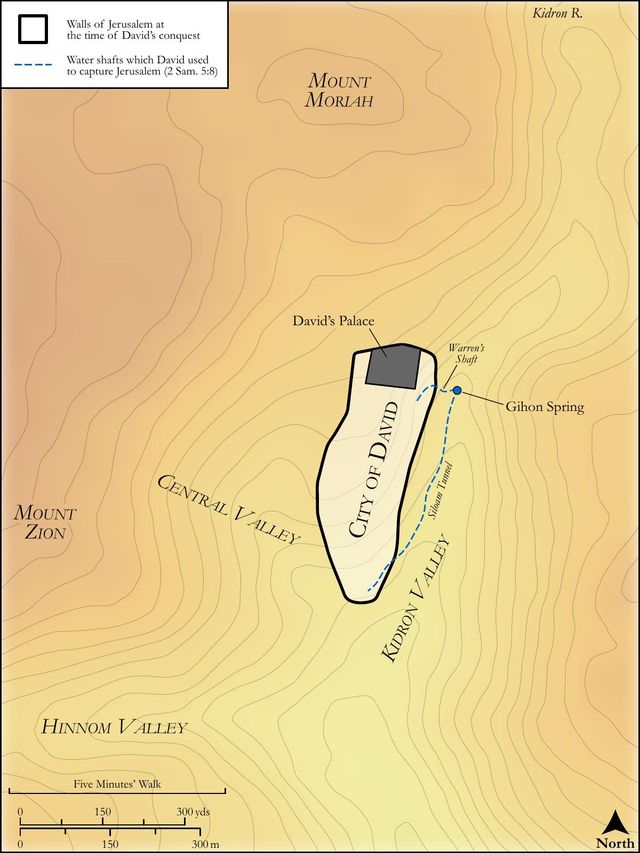
The scene is set in Jerusalem, specifically at the threshing floor of Araunah, who is also identified as Ornan in the Chronicler's account (1 Chronicles 21). Threshing floors were typically elevated, open-air, circular areas, often on hilltops, designed to harness the wind for winnowing grain—separating the lighter chaff from the heavier kernels. While some were communal, this one was privately owned by Araunah. As a Jebusite, Araunah represents one of the indigenous inhabitants of Jerusalem prior to its capture by David and its establishment as the capital of Israel (2 Samuel 5:6-9). His continued presence and, more remarkably, his willingness to contribute so significantly to Israelite worship, suggest either a respectful coexistence or a degree of integration into Davidic society. The practice of offering burnt sacrifices (‘olah) was a cornerstone of Israelite worship, symbolizing complete dedication to God and serving as a primary means of atonement for sin. The plague itself aligns with common ancient Near Eastern understandings of divine judgment, where the transgression of a king or nation could provoke divine wrath and bring calamity upon the entire populace.
Key Themes
ShowHideThis verse powerfully contributes to several overarching themes within 2 Samuel and the broader biblical narrative. Firstly, it profoundly illustrates the theme of divine judgment and mercy. The devastating plague is a direct and severe consequence of David's sin, unequivocally demonstrating God's holiness and the gravity of disobedience. Yet, God's instruction to build an altar on Araunah's threshing floor simultaneously reveals His boundless mercy, providing a specific, divinely ordained means for atonement and the cessation of judgment. Secondly, the passage illuminates the nature of true sacrifice. While Araunah's offer is one of immense and unreserved generosity, David's subsequent insistence on purchasing the materials for the sacrifice (2 Samuel 24:24) establishes the foundational principle that genuine worship and atonement must involve personal cost and intentionality, rather than mere convenience or receiving something for free. This principle is fundamental to understanding biblical worship and the covenant relationship. Lastly, Araunah's extraordinary generosity and reverence for God and His anointed king serve as a moral exemplar. His selfless response stands in stark contrast to the prideful sin that precipitated the crisis, pointing towards a spirit of profound devotion in the face of divine need. Furthermore, the location itself, Araunah's threshing floor, gains immense theological significance as it later becomes the site of Solomon's magnificent Temple (2 Chronicles 3:1), imbuing this spontaneous act of generosity with enduring importance as the foundational place of Israel's perpetual worship and national atonement.
Exposition and Analysis
ShowHideKey Word Analysis
ShowHideThis term, derived from an unused root meaning "to rule," signifies a "sovereign, i.e. controller (human or divine); lord, master, owner." Araunah's use of "my lord the king" demonstrates profound deference and respect for David's royal authority and his position as God's anointed leader. It acknowledges David's supreme standing and Araunah's humble submission to his request, reflecting a recognition of both David's earthly power and the divine mandate behind his kingship.
This word refers to "beef cattle or an animal of the ox family of either gender (as used for plowing); collectively, a herd." Oxen were highly valuable assets in an agrarian society, serving as beasts of burden for plowing and threshing, and as a primary source of meat and sacrificial animals. Araunah's immediate offer of his oxen for "burnt sacrifice" highlights the immense value of his gift, as these animals were essential for his livelihood and represented a significant portion of his wealth. Their suitability for the ‘olah (whole burnt offering) underscores his understanding of the specific ritual requirements.
This specific term denotes a "threshing sledge," a heavy wooden board or frame, often fitted with sharp stones or iron teeth on its underside, dragged by oxen over harvested grain to separate the kernels from the stalks. Along with "other instruments of the oxen," these were the very tools of Araunah's trade and essential for his agricultural productivity. His willingness to offer these instruments "for wood" for the sacrifice demonstrates an extraordinary level of self-emptying generosity, as he was offering to dismantle the very means of his livelihood to facilitate the atonement and worship of God.
Verse Breakdown
ShowHide"And Araunah said unto David,"
This opening phrase immediately establishes the direct, respectful, and urgent dialogue between Araunah, the Jebusite landowner, and King David. It sets the scene for Araunah's response, emphasizing his promptness and the gravity of the king's unexpected visit, which he understands is tied to the national crisis.
"Let my lord the king take and offer up what [seemeth] good unto him:"
Araunah's words convey a profound sense of humility, deference, and complete submission to David's will and, by extension, to God's command. He places the decision and the choice of materials entirely in David's hands, indicating his unreserved willingness to provide whatever is necessary. This phrase highlights his selflessness and the absence of any desire for personal gain or negotiation.
"behold, [here be] oxen for burnt sacrifice,"
With remarkable immediacy, Araunah identifies and offers the most critical component for the required sacrifice: the animals themselves. This is not a mere suggestion but a concrete, tangible provision, demonstrating his understanding of the urgency of the situation and the specific ritual needs for a burnt offering. The oxen, being valuable assets, underscore the substantial nature of his gift, freely given for the purpose of national atonement.
"and threshing instruments and [other] instruments of the oxen for wood."
Beyond the animals, Araunah extends his generosity by offering the very tools of his trade—his threshing sledges and other equipment associated with his oxen—to be used as fuel for the sacrificial fire. This detail profoundly emphasizes the totality and comprehensiveness of his offering. He is willing to dismantle and sacrifice his means of production, demonstrating an unparalleled act of devotion and self-emptying generosity for the sake of God's worship and the salvation of the nation.
Literary Devices
ShowHideThe passage employs several impactful literary devices that deepen its theological and narrative significance. Generosity as Contrast is powerfully evident, as Araunah's immediate, unsolicited, and total self-giving stands in stark opposition to David's earlier sin of the census, which stemmed from a lack of trust in God's provision and a reliance on human strength. Araunah's response highlights a spirit of devotion and selfless obedience that David, at that moment, had tragically lacked, serving as a moral and spiritual foil. Symbolism is profoundly at play with the "threshing floor" itself. Traditionally a place of arduous labor and separation (grain from chaff), it is here transformed into a sacred site where divine judgment is averted through costly sacrifice, thereby becoming a place of reconciliation, holiness, and divine encounter. This transformation is deeply symbolic of God's ability to redeem and sanctify ordinary spaces for sacred purposes. Furthermore, the narrative subtly employs Foreshadowing, pointing to the enduring significance of this specific location. While not explicitly stated in this verse, the discerning reader, especially with the benefit of later biblical texts, understands that this very threshing floor will become the permanent site of the Lord's house, Solomon's Temple (2 Chronicles 3:1). This future development imbues Araunah's spontaneous generosity with immense historical and theological weight, making his act foundational to Israel's future worship and national identity.
Theological and Thematic Connections
ShowHideAraunah's offer in 2 Samuel 24:22 is a profound theological statement on the nature of true giving and the heart required for worship. His immediate, unsolicited, and comprehensive provision of everything needed for the sacrifice—the land, the animals, and the fuel—demonstrates a spirit of unparalleled generosity rooted in deep reverence for God and genuine respect for His anointed king. This act powerfully underscores the biblical principle that genuine devotion often manifests in costly self-sacrifice, not merely giving from one's surplus but offering what is essential, even one's means of livelihood. It also highlights God's perfect provision, as the means for atonement are readily available when a repentant heart seeks reconciliation. This divine-human interaction reveals that God, in His mercy, provides the way for sin to be covered, even amidst judgment, and that true worship demands a heart that is willing to give its all.
Reflection and Application
ShowHideAraunah's spontaneous and complete generosity presents a compelling and challenging paradigm for contemporary believers. His willingness to give not just a portion, but his entire means of livelihood—his land, his oxen, and his agricultural equipment—for the sake of national atonement and the cessation of divine judgment, exemplifies a radical trust in God's providence and a profound love for his community. This passage prompts us to critically examine the depth of our own generosity: are we willing to give sacrificially, even when it costs us something significant, for the advancement of God's kingdom and the spiritual and physical well-being of others? It serves as a powerful reminder that true giving, in God's eyes, is not primarily measured by the amount, but by the heart and the spirit of selflessness behind it. David's subsequent principled refusal to accept a free gift for the sacrifice (2 Samuel 24:24), insisting that he would "not offer burnt offerings unto the Lord my God of that which doth cost me nothing," further reinforces the enduring principle that genuine worship and service to God should involve personal investment and a profound recognition of the immense value of what we offer to Him. Our worship, our time, our talents, and our material resources should reflect a costly devotion, mirroring the ultimate sacrifice made for us.
Questions for Reflection
ShowHideFAQ
ShowHideWho was Araunah, and why is his threshing floor significant?
ShowHideAraunah (also known as Ornan in 1 Chronicles 21) was a Jebusite, one of the original inhabitants of Jerusalem before King David conquered the city and made it his capital. His threshing floor was a practical, open-air area used for processing grain. Its significance is immense because it was the specific location divinely chosen by God for David to build an altar to stop the devastating plague that had afflicted Israel (2 Samuel 24:18). This site, purchased by David, later became the permanent and most sacred location for Solomon's magnificent Temple, the central place of worship for Israel for centuries (2 Chronicles 3:1). Thus, Araunah's threshing floor transitioned from a place of agricultural labor to the holiest site in Israel, symbolizing God's enduring presence, His provision for atonement, and the focal point of national worship.
Why was David's census considered a sin that brought about a plague?
ShowHideWhile not every census was inherently sinful in Israel (e.g., the censuses in Numbers 1-3), David's census in 2 Samuel 24:1 was clearly an act of grave transgression. The text indicates that "the anger of the Lord was kindled against Israel" (2 Samuel 24:1), implying that David's motive was flawed. Scholars suggest his sin likely stemmed from pride, a reliance on his own military strength and numbers rather than on God's divine providence and power. It may have been conducted without divine command, or with an improper, self-aggrandizing motive, such as boasting in the size of his fighting force or planning for territorial expansion based on human might rather than divine leading. This highlights the dangers of human self-reliance, the temptation to trust in worldly power, and the paramount importance of humility and absolute dependence on God for national security and prosperity. David's sin, as the king, had devastating consequences for the entire nation, leading to severe divine judgment in the form of a plague.
Christ-Centered Fulfillment
ShowHideAraunah's spontaneous and complete offer of his livelihood for sacrifice, coupled with David's subsequent insistence on purchasing it because he would "not offer burnt offerings unto the Lord my God of that which doth cost me nothing" (2 Samuel 24:24), powerfully foreshadows the ultimate and perfect sacrifice of Jesus Christ. Araunah's immense generosity, a free gift of atonement provided in a moment of national crisis, points profoundly to God's own unparalleled initiative in providing the Lamb. Just as Araunah provided the oxen and the wood, God, in His boundless love, provided His only Son, the Lamb of God who takes away the sin of the world, as the perfect, unblemished sacrifice for humanity's sin. Moreover, David's foundational principle of costly sacrifice finds its ultimate and supreme fulfillment in Christ, whose sacrifice was not "nothing" but cost Him everything—His very life—to redeem humanity from sin and death. He did not offer something that cost Him nothing; rather, He was the costly, unblemished, and infinitely valuable sacrifice, offered once for all time (Hebrews 10:10). Through His atoning death on the cross, Jesus became the ultimate propitiation for sin, fulfilling and superseding all the Old Testament sacrifices and making a way for humanity to be eternally reconciled to God, not through the blood of bulls and goats, but through His own precious and purifying blood (1 Peter 1:18-19). Thus, Araunah's threshing floor, a place where divine judgment was averted by a costly sacrifice, prefigures Golgotha, where the ultimate judgment for humanity's sin was perfectly borne by Christ, leading to eternal life and reconciliation for all who believe (Romans 6:23).