


2 Kings 23:29
Bible text: King James Version (1769 Blayney text) · Public domain
Bible text: King James Version with Strong's numbers · Public domain
Bible text: Berean Standard Bible · Public domain
Bible text: American Standard Version (1901) · Public domain
Bible text: World English Bible, Messianic edition · Public domain
Bible text: Geneva Bible (1599) · Public domain
Bible text: Young's Literal Translation · Public domain
- בְּיָמָיוbe·ya·Mavin his daysH3117Prep-b ¦ N-mpc ¦ 3msNoun Plural Masculine Constructבְּinיָמָיdaysוhis
- עָלָה'a·Lahhe went upH5927V-Qal-Perf-3msVerb Qal Perfect 3rd Singular Masculine
- פַרְעֹהfar·'OhPharaohH6547N-msNoun Title Singular Masculine Absolute
- נְכֹהne·KhohNechoH5224N-proper-mNoun Proper Masculine
- מֶלֶךְMe·lekh[the] king ofH4428N-mscNoun Singular Masculine Construct
- מִצְרַיִםmitz·Ra·yimEgyptH4714N-properNoun Proper Location
- עַל'alonH5921PrepPreposition
- מֶלֶךְMe·lekh[the] king ofH4428N-mscNoun Singular Masculine Construct
- אַשּׁוּר'a·ShurAssyriaH804N-properNoun Proper Location
- עַל'altoH5921PrepPreposition
- נְהַרne·har[the] river ofH5104N-mscNoun Singular Masculine Construct
- פְּרָתpe·RatEuphratesH6578N-properNoun Proper Location
- וַיֵּלֶךְvai·Ye·lekhand he wentH1980Conj-w ¦ V-Qal-ConsecImperf-3msVerb Qal Consecutive Imperfect 3rd Singular Masculineוַandיֵּלֶךְhe went
- הַמֶּלֶךְha·Me·lekhthe kingH4428Art ¦ N-msNoun Singular Masculine Absoluteהַtheמֶּלֶךְking
- יֹאשִׁיָּהוּyo·shi·Ya·huJosiahH2977N-proper-mNoun Proper Masculine
- לִקְרָאתוֹlik·ra·Toto meet himH7122Prep-l ¦ V-Qal-Inf ¦ 3msVerb Qal Infinitive Constructלִtoקְרָאתmeetוֹhim
- וַיְמִיתֵהוּvay·mi·Te·huand he killed himH4191Conj-w ¦ V-Hiphil-ConsecImperf-3ms ¦ 3msVerb Hiphil Consecutive Imperfect 3rd Singular Masculineוַandיְמִיתֵhe killedהוּhim
- בִּמְגִדּוֹbim·gi·Doat MegiddoH4023Prep-b ¦ N-properNoun Proper LocationבִּatמְגִדּוֹMegiddo
- כִּרְאֹתוֹkir·'o·Towhen he sawH7200Prep-k ¦ V-Qal-Inf ¦ 3msVerb Qal Infinitive Constructכִּwhenרְאֹתsawוֹhe
- אֹתוֹ'o·To<obj.> himH853DirObjM ¦ 3msParticle Object Indicatorאֹת<obj.>וֹhim
English is a literal word-by-word gloss of the Hebrew, not the KJV's wording. Why?
This is the original text the KJV's translators worked from — each Hebrew word with its own literal English meaning in this verse, prepared by scholars at Tyndale House, Cambridge. The KJV translates whole sentences, not word by word, so its wording differs: one Hebrew word can become several English words, and the KJV may choose “the LORD” where the gloss reads “Yahweh”. Both are faithful — they answer different questions. For the KJV's own rendering, switch to the KJV text.
Details
See on the biblical-era maps
Study this verse
Public-domain commentary
Matthew Henry
From his Commentary on the Whole Bible. Henry comments on passages, not single verses — this entry covers 2 Kings 23:25–30. His three-level outline is real structure in the source text, so it is rendered as structure.
Upon the reading of these verses we must say, Lord, though thy righteousness be as the great mountains - evident, conspicuous, and past dispute, yet thy judgments are a great deep, unfathomable and past finding out, Psa 36:6. What shall we say to this?
I.It is here owned that Josiah was one of the best kings that ever sat upon the throne of David, Kg2 23:25.
As Hezekiah was a non-such for faith and dependence upon God in straits (Kg2 18:5), so Josiah was a non-such for sincerity and zeal in carrying on a work of reformation. For this there was none like him,
1.That he turned to the Lord from whom his fathers had revolted. It is true religion to turn to God as one we have chosen and love. He did what he could to turn his kingdom also to the Lord.
2.That he did this with his heart and soul; his affections and aims were right in what he did. Those make nothing of their religion that do not make heart-work of it.
3.That he did it with all his heart, and all his soul, and all his might - with vigour, and courage, and resolution: he could not otherwise have broken through the difficulties he had to grapple with. What great things may we bring to pass in the service of God if we be but lively and hearty in it!
4.That he did this according to all the law of Moses, in an exact observance of that law and with an actual regard to it. His zeal did not transport him into any irregularities, but, in all he did, he walked by rule.
II.Notwithstanding this he was cut off by a violent death in the midst of his days, and his kingdom was ruined within a few years after.
Consequent upon such a reformation as this, one would have expected nothing but the prosperity and glory both of king and kingdom; but, quite contrary, we find both under a cloud.
1.Even the reformed kingdom continues marked for ruin. For all this (Kg2 23:26) the Lord turned not from the fierceness of his great wrath. That is certainly true, which God spoke by the prophet (Jer 18:7, Jer 18:8), that if a nation, doomed to destruction, turn from the evil of sin, God will repent of the evil of punishment; and therefore we must conclude that Josiah's people, though they submitted to Josiah's power, did not heartily imbibe Josiah's principles. They were turned by force, and did not voluntarily turn from their evil way, but still continued their affection for their idols; and therefore he that knows men's hearts would not recall the sentence, which was, That Judah should be removed, as Israel had been, and Jerusalem itself cast off, Kg2 23:27. Yet even this destruction was intended to be their effectual reformation; so that we must say, not only that the criminals had filled their measure and were ripe for ruin, but also that the disease had come to a crisis, and was ready for a cure; and this shall be all the fruit, even the taking away of sin.
2.As an evidence of this, even the reforming king is cut off in the midst of his usefulness - in mercy to him, that he might not see the evil which was coming upon his kingdom, but in wrath to his people, for his death was an inlet to their desolations. The king of Egypt waged war, it seems, with the king of Assyria: so the king of Babylon is now called. Josiah's kingdom lay between them. He therefore thought himself concerned to oppose the king of Egypt, and check the growing, threatening, greatness of his power; for though, at this time, he protested that he had no design against Josiah, yet, if he should prevail to unite the river of Egypt and the river Euphrates, the land of Judah would soon be overflowed between them. Therefore Josiah went against him, and was killed in the first engagement, Kg2 23:29, Kg2 23:30. Here,
(1.)We cannot justify Josiah's conduct. He had no clear call to engage in this war, nor do we find that he asked counsel of God by urim or prophets concerning it. What had he to do to appear and act as a friend and ally to the king of Assyria? Should he help the ungodly and love those that hate the Lord? If the kings of Egypt and Assyria quarrelled, he had reason to think God would bring good out of it to him and his people, by making them instrumental to weaken one another. Some understand the promise made to him that he should come to his grave in peace in a sense in which it was not performed because, by his miscarriage in this matter, he forfeited the benefit of it. God has promised to keep us in all our ways; but, if we go out of our way, we throw ourselves out of his protection. I understand the promise so as that I believe it was fulfilled, for he died in peace with God and his own conscience, and saw not, nor had any immediate prospect of, the destruction of Judah and Jerusalem by the Chaldeans; yet I understand the providence to be a rebuke to him for his rashness.
(2.)We must adore God's righteousness in taking away such a jewel from an unthankful people that knew not how to value it. They greatly lamented his death (Ch2 35:25), urged to it by Jeremiah, who told them the meaning of it, and what a threatening omen it was; but they had not made a due improvement of the mercies they enjoyed by his life, of which God taught them the worth by the want.
Historical interpretation
Historical reception
1 surviving comment on this verse from the historical church.
Nobody must think that anything was detracted to the celerity of death because of one’s merits. Enoch was kidnapped, lest malice might spoil his heart, and Josiah, who celebrated the Passover of the Lord in the eighteenth year of his reign in such a manner that he overcame in piousness all the previous kings, did not survive longer through the merits of his faith. No, rather, because grievous destruction threatened the Jewish people, the just king was taken away beforehand. I fear that you, too, were snatched away from us because of some offense on our part, so that, as a just person, you might escape in the eighteenth year of your reign the bitterness of impending evil.
Continue studying 2 Kings 23:29 across the web’s major study libraries — every link below opens this exact verse, chapter, or book on the destination site.
Read & Compare
 BibleGatewayThis verse in more than 200 translations and 70 languages.
 Bible.comThe YouVersion reader — hundreds of translations, reading plans, and highlights.
 ESV.orgCrossway's official English Standard Version reader.
 NET BibleThe NET translation with 60,000+ translators' notes on every rendering decision.
 STEP BibleTyndale House's free study tool — original text, vocabulary, and scholarly resources.
 BibliaLogos Bible Software's free web reader.
 USCCBThe New American Bible (Revised Edition) with the U.S. bishops' study notes.
Commentaries
 BibleHub CommentariesDozens of classic commentaries on this verse, gathered on one page.
 StudyLightMore than 100 commentary sets — the largest collection on the web.
 BibleRefPlain-English commentary on what this verse means, verse by verse.
 Enduring WordDavid Guzik's free commentary on this chapter, widely used by Bible teachers.
 Bible Study ToolsVerse commentary alongside Greek and Hebrew study aids.
Original Language & Research
- BibleHub InterlinearThe verse word by word — original language, transliteration, and English.
- BibleHub LexiconEvery word's original-language definition and Strong's entry.
 Blue Letter BibleDeep-study tools — Strong's numbers, concordance, and word studies.
 SefariaThe Hebrew text with Rashi and centuries of Jewish commentary.
Sermons, Hymns & Audio


TrulyRandomVerse is not affiliated with these sites and doesn’t control their content. They’re linked because they’re genuinely useful.
Summary
records the abrupt and tragic demise of King Josiah, one of Judah's most righteous monarchs, at the hands of Pharaoh Necho II of Egypt. His death at Megiddo marks a catastrophic turning point for the Southern Kingdom, extinguishing the last flicker of spiritual revival and political stability before Judah's rapid descent into foreign domination and the eventual Babylonian Exile. It stands as a somber testament to the complex interplay of human decision, geopolitical forces, and divine sovereignty in the unfolding narrative of Israel's history, highlighting the irreversible nature of God's judgment against a nation steeped in sin, despite the piety of its leader.
Context
ShowHideLiterary Context
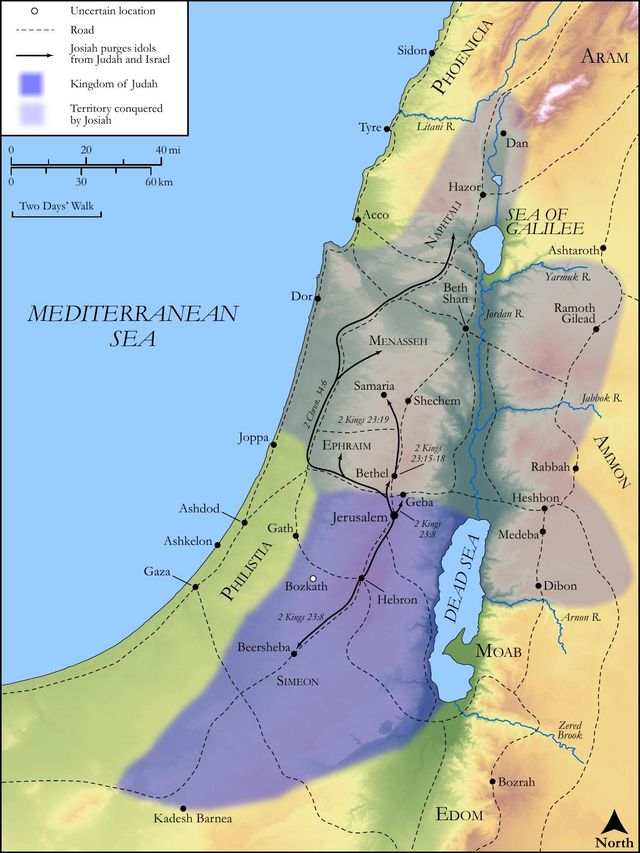
The immediate literary context of 2 Kings 23:29 is profoundly significant, juxtaposing the pinnacle of Judah's spiritual renewal with its sudden collapse. The preceding chapters, 2 Kings 22-23, meticulously detail Josiah's unparalleled religious reforms, a sweeping purge of idolatry from Judah and Jerusalem, and the monumental rediscovery of the Book of the Law. 2 Kings 23:25 explicitly praises Josiah, stating, "And like unto him was there no king before him, that turned to the LORD with all his heart, and with all his soul, and with all his might, according to all the law of Moses; neither after him arose there any like him." This verse, therefore, shatters the narrative of revival, introducing an unexpected and devastating end to the reign of Judah's most righteous king since David. It serves as a jarring pivot point, setting the stage for the subsequent rapid decline and ultimate judgment on Judah, despite Josiah's sincere efforts, underscoring the irreversible nature of God's decree against the nation's persistent sin (2 Kings 23:26-27).
Historical & Cultural Context
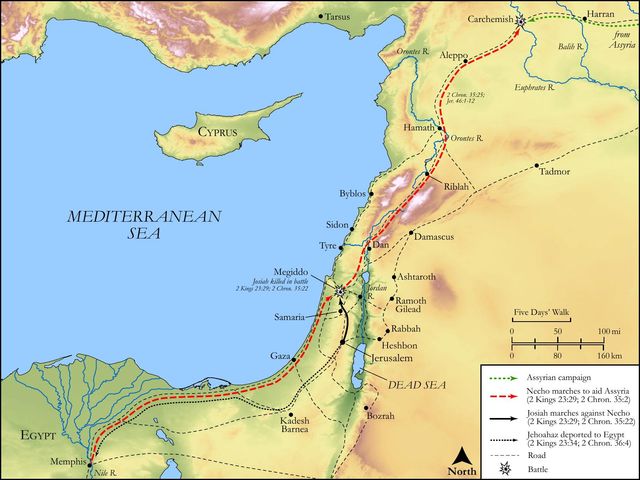
Josiah's reign (640-609 BC) coincided with a period of intense geopolitical upheaval among the kingdoms of that day. The once-dominant Assyrian Empire was in terminal decline, weakened by internal strife and external pressures, particularly from the rising Neo-Babylonian Empire. Two new powers were ascendant: Babylon to the east, rapidly expanding its influence, and Egypt to the southwest, seeking to reassert its regional power. Pharaoh Necho II's expedition northward to the Euphrates River was an attempt to aid the remnants of the Assyrian army against the burgeoning Babylonian threat. Necho's strategy aimed to maintain a buffer state between Egypt and Babylon, thereby protecting Egyptian interests. Josiah's decision to intercept Necho at Megiddo, a strategically vital choke-point in the Jezreel Valley (a historic battleground), is not fully explained in 2 Kings. However, 2 Chronicles 35:20-24 provides additional detail, including a warning from Necho himself, who claimed God had sent him. Josiah's motives may have included preventing Egyptian aid to Assyria (a long-standing oppressor of Judah), asserting Judah's independence, or perhaps a fatal miscalculation of divine will.
Key Themes
ShowHideThis verse powerfully contributes to several key themes within the books of Kings. Firstly, it highlights the Limits of Righteousness in Averting Corporate Judgment, as even a king as devoted as Josiah could not ultimately avert the divine judgment decreed for Judah's persistent idolatry, particularly the deep-seated sins of Manasseh (2 Kings 23:26-27). His death underscores that individual piety, while commendable, does not always negate the corporate consequences of a nation's accumulated sin. Secondly, it explores the theme of Human Agency and Divine Sovereignty, raising questions about Josiah's decision-making and whether his actions were truly aligned with God's will, especially given Necho's claim of divine instruction in 2 Chronicles 35:21. This raises the theological tension between human responsibility and God's overarching plan. Thirdly, it serves as a stark Turning Point for Judah, marking the definitive end of its last period of spiritual and political vitality. Following Josiah's death, the kingdom rapidly spiraled into servitude and eventual destruction, fulfilling earlier prophetic warnings (e.g., Isaiah 39:6). Finally, the mention of Megiddo imbues the event with profound symbolic weight, as this ancient battlefield later became a powerful symbol of climactic confrontation, even referenced in eschatological contexts (Revelation 16:16).
Exposition and Analysis
ShowHideKey Word Analysis
ShowHideVerse Breakdown
ShowHide"In his days Pharaohnechoh king of Egypt went up against the king of Assyria to the river Euphrates:"
This clause establishes the historical and geopolitical context, setting the scene during Josiah's reign ("In his days"). It identifies Pharaoh Necho II of Egypt as the primary actor, detailing his military objective: to advance against the remnants of the Assyrian Empire, specifically toward the strategic Euphrates River. This movement signifies a major shift in regional power dynamics as Egypt sought to reassert its influence amidst the decline of Assyria and the rise of Babylon.
"and king Josiah went against him;"
This is the pivotal and tragic turning point of the verse. Despite Necho's stated objective being against Assyria, King Josiah inexplicably chose to intercept the Egyptian forces. The phrase "went against him" indicates a hostile engagement, a deliberate act of confrontation. This decision, seemingly made without explicit divine command (and perhaps even against a divine warning, as per the Chronicler's account), is the direct cause of the ensuing catastrophe for Judah and its king.
"and he slew him at Megiddo, when he had seen him."
This final clause delivers the devastating outcome. "He slew him" unequivocally states that Pharaoh Necho (or his forces) killed Josiah. The location, "Megiddo," is profoundly significant, being a historically strategic and often-contested battlefield in the Jezreel Valley, known for decisive and often calamitous battles. The phrase "when he had seen him" is somewhat ambiguous; it could imply "when Necho saw Josiah" (suggesting recognition or a direct encounter leading to the fatal blow), or "when Josiah had seen Necho" (suggesting Josiah initiated the engagement upon sighting the Egyptian army). Regardless of the precise interpretation, it signifies the immediate and fatal consequence of Josiah's decision to intervene.
Literary Devices
ShowHideThe narrative of 2 Kings 23:29 is steeped in Tragedy, presenting the untimely death of Judah's most righteous king as a profound and unexpected sorrow. This is amplified by a powerful sense of Irony: a king who diligently purged idolatry and restored covenant faithfulness meets his end not in a noble defense against idolatrous enemies, but in a seemingly ill-advised confrontation with an ostensibly neutral power. The abruptness of the verse's conclusion, following the detailed account of Josiah's extensive reforms, creates a powerful sense of Foreshadowing, signaling the imminent and irreversible decline of Judah. The stark, factual reporting of the event, devoid of emotional embellishment, employs a Laconic style that heightens the sense of shock and finality, allowing the sheer weight of the event to speak for itself. The mention of Megiddo also serves as a potent Symbolism, transforming a geographical location into a byword for decisive and often calamitous battle, a place where destinies are sealed, echoing its later eschatological significance.
Theological and Thematic Connections
ShowHideThe death of Josiah in 2 Kings 23:29 presents a profound theological paradox: how could such a righteous king meet such a tragic end? The text suggests that while Josiah's personal piety was unparalleled (2 Kings 23:25), the cumulative sin of Judah, particularly the deep-seated idolatry introduced under Manasseh, had reached a point where divine judgment was irreversible (2 Kings 23:26-27). Josiah's death, therefore, can be understood as part of God's sovereign plan for Judah, perhaps even a merciful removal of a righteous king before the full force of the impending catastrophe. It underscores the severity of corporate sin and the reality that even individual righteousness cannot always avert national judgment. Furthermore, it highlights the danger of presumptuous action, even with good intentions, when not aligned with divine counsel, reminding us of the importance of discerning God's specific will in every endeavor.
Reflection and Application
ShowHideThe account of Josiah's death at Megiddo offers a sobering yet vital lesson for believers today: even the most devout and well-intentioned individuals are not exempt from the consequences of human error, the complexities of geopolitical realities, or the unfolding of God's sovereign plan, which can include judgment. Josiah's zeal for God was unquestionable, as evidenced by his extensive reforms, yet his decision to engage Necho, possibly without explicit divine command and perhaps even against a warning, led to his untimely demise. This compels us to cultivate deep spiritual discernment, seeking God's wisdom not just for our intentions, but for our specific actions and strategies, especially in moments of conflict or significant decision. We are reminded that while God honors faithfulness, He also operates within a larger redemptive history where individual lives, even righteous ones, fit into His overarching purposes for nations and humanity. Ultimately, this narrative calls us to humility, profound reliance on divine guidance, and a recognition that God's ways are often higher and more complex than our immediate understanding, transcending our personal desires or expectations of immediate reward for righteousness.
Questions for Reflection
ShowHideFAQ
ShowHideWhy did Josiah go to battle against Pharaoh Necho, especially if Necho claimed divine instruction?
ShowHideThe biblical text in 2 Kings does not explicitly state Josiah's motives, making his decision a subject of scholarly debate. 2 Chronicles 35:20-24 provides more detail, indicating that Necho sent envoys warning Josiah not to interfere, claiming God had sent him on his mission against Assyria and that God was with him. Josiah may have viewed Necho's passage through Judah as a direct threat to his kingdom's sovereignty and a violation of his territory, or he might have sought to prevent any aid from reaching Assyria, a long-standing oppressor of Judah. It's also possible he misjudged the situation, believing he was acting in God's will to protect his nation by weakening a potential Egyptian-Assyrian alliance, despite Necho's warning. His action appears to have been a strategic miscalculation, made without explicit divine command from the Lord, unlike many of his other righteous deeds.
Was Josiah's death a divine judgment, given his righteousness?
ShowHideThis is a complex theological question. While Josiah was undeniably a righteous king, unparalleled in his devotion (2 Kings 23:25), the preceding verses in 2 Kings 23:26-27 clearly state that God's fierce anger against Judah, due to the sins of Manasseh and the nation's persistent idolatry, would not turn away. Therefore, Josiah's death, while personally tragic, is often seen as part of God's predetermined judgment upon Judah, perhaps even a merciful removal of a righteous king before the full brunt of the Babylonian exile. It highlights that individual righteousness does not always negate the corporate consequences of a nation's deep-seated sin, and that God's sovereign plan for judgment can unfold even through unexpected means and seemingly unfortunate circumstances.
Christ-Centered Fulfillment
ShowHideThe tragic death of King Josiah at Megiddo, though a somber end to a righteous reign, powerfully foreshadows the ultimate, perfect King, Jesus Christ. Josiah, despite his unparalleled devotion and sincere efforts to reform Judah, ultimately failed to save his people from their impending judgment, and his own death was a consequence of a seemingly misguided decision. He was a righteous king who died, leaving his people still under the shadow of sin and judgment, unable to fully avert the consequences of their corporate rebellion. In stark contrast, Jesus, the truly righteous King, did not die due to a misstep or a geopolitical blunder, but as the intentional, atoning sacrifice for the sins of the world (John 1:29). While Josiah's death marked the beginning of Judah's irreversible decline, Christ's death on the cross, though seemingly a defeat, was the decisive victory over sin, death, and the powers of darkness (Colossians 2:13-15). Unlike Josiah, whose personal righteousness could not avert national judgment, Jesus' perfect righteousness and sacrificial death provide a path to salvation, reconciliation, and eternal life for all who believe (Romans 5:8). He is the King who truly "went against" the ultimate enemy of humanity, not to be slain by them in defeat, but to conquer them through His own willing sacrifice, rising again to reign forever as the King of kings and Lord of lords (Revelation 19:11-16). Josiah's story, therefore, points us to the profound need for a King whose righteousness is not merely exemplary but redemptive, whose death is not a tragedy but a triumph, and whose reign secures eternal hope and a kingdom that will never end (Daniel 7:13-14).