


2 Chronicles 35:21
- וַיִּשְׁלַחvai·yish·Lachand he sentH7971Conj-w ¦ V-Qal-ConsecImperf-3msVerb Qal Consecutive Imperfect 3rd Singular Masculineוַandיִּשְׁלַחhe sent
- אֵלָיו'e·Lavto himH413Prep ¦ 3msPrepositionאֵלָיtoוhim
- מַלְאָכִיםmal·'a·KhimmessengersH4397N-mpNoun Plural Masculine Absolute
- לֵאמֹרle·Mor<to> sayingH559Prep-l ¦ V-Qal-InfVerb Qal Infinitive Constructלֵ<to>אמֹרsaying
- מַהmahwhat?H4100InterrogPronoun Interrogative
- לִּיli[is] to <the> mePrep-l ¦ 1csSuffix Personal 1st Singular common genderלִּ[is] to <the>יme
- וָלָךְva·Lakhand to <the> youConj-w ¦ Prep-l ¦ 2msSuffix Personal 2nd Singular Masculineוָandלָto <the>ךְyou
- מֶלֶךְMe·lekhO king ofH4428N-mscNoun Singular Masculine Construct
- יְהוּדָהye·hu·DahJudahH3063N-properNoun Proper Location
- לֹאlo'notH3808NegParticle Negative
- עָלֶיךָ'a·Lei·khaon youH5921Prep ¦ 2msPrepositionעָלֶיonךָyou
- אַתָּה'a·TahyouH859Pro-2msPronoun Personal 2nd Singular Masculine
- הַיּוֹםhai·yOmthis dayH3117Art ¦ N-msNoun Singular Masculine Absoluteהַthisיּוֹםday
- כִּיkiforH3588PrtParticle Conditional
- אֶל'elagainstH413PrepPreposition
- בֵּיתbeit[the] house ofH1004N-mscNoun Singular Masculine Construct
- מִלְחַמְתִּיmil·cham·Timy battleH4421N-fsc ¦ 1csNoun Singular Feminine Constructמִלְחַמְתִּbattleיmy
- וֵאלֹהִיםve·lo·Himand GodH430Conj-w ¦ N-mpNoun Plural Masculine AbsoluteוֵandאלֹהִיםGod
- אָמַר'a·Marhe has saidH559V-Qal-Perf-3msVerb Qal Perfect 3rd Singular Masculine
- לְבַהֲלֵנִיle·va·ha·Le·nito I hurryH926Prep-l ¦ V-Piel-Inf ¦ 1csVerb Piel Infinitive ConstructלְtoבַהֲלֵhurryנִיI
- חֲדַלcha·dalceaseH2308V-Qal-Imp-2msVerb Qal Imperative 2nd Singular Masculine
- לְךָle·Kha<for> yourselfPrep-l ¦ 2msSuffix Personal 2nd Singular Masculineלְ<for>ךָyourself
- מֵאֱלֹהִיםme·'E·lo·Himfrom GodH430Prep-m ¦ N-mpNoun Plural Masculine AbsoluteמֵfromאֱלֹהִיםGod
- אֲשֶׁר'a·SherwhoH834RelParticle Relative
- עִמִּי'i·Mi[is] with meH5973Prep ¦ 1csPrepositionעִמִּ[is] withיme
- וְאַלve·'aland may notH408Conj-w ¦ NegParticle Negativeוְandאַלmay not
- יַשְׁחִיתֶךָyash·chi·Te·khahe destroy youH7843V-Hiphil-Imperf-3ms ¦ 2msVerb Hiphil Imperfect 3rd Singular Masculineיַשְׁחִיתֶhe destroyךָyou
English is a literal word-by-word gloss of the Hebrew, not the KJV's wording. Why?
This is the original text the KJV's translators worked from — each Hebrew word with its own literal English meaning in this verse, prepared by scholars at Tyndale House, Cambridge. The KJV translates whole sentences, not word by word, so its wording differs: one Hebrew word can become several English words, and the KJV may choose “the LORD” where the gloss reads “Yahweh”. Both are faithful — they answer different questions. For the KJV's own rendering, switch to the KJV text.
Details
See on the biblical-era maps
Study this verse
Public-domain commentary
Matthew Henry
From his Commentary on the Whole Bible. Henry comments on passages, not single verses — this entry covers 2 Chronicles 35:20–27. His three-level outline is real structure in the source text, so it is rendered as structure.
It was thirteen years from Josiah's famous passover to his death. During this time, we may hope, thing went well in his kingdom, that he prospered, and religion flourished; yet we are not entertained with the pleasing account of those years, but they are passed over in silence, because the people, for all this, were not turned from the love of their sins nor God from the fierceness of his anger. The next news therefore we hear of Josiah is that he is cut off in the midst of his days and usefulness, before he is full forty years old. We had this sad story, Kg2 23:29, Kg2 23:30. Here it is somewhat more largely related. That appears here, more than did there, which reflects such blame on Josiah and such praise on the people as one would not have expected.
I.Josiah was a very good prince, yet he was much to be blamed for his rashness and presumption in going out to war against the king of Egypt without cause or call. It was bad enough, as it appeared in the Kings, that he meddled with strife which belonged not to him. But here it looks worse; for, it seems, the king of Egypt sent ambassadors to him, to warn him against this enterprise, Ch2 35:21.
1.The king of Egypt argued with Josiah,
(1.)From principles of justice. He professed that he had no desire to do him any hurt, and therefore it was unfair, against common equity and the law of nations, for Josiah to take up arms against him. If even a righteous man engage in an unrighteous cause, let him not expect to prosper. God is no respecter of persons. See Pro 3:30; Pro 25:8.
(2.)From principles of religion: "God is with me; nay, He commanded me to make haste, and therefore, if thou retard my motions, thou meddlest with God." It cannot be that the king of Egypt only pretended this (as Sennacherib did in a like case, Kg2 18:25), hoping thereby to make Josiah desist, because he knew he had a veneration for the word of God; for it is said here (Ch2 35:22) that the words of Necho were from the mouth of God. We must therefore suppose that either by a dream, or by a strong impulse upon his spirit which he had reason to think was from God, or by Jeremiah or some other prophet, he had ordered him to make war upon the king of Assyria.
(3.)From principles of policy: "That he destroy thee not; it is at thy peril if thou engage against one that has not only a better army and a better cause, but God on his side."
2.It was not in wrath to Josiah, whose heart was upright with the Lord his God, but in wrath to a hypocritical nation, who were unworthy of so good a king, that he was so far infatuated as not to hearken to these fair reasonings and desist from his enterprise. He would not turn his face from him, but went in person and fought the Egyptian army in the valley of Megiddo, Ch2 35:22. If perhaps he could not believe that the king of Egypt had a command from God to do what he did, yet, upon his pleading such a command, he ought to have consulted the oracles of God before he went out against him. His not doing that was his great fault, and of fatal consequence. In this matter he walked not in the ways of David his father; for, had it been his case, he would have enquired of the Lord, Shall I go up? Wilt thou deliver them into my hands? How can we think to prosper in our ways if we do not acknowledge God in them?
II.The people were a very wicked people, yet they were much to be commended for lamenting the death of Josiah as they did.
That Jeremiah lamented him I do not wonder; he was the weeping prophet, and plainly foresaw the utter ruin of his country following upon the death of this good king. But it is strange to find that all Judah and Jerusalem, that stupid senseless people, mourned for him (Ch2 35:24), contrived how to have their mourning excited by singing men and singing women, how to have it spread through the kingdom (they made an ordinance in Israel that the mournful ditties penned on this sad occasion should be learned and sung by all sorts of people), and also how to have the remembrance of it perpetuated: these elegies were inserted in the collections of state poems; they are written in the Lamentations. Hereby it appeared,
1.That they had some respect to their good prince, and that, though they did not cordially comply with him in all his good designs, they could not but greatly honour him. Pious useful men will be manifested in the consciences even of those that will not be influenced by their example; and many that will not submit to the rules of serious godliness themselves yet cannot but give it their good word and esteem it in others. Perhaps those lamented Josiah when he was dead that were not thankful to God for him while he lived. The Israelites murmured at Moses and Aaron while they were with them and spoke sometimes of stoning them, and yet, when they died, they mourned for them many days. We are often taught to value mercies by the loss of them which, when we enjoyed them, we did not prize as we ought.
2.That they had some sense of their own danger now that he was gone. Jeremiah told them, it is likely, of the evil they might now expect to come upon them, from which he was taken away; and so far they credited what he said that they lamented the death of him that was their defence. Note, Many will more easily be persuaded to lament the miseries that are coming upon them than to take the proper way by universal reformation to prevent them, will shed tears for their troubles, but will not be prevailed upon to part with their sins. But godly sorrow worketh repentance and that repentance will be to salvation.
Continue studying 2 Chronicles 35:21 across the web’s major study libraries — every link below opens this exact verse, chapter, or book on the destination site.
Read & Compare
 BibleGatewayThis verse in more than 200 translations and 70 languages.
 Bible.comThe YouVersion reader — hundreds of translations, reading plans, and highlights.
 ESV.orgCrossway's official English Standard Version reader.
 NET BibleThe NET translation with 60,000+ translators' notes on every rendering decision.
 STEP BibleTyndale House's free study tool — original text, vocabulary, and scholarly resources.
 BibliaLogos Bible Software's free web reader.
 USCCBThe New American Bible (Revised Edition) with the U.S. bishops' study notes.
Commentaries
 BibleHub CommentariesDozens of classic commentaries on this verse, gathered on one page.
 StudyLightMore than 100 commentary sets — the largest collection on the web.
 BibleRefPlain-English commentary on what this verse means, verse by verse.
 Enduring WordDavid Guzik's free commentary on this chapter, widely used by Bible teachers.
 Bible Study ToolsVerse commentary alongside Greek and Hebrew study aids.
Original Language & Research
- BibleHub InterlinearThe verse word by word — original language, transliteration, and English.
- BibleHub LexiconEvery word's original-language definition and Strong's entry.
 Blue Letter BibleDeep-study tools — Strong's numbers, concordance, and word studies.
 SefariaThe Hebrew text with Rashi and centuries of Jewish commentary.
Sermons, Hymns & Audio


TrulyRandomVerse is not affiliated with these sites and doesn’t control their content. They’re linked because they’re genuinely useful.
Summary
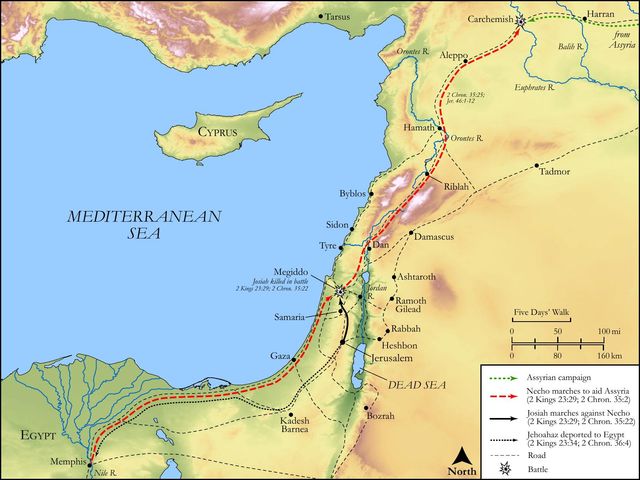
Second Chronicles 35:21 records the critical and ultimately tragic encounter between King Josiah of Judah and Pharaoh Necho II of Egypt. As Necho marched northward to aid the collapsing Assyrian Empire against the rising Babylonian threat, he sent an unambiguous message to Josiah, asserting that his campaign was not against Judah but was divinely ordained. Necho explicitly warned Josiah not to interfere with God's purposes, lest he face destruction. This pivotal verse sets the stage for Josiah's fatal decision to engage Necho in battle, despite the clear warning, leading to the untimely demise of one of Judah's most righteous kings and marking a significant turning point in Judah's history.
Context
ShowHideLiterary Context
This verse serves as a dramatic pivot point in the Chronicler's narrative, immediately preceding the account of Josiah's death at the Battle of Megiddo in 2 Chronicles 35:22-24. It follows a detailed and highly laudatory description of Josiah's extensive religious reforms, his zealous purification of the land from idolatry, and his unparalleled celebration of the Passover, presented as the greatest since the days of Samuel (2 Chronicles 35:1-19). The Chronicler's emphasis on Josiah's piety and unwavering obedience to the Mosaic Law throughout these preceding verses creates a stark and perplexing contrast with his decision to disregard Necho's warning, which is explicitly stated to be from God (2 Chronicles 35:22). This narrative sequence highlights the severe consequences of even a righteous king's disobedience to a clear divine word, marking a tragic turning point that precipitates Judah's rapid decline towards exile.
Historical & Cultural Context
The late 7th century BC was a period of profound geopolitical upheaval in the ancient Near East. The once-dominant Assyrian Empire was in rapid decline, facing an existential threat from the burgeoning Babylonian (Chaldean) Empire. Egypt, under Pharaoh Necho II, sought to prevent Babylonian ascendancy and preserve a buffer state by supporting the remnants of Assyria. Necho's march through Judah was part of this strategic effort, aiming to join forces with the Assyrians at Carchemish. Josiah, perhaps driven by a desire to reassert Judah's independence from foreign powers, to prevent the resurgence of Assyrian influence, or to capitalize on the regional power vacuum, chose to intercept Necho at Megiddo, a strategically significant plain. The cultural understanding of "God" in Necho's statement is crucial; while he was a pagan ruler, the Chronicler presents his warning as genuinely divinely inspired, indicating God's ability to use any instrument to communicate His will, even those who do not worship Him directly or acknowledge Him as Yahweh.
Key Themes
ShowHideThe central themes embedded in 2 Chronicles 35:21 include Divine Sovereignty, demonstrating God's ultimate control over international affairs and His ability to orchestrate events and even speak through pagan rulers, as Necho explicitly states, "God commanded me to make haste." Another prominent theme is the Consequences of Disobedience, even for a devout king like Josiah. His failure to heed a clear divine warning, regardless of its unexpected source, leads directly to his untimely death and sets Judah on a path of irreversible decline, underscoring the gravity of acting outside God's revealed will. Furthermore, the passage highlights the importance of Discerning God's Will from Unexpected Sources, challenging the assumption that divine communication is limited to traditional prophets or direct revelation to Israelite leaders. It serves as a stark reminder that God's voice can emerge from surprising channels, demanding humility and careful discernment from His people, as tragically demonstrated by Josiah's actions in 2 Chronicles 35:22.
Exposition and Analysis
ShowHideKey Word Analysis
ShowHideThis word (H4397) refers to a messenger, specifically one dispatched as a deputy. While often translated as "angel" when referring to divine messengers, here it denotes human envoys. The use of "ambassadors" emphasizes the formal, official nature of Necho's communication, indicating a deliberate diplomatic effort to avoid conflict with Judah and convey a precise message, rather than merely a casual encounter.
Derived from a primitive root (H2308) meaning "to be flabby" or "desist," this term conveys a strong imperative to cease, stop, or refrain from an action. When Necho warns Josiah to "forbear thee from meddling with God," he is issuing a direct command to halt any interference with his divinely sanctioned mission, emphasizing the gravity of the potential opposition.
This plural noun (H430) is a general term for deity, often used for the supreme God (especially with the article, as here) but can also refer to gods in the ordinary sense, magistrates, or even as a superlative. While Necho, as an Egyptian pharaoh, would have worshipped his own deities, the Chronicler's theological perspective affirms that this was indeed a message from the one true God, Yahweh, underscoring His universal sovereignty and His ability to speak through any channel.
Verse Breakdown
ShowHide"But he sent ambassadors to him, saying, What have I to do with thee, thou king of Judah?"
This opening clause establishes Pharaoh Necho's proactive and diplomatic initiative to communicate directly with King Josiah. The rhetorical question, "What have I to do with thee?" (a common idiom for disassociation or non-involvement), is a forceful declaration that Necho's purpose and conflict do not concern Josiah or his kingdom, signaling a clear boundary and a plea for non-interference.
"[I come] not against thee this day, but against the house wherewith I have war:"
Necho explicitly clarifies his military objective, stating unequivocally that his campaign is not directed at Judah. The "house wherewith I have war" refers to the remnants of the collapsing Assyrian Empire and, by extension, the rising Babylonian power at Carchemish. This statement is a direct attempt to de-escalate any perceived threat to Judah and to explain the true nature of his northward march, which was a strategic move to maintain regional balance.
"for God commanded me to make haste:"
This is a crucial and startling claim by Necho, providing a divine justification for his urgent military movement. Whether Necho believed his own gods or the God of Israel had commanded him, the Chronicler's subsequent narrative affirms that this was indeed a message from the true God, highlighting God's sovereign hand in geopolitical events and His ability to use unexpected instruments to achieve His purposes, even through a pagan ruler.
"forbear thee from [meddling with] God, who [is] with me, that he destroy thee not."
This is the direct and potent warning. Necho urges Josiah to desist from interfering with what he claims is a divinely sanctioned mission. The phrase "God, who is with me" implies divine endorsement and protection for Necho's campaign, while the chilling consequence "that he destroy thee not" serves as a severe warning of the fatal outcome if Josiah chooses to oppose God's will by hindering Necho's divinely directed haste.
Literary Devices
ShowHideThe Chronicler employs several potent literary devices in 2 Chronicles 35:21. Most notably, there is profound Irony in God's clear warning to His chosen king, Josiah, being delivered through a pagan pharaoh. This unexpected channel for divine communication underscores God's universal sovereignty and challenges human assumptions about how God reveals His will. The verse also serves as a strong element of Foreshadowing, as Necho's explicit warning of destruction ("that he destroy thee not") directly predicts Josiah's tragic demise in the subsequent verses. This creates Dramatic Irony, as the reader is aware of Josiah's fate, making his decision to ignore the warning all the more poignant and regrettable. Furthermore, the entire interaction implicitly highlights the theme of Divine Sovereignty, portraying God as actively orchestrating events on the world stage, even through the actions and words of non-believers, to achieve His ultimate purposes.
Theological and Thematic Connections
ShowHideThe profound theological implication of 2 Chronicles 35:21 is God's absolute sovereignty, extending even to the hearts and actions of pagan rulers and the outcomes of international conflicts. God's ability to communicate His will through an unexpected source like Pharaoh Necho underscores that His purposes transcend human limitations and religious boundaries, demonstrating His control over all of history. Josiah's tragic failure to discern and obey this divine warning, despite his otherwise exemplary piety, serves as a powerful reminder that even the most righteous individuals are not immune to the consequences of disobedience. It highlights the critical importance of humility and discernment in recognizing God's voice, regardless of the messenger, and the severe repercussions of resisting His revealed will.
Reflection and Application
ShowHideThe account of Josiah's fatal encounter with Pharaoh Necho in 2 Chronicles 35:21 provides timeless lessons for believers today. It challenges us to cultivate a profound sense of spiritual discernment, recognizing that God is not limited to speaking through conventional channels. His voice can emerge from surprising sources, even those we might initially dismiss as secular or unspiritual. This requires humility to listen beyond our preconceived notions and a willingness to test every word against the consistent revelation of Scripture and the inner witness of the Holy Spirit. Furthermore, Josiah's tragic end underscores the paramount importance of obedience to God's revealed will, even when it seems counterintuitive or clashes with our own plans and desires. Our zeal, no matter how well-intentioned, must always be submitted to divine wisdom. The narrative also encourages us to consider whether we are engaging in "wars" that are not ours to fight, or interfering with God's sovereign work in situations where He has not called us to intervene. True wisdom lies in discerning God's path and aligning our steps with His, rather than "meddling with God" in ways that could lead to spiritual or personal destruction.
Questions for Reflection
ShowHideFAQ
ShowHideWhy did King Josiah, a righteous king, disregard what was clearly a divine warning?
ShowHideThe text does not explicitly state Josiah's motives, leaving room for theological reflection. Despite his piety and extensive reforms, Josiah may have been driven by a complex mix of geopolitical ambition, a desire to assert Judah's independence from foreign powers, or a misinterpretation of God's will. He might have seen the Assyrian-Egyptian conflict as a strategic opportunity to weaken regional powers and secure Judah's position, perhaps believing God would bless his proactive stance. It's also possible that, having successfully led a great revival, he felt a sense of invincibility or failed to seek direct divine counsel for this specific military engagement, relying instead on his own strategic judgment. The Chronicler simply states that Josiah "would not turn his face from him, but disguised himself, that he might fight with him, and hearkened not unto the words of Necho from the mouth of God" (2 Chronicles 35:22), emphasizing his disobedience rather than his reasoning.
How could a pagan ruler like Pharaoh Necho speak words that were truly from God?
ShowHideGod's sovereignty extends over all creation, including nations and their rulers, whether they acknowledge Him or not. The Bible frequently demonstrates God using pagan kings and empires as instruments to accomplish His purposes, even if those rulers are unaware of it or attribute their success to their own deities. For example, God calls Cyrus the Great His "anointed" in Isaiah 45:1, using him to facilitate the return of the exiles. Similarly, God used Pharaoh Necho to deliver a warning to Josiah. This highlights that God's communication is not limited to His covenant people or traditional prophets; He can speak through any channel He chooses to convey His will and uphold His plans, demonstrating His absolute control over human history and His ability to bypass conventional means to achieve His ends.
What was the "house wherewith I have war" that Necho referred to?
ShowHideThe "house wherewith I have war" refers to the remnants of the Assyrian Empire, which was rapidly collapsing under the assault of the rising Babylonian (Chaldean) Empire. Pharaoh Necho's objective was to march northward to the Euphrates River, specifically to Carchemish, to assist the Assyrians against the Babylonians. Egypt sought to prevent the complete dominance of Babylon, viewing a weakened Assyria as a preferable buffer state. Necho's campaign was a strategic move to maintain a balance of power in the ancient Near East, not an act of aggression against Judah. Josiah's decision to intercept him at Megiddo was therefore an intervention in a conflict that did not directly involve Judah's immediate security or the fulfillment of God's covenant promises to Israel.
Christ-Centered Fulfillment
ShowHideThe tragic narrative of Josiah's disobedience in 2 Chronicles 35:21 finds its ultimate fulfillment and resolution in the person and work of Jesus Christ. Josiah, despite being one of Judah's most righteous kings, ultimately failed to perfectly discern and obey God's will, leading to his own death and the accelerated decline of his kingdom. This highlights the inherent limitations of even the best human kings and their inability to perfectly fulfill God's purposes. In stark contrast, Jesus Christ is the true and perfect King, the ultimate Son of David, who perfectly embodies obedience to the Father's will. Unlike Josiah, who "hearkened not unto the words of Necho from the mouth of God" (2 Chronicles 35:22), Jesus consistently declared, "I always do what pleases him" (John 8:29). He did not "meddle" with God's plan but fully embraced it, even to the point of death on the cross, becoming the Lamb of God who takes away the sin of the world. The warning to "forbear thee from meddling with God" finds its most profound application in the call to surrender to God's sovereign plan of salvation through Christ. He is the one through whom God's ultimate purposes for humanity are perfectly achieved, bringing about a kingdom that will never end, unlike the earthly kingdom of Judah which suffered greatly from its king's disobedience (Luke 1:33).