


2 Kings 18:5
Bible text: King James Version (1769 Blayney text) · Public domain
Bible text: Berean Standard Bible · Public domain
Bible text: American Standard Version (1901) · Public domain
Bible text: World English Bible, Messianic edition · Public domain
Bible text: Geneva Bible (1599) · Public domain
Bible text: Young's Literal Translation · Public domain
- בַּיהוָהba·Yah·wehin YahwehH3068Prep-b ¦ N-properNoun Proper TitleבַּinיהוָהYahweh
- אֱלֹהֵי'e·lo·hei[the] God ofH430N-mpcNoun Plural Masculine Construct
- יִשְׂרָאֵלYis·ra·'ElIsraelH3478N-properNoun Proper Location
- בָּטָחba·Tachhe trustedH982V-Qal-Perf-3msVerb Qal Perfect 3rd Singular Masculine
- וְאַחֲרָיוve·'a·cha·Ravand after himH310Conj-w ¦ Adj-mpc ¦ 3msAdjective Numerical Plural Masculine Constructוְandאַחֲרָיafterוhim
- לֹאlo'notH3808NegParticle Negative
- הָיָהha·Yahanyone wasH1961V-Qal-Perf-3msVerb Qal Perfect 3rd Singular Masculine
- כָמֹהוּkha·Mo·hulike himH3644Prep ¦ 3msPrepositionכָמֹlikeהוּhim
- בְּכֹלbe·Kholamong allH3605Prep-b ¦ N-mscNoun Singular Masculine Constructבְּamongכֹלall
- מַלְכֵיmal·Khei[the] kings ofH4428N-mpcNoun Plural Masculine Construct
- יְהוּדָהye·hu·DahJudahH3063N-properNoun Proper Location
- וַאֲשֶׁרva·'a·Sherand [those] whoH834Conj-w ¦ RelParticle Relativeוַandאֲשֶׁר[those] who
- הָיוּha·Yuthey wereH1961V-Qal-Perf-3cpVerb Qal Perfect 3rd Plural common gender
- לְפָנָיוle·fa·Nav<to> before himH6440Prep-l ¦ N-mpc ¦ 3msNoun Plural Masculine Constructלְ<to>פָנָיbeforeוhim
English is a literal word-by-word gloss of the Hebrew, not the KJV's wording. Why?
This is the original text the KJV's translators worked from — each Hebrew word with its own literal English meaning in this verse, prepared by scholars at Tyndale House, Cambridge. The KJV translates whole sentences, not word by word, so its wording differs: one Hebrew word can become several English words, and the KJV may choose “the LORD” where the gloss reads “Yahweh”. Both are faithful — they answer different questions. For the KJV's own rendering, switch to the KJV text.
Details
See on the biblical-era maps
Study this verse
Public-domain commentary
Matthew Henry
From his Commentary on the Whole Bible. Henry comments on passages, not single verses — this entry covers 2 Kings 18:1–8. His three-level outline is real structure in the source text, so it is rendered as structure.
We have here a general account of the reign of Hezekiah. It appears, by comparing his age with his father's, that he was born when his father was about eleven or twelve years old, divine Providence so ordering that he might be of full age, and fit for business, when the measure of his father's iniquity should be full. Here is,
I.His great piety, which was the more wonderful because his father was very wicked and vile, one of the worst of the kings, yet he was one of the best, which may intimate to us that what good there is in any is not of nature, but of grace, free grace, sovereign grace, which, contrary to nature, grafts into the good olive that which was wild by nature (Rom 11:24), and also that grace gets over the greatest difficulties and disadvantages: Ahaz, it is likely, gave his son a bad education as well as a bad example; Urijah his priest perhaps had the tuition of him; his attendants and companions, we may suppose, were such as were addicted to idolatry; and yet Hezekiah became eminently good. When God's grace will work what can hinder it?
1.He was a genuine son of David, who had a great many degenerate ones (Kg2 18:3): He did that which was right, according to all that David his father did, with whom the covenant was made, and therefore he was entitled to the benefit of it. We have read of some of them who did that which was right, but not like David, Kg2 14:3. They did not love God's ordinances, nor cleave to them, as he did; but Hezekiah was a second David, had such a love for God's word, and God's house, as he had. Let us not be frightened with an apprehension of the continual decay of virtue, as if, when times and men are bad, they must needs, of course, grow worse and worse; that does not follow, for, after many bad kings, God raised up one that was like David himself.
2.He was a zealous reformer of his kingdom, and as we find (Ch2 29:3) he began betimes to be so, fell to work as soon as ever he came to the crown, and lost no time. He found his kingdom very corrupt, the people in all things too superstitious. They had always been so, but in the last reign worse than ever. By the influence of his wicked father, a deluge of idolatry had overspread the land; his spirit was stirred against this idolatry, we may suppose (as Paul's at Athens), while his father lived, and therefore, as soon as ever he had power in his hands, he set himself to abolish it (Kg2 18:4), though, considering how the people were wedded to it, he might think it could not be done without opposition.
(1.)The images and the groves were downright idolatrous and of heathenish original. These he broke and destroyed. Though his own father had set them up, and shown an affection for them, yet he would not protect them. We must never dishonour God in honour to our earthly parents.
(2.)The high places, though they had sometimes been used by the prophets upon special occasions and had been hitherto connived at by the good kings, were nevertheless an affront to the temple and a breach of the law which required them to worship there only, and, being from under the inspection of the priests, gave opportunity for the introducing of idolatrous usages. Hezekiah therefore, who made God's word his rule, not the example of his predecessors, removed them, made a law for the removal of them, the demolishing of the chapels, tabernacles, and altars there erected, and the suppressing of the use of them, which law was put in execution with vigour; and, it is probable, the terrible judgments which the kingdom of Israel was now under for their idolatry made Hezekiah the more zealous and the people the more willing to comply with him. It is well when our neighbours' harms are our warnings.
(3.)The brazen serpent was originally of divine institution, and yet, because it had been abused to idolatry, he broke it to pieces. The children of Israel had brought that with them to Canaan; where they set it up we are not told, but, it seems, it had been carefully preserved, as a memorial of God's goodness to their fathers in the wilderness and a traditional evidence of the truth of that story, Num 21:9, for the encouragement of the sick to apply to God for a cure and of penitent sinners to apply to him for mercy. But in process of time, when they began to worship the creature more than the Creator, those that would not worship images borrowed from the heathen, as some of their neighbours did, were drawn in by the tempter to burn incense to the brazen serpent, because that was made by order from God himself and had been an instrument of good to them. But Hezekiah, in his pious zeal for God's honour, not only forbade the people to worship it, but, that it might never be so abused any more, he showed the people that it was Nehushtan, nothing else but a piece of brass, and that therefore it was an idle wicked thing to burn incense to it; he then broke it to pieces, that is, as bishop Patrick expounds it, ground it to powder, which he scattered in the air, that no fragment of it might remain. If any think that the just honour of the brazen serpent was hereby diminished they will find it abundantly made up again, Joh 3:14, where our Saviour makes it a type of himself. Good things, when idolized, are better parted with than kept.
3.Herein he was a nonesuch, Kg2 18:5. None of all the kings of Judah were like him, either before or after him. Two things he was eminent for in his reformation: - (1.) Courage and confidence in God. In abolishing idolatry, there was danger of disobliging his subjects, and provoking them to rebel; but he trusted in the Lord God of Israel to bear him out in what he did and save him from harm. A firm belief of God's all-sufficiency to protect and reward us will conduce much to make us sincere, bold, and vigorous, in the way of our duty, like Hezekiah. When he came to the crown he found his kingdom compassed with enemies, but he did not seek for succour to foreign aids, as his father did, but trusted in the God of Israel to be the keeper of Israel. (2.) Constancy and perseverance in his duty. For this there was none like him, that he clave to the Lord with a fixed resolution and never departed from following him, Kg2 18:6. Some of his predecessors that began well fell off: but he, like Caleb, followed the Lord fully. He not only abolished all idolatrous usages, but kept God's commandments, and in every thing made conscience of his duty.
II.His great prosperity, Kg2 18:7, Kg2 18:8.
He was with God, and then God was with him, and, having the special presence of God with him, he prospered whithersoever he went, had wonderful success in all his enterprises, in his wars, his buildings, and especially his reformation, for that good work was carried on with less difficulty than he could have expected. Those that do God's work with an eye to his glory, and with confidence in his strength, may expect to prosper in it. Great is the truth and will prevail. Finding himself successful,
1.He threw off the yoke of the king of Assyria, which his father had basely submitted to. This is called rebelling against him, because so the king of Assyria called it; but it was really an asserting of the just rights of his crown, which it was not in the power of Ahaz to alienate. If it was imprudent to make this bold struggle so soon, yet I see not that it was, as some think, unjust; when he had thrown out the idolatry of the nations he might well throw off the yoke of their oppression. The surest way to liberty is to serve God.
2.He made a vigorous attack upon the Philistines, and smote them even unto Gaza, both the country villages and the fortified town, the tower of the watchmen and the fenced cities, reducing those places which they had made themselves masters of in his father's time, Ch2 28:18. When he had purged out the corruptions his father had brought in he might expect to recover the possessions his father had lost. Of his victories over the Philistines Isaiah prophesied, Isa 14:28, etc.
Continue studying 2 Kings 18:5 across the web’s major study libraries — every link below opens this exact verse, chapter, or book on the destination site.
Read & Compare
 BibleGatewayThis verse in more than 200 translations and 70 languages.
 Bible.comThe YouVersion reader — hundreds of translations, reading plans, and highlights.
 ESV.orgCrossway's official English Standard Version reader.
 NET BibleThe NET translation with 60,000+ translators' notes on every rendering decision.
 STEP BibleTyndale House's free study tool — original text, vocabulary, and scholarly resources.
 BibliaLogos Bible Software's free web reader.
 USCCBThe New American Bible (Revised Edition) with the U.S. bishops' study notes.
Commentaries
 BibleHub CommentariesDozens of classic commentaries on this verse, gathered on one page.
 StudyLightMore than 100 commentary sets — the largest collection on the web.
 BibleRefPlain-English commentary on what this verse means, verse by verse.
 Enduring WordDavid Guzik's free commentary on this chapter, widely used by Bible teachers.
 Bible Study ToolsVerse commentary alongside Greek and Hebrew study aids.
Original Language & Research
- BibleHub InterlinearThe verse word by word — original language, transliteration, and English.
- BibleHub LexiconEvery word's original-language definition and Strong's entry.
 Blue Letter BibleDeep-study tools — Strong's numbers, concordance, and word studies.
 SefariaThe Hebrew text with Rashi and centuries of Jewish commentary.
Sermons, Hymns & Audio


TrulyRandomVerse is not affiliated with these sites and doesn’t control their content. They’re linked because they’re genuinely useful.
Summary
2 Kings 18:5 presents an extraordinary commendation of King Hezekiah of Judah, declaring him unparalleled among all the kings who reigned before or after him. This unique distinction is attributed entirely to his profound, unwavering trust in the LORD God of Israel, establishing his deep personal faith as the foundational principle of his reign. This verse serves as a pivotal theological statement, setting the stage for Hezekiah's radical religious reforms and his remarkable resilience in the face of the formidable Assyrian Empire.
Context
ShowHideLiterary Context
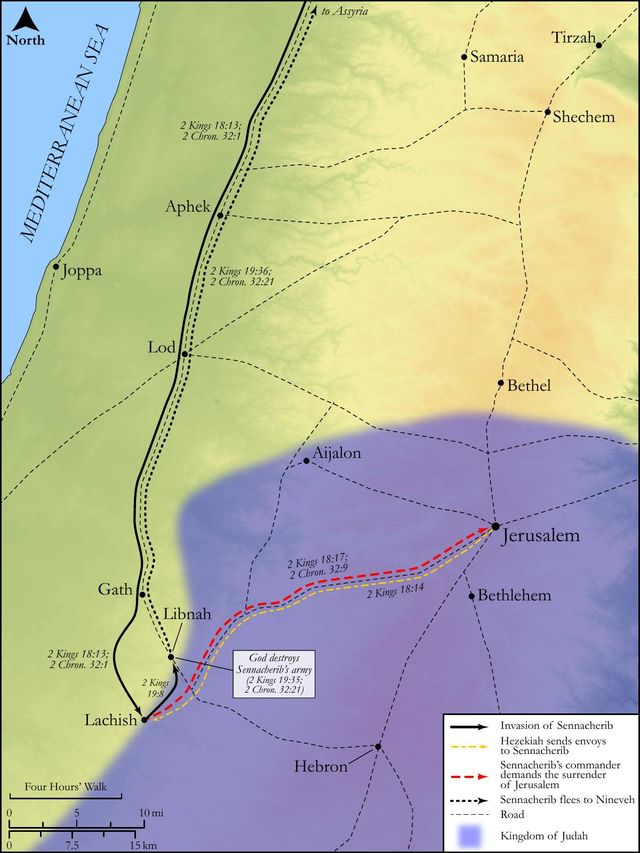
This powerful declaration appears early in the account of King Hezekiah's reign, immediately following a concise summary of his initial righteous actions. 2 Kings 18:3-4 details his immediate and drastic religious reforms, including the removal of high places, the breaking of sacred pillars, the cutting down of Asherah poles, and even the destruction of Nehushtan, the bronze serpent that had become an object of worship. Verse 5 functions as the theological bedrock and justification for these bold, counter-cultural actions, asserting that they stemmed directly from Hezekiah's profound and active trust in the LORD. It sets the spiritual tone for the remainder of his narrative, particularly the dramatic account of the Assyrian invasion and God's miraculous deliverance in 2 Kings 19, where Hezekiah's trust is put to its ultimate test and proven true.
Historical & Cultural Context
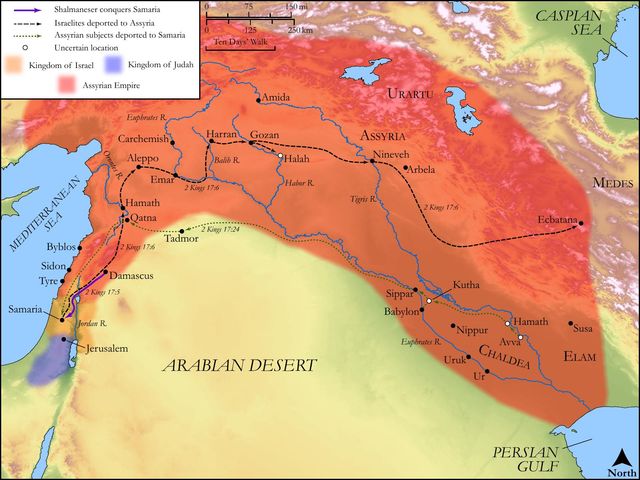
Hezekiah ascended the throne of Judah at a precarious moment in Israelite history, succeeding his father, King Ahaz, who was notoriously wicked and led Judah into deep syncretism and idolatry, even sacrificing his own son in the fire (2 Kings 16:3). The nation was also under immense geopolitical pressure from the burgeoning Neo-Assyrian Empire, which had already conquered the Northern Kingdom of Israel and exiled its people (2 Kings 17:6). In this environment of pervasive religious apostasy and overwhelming external threat, Hezekiah's radical reforms and his unwavering trust in Yahweh represented a profound and courageous counter-cultural stance. His decision to destroy long-standing cultic sites and even a revered artifact like Nehushtan (which dated back to Moses' time, as recorded in Numbers 21:9) demonstrates a commitment to monotheistic purity that defied popular practice, political expediency, and the prevailing religious landscape.
Key Themes
ShowHideHezekiah's reign, encapsulated by this singular verse, highlights several crucial themes that resonate throughout biblical theology. Foremost is the theme of Unwavering Trust in God, which is presented as the singular defining characteristic that sets Hezekiah apart. Unlike many kings who sought alliances with foreign powers or relied on military might, Hezekiah consistently placed his faith in the LORD, even when facing the overwhelming might of the Assyrian Empire, as vividly portrayed in his desperate yet faithful prayer in 2 Kings 19:15-19. This trust leads directly to the theme of Exceptional Righteousness and Obedience, as his faith is not passive but active, compelling him to undertake sweeping religious reforms that cleansed the land of idolatry and restored proper worship. The verse also underscores the Source of True Strength and Deliverance, demonstrating that genuine security and success for God's people come not from human wisdom, political maneuvering, or military power, but from a steadfast reliance on the covenant-keeping God, a truth echoed throughout the prophetic books, such as Isaiah 30:15.
Exposition and Analysis
ShowHideKey Word Analysis
ShowHideThis primitive root signifies a deep, confident reliance, a leaning upon, or a feeling of security in someone or something. It implies more than mere intellectual assent; it denotes an active, volitional dependence and a sure hope. In the context of 2 Kings 18:5, Hezekiah's bâṭach was not a passive hope but an active, demonstrated trust that informed his bold decisions to defy Assyria and to purify Judah's worship, even when such actions seemed politically and religiously perilous. It speaks to a profound inner conviction that Yahweh alone was his refuge and strength.
This is the Jewish national name of God, referring to "the self-Existent or Eternal One." It is the covenant name of God, emphasizing His unchanging, faithful, and sovereign character. Hezekiah's trust was not in a generic deity or a foreign god, but specifically in Yahweh, the God who had revealed Himself to Israel, made covenants with them, and demonstrated His power and faithfulness throughout their history. This specific object of his trust is crucial to understanding the depth and theological significance of his faith.
Verse Breakdown
ShowHide"He trusted in the LORD God of Israel;"
This opening clause establishes the core characteristic and defining virtue of Hezekiah's reign: his profound and active faith in Yahweh, the covenant God of Israel. This trust is presented as the primary motivation and guiding principle for all his subsequent actions, setting him apart from the idolatrous practices of his predecessors and contemporaries. It highlights a personal, volitional reliance on God's character and promises.
"so that after him was none like him among all the kings of Judah,"
This part of the superlative commendation asserts Hezekiah's unique standing among all the kings who would succeed him on the throne of Judah. It highlights that no future monarch would attain the same level of consistent and profound trust in the LORD, indicating a sustained and unparalleled devotion that would not be replicated by his successors.
"nor [any] that were before him."
This final clause extends the superlative judgment to encompass all the kings who reigned before Hezekiah. Together with the preceding clause, it unequivocally declares Hezekiah's trust in the LORD to be unparalleled in the entire history of the Judahite monarchy, marking him as singularly devoted in this specific aspect of his faith, surpassing even highly regarded kings like David or Solomon in this particular quality of trust.
Literary Devices
ShowHideThe language of 2 Kings 18:5 employs several potent literary devices to convey its profound message. The most prominent is Superlative Commendation, using the emphatic phrase "none like him among all the kings of Judah, nor any that were before him." This is a form of Hyperbole, not intended to suggest absolute moral perfection in every aspect of Hezekiah's life, but rather to emphasize the extraordinary and unparalleled nature of his trust in Yahweh. It functions as a powerful theological statement, setting Hezekiah's reign apart as a model of unwavering faithfulness. There is also an implicit Contrast drawn between Hezekiah and the many unfaithful kings who preceded and followed him, particularly his wicked father Ahaz, whose apostasy is starkly highlighted in earlier chapters. The verse serves as a Theological Thesis Statement for Hezekiah's entire narrative, framing his subsequent actions, particularly his sweeping religious reforms and his courageous defiance of the Assyrian superpower, as direct outgrowths of this foundational and exceptional trust.
Theological and Thematic Connections
ShowHideHezekiah's unparalleled trust in the LORD God of Israel, as highlighted in 2 Kings 18:5, resonates deeply with the broader biblical theology of faith as the foundational principle for a right relationship with God. His example demonstrates that genuine trust is not merely intellectual assent but an active, courageous reliance on God's character and promises, even in the face of overwhelming human odds. This profound reliance on Yahweh led to tangible acts of obedience, such as the purification of worship and the destruction of idolatry, and ultimately resulted in divine deliverance from the Assyrian threat. The verse underscores God's valuing of such wholehearted devotion, showing that faithfulness is not only rewarded but also sets a standard for future generations. It reminds us that true strength and security are found not in human alliances, military might, or material possessions, but in a steadfast, covenantal relationship with the sovereign God who is worthy of all trust.
Reflection and Application
ShowHideHezekiah's exemplary trust in 2 Kings 18:5 offers a compelling and challenging model for believers in every generation. In a world that constantly encourages self-reliance, worldly strategies, and immediate gratification, Hezekiah's story calls us back to the primacy of absolute dependence on God. His trust was not passive; it propelled him to courageous and often unpopular actions, such as dismantling deeply entrenched idolatrous practices and defying a global superpower. For us, this translates into actively choosing to lean on God's wisdom and strength in our daily decisions, rather than our own understanding, the prevailing cultural currents, or the advice of those who do not honor God. It challenges us to pursue spiritual purity in our own lives, identifying and removing "high places" of sin, idolatry, or misplaced allegiances, and to stand firm in our convictions even when it means going against the tide or facing significant opposition. Ultimately, Hezekiah's commendation reminds us that God honors and empowers those who place their complete confidence in Him, demonstrating that a life lived in radical trust is the most effective, spiritually fruitful, and ultimately secure path.
Questions for Reflection
ShowHideFAQ
ShowHideWas Hezekiah truly perfect, given the "none like him" statement?
ShowHideThe phrase "none like him" in 2 Kings 18:5 is a superlative commendation that highlights Hezekiah's unparalleled trust in the LORD, specifically in the context of his radical religious reforms and his unwavering reliance on God during the Assyrian crisis. It does not imply absolute moral perfection or sinlessness in every aspect of his life. The Bible itself records instances where Hezekiah fell short, such as his prideful display of his treasures to the Babylonian envoys in 2 Kings 20:12-19, an act that drew divine rebuke and prophecy of future judgment. Similarly, while King David was described as "a man after God's own heart" (1 Samuel 13:14), he committed serious sins. The "none like him" statements in Scripture often refer to a specific, outstanding quality or a particular period of exemplary faithfulness, rather than an overall perfect character. For Hezekiah, this unique quality was his consistent and profound trust in Yahweh, distinguishing him from the general pattern of idolatry and wavering faith among Judah's kings.
Christ-Centered Fulfillment
ShowHideWhile Hezekiah stands out as an exemplary king in his trust and devotion, his reign ultimately points to the perfect King, Jesus Christ. Hezekiah's unparalleled trust in the LORD, which led to the cleansing of the temple and the land from idolatry, foreshadows Christ's ultimate work of spiritual purification and the establishment of a new covenant. Jesus is the one in whom perfect trust was placed by the Father, and who Himself perfectly trusted the Father in all things, even to the point of obedient death on the cross (Philippians 2:8). Hezekiah's reliance on God for miraculous deliverance from the overwhelming Assyrian Empire prefigures Christ's decisive victory over sin, death, and the powers of darkness, securing eternal salvation and true freedom for His people (Colossians 2:15). Furthermore, Hezekiah's unique commendation as "none like him" finds its ultimate and absolute fulfillment in Jesus, who is truly unique and without peer—the "author and perfecter of our faith" (Hebrews 12:2), the one in whom all the promises of God find their "Yes" and "Amen" (2 Corinthians 1:20). Through Christ, believers are empowered to live lives of genuine trust in God, participating in the new covenant that Hezekiah's reforms only dimly anticipated, and becoming part of a kingdom that will never be destroyed (Daniel 2:44).