


2 Kings 18:4
Bible text: King James Version (1769 Blayney text) · Public domain
Bible text: King James Version with Strong's numbers · Public domain
Bible text: Berean Standard Bible · Public domain
Bible text: American Standard Version (1901) · Public domain
Bible text: World English Bible, Messianic edition · Public domain
Bible text: Geneva Bible (1599) · Public domain
Bible text: Young's Literal Translation · Public domain
- הוּאhu'heH1931Pro-3msPronoun Personal 3rd Singular Masculine
- הֵסִירhe·Sirhe removedH5493V-Hiphil-Perf-3msVerb Hiphil Perfect 3rd Singular Masculine
- אֶת'et<obj.>H853DirObjMParticle Object Indicator
- הַבָּמוֹתha·ba·Motthe high placesH1116Art ¦ N-fpNoun Plural Feminine Absoluteהַtheבָּמוֹתhigh places
- וְשִׁבַּרve·shi·Barand he brokeH7665Conj-w ¦ V-Piel-ConsecPerf-3msVerb Piel Consecutive Perfect 3rd Singular Masculineוְandשִׁבַּרhe broke
- אֶת'et<obj.>H853DirObjMParticle Object Indicator
- הַמַּצֵּבֹתha·ma·tze·Votthe sacred pillarsH4676Art ¦ N-fpNoun Plural Feminine Absoluteהַtheמַּצֵּבֹתsacred pillars
- וְכָרַתve·kha·Ratand he cut downH3772Conj-w ¦ V-Qal-ConsecPerf-3msVerb Qal Consecutive Perfect 3rd Singular Masculineוְandכָרַתhe cut down
- אֶת'et<obj.>H853DirObjMParticle Object Indicator
- הָאֲשֵׁרָהha·'a·she·Rahthe Asherah poleH842Art ¦ N-fsNoun Title Singular Feminine AbsoluteהָtheאֲשֵׁרָהAsherah pole
- וְכִתַּתve·khi·Tatand he crushed to piecesH3807Conj-w ¦ V-Piel-ConsecPerf-3msVerb Piel Consecutive Perfect 3rd Singular Masculineוְandכִתַּתhe crushed to pieces
- נְחַשׁne·Chash[the] snake ofH5175N-mscNoun Singular Masculine Construct
- הַנְּחֹשֶׁתha·ne·Cho·shet<the> bronzeH5178Art ¦ N-fsNoun Singular Feminine Absoluteהַ<the>נְּחֹשֶׁתbronze
- אֲשֶׁר'a·SherwhichH834RelParticle Relative
- עָשָׂה'a·Sahhe had madeH6213V-Qal-Perf-3msVerb Qal Perfect 3rd Singular Masculine
- מֹשֶׁהmo·ShehMosesH4872N-proper-mNoun Proper Masculine
- כִּיkiforH3588PrtParticle Conditional
- עַד'aduntilH5704PrepPreposition
- הַיָּמִיםhai·ya·Mimthe daysH3117Art ¦ N-mpNoun Plural Masculine Absoluteהַtheיָּמִיםdays
- הָהֵמָּהha·He·mah<the> thoseH1992Art ¦ Pro-3mpPronoun Personal 3rd Plural Masculineהָ<the>הֵמָּהthose
- הָיוּha·Yuthey wereH1961V-Qal-Perf-3cpVerb Qal Perfect 3rd Plural common gender
- בְנֵיve·nei[the] people ofH1121N-mpcNoun Plural Masculine Construct
- יִשְׂרָאֵלYis·ra·'ElIsraelH3478N-properNoun Proper Location
- מְקַטְּרִיםme·ka·te·Rimmaking smokeH6999V-Piel-Prtcpl-mpVerb Piel Participle Plural Masculine Absolute
- לוֹloto itPrep-l ¦ 3msSuffix Personal 3rd Singular Masculineלtoוֹit
- וַיִּקְרָאvai·yik·ra'and someone had calledH7121Conj-w ¦ V-Qal-ConsecImperf-3msVerb Qal Consecutive Imperfect 3rd Singular Masculineוַandיִּקְרָאsomeone had called
- לוֹlo<to> itPrep-l ¦ 3msSuffix Personal 3rd Singular Masculineל<to>וֹit
- נְחֻשְׁתָּןne·chush·TanNehushtanH5180N-properNoun Proper Title
English is a literal word-by-word gloss of the Hebrew, not the KJV's wording. Why?
This is the original text the KJV's translators worked from — each Hebrew word with its own literal English meaning in this verse, prepared by scholars at Tyndale House, Cambridge. The KJV translates whole sentences, not word by word, so its wording differs: one Hebrew word can become several English words, and the KJV may choose “the LORD” where the gloss reads “Yahweh”. Both are faithful — they answer different questions. For the KJV's own rendering, switch to the KJV text.
Details
See on the biblical-era maps
Study this verse
Public-domain commentary
Matthew Henry
From his Commentary on the Whole Bible. Henry comments on passages, not single verses — this entry covers 2 Kings 18:1–8. His three-level outline is real structure in the source text, so it is rendered as structure.
We have here a general account of the reign of Hezekiah. It appears, by comparing his age with his father's, that he was born when his father was about eleven or twelve years old, divine Providence so ordering that he might be of full age, and fit for business, when the measure of his father's iniquity should be full. Here is,
I.His great piety, which was the more wonderful because his father was very wicked and vile, one of the worst of the kings, yet he was one of the best, which may intimate to us that what good there is in any is not of nature, but of grace, free grace, sovereign grace, which, contrary to nature, grafts into the good olive that which was wild by nature (Rom 11:24), and also that grace gets over the greatest difficulties and disadvantages: Ahaz, it is likely, gave his son a bad education as well as a bad example; Urijah his priest perhaps had the tuition of him; his attendants and companions, we may suppose, were such as were addicted to idolatry; and yet Hezekiah became eminently good. When God's grace will work what can hinder it?
1.He was a genuine son of David, who had a great many degenerate ones (Kg2 18:3): He did that which was right, according to all that David his father did, with whom the covenant was made, and therefore he was entitled to the benefit of it. We have read of some of them who did that which was right, but not like David, Kg2 14:3. They did not love God's ordinances, nor cleave to them, as he did; but Hezekiah was a second David, had such a love for God's word, and God's house, as he had. Let us not be frightened with an apprehension of the continual decay of virtue, as if, when times and men are bad, they must needs, of course, grow worse and worse; that does not follow, for, after many bad kings, God raised up one that was like David himself.
2.He was a zealous reformer of his kingdom, and as we find (Ch2 29:3) he began betimes to be so, fell to work as soon as ever he came to the crown, and lost no time. He found his kingdom very corrupt, the people in all things too superstitious. They had always been so, but in the last reign worse than ever. By the influence of his wicked father, a deluge of idolatry had overspread the land; his spirit was stirred against this idolatry, we may suppose (as Paul's at Athens), while his father lived, and therefore, as soon as ever he had power in his hands, he set himself to abolish it (Kg2 18:4), though, considering how the people were wedded to it, he might think it could not be done without opposition.
(1.)The images and the groves were downright idolatrous and of heathenish original. These he broke and destroyed. Though his own father had set them up, and shown an affection for them, yet he would not protect them. We must never dishonour God in honour to our earthly parents.
(2.)The high places, though they had sometimes been used by the prophets upon special occasions and had been hitherto connived at by the good kings, were nevertheless an affront to the temple and a breach of the law which required them to worship there only, and, being from under the inspection of the priests, gave opportunity for the introducing of idolatrous usages. Hezekiah therefore, who made God's word his rule, not the example of his predecessors, removed them, made a law for the removal of them, the demolishing of the chapels, tabernacles, and altars there erected, and the suppressing of the use of them, which law was put in execution with vigour; and, it is probable, the terrible judgments which the kingdom of Israel was now under for their idolatry made Hezekiah the more zealous and the people the more willing to comply with him. It is well when our neighbours' harms are our warnings.
(3.)The brazen serpent was originally of divine institution, and yet, because it had been abused to idolatry, he broke it to pieces. The children of Israel had brought that with them to Canaan; where they set it up we are not told, but, it seems, it had been carefully preserved, as a memorial of God's goodness to their fathers in the wilderness and a traditional evidence of the truth of that story, Num 21:9, for the encouragement of the sick to apply to God for a cure and of penitent sinners to apply to him for mercy. But in process of time, when they began to worship the creature more than the Creator, those that would not worship images borrowed from the heathen, as some of their neighbours did, were drawn in by the tempter to burn incense to the brazen serpent, because that was made by order from God himself and had been an instrument of good to them. But Hezekiah, in his pious zeal for God's honour, not only forbade the people to worship it, but, that it might never be so abused any more, he showed the people that it was Nehushtan, nothing else but a piece of brass, and that therefore it was an idle wicked thing to burn incense to it; he then broke it to pieces, that is, as bishop Patrick expounds it, ground it to powder, which he scattered in the air, that no fragment of it might remain. If any think that the just honour of the brazen serpent was hereby diminished they will find it abundantly made up again, Joh 3:14, where our Saviour makes it a type of himself. Good things, when idolized, are better parted with than kept.
3.Herein he was a nonesuch, Kg2 18:5. None of all the kings of Judah were like him, either before or after him. Two things he was eminent for in his reformation: - (1.) Courage and confidence in God. In abolishing idolatry, there was danger of disobliging his subjects, and provoking them to rebel; but he trusted in the Lord God of Israel to bear him out in what he did and save him from harm. A firm belief of God's all-sufficiency to protect and reward us will conduce much to make us sincere, bold, and vigorous, in the way of our duty, like Hezekiah. When he came to the crown he found his kingdom compassed with enemies, but he did not seek for succour to foreign aids, as his father did, but trusted in the God of Israel to be the keeper of Israel. (2.) Constancy and perseverance in his duty. For this there was none like him, that he clave to the Lord with a fixed resolution and never departed from following him, Kg2 18:6. Some of his predecessors that began well fell off: but he, like Caleb, followed the Lord fully. He not only abolished all idolatrous usages, but kept God's commandments, and in every thing made conscience of his duty.
II.His great prosperity, Kg2 18:7, Kg2 18:8.
He was with God, and then God was with him, and, having the special presence of God with him, he prospered whithersoever he went, had wonderful success in all his enterprises, in his wars, his buildings, and especially his reformation, for that good work was carried on with less difficulty than he could have expected. Those that do God's work with an eye to his glory, and with confidence in his strength, may expect to prosper in it. Great is the truth and will prevail. Finding himself successful,
1.He threw off the yoke of the king of Assyria, which his father had basely submitted to. This is called rebelling against him, because so the king of Assyria called it; but it was really an asserting of the just rights of his crown, which it was not in the power of Ahaz to alienate. If it was imprudent to make this bold struggle so soon, yet I see not that it was, as some think, unjust; when he had thrown out the idolatry of the nations he might well throw off the yoke of their oppression. The surest way to liberty is to serve God.
2.He made a vigorous attack upon the Philistines, and smote them even unto Gaza, both the country villages and the fortified town, the tower of the watchmen and the fenced cities, reducing those places which they had made themselves masters of in his father's time, Ch2 28:18. When he had purged out the corruptions his father had brought in he might expect to recover the possessions his father had lost. Of his victories over the Philistines Isaiah prophesied, Isa 14:28, etc.
Historical interpretation
Fourteen Centuries of Reception
4 surviving comments on this verse. Each one is dated, so this reads as a timeline rather than a list.
Select a marker to jump to its quote. Markers stagger vertically where authors wrote within a few decades of each other.
Then there were the miracles ... of the deadly bites of serpents, inflicted as just punishment for sin, and healed when a brazen serpent was raised on a wooden pole in sight of all, so that not only did relief come to an afflicted people but also the destruction of death by death was symbolized by this image of the crucifixion. This serpent was preserved intact in memory of the miracle but afterwards was worshiped as an idol by the unfaithful people until King Hezekiah, religiously using his power in the service of God, destroyed it and thus gained great renown for his piety.
But because he goes on to add "of this man's seed God, according to his promise, has raised up to Israel a Savior, Jesus," he indicates that that testimony must have a deeper meaning in the Lord Jesus, who truly does all the will of God the Father, rather than in the great King David, who, even though according to the previous discussion his sins had been remitted and not imputed and also because of the holy penitence mentioned, could not unjustly be said to have been found according to the heart of God. Yet, how did he do all the will of God? Even if he was exceptionally praised when Scripture relates his times and his deeds, he is marked because he did not destroy the high places where the people of God used to sacrifice contrary to the command of God, who had ordered that sacrifices be offered to him only in the tabernacle of the testament, although in these same high places sacrifice is offered to the same God. The king Hezekiah, himself sprung from the seed of David, afterwards destroyed these places, accompanied by the testimony of his great praise.
A sovereign serves God one way as man, another way as king; he serves him as man by living according to faith, he serves him as king by exerting the necessary strength to sanction laws that command goodness and prohibit its opposite. It was thus that Hezekiah served him by destroying the groves and temples of idols and the high places that had been set up contrary to the commandments of God.
And he called its name Nohestan: That is, their brass; or a little brass. So he called it in contempt, because they had made an idol of it.
Continue studying 2 Kings 18:4 across the web’s major study libraries — every link below opens this exact verse, chapter, or book on the destination site.
Read & Compare
 BibleGatewayThis verse in more than 200 translations and 70 languages.
 Bible.comThe YouVersion reader — hundreds of translations, reading plans, and highlights.
 ESV.orgCrossway's official English Standard Version reader.
 NET BibleThe NET translation with 60,000+ translators' notes on every rendering decision.
 STEP BibleTyndale House's free study tool — original text, vocabulary, and scholarly resources.
 BibliaLogos Bible Software's free web reader.
 USCCBThe New American Bible (Revised Edition) with the U.S. bishops' study notes.
Commentaries
 BibleHub CommentariesDozens of classic commentaries on this verse, gathered on one page.
 StudyLightMore than 100 commentary sets — the largest collection on the web.
 BibleRefPlain-English commentary on what this verse means, verse by verse.
 Enduring WordDavid Guzik's free commentary on this chapter, widely used by Bible teachers.
 Bible Study ToolsVerse commentary alongside Greek and Hebrew study aids.
Original Language & Research
- BibleHub InterlinearThe verse word by word — original language, transliteration, and English.
- BibleHub LexiconEvery word's original-language definition and Strong's entry.
 Blue Letter BibleDeep-study tools — Strong's numbers, concordance, and word studies.
 SefariaThe Hebrew text with Rashi and centuries of Jewish commentary.
Sermons, Hymns & Audio


TrulyRandomVerse is not affiliated with these sites and doesn’t control their content. They’re linked because they’re genuinely useful.
Summary
King Hezekiah's radical religious reforms are powerfully encapsulated, detailing his zealous dismantling of idolatrous practices throughout Judah. This pivotal verse highlights his removal of illicit "high places," the destruction of pagan "images" and "groves," and most strikingly, the shattering of the bronze serpent, "Nehushtan," an object originally made by Moses but which had tragically devolved into an idol. Hezekiah's actions underscore his unwavering commitment to restore exclusive worship of Yahweh, setting an unprecedented standard for spiritual purity and obedience to the Mosaic covenant.
Context
ShowHideLiterary Context
This verse immediately follows a brief but crucial introduction to King Hezekiah's reign, which is presented in stark contrast to his wicked father, Ahaz, who had actively promoted idolatry and even child sacrifice, as detailed in 2 Kings 16. 2 Kings 18:3 explicitly states that Hezekiah "did that which was right in the sight of the LORD, according to all that David his father did," immediately setting the stage for the radical and comprehensive reforms described in verse 4. Unlike many previous "good" kings of Judah who failed to completely remove the "high places" (e.g., Asa in 1 Kings 15:14 and Joash in 2 Kings 12:3), Hezekiah's actions here mark a decisive and unprecedented break from syncretistic worship, positioning him as one of Judah's most righteous monarchs and a key figure in the Deuteronomistic history's narrative of covenant fidelity.
Historical & Cultural Context
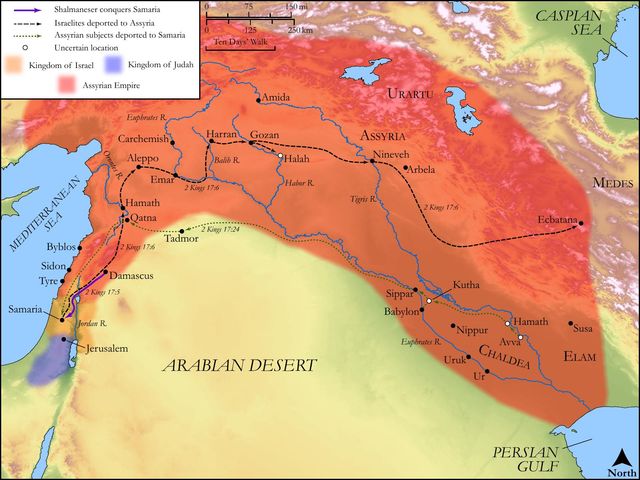
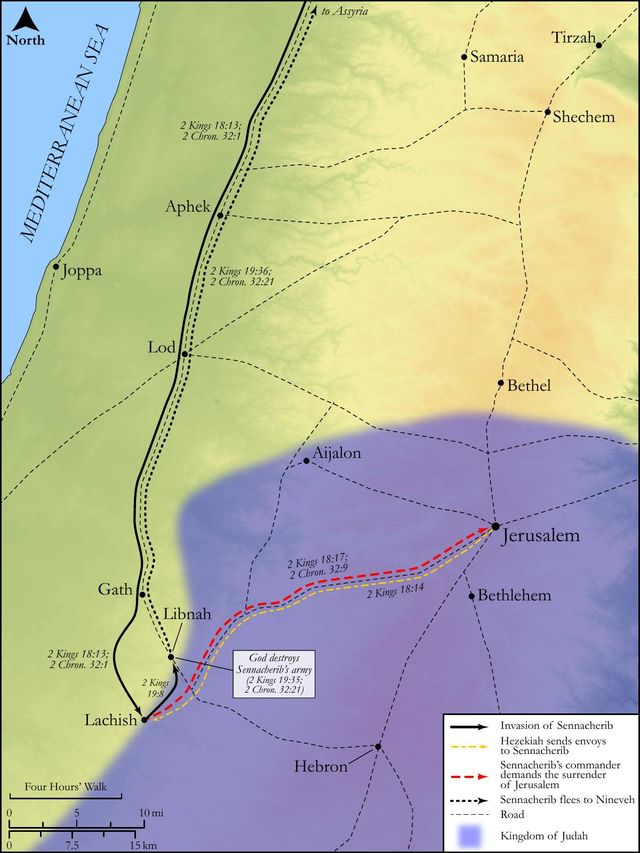
Hezekiah reigned during a tumultuous period in the late 8th century BCE (c. 715-686 BCE), with the mighty Assyrian Empire dominating the nations round about and posing an existential threat to Judah. The northern kingdom of Israel had recently fallen to Assyria in 722 BCE (2 Kings 17), serving as a stark warning to Judah regarding the consequences of covenant disloyalty. Idolatry and syncretism were deeply entrenched in Judah, influenced by pervasive Canaanite fertility cults and the religious practices of neighboring nations, often adopted for political alliances or perceived prosperity. "High places" (Hebrew: bamot) were local altars, often on elevated ground, used for worship that blended Yahwism with pagan rituals. "Images" (Hebrew: matstsebot) were sacred pillars, and "groves" (Hebrew: asherim) were cultic poles associated with the Canaanite goddess Asherah. The worship of these deities often involved sexual rites and even child sacrifice, directly violating the Mosaic Law's prohibitions against idolatry (Deuteronomy 12:2-4). Hezekiah's reforms were thus not merely religious but also a profound act of national identity and political defiance against the prevailing cultural currents and the spiritual compromises of his predecessors.
Key Themes
ShowHideThis verse powerfully illustrates several key themes within the books of Kings and the broader Old Testament narrative. Firstly, it highlights the theme of Radical Reform and Zeal for God, demonstrating Hezekiah's uncompromising commitment to Yahweh alone, mirroring the call for exclusive worship found in the Ten Commandments (Exodus 20:3-5). Hezekiah's actions represent a decisive turning point, reversing generations of spiritual decline. Secondly, it emphasizes the Eradication of Idolatry, a recurring command throughout the Pentateuch (Deuteronomy 7:5). Hezekiah's comprehensive assault on pagan worship was a direct response to the spiritual apostasy that had plagued Judah for generations, often leading to divine judgment. Finally, the destruction of the bronze serpent introduces the profound theme of the Danger of Veneration Turning to Idolatry. An object originally divinely ordained for healing (Numbers 21:8-9) had become a snare, illustrating how even sacred objects or traditions can be corrupted when they become the focus of worship instead of the God who commanded their creation. This serves as a timeless warning against misplaced devotion and the human propensity to worship the created rather than the Creator.
Exposition and Analysis
ShowHideKey Word Analysis
ShowHideFrom an unused root meaning "to be high," this term refers to an elevation or height, specifically an elevated site used for religious worship. While some bamot might have been legitimate altars in earlier periods, by the time of the monarchy, they had largely become centers for syncretistic worship, blending Yahwism with pagan Canaanite practices, or purely idolatrous rites. Their removal was a consistent sign of true devotion to Yahweh, yet many "good" kings failed to fully eradicate them, making Hezekiah's comprehensive action particularly noteworthy.
Derived from a root meaning "happy," this term refers to Asherah (or Astarte), a Phoenician goddess, and by extension, an image or cultic pole dedicated to her. Asherah worship was a pervasive and corrupting influence in Israel and Judah, often associated with fertility rites and cultic prostitution. Cutting down the ʾasherim was a direct assault on a deeply entrenched pagan cult that directly violated the covenant with Yahweh.
This unique name, given by Hezekiah to the shattered bronze serpent, is derived from the Hebrew word for "bronze" or "copper" (nᵉchôsheth). It literally means "a piece of bronze" or "bronze thing." By renaming it, Hezekiah deliberately stripped the object of any perceived sacredness or power, reducing it to its mere material composition. This act was a powerful theological statement, discrediting its idolatrous veneration and emphasizing that it was nothing more than an inanimate object, utterly unworthy of worship.
Verse Breakdown
ShowHide"He removed the high places,"
This opening clause immediately establishes Hezekiah's primary objective: the systematic dismantling of illicit worship sites. The "high places" represented a persistent spiritual compromise in Judah, where people worshipped Yahweh alongside other deities, or even worshipped other deities exclusively. Hezekiah's action here signifies a radical break from generations of syncretism and a return to the purity of Yahwistic worship.
"and brake the images,"
Following the removal of the sites, Hezekiah also destroyed the specific cultic objects found there. "Images" (מַצֵּבָה, matstsebah, often translated as "pillars" or "standing stones") were typically pagan stelae or altars, often phallic in nature, dedicated to foreign gods. Their destruction was a direct assault on the physical manifestations of idolatry, ensuring that the visual and tangible symbols of false worship were eradicated.
"and cut down the groves,"
This refers to the destruction of the asherim (Asherah poles), which were central to Canaanite fertility cults. These wooden cult objects were often carved or decorated and represented the goddess Asherah. Their removal was a further purification, targeting another deeply embedded and morally corrupting form of pagan worship that had ensnared the people of Judah.
"and brake in pieces the brasen serpent that Moses had made:"
This is the most shocking and significant act of reform described in the verse. The bronze serpent, initially created by divine command during the wilderness wanderings (Numbers 21:8-9), was a symbol of God's healing and deliverance. Its destruction demonstrates Hezekiah's radical commitment to purity, willing to destroy even an object with a sacred past when it had become an object of idolatry, highlighting that no object, however historically significant, should rival God.
"for unto those days the children of Israel did burn incense to it:"
This explanatory clause justifies the destruction of the bronze serpent. It reveals that an object originally intended as a means to look to God for healing had become an end in itself, a recipient of worship. The act of burning incense, reserved for Yahweh alone, signifies its transformation into an idol, demonstrating the severe spiritual corruption that had taken place over centuries.
"and he called it Nehushtan."
This final, declarative statement underscores Hezekiah's profound theological insight and unwavering determination. By renaming the serpent "Nehushtan" ("a mere piece of bronze"), he publicly stripped it of any lingering aura of sacredness or power, reducing it to its mundane material composition and publicly declaring its utter worthlessness as an object of worship. This act served as a powerful lesson against superstition and misplaced veneration.
Literary Devices
ShowHideThe passage in 2 Kings 18:4 employs several powerful literary devices to convey its profound theological message. Contrast is immediately evident in the literary context, setting Hezekiah's righteous and uncompromising actions in stark opposition to the pervasive wickedness of his father, Ahaz, and indeed, many other kings of Judah who failed to fully eradicate idolatry. This highlights Hezekiah's unique zeal and obedience. Symbolism is pervasive, with the "high places," "images," and "groves" serving as potent symbols of spiritual apostasy, syncretism, and covenant infidelity, while their systematic destruction symbolizes a decisive return to covenant fidelity and exclusive worship of Yahweh. The bronze serpent, in particular, carries layered symbolism: initially a symbol of divine healing and salvation, it tragically transforms into a symbol of corrupted worship and idolatry, illustrating the insidious dangers of misplaced veneration. There is also a strong element of Irony in the destruction of the bronze serpent; an object divinely commissioned to save lives in the wilderness had, through human sin, become a source of spiritual death, requiring its destruction by a righteous king. Hezekiah's act of renaming it "Nehushtan" is a powerful form of Discrediting or Demystification, stripping the object of its false sacredness and reducing it to its mundane reality, thereby reasserting the sole sovereignty of Yahweh.
Theological and Thematic Connections
ShowHide2 Kings 18:4 serves as a powerful theological statement about the nature of true worship and the insidious dangers of idolatry. Hezekiah's actions embody the Deuteronomic call for exclusive devotion to Yahweh, emphasizing that God tolerates no rivals and demands complete allegiance. The destruction of the bronze serpent, an object with a divinely ordained past, is particularly significant, illustrating that even things initially good or sacred can become idols if they divert worship from the Creator to the created. This passage underscores the constant human propensity toward idolatry, whether through overt paganism or the subtle veneration of spiritual objects, traditions, or even personal achievements. Hezekiah's zeal reminds believers that genuine faith requires radical purification and an uncompromising commitment to God's commandments, even when it means confronting deeply entrenched practices or cherished symbols that have become corrupted. It is a timeless call to ensure that our worship remains pure, directed solely to the one true God.
Reflection and Application
ShowHideKing Hezekiah's radical reforms in 2 Kings 18:4 offer profound and enduring lessons for believers today. His uncompromising zeal for the purity of worship challenges us to critically examine our own lives and communities for any "high places" or "Nehushtans" that subtly or overtly compete for God's rightful place in our hearts. Idolatry is not limited to bowing before physical statues; it can manifest as anything—possessions, careers, relationships, traditions, or even spiritual practices—that becomes an ultimate concern, diverting our primary devotion from the living God. Hezekiah's courage to dismantle deeply entrenched practices, even those with historical or sentimental value (like the bronze serpent), calls us to a similar spiritual discernment and boldness. We are invited to cultivate a radical commitment to worship the Creator alone, ensuring that our faith remains centered on Him, and not on the created things or even the means by which He works. This spirit of reform requires ongoing vigilance and a willingness to purify our hearts and lives from anything that might subtly detract from true, unadulterated devotion to God. It reminds us that true spiritual health demands a constant re-evaluation of what we truly cherish and serve.
Questions for Reflection
ShowHideFAQ
ShowHideWhy was the "brazen serpent" (Nehushtan) particularly problematic, given its divine origin?
ShowHideThe brazen serpent, originally made by Moses at God's command in Numbers 21:8-9, was a divinely appointed instrument for healing for the Israelites bitten by venomous snakes. Looking at it brought physical healing, serving as a symbol of God's power to save and a test of faith. However, over centuries, the people of Israel began to venerate the object itself, burning incense to it as if it possessed inherent power or divinity. This transformed a symbol pointing to God into an idol that received worship due only to God. Hezekiah recognized that its historical significance had been corrupted by idolatrous practice, making it a stumbling block rather than a spiritual aid. His act of destroying it and renaming it "Nehushtan" ("a mere piece of bronze") was a powerful statement that no object, no matter its past, should usurp the worship due to Yahweh alone. It served as a stark lesson against the human tendency to worship the created rather than the Creator, and a reminder that even good things can become idols when our hearts are misdirected.
Christ-Centered Fulfillment
ShowHideHezekiah's zealous destruction of the bronze serpent, "Nehushtan," finds profound Christ-centered fulfillment, particularly in the New Testament's portrayal of Jesus as the ultimate deliverer and the sole object of true worship. Just as the bronze serpent was lifted up in the wilderness so that those who looked upon it might live, Jesus himself declares in John 3:14-15, "And as Moses lifted up the serpent in the wilderness, even so must the Son of Man be lifted up: that whosoever believeth in him should not perish, but have eternal life." The physical healing offered by the serpent thus serves as a powerful type, foreshadowing the spiritual and eternal life offered through faith in the crucified Christ. Moreover, Hezekiah's radical act of destroying the corrupted serpent also prefigures Christ's own uncompromising purification of worship. Just as Hezekiah cleansed the temple and land of idolatry, Jesus, too, demonstrated His divine zeal by cleansing the temple of commercialism and corruption (John 2:13-17), declaring His Father's house to be a house of prayer. Ultimately, the story of Nehushtan serves as a profound reminder that our worship must be directed solely to God through Christ, the true object of our faith, and never to any created thing, tradition, or even a past instrument of divine grace. He is the Lamb of God who takes away the sin of the world, the one to whom all true worship and glory belong, and the only one who can truly heal and save.