


1 Kings 22:43
- וַיֵּלֶךְvai·Ye·lekhand he walkedH1980Conj-w ¦ V-Qal-ConsecImperf-3msVerb Qal Consecutive Imperfect 3rd Singular Masculineוַandיֵּלֶךְhe walked
- אַךְ'akhonlyH389AdvAdverb
- בְּכָלbe·kholin allH3605Prep-b ¦ N-mscNoun Singular Masculine Constructבְּinכָלall
- הַבָּמוֹתha·ba·Motthe high placesH1116Art ¦ N-fpNoun Plural Feminine Absoluteהַtheבָּמוֹתhigh places
- דֶּרֶךְDe·rekh[the] way ofH1870N-cscNoun Singular common gender Construct
- לֹאlo'notH3808NegParticle Negative
- אָסָא'a·Sa'AsaH609N-proper-mNoun Proper Masculine
- סָרוּSa·ruthey were removedH5493V-Qal-Perf-3cpVerb Qal Perfect 3rd Plural common gender
- אָבִיו'a·Vivhis fatherH1N-msc ¦ 3msNoun Singular Masculine Constructאָבִיfatherוhis
- עוֹדodstillH5750Adj-msAdjective Numerical Singular Masculine Absolute
- לֹאlo'notH3808NegParticle Negative
- הָעָםha·'Amthe peopleH5971Art ¦ N-msNoun Singular Masculine Absoluteהָtheעָםpeople
- סָרsarhe turned asideH5493V-Qal-Perf-3msVerb Qal Perfect 3rd Singular Masculine
- מְזַבְּחִיםme·za·be·Chim[were] sacrificingH2076V-Piel-Prtcpl-mpVerb Piel Participle Plural Masculine Absolute
- מִמֶּנּוּmi·Me·nufrom itH4480Prep ¦ 3msPrepositionמִמֶּfromנּוּit
- וּמְקַטְּרִיםu·me·ka·te·Rimand making smokeH6999Conj-w ¦ V-Piel-Prtcpl-mpVerb Piel Participle Plural Masculine Absoluteוּandמְקַטְּרִיםmaking smoke
- לַעֲשׂוֹתla·'a·Sotto doH6213Prep-l ¦ V-Qal-InfVerb Qal Infinitive Constructלַtoעֲשׂוֹתdo
- בַּבָּמוֹתba·ba·Motat the high placesH1116Prep-b ¦ N-fpNoun Plural Feminine Absoluteבַּat theבָּמוֹתhigh places
- הַיָּשָׁרhai·ya·Sharthe rightH3477Art ¦ Adj-msAdjective Singular Masculine Absoluteהַtheיָּשָׁרright
- בְּעֵינֵיbe·'ei·Neiin [the] eyes ofH5869Prep-b ¦ N-fdcNoun Dual Feminine Constructבְּinעֵינֵי[the] eyes of
- יְהוָהYah·wehYahwehH3068N-properNoun Proper Title
English is a literal word-by-word gloss of the Hebrew, not the KJV's wording. Why?
This is the original text the KJV's translators worked from — each Hebrew word with its own literal English meaning in this verse, prepared by scholars at Tyndale House, Cambridge. The KJV translates whole sentences, not word by word, so its wording differs: one Hebrew word can become several English words, and the KJV may choose “the LORD” where the gloss reads “Yahweh”. Both are faithful — they answer different questions. For the KJV's own rendering, switch to the KJV text.
Details
See on the biblical-era maps

Study this verse
Public-domain commentary
Matthew Henry
From his Commentary on the Whole Bible. Henry comments on passages, not single verses — this entry covers 1 Kings 22:41–53.
Here is, I. A short account of the reign of Jehoshaphat king of Judah, of which we shall have a much fuller narrative in the book of Chronicles, and of the greatness and goodness of that prince, neither of which was lessened or sullied by any thing but his intimacy with the house of Ahab, which, upon several accounts, was a diminution to him. His confederacy with Ahab in war we have already found dangerous to him, and his confederacy with Ahaziah his son in trade sped no better. He offered to go partner with him in a fleet of merchant-ships, that should fetch gold from Ophir, as Solomon's navy did, Kg1 22:49. See Ch2 20:35, Ch2 20:36. But, while they were preparing to set sail, they were exceedingly damaged and disabled by a storm (broken at Ezion-geber), which a prophet gave Jehoshaphat to understand was a rebuke to him for his league with wicked Ahaziah (Ch2 20:37); and therefore, as we are told here (Kg1 22:49), when Ahaziah desired a second time to be a partner with him, or, if that could not be obtained, that he might but send his servants with some effects of board Jehoshaphat's ships, he refused: Jehoshaphat would not. The rod of God, expounded by the word of God, had effectually broken him off from his confederacy with that ungodly unhappy prince. Better buy wisdom dear than be without it; but experience is therefore said to be the mistress of fools because those are fools that will not learn till they are taught by experience, and particularly till they are taught the danger of associating with wicked people. Now Jehoshaphat's reign appears here to have been none of the longest, but one of the best. 1. It was none of the longest, for he reigned but twenty-five years (Kg1 22:42), but then it was in the prime of his time, between thirty-five and sixty, and these twenty-five, added to his father's happy forty-one, give us a grateful idea of the flourishing condition of the kingdom of Judah, and of religion in it, for a great while, even when things were very bad, upon all accounts, in the kingdom of Israel. If Jehoshaphat reigned not so long as his father, to balance this he had not those blemishes on the latter end of his reign that his father had (Ch2 16:9, Ch2 16:10, Ch2 16:12), and it is better for a man that has been in reputation for wisdom and honour to die in the midst of it than to outlive it. 2. Yet is was one of the best, both in respect of piety and prosperity. (1.) He did well: He did that which was right in the eyes of the Lord (Kg1 22:43), observed the commands of his God, and trod in the steps of his good father; and he persevered therein: He turned not aside from it. Yet every man's character has some but or other, so had his; the high places were not taken away, no not out of Judah and Benjamin, though those tribes lay so near Jerusalem that they might easily bring their offerings and incense to the altar there, and could not pretend, as some other of the tribes, the inconveniency of lying remote. But old corruptions are with difficulty rooted out, especially when they have formerly had the patronage of those that were good, as the high places had of Samuel, Solomon, and some others. (2.) His affairs did well. He prevented the mischiefs which had attended their wars with the kingdom of Israel, establishing a lasting peace (Kg1 22:44), which would have been a greater blessing if he had contented himself with a peace, and not carried it on to an affinity with Israel; he put a deputy, or viceroy, in Edom, so that the kingdom was tributary to him (Kg1 22:47), and therein the prophecy concerning Esau and Jacob was fulfilled, that the elder should serve the younger. And, in general, mention is made of his might and his wars, Kg1 22:45. He pleased God, and God blessed him with strength and success. His death is spoken of (Kg1 22:50), to shut up his story, yet, in the history of the kings of Israel, we find mention of him afterwards, Kg2 3:7.
II.The beginning of the story of Ahaziah the son of Ahab, Kg1 22:51-53.
His reign was very short, not two years. Some sinners God makes quick work with. It is a very bad character that is here given him. He not only kept up Jeroboam's idolatry, but the worship of Baal likewise; though he had heard of the ruin of Jeroboam's family, and had seen his own father drawn into destruction by the prophets of Baal, who had often been proved false prophets, yet he received no instruction, took no warning, but followed the example of his wicked father and the counsel of his more wicked mother Jezebel, who was still living. Miserable are the children that not only derive a stock of corruption from their parents, but are thus taught by them to trade with it; and unhappy, most unhappy parents, are those that help to damn their children's souls.
Continue studying 1 Kings 22:43 across the web’s major study libraries — every link below opens this exact verse, chapter, or book on the destination site.
Read & Compare
 BibleGatewayThis verse in more than 200 translations and 70 languages.
 Bible.comThe YouVersion reader — hundreds of translations, reading plans, and highlights.
 ESV.orgCrossway's official English Standard Version reader.
 NET BibleThe NET translation with 60,000+ translators' notes on every rendering decision.
 STEP BibleTyndale House's free study tool — original text, vocabulary, and scholarly resources.
 BibliaLogos Bible Software's free web reader.
 USCCBThe New American Bible (Revised Edition) with the U.S. bishops' study notes.
Commentaries
 BibleHub CommentariesDozens of classic commentaries on this verse, gathered on one page.
 StudyLightMore than 100 commentary sets — the largest collection on the web.
 BibleRefPlain-English commentary on what this verse means, verse by verse.
 Enduring WordDavid Guzik's free commentary on this chapter, widely used by Bible teachers.
 Bible Study ToolsVerse commentary alongside Greek and Hebrew study aids.
Original Language & Research
- BibleHub InterlinearThe verse word by word — original language, transliteration, and English.
- BibleHub LexiconEvery word's original-language definition and Strong's entry.
 Blue Letter BibleDeep-study tools — Strong's numbers, concordance, and word studies.
 SefariaThe Hebrew text with Rashi and centuries of Jewish commentary.
Sermons, Hymns & Audio


TrulyRandomVerse is not affiliated with these sites and doesn’t control their content. They’re linked because they’re genuinely useful.
Summary
1 Kings 22:43 provides a succinct yet profound assessment of King Jehoshaphat's reign in Judah, characterizing him as a monarch fundamentally committed to covenant faithfulness, diligently following the righteous example of his father, Asa. Despite this commendable devotion and his general adherence to divine standards, the verse critically highlights a persistent and significant failing: the high places, unauthorized sites of worship, remained intact, with the people continuing to offer sacrifices and burn incense there. This reveals a poignant tension between the king's sincere righteous intentions and the deeply entrenched, often compromised, religious practices of the populace, presenting a nuanced picture of a good king whose reforms were ultimately incomplete.
Context
ShowHideLiterary Context
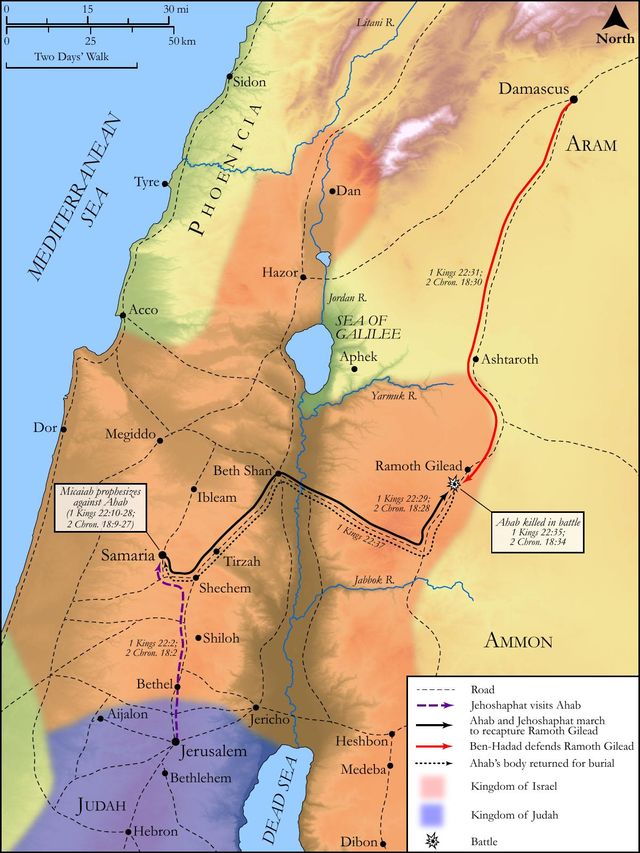
This verse functions as a pivotal summary statement for Jehoshaphat's rule within the broader narrative of 1 Kings, immediately following the dramatic account of the battle of Ramoth-gilead, where King Ahab of Israel met his demise and Jehoshaphat narrowly escaped. It offers a concise, divinely-informed theological evaluation of his reign before the biblical narrative transitions to his successor, Jehoram. While 1 Kings presents this brief, evaluative summary of Jehoshaphat's reign, the parallel account in 2 Chronicles provides a far more extensive and generally positive portrayal, detailing his significant administrative, judicial, and religious reforms, as well as his military endeavors. Notably, 2 Chronicles suggests a more thorough removal of high places than implied here, creating a textual tension that invites deeper theological reflection on the nature of biblical summaries and the scope of historical reporting. Thus, 1 Kings 22:43 serves as a crucial bridge, concluding one narrative arc while foreshadowing the ongoing spiritual challenges facing the kingdom of Judah.
Historical & Cultural Context
Jehoshaphat governed the Southern Kingdom of Judah during a tumultuous era when the Northern Kingdom of Israel was mired in profound idolatry and political instability, particularly under the notorious Omride dynasty of Ahab and Jezebel. The "high places" (Hebrew: bâmôt) were ancient cultic sites, typically located on elevated ground, which predated Israelite settlement and were originally utilized by Canaanites for pagan worship. Over time, Israelites adopted these sites, sometimes dedicating them to Yahweh, yet frequently blending genuine worship with unauthorized or syncretistic practices. Mosaic Law unequivocally commanded centralized worship at the tabernacle and, subsequently, the Temple in Jerusalem, as articulated in passages like Deuteronomy 12:5-7. The enduring presence of these high places signaled a persistent failure to fully eradicate pagan influences and a widespread resistance to the divinely ordained central worship system, reflecting a deeply ingrained popular piety that often prioritized convenience or tradition over strict adherence to God's explicit commands.
Key Themes
ShowHide1 Kings 22:43 significantly contributes to several overarching themes within the Deuteronomistic History (Joshua-Kings). Firstly, it powerfully reinforces the theme of righteous leadership by commending Jehoshaphat for "doing that which was right in the eyes of the LORD," a recurring evaluative formula employed to assess kings who largely adhered to the covenant. This commendation positions him among the more faithful kings of Judah, drawing a sharp contrast with the consistently wicked kings of Israel. Secondly, the verse highlights the pervasive theme of incomplete reform, as Jehoshaphat's failure to dismantle the high places mirrors the partial reforms undertaken by his father, King Asa, as noted in 1 Kings 15:14. This recurring motif underscores the enduring challenge of fully purifying the nation's worship from syncretistic elements. Finally, the passage vividly illustrates the inherent tension between divine standard and popular religious practice, demonstrating that even a righteous king faced formidable obstacles in enforcing God's complete will when confronted with deeply ingrained popular traditions and preferences for worship outside the divinely appointed Temple.
Exposition and Analysis
ShowHideKey Word Analysis
ShowHideThis verb, often translated as "walked," is employed metaphorically in biblical Hebrew to denote one's manner of life, conduct, or consistent adherence to a particular path. When applied to kings, "walking in the ways of" a predecessor or "walking in the ways of the LORD" signifies following a specific pattern of behavior, whether righteous or wicked. Here, it indicates Jehoshaphat's consistent lifestyle and policy of obedience, mirroring the generally positive and reforming reign of his father, Asa. The term implies a sustained commitment and direction of life.
This is a crucial theological and evaluative formula, composed of the Hebrew words yâshâr (H3477, meaning "straight, just, upright"), ʻayin (H5869, "eye"), and Yᵉhôvâh (H3068, "LORD"). Used repeatedly throughout the books of Kings and Chronicles, it assesses the spiritual and moral quality of a king's reign. Its application to Jehoshaphat signifies that his actions and policies were in alignment with God's covenant demands and ethical standards. This marks him as one of the few kings of Judah who received divine commendation, distinguishing him from many of his contemporaries, especially those in the Northern Kingdom who consistently did "evil in the eyes of the LORD."
Derived from an unused root meaning "to be high," bâmâh (H1116) refers to an elevation or height, specifically cultic sites, often on hills or artificial mounds, used for religious worship. While some bâmôt were unequivocally associated with pagan deities and idolatry (e.g., Baal or Asherah), others were used for the worship of Yahweh, but in a manner not sanctioned by the Mosaic Law, which prescribed centralized worship at the Jerusalem Temple. Their persistence represented a compromise, a deviation from pure worship, and a lingering susceptibility to syncretism, even when ostensibly used for the LORD.
Verse Breakdown
ShowHide"And he walked in all the ways of Asa his father; he turned not aside from it, doing [that which was] right in the eyes of the LORD:"
This opening clause establishes Jehoshaphat's general character and the overall positive assessment of his reign. His conduct mirrored that of his father Asa, who, despite some personal failings, was largely considered a righteous king who initiated significant reforms. The phrase "doing that which was right in the eyes of the LORD" is a strong affirmation of Jehoshaphat's commitment to covenant faithfulness and obedience to God's commands, indicating a reign marked by integrity, devotion, and a conscious effort to align with divine standards.
"nevertheless the high places were not taken away;"
This is the critical caveat, introducing a significant qualification to the otherwise glowing assessment. Despite Jehoshaphat's general righteousness and his intent to follow God's will, he failed to fully eradicate the high places. This indicates an incomplete reform, a persistent area of compromise, or a weakness in his religious policy. It suggests either an inability to enforce the full extent of Mosaic Law regarding worship centralization, or perhaps a pragmatic concession to deeply ingrained popular religious practice that he could not or would not overcome.
"[for] the people offered and burnt incense yet in the high places."
This final clause provides the reason or explanation for the persistence of the high places. It was not necessarily the king's direct endorsement of them, but rather the deep-seated religious habits and preferences of the populace. The people continued to utilize these unauthorized sites for worship, highlighting the formidable challenge of enforcing strict adherence to divine commands when confronted with popular custom and tradition. This reveals a profound tension between the ideal of centralized, pure worship and the practical reality of popular piety, which often resisted radical change.
Literary Devices
ShowHideThe verse effectively employs Juxtaposition to highlight the inherent tension in Jehoshaphat's reign: his general righteousness is immediately contrasted with a significant, persistent failure. The positive assessment ("doing that which was right in the eyes of the LORD") is set in direct opposition to the negative reality ("nevertheless the high places were not taken away"), creating a sense of qualified commendation. Furthermore, the use of Formulaic Language ("doing that which was right in the eyes of the LORD") is a recurring motif throughout the books of Kings, serving as a standardized theological judgment on the kings, lending a sense of authoritative divine assessment and continuity to the narrative. Finally, the "for" clause acts as a Parenthetical Explanation, providing the underlying reason for the king's incomplete reform, attributing the persistence of the high places primarily to the people's continued practice rather than solely to the king's will.
Theological and Thematic Connections
ShowHide1 Kings 22:43 offers a profound theological insight into the nature of obedience and the enduring challenges of spiritual reform within God's people. It demonstrates that even genuinely righteous individuals, highly commended by God for their overall conduct, can have areas of incomplete obedience or persistent compromise. Jehoshaphat's failure to remove the high places, despite his otherwise exemplary devotion, underscores the immense difficulty of uprooting deeply ingrained cultural and religious practices, even when they clearly deviate from God's explicit commands. This highlights the ongoing tension between divine standards for worship (centralized, pure, and exclusive) and the human tendency towards syncretism, convenience, or traditional forms of piety that fall short of God's ideal. The verse serves as a powerful reminder that true faithfulness demands not just general righteousness, but also diligent attention to specific commands and a courageous willingness to confront popular deviations for the sake of God's glory and the purity of His worship.
Reflection and Application
ShowHideJehoshaphat's story in 1 Kings 22:43 is a poignant and challenging reminder that even those earnestly seeking to follow God can harbor areas of compromise or incomplete obedience. While he was largely commended for "doing that which was right in the eyes of the LORD," the persistent presence of the high places reveals a significant blind spot or an area where popular custom and convenience outweighed divine command. For believers today, this serves as a powerful call to introspective examination: are there "high places" – areas of unaddressed sin, cultural compromises, or traditional practices – that, while perhaps not overtly idolatrous, subtly dilute our devotion, divert our worship, or fall short of God's perfect will? True spiritual maturity involves not just general righteousness, but a relentless pursuit of holiness that seeks to dismantle every stronghold and bring every aspect of life into full conformity with Christ's Lordship, even when it means challenging deeply ingrained habits, popular norms, or personal comfort zones. This verse compels us to ask if our obedience is merely sufficient or truly striving for complete surrender and purity in every sphere.
Questions for Reflection
ShowHideFAQ
ShowHideWhy were the high places a problem if people were worshipping the LORD there?
ShowHideWhile some high places were indeed used for the worship of Yahweh, they were problematic for several crucial reasons. Firstly, they directly violated God's explicit command for centralized worship at the Jerusalem Temple, as articulated in passages like Deuteronomy 12:5-7. This divine mandate for centralization was designed to prevent syncretism and ensure the purity and unity of Israelite worship, guarding against the adoption of pagan rituals, beliefs, or the fragmentation of their spiritual identity. Secondly, even when ostensibly dedicated to Yahweh, these sites often retained elements of Canaanite worship practices, leading to a dangerous blending of true worship with idolatrous or unauthorized rituals. This syncretism could subtly corrupt the people's understanding of God's character and His holy demands. Thirdly, the decentralized nature of high places made it exceedingly difficult for the Levitical priesthood or righteous kings to regulate worship and ensure doctrinal purity, leaving the door open for spiritual compromise, moral laxity, and the gradual erosion of covenant faithfulness.
How could Jehoshaphat be described as "doing that which was right in the eyes of the LORD" if he allowed the high places to remain?
ShowHideThe biblical assessment of kings, particularly in the books of Kings, often reflects an overall character and the general trajectory of their reign, rather than demanding a flawless record of perfection. The phrase "doing that which was right in the eyes of the LORD" indicates a prevailing commitment to covenant faithfulness and a general alignment with God's will, especially when contrasted with the widespread idolatry and wickedness of the Northern Kingdom. Jehoshaphat's reign was indeed marked by significant positive reforms, including sending officials and Levites to teach the Law throughout Judah (2 Chronicles 17:7-9) and establishing a robust judicial system (2 Chronicles 19:4-11). His failure to completely remove the high places, while a significant blemish on his record and a point of divine disapproval, may have been due to the deep-seated popular resistance mentioned in the verse, or perhaps a pragmatic compromise in a complex and challenging political and religious landscape. It highlights that even the most righteous of human leaders are imperfect and that God's grace often assesses the heart's overall direction and sincere efforts, even amidst specific shortcomings and areas of incomplete obedience.
Christ-Centered Fulfillment
ShowHideThe partial obedience of Jehoshaphat, commendable yet ultimately flawed, serves as a poignant backdrop that powerfully illuminates the perfect and complete obedience of Jesus Christ. While Jehoshaphat struggled to fully purify the worship of his people from the "high places" of compromise and syncretism, Jesus is the one who perfectly fulfilled all righteousness, never turning aside from doing "that which was right in the eyes of the LORD" (Matthew 3:15). He is the true Temple, the ultimate and singular place where God's presence dwells in its fullness and where worship in "spirit and truth" is eternally offered, rendering all other "high places" and earthly sanctuaries obsolete (John 2:19-21; John 4:23-24). Through His atoning sacrifice on the cross, Christ not only cleanses us from the defilement of sin but also empowers us by His Spirit to dismantle the "high places" within our own hearts—the idols of self, comfort, cultural conformity, or any cherished tradition that competes for our ultimate allegiance. His perfect life, sacrificial death, and victorious resurrection provide the divine means for a truly complete and uncompromised worship, inviting us to walk in His perfect ways, turning not aside, and living lives fully pleasing in the eyes of the Lord, reflecting His holiness in every sphere (Hebrews 9:14; Philippians 2:8).