


2 Kings 17:25
- וַיְהִיvay·Hiand it wasH1961Conj-w ¦ V-Qal-ConsecImperf-3msVerb Qal Consecutive Imperfect 3rd Singular Masculineוַandיְהִיit was
- בִּתְחִלַּתbit·chi·Latat [the] beginning ofH8462Prep-b ¦ N-fscNoun Singular Feminine Constructבִּatתְחִלַּת[the] beginning of
- שִׁבְתָּםshiv·Tamthey dwellingH3427V-Qal-Inf ¦ 3mpVerb Qal Infinitive Constructשִׁבְתָּdwellingםthey
- שָׁםShamthereH8033AdvAdverb
- לֹאlo'notH3808NegParticle Negative
- יָרְאוּya·re·'Uthey fearedH3372V-Qal-Perf-3cpVerb Qal Perfect 3rd Plural common gender
- אֶת'et<obj.>H853DirObjMParticle Object Indicator
- יְהוָהYah·wehYahwehH3068N-properNoun Proper Title
- וַיְשַׁלַּחvay·sha·Lachand he sentH7971Conj-w ¦ V-Piel-ConsecImperf-3msVerb Piel Consecutive Imperfect 3rd Singular Masculineוַandיְשַׁלַּחhe sent
- יְהוָהYah·wehYahwehH3068N-properNoun Proper Title
- בָּהֶםba·Hemamong themPrep-b ¦ 3mpSuffix Personal 3rd Plural Masculineבָּamongהֶםthem
- אֶת'et<obj.>H853DirObjMParticle Object Indicator
- הָאֲרָיוֹתha·'a·ra·Yot<the> lionsH738Art ¦ N-fpNoun Plural Feminine Absoluteהָ<the>אֲרָיוֹתlions
- וַיִּהְיוּvai·yih·Yuand they wereH1961Conj-w ¦ V-Qal-ConsecImperf-3mpVerb Qal Consecutive Imperfect 3rd Plural Masculineוַandיִּהְיוּthey were
- הֹרְגִיםho·re·GimkillingH2026V-Qal-Prtcpl-mpVerb Qal Participle Plural Masculine Absolute
- בָּהֶםba·Hemin themPrep-b ¦ 3mpSuffix Personal 3rd Plural Masculineבָּinהֶםthem
English is a literal word-by-word gloss of the Hebrew, not the KJV's wording. Why?
This is the original text the KJV's translators worked from — each Hebrew word with its own literal English meaning in this verse, prepared by scholars at Tyndale House, Cambridge. The KJV translates whole sentences, not word by word, so its wording differs: one Hebrew word can become several English words, and the KJV may choose “the LORD” where the gloss reads “Yahweh”. Both are faithful — they answer different questions. For the KJV's own rendering, switch to the KJV text.
Details
See on the biblical-era map
Study this verse
Public-domain commentary
Matthew Henry
From his Commentary on the Whole Bible. Henry comments on passages, not single verses — this entry covers 2 Kings 17:24–41. His two-level outline is real structure in the source text, so it is rendered as structure.
Never was land lost, we say, for want of an heir. When the children of Israel were dispossessed, and turned out of Canaan, the king of Assyria soon transplanted thither the supernumeraries of his own country, such as it could well spare, who should be servants to him and masters to the Israelites that remained; and here we have an account of these new inhabitants, whose story is related here that we may take our leave of Samaria, as also of the Israelites that were carried captive into Assyria.
I.Concerning the Assyrians that were brought into the land of Israel we are here told,
1.That they possessed Samaria and dwelt in the cities thereof, Kg2 17:24. It is common for lands to change their owners, but sad that the holy land should become a heathen land again. See what work sin makes.
2.That at their first coming God sent lions among them. They were probably insufficient to people the country, which occasioned the beasts of the field to multiply against them (Exo 23:29); yet, besides the natural cause, there was a manifest hand of God in it, who is Lord of hosts, of all the creatures, and can serve his own purposes by which he pleases, small or great, lice or lions. God ordered them this rough welcome to check their pride and insolence, and to let them know that though they had conquered Israel the God of Israel had power enough to deal with them - that he could have prevented their settling here, by ordering lions into the service of Israel, and that he permitted it, not for their righteousness, but the wickedness of his own people - and that they were now under his visitation. They had lived without God in their own land, and were not plagued with lions; but, if they do so in this land, it is at their peril.
3.That they sent a remonstrance of this grievance to the king their master, setting forth, it is likely, the loss their infant colony had sustained by the lions and the continual fear they were in of them, and stating that they looked upon it to be a judgment upon them for not worshipping the God of the land, which they could not, because they knew not how, Kg2 17:26. The God of Israel was the God of the whole world, but they ignorantly call him the God of the land, apprehending themselves therefore within his reach, and concerned to be upon good terms with him. Herein they shamed the Israelites, who were not so ready to hear the voice of God's judgments as they were, and who had not served the God of that land, though he was the God of their fathers and their great benefactor, and though they were well instructed in the manner of his worship. Assyrians begged to be taught that which Israelites hated to be taught.
4.That the king of Assyria took care to have them taught the manner of the God of the land (Kg2 17:27, Kg2 17:28), not out of any affection to that God, but to save his subjects from the lions. On this errand he sent back one of the priests whom he had carried away captive. A prophet would have done them more good, for this was but one of the priests of the calves, and therefore chose to dwell at Bethel for old acquaintance' sake, and, though he might teach them to do better than they did, he was not likely to teach them to do well, unless he had taught his own people better. However, he came and dwelt among them, to teach them how they should fear the Lord. Whether he taught them out of the book of the law, or only by word of mouth, is uncertain.
5.That, being thus taught, they made a mongrel religion of it, worshipped the God of Israel for fear and their own idols for love (Kg2 17:33): They feared the Lord, but they served their own gods. They all agreed to worship the God of the land according to the manner, to serve the Jewish festivals and rites of sacrificing, but every nation made gods of their own besides, not only for their private use in their own families, but to be put in the houses of their high places, Kg2 17:9. The idols of each country are here named, Kg2 17:30, Kg2 17:31. The learned are at a loss for the signification of several of these names, and cannot agree by what representations these gods were worshipped. If we may credit the traditions of the Jewish doctors, they tell us that Succoth-Benoth was worshipped in a hen and chickens, Nergal in a cock, Ashima in a smooth goat, Nibhaz in a dog, Tartak in an ass, Adrammelech in a peacock, Anammelech in a pheasant. Our own tell us, more probably, that Succoth-Benoth (signifying the tents of the daughters) was Venus. Nergal, being worshipped by the Cuthites, or Persians, was the fire, Adrammelech and Anammelech were only distinctions of Moloch. See how vain idolaters were in their imaginations, and wonder at their sottishness. Our very ignorance concerning these idols teaches us the accomplishment of that word which God has spoken, that these false gods should all perish (Jer 10:11); they are all buried in oblivion, while the name of the true God shall continue for ever.
6.This medley superstition is here said to continue unto this day (Kg2 17:41), till the time when this book was written and long after, above 300 years in all, till the time of Alexander the Great, when Manasse, brother to Jaddus the high priest of the Jews, having married the daughter of Sanballat, governor of the Samaritans, went over to them, got leave of Alexander to build a temple in Mount Gerizim, drew over many of the Jews to him, and prevailed with the Samaritans to cast away all their idols and to worship the God of Israel only; yet their worship was mixed with so much superstition that our Saviour told them they knew not what they worshipped, Joh 4:22.
II.Concerning the Israelites that were carried into the land of Assyria.
This historian has occasion to speak of them (Kg2 17:22), showing that their successors in the land did as they had done (after the manner of the nations whom they carried away), they worshipped both the God of Israel and those other gods; but what did the captives do in the land of their affliction? Were they reformed, and brought to repentance, by their troubles? No, they did after the former manner, Kg2 17:34. When the two tribes were afterwards carried into Babylon, they were cured by it of their idolatry, and therefore, after seventy years, they were brought back with joy; but the ten tribes were hardened in the furnace, and therefore were justly lost in it and left to perish. This obstinacy of theirs is here aggravated by the consideration,
1.Of the honour God had put upon them, as the seed of Jacob, whom he named Israel, and from him they were so named, but were a reproach to that worthy name by which they were called.
2.Of the covenant he made with them, and the charge he gave them upon that covenant, which is here very fully recited, that they should fear and serve the Lord Jehovah only, who had brought them up out of Egypt (Kg2 17:36), that, having received his statutes and ordinances in writing, they should observe to do them for evermore (Kg2 17:37), and never forget that covenant which God had made with them, the promises and conditions of that covenant, especially that great article of it which is here thrice repeated, because it had been so often inculcated and so much insisted on, that they should not fear other gods. He had told them that, if they kept close to him, he would deliver them out of the hand of all their enemies (Kg2 17:39); yet when they were in the hand of their enemies, and stood in need of deliverance, they were so stupid, and had so little sense of their own interest, that they did after the former manner (Kg2 17:40), they served both the true God and false gods, as if they knew no difference. Ephraim is joined to idols, let him alone. So they did, and so did the nations that succeeded them. Well might the apostle ask, What then, Are we better than they? No, in no wise, for both Jews and Gentiles are all under sin, Rom 3:9.
Historical interpretation
Historical reception
3 surviving comments on this verse. Each one is dated, so this reads as a timeline rather than a list.
Select a marker to jump to its quote. Markers stagger vertically where authors wrote within a few decades of each other.
“Faithless Israel has shown itself less guilty than false Judah.” The letter of the text just read has something unclear that we need to understand first. Then, after this, if God wills, we shall know his mystical plan. He wants us then to know in these words, just as it is written in Kings, that the people were divided in those times into the kingdom of ten tribes under Jeroboam and the kingdom of two tribes under Roboam. And those under Jeroboam were called Israel, and those under Roboam Judah. And the division of the people persisted, according to the history, until today. For we know of nothing in the history that united Israel and Judah “into the same nation.” Then Israel first, under Jeroboam and under his successors, sinned excessively, and Israel sinned so much beyond Judah that they were sentenced by providence to become captives “to the Assyrians until the sign,” as the Scripture says. After this, the people of Judah also sinned, and as captives they were sentenced to Babylon, not until a sign, as Israel, but for “seventy years,” as Jeremiah prophesied and Daniel also mentioned.
[The Lord] takes hold of two principal lions, the Assyrians and the Babylonians. According to the history in the fourth book of Kings, there are two. For Assyria removed the sons of Israel to Assyria “until today,” but Babylon removed the sons of Judah “to Babylon.” Except he did not say here first and second, but first and last. For the first lion is the antagonistic devil; he is a murderer. The very last lion at the completion of the age is “the man of sin, the son of perdition, who exalts himself above every so-called god or object of worship.”
Finally, how inseparable is the sacrament of unity and how hopeless are they and what greatest perdition they seek for themselves from the indignation of God—they who make a schism and, after having abandoned their bishop, appoint for themselves another false bishop from without—the divine Scripture declares in the book of Kings, when from the tribe of Judah and Benjamin ten tribes were separated and, abandoning their king, appointed themselves another from without. “And the Lord was offended,” it says, “at all the seed of Israel, and afflicted them and delivered them up to plunder till he cast them away from his face because Israel was torn from the house of David, and they made Jeroboam son of Nabath their king.” It said that the Lord was offended and gave them over to perdition because they had been dispersed from unity and had appointed another king for themselves.And so great indignation of the Lord remained against those who had made the schism that even when the man of God had been sent to Jeroboam to upbraid him for his sins and to foretell future vengeance, he was forbidden also to eat bread and to drink water among them. Since he had not heeded this and had dined contrary to the precept of God, he was immediately stricken by the majesty of divine censure; on his return, he was killed on the journey by the attack and bite of a lion. And does anyone of you dare to say that the life-giving water of baptism and heavenly grace can be common with schismatics with whom neither earthly food nor worldly drink ought to be common?
Moreover, the Lord satisfies us in his gospel and reveals a greater light of understanding that the same people who then had separated themselves from the tribe of Judah and Benjamin and, after having abandoned Jerusalem, had withdrawn to Samaria should be reputed among the profane and the Gentiles. For when he first sent his disciples upon the ministry of salvation, he commanded and said, “Do not go in the direction of the Gentiles or enter the town of the Samaritans.” Sending first to the Jews, he orders the Gentiles to be passed over as yet; but, adding that the city of the Samaritans, where there were schismatics, ought to be omitted, he shows that the schismatics were in the same category as the Gentiles.
Continue studying 2 Kings 17:25 across the web’s major study libraries — every link below opens this exact verse, chapter, or book on the destination site.
Read & Compare
 BibleGatewayThis verse in more than 200 translations and 70 languages.
 Bible.comThe YouVersion reader — hundreds of translations, reading plans, and highlights.
 ESV.orgCrossway's official English Standard Version reader.
 NET BibleThe NET translation with 60,000+ translators' notes on every rendering decision.
 STEP BibleTyndale House's free study tool — original text, vocabulary, and scholarly resources.
 BibliaLogos Bible Software's free web reader.
 USCCBThe New American Bible (Revised Edition) with the U.S. bishops' study notes.
Commentaries
 BibleHub CommentariesDozens of classic commentaries on this verse, gathered on one page.
 StudyLightMore than 100 commentary sets — the largest collection on the web.
 BibleRefPlain-English commentary on what this verse means, verse by verse.
 Enduring WordDavid Guzik's free commentary on this chapter, widely used by Bible teachers.
 Bible Study ToolsVerse commentary alongside Greek and Hebrew study aids.
Original Language & Research
- BibleHub InterlinearThe verse word by word — original language, transliteration, and English.
- BibleHub LexiconEvery word's original-language definition and Strong's entry.
 Blue Letter BibleDeep-study tools — Strong's numbers, concordance, and word studies.
 SefariaThe Hebrew text with Rashi and centuries of Jewish commentary.
Sermons, Hymns & Audio


TrulyRandomVerse is not affiliated with these sites and doesn’t control their content. They’re linked because they’re genuinely useful.
Summary
Second Kings 17:25 details the immediate and severe consequences faced by the foreign peoples whom the Assyrian king resettled in the former Northern Kingdom of Israel. These new inhabitants, unfamiliar with the God of the land, failed to show Him proper reverence. As a direct result, the LORD sent lions among them, leading to fatalities. This dramatic event served as a stark demonstration of God's unwavering sovereignty over His land and His non-negotiable demand for acknowledgment from all who dwell within it, powerfully illustrating the dire repercussions of spiritual ignorance and irreverence.
Context
ShowHideLiterary Context
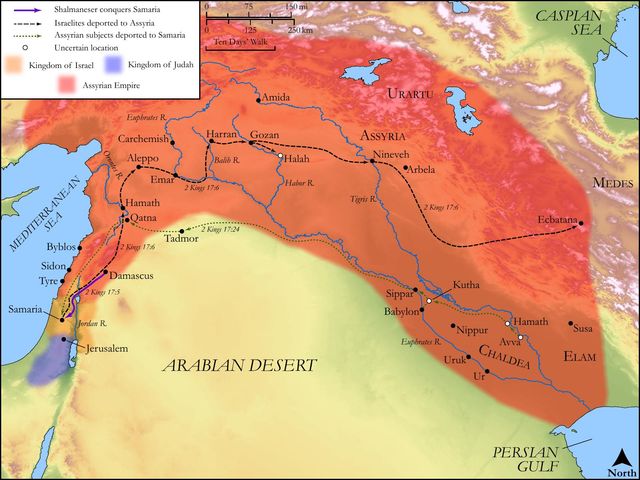
This verse is strategically placed within the pivotal seventeenth chapter of 2 Kings, which meticulously chronicles the tragic downfall of the Northern Kingdom of Israel. Following Samaria's conquest by Assyria and the subsequent deportation of the Israelites by Shalmaneser V and Sargon II (as comprehensively detailed in 2 Kings 17:6-23), the Assyrian monarch implemented a standard imperial policy of population transfer. He brought in diverse foreign peoples from regions such as Babylon, Cuthah, Ava, Hamath, and Sepharvaim to inhabit the now-vacated Israelite territories. Verse 25 marks the critical juncture of their initial settlement and immediately introduces the central spiritual crisis: their profound failure to "fear the LORD." This swift and decisive divine response sets the narrative trajectory for the subsequent events, where the foreign settlers, confronted by the lions, are compelled to seek understanding of the "custom of the God of the land" (2 Kings 17:26), ultimately leading to the development of a unique and enduring form of syncretistic worship.
Historical & Cultural Context
The Assyrian Empire, particularly under the reigns of Tiglath-Pileser III, Shalmaneser V, and Sargon II, systematically employed a strategic policy of forced population exchange. This draconian practice served multiple imperial objectives: to dismantle the national identity and cohesion of conquered peoples, thereby precluding future rebellions; to integrate new populations into the broader imperial system; and to exploit the agricultural and economic potential of newly acquired lands. The resettled peoples, in accordance with the prevailing ancient Near Eastern worldview, brought their own pantheon of gods and established religious practices with them. Crucially, within this cultural paradigm, it was universally understood that each land possessed its own patron deity, and the prosperity, safety, and well-being of its inhabitants were intrinsically contingent upon appeasing this local divinity. Thus, when the lions began to attack, it was not merely interpreted as a random natural disaster but as an unmistakable sign that the "god of the land" was profoundly displeased, demanding immediate recognition and worship from the new inhabitants. This deeply ingrained cultural and religious understanding directly motivated their subsequent actions to inquire about and eventually attempt to appease YHWH.
Key Themes
ShowHideThe incident recounted in 2 Kings 17:25 powerfully contributes to several overarching themes pervasive in 2 Kings and the broader biblical narrative. Firstly, it emphatically underscores Divine Judgment and Consequence, vividly demonstrating God's active and sovereign involvement in the affairs of nations and His immediate, tangible response to irreverence, even from those who are not His covenant people. The sending of lions is a potent manifestation of God's absolute sovereignty over creation and His unwavering demand for acknowledgment. Secondly, the core issue at hand is the profound Lack of the Fear of the LORD. This foundational biblical phrase, central to wisdom literature (e.g., Proverbs 1:7), denotes not mere terror, but a deep, respectful acknowledgment of God's power, holiness, and unique status as the supreme, sovereign God, leading to reverence and submission. The lions served as a severe, undeniable, and visceral lesson in the absolute necessity of this reverence. Lastly, the event starkly highlights God's Sovereignty Over Creation, showcasing His unparalleled ability to utilize natural elements, including wild animals, as direct instruments of His divine will and judgment. This profound concept is consistently affirmed throughout Scripture, from the devastating plagues in Exodus to the specific warnings in Leviticus 26:22, unequivocally affirming God's supreme and unchallengeable authority over all aspects of His creation.
Exposition and Analysis
ShowHideKey Word Analysis
ShowHideThis verb is absolutely central to comprehending the spiritual failure of the new settlers. While yârêʼ can indeed mean "to be afraid" or "to be terrified," in a theological context, particularly when applied to God, its primary significance is "to revere," "to stand in awe of," "to respect," or "to submit to." It implies a proper, humble acknowledgment of God's immense power, inherent holiness, and supreme authority, which naturally leads to obedience and worship. Therefore, the phrase "feared not the LORD" signifies that they did not accord YHWH the honor, respect, or submission due to Him as the sovereign God of the land, nor did they acknowledge His unique status as the one true God. Their lack of reverence was not simply an absence of terror, but a profound and dangerous spiritual disregard.
The deliberate use of the covenant name YHWH (consistently rendered "LORD" in most English translations) is profoundly significant. This is the personal, revealed name of the God of Israel, signifying His eternal self-existence, His unwavering covenant faithfulness, and His absolute, unchallengeable sovereignty. Even though the foreign settlers were initially ignorant of this specific name, the biblical text explicitly identifies the God who initiated this judgment as YHWH, emphatically emphasizing that it was not merely a generic "god of the land" but the one true God who was asserting His inherent authority and demanding recognition within His divinely appointed territory. This highlights God's universal claim to sovereignty, extending far beyond His covenant people to encompass all inhabitants of the earth.
This primitive root signifies "to smite with deadly intent," "to kill," or "to murder." Its use here underscores the lethal and undeniable nature of the divine judgment. The lions were not merely frightening or disruptive; they were instruments of death, directly executing God's will. This unambiguous outcome left no room for misinterpretation regarding the severity of God's displeasure and the tangible consequences of failing to acknowledge His authority. The deaths served as a stark, undeniable, and immediate sign of divine wrath.
Verse Breakdown
ShowHide"And so it was at the beginning of their dwelling there"
This clause precisely establishes the immediate temporal context of the divine judgment. The sending of the lions was not a delayed or lingering consequence but an almost instantaneous and direct divine response to their initial presence and, more importantly, their initial behavior in the land. It powerfully underscores the urgency and immediacy of acknowledging God's inherent sovereignty over the territory they had just occupied.
"that they feared not the LORD"
This is the core spiritual diagnosis and the direct, explicit cause of the subsequent divine judgment. Their failure was not merely a passive ignorance (though their unfamiliarity was a factor), but an active or passive lack of intentional reverence, acknowledgment, and submission to the true God. They continued to practice their own idolatrous customs without making any effort to understand or honor the God who had so powerfully demonstrated His authority by allowing the previous inhabitants to be exiled.
"therefore the LORD sent lions among them"
This clause unequivocally reveals the direct divine action and the immediate, terrifying consequence. The conjunction "therefore" explicitly and emphatically links their spiritual failure to God's direct, purposeful intervention. It was not a random natural phenomenon or an unfortunate coincidence, but a deliberate act of divine judgment, demonstrating God's active involvement in the world and His direct, decisive response to human disregard for His supreme authority.
"which slew some of them"
This phrase describes the tangible, deadly, and undeniable outcome of God's judgment. The resulting fatalities served as an undeniable sign of divine displeasure and acted as a powerful, terrifying catalyst for the surviving settlers to seek understanding about the "custom of the God of the land." It was a severe, yet undeniably effective, means of capturing their attention and compelling them to acknowledge God's pervasive presence and formidable power.
Literary Devices
ShowHideThe primary literary device powerfully at play in 2 Kings 17:25 is Cause and Effect. The text explicitly and unambiguously states that because "they feared not the LORD," therefore "the LORD sent lions among them." This direct causal link highlights God's active, responsive, and just nature, demonstrating unequivocally that spiritual disregard and irreverence have tangible, often severe, consequences. Additionally, the narrative employs Divine Retribution/Judgment, wherein God directly intervenes to punish a specific transgression—in this case, the profound irreverence and failure to acknowledge His sovereignty over His land. The Symbolism of the lions is also deeply significant; in ancient Near Eastern thought, wild animals frequently represented chaos, untamed danger, and often, divine wrath or judgment. Here, they powerfully symbolize God's sovereign power to enforce His will and His absolute control over creation, serving as a terrifying, undeniable, and lethal messenger of His profound displeasure.
Theological and Thematic Connections
ShowHideThe account in 2 Kings 17:25 serves as a profound theological statement about God's universal sovereignty and His non-negotiable demand for recognition from all peoples, regardless of their background, prior knowledge, or cultural origins. It underscores that God is not merely confined to Israel or a localized deity, but is indeed the God of all the earth, asserting His supreme authority even over those who are ignorant of His specific covenant name or His revealed law. The "fear of the LORD" is presented as a fundamental prerequisite for well-being, security, and a proper relationship with the divine. This fear is not merely terror or dread, but a reverent awe that leads to acknowledging God's rightful place as Creator and Sustainer, and subsequently submitting to His divine will. The consequences of spiritual apathy, active disregard, or outright rebellion against God's presence and authority are depicted as severe, demonstrating that God is not passive or indifferent but actively involved in upholding His holiness and asserting His dominion over all creation. This incident powerfully foreshadows the broader biblical truth that all humanity is ultimately accountable to God for the light they have received, and that spiritual ignorance, while perhaps mitigating culpability, does not negate the reality of divine judgment for unacknowledged sovereignty.
Reflection and Application
ShowHideThe narrative of 2 Kings 17:25, while deeply rooted in a specific historical and cultural context, conveys timeless spiritual principles that resonate profoundly with contemporary life. It challenges us to undertake a rigorous self-examination of our own "fear of the LORD"—not as a paralyzing dread, but as a profound, active reverence and awe for God's inherent holiness, omnipotent power, and boundless love. In a world increasingly characterized by spiritual apathy, pervasive secularism, or a casual, consumeristic approach to faith, this verse serves as a potent reminder that God is actively sovereign and demands to be acknowledged, honored, and reverenced by all His creation. Disregarding God's authority, whether stemming from genuine ignorance, passive indifference, or outright rebellious defiance, inevitably carries profound consequences. While God may not dispatch literal lions in our modern era, spiritual disregard can manifest in myriad forms: profound brokenness in relationships, pervasive moral decay within society, a crippling loss of ultimate purpose and meaning, and ultimately, a tragic separation from the very source of life and truth. This passage urgently calls us to cultivate a posture of profound humility and willing submission, recognizing God's omnipresent presence and supreme authority in every sphere of our lives, from our most intimate personal decisions to the foundational structures of our societies. It implores us to diligently seek wisdom and understanding of His righteous ways, for true, abundant, and eternal life is unequivocally found in revering the LORD.
Questions for Reflection
ShowHideFAQ
ShowHideWhy did God send lions specifically?
ShowHideThe sending of lions was a deliberate, highly symbolic, and potent act of divine judgment, chosen for several compelling reasons. Firstly, it unequivocally demonstrated God's absolute sovereignty over creation, powerfully showcasing His ability to utilize natural elements and wild animals as direct instruments of His divine will. This was an unmistakable, undeniable sign that the "god of the land" was profoundly displeased, as lions were a formidable, terrifying, and universally recognized force in the ancient world, representing untamed power and danger. Secondly, it resonated deeply with prevalent ancient Near Eastern beliefs that a land's patron deity would actively protect its territory and its people, and conversely, would justly punish those who disrespected or failed to acknowledge it. The lions were a vivid, tangible manifestation of divine wrath, making it impossible for the settlers to ignore the spiritual reality of their situation. Thirdly, it echoed the covenant curses for disobedience outlined for Israel in passages like Leviticus 26:22, where wild beasts are explicitly listed as a consequence of turning away from God. While these foreigners were not under the Mosaic covenant, the universal principle of divine consequence for spiritual disregard remained powerfully in effect.
Was this fair to the new settlers who didn't know the LORD?
ShowHideThis question touches on the profound theological concepts of divine justice, general revelation, and human accountability. While the foreign settlers were indeed ignorant of YHWH's specific revealed name and covenant, the overarching biblical worldview consistently maintains that God is the sovereign ruler of all the earth, and all humanity is ultimately accountable to Him. The incident with the lions can be profoundly understood as a form of general revelation—a clear, undeniable, and terrifying sign designed to capture their attention and compel them to inquire about the true God of the land. As Romans 1:19-20 eloquently states, God's "invisible attributes, namely, his eternal power and divine nature, have been clearly perceived, ever since the creation of the world, in the things that have been made." The lions were therefore not merely arbitrary punishment but a severe, yet ultimately effective, means to initiate a search for truth and to establish the necessary "fear of the LORD" that would lead to their well-being and survival in the land. It was a terrifying, yet undeniable, opportunity for them to learn about and turn to Him, which they eventually did, albeit imperfectly and syncretistically (2 Kings 17:28-33).
Christ-Centered Fulfillment
ShowHideThe incident in 2 Kings 17:25, powerfully highlighting the severe consequences of not fearing the LORD, finds its ultimate and most profound Christ-centered fulfillment in the person and redemptive work of Jesus Christ. In the Old Testament, the "fear of the LORD" was consistently presented as the very beginning of wisdom (Proverbs 9:10) and the indispensable, proper posture before a holy and sovereign God. In the New Covenant, this foundational reverence is not diminished but is profoundly transformed, deepened, and brought to its perfect expression through Christ. Jesus is the ultimate and complete revelation of God Himself, the very radiance of God's glory and the exact imprint of His nature (Hebrews 1:1-3). Therefore, to truly "fear the LORD" now means to acknowledge, honor, and submit to Jesus Christ, who perfectly embodies and reveals the Father. The consequences of rejecting God's authority, once manifested in the literal terror of lions, are now ultimately realized in the eternal repercussions of rejecting the Son. He is simultaneously the gentle Lamb of God who takes away the sin of the world and the majestic Lion of the tribe of Judah who will execute final and righteous judgment. The "fearful thing to fall into the hands of the living God" (Hebrews 10:31) is ultimately mitigated and overcome for those who, through saving faith in Christ, are reconciled to God. They no longer face His wrath, but rather experience the boundless riches of His grace and the promise of eternal life (John 3:36). Thus, Christ is both the one who perfectly embodied the fear of the Lord in His earthly life and the one through whom we can now approach God without fear of condemnation, but with confidence and peace.