


2 Kings 17:37
Bible text: King James Version (1769 Blayney text) · Public domain
Bible text: King James Version with Strong's numbers · Public domain
Bible text: Berean Standard Bible · Public domain
Bible text: American Standard Version (1901) · Public domain
Bible text: World English Bible, Messianic edition · Public domain
Bible text: Geneva Bible (1599) · Public domain
Bible text: Young's Literal Translation · Public domain
- וְאֶתve·'Etand <obj.>H853Conj-w ¦ DirObjMParticle Object Indicatorוְandאֶת<obj.>
- הַחֻקִּיםha·chu·Kimthe statutesH2706Art ¦ N-mpNoun Plural Masculine Absoluteהַtheחֻקִּיםstatutes
- וְאֶתve·'Etand <obj.>H853Conj-w ¦ DirObjMParticle Object Indicatorוְandאֶת<obj.>
- הַמִּשְׁפָּטִיםha·mish·pa·Timthe judgmentsH4941Art ¦ N-mpNoun Plural Masculine Absoluteהַtheמִּשְׁפָּטִיםjudgments
- וְהַתּוֹרָהve·ha·to·Rahand the lawH8451Conj-w ¦ Art ¦ N-fsNoun Singular Feminine Absoluteוְandהַtheתּוֹרָהlaw
- וְהַמִּצְוָהve·ha·mitz·Vahand the commandmentH4687Conj-w ¦ Art ¦ N-fsNoun Singular Feminine Absoluteוְandהַtheמִּצְוָהcommandment
- אֲשֶׁר'a·SherwhichH834RelParticle Relative
- כָּתַבka·Tavhe wroteH3789V-Qal-Perf-3msVerb Qal Perfect 3rd Singular Masculine
- לָכֶםla·Khemfor youPrep-l ¦ 2mpSuffix Personal 2nd Plural Masculineלָforכֶםyou
- תִּשְׁמְרוּןtish·me·Runyou will take care !H8104V-Qal-Imperf-2mp ¦ SfxVerb Qal Imperfect 2nd Plural Masculineתִּשְׁמְרוּyou will take careן!
- לַעֲשׂוֹתla·'a·Sotto doH6213Prep-l ¦ V-Qal-InfVerb Qal Infinitive Constructלַtoעֲשׂוֹתdo
- כָּלkolallH3605N-mscNoun Singular Masculine Construct
- הַיָּמִיםhai·ya·Mimthe daysH3117Art ¦ N-mpNoun Plural Masculine Absoluteהַtheיָּמִיםdays
- וְלֹאve·Lo'and notH3808Conj-w ¦ NegParticle Negativeוְandלֹאnot
- תִירְאוּti·re·'Uyou must fearH3372V-Qal-Imperf-2mpVerb Qal Imperfect 2nd Plural Masculine
- אֱלֹהִים'E·lo·HimgodsH430N-mpNoun Plural Masculine Absolute
- אֲחֵרִים'a·che·RimotherH312Adj-mpAdjective Plural Masculine Absolute
English is a literal word-by-word gloss of the Hebrew, not the KJV's wording. Why?
This is the original text the KJV's translators worked from — each Hebrew word with its own literal English meaning in this verse, prepared by scholars at Tyndale House, Cambridge. The KJV translates whole sentences, not word by word, so its wording differs: one Hebrew word can become several English words, and the KJV may choose “the LORD” where the gloss reads “Yahweh”. Both are faithful — they answer different questions. For the KJV's own rendering, switch to the KJV text.
Details
See on the biblical-era map
Study this verse
Public-domain commentary
Matthew Henry
From his Commentary on the Whole Bible. Henry comments on passages, not single verses — this entry covers 2 Kings 17:24–41. His two-level outline is real structure in the source text, so it is rendered as structure.
Never was land lost, we say, for want of an heir. When the children of Israel were dispossessed, and turned out of Canaan, the king of Assyria soon transplanted thither the supernumeraries of his own country, such as it could well spare, who should be servants to him and masters to the Israelites that remained; and here we have an account of these new inhabitants, whose story is related here that we may take our leave of Samaria, as also of the Israelites that were carried captive into Assyria.
I.Concerning the Assyrians that were brought into the land of Israel we are here told,
1.That they possessed Samaria and dwelt in the cities thereof, Kg2 17:24. It is common for lands to change their owners, but sad that the holy land should become a heathen land again. See what work sin makes.
2.That at their first coming God sent lions among them. They were probably insufficient to people the country, which occasioned the beasts of the field to multiply against them (Exo 23:29); yet, besides the natural cause, there was a manifest hand of God in it, who is Lord of hosts, of all the creatures, and can serve his own purposes by which he pleases, small or great, lice or lions. God ordered them this rough welcome to check their pride and insolence, and to let them know that though they had conquered Israel the God of Israel had power enough to deal with them - that he could have prevented their settling here, by ordering lions into the service of Israel, and that he permitted it, not for their righteousness, but the wickedness of his own people - and that they were now under his visitation. They had lived without God in their own land, and were not plagued with lions; but, if they do so in this land, it is at their peril.
3.That they sent a remonstrance of this grievance to the king their master, setting forth, it is likely, the loss their infant colony had sustained by the lions and the continual fear they were in of them, and stating that they looked upon it to be a judgment upon them for not worshipping the God of the land, which they could not, because they knew not how, Kg2 17:26. The God of Israel was the God of the whole world, but they ignorantly call him the God of the land, apprehending themselves therefore within his reach, and concerned to be upon good terms with him. Herein they shamed the Israelites, who were not so ready to hear the voice of God's judgments as they were, and who had not served the God of that land, though he was the God of their fathers and their great benefactor, and though they were well instructed in the manner of his worship. Assyrians begged to be taught that which Israelites hated to be taught.
4.That the king of Assyria took care to have them taught the manner of the God of the land (Kg2 17:27, Kg2 17:28), not out of any affection to that God, but to save his subjects from the lions. On this errand he sent back one of the priests whom he had carried away captive. A prophet would have done them more good, for this was but one of the priests of the calves, and therefore chose to dwell at Bethel for old acquaintance' sake, and, though he might teach them to do better than they did, he was not likely to teach them to do well, unless he had taught his own people better. However, he came and dwelt among them, to teach them how they should fear the Lord. Whether he taught them out of the book of the law, or only by word of mouth, is uncertain.
5.That, being thus taught, they made a mongrel religion of it, worshipped the God of Israel for fear and their own idols for love (Kg2 17:33): They feared the Lord, but they served their own gods. They all agreed to worship the God of the land according to the manner, to serve the Jewish festivals and rites of sacrificing, but every nation made gods of their own besides, not only for their private use in their own families, but to be put in the houses of their high places, Kg2 17:9. The idols of each country are here named, Kg2 17:30, Kg2 17:31. The learned are at a loss for the signification of several of these names, and cannot agree by what representations these gods were worshipped. If we may credit the traditions of the Jewish doctors, they tell us that Succoth-Benoth was worshipped in a hen and chickens, Nergal in a cock, Ashima in a smooth goat, Nibhaz in a dog, Tartak in an ass, Adrammelech in a peacock, Anammelech in a pheasant. Our own tell us, more probably, that Succoth-Benoth (signifying the tents of the daughters) was Venus. Nergal, being worshipped by the Cuthites, or Persians, was the fire, Adrammelech and Anammelech were only distinctions of Moloch. See how vain idolaters were in their imaginations, and wonder at their sottishness. Our very ignorance concerning these idols teaches us the accomplishment of that word which God has spoken, that these false gods should all perish (Jer 10:11); they are all buried in oblivion, while the name of the true God shall continue for ever.
6.This medley superstition is here said to continue unto this day (Kg2 17:41), till the time when this book was written and long after, above 300 years in all, till the time of Alexander the Great, when Manasse, brother to Jaddus the high priest of the Jews, having married the daughter of Sanballat, governor of the Samaritans, went over to them, got leave of Alexander to build a temple in Mount Gerizim, drew over many of the Jews to him, and prevailed with the Samaritans to cast away all their idols and to worship the God of Israel only; yet their worship was mixed with so much superstition that our Saviour told them they knew not what they worshipped, Joh 4:22.
II.Concerning the Israelites that were carried into the land of Assyria.
This historian has occasion to speak of them (Kg2 17:22), showing that their successors in the land did as they had done (after the manner of the nations whom they carried away), they worshipped both the God of Israel and those other gods; but what did the captives do in the land of their affliction? Were they reformed, and brought to repentance, by their troubles? No, they did after the former manner, Kg2 17:34. When the two tribes were afterwards carried into Babylon, they were cured by it of their idolatry, and therefore, after seventy years, they were brought back with joy; but the ten tribes were hardened in the furnace, and therefore were justly lost in it and left to perish. This obstinacy of theirs is here aggravated by the consideration,
1.Of the honour God had put upon them, as the seed of Jacob, whom he named Israel, and from him they were so named, but were a reproach to that worthy name by which they were called.
2.Of the covenant he made with them, and the charge he gave them upon that covenant, which is here very fully recited, that they should fear and serve the Lord Jehovah only, who had brought them up out of Egypt (Kg2 17:36), that, having received his statutes and ordinances in writing, they should observe to do them for evermore (Kg2 17:37), and never forget that covenant which God had made with them, the promises and conditions of that covenant, especially that great article of it which is here thrice repeated, because it had been so often inculcated and so much insisted on, that they should not fear other gods. He had told them that, if they kept close to him, he would deliver them out of the hand of all their enemies (Kg2 17:39); yet when they were in the hand of their enemies, and stood in need of deliverance, they were so stupid, and had so little sense of their own interest, that they did after the former manner (Kg2 17:40), they served both the true God and false gods, as if they knew no difference. Ephraim is joined to idols, let him alone. So they did, and so did the nations that succeeded them. Well might the apostle ask, What then, Are we better than they? No, in no wise, for both Jews and Gentiles are all under sin, Rom 3:9.
Continue studying 2 Kings 17:37 across the web’s major study libraries — every link below opens this exact verse, chapter, or book on the destination site.
Read & Compare
 BibleGatewayThis verse in more than 200 translations and 70 languages.
 Bible.comThe YouVersion reader — hundreds of translations, reading plans, and highlights.
 ESV.orgCrossway's official English Standard Version reader.
 NET BibleThe NET translation with 60,000+ translators' notes on every rendering decision.
 STEP BibleTyndale House's free study tool — original text, vocabulary, and scholarly resources.
 BibliaLogos Bible Software's free web reader.
 USCCBThe New American Bible (Revised Edition) with the U.S. bishops' study notes.
Commentaries
 BibleHub CommentariesDozens of classic commentaries on this verse, gathered on one page.
 StudyLightMore than 100 commentary sets — the largest collection on the web.
 BibleRefPlain-English commentary on what this verse means, verse by verse.
 Enduring WordDavid Guzik's free commentary on this chapter, widely used by Bible teachers.
 Bible Study ToolsVerse commentary alongside Greek and Hebrew study aids.
Original Language & Research
- BibleHub InterlinearThe verse word by word — original language, transliteration, and English.
- BibleHub LexiconEvery word's original-language definition and Strong's entry.
 Blue Letter BibleDeep-study tools — Strong's numbers, concordance, and word studies.
 SefariaThe Hebrew text with Rashi and centuries of Jewish commentary.
Sermons, Hymns & Audio


TrulyRandomVerse is not affiliated with these sites and doesn’t control their content. They’re linked because they’re genuinely useful.
Summary
Second Kings 17:37 encapsulates the unchanging and comprehensive expectations of God for His covenant people, Israel. Set against the tragic backdrop of the Northern Kingdom's exile due to persistent idolatry and disobedience, this verse powerfully reiterates the core demands of the Mosaic Covenant: absolute adherence to all divine law and exclusive, unreserved worship of the one true God, Yahweh, without fear or reverence for any other deity, for all generations.
Context
ShowHideLiterary Context
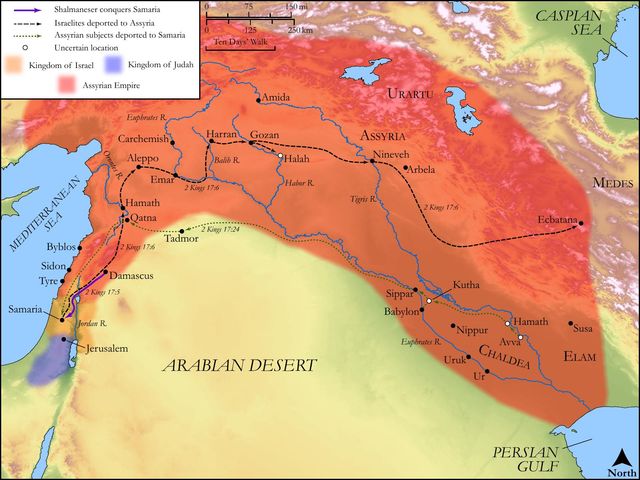
This verse is situated within 2 Kings 17, a pivotal chapter that offers a theological explanation for the catastrophic fall of the Northern Kingdom of Israel to Assyria in 722 BC. The preceding verses (e.g., 2 Kings 17:34-36) lament Israel's failure to adhere to the covenant, highlighting their syncretistic practices—worshiping the Lord alongside foreign gods. Verse 37, therefore, functions as a direct counterpoint and divine indictment, articulating the clear, unambiguous commands that Israel consistently neglected. It serves as a stark reminder of the standard from which they deviated, underscoring the justice of their judgment and the consequences of covenant infidelity. The entire chapter serves as a theological post-mortem, explaining why Israel fell, not just how.
Historical & Cultural Context
The fall of Samaria and the subsequent exile marked the end of the Northern Kingdom. This era was characterized by intense geopolitical pressures from empires like Assyria, leading to cultural and religious assimilation attempts. Among the polytheistic nations of that day, peoples typically adopted the gods of their conquerors or integrated them into their existing pantheons, believing in a multiplicity of deities. Israel, however, was unique in its covenant with Yahweh, which demanded exclusive monotheism. The command "ye shall not fear other gods" directly confronts the prevailing syncretism and the temptation to appease foreign deities for political or economic gain, a practice explicitly forbidden by the Mosaic Law (e.g., Deuteronomy 6:14). This historical context highlights the immense pressure Israel faced to conform to surrounding religious practices and the radical nature of God's demand for exclusive worship.
Key Themes
ShowHideSecond Kings 17:37 is rich with themes central to the Deuteronomistic history. Covenant Fidelity is paramount, as the verse emphasizes the perpetual obligation to observe God's "statutes, ordinances, law, and commandment," which collectively represent the comprehensive body of divine instruction given through Moses. This observance was not merely ritualistic but foundational to Israel's identity and their unique relationship with God, as outlined in Deuteronomy 4:1-2. The theme of Exclusive Worship (Monotheism) is powerfully articulated by the command, "ye shall not fear other gods," echoing the First Commandment and prohibiting any form of reverence or allegiance to deities other than Yahweh. This prohibition underscores the absolute sovereignty of Yahweh and His intolerance for rivals. Finally, the phrase "for evermore" highlights the Enduring Obligation of these divine requirements, signifying their timeless and unchanging nature, applicable across all generations of Israel and reflecting the immutable character of God Himself.
Exposition and Analysis
ShowHideKey Word Analysis
ShowHideMeaning "an enactment; hence, an appointment (of time, space, quantity, labor or usage); appointed, bound, commandment, convenient, custom, decree(-d), due, law, measure, [idiom] necessary, ordinance(-nary), portion, set time, statute, task." In this context, chôq refers to divine decrees or fixed ordinances, often those established by God as unchangeable and foundational laws for His people.
Meaning "to fear; morally, to revere; caus. to frighten; affright, be (make) afraid, dread(-ful), (put in) fear(-ful, -fully, -ing), (be had in) reverence(-end), [idiom] see, terrible (act, -ness, thing)." In the context of "ye shall not fear other gods," yârê' carries a dual meaning. Primarily, it denotes profound reverence, awe, and worship—the kind of honor and devotion due only to the one true God. To "fear" other gods would mean to acknowledge their power, to worship them, or to seek their favor. Secondarily, it can imply dread or terror. The command, therefore, prohibits both the worship of false deities and any intimidation by their supposed power or influence. Israel was to direct all their reverence, trust, and obedience solely towards Yahweh, not towards the idols or gods of surrounding nations.
Meaning "a day (as the warm hours), whether literal (from sunrise to sunset, or from one sunset to the next), or figurative (a space of time defined by an associated term), (often used adverb); age, [phrase] always, [phrase] chronicals, continually(-ance), daily, ((birth-), each, to) day, (now a, two) days (agone), [phrase] elder, [phrase] end, [phrase] evening, [phrase] (for) ever(-lasting, -more), [idiom] full, life, as (so) long as (... live), (even) now, [phrase] old, [phrase] outlived, [phrase] perpetually, presently, [phrase] remaineth, [idiom] required, season, [idiom] since, space, then, (process of) time, [phrase] as at other times, [phrase] in trouble, weather, (as) when, (a, the, within a) while (that), [idiom] whole ([phrase] age), (full) year(-ly), [phrase] younger." In this verse, yôwm is used adverbially to signify perpetuity or eternity, underscoring the timeless and unending nature of God's commands and Israel's obligation to them.
Verse Breakdown
ShowHide"And the statutes, and the ordinances, and the law, and the commandment"
This opening phrase meticulously lists the various categories of divine instruction given to Israel, emphasizing the comprehensive and multifaceted nature of God's revealed will. It refers to the entirety of the Mosaic Law, encompassing every aspect of life from moral principles to civil regulations and ceremonial practices, leaving no area outside of divine jurisdiction.
"which he wrote for you"
This clause underscores the divine origin and authority of these laws. They were not human inventions, cultural customs, or evolving traditions, but direct, immutable, and written revelation from God Himself. This emphasizes their binding nature and the fact that God personally established His covenant with Israel through these precise instructions.
"ye shall observe to do for evermore"
This is a command for perpetual and active obedience. "Observe to do" implies diligent attention, careful adherence, and practical application of the laws in daily life, not merely intellectual acknowledgment. The phrase "for evermore" highlights the enduring, unchanging, and unconditional nature of these covenant obligations, signifying their applicability across all generations of Israel, without expiration or amendment.
"and ye shall not fear other gods"
This is the foundational and most critical prohibition, demanding exclusive monotheistic worship. It forbids any form of reverence, worship, allegiance, or even intimidated respect towards any deity other than Yahweh. This command directly counters the widespread idolatry and syncretism that plagued Israel, asserting God's sole claim to their devotion and warning against the spiritual consequences of divided loyalty.
Literary Devices
ShowHideSecond Kings 17:37 employs several potent literary devices to convey its message with emphasis and clarity. The most prominent is Polysyndeton, evident in the repeated use of the conjunction "and" ("And the statutes, and the ordinances, and the law, and the commandment"). This repetition serves to emphasize the sheer volume and comprehensive nature of God's commands, creating a sense of overwhelming totality that Israel was expected to obey. This also functions as a Merism, as the collection of terms for "law" represents the whole of God's revealed instruction, encompassing every facet of the covenant. Furthermore, the verse is highly Didactic, serving as a direct instruction and theological explanation within the Deuteronomistic history. It is a clear statement of divine expectation, contrasting sharply with the narrative of Israel's failure, thereby reinforcing the theological lesson that disobedience to God's explicit commands, especially regarding exclusive worship, leads to severe consequences. The language is also deeply rooted in Covenant Language, utilizing terms and concepts that define the unique legal and relational framework between Yahweh and Israel, highlighting the sacred obligations that Israel had violated.
Theological and Thematic Connections
ShowHideSecond Kings 17:37 stands as a powerful theological anchor, connecting to the broader biblical narrative of God's unwavering character, His covenant faithfulness, and His demand for exclusive devotion. It underscores the principle that true worship involves both obedient adherence to God's revealed will and the absolute rejection of all competing allegiances. The verse highlights the gravity of idolatry not merely as a ritualistic transgression but as a fundamental breach of the covenant relationship, demonstrating a failure to "fear" (revere and obey) the one true God. This divine expectation for total fidelity to His commands and His person echoes throughout Scripture, revealing a God who is holy, just, and deserving of undivided worship from His people, a God who will not share His glory with another.
Reflection and Application
ShowHideSecond Kings 17:37, though rooted in ancient Israel's history, offers profound and timeless principles for believers today. It serves as a potent reminder that God's expectations for His people are unchanging: He desires our complete obedience and exclusive devotion. In a contemporary world filled with myriad distractions and competing allegiances, this verse challenges us to examine what truly holds the place of ultimate "fear" or reverence in our lives. While we may not bow to physical idols, anything that displaces God from the center of our hearts—be it wealth, career, comfort, relationships, personal ambition, or even self-reliance—can become a modern idol. Our call is to prioritize God's Word, diligently observing its principles not out of legalistic compulsion but as an expression of love and gratitude for His saving grace. Our faith is not merely intellectual assent; it is demonstrated through a life of active obedience and undivided worship, recognizing God's supreme authority and His boundless love for us. This verse calls us to a radical, uncompromising fidelity to the one true God, who alone is worthy of our complete trust, reverence, and obedience.
Questions for Reflection
ShowHideFAQ
ShowHideWhy does the text group "statutes, ordinances, law, and commandment" together?
ShowHideThe grouping of "statutes, ordinances, law, and commandment" serves to emphasize the comprehensive and all-encompassing nature of God's revealed will. It's a literary device known as a merism, indicating the totality of the Mosaic Law. These terms collectively refer to the entire body of divine instruction given to Israel, covering every aspect of their lives—moral, civil, and ceremonial. God's expectation was not for partial obedience to a few select rules, but for complete adherence to all that He had commanded, as seen throughout the Pentateuch (e.g., Deuteronomy 4:1 and Deuteronomy 5:31). This highlights the holistic demand for covenant fidelity and the pervasive nature of God's authority over His people.
Christ-Centered Fulfillment
ShowHideSecond Kings 17:37, with its unwavering demand for perfect obedience to God's law and exclusive worship, finds its ultimate fulfillment in Jesus Christ. The Old Covenant, though righteous and good, revealed humanity's inherent inability to perfectly "observe to do for evermore" God's commands and to consistently "not fear other gods." Jesus, however, perfectly fulfilled the law (as stated in Matthew 5:17, "Do not think that I have come to abolish the Law or the Prophets; I have not come to abolish them but to fulfill them"). He lived a life of unblemished obedience, offering the perfect sacrifice that atones for our inability to keep the law and our failures in worship. Furthermore, Christ is the ultimate object of our "fear"—not a fear of dread, but a loving, reverential awe and worship that displaces all other gods and idols. Through His atoning work, we are freed from the bondage of sin and the fear of judgment, receiving the Holy Spirit who empowers us to live according to God's will, not by our own strength but by grace (Romans 8:3-4). The New Covenant, inaugurated by Christ's blood, writes God's law not on tablets of stone but on our hearts (Jeremiah 31:33), enabling a Spirit-empowered obedience and an undivided devotion to the one true God, who is now our Father through Christ (Romans 8:15). Thus, the call to exclusive worship and obedience remains, but it is now rooted in our union with Christ and empowered by His transforming grace, leading us to "worship God acceptably with reverence and awe, for our God is a consuming fire" (Hebrews 12:28-29).