


2 Chronicles 8:17
- אָז'azthenH227AdvAdverb
- הָלַךְha·Lakhhe wentH1980V-Qal-Perf-3msVerb Qal Perfect 3rd Singular Masculine
- שְׁלֹמֹהshe·lo·MohSolomonH8010N-proper-mNoun Proper Masculine
- לְעֶצְיוֹןle·'etz·yonto EzionH6100Prep-l ¦ N-properNoun Proper LocationלְtoעֶצְיוֹןEzion
- גֶּבֶרGe·verGeberH6100N-properNoun Proper Location
- וְאֶלve·'eland toH413Conj-w ¦ PrepPrepositionוְandאֶלto
- אֵילוֹת'ei·LotElathH359N-properNoun Proper Location
- עַל'alonH5921PrepPreposition
- שְׂפַתse·Fat[the] shore ofH8193N-fscNoun Singular Feminine Construct
- הַיָּםhai·Yamthe seaH3220Art ¦ N-msNoun Singular Masculine Absoluteהַtheיָּםsea
- בְּאֶרֶץbe·'E·retzin [the] land ofH776Prep-b ¦ N-fscNoun Singular Feminine Constructבְּinאֶרֶץ[the] land of
- אֱדוֹם'e·DomEdomH123N-proper-mNoun Proper Masculine
English is a literal word-by-word gloss of the Hebrew, not the KJV's wording. Why?
This is the original text the KJV's translators worked from — each Hebrew word with its own literal English meaning in this verse, prepared by scholars at Tyndale House, Cambridge. The KJV translates whole sentences, not word by word, so its wording differs: one Hebrew word can become several English words, and the KJV may choose “the LORD” where the gloss reads “Yahweh”. Both are faithful — they answer different questions. For the KJV's own rendering, switch to the KJV text.
Details
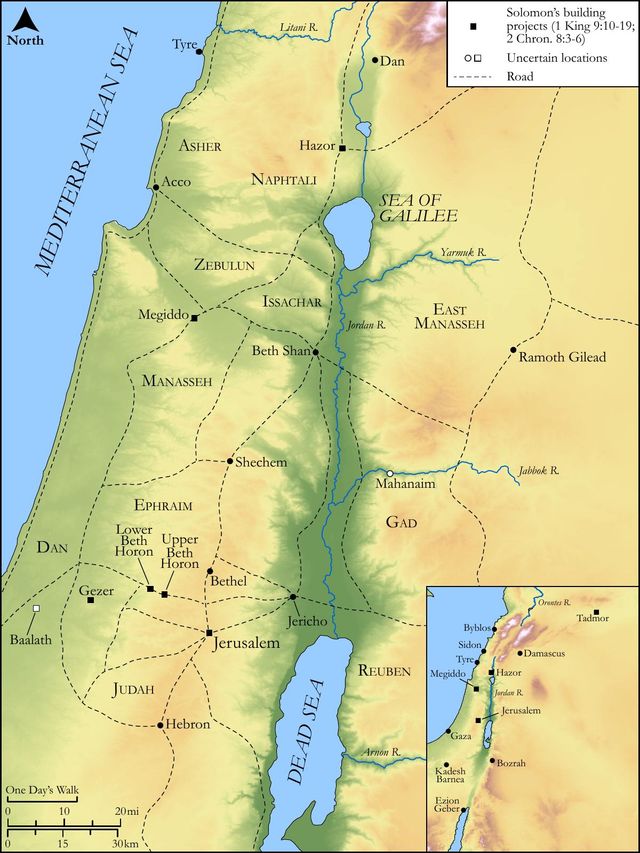
See on the biblical-era map
Study this verse
Public-domain commentary
Matthew Henry
From his Commentary on the Whole Bible. Henry comments on passages, not single verses — this entry covers 2 Chronicles 8:12–18.
Here is, I. Solomon's devotion. The building of the temple was in order to the service of the temple. Whatever cost he was at in rearing the structure, if he had neglected the worship that was to be performed there, it would all have been to no purpose. Assisting the devotion of others will not atone for our own neglects. When Solomon had built the temple, 1. He kept up the holy sacrifices there, according to the law of Moses, Ch2 8:12, Ch2 8:13. In vain had the altar been built, and in vain had fire come down from heaven, if sacrifices had not been constantly brought as the food of the altar and the fuel of that fire. There were daily sacrifices, a certain rate every day, as duly as the day came, weekly sacrifices on the sabbath, double to what was offered on other days, monthly sacrifices on the new moons, and yearly sacrifices at the three solemn feasts. Those are spiritual sacrifices that are now required of us, which we are to bring daily and weekly; and it is good to be in a settled method of devotion. 2. He kept up the holy songs there, according to the law of David, who is here called the man of God, as Moses was, because he was both instructed and authorised of God to make these establishments; and Solomon took care to see them observed as the duty of every day required, Ch2 8:14. Solomon, though a wise and great man and the builder of the temple, did not attempt to amend, alter, or add to what the man of God had, in God's name, commanded, but closely adhered to that, and used his authority to have that duly observed; and then none departed from the commandment of the king concerning any matter, Ch2 8:15. He observed God's laws, and then all obeyed his orders. When the service of the temple was put into this good order, then it is said, The house of the Lord was perfected, Ch2 8:16. The work was the main matter, not the place; the temple was unfinished till all this was done.
II.Solomon's merchandise.
He did himself in person visit the sea-port towns of Eloth and Ezion-geber; for those that deal much in the world will find it their interest, as far as they can, to inspect their affairs themselves and to see with their own eyes, Ch2 8:17. Canaan was a rich country, and yet must send to Ophir for gold; the Israelites were a wise and understanding people, and yet must be beholden to the king of Tyre for men that had knowledge of the seas, Ch2 8:18. Yet Canaan was God's peculiar land, and Israel God's peculiar people. This teaches us that grace, and not gold, is the best riches, and acquaintance with God and his law, not with arts and sciences, the best knowledge.
Continue studying 2 Chronicles 8:17 across the web’s major study libraries — every link below opens this exact verse, chapter, or book on the destination site.
Read & Compare
 BibleGatewayThis verse in more than 200 translations and 70 languages.
 Bible.comThe YouVersion reader — hundreds of translations, reading plans, and highlights.
 ESV.orgCrossway's official English Standard Version reader.
 NET BibleThe NET translation with 60,000+ translators' notes on every rendering decision.
 STEP BibleTyndale House's free study tool — original text, vocabulary, and scholarly resources.
 BibliaLogos Bible Software's free web reader.
 USCCBThe New American Bible (Revised Edition) with the U.S. bishops' study notes.
Commentaries
 BibleHub CommentariesDozens of classic commentaries on this verse, gathered on one page.
 StudyLightMore than 100 commentary sets — the largest collection on the web.
 BibleRefPlain-English commentary on what this verse means, verse by verse.
 Enduring WordDavid Guzik's free commentary on this chapter, widely used by Bible teachers.
 Bible Study ToolsVerse commentary alongside Greek and Hebrew study aids.
Original Language & Research
- BibleHub InterlinearThe verse word by word — original language, transliteration, and English.
- BibleHub LexiconEvery word's original-language definition and Strong's entry.
 Blue Letter BibleDeep-study tools — Strong's numbers, concordance, and word studies.
 SefariaThe Hebrew text with Rashi and centuries of Jewish commentary.
Sermons, Hymns & Audio


TrulyRandomVerse is not affiliated with these sites and doesn’t control their content. They’re linked because they’re genuinely useful.
Summary
This verse succinctly captures King Solomon's strategic initiative in establishing and utilizing key maritime trade hubs at Eziongeber and Eloth, situated on the Red Sea coast within the territory of Edom. It underscores his remarkable administrative foresight and the expansive reach of his economic ventures, which were pivotal in accumulating the immense wealth and fostering the unprecedented prosperity that defined his illustrious reign.
Context
ShowHideLiterary Context
2 Chronicles 8:17 is strategically placed within a broader narrative detailing the zenith of King Solomon's reign, specifically following an extensive account of his monumental building projects throughout Jerusalem and the kingdom of Israel, including the temple, his palace, and various fortified cities (2 Chronicles 8:1-6). The preceding verses also describe his sophisticated administrative organization of both Israelite and non-Israelite labor (2 Chronicles 8:7-10) and the relocation of Pharaoh's daughter to her new palace (2 Chronicles 8:11). This verse marks a significant transition from Solomon's internal domestic achievements and infrastructural development to his burgeoning international endeavors, particularly his maritime trade. It serves as a crucial prelude to 2 Chronicles 8:18, which immediately follows, detailing the lucrative voyages to Ophir and illustrating how Solomon's strategic control and utilization of these Red Sea ports directly facilitated his vast and prosperous commercial network.
Historical & Cultural Context
Eziongeber (also spelled Ezion-geber) and Eloth (or Elath, corresponding to the modern-day Eilat/Aqaba region) were ancient, vital port cities located at the northernmost tip of the Gulf of Aqaba, an arm of the Red Sea. Their geographical position was exceptionally strategic, making them indispensable hubs for ancient trade routes that connected the Arabian Peninsula, East Africa, and potentially India, with the Levant and the Mediterranean world. Historically, the land of Edom, where these cities were located, was a kingdom inhabited by the descendants of Esau, often characterized by a strained and sometimes hostile relationship with Israel. However, King David, Solomon's father, had previously subdued Edom, establishing garrisons and effectively bringing the region under Israelite control or strong influence. Solomon's ability to operate these ports without hindrance signifies his continued dominion over Edom or a stable political alliance, ensuring unhindered access to these crucial sea lanes. This access was paramount for importing exotic goods, precious metals, and valuable timber, which significantly contributed to Israel's legendary wealth during Solomon's reign.
Key Themes
ShowHideThis verse powerfully encapsulates several defining themes of Solomon's reign. Firstly, it highlights Solomon's Unprecedented Prosperity and Global Reach, demonstrating how his influence extended far beyond the traditional borders of Israel, enabling a vast maritime trade network that brought immense wealth into the kingdom, as further elaborated in 2 Chronicles 9:21. Secondly, it underscores his mastery of Strategic Geography and Astute Administration, showcasing Solomon's profound understanding and utilization of vital geographical points for economic and political advantage. His careful management of resources, strategic planning, and the establishment of a naval presence at these ports exemplify his administrative genius. Thirdly, the verse subtly points to Divine Blessing and Covenant Fulfillment, as Solomon's capacity to control and leverage these ports, building upon David's prior conquest of Edom, can be seen as a tangible manifestation of God's favor upon his reign. This access was a cornerstone of the unprecedented wealth, peace, and dominion enjoyed during his time, reflecting the blessings promised to a king who walked in God's ways, a theme prevalent throughout accounts like 1 Kings 4.
Exposition and Analysis
ShowHideKey Word Analysis
ShowHideFrom the Hebrew words meaning "backbone-like of a man," Eziongeber was a strategically vital port city situated at the northern end of the Gulf of Aqaba. Its location made it a crucial gateway for maritime trade routes connecting the Levant with the Arabian Peninsula and East Africa, serving as a primary hub for Solomon's lucrative commercial enterprises.
Also known as Elath or Eilat (modern-day Aqaba/Eilat area), this city was closely associated with Eziongeber, often considered its twin city or a nearby complementary port. Derived from a root meaning "trees or a grove (i.e. palms)," Eloth's coastal position was equally paramount for Solomon's naval operations and international trade, functioning as a key point of departure and arrival for his merchant fleets traversing the Red Sea.
From the root meaning "red," Edom was a historical kingdom located southeast of Israel, inhabited by the descendants of Esau. While the relationship between Israel and Edom was historically marked by conflict, under King David, Edom had been decisively subdued. Solomon's presence and operations "in the land of Edom" signify Israel's continued dominion or strong political influence over this territory, which was essential for maintaining secure trade routes and unhindered access to the Red Sea ports.
Verse Breakdown
ShowHide"Then went Solomon"
This opening phrase signifies a deliberate, purposeful, and active engagement by King Solomon. It implies a strategic decision and a personal or administrative initiative, rather than a passive or accidental occurrence. It highlights his role as a proactive and visionary leader in expanding his kingdom's influence.
"to Eziongeber, and to Eloth"
This specifies the precise destinations of Solomon's journey or, more broadly, the focus of his administrative and economic attention. The explicit mention of these two distinct, yet geographically proximate, port cities underscores the critical importance of this Red Sea region for his maritime ventures, suggesting a comprehensive establishment or reinforcement of naval and commercial infrastructure.
"at the sea side"
This phrase serves to emphasize the coastal nature of these locations, directly linking them to maritime activities and trade. It clarifies the fundamental reason for their significance – their direct access to the sea was the indispensable foundation for Solomon's ability to conduct long-distance international commerce and project naval power.
"in the land of Edom"
This geographical and political detail is profoundly significant. It situates Solomon's activities outside the traditional, core borders of Israel, within a territory that had historically been a rival and often hostile kingdom. This demonstrates the remarkable extent of Solomon's dominion or influence, building upon the military conquests of his father, David, which allowed him to control or effectively utilize these vital foreign territories for the immense economic benefit of Israel.
Literary Devices
ShowHideThe verse effectively employs Geographical Specificity, precisely naming Eziongeber, Eloth, and Edom. This meticulous naming of identifiable locations grounds the narrative in historical reality, lending verisimilitude and emphasizing the tangible scope of Solomon's extensive kingdom and his strategic reach. Furthermore, the verse functions as a narrative Transition, smoothly shifting the reader's focus from Solomon's internal domestic achievements, such as his grand building projects and administrative organization, to his burgeoning international trade and burgeoning naval power. In doing so, it provides clear Foreshadowing for the subsequent account of his immensely lucrative voyages to Ophir, thereby revealing the primary source of much of Solomon's legendary wealth and the prosperity of his reign.
Theological and Thematic Connections
ShowHideSolomon's strategic engagement with the Red Sea ports of Eziongeber and Eloth in the land of Edom is a profound testament to the comprehensive nature of God's blessing upon his reign. The unparalleled wisdom granted to him by God was not merely for rendering just judgments but also for astute administration, meticulous economic planning, and skillful international relations. This verse vividly demonstrates how divine favor manifested in practical opportunities, enabling Solomon to leverage geographical advantages and past military victories (specifically David's conquest of Edom) for the unprecedented prosperity of Israel. His reign represents a zenith of Israelite power, wealth, and international influence, serving as a partial, yet significant, fulfillment of the covenant promises given to Abraham regarding land and dominion, and to David concerning an enduring kingdom. It underscores the theological truth that God's blessings often empower believers to exercise wisdom, diligence, and strategic foresight in practical affairs, leading to flourishing and the expansion of influence for His divine purposes.
Reflection and Application
ShowHideSolomon's deliberate journey to Eziongeber and Eloth serves as a powerful reminder that divine blessing often accompanies diligent human effort, strategic foresight, and faithful stewardship. His reign, characterized by unparalleled prosperity, was not merely a result of passive reception of God's favor but an active and wise stewardship of God-given resources, talents, and opportunities. For believers today, this verse challenges us to thoughtfully consider how we are stewarding the "ports" and "lands" God has entrusted to us—our unique talents, financial resources, relational networks, and spheres of influence. Are we actively seeking out and leveraging the strategic opportunities God provides, not solely for personal gain, but for the flourishing of our communities, the advancement of His kingdom, and the blessing of others? Solomon's example encourages us to integrate spiritual wisdom with practical administration and diligent effort, recognizing that our abilities and circumstances, when yielded to God, can be powerfully used to further His purposes and reflect His goodness in a world desperately in need of it.
Questions for Reflection
ShowHideFAQ
ShowHideWhy were Eziongeber and Eloth so important to Solomon?
ShowHideEziongeber and Eloth were critically important to King Solomon primarily because of their strategic geographical location. These cities served as vital port hubs at the northern tip of the Gulf of Aqaba, an arm of the Red Sea. This prime position made them indispensable for maritime trade routes that connected the Levant with the rich markets of the Arabian Peninsula, East Africa, and potentially even further afield. Access to these ports enabled Solomon to launch his vast merchant fleets, facilitating the importation of exotic goods, precious metals (such as the gold from Ophir mentioned in 2 Chronicles 8:18), and other valuable commodities. This extensive trade was foundational to the immense wealth and unprecedented prosperity that characterized his reign.
What was Israel's relationship with Edom at this time?
ShowHideAt the time of King Solomon's reign, the land of Edom, where Eziongeber and Eloth were situated, was under Israelite control or at least significant influence. King David, Solomon's father, had previously subdued Edom and established garrisons there, effectively bringing it into the sphere of Israelite dominion. This political control was absolutely crucial for Solomon, as it ensured secure and unhindered access to these vital port cities and the lucrative trade routes that emanated from them. Without this established control, Solomon's extensive maritime trade operations would have been vulnerable to interference or hostility from the Edomites, highlighting the importance of David's earlier military success in securing this strategic region.
Christ-Centered Fulfillment
ShowHideSolomon's reign, marked by unparalleled wisdom, immense wealth, and extensive international influence, serves as a significant type and shadow of the coming Messiah, Jesus Christ. While Solomon's dominion was earthly, temporal, and ultimately flawed by his later disobedience, Christ's reign is eternal, spiritual, and perfectly righteous. Solomon's strategic journey to Eziongeber and Eloth, establishing access to distant lands for material gain and the expansion of his earthly kingdom, profoundly foreshadows Christ's spiritual dominion over all nations, gathering people from every tribe, tongue, and nation into His eternal, heavenly kingdom (Revelation 7:9-10). The wisdom Solomon exercised in administration, trade, and judgment, though divinely granted and great, pales in comparison to Christ, who is the very wisdom of God incarnate (1 Corinthians 1:24) and in whom "are hidden all the treasures of wisdom and knowledge" (Colossians 2:3). The immense wealth and prosperity accumulated by Solomon point to the immeasurable spiritual riches found exclusively in Christ, who, though He was infinitely rich in glory and divine nature, yet for our sake became poor, so that we through His poverty might become eternally rich in grace and salvation (2 Corinthians 8:9). The peace and security that facilitated Solomon's vast trade, established through strategic control and alliances, ultimately point to the true, lasting, and universal peace found only in the kingdom of God, a peace established not by human might or political maneuvering, but by Christ's sacrificial death on the cross, reconciling all things to Himself (Colossians 1:19-20). Thus, Solomon's temporal glory, though magnificent, serves as a dim yet significant reflection of the far greater and eternal glory of Christ, the true King of kings, whose dominion extends to the uttermost parts of the earth and whose spiritual riches are inexhaustible and freely given.