


1 Kings 11:10
Bible text: King James Version (1769 Blayney text) · Public domain
Bible text: Berean Standard Bible · Public domain
Bible text: American Standard Version (1901) · Public domain
Bible text: World English Bible, Messianic edition · Public domain
Bible text: Geneva Bible (1599) · Public domain
Bible text: Young's Literal Translation · Public domain
- וְצִוָּהve·tzi·Vahand he had commandedH6680Conj-w ¦ V-Piel-ConsecPerf-3msVerb Piel Consecutive Perfect 3rd Singular Masculineוְandצִוָּהhe had commanded
- אֵלָיו'e·Lavto himH413Prep ¦ 3msPrepositionאֵלָיtoוhim
- עַל'alonH5921PrepPreposition
- הַדָּבָרha·da·Varthe matterH1697Art ¦ N-msNoun Singular Masculine Absoluteהַtheדָּבָרmatter
- הַזֶּהha·Zeh<the> thisH2088Art ¦ PrtParticle Demonstrativeהַ<the>זֶּהthis
- לְבִלְתִּיle·Vil·tito notH1115Prep-l ¦ N-csNoun Singular common gender Absoluteלְtoבִלְתִּיnot
- לֶכֶתLe·khetto walkH1980V-Qal-InfVerb Qal Infinitive Construct
- אַחֲרֵי'a·cha·ReiafterH310Adj-mpcAdjective Numerical Plural Masculine Construct
- אֱלֹהִים'E·lo·HimgodsH430N-mpNoun Plural Masculine Absolute
- אֲחֵרִים'a·che·RimotherH312Adj-mpAdjective Plural Masculine Absolute
- וְלֹאve·Lo'and notH3808Conj-w ¦ NegParticle Negativeוְandלֹאnot
- שָׁמַרsha·Marhe observedH8104V-Qal-Perf-3msVerb Qal Perfect 3rd Singular Masculine
- אֵת'et<obj.>H853DirObjMParticle Object Indicator
- אֲשֶׁר'a·Sher[that] whichH834RelParticle Relative
- צִוָּהtzi·Vahhe had commandedH6680V-Piel-Perf-3msVerb Piel Perfect 3rd Singular Masculine
- יְהוָהYah·wehYahwehH3068N-properNoun Proper Title
English is a literal word-by-word gloss of the Hebrew, not the KJV's wording. Why?
This is the original text the KJV's translators worked from — each Hebrew word with its own literal English meaning in this verse, prepared by scholars at Tyndale House, Cambridge. The KJV translates whole sentences, not word by word, so its wording differs: one Hebrew word can become several English words, and the KJV may choose “the LORD” where the gloss reads “Yahweh”. Both are faithful — they answer different questions. For the KJV's own rendering, switch to the KJV text.
Details
See on the biblical-era maps
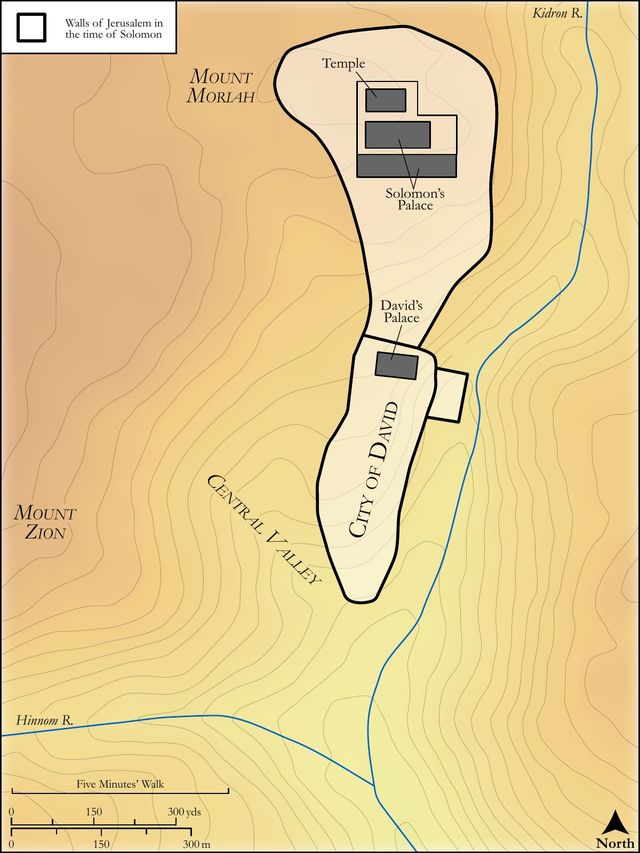
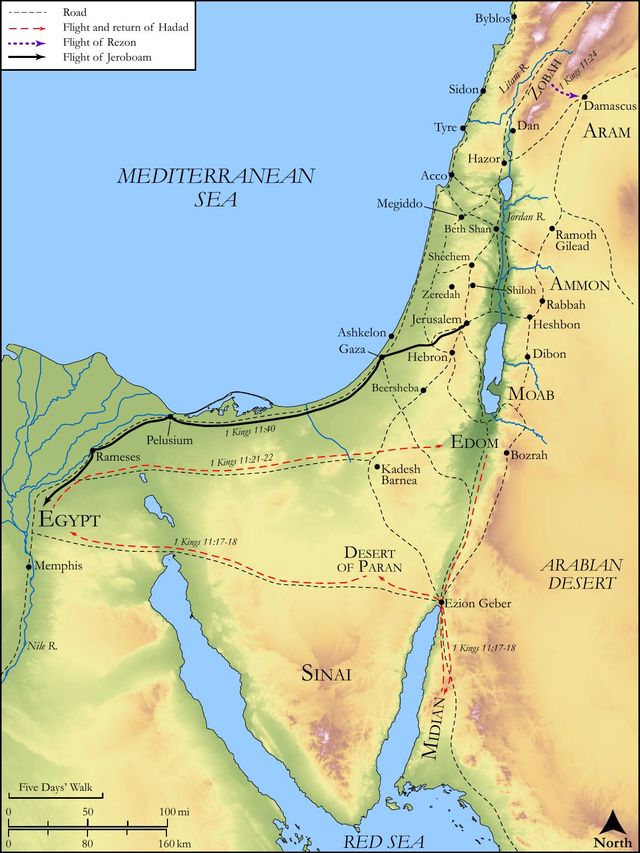
Study this verse
Public-domain commentary
Matthew Henry
From his Commentary on the Whole Bible. Henry comments on passages, not single verses — this entry covers 1 Kings 11:9–13. His three-level outline is real structure in the source text, so it is rendered as structure.
Here is, I. God's anger against Solomon for his sin. The thing he did displeased the Lord. Time was then the Lord loved Solomon (Sa2 12:24) and delighted in him (Kg1 10:9), but now the Lord was angry with Solomon (Kg1 11:9), for there was in his sin, 1. The most base ingratitude that could be. He turned from the Lord who had appeared unto him twice, once before he began to build the temple (Kg1 3:5) and once after he had dedicated it, Kg1 9:2. God keeps account of the gracious visits he makes us, whether we do or no, knows how often he has appeared to us and for us, and will remember it against us if we turn from him. God's appearing to Solomon was such a sensible confirmation of his faith as should have for ever prevented his worshipping any other god; it was also such a distinguishing favour, and put such an honour upon him, as he ought never to have forgotten, especially considering what God said to him in both these appearances. 2. The most wilful disobedience. This was the very thing concerning which God had commanded him - that he should not go after other gods, yet he was not restrained by such an express admonition, Kg1 11:10. Those who have dominion over men are apt to forget God's dominion over them; and, while they demand obedience from their inferiors, to deny it to him who is the Supreme.
II.The message he sent him hereupon (Kg1 11:11):
The Lord said unto Solomon (it is likely by a prophet) that he must expect to smart for his apostasy. And here,
1.The sentence is just, that, since he had revolted from God, part of his kingdom should revolt from his family; he had given God's glory to the creature, and therefore God would give his crown to his servant: "I will rend the kingdom from thee, in thy posterity, and will give it to thy servant, who shall bear rule over much of that for which thou hast laboured." This was a great mortification to Solomon, who pleased himself no doubt with the prospect of the entail of his rich kingdom upon his heirs for ever. Sin brings ruin upon families, cuts off entails, alienates estates, and lays men's honour in the dust.
2.Yet the mitigations of it are very kind, for David's sake (Kg1 11:12, Kg1 11:13), that is, for the sake of the promise made to David. Thus all the favour God shows to man is for Christ's sake, and for the sake of the covenant made with him. The kingdom shall be rent from Solomon's house, but,
(1.)Not immediately. Solomon shall not live to see it done, but it shall be rent out of the hand of his son, a son that was born to him by one of his strange wives, for his mother was an Ammonitess (Kg1 14:31) and probably had been a promoter of idolatry. What comfort can a man take in leaving children and an estate behind him if he do not leave a blessing behind him? Yet, if judgments be coming, it is a favour to us if they come not in our days, as Kg2 20:19.
(2.)Not wholly. One tribe, that of Judah, the strongest and most numerous, shall remain to the house of David (Kg1 11:13), for Jerusalem's sake, which David built, and for the sake of the temple there, which Solomon built; these shall not go into other hands. Solomon did not quickly nor wholly turn away from God; therefore God did not quickly nor wholly take the kingdom from him.
Upon this message which God graciously sent to Solomon, to awaken his conscience and bring him to repentance, we have reason to hope that he humbled himself before God, confessed his sin, begged pardon, and returned to his duty, that he then published his repentance in the book of Ecclesiastes, where he bitterly laments his own folly and madness (Ecc 7:25, Ecc 7:26), and warns others to take heed of the like evil courses, and to fear God and keep his commandments, in consideration of the judgment to come, which, it is likely, had made him tremble, as it did Felix. That penitential sermon was as true an indication of a heart broken for sin and turned from it as David's penitential psalms were, though of another nature. God's grace in his people works variously. Thus, though Solomon fell, he was not utterly cast down; what God had said to David concerning him was fulfilled: I will chasten him with the rod of men, but my mercy shall not depart from him, Sa2 7:14, Sa2 7:15. Though God may suffer those whom he loves to fall into sin, he will not suffer them to lie still in it. Solomon's defection, though it was much his reproach and a great blemish to his personal character, yet did not so far break in upon the character of his reign but that it was afterwards made the pattern of a good reign, Ch2 11:17, where the kings are said to have done well, while they walked in the way of David and Solomon. But, though we have all this reason to hope he repented and found mercy, yet the Holy Ghost did not think fit expressly to record his recovery, but left it doubtful, for warning to others not to sin upon presumption of repenting, for it is but a peradventure whether God will give them repentance, or, if he do, whether he will give the evidence of it to themselves or others. Great sinners may recover themselves and have the benefit of their repentance, and yet be denied both the comfort and credit of it; the guilt may be taken away, and yet not the reproach.
Continue studying 1 Kings 11:10 across the web’s major study libraries — every link below opens this exact verse, chapter, or book on the destination site.
Read & Compare
 BibleGatewayThis verse in more than 200 translations and 70 languages.
 Bible.comThe YouVersion reader — hundreds of translations, reading plans, and highlights.
 ESV.orgCrossway's official English Standard Version reader.
 NET BibleThe NET translation with 60,000+ translators' notes on every rendering decision.
 STEP BibleTyndale House's free study tool — original text, vocabulary, and scholarly resources.
 BibliaLogos Bible Software's free web reader.
 USCCBThe New American Bible (Revised Edition) with the U.S. bishops' study notes.
Commentaries
 BibleHub CommentariesDozens of classic commentaries on this verse, gathered on one page.
 StudyLightMore than 100 commentary sets — the largest collection on the web.
 BibleRefPlain-English commentary on what this verse means, verse by verse.
 Enduring WordDavid Guzik's free commentary on this chapter, widely used by Bible teachers.
 Bible Study ToolsVerse commentary alongside Greek and Hebrew study aids.
Original Language & Research
- BibleHub InterlinearThe verse word by word — original language, transliteration, and English.
- BibleHub LexiconEvery word's original-language definition and Strong's entry.
 Blue Letter BibleDeep-study tools — Strong's numbers, concordance, and word studies.
 SefariaThe Hebrew text with Rashi and centuries of Jewish commentary.
Sermons, Hymns & Audio


TrulyRandomVerse is not affiliated with these sites and doesn’t control their content. They’re linked because they’re genuinely useful.
Summary
First Kings 11:10 records the profound tragedy of King Solomon's direct and deliberate disobedience to the LORD. Despite receiving explicit divine commands not to pursue other gods, Solomon, influenced by his numerous foreign wives, turned his heart away from the God of Israel. This pivotal verse underscores the gravity of his apostasy, revealing a failure not merely of moral weakness but of a conscious rejection of the covenant relationship, setting the stage for the severe divine judgment and the eventual division of his kingdom.
Context
ShowHideLiterary Context
This verse is deeply embedded within the narrative of Solomon's spiritual decline, which begins in earnest in 1 Kings 11:1. The preceding verses detail Solomon's extensive marriage alliances with foreign women from nations explicitly forbidden by God, who "turned away his heart after other gods" (1 Kings 11:3). 1 Kings 11:9 explicitly states God's anger because Solomon's heart had turned from the LORD. Therefore, 1 Kings 11:10 serves as the direct theological explanation for God's wrath, highlighting that Solomon's actions were not merely an oversight but a conscious violation of a specific, repeated divine injunction. The verses immediately following detail the consequences, with God declaring He would tear the kingdom from Solomon's hand (1 Kings 11:11-13).
Historical & Cultural Context
Solomon's reign, initially marked by unparalleled wisdom, peace, and prosperity, was also characterized by extensive international diplomacy and trade. Marriages to foreign princesses were common political strategies among the kings of that day, intended to forge alliances and secure peace. However, the Mosaic Law, particularly in Deuteronomy 7:3-4 and Deuteronomy 17:16-17, explicitly prohibited Israelite kings from multiplying wives, especially foreign ones, precisely because they would "turn away your heart after their gods." Solomon's actions, therefore, were not merely culturally acceptable but religiously forbidden for the king of Israel, who was meant to embody covenant fidelity. His building of high places for pagan deities (1 Kings 11:7-8) for his wives was a public act of apostasy, mirroring the very practices God had warned Israel against when entering the promised land.
Key Themes
ShowHide1 Kings 11:10 powerfully articulates several core themes running through the book of 1 Kings and the broader Deuteronomistic History. First, it emphasizes the sovereignty of God and His unwavering expectation of exclusive worship, as articulated in the First Commandment. Second, it highlights the peril of idolatry, not just as a ritualistic act but as a turning of the heart away from God, which inevitably leads to spiritual and national decay. Third, the verse underscores the consequences of disobedience, demonstrating that even divinely gifted and blessed individuals like Solomon are not exempt from the covenant curses for unfaithfulness. Finally, it reinforces the theme of covenant fidelity, illustrating that the success and stability of the monarchy and the nation were directly contingent upon the king's adherence to God's commands, a principle established in the Mosaic covenant and reiterated in the Davidic covenant.
Exposition and Analysis
ShowHideKey Word Analysis
ShowHideThis verb signifies a direct, authoritative, and often repeated instruction or injunction. It implies a clear, unambiguous order from a superior to a subordinate. In this context, it underscores that God's prohibition against idolatry was not a suggestion or a general principle, but a specific, personal command given to Solomon, likely on multiple occasions, including the significant divine appearances recorded in 1 Kings 3:5-14 and 1 Kings 9:1-9. The use of this word emphasizes Solomon's culpability, as he acted in full knowledge of God's explicit will.
This primitive root means "to walk" or "to go," but when combined with the preposition ʼachar (H310, "after"), it forms the idiomatic expression "go after." This idiom denotes allegiance, devotion, and active pursuit. It's not merely a casual interest or passive observation but a profound commitment, implying that one's life path and actions are directed by the object of this "following." When applied to "other gods," it signifies idolatry in its fullest sense: the transfer of worship, loyalty, and service from the one true God to false deities. Solomon's "going after" other gods meant he actively participated in, supported, and allowed the worship of pagan idols, effectively making them the focus of his spiritual energy and the kingdom's religious life.
This plural noun refers to "gods in the ordinary sense," but specifically used (especially with the article) of the supreme God. However, in this context, combined with ʼachêr (H312, "other"), the phrase "other gods" is a standard biblical designation for pagan deities, emphasizing their falsehood and their opposition to the LORD (H3068, Yᵉhôvâh), the one true God of Israel. The very concept of "other gods" is an affront to God's exclusive claim to worship and His singular identity as the Creator and Redeemer. Solomon's pursuit of these "other gods" was a direct violation of the foundational command of the covenant: "You shall have no other gods before me" (Exodus 20:3).
Verse Breakdown
ShowHide"And had commanded him concerning this thing,"
This clause refers back to previous divine encounters with Solomon, particularly the two significant appearances of the LORD. The "thing" in question is the explicit prohibition against idolatry. God had not left Solomon in the dark; He had directly and personally communicated His will regarding exclusive worship and the dangers of turning away. This highlights the intentionality of Solomon's sin—it was not an error of ignorance but a deliberate defiance of a known divine directive.
"that he should not go after other gods:"
This specifies the content of God's command. It was a clear, unambiguous prohibition against idolatry, which encompassed both the worship of foreign deities and the adoption of their practices. The phrase "go after" implies a deep commitment and allegiance, indicating that Solomon's sin was not merely passive tolerance but an active turning of his heart and actions towards false worship, influenced by his foreign wives and their religious practices.
"but he kept not that which the LORD commanded."
This concluding clause delivers the stark verdict: Solomon failed to obey. The Hebrew verb "kept" (שמר, shâmar) implies guarding, observing, or preserving. Solomon did not guard or observe the divine command. This statement serves as the theological hinge of the verse, directly attributing the ensuing divine wrath and judgment to Solomon's personal and profound failure to maintain fidelity to the LORD. It underscores the severity of his disobedience and its direct link to the consequences that follow.
Literary Devices
ShowHideThe passage employs several literary devices to heighten the impact of Solomon's fall. Juxtaposition is prominent, contrasting Solomon's unparalleled wisdom and initial faithfulness (as seen in his prayer for wisdom in 1 Kings 3 and the building of the Temple in 1 Kings 6-8) with his profound spiritual decline. This contrast emphasizes the tragic nature of his apostasy. Repetition of the word "commanded" (implied by "kept not that which the LORD commanded") reinforces the clarity and directness of God's instruction, thereby underscoring the deliberate nature of Solomon's disobedience. The narrative also uses Irony, as the wisest king, renowned for his discernment, acts with ultimate foolishness by abandoning the source of all wisdom. This serves as a powerful cautionary tale, illustrating that even the most blessed and gifted individuals are susceptible to spiritual compromise and the dire consequences of unfaithfulness.
Theological and Thematic Connections
ShowHideThe profound disobedience of Solomon in 1 Kings 11:10 resonates deeply with the overarching biblical narrative of covenant fidelity and the consequences of apostasy. It serves as a stark reminder that God's covenant with His people demands exclusive worship and unwavering obedience. Solomon's failure, despite his unique wisdom and the direct divine warnings, underscores the persistent human tendency to stray from God, even when abundantly blessed. This verse highlights the critical theological truth that true spiritual prosperity is not found in worldly wisdom, wealth, or power, but in a steadfast and undivided heart devoted to the LORD. His turning to "other gods" was not merely a ritualistic deviation but a fundamental betrayal of the covenant relationship, leading directly to the fracturing of the united kingdom and setting a tragic precedent for subsequent kings of Israel.
Reflection and Application
ShowHideSolomon's tragic departure from God's explicit commands in 1 Kings 11:10 offers a sobering and timeless lesson for all believers. It reveals that even those who have experienced profound divine favor, wisdom, and blessing are not immune to the insidious pull of idolatry and compromise. Solomon's downfall was not sudden but a gradual turning of his heart, influenced by relationships that subtly eroded his devotion to the LORD. This warns us against the dangers of allowing seemingly minor compromises or worldly entanglements to take root, as they can slowly but surely displace God from His rightful place of supremacy in our lives. Our spiritual vigilance must extend to every area, especially our relationships and desires, ensuring that our hearts remain undivided in their loyalty to Christ.
Questions for Reflection
ShowHideFAQ
ShowHideWhat was the "thing" God commanded Solomon not to do?
ShowHideThe "thing" God commanded Solomon not to do was to "go after other gods," meaning to worship, serve, or give allegiance to any deity other than the LORD. This command was a foundational principle of the covenant God made with Israel, explicitly stated in the First Commandment. God had reiterated this warning to Solomon personally on at least two significant occasions: first, after Solomon's request for wisdom (1 Kings 3:5-14), and second, after the dedication of the Temple (1 Kings 9:1-9). In these encounters, God made it clear that Solomon's continued prosperity and the stability of his kingdom were contingent upon his exclusive devotion to Him and his obedience to His statutes and rules. Solomon's failure was not due to ignorance but to a deliberate choice to disregard these explicit divine injunctions.
Christ-Centered Fulfillment
ShowHideWhile 1 Kings 11:10 starkly portrays the failure of an earthly king to keep God's command, it simultaneously points forward to the perfect obedience of a greater King, Jesus Christ. Solomon's tragic turning away from the LORD, influenced by worldly alliances and desires, underscores humanity's inherent inability to maintain perfect fidelity to God's law. This persistent failure, seen throughout Israel's history, highlights the desperate need for a Savior who would perfectly fulfill all righteousness. Jesus, unlike Solomon, was tempted in every way, yet without sin (Hebrews 4:15). He perfectly embodied the command to love the LORD with all His heart, soul, mind, and strength, never turning to "other gods" or earthly allegiances, but always doing the will of His Father (John 6:38). Where Solomon's disobedience led to the division of a kingdom and divine judgment, Christ's perfect obedience, culminating in His sacrifice on the cross, brings about reconciliation, forgiveness, and the establishment of an eternal kingdom that will never be divided (Colossians 1:13-14). He is the true and faithful King, the ultimate Lamb of God who takes away the sin of the world (John 1:29), offering a new covenant where God's law is written on hearts, enabling a faithful obedience that Solomon could not sustain (Hebrews 8:10).