


1 Kings 11:13
Bible text: King James Version (1769 Blayney text) · Public domain
Bible text: King James Version with Strong's numbers · Public domain
Bible text: Berean Standard Bible · Public domain
Bible text: American Standard Version (1901) · Public domain
Bible text: World English Bible, Messianic edition · Public domain
Bible text: Geneva Bible (1599) · Public domain
Bible text: Young's Literal Translation · Public domain
- רַקrakonlyH7535AdvAdverb
- אֶת'et<obj.>H853DirObjMParticle Object Indicator
- כָּלkolallH3605N-mscNoun Singular Masculine Construct
- הַמַּמְלָכָהha·mam·la·Khahthe kingdomH4467Art ¦ N-fsNoun Singular Feminine Absoluteהַtheמַּמְלָכָהkingdom
- לֹאlo'notH3808NegParticle Negative
- אֶקְרָע'ek·Ra'I will tear awayH7167V-Qal-Imperf-1csVerb Qal Imperfect 1st Singular common gender
- שֵׁבֶטShe·veta tribeH7626N-msNoun Singular Masculine Absolute
- אֶחָד'e·ChadoneH259N-fsNoun Singular Feminine Absolute
- אֶתֵּן'e·TenI will giveH5414V-Qal-Imperf-1csVerb Qal Imperfect 1st Singular common gender
- לִבְנֶךָliv·Ne·khato your sonH1121Prep-l ¦ N-msc ¦ 2msNoun Singular Masculine Constructלִtoבְנֶsonךָyour
- לְמַעַןle·Ma·'anfor [the] sake ofH4616PrtParticle Conditional
- דָּוִדda·VidDavidH1732N-proper-mNoun Proper Masculine
- עַבְדִּי'av·Dimy servantH5650N-msc ¦ 1csNoun Singular Masculine Constructעַבְדִּservantיmy
- וּלְמַעַןu·le·Ma·'anand for [the] sake ofH4616Conj-w ¦ PrtParticle Conditionalוּandלְמַעַןfor [the] sake of
- יְרוּשָׁלִַםye·ru·sha·LimJerusalemH3389N-properNoun Proper Location
- אֲשֶׁר'a·SherwhichH834RelParticle Relative
- בָּחָרְתִּיba·Cha·re·tiI have chosenH977V-Qal-Perf-1csVerb Qal Perfect 1st Singular common gender
English is a literal word-by-word gloss of the Hebrew, not the KJV's wording. Why?
This is the original text the KJV's translators worked from — each Hebrew word with its own literal English meaning in this verse, prepared by scholars at Tyndale House, Cambridge. The KJV translates whole sentences, not word by word, so its wording differs: one Hebrew word can become several English words, and the KJV may choose “the LORD” where the gloss reads “Yahweh”. Both are faithful — they answer different questions. For the KJV's own rendering, switch to the KJV text.
Details
See on the biblical-era maps
Study this verse
Public-domain commentary
Matthew Henry
From his Commentary on the Whole Bible. Henry comments on passages, not single verses — this entry covers 1 Kings 11:9–13. His three-level outline is real structure in the source text, so it is rendered as structure.
Here is, I. God's anger against Solomon for his sin. The thing he did displeased the Lord. Time was then the Lord loved Solomon (Sa2 12:24) and delighted in him (Kg1 10:9), but now the Lord was angry with Solomon (Kg1 11:9), for there was in his sin, 1. The most base ingratitude that could be. He turned from the Lord who had appeared unto him twice, once before he began to build the temple (Kg1 3:5) and once after he had dedicated it, Kg1 9:2. God keeps account of the gracious visits he makes us, whether we do or no, knows how often he has appeared to us and for us, and will remember it against us if we turn from him. God's appearing to Solomon was such a sensible confirmation of his faith as should have for ever prevented his worshipping any other god; it was also such a distinguishing favour, and put such an honour upon him, as he ought never to have forgotten, especially considering what God said to him in both these appearances. 2. The most wilful disobedience. This was the very thing concerning which God had commanded him - that he should not go after other gods, yet he was not restrained by such an express admonition, Kg1 11:10. Those who have dominion over men are apt to forget God's dominion over them; and, while they demand obedience from their inferiors, to deny it to him who is the Supreme.
II.The message he sent him hereupon (Kg1 11:11):
The Lord said unto Solomon (it is likely by a prophet) that he must expect to smart for his apostasy. And here,
1.The sentence is just, that, since he had revolted from God, part of his kingdom should revolt from his family; he had given God's glory to the creature, and therefore God would give his crown to his servant: "I will rend the kingdom from thee, in thy posterity, and will give it to thy servant, who shall bear rule over much of that for which thou hast laboured." This was a great mortification to Solomon, who pleased himself no doubt with the prospect of the entail of his rich kingdom upon his heirs for ever. Sin brings ruin upon families, cuts off entails, alienates estates, and lays men's honour in the dust.
2.Yet the mitigations of it are very kind, for David's sake (Kg1 11:12, Kg1 11:13), that is, for the sake of the promise made to David. Thus all the favour God shows to man is for Christ's sake, and for the sake of the covenant made with him. The kingdom shall be rent from Solomon's house, but,
(1.)Not immediately. Solomon shall not live to see it done, but it shall be rent out of the hand of his son, a son that was born to him by one of his strange wives, for his mother was an Ammonitess (Kg1 14:31) and probably had been a promoter of idolatry. What comfort can a man take in leaving children and an estate behind him if he do not leave a blessing behind him? Yet, if judgments be coming, it is a favour to us if they come not in our days, as Kg2 20:19.
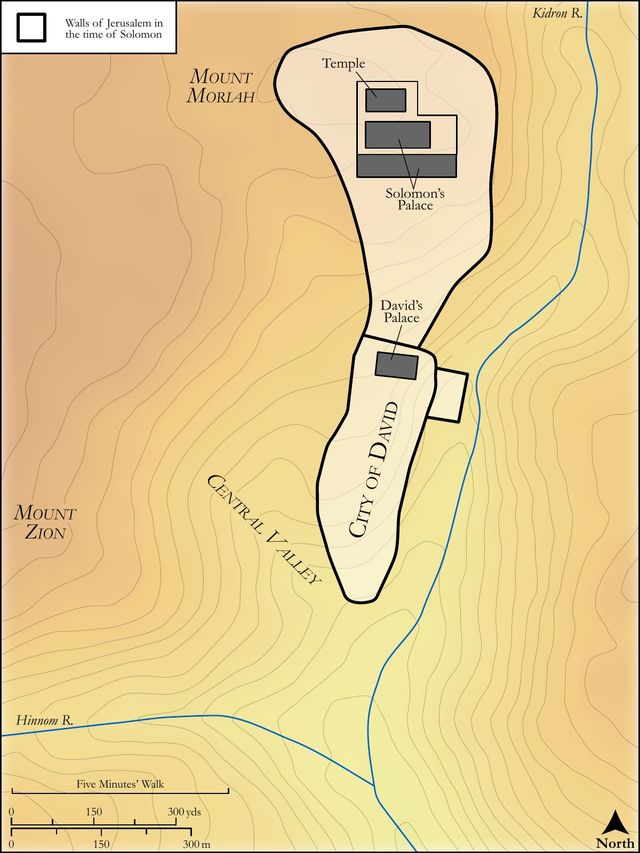
(2.)Not wholly. One tribe, that of Judah, the strongest and most numerous, shall remain to the house of David (Kg1 11:13), for Jerusalem's sake, which David built, and for the sake of the temple there, which Solomon built; these shall not go into other hands. Solomon did not quickly nor wholly turn away from God; therefore God did not quickly nor wholly take the kingdom from him.
Upon this message which God graciously sent to Solomon, to awaken his conscience and bring him to repentance, we have reason to hope that he humbled himself before God, confessed his sin, begged pardon, and returned to his duty, that he then published his repentance in the book of Ecclesiastes, where he bitterly laments his own folly and madness (Ecc 7:25, Ecc 7:26), and warns others to take heed of the like evil courses, and to fear God and keep his commandments, in consideration of the judgment to come, which, it is likely, had made him tremble, as it did Felix. That penitential sermon was as true an indication of a heart broken for sin and turned from it as David's penitential psalms were, though of another nature. God's grace in his people works variously. Thus, though Solomon fell, he was not utterly cast down; what God had said to David concerning him was fulfilled: I will chasten him with the rod of men, but my mercy shall not depart from him, Sa2 7:14, Sa2 7:15. Though God may suffer those whom he loves to fall into sin, he will not suffer them to lie still in it. Solomon's defection, though it was much his reproach and a great blemish to his personal character, yet did not so far break in upon the character of his reign but that it was afterwards made the pattern of a good reign, Ch2 11:17, where the kings are said to have done well, while they walked in the way of David and Solomon. But, though we have all this reason to hope he repented and found mercy, yet the Holy Ghost did not think fit expressly to record his recovery, but left it doubtful, for warning to others not to sin upon presumption of repenting, for it is but a peradventure whether God will give them repentance, or, if he do, whether he will give the evidence of it to themselves or others. Great sinners may recover themselves and have the benefit of their repentance, and yet be denied both the comfort and credit of it; the guilt may be taken away, and yet not the reproach.
Historical interpretation
Fourteen Centuries of Reception
2 surviving comments on this verse. Each one is dated, so this reads as a timeline rather than a list.
Select a marker to jump to its quote. Markers stagger vertically where authors wrote within a few decades of each other.
The son of this David, Solomon by name, was caught by the same snare as his father, and out of complacence to women fell away from the God of his fathers. You see how great an evil it is not to master pleasure, not to upset the ruling principle in nature and for a man to be slave of women. This same Solomon, then, who was formerly righteous and wise but who ran a risk of being deprived of all the kingdom on account of his sin, God permitted to keep the sixth part of the government on account of the renown of his father.
One tribe: Besides that of Juda, his own native tribe.
Continue studying 1 Kings 11:13 across the web’s major study libraries — every link below opens this exact verse, chapter, or book on the destination site.
Read & Compare
 BibleGatewayThis verse in more than 200 translations and 70 languages.
 Bible.comThe YouVersion reader — hundreds of translations, reading plans, and highlights.
 ESV.orgCrossway's official English Standard Version reader.
 NET BibleThe NET translation with 60,000+ translators' notes on every rendering decision.
 STEP BibleTyndale House's free study tool — original text, vocabulary, and scholarly resources.
 BibliaLogos Bible Software's free web reader.
 USCCBThe New American Bible (Revised Edition) with the U.S. bishops' study notes.
Commentaries
 BibleHub CommentariesDozens of classic commentaries on this verse, gathered on one page.
 StudyLightMore than 100 commentary sets — the largest collection on the web.
 BibleRefPlain-English commentary on what this verse means, verse by verse.
 Enduring WordDavid Guzik's free commentary on this chapter, widely used by Bible teachers.
 Bible Study ToolsVerse commentary alongside Greek and Hebrew study aids.
Original Language & Research
- BibleHub InterlinearThe verse word by word — original language, transliteration, and English.
- BibleHub LexiconEvery word's original-language definition and Strong's entry.
 Blue Letter BibleDeep-study tools — Strong's numbers, concordance, and word studies.
 SefariaThe Hebrew text with Rashi and centuries of Jewish commentary.
Sermons, Hymns & Audio


TrulyRandomVerse is not affiliated with these sites and doesn’t control their content. They’re linked because they’re genuinely useful.
Summary
1 Kings 11:13 reveals God's tempered judgment upon King Solomon, who had turned away to idolatry, declaring that while the kingdom would indeed be torn from his lineage, a remnant—specifically one tribe—would be preserved for his son. This divine mitigation was not due to Solomon's merit but entirely for the sake of God's unbreakable covenant with His servant David and for the enduring significance of Jerusalem, the city He had sovereignly chosen as the dwelling place for His Name. This verse powerfully illustrates the tension between divine justice for sin and unwavering covenant faithfulness, setting the stage for the kingdom's division while securing the Davidic line.
Context
ShowHideLiterary Context
This verse is a direct pronouncement from the Lord to Solomon, following God's explicit declaration of judgment in 1 Kings 11:11. The immediate preceding verses, 1 Kings 11:1-8, meticulously detail Solomon's profound spiritual decline, particularly his proliferation of foreign wives who led his heart astray to worship their gods, building high places for them in direct violation of God's commands. God had appeared to Solomon twice before, in 1 Kings 3:5-14 and 1 Kings 9:1-9, warning him against precisely this kind of apostasy and explicitly stating the consequences of disobedience. Verse 13, therefore, serves as a crucial theological pivot, introducing the element of divine mercy and covenant fidelity that would prevent the complete annihilation of the Davidic dynasty's rule, setting the historical and theological stage for the kingdom's division under Rehoboam.
Historical & Cultural Context
Solomon's reign, initially marked by unparalleled wisdom and prosperity, had devolved into a period of widespread syncretism and spiritual compromise. The practice of kings marrying foreign princesses was common among the kings of that day, often for political alliances, but for Israelite kings, it carried the unique danger of introducing foreign deities and practices, directly contravening the Mosaic Law's prohibitions against idolatry and intermarriage. The "one tribe" mentioned in this verse refers primarily to Judah, which would also encompass the tribe of Benjamin, as these two tribes remained loyal to the Davidic line after the split. Jerusalem, chosen by God as the site for His temple and the capital of the united monarchy, held immense religious and political significance. Its status as God's chosen city provided a theological anchor for the preservation of a remnant of the kingdom, even as the larger nation faced divine discipline and fragmentation.
Key Themes
ShowHide1 Kings 11:13 powerfully articulates several foundational themes central to the Deuteronomistic History and biblical theology. Firstly, it underscores God's unwavering covenant faithfulness, particularly to the Davidic covenant established in 2 Samuel 7, which promised an eternal dynasty. Despite Solomon's egregious failure, God's promise to David stands, demonstrating that divine promises are not contingent on human perfection. Secondly, the verse highlights the tension between divine justice and mercy. Solomon's sin justly warrants the rending of the kingdom, as declared in 1 Kings 11:11, yet God's mercy prevails, preserving a remnant. This illustrates God's character as both righteous judge and compassionate Redeemer. Thirdly, the significance of Jerusalem is emphasized. God's choice of Jerusalem, not merely as a political capital but as the place where His Name would dwell, as seen in 2 Chronicles 6:6, provides another profound reason for the partial preservation of the kingdom, tying the Davidic line to the holy city and the temple.
Exposition and Analysis
ShowHideKey Word Analysis
ShowHideThis verb (H7167) literally means "to tear," "to rip," or "to cut off." Its use here vividly conveys the violent and decisive nature of God's judgment, signifying a forceful separation and division of the kingdom. It implies a painful, irreversible act, emphasizing the severity of Solomon's apostasy and the direct consequence of his actions, yet also highlighting God's sovereign power to execute His will.
The term (H5650) applied to David is highly significant. It denotes a bond of loyal and devoted service, not merely a slave. In biblical theology, being called God's "servant" is a title of honor and intimacy, indicating one chosen and commissioned by God for a specific purpose. Here, it underscores David's unique standing before God, whose faithfulness and God's unconditional covenant with him serve as the basis for God's continued grace to his descendants, despite their failures.
This verb (H977) signifies a deliberate, sovereign act of selection. When applied to Jerusalem, it highlights the city's special status, not based on its inherent merit or strategic importance, but solely on God's divine purpose and election. It underscores that Jerusalem's significance is rooted in God's initiative and His plan for redemption, making it a focal point of His covenantal dealings and the place where His presence would uniquely reside.
Verse Breakdown
ShowHide"Howbeit I will not rend away all the kingdom;"
This clause introduces the crucial mitigation of the judgment previously declared in 1 Kings 11:11. While the kingdom will be torn from Solomon's lineage, it will not be a complete and utter removal of all royal authority. This demonstrates God's restraint and mercy, preventing total annihilation of the Davidic dynasty, thereby preserving the line through which the Messiah would come.
"[but] will give one tribe to thy son"
This specifies the extent of the preservation. The "one tribe" refers primarily to Judah, which also included the tribe of Benjamin, as these two tribes largely remained loyal to the Davidic line after the kingdom's division. This ensures the continuation of a remnant of the Davidic kingdom, maintaining the integrity of the messianic promise and the continuity of the covenant line.
"for David my servant's sake,"
This phrase provides the primary and most profound reason for God's mercy. It is not for Solomon's sake, who has grievously sinned and provoked God's wrath, but for the sake of God's unbreakable covenant with David. This highlights God's unwavering faithfulness to His promises, even when the human party to the covenant fails. David's past obedience and God's unconditional promise to him serve as the foundation for this act of sovereign grace.
"and for Jerusalem's sake which I have chosen."
This offers a secondary, yet equally profound, reason for the preservation of a remnant. God's sovereign choice of Jerusalem as the place where His Name would dwell, as recorded in 2 Chronicles 6:6, signifies its unique theological importance in His redemptive plan. The preservation of a portion of the kingdom is intrinsically linked to the preservation of the holy city, which would remain the center of true worship and the future birthplace of the Messiah.
Literary Devices
ShowHideThe passage employs several significant literary devices that amplify its theological weight. Divine Speech is central, as the words are a direct pronouncement from God Himself, lending them ultimate authority and immutable truth. The phrase "rend away" functions as a powerful metaphor for the violent and decisive division of the kingdom, emphasizing the severity of God's judgment through a vivid, physical image. There is a clear use of contrast between the full judgment threatened ("rend away all the kingdom") and the tempered execution ("not rend away all... but will give one tribe"), highlighting God's justice tempered with His profound mercy. The repetition of "for... sake" ("for David my servant's sake, and for Jerusalem's sake") serves as a powerful motif, emphasizing the two foundational reasons for God's covenant loyalty and election. This repetition reinforces that God's actions are rooted in His unchanging character and prior commitments, not in human merit. This also functions as a form of covenantal language, demonstrating God's unwavering adherence to His established promises.
Theological and Thematic Connections
ShowHide1 Kings 11:13 is a pivotal theological statement, articulating the profound tension between God's righteous judgment against sin and His unwavering faithfulness to His covenant promises. While Solomon's apostasy justly incurs severe consequences, God's character as a covenant-keeping God prevails. The preservation of a single tribe for David's sake underscores that God's promises are ultimately unconditional, rooted in His own character and sovereign election rather than human performance. This divine fidelity ensures the continuity of the messianic line through Judah, demonstrating God's overarching redemptive plan. The inclusion of Jerusalem's chosen status further ties the Davidic covenant to God's broader purposes for a holy dwelling place and a people set apart for His name, emphasizing the city's role in the unfolding of salvation history.
Reflection and Application
ShowHide1 Kings 11:13 offers profound lessons for contemporary believers, reminding us of the enduring nature of God's faithfulness even in the face of human failure. While Solomon's grievous sins brought severe consequences—the division of his kingdom—God's promise to David remained unbroken, ensuring the continuation of the lineage through which the Messiah would ultimately come. This should instill in us a deep confidence in God's steadfast love and His unwavering commitment to His redemptive plan, even when we stumble. However, it also serves as a sober warning: sin has real and painful consequences, not only for us personally but potentially for generations and for the wider community. Our choices, whether in obedience or disobedience, contribute to a legacy. We are called to live faithfully, not presuming upon God's grace, but trusting in His mercy while striving for holiness and obedience. Ultimately, this verse points us to the truth that God's purposes will prevail, not because of our strength or merit, but because of His sovereign will and His eternal covenant.
Questions for Reflection
ShowHideFAQ
ShowHideWhy did God not completely "rend away" the kingdom from Solomon's line, given his severe idolatry?
ShowHideGod's decision to preserve a remnant of the kingdom, specifically "one tribe" (Judah, including Benjamin), was not due to any merit on Solomon's part. Instead, 1 Kings 11:13 explicitly states two profound reasons: "for David my servant's sake, and for Jerusalem's sake which I have chosen." This highlights God's unwavering faithfulness to His covenant with David, as detailed in 2 Samuel 7:12-16, which promised an eternal dynasty. It also underscores His commitment to Jerusalem as the chosen city for His Name to dwell, a truth emphasized in 2 Chronicles 6:6. God's character is both perfectly just (punishing sin) and profoundly merciful (keeping His promises), ensuring the continuity of the lineage through which the Messiah would eventually come.
What is the significance of God calling David "my servant" in this context?
ShowHideThe title "my servant" (Hebrew: ʿeved) is a profound term of endearment and honor in the Old Testament, signifying a special relationship of trust, obedience, and divine commissioning. When God refers to David as "my servant" in 1 Kings 11:13, it underscores that the preservation of a portion of the kingdom is a direct consequence of God's unbreakable covenant with David. This covenant was established because of David's faithful heart and his general obedience, despite his own personal failings. It emphasizes that God's promises are rooted in His own immutable character and prior commitments, not solely on the immediate performance of subsequent generations. This covenantal faithfulness to David became the bedrock for Israel's hope, ultimately pointing to the ultimate "Servant" of the Lord, Jesus Christ.
Christ-Centered Fulfillment
ShowHide1 Kings 11:13, with its emphasis on God's unwavering faithfulness to the Davidic covenant despite human failure, finds its ultimate and glorious fulfillment in Jesus Christ. The preservation of "one tribe" (Judah) for David's sake ensured the continuity of the royal lineage from which the Messiah would be born. Jesus, the "Son of David" who perfectly embodies the Davidic covenant, is the true and eternal King whose kingdom will never be divided or destroyed, as affirmed in Matthew 1:1 and throughout the New Testament. Unlike Solomon, who turned away, Jesus is the perfectly faithful "servant" of the Lord, who perfectly fulfilled God's will and humbled Himself in obedience even to death on a cross, as described in Philippians 2:7-8. Furthermore, just as Jerusalem was chosen by God as the place for His Name to dwell, Christ is the true Temple, the dwelling place of God among humanity, as He Himself declared in John 2:19-21. He is the spiritual center of God's eternal kingdom, the "New Jerusalem" where God's presence dwells fully among His redeemed people, as envisioned in Revelation 21:2. Thus, the partial preservation of the kingdom in 1 Kings 11:13 is a powerful testament to God's unwavering commitment to His redemptive plan, culminating in the reign of Christ, who perfectly embodies the Davidic covenant and establishes an everlasting kingdom of peace and righteousness for all who believe.