


1 Kings 9:2
Bible text: King James Version (1769 Blayney text) · Public domain
Bible text: Berean Standard Bible · Public domain
Bible text: American Standard Version (1901) · Public domain
Bible text: World English Bible, Messianic edition · Public domain
Bible text: Geneva Bible (1599) · Public domain
Bible text: Young's Literal Translation · Public domain
- וַיֵּרָאvai·ye·Ra'and he appearedH7200Conj-w ¦ V-Niphal-ConsecImperf-3msVerb Niphal Consecutive Imperfect 3rd Singular Masculineוַandיֵּרָאhe appeared
- יְהוָהYah·wehYahwehH3068N-properNoun Proper Title
- אֶל'eltoH413PrepPreposition
- שְׁלֹמֹהshe·lo·MohSolomonH8010N-proper-mNoun Proper Masculine
- שֵׁנִיתshe·Nita second [time]H8145Adj-fsAdjective Numerical Position Singular Feminine Absolute
- כַּאֲשֶׁרka·'a·Sherjust asH834Prep-k ¦ RelParticle Relativeכַּjustאֲשֶׁרas
- נִרְאָהnir·'Ahhe had appearedH7200V-Niphal-Perf-3msVerb Niphal Perfect 3rd Singular Masculine
- אֵלָיו'e·Lavto himH413Prep ¦ 3msPrepositionאֵלָיtoוhim
- בְּגִבְעוֹןbe·giv·'onat GibeonH1391Prep-b ¦ N-properNoun Proper LocationבְּatגִבְעוֹןGibeon
English is a literal word-by-word gloss of the Hebrew, not the KJV's wording. Why?
This is the original text the KJV's translators worked from — each Hebrew word with its own literal English meaning in this verse, prepared by scholars at Tyndale House, Cambridge. The KJV translates whole sentences, not word by word, so its wording differs: one Hebrew word can become several English words, and the KJV may choose “the LORD” where the gloss reads “Yahweh”. Both are faithful — they answer different questions. For the KJV's own rendering, switch to the KJV text.
Details
See on the biblical-era maps

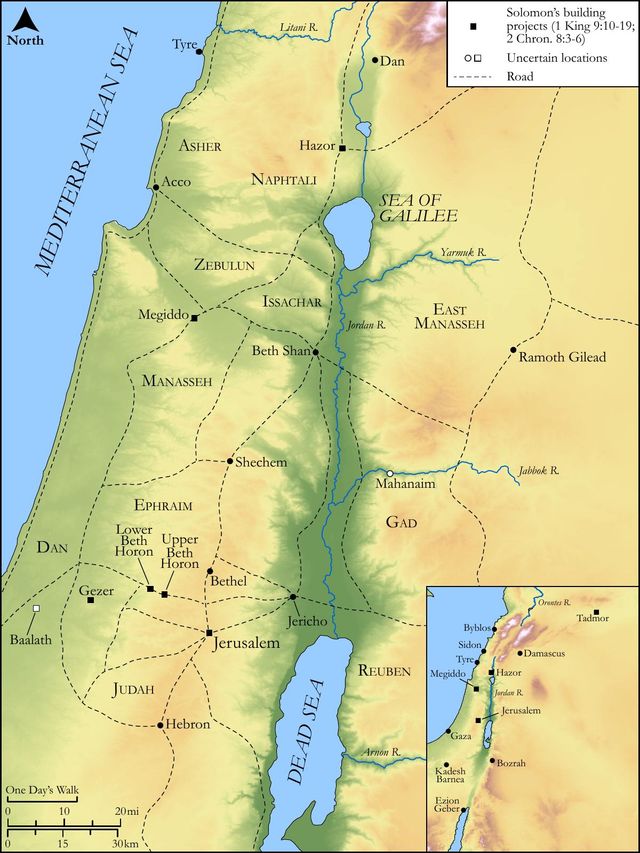
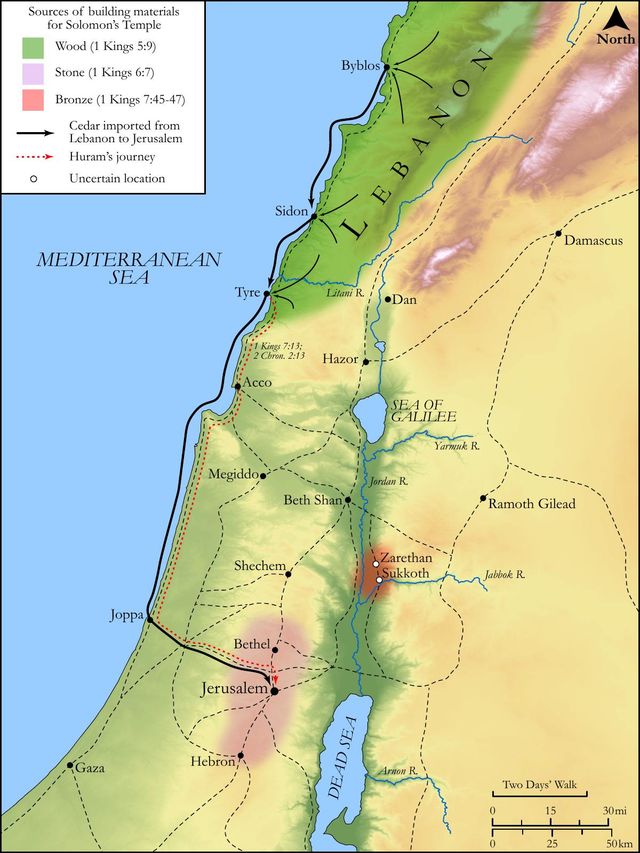
Study this verse
Public-domain commentary
Matthew Henry
From his Commentary on the Whole Bible. Henry comments on passages, not single verses — this entry covers 1 Kings 9:1–9. His three-level outline is real structure in the source text, so it is rendered as structure.
God had given a real answer to Solomon's prayer, and tokens of his acceptance of it, immediately, by the fire from heaven which consumed the sacrifices (as we find Ch2 7:1); but here we have a more express and distinct answer to it. Observe,
I.In what way God gave him this answer.
He appeared to him, as he had done at Gibeon, in the beginning of his reign, in a dream or vision, Kg1 9:2. The comparing of it with that intimates that it was the very night after he had finished the solemnities of his festival, for so that was, Ch2 1:6, Ch2 1:7. And then Kg1 9:1, speaking of Solomon's finishing all his buildings, which was not till many years after the dedication of the temple, must be read thus, Solomon finished (as it is Ch2 7:11), and Kg1 9:2 must be read, and the Lord had appeared.
II.The purport of this answer.
1.He assures him of his special presence in the temple he had built, in answer to the prayer he had made (Kg1 9:3): I have hallowed this house. Solomon had dedicated it, but it was God's prerogative to hallow it - to sanctify or consecrate it. Men cannot make a place holy, yet what we, in sincerity, devote to God, we may hope he will graciously accept as his; and his eyes and his heart shall be upon it. Apply it to persons, the living temples. Those whom God hallows or sanctifies, whom he sets apart for himself, have his eye, his heart, his love and care, and this perpetually.
2.He shows him that he and his people were for the future upon their good behaviour. Let them not be secure now, as if they might live as they please now that they have the temple of the Lord among them, Jer 7:4. No, this house was designed to protect them in their allegiance to God, but not in their rebellion or disobedience. God deals plainly with us, sets before us good and evil, the blessing and the curse, and lets us know what we must trust to. God here tells Solomon,
(1.)That the establishment of his kingdom depended upon the constancy of his obedience (Kg1 9:4, Kg1 9:5): "If thou wilt walk before me as David did, who left thee a good example and encouragement enough to follow it (and advantage thou wilt be accountable for if thou do not improve it), if thou wilt walk as he did, in integrity of heart and uprightness" (for that is the main matter - no religion without sincerity), "then I will establish the throne of thy kingdom, and not otherwise," for on that condition the promise was made, Psa 132:12. If we perform our part of the covenant, God will not fail to perform his; if we improve the grace God has given us, he will confirm us to the end. Let not the children of godly parents expect the entail of the blessing, unless they tread in the steps of those that have gone before them to heaven, and keep up the virtue and piety of their ancestors.
(2.)That the ruin of his kingdom would be the certain consequence of his or his children's apostasy from God (Kg1 9:6): "But know thou, and let thy family and kingdom know it, and be admonished by it, that if you shall altogether turn from following me" (so it is thought it should be read), "if you forsake my service, desert my altar, and go and serve other gods" (for that was the covenant-breaking sin), "if you or your children break off from me, this house will not save you. But, [1.] Israel, though a holy nation, will be cut off (Kg1 9:7), by one judgment after another, till they become a proverb and a by-word, and the most despicable people under the sun, though now the most honourable." This supposes the destruction of the royal family, though it is not particularly threatened; the king is, of course, undone, if the kingdom be. [2.] "The temple, though a holy house, which God himself has hallowed for his name, shall be abandoned and laid desolate (Kg1 9:8, Kg1 9:9): This house which is high." They prided themselves in the stateliness and magnificence of the structure, but let them know that it is not so high as to be out of the reach of God's judgments, if they vilify it so as to exchange it for groves and idol-temples, and yet, at the same time, magnify it so as to think it will secure the favour of God to them though they ever so much corrupt themselves. This house which is high. Those that now pass by it are astonished at the bulk and beauty of it; the richness, contrivance, and workmanship, are admired by all spectators, and it is called a stupendous fabric; but, if you forsake God, its height will make its fall the more amazing, and those that pass by will be as much astonished at its ruins, while the guilty, self-convicted, self-condemned, Israelites, will be forced to acknowledge, with shame, that they themselves were the ruin of it; for when it shall be asked, Why hath the Lord done thus to his house? they cannot but answer, It was because they forsook the Lord their God. See Deu 29:24, Deu 29:25. Their sin will be read in their punishment. They deserted the temple, and therefore God deserted it; they profaned it with their sins and laid it common, and therefore God profaned it with his judgments and laid it waste. God gave Solomon fair warning of this, now that he had newly built and dedicated it, that he and his people might not be high-minded, but fear.
Continue studying 1 Kings 9:2 across the web’s major study libraries — every link below opens this exact verse, chapter, or book on the destination site.
Read & Compare
 BibleGatewayThis verse in more than 200 translations and 70 languages.
 Bible.comThe YouVersion reader — hundreds of translations, reading plans, and highlights.
 ESV.orgCrossway's official English Standard Version reader.
 NET BibleThe NET translation with 60,000+ translators' notes on every rendering decision.
 STEP BibleTyndale House's free study tool — original text, vocabulary, and scholarly resources.
 BibliaLogos Bible Software's free web reader.
 USCCBThe New American Bible (Revised Edition) with the U.S. bishops' study notes.
Commentaries
 BibleHub CommentariesDozens of classic commentaries on this verse, gathered on one page.
 StudyLightMore than 100 commentary sets — the largest collection on the web.
 BibleRefPlain-English commentary on what this verse means, verse by verse.
 Enduring WordDavid Guzik's free commentary on this chapter, widely used by Bible teachers.
 Bible Study ToolsVerse commentary alongside Greek and Hebrew study aids.
Original Language & Research
- BibleHub InterlinearThe verse word by word — original language, transliteration, and English.
- BibleHub LexiconEvery word's original-language definition and Strong's entry.
 Blue Letter BibleDeep-study tools — Strong's numbers, concordance, and word studies.
 SefariaThe Hebrew text with Rashi and centuries of Jewish commentary.
Sermons, Hymns & Audio


TrulyRandomVerse is not affiliated with these sites and doesn’t control their content. They’re linked because they’re genuinely useful.
Summary
1 Kings 9:2 marks a profoundly significant moment in the reign of King Solomon: the LORD's second direct manifestation to him. This divine encounter occurs immediately following the completion of the magnificent Temple in Jerusalem and Solomon's own royal palace, pivotal achievements that symbolized the zenith of his early rule and the establishment of God's dwelling place among His people. This appearance is God's direct response to Solomon's heartfelt dedication prayer for the newly consecrated Temple, serving to affirm His abiding presence with Israel and to unequivocally reiterate the terms of His covenant with the king and the nation.
Context
ShowHideLiterary Context
This verse serves as a crucial hinge in the narrative of 1 Kings. It directly follows the monumental twenty-year building project of Solomon's Temple and his own palace, as detailed in 1 Kings 9:1. The preceding chapter, 1 Kings 8, describes the grand dedication of the Temple, culminating in Solomon's extensive and moving prayer for the nation and God's subsequent descent of glory upon the Temple, as recorded in 1 Kings 8:10-11. This second appearance of the LORD is therefore a direct, personal divine response to Solomon's prayer and the completion of the sacred edifice, setting the stage for the conditional covenant warnings and promises that immediately follow in 1 Kings 9:3-9. It transitions the narrative from the triumph of construction and dedication to the solemnity of divine expectation and covenant responsibility.
Historical & Cultural Context
Solomon's reign represents the golden age of the united monarchy in Israel, marked by unparalleled wealth, wisdom, and architectural achievements. The construction of the Temple was not merely a building project but the fulfillment of David's longing and a central act of national identity and worship. Direct divine appearances to kings were rare but highly significant, validating their rule and establishing a direct line of communication between the LORD and the monarch, as when He appeared to Solomon in a dream at Gibeon. The reference to Gibeon recalls the earlier, foundational encounter where Solomon famously requested wisdom over wealth or long life (1 Kings 3:5-14), which set the trajectory for his prosperous and wise reign. This second appearance underscores the ongoing nature of God's relationship with His chosen king and nation, particularly after such a monumental act of devotion as the Temple's dedication. It places Solomon firmly within the tradition of biblical figures who received direct divine revelation, emphasizing the unique nature of his kingship.
Key Themes
ShowHideThe verse powerfully contributes to several overarching themes within 1 Kings and the broader Deuteronomistic History. First, it highlights Divine Faithfulness and Presence: God demonstrates His unwavering commitment to His covenant promises by responding to Solomon's prayer and the dedication of the Temple, signifying His active presence among His people. This echoes the promise of God to dwell among Israel, a theme central to the Pentateuch and fulfilled in the Tabernacle and now the Temple. Second, it underscores the Continuity of Relationship and Covenant: By explicitly linking this appearance to the one at Gibeon, the text emphasizes that God's engagement with Solomon is not a one-time event but an ongoing, personal relationship, albeit one with clear conditions. This reinforces the idea that God's covenant with David (2 Samuel 7) is being worked out through Solomon, but with a renewed emphasis on the king's personal accountability. Third, it foreshadows the theme of Conditional Blessing and Judgment: While affirming His presence, the LORD's subsequent words in 1 Kings 9:3-9 reiterate the conditional nature of His blessings, emphasizing that continued prosperity and divine favor are contingent upon Solomon's and Israel's obedience to God's laws, setting up the tragic trajectory of the later monarchy and the eventual exile.
Exposition and Analysis
ShowHideKey Word Analysis
ShowHideThis is the sacred, covenantal name of God, YHWH, often translated as "Jehovah" or "the LORD." It signifies the self-existent, eternal, and unchanging God who is in covenant relationship with His people. The use of this specific name emphasizes that the appearance is not from a generic deity but from the personal God of Israel, the one who made promises to Abraham, delivered Israel from Egypt, and established His covenant with David. His appearance underscores His active involvement in Israel's history and His personal commitment to Solomon and the nation.
Derived from the root meaning "to see," this word in its passive or reflexive form ("to be seen," "to reveal oneself") denotes a direct, often visible or profoundly experiential manifestation of the divine presence—a theophany. It implies a deliberate act of divine self-disclosure, not merely a dream or vision, but a significant and unmistakable communication that confirms God's active engagement with Solomon and the future of Israel. This is a personal, direct encounter, emphasizing the intimacy and gravity of the divine-human interaction, confirming the authenticity and authority of the message that follows.
The explicit mention of this being the "second time" is crucial for establishing continuity and emphasizing the significance of the divine initiative. It immediately draws a parallel to the first appearance at Gibeon (1 Kings 3:5), establishing a progressive nature of God's revelation and covenant dealings with His chosen king. This repetition underscores that this appearance is not a random event but a deliberate, purposeful follow-up to the initial encounter, marking a new phase in their relationship and a reiteration of divine commitment and expectation, particularly after the monumental achievement of the Temple's completion.
This geographical reference serves as a powerful allusion to the inaugural, foundational encounter between God and Solomon. At Gibeon, Solomon, in humility, chose wisdom to govern God's people over personal gain, a choice that pleased the LORD and led to an extraordinary endowment of wisdom, wealth, and honor (1 Kings 3:5-14). By linking the second appearance to the first, the text reminds the reader of the initial covenant and the principles upon which Solomon's reign was established. It suggests that the terms of this second encounter, though perhaps more conditional, are rooted in the same divine faithfulness and human responsibility established at Gibeon.
Verse Breakdown
ShowHide"That the LORD appeared to Solomon the second time"
This clause highlights God's sovereign initiative and personal engagement. The LORD, the covenant God of Israel, takes the active role in initiating this profound encounter with Solomon. The phrase "the second time" immediately signals a deliberate, purposeful follow-up to a previous, significant divine manifestation. It indicates that this is not a casual or isolated event but a continuation of God's direct interaction with Solomon, marking a new phase in their relationship, particularly after the monumental achievement of the Temple's completion and Solomon's dedication prayer. This appearance is a direct response to human action (the prayer and the Temple's dedication) but is entirely God's prerogative and timing.
"as he had appeared unto him at Gibeon"
This comparative clause explicitly links the current manifestation to the earlier, highly significant theophany at Gibeon. The phrase "as he had appeared" suggests a similar nature of encounter—direct, personal, and profoundly impactful, carrying the same weight and authority. This connection serves to establish continuity in God's dealings with Solomon, grounding the present divine message in the context of the initial covenant and the wisdom granted to Solomon. It reminds Solomon, and the reader, of the foundational principles of his kingship—humility, wisdom, and obedience—which were established at Gibeon, thereby setting the stage for the conditional warnings that follow.
Literary Devices
ShowHideThe verse employs several significant literary devices. Allusion is central, as the phrase "as he had appeared unto him at Gibeon" directly references the pivotal event in 1 Kings 3, immediately recalling Solomon's humble request for wisdom and God's generous response. This allusion establishes a crucial thematic and narrative link, reminding the reader of the covenantal foundations of Solomon's reign and setting a precedent for divine interaction. Repetition of the concept of God "appearing" to Solomon underscores the divine initiative and the personal, direct nature of God's relationship with His chosen king. This repetition also emphasizes the significance of these direct divine communications as markers in Solomon's spiritual and political journey, highlighting God's active involvement in his rule. Furthermore, the verse functions as a form of Foreshadowing, setting the stage for the conditional covenant and warnings that the LORD will deliver to Solomon in the subsequent verses (1 Kings 9:3-9). The solemnity and directness of this second appearance prepare the reader for the weighty message that follows, highlighting the critical importance of obedience for the continued blessing of the monarchy and the nation.
Theological and Thematic Connections
ShowHideThis second appearance of the LORD to Solomon is a profound theological statement about God's active involvement in human history and His commitment to His covenant people. It demonstrates God's attentiveness to the prayers and faithful actions of His servants, as this appearance is a direct response to Solomon's dedication of the Temple. Yet, it also underscores the enduring truth that divine favor and presence are often accompanied by significant responsibilities and conditional expectations. God's presence is not a guarantee of unconditional blessing, but rather an invitation to deeper obedience and faithfulness. This encounter reinforces the Deuteronomistic theology prevalent in 1 Kings, where blessing follows obedience and judgment follows disobedience, particularly for the king who serves as the spiritual leader of the nation. It highlights God's desire for an ongoing, personal relationship with His chosen leaders, while simultaneously emphasizing the gravity of their covenant obligations.
Reflection and Application
ShowHideThe LORD's second appearance to Solomon serves as a powerful reminder that God is not a distant deity but one who actively engages with His people, responding to their prayers and acknowledging their efforts to honor Him. Just as He appeared to Solomon after the completion of the Temple, God is attentive to our sincere acts of worship and service, and He desires to communicate with us. However, this verse also carries a profound challenge: divine favor and significant spiritual achievements (like building a temple or experiencing a breakthrough) do not exempt us from the ongoing call to obedience. In fact, they often intensify the responsibility. Our continued walk with God, even after moments of great spiritual breakthrough or success, requires sustained faithfulness and adherence to His will. God's presence is a precious gift, but it also calls for reverence, humility, and a steadfast commitment to living according to His commands. It prompts us to consider how we respond to moments of divine affirmation in our own lives—do we grow complacent, or are we spurred to deeper devotion and obedience? This passage encourages us to seek God's presence not just for blessing, but for guidance and to align our lives more fully with His purposes.
Questions for Reflection
ShowHideFAQ
ShowHideWhy is it important that this is the "second" appearance of the LORD to Solomon?
ShowHideThe designation "second" is crucial because it immediately links this encounter to the first, highly significant appearance at Gibeon, recorded in 1 Kings 3:5. This connection emphasizes continuity in God's direct, personal dealings with Solomon. The first appearance established the foundation of Solomon's reign, where he chose wisdom over wealth. The second appearance, coming after the completion of the Temple, marks a new phase, a divine response to Solomon's faithfulness in building God's house, but also a reiteration of the conditional nature of God's covenant. It signifies that God's relationship with His king is ongoing, purposeful, and dynamic, responding to key moments in Solomon's life and reign. It also highlights the gravity of the message that follows, as it builds upon the established divine-human relationship and underscores the escalating responsibility that comes with increased divine favor and revelation.
What was the primary purpose or message of this second appearance?
ShowHideThe primary purpose of this second appearance was multifaceted. First, it was a divine affirmation and response to Solomon's dedication prayer for the Temple (1 Kings 8:22-53). God explicitly states, "I have heard your prayer and your plea, which you have made before me. I have consecrated this house that you have built, by putting my name there forever" (1 Kings 9:3). This confirms God's acceptance of the Temple as His dwelling place and His commitment to His covenant with Israel. Second, and crucially, it was to reiterate and reinforce the conditional nature of God's covenant with Solomon and his descendants. The subsequent verses (1 Kings 9:4-9) lay out clear stipulations: continued blessing and an enduring dynasty are contingent upon Solomon's and Israel's obedience to God's statutes and commandments. Failure to obey would result in severe judgment, including the destruction of the very Temple just consecrated. Thus, the appearance served as both a confirmation of presence and a solemn warning, setting the stage for the narrative trajectory of the rest of 1 Kings.
Christ-Centered Fulfillment
ShowHideWhile 1 Kings 9:2 describes a direct theophany to an earthly king, its ultimate theological trajectory points towards Christ. Solomon, in his wisdom and role as temple builder, foreshadows a greater reality. Jesus is the "greater Solomon" (Matthew 12:42), the one in whom all wisdom resides, and the ultimate Temple, the true dwelling place of God among humanity. The physical presence of God in the Jerusalem Temple, affirmed by this appearance to Solomon, finds its ultimate and perfect fulfillment in the incarnate Christ, for "in him the whole fullness of deity dwells bodily" (Colossians 2:9). The conditional covenant offered to Solomon, where blessings were tied to human obedience, points to the New Covenant established in Christ's blood, which is founded on God's unconditional grace and fulfilled by Jesus' perfect obedience (Hebrews 8:6-13). While God "appeared" to Solomon in a visible manifestation, in Christ, God has fully and finally revealed Himself, for "no one has ever seen God; the only God, who is at the Father's side, he has made him known" (John 1:18). Thus, the divine presence affirmed to Solomon is perfectly embodied in Jesus, who is Emmanuel, "God with us" (Matthew 1:23), and through whom believers become living temples of the Holy Spirit (1 Corinthians 6:19), experiencing God's presence in a way far surpassing the Old Testament temple.