


1 Kings 6:12
Bible text: King James Version (1769 Blayney text) · Public domain
Bible text: King James Version with Strong's numbers · Public domain
Bible text: Berean Standard Bible · Public domain
Bible text: American Standard Version (1901) · Public domain
Bible text: World English Bible, Messianic edition · Public domain
Bible text: Geneva Bible (1599) · Public domain
Bible text: Young's Literal Translation · Public domain
- הַבַּיִתha·Ba·yitthe houseH1004Art ¦ N-msNoun Singular Masculine Absoluteהַtheבַּיִתhouse
- הַזֶּהha·Zeh<the> thisH2088Art ¦ PrtParticle Demonstrativeהַ<the>זֶּהthis
- אֲשֶׁר'a·SherwhichH834RelParticle Relative
- אַתָּה'a·TahyouH859Pro-2msPronoun Personal 2nd Singular Masculine
- בֹנֶהvo·Neh[are] buildingH1129V-Qal-Prtcpl-msVerb Qal Participle Singular Masculine Absolute
- אִם'imifH518PrtParticle Conditional
- תֵּלֵךְte·Lekhyou will walkH1980V-Qal-Imperf-2msVerb Qal Imperfect 2nd Singular Masculine
- בְּחֻקֹּתַיbe·chu·ko·Taiin my statutesH2708Prep-b ¦ N-fpc ¦ 1csNoun Plural Feminine Constructבְּinחֻקֹּתַstatutesיmy
- וְאֶתve·'Etand <obj.>H853Conj-w ¦ DirObjMParticle Object Indicatorוְandאֶת<obj.>
- מִשְׁפָּטַיmish·pa·Taimy judgmentsH4941N-mpc ¦ 1csNoun Plural Masculine Constructמִשְׁפָּטַjudgmentsיmy
- תַּעֲשֶׂהta·'a·Sehyou will observeH6213V-Qal-Imperf-2msVerb Qal Imperfect 2nd Singular Masculine
- וְשָׁמַרְתָּve·sha·mar·Taand you will keepH8104Conj-w ¦ V-Qal-ConsecPerf-2msVerb Qal Consecutive Perfect 2nd Singular Masculineוְandשָׁמַרְתָּyou will keep
- אֶת'et<obj.>H853DirObjMParticle Object Indicator
- כָּלkolallH3605N-mscNoun Singular Masculine Construct
- מִצְוֹתַיmitz·vo·Taimy commandmentsH4687N-fpc ¦ 1csNoun Plural Feminine Constructמִצְוֹתַcommandmentsיmy
- לָלֶכֶתla·Le·khetto walkH1980Prep-l ¦ V-Qal-InfVerb Qal Infinitive Constructלָtoלֶכֶתwalk
- בָּהֶםba·Hemin <the> themPrep-b ¦ 3mpSuffix Personal 3rd Plural Masculineבָּin <the>הֶםthem
- וַהֲקִמֹתִיva·ha·ki·mo·Tiand I will establishH6965Conj-w ¦ V-Hiphil-ConsecPerf-1csVerb Hiphil Consecutive Perfect 1st Singular common genderוַandהֲקִמֹתִיI will establish
- אֶת'et<obj.>H853DirObjMParticle Object Indicator
- דְּבָרִיde·va·Rimy wordH1697N-msc ¦ 1csNoun Singular Masculine Constructדְּבָרִwordיmy
- אִתָּךְ'i·Takhwith youH854Prep ¦ 2msPreposition Definiteאִתָּwithךְyou
- אֲשֶׁר'a·SherwhichH834RelParticle Relative
- דִּבַּרְתִּיdi·Bar·tiI spokeH1696V-Piel-Perf-1csVerb Piel Perfect 1st Singular common gender
- אֶל'eltoH413PrepPreposition
- דָּוִדda·VidDavidH1732N-proper-mNoun Proper Masculine
- אָבִיךָ'a·Vi·khayour fatherH1N-msc ¦ 2msNoun Singular Masculine Constructאָבִיfatherךָyour
English is a literal word-by-word gloss of the Hebrew, not the KJV's wording. Why?
This is the original text the KJV's translators worked from — each Hebrew word with its own literal English meaning in this verse, prepared by scholars at Tyndale House, Cambridge. The KJV translates whole sentences, not word by word, so its wording differs: one Hebrew word can become several English words, and the KJV may choose “the LORD” where the gloss reads “Yahweh”. Both are faithful — they answer different questions. For the KJV's own rendering, switch to the KJV text.
Details
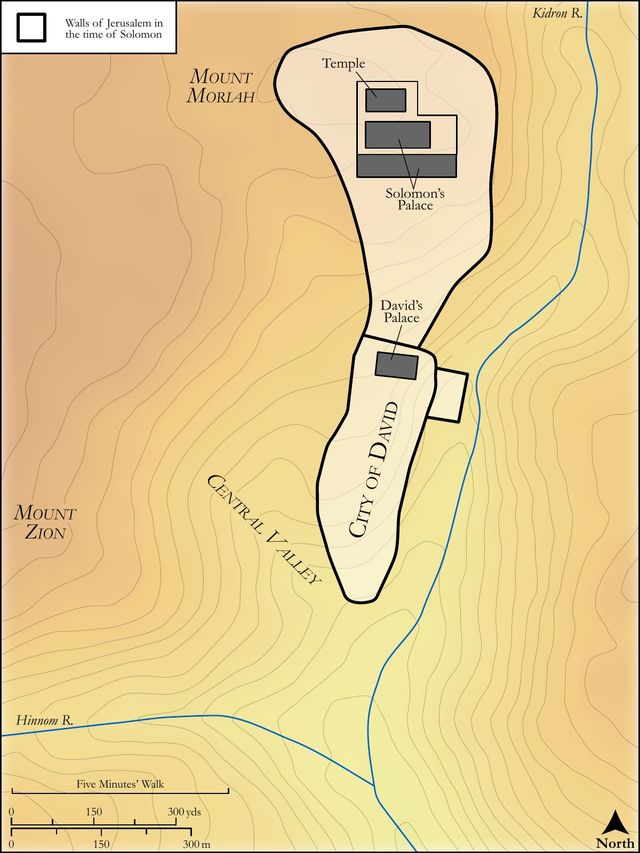
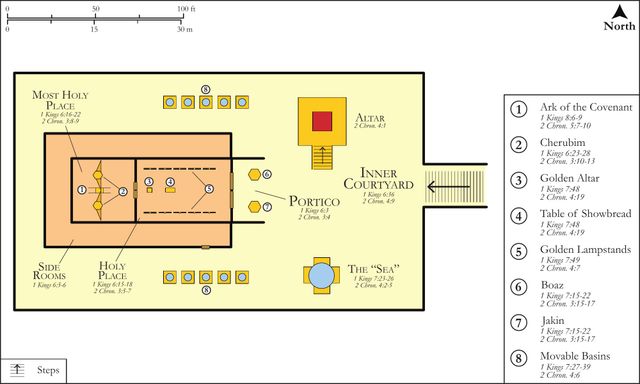
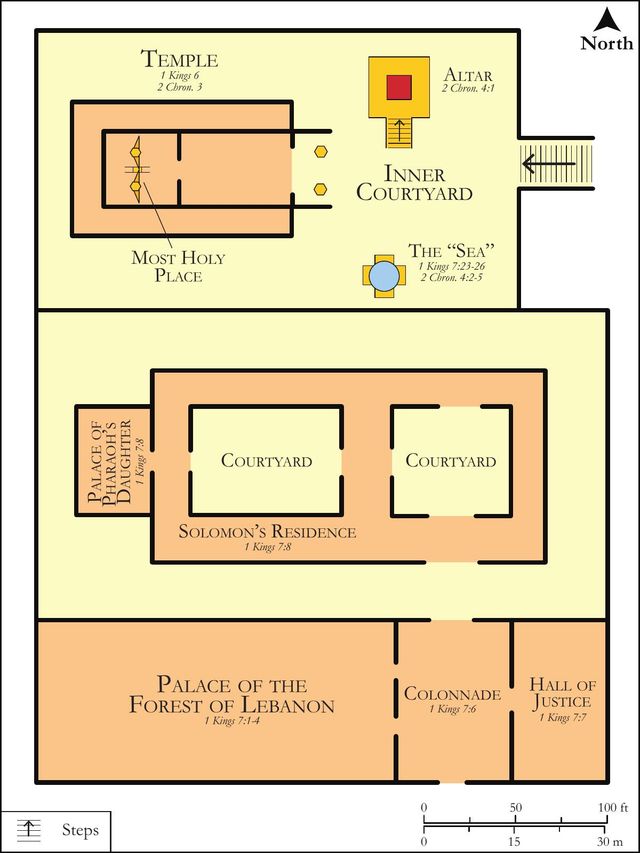
See on the biblical-era maps
Study this verse
Public-domain commentary
Matthew Henry
From his Commentary on the Whole Bible. Henry comments on passages, not single verses — this entry covers 1 Kings 6:11–14.
Here is, I. The word God sent to Solomon, when he was engaged in building the temple. God let him know that he took notice of what he was doing, the house he was now building, Kg1 6:12. None employ themselves for God without having his eye upon them. "I know thy works, thy good works." He assured him that if he would proceed and persevere in obedience to the divine law, and keep in the way of duty and the true worship of God, the divine loving-kindness should be drawn out both to himself (I will perform my word with thee) and to his kingdom: "Israel shall be ever owned as my people; I will dwell among them, and not forsake them." This word God sent him probably by a prophet, 1. That by the promise he might be encouraged and comforted in his work. Perhaps sometimes the great care, expense, and fatigue of it, made him ready to wish he had never begun it; but this would help him through the difficulties of it, that the promised establishment of his family and kingdom would abundantly recompense all his pains. An eye to the promise will carry us cheerfully through our work; and those who wish well to the public will think nothing too much that they can do to secure and perpetuate to it the tokens of God's presence. 2. That, by the condition annexed, he might be awakened to consider that though he built the temple ever so strong the glory of it would soon depart, unless he and his people continued to walk in God's statutes. God plainly let him know that all this charge which he and his people were at, in erecting this temple, would neither excuse them from obedience to the law of God nor shelter them from his judgments in case of disobedience. Keeping God's commandments is better, and more pleasing to him, than building churches.
II.The work Solomon did for God:
So he built the house (Kg1 6:14), so animated by the message God had sent him, so admonished not to expect that God should own his building unless he were obedient to his laws: "Lord, I proceed upon these terms, being firmly resolved to walk in thy statutes." The strictness of God's government will never drive a good man from his service, but quicken him in it. Solomon built and finished, he went on with the work, and God went along with him till it was completed. It is spoken both to God's praise and his: he grew not weary of the work, met not with any obstructions (as Ezr 4:24), did not out-build his property, nor do it by halves, but, having begun to build, was both able and willing to finish; for he was a wise builder.
Continue studying 1 Kings 6:12 across the web’s major study libraries — every link below opens this exact verse, chapter, or book on the destination site.
Read & Compare
 BibleGatewayThis verse in more than 200 translations and 70 languages.
 Bible.comThe YouVersion reader — hundreds of translations, reading plans, and highlights.
 ESV.orgCrossway's official English Standard Version reader.
 NET BibleThe NET translation with 60,000+ translators' notes on every rendering decision.
 STEP BibleTyndale House's free study tool — original text, vocabulary, and scholarly resources.
 BibliaLogos Bible Software's free web reader.
 USCCBThe New American Bible (Revised Edition) with the U.S. bishops' study notes.
Commentaries
 BibleHub CommentariesDozens of classic commentaries on this verse, gathered on one page.
 StudyLightMore than 100 commentary sets — the largest collection on the web.
 BibleRefPlain-English commentary on what this verse means, verse by verse.
 Enduring WordDavid Guzik's free commentary on this chapter, widely used by Bible teachers.
 Bible Study ToolsVerse commentary alongside Greek and Hebrew study aids.
Original Language & Research
- BibleHub InterlinearThe verse word by word — original language, transliteration, and English.
- BibleHub LexiconEvery word's original-language definition and Strong's entry.
 Blue Letter BibleDeep-study tools — Strong's numbers, concordance, and word studies.
 SefariaThe Hebrew text with Rashi and centuries of Jewish commentary.
Sermons, Hymns & Audio


TrulyRandomVerse is not affiliated with these sites and doesn’t control their content. They’re linked because they’re genuinely useful.
Summary
In 1 Kings 6:12, amidst the meticulous description of Solomon's construction of the Temple, God delivers a pivotal divine interjection. This verse reveals that while the physical edifice is significant, God's continued favor, presence, and the fulfillment of His covenant promises to David concerning Solomon's reign are profoundly contingent upon Solomon's personal and comprehensive obedience to the divine statutes, judgments, and commandments. It underscores that true blessing is rooted not merely in monumental religious works, but in a faithful, obedient walk with God.
Context
ShowHideLiterary Context
This divine word from the Lord arrives as a striking interruption within a highly detailed architectural narrative. The preceding verses of 1 Kings 6 are devoted to the precise dimensions, materials, and intricate craftsmanship of the Temple's construction, emphasizing its grandeur and sacred purpose. Suddenly, the focus shifts from the physical structure to the spiritual foundation. This interjection serves as a theological anchor, reminding Solomon—and the reader—that the Temple, however magnificent, is merely a shell without the living obedience of the king and the people. It immediately follows the completion of the inner sanctuary, the Holy of Holies, highlighting that even at the pinnacle of human endeavor for God, divine presence is not automatic but conditional on faithfulness. This divine word sets up the subsequent narrative of Solomon's reign, where his eventual decline is directly linked to his failure to heed these very commands, illustrating the profound consequences of disobedience despite initial devotion and grand achievements.
Historical & Cultural Context
King Solomon inherited the mandate to build the Temple from his father, David, a project of immense national and religious significance for Israel. The Temple was to be the central place of worship, the dwelling place for God's presence among His people, and a symbol of Israel's unique covenant relationship with Yahweh. The construction of so grand a house for the LORD might be taken to signify the king's power and piety. However, this verse places the emphasis not on the king's architectural prowess, but on his moral and spiritual fidelity. It harks back to the foundational Mosaic covenant, where blessings and curses were directly tied to obedience to God's law (Deuteronomy 28), and sets up the tension within the Davidic covenant, which, while ultimately unconditional in its promise of an eternal dynasty (2 Samuel 7:12-16), was conditional in its immediate outworkings for individual kings and the nation's prosperity. This divine word served as a crucial reminder to Solomon that his reign's success and the Temple's efficacy were not guaranteed by its completion but by his adherence to the divine will.
Key Themes
ShowHideThe primary theme is the Conditional Nature of Blessings within Covenant. While God's overarching covenant with David was unconditional concerning the eternal dynasty, the immediate prosperity and stability of Solomon's reign, and indeed the divine presence within the Temple, were contingent upon his obedience. This highlights the ongoing tension between God's steadfast faithfulness and humanity's responsibility, a tension often explored in books like Deuteronomy. Another key theme is Obedience as the True Foundation of Worship. The verse powerfully asserts that the spiritual efficacy and divine approval of the Temple, or any religious endeavor, do not stem from its physical splendor or the rituals performed within it, but from the righteous living of those who serve God. This echoes the prophetic calls for justice and righteousness over mere sacrifice, as seen in Amos 5:21-24. Finally, it underscores the Continuity of God's Promise, reaffirming that God remains committed to the word He spoke to David, yet this commitment is expressed in a way that demands a responsive, obedient walk from the current generation, linking Solomon's actions directly to the legacy of his father, David, and the future of the kingdom.
Exposition and Analysis
ShowHideKey Word Analysis
ShowHideThis word, from H1004, refers broadly to a dwelling, habitation, or building. In this context, it specifically denotes the Temple, the physical structure Solomon is constructing. However, the term often carries broader implications in Scripture, extending to family, household, or dynasty, subtly hinting at the interconnectedness between the physical Temple and the spiritual health of Solomon's "house" or lineage.
This primitive root signifies movement, to go or to walk. Figuratively, it denotes a manner of life, a course of conduct, or habitual behavior. When God commands Solomon to "walk in my statutes," it implies not merely an occasional act of obedience but a consistent, ongoing lifestyle characterized by adherence to God's revealed will. It's about the direction and pattern of one's entire life.
This root means "to rise," "to stand," or "to establish." In this context, "perform my word" means God will establish, confirm, or make good on His promise. It signifies God's active fulfillment and unwavering commitment to uphold His covenant, contingent upon Solomon's faithfulness. This word emphasizes the certainty and reliability of God's actions when His conditions are met.
Verse Breakdown
ShowHide"[Concerning] this house which thou art in building"
This introductory phrase immediately grounds God's message in the present reality of Solomon's grand project. It sets the stage by acknowledging the monumental task at hand, yet subtly implies that the physical structure is not the ultimate focus of God's concern. The Temple is the context, but the covenant relationship is the core, indicating that the building itself, however magnificent, is secondary to the spiritual state of its builder and the nation.
"if thou wilt walk in my statutes, and execute my judgments, and keep all my commandments to walk in them;"
This is the crucial conditional clause, highlighting the absolute necessity of Solomon's personal obedience. "Walk in my statutes" implies a lifestyle of adherence to God's fixed decrees and established order. "Execute my judgments" suggests active implementation and enforcement of divine justice and ethical rulings, particularly relevant for a king responsible for upholding righteousness in the land. "Keep all my commandments to walk in them" reinforces the idea of comprehensive, practical, and ongoing obedience to the entirety of God's revealed will, encompassing both ceremonial and moral imperatives. The repetition of "to walk in them" emphasizes the active, continuous, and practical nature of this obedience, distinguishing it from mere intellectual assent or ritualistic performance.
"then will I perform my word with thee, which I spake unto David thy father:"
This is the divine promise, contingent on the preceding condition. "Perform my word" signifies God's faithfulness to His covenant, specifically the Davidic covenant. The "word" refers primarily to the promise of an enduring dynasty (2 Samuel 7:12-16), including the promise that Solomon would build the Temple. While the dynasty itself was unconditionally promised, the immediate blessings of a stable reign, prosperity, and God's continued presence within the Temple were directly linked to Solomon's faithfulness. This clause underscores God's steadfastness while simultaneously revealing the mechanism by which His promises would be experienced by the current generation.
Literary Devices
ShowHideThe verse employs several significant literary devices that amplify its theological weight. Foremost is Divine Interruption, where God's voice abruptly breaks into the technical, architectural description of the Temple, suddenly shifting the narrative focus from the physical to the spiritual. This abrupt shift emphasizes the paramount importance of God's message over human endeavors, highlighting that divine presence is not automatically conferred by a building. The structure of the verse itself is a clear Conditional Clause ("if...then"), which is a foundational element of biblical covenant theology, particularly evident in the Mosaic Law. This structure explicitly links human action (obedience) to divine response (blessing/fulfillment of promise), establishing a clear cause-and-effect relationship. Furthermore, the use of the Triad ("statutes, judgments, and commandments") is a rhetorical device that emphasizes completeness and comprehensiveness, signifying that God expects holistic and unwavering obedience to the entirety of His revealed will, not just a select portion. This triad functions as a form of Merism, where two or three distinct terms are used to represent the whole body of divine law, underscoring the all-encompassing nature of the required obedience.
Theological and Thematic Connections
ShowHideThis verse stands as a powerful theological statement on the nature of God's covenant relationship with His people, particularly within the Old Testament framework. It clarifies that while God's ultimate promises are steadfast and rooted in His own character, the experience of those promises and the ongoing blessings associated with them are often contingent upon human faithfulness. It distinguishes between the unconditional nature of the Davidic covenant in its ultimate fulfillment through Christ and the conditional nature of its immediate blessings for individual kings and the nation of Israel. This principle resonates throughout the Old Testament, where Israel's prosperity, security, and God's manifest presence were directly tied to their adherence to the covenant stipulations. It underscores that true worship is not merely ritualistic or architectural, but a holistic lifestyle of obedience flowing from a heart devoted to God, a theme consistently echoed by the prophets who often critiqued Israel's external religiosity in the absence of internal righteousness.
Reflection and Application
ShowHide1 Kings 6:12 serves as a timeless reminder that God prioritizes obedience over outward display or impressive achievements. For believers today, this means that our spiritual effectiveness, the vitality of our churches, and our personal experience of God's blessings are intimately connected to our willingness to "walk in His statutes, execute His judgments, and keep all His commandments." It challenges us to look beyond the grand projects, impressive ministries, or outward expressions of religiosity, and instead focus on the foundational commitment of a heart devoted to God's will. Just as the magnificent Temple would be spiritually empty without Solomon's obedience, our lives and ministries, however outwardly impressive, can lack true divine power and presence if we neglect a consistent, comprehensive walk of faith and obedience. This verse calls us to examine our lives and ensure that our actions align with our confession, recognizing that God's promises, while ultimately secure in Christ, invite our faithful response. It reminds us that genuine faith is active, expressing itself through a life lived in humble submission to God's revealed will, not as a means to earn favor, but as a joyful response to His grace.
Questions for Reflection
ShowHideFAQ
ShowHideDoes this verse imply that God's covenant with David was conditional, contradicting other passages?
ShowHideNo, it does not contradict the unconditional nature of God's covenant with David concerning an eternal dynasty. The Davidic covenant, as revealed in 2 Samuel 7, is indeed unconditional in its promise that David's house and kingdom would endure forever, ultimately fulfilled in Christ's eternal reign (Luke 1:32-33). However, 1 Kings 6:12 speaks to the conditional experience of blessings and the stability of the immediate king's reign within that covenant. While the dynasty would not be cut off, individual kings could face discipline, loss of immediate blessing, or even the fracturing of the kingdom (as happened after Solomon's reign) if they disobeyed. This verse highlights that while God's ultimate promise is secure, the present prosperity and the full manifestation of His presence were contingent on Solomon's faithfulness, demonstrating God's justice and His desire for a responsive relationship with His covenant people.
Does this verse teach salvation by works?
ShowHideNo, this verse does not teach salvation by works. It operates within the Old Covenant framework, where blessings and curses in the earthly kingdom were tied to obedience to the Mosaic Law. This is about the maintenance of a covenant relationship and the experience of temporal blessings and curses within that covenant, not about eternal salvation. The Bible consistently teaches that salvation, both in the Old and New Testaments, is by God's grace through faith (Ephesians 2:8-9; Romans 3:20). For the Israelites, obedience was the expected response of a people already chosen and redeemed by God, demonstrating their love and loyalty (John 14:23; 1 John 5:3). This passage underscores that while God's election is sovereign, human responsibility for obedience remains a vital component of the covenant relationship, impacting the enjoyment of covenant blessings.
Christ-Centered Fulfillment
ShowHide1 Kings 6:12, with its emphasis on conditional obedience for the fulfillment of promises, finds its ultimate and perfect fulfillment in Jesus Christ. While Solomon's blessings were contingent upon his imperfect obedience, Christ's perfect and unwavering obedience secured for us a superior covenant. Where Solomon ultimately failed to "walk in my statutes, and execute my judgments, and keep all my commandments," leading to the division of his kingdom, Jesus perfectly fulfilled every requirement of the law, becoming the obedient Son whose righteousness is imputed to believers (Romans 5:19). The physical Temple, which was meant to house God's presence, pointed to Christ Himself, who declared His own body as the true temple, and then to the church, which is now God's spiritual dwelling by the Spirit. Through Christ's perfect obedience, the righteous requirement of the law is fulfilled in us who are in Him, not by our own efforts to earn blessing, but by grace through faith. This transforms the conditional "if...then" of the Old Covenant into the "because of Christ...therefore" of the new covenant, where God's promises are yes and amen in Him, and our obedience flows from a transformed heart, empowered by the Spirit, as a response to His unconditional love and grace, enabling us to truly "walk" in His ways.