


1 Kings 6:13
Bible text: King James Version (1769 Blayney text) · Public domain
Bible text: Berean Standard Bible · Public domain
Bible text: American Standard Version (1901) · Public domain
Bible text: World English Bible, Messianic edition · Public domain
Bible text: Geneva Bible (1599) · Public domain
Bible text: Young's Literal Translation · Public domain
- וְשָׁכַנְתִּיve·Sha·khan·Tiand I will dwellH7931Conj-w ¦ V-Qal-ConsecPerf-1csVerb Qal Consecutive Perfect 1st Singular common genderוְandשָׁכַנְתִּיI will dwell
- בְּתוֹךְbe·Tokhin amongH8432Prep-b ¦ N-mscNoun Singular Masculine Constructבְּinתוֹךְamong
- בְּנֵיbe·Nei[the] people ofH1121N-mpcNoun Plural Masculine Construct
- יִשְׂרָאֵלYis·ra·'ElIsraelH3478N-properNoun Proper Location
- וְלֹאve·Lo'and notH3808Conj-w ¦ NegParticle Negativeוְandלֹאnot
- אֶעֱזֹב'e·'e·ZoI will abandonH5800V-Qal-Imperf-1csVerb Qal Imperfect 1st Singular common gender
- אֶת'et<obj.>H853DirObjMParticle Object Indicator
- עַמִּי'a·Mimy peopleH5971N-msc ¦ 1csNoun Singular Masculine Constructעַמִּpeopleיmy
- יִשְׂרָאֵלYis·ra·'ElIsraelH3478N-properNoun Proper Location
English is a literal word-by-word gloss of the Hebrew, not the KJV's wording. Why?
This is the original text the KJV's translators worked from — each Hebrew word with its own literal English meaning in this verse, prepared by scholars at Tyndale House, Cambridge. The KJV translates whole sentences, not word by word, so its wording differs: one Hebrew word can become several English words, and the KJV may choose “the LORD” where the gloss reads “Yahweh”. Both are faithful — they answer different questions. For the KJV's own rendering, switch to the KJV text.
Details
See on the biblical-era maps

Study this verse
Public-domain commentary
Matthew Henry
From his Commentary on the Whole Bible. Henry comments on passages, not single verses — this entry covers 1 Kings 6:11–14.
Here is, I. The word God sent to Solomon, when he was engaged in building the temple. God let him know that he took notice of what he was doing, the house he was now building, Kg1 6:12. None employ themselves for God without having his eye upon them. "I know thy works, thy good works." He assured him that if he would proceed and persevere in obedience to the divine law, and keep in the way of duty and the true worship of God, the divine loving-kindness should be drawn out both to himself (I will perform my word with thee) and to his kingdom: "Israel shall be ever owned as my people; I will dwell among them, and not forsake them." This word God sent him probably by a prophet, 1. That by the promise he might be encouraged and comforted in his work. Perhaps sometimes the great care, expense, and fatigue of it, made him ready to wish he had never begun it; but this would help him through the difficulties of it, that the promised establishment of his family and kingdom would abundantly recompense all his pains. An eye to the promise will carry us cheerfully through our work; and those who wish well to the public will think nothing too much that they can do to secure and perpetuate to it the tokens of God's presence. 2. That, by the condition annexed, he might be awakened to consider that though he built the temple ever so strong the glory of it would soon depart, unless he and his people continued to walk in God's statutes. God plainly let him know that all this charge which he and his people were at, in erecting this temple, would neither excuse them from obedience to the law of God nor shelter them from his judgments in case of disobedience. Keeping God's commandments is better, and more pleasing to him, than building churches.
II.The work Solomon did for God:
So he built the house (Kg1 6:14), so animated by the message God had sent him, so admonished not to expect that God should own his building unless he were obedient to his laws: "Lord, I proceed upon these terms, being firmly resolved to walk in thy statutes." The strictness of God's government will never drive a good man from his service, but quicken him in it. Solomon built and finished, he went on with the work, and God went along with him till it was completed. It is spoken both to God's praise and his: he grew not weary of the work, met not with any obstructions (as Ezr 4:24), did not out-build his property, nor do it by halves, but, having begun to build, was both able and willing to finish; for he was a wise builder.
Continue studying 1 Kings 6:13 across the web’s major study libraries — every link below opens this exact verse, chapter, or book on the destination site.
Read & Compare
 BibleGatewayThis verse in more than 200 translations and 70 languages.
 Bible.comThe YouVersion reader — hundreds of translations, reading plans, and highlights.
 ESV.orgCrossway's official English Standard Version reader.
 NET BibleThe NET translation with 60,000+ translators' notes on every rendering decision.
 STEP BibleTyndale House's free study tool — original text, vocabulary, and scholarly resources.
 BibliaLogos Bible Software's free web reader.
 USCCBThe New American Bible (Revised Edition) with the U.S. bishops' study notes.
Commentaries
 BibleHub CommentariesDozens of classic commentaries on this verse, gathered on one page.
 StudyLightMore than 100 commentary sets — the largest collection on the web.
 BibleRefPlain-English commentary on what this verse means, verse by verse.
 Enduring WordDavid Guzik's free commentary on this chapter, widely used by Bible teachers.
 Bible Study ToolsVerse commentary alongside Greek and Hebrew study aids.
Original Language & Research
- BibleHub InterlinearThe verse word by word — original language, transliteration, and English.
- BibleHub LexiconEvery word's original-language definition and Strong's entry.
 Blue Letter BibleDeep-study tools — Strong's numbers, concordance, and word studies.
 SefariaThe Hebrew text with Rashi and centuries of Jewish commentary.
Sermons, Hymns & Audio


TrulyRandomVerse is not affiliated with these sites and doesn’t control their content. They’re linked because they’re genuinely useful.
Summary
1 Kings 6:13 encapsulates a pivotal divine declaration made to King Solomon amidst the construction of the First Temple, affirming God's profound and enduring commitment to His covenant people. This verse reveals God's intention to intimately "dwell among" the children of Israel and His unwavering resolve "not to forsake" them, thereby establishing a crucial theological connection between the physical sanctuary and the conditional nature of God's manifest presence, which was deeply intertwined with Israel's faithfulness to His covenant commands. It underscores that while the Temple symbolized God's dwelling, the true relationship was predicated on the nation's obedience and loyalty.
Context
ShowHideLiterary Context
This profound divine promise is strategically placed within the meticulous narrative of King Solomon's construction of the Temple in Jerusalem, specifically in 1 Kings 6. The preceding chapters, 1 Kings 5 and the initial verses of 1 Kings 6, detail the immense scale, meticulous planning, and sacred purpose of this monumental undertaking, including the gathering of materials and the precise architectural specifications. 1 Kings 6:13 functions as a divine interjection, a direct word from the Lord to Solomon, clarifying that the efficacy and permanence of God's dwelling within this magnificent structure were not automatic or guaranteed by the building itself. Instead, they were deeply contingent upon Israel's ongoing obedience to the Mosaic covenant, a condition implicitly introduced by the emphasis on God's statutes and judgments in the verses immediately preceding this divine promise.
Historical & Cultural Context
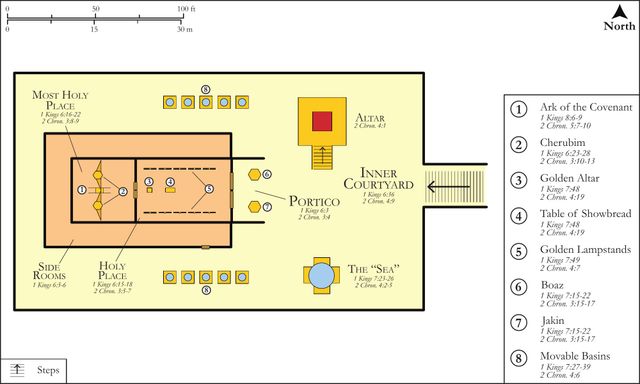
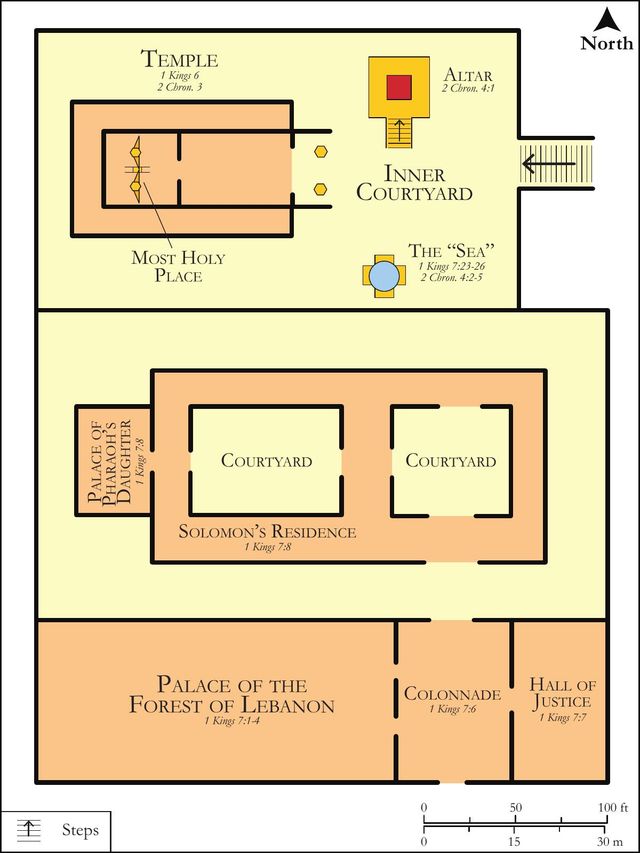
Solomon's construction of the Temple served to demonstrate the nation's devotion, as the willing offerings of the people had done for the tabernacle. Yet for Israel, the Temple held a unique and unparalleled significance. It was not merely a grand edifice for a national deity but the designated, permanent dwelling place for Yahweh, the One True God, who had sovereignly chosen Israel as His covenant people. This Temple was envisioned as the successor to the portable Tabernacle, which had symbolized God's mobile presence during their wilderness wanderings. The promise in 1 Kings 6:13 thus resonates with a long-standing history of God's desire for intimate presence with His people, a theme traceable from His walk with Adam in Eden, through the patriarchal covenants, and most explicitly in the Mosaic Covenant at Mount Sinai, where God explicitly promised to dwell among them if they faithfully obeyed His voice.
Key Themes
ShowHideThe central themes woven into 1 Kings 6:13 are Divine Presence, Covenant Faithfulness, and the Conditional Nature of Blessing. The Temple was designed to be the tangible manifestation of God's immanent presence, a sacred space where His glory would reside, echoing the divine instructions for the Tabernacle in Exodus 25:8. Yet, the profound promise of His enduring presence and His steadfast refusal to "forsake" them was explicitly tied to Israel's adherence to the statutes and ordinances of the Mosaic Covenant. This condition is articulated throughout the Torah, particularly in passages like Leviticus 26:11-12 and the comprehensive blessings and curses outlined in Deuteronomy 28. This highlights the persistent tension in Israel's theological narrative between God's unconditional election of His people and the conditional enjoyment of His manifest blessings and presence.
Exposition and Analysis
ShowHideKey Word Analysis
ShowHideThis primitive root signifies "to reside or permanently stay (literally or figuratively); abide, continue, (cause to, make to) dwell(-er), have habitation, inhabit, lay, place, (cause to) remain, rest, set (up)." This verb is the root from which the noun mishkan (Tabernacle) and the theological concept of Shekinah (God's glorious, manifest presence) are derived. Its use here emphasizes a personal, intimate, and tangible presence of God among His people, not merely a distant oversight. It evokes the imagery of God "tabernacling" among His people, a profound expression of His desire for communion and active involvement in their lives.
This primitive root means "to loosen, i.e. relinquish, permit, etc.; commit self, fail, forsake, fortify, help, leave (destitute, off), refuse, [idiom] surely." When used in the context of God's relationship with His people, it speaks to His steadfast loyalty and unwavering commitment to His covenant. The promise "will not forsake" reassures Israel of God's enduring faithfulness, even when their own faithfulness might waver. It underscores His immutable character as a God who keeps His promises and remains true to His people, despite their imperfections and potential for rebellion.
Derived from שָׂרָה (sarah, to rule) and אֵל (el, God), meaning "he will rule as God." This is the symbolic name given to Jacob after his wrestling with God (Genesis 32:28). It also refers typically to his posterity, the nation of Israel. Its repetition in this verse ("children of Israel," "my people Israel") emphasizes the specific, chosen, covenantal relationship God has with this particular nation, highlighting the exclusivity and intimacy of the divine promise to them as His treasured possession.
Verse Breakdown
ShowHide"And I will dwell among the children of Israel,"
This clause expresses God's profound and active desire for intimate communion with His chosen people. The construction of the Temple was a tangible, physical response to this divine longing, providing a designated, central place for His manifest presence. This promise signifies God's active involvement in the life of the nation, assuring them of His protective care, His guiding hand, and His abundant blessing from within their very midst. This dwelling is not a passive observation but an active, relational, and transformative presence.
"and will not forsake my people Israel."
This second clause powerfully reinforces the steadfastness of God's covenant loyalty and His unwavering commitment. Despite Israel's future failures, periods of disobedience, and even outright rebellion, God's fundamental commitment to His people, rooted in His immutable character and the covenants He established with Abraham and Moses, remains. This promise offers profound reassurance of His enduring love, His steadfast support, and His refusal to abandon them entirely, even when divine discipline becomes necessary. It speaks to the ultimate security of God's relationship with His elect nation, ensuring their preservation and eventual restoration.
Literary Devices
ShowHideThe verse employs several significant literary devices to convey its profound message. Divine Promise is central, as God directly declares His intentions to Solomon, offering a powerful assurance of His presence and faithfulness. The use of the first-person singular pronoun "I" ("And I will dwell... and will not forsake") emphasizes the Sovereignty and Personal Nature of God's commitment, highlighting that this is a direct, volitional act of the Almighty. There is a clear element of Covenant Language, echoing the conditional promises and blessings found throughout the Pentateuch, particularly in Leviticus 26 and Deuteronomy 28, where God's dwelling is linked to Israel's obedience. The phrases "dwell among" and "not forsake" also exhibit Parallelism, reinforcing the singular, overarching idea of God's abiding presence and loyalty through two distinct but complementary expressions. This repetition serves to underscore the profound importance and certainty of the divine declaration, impressing upon Solomon and the nation the weight of this covenantal relationship.
Theological and Thematic Connections
ShowHide1 Kings 6:13 is a profound encapsulation of God's enduring desire for intimate relationship with humanity, a foundational theme that permeates the entire biblical narrative. From His initial walk with Adam and Eve in the Garden of Eden (Genesis 3:8) to His dwelling in the Tabernacle and subsequently the Temple, God consistently seeks to be present with His people. This verse, however, also subtly introduces the inherent tension between God's unconditional election of Israel as His chosen people and the conditional nature of His manifest blessings and continued dwelling, which were contingent upon Israel's obedience to the covenant. It foreshadows the challenges Israel would face in maintaining this obedience, leading to periods where God's manifest presence seemed withdrawn or His glory departed (e.g., Ezekiel 10). Yet, His ultimate promise to "not forsake" them remained, pointing to a deeper, unbreakable covenant loyalty that would ultimately find its perfect and eternal fulfillment in the person and work of Jesus Christ.
Reflection and Application
ShowHide1 Kings 6:13 offers both profound comfort and a significant challenge to believers in the present age. It serves as a powerful reminder that God's deepest and most consistent desire is to be intimately present with His people. While the physical Temple no longer stands as His primary dwelling place, the New Testament reveals that God's presence is now manifested in an even more profound and personal way: through the indwelling Holy Spirit in the hearts of all who believe in Christ, making each Christian a living "temple of the Holy Spirit" (1 Corinthians 6:19). This transformative truth reshapes our understanding of worship, holiness, and daily life, as we are called to live in a manner worthy of His holy presence within us. Furthermore, the promise, "I will not forsake my people," echoes through the ages, providing immense assurance of God's unwavering faithfulness and steadfast love, even when we stumble or face trials. This provides immense confidence and solace, knowing that in Christ, we have a God who will never leave us nor abandon us, regardless of our circumstances or past failures. It calls us to respond with faithful obedience, not as a means to earn His presence, but as a joyful and grateful response to His abiding and unconditional love.
Questions for Reflection
ShowHideFAQ
ShowHideWas God's promise to dwell among Israel conditional or unconditional?
ShowHideGod's promise in 1 Kings 6:13 is best understood as having both unconditional and conditional aspects. The fundamental, overarching promise that God would "not forsake my people Israel" speaks to His unconditional covenant faithfulness, rooted in His immutable character and His sovereign election of Abraham's descendants. This aspect of His promise is steadfast and enduring, guaranteeing the preservation of Israel as a people. However, the full experience of His manifest dwelling and the blessings associated with His presence within the Temple were indeed conditional upon Israel's obedience to His statutes and judgments. This condition is explicitly stated in the verses immediately preceding 1 Kings 6:13 (e.g., 1 Kings 6:12). If Israel walked in His ways, His presence would remain and bless them; if they rebelled, His glory would eventually depart, as tragically depicted in Ezekiel's vision (Ezekiel 10). Therefore, while God's commitment to them as a people was unconditional, the manifest enjoyment of His dwelling and the associated covenant blessings were contingent upon their fidelity to the covenant stipulations.
Christ-Centered Fulfillment
ShowHideThe profound promise of God to "dwell among the children of Israel" finds its ultimate, perfect, and most glorious fulfillment in the person of Jesus Christ. The Apostle John powerfully declares that "the Word became flesh and [dwelt] among us" (John 1:14), using the Greek verb skenoo, which literally means "to tabernacle" or "to pitch a tent," directly echoing the Old Testament concept of God's presence in the Tabernacle and Temple. Jesus is the living Temple, the very embodiment of God's presence among humanity, as He Himself proclaimed, "Destroy this temple, and in three days I will raise it up" (John 2:19, referring to the temple of His body, John 2:21). Through His sacrificial death and glorious resurrection, Jesus inaugurated a new covenant where God's presence is no longer confined to a physical building but dwells within believers by the Holy Spirit, making each Christian a "temple of the Holy Spirit" (1 Corinthians 3:16; 1 Corinthians 6:19). Furthermore, Christ perfectly fulfills the "will not forsake" aspect of the promise; through His finished work on the cross, believers are assured of God's eternal presence and an unbreakable covenant relationship, as He promises, "I will never leave you nor forsake you" (Hebrews 13:5). Ultimately, the eschatological vision of the New Jerusalem in Revelation 21:3 depicts the final, perfect fulfillment: "Behold, the dwelling place of God is with man. He will dwell with them, and they will be his people, and God himself will be with them as their God."