


Numbers 24:12
Bible text: King James Version (1769 Blayney text) · Public domain
Bible text: Berean Standard Bible · Public domain
Bible text: American Standard Version (1901) · Public domain
Bible text: World English Bible, Messianic edition · Public domain
Bible text: Geneva Bible (1599) · Public domain
Bible text: Young's Literal Translation · Public domain
- וַיֹּאמֶרvai·Yo·merand he saidH559Conj-w ¦ V-Qal-ConsecImperf-3msVerb Qal Consecutive Imperfect 3rd Singular Masculineוַandיֹּאמֶרhe said
- בִּלְעָםbil·'AmBalaamH1109N-proper-mNoun Proper Masculine
- אֶל'eltoH413PrepPreposition
- בָּלָקba·LakBalakH1111N-proper-mNoun Proper Masculine
- הֲלֹאha·Lo'¿ notH3808Interrog ¦ NegParticle Negativeהֲ¿לֹאnot
- גַּםgamalsoH1571AdvAdverb
- אֶל'eltoH413PrepPreposition
- מַלְאָכֶיךָmal·'a·Khei·khayour messengersH4397N-mpc ¦ 2msNoun Plural Masculine Constructמַלְאָכֶיmessengersךָyour
- אֲשֶׁר'a·SherwhomH834RelParticle Relative
- שָׁלַחְתָּsha·Lach·tayou sentH7971V-Qal-Perf-2msVerb Qal Perfect 2nd Singular Masculine
- אֵלַי'e·Laito meH413Prep ¦ 1csPreposition Definiteאֵלַtoיme
- דִּבַּרְתִּיdi·Bar·tidid I speakH1696V-Piel-Perf-1csVerb Piel Perfect 1st Singular common gender
- לֵאמֹרle·Mor<to> sayingH559Prep-l ¦ V-Qal-InfVerb Qal Infinitive Constructלֵ<to>אמֹרsaying
English is a literal word-by-word gloss of the Hebrew, not the KJV's wording. Why?
This is the original text the KJV's translators worked from — each Hebrew word with its own literal English meaning in this verse, prepared by scholars at Tyndale House, Cambridge. The KJV translates whole sentences, not word by word, so its wording differs: one Hebrew word can become several English words, and the KJV may choose “the LORD” where the gloss reads “Yahweh”. Both are faithful — they answer different questions. For the KJV's own rendering, switch to the KJV text.
Details
See on the biblical-era map
Study this verse
Public-domain commentary
Matthew Henry
From his Commentary on the Whole Bible. Henry comments on passages, not single verses — this entry covers Numbers 24:10–14.
We have here the conclusion of this vain attempt to curse Israel, and the total abandonment of it. 1. Balak made the worst of it. He broke out into a rage against Balaam (Num 24:10), expressed both in words and gesture the highest degree of vexation at the disappointment; he smote his hands together, for indignation, to see all his measures thus broken, and his project baffled. He charged Balaam with putting upon him the basest affront and cheat imaginable: "I called thee to curse my enemies, and thou hast shown thyself in league with them, and in their interests, for thou hast blessed them these three times, though, by appointing the altars to be built and sacrifices to be offered, thou madest be believe thou wouldest certainly curse them." Hereupon he forbade him his presence, expelled him his country, upbraided him with the preferments he had designed to bestow upon him, but now would not (Num 24:11): "The Lord hath kept thee back from honour. See what thou gettest by pleasing the Lord, instead of pleasing me; thou has hindered thy preferment by it." Thus those who are any way losers by their duty are commonly upbraided with it, as fools, for preferring it before their interest in the world. Whereas, if Balaam had been voluntary and sincere in his adherence to the word of the Lord, though he lost the honour Balak designed him by it, God would have made that loss up to him abundantly to his advantage. 2. Balaam made the best if it. (1.) He endeavours to excuse the disappointment. And a very good excuse he has for it, that God restrained him from saying what he would have said, and constrained him to say what he would not; and that this was what Balak ought not to be displeased at, not only because he could not help it, but because he had told Balak before what he must depend upon, Num 24:12, Num 24:13. Balak could not say that he had cheated him, since he had given him fair notice of the check he found himself under. (2.) He endeavours to atone for it, Num 24:14. Though he cannot do what Balak would have him do, yet, [1.] He will gratify his curiosity with some predictions concerning the nations about him. It is natural to us to be pleased with prophecy, and with this he hopes to pacify the angry prince. [2.] He will satisfy him with an assurance that, whatever this formidable people should do to his people, it should not be till the latter days; so that he, for his part, needed not to fear any mischief or molestation from them; the vision was for a great while to come, but in his days there should be peace. [3.] He will put him into a method of doing Israel a mischief without the ceremonies of enchantment and execration. This seems to be implied in that word: I will advertise thee; for it properly signifies, I will counsel thee. What the counsel was is not set down here, because it was given privately, but we are told afterwards what it was, Num 31:16. He counselled him to entice the Israelites to idolatry, Rev 2:14. Since he could not have leave from God to curse them, he puts him in a way of getting help from the devil to tempt them. Flectere si nequeo superos, Acheronta movebo - If I cannot move heaven, I will solicit hell.
Continue studying Numbers 24:12 across the web’s major study libraries — every link below opens this exact verse, chapter, or book on the destination site.
Read & Compare
 BibleGatewayThis verse in more than 200 translations and 70 languages.
 Bible.comThe YouVersion reader — hundreds of translations, reading plans, and highlights.
 ESV.orgCrossway's official English Standard Version reader.
 NET BibleThe NET translation with 60,000+ translators' notes on every rendering decision.
 STEP BibleTyndale House's free study tool — original text, vocabulary, and scholarly resources.
 BibliaLogos Bible Software's free web reader.
 USCCBThe New American Bible (Revised Edition) with the U.S. bishops' study notes.
Commentaries
 BibleHub CommentariesDozens of classic commentaries on this verse, gathered on one page.
 StudyLightMore than 100 commentary sets — the largest collection on the web.
 BibleRefPlain-English commentary on what this verse means, verse by verse.
 Enduring WordDavid Guzik's free commentary on this chapter, widely used by Bible teachers.
 Bible Study ToolsVerse commentary alongside Greek and Hebrew study aids.
Original Language & Research
- BibleHub InterlinearThe verse word by word — original language, transliteration, and English.
- BibleHub LexiconEvery word's original-language definition and Strong's entry.
 Blue Letter BibleDeep-study tools — Strong's numbers, concordance, and word studies.
 SefariaThe Hebrew text with Rashi and centuries of Jewish commentary.
Sermons, Hymns & Audio


TrulyRandomVerse is not affiliated with these sites and doesn’t control their content. They’re linked because they’re genuinely useful.
Summary
Numbers 24:12 captures a pivotal moment in the narrative of Balaam and Balak, as Balaam, the diviner of Pethor, reiterates his foundational premise to the frustrated King of Moab. Through a rhetorical question, Balaam reminds Balak of his consistent declaration that he is merely a mouthpiece for Yahweh, able to speak only what God puts into his mouth. This serves as a crucial prelude to Balaam's fourth and final oracle, underscoring the absolute sovereignty of God over human intentions and prophetic utterances, even those of an unwilling agent.
Context
ShowHideLiterary Context
Numbers 24:12 serves as a direct interjection by Balaam to Balak, immediately preceding Balaam's fourth and most significant oracle (Numbers 24:15-24). This verse follows three previous attempts by Balak to induce Balaam to curse Israel, all of which resulted in blessings (Numbers 23:7-10, Numbers 23:18-24, Numbers 24:3-9). Balaam's rhetorical question harks back to his initial refusal to transgress God's word to Balak's first messengers in Numbers 22:18, and his repeated affirmations throughout his oracles, such as in Numbers 23:12 and Numbers 23:26). This repetition underscores the futility of Balak's efforts and the unyielding nature of God's command over Balaam, setting the stage for the final, powerful oracle.
Historical & Cultural Context
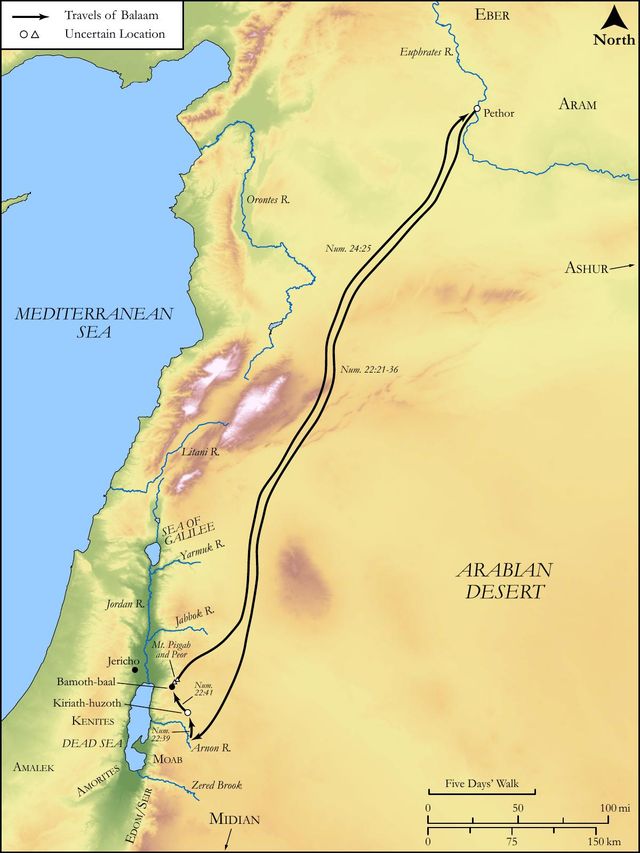
The setting is the plains of Moab, east of the Jordan River, where the Israelites were encamped, causing great fear to King Balak of Moab. Among the nations of that day, it was common practice for kings to employ diviners or sorcerers to curse their enemies or secure blessings. Balaam, hailing from Pethor in Mesopotamia (Deuteronomy 23:4), was renowned for his abilities, making him a prime candidate for Balak's desperate scheme. The narrative reflects the prevalent belief in the power of spoken words, especially those uttered by a diviner, to influence events. However, the Numbers account subverts this pagan understanding by demonstrating Yahweh's absolute control, even over a foreign diviner, showcasing His unique sovereignty over all spiritual forces and human endeavors. This context highlights the clash between pagan practices and the singular power of the God of Israel.
Key Themes
ShowHideThis verse powerfully contributes to several overarching themes within the book of Numbers and beyond. Firstly, it highlights Divine Sovereignty, emphasizing God's absolute control over human plans and intentions. Despite Balak's desperate attempts to manipulate spiritual forces against Israel, God's will for His chosen people prevails, turning intended curses into blessings, as seen throughout Numbers 22 through Numbers 24). Secondly, it illuminates Balaam's Predicament, depicting him as caught between the earthly desires for reward from King Balak and the irresistible power of God's command. His rhetorical question here underscores his repeated, albeit self-serving, declarations of being bound by God's word, even as his later actions (e.g., Numbers 31:16) reveal a conflicted character driven by greed. Lastly, it reinforces the theme of God's Unchangeable Purpose for Israel, demonstrating that no human scheme or power can thwart God's covenant promises to His people, aligning with the broader biblical truth that God's counsel shall stand (Isaiah 46:10).
Exposition and Analysis
ShowHideKey Word Analysis
ShowHideThis word (H1696) is a primitive root meaning "to speak," often implying a definitive, authoritative declaration or arrangement of words. Balaam uses this verb to remind Balak of his prior, formal statements to the messengers. It emphasizes that his utterances are not casual remarks but weighty pronouncements, underscoring his position as a mouthpiece for a higher power, unable to deviate from the divine message.
This term (H4397) refers to a "messenger" or "deputy," often dispatched with a specific purpose. By referencing "thy messengers," Balaam recalls the two delegations Balak sent to him (Numbers 22:5, 15). The use of this word highlights that Balak had been thoroughly informed of Balaam's limitations from the very beginning, making Balak's continued insistence on a curse a deliberate disregard of Balaam's consistent warnings.
This is a primitive root (H559) meaning "to say," used with great latitude to introduce direct speech or the content of a preceding verb. Here, it signals that Balaam is recalling the precise substance of his prior declarations to Balak's envoys. It reinforces the idea that his current inability to curse Israel is not a new development but a consistent, divinely imposed condition, confirming the continuity of God's command over Balaam's words.
Verse Breakdown
ShowHide"And Balaam said unto Balak"
This opening clause immediately places the verse in the context of a direct, personal confrontation between the two main characters. It signifies a moment of verbal exchange, where Balaam takes the initiative to address Balak directly, setting the stage for his rhetorical reminder and underscoring the tension between the two.
"Spake I not also to thy messengers which thou sentest unto me, saying,"
This is a powerful rhetorical question. Balaam is not seeking information from Balak; rather, he is emphatically asserting a known truth. The question serves as a sharp rebuke and a reminder to Balak that Balaam had consistently communicated his inability to act contrary to God's will from their very first interaction. It implies that Balak's continued insistence on a curse is either due to a lack of understanding, willful ignorance, or desperate hope, despite Balaam's clear and repeated warnings. This clause underscores Balaam's (stated) position as an agent bound by divine command, not by human will or reward.
Literary Devices
ShowHideNumbers 24:12 effectively employs several literary devices to convey its message. The most prominent is the Rhetorical Question, "Spake I not also to thy messengers... saying," which Balaam uses not to elicit information but to make a forceful assertion. This device highlights Balak's stubbornness and Balaam's consistent (though perhaps self-serving) declaration of divine constraint. It emphasizes the futility of Balak's persistent attempts to sway Balaam. Furthermore, there is an element of Repetition and Recapitulation as Balaam echoes his earlier statements found in Numbers 22:18 and Numbers 23:12, reinforcing the theme of God's unyielding control over Balaam's words. This consistent message, despite changing circumstances, serves to underscore the unwavering nature of God's purpose. The verse also subtly employs Irony, as Balaam, a pagan diviner hired to curse, is forced to remind his employer of the divine hand that compels him to bless, thereby becoming an unwitting instrument of God's will.
Theological and Thematic Connections
ShowHideNumbers 24:12 profoundly illustrates the unwavering sovereignty of God over all creation, including the will and words of individuals, even those who are not His covenant people. Balaam's rhetorical question serves as a stark reminder that no human scheme, no matter how powerful or well-funded, can thwart the divine purpose. God's plan for Israel's blessing and protection is immutable, and He can use even reluctant or morally compromised agents to accomplish His will. This passage reassures believers that God is ultimately in control, orchestrating events to fulfill His promises, even when facing formidable opposition. It teaches us to trust in His overarching plan, knowing that His counsel will stand and He will accomplish all His purpose, regardless of human machinations.
Reflection and Application
ShowHideNumbers 24:12 stands as a powerful testament to God's unassailable sovereignty, a truth that offers profound comfort and challenge to believers today. In a world often characterized by chaos, human ambition, and seemingly insurmountable obstacles, this verse reminds us that God's purposes cannot be thwarted. Just as Balaam, despite his desire for gain, could only speak what God commanded, so too are all things ultimately subject to the divine will. This calls us to a deeper trust in God's providence, even when circumstances seem to defy our expectations or when opposition appears overwhelming. It encourages us to align our own words and actions with God's revealed will, recognizing that true power and lasting impact come not from human manipulation or self-interest, but from humble obedience to the One who holds all things in His hands. We are invited to surrender our own plans and desires, trusting that God is working all things for His glory and the good of His people.
Questions for Reflection
ShowHideFAQ
ShowHideWas Balaam a true prophet of God in the same sense as the prophets of Israel?
ShowHideNo, Balaam was not a prophet in the covenantal sense of those who served Yahweh exclusively and faithfully within Israel. He is described as a diviner or soothsayer from Mesopotamia, a practitioner of pagan arts who was renowned for his ability to bless or curse. However, the narrative in Numbers clearly demonstrates that God sovereignly chose to use Balaam as a mouthpiece for His own divine message, overriding Balaam's personal will and intentions. While God spoke through him, Balaam's heart remained conflicted, driven by greed, as evidenced by his later counsel to Balak that led Israel into sin (Numbers 31:16). The New Testament also portrays him negatively as one who loved "the wages of unrighteousness" (2 Peter 2:15) and whose error was for profit (Jude 1:11). So, while God used him, Balaam was not a faithful prophet of Yahweh.
Why did God allow Balaam to go with Balak's messengers if He didn't want him to curse Israel?
ShowHideThis is a complex aspect of the narrative that highlights God's sovereignty and His interaction with human will. Initially, God explicitly forbade Balaam from going with the first group of messengers and cursing Israel (Numbers 22:12). When Balak sent more distinguished and numerous princes, Balaam, still desiring the reward, pressed God again. This time, God permitted him to go, but with a strict condition: "only the word that I speak to you, that you shall do" (Numbers 22:20). This permission was not an endorsement of Balaam's greed but a demonstration of God's ability to turn human intentions for evil into His own good purposes. The subsequent episode with the talking donkey (Numbers 22:22-35) further underscores God's absolute control over Balaam, illustrating that Balaam could not speak or act outside of God's direct command. God allowed him to go to showcase His power and to ensure that His people, Israel, would be blessed, not cursed.
Christ-Centered Fulfillment
ShowHideThe unwavering sovereignty of God displayed in Numbers 24:12, where even a pagan diviner is compelled to speak only God's words, finds its ultimate and most profound fulfillment in Jesus Christ. Balaam, though an unwilling instrument, was forced to declare a "Star out of Jacob" and a "Scepter out of Israel" (Numbers 24:17), a clear messianic prophecy pointing to the coming King. This foreshadows Jesus, who is the true and perfect embodiment of God's blessing and the ultimate fulfillment of His promises to Israel and all nations. Unlike Balaam, who was a conflicted prophet driven by greed, Jesus is the Lamb of God who takes away the sin of the world, the perfectly obedient Son who always spoke and acted according to the Father's will (John 8:28). God's unchangeable purpose to bless His people, which Balaam was forced to proclaim, culminates in Christ's redemptive work, bringing not just protection from enemies but eternal salvation and a spiritual blessing to all who believe. He is the true King of Kings and Lord of Lords, whose reign cannot be cursed or thwarted, and through whom God's ancient promise to Abraham—that in his seed all the nations of the earth would be blessed—is gloriously realized (Galatians 3:8).