


Numbers 23:12
Bible text: King James Version (1769 Blayney text) · Public domain
Bible text: Berean Standard Bible · Public domain
Bible text: American Standard Version (1901) · Public domain
Bible text: World English Bible, Messianic edition · Public domain
Bible text: Geneva Bible (1599) · Public domain
Bible text: Young's Literal Translation · Public domain
- וַיַּעַןvai·Ya·'anand he answeredH6030Conj-w ¦ V-Qal-ConsecImperf-3msVerb Qal Consecutive Imperfect 3rd Singular Masculineוַandיַּעַןhe answered
- וַיֹּאמַרvai·yo·Marand he saidH559Conj-w ¦ V-Qal-ConsecImperf-3msVerb Qal Consecutive Imperfect 3rd Singular Masculineוַandיֹּאמַרhe said
- הֲלֹאha·Lo'¿ notH3808Interrog ¦ NegParticle Negativeהֲ¿לֹאnot
- אֵת'et<obj.>H853DirObjMParticle Object Indicator
- אֲשֶׁר'a·Sher[that] whichH834RelParticle Relative
- יָשִׂיםya·Simhe will putH7760V-Qal-Imperf-3msVerb Qal Imperfect 3rd Singular Masculine
- יְהוָהYah·wehYahwehH3068N-properNoun Proper Title
- בְּפִיbe·Fiin my mouthH6310Prep-b ¦ N-msc ¦ 1csNoun Singular Masculine Constructבְּinפִmouthיmy
- אֹתוֹ'o·To<obj.> itH853DirObjM ¦ 3msParticle Object Indicatorאֹת<obj.>וֹit
- אֶשְׁמֹר'esh·Morwill I take careH8104V-Qal-Imperf-1csVerb Qal Imperfect 1st Singular common gender
- לְדַבֵּרle·da·Berto speakH1696Prep-l ¦ V-Piel-InfVerb Piel Infinitive Constructלְtoדַבֵּרspeak
English is a literal word-by-word gloss of the Hebrew, not the KJV's wording. Why?
This is the original text the KJV's translators worked from — each Hebrew word with its own literal English meaning in this verse, prepared by scholars at Tyndale House, Cambridge. The KJV translates whole sentences, not word by word, so its wording differs: one Hebrew word can become several English words, and the KJV may choose “the LORD” where the gloss reads “Yahweh”. Both are faithful — they answer different questions. For the KJV's own rendering, switch to the KJV text.
Details
See on the biblical-era map
Study this verse
Public-domain commentary
Matthew Henry
From his Commentary on the Whole Bible. Henry comments on passages, not single verses — this entry covers Numbers 23:1–12. His four-level outline is real structure in the source text, so it is rendered as structure.
Here is, I. Great preparation made for the cursing of Israel. That which was aimed at was to engage the God of Israel to forsake them, and either to be on Moab's side or to stand neuter. O the sottishness of superstition, to imagine that God will be at men's beck! Balaam and Balak think to bribe him with altars and sacrifices, offered without any warrant or institution of his: as if he would eat the flesh of bulls or drink the blood of goats. Ridiculous nonsense, to think that these would please God, and gain his favour, when there could be in them no exercise either of faith or obedience! Yet, it should seem, they offered these sacrifices to the God of heaven the supreme Numen - Divinity, and not to any of their local deities. But the multiplying of altars was an instance of their degeneracy from the religion of their ancestors, and their apostasy to idolatry; for those that multiplied altars multiplied gods. Ephraim made many altars to sin, Hos 8:11. Thus they liked not to retain God in their knowledge, but became vain in their imaginations; and yet presumptuously expected hereby to gain God over to them from Israel, who had his sanctuary among them, and his anointed altar. Observe here, 1. How very imperious Balaam was, proud to have the command of a king and to give law to princes. Such is the spirit of that wicked one who exalts himself above all that is called God, or that is worshipped. With what authority does Balaam give orders! Build me here (in the place I have pitched upon) seven altars, of stone or turf. Thus he covers his malice against Israel with a show of devotion, but his sacrifice was an abomination, being brought with such a wicked mind, Pro 21:27. That which he aimed at was not to honour God with the sacrifices of righteousness, but to enrich himself with the wages of unrighteousness. 2. How very obsequious Balak was. The altars were presently built, and the sacrifices prepared, the best of the sort, seven bullocks and seven rams. Balak makes no objection to the charge, nor does he snuff at it, or think it either a weariness or a disparagement to stand by his burnt-offering as Balaam ordered him.
II.The turning of the curse into a blessing, by the overruling power of God, in love to Israel, which is the account Moses gives of it, Deu 23:5.
1.God puts the blessing into the mouth of Balaam. While the sacrifices were burning, Balaam retired; he went solitary, into some dark grove on the top of the high place, Deu 23:3, marg. Thus much he knew, that solitude gives a good opportunity for communion with God; those that would meet with him must retire from the world, and the business and conversation of it, and love to be private, reckoning themselves never less alone than when alone, because the Father is with them. Enter therefore into thy closet, and shut the door, and be assured that God will meet thee if thou seek him in the due order. But Balaam retired with a peradventure only, having some thoughts that God might meet him; but being conscious to himself of guilt, and knowing that God had lately met him in anger, he had reason to speak doubtfully: Peradventure the Lord will come to meet me, Num 23:3. But let not such a man think that he shall receive any favour from God. Nay, it should seem, though he pretended to go and meet with God, he really designed to use enchantments; see Num 24:1. But, whatever he intended. God designed to serve his own glory by him, and therefore met Balaam, Num 23:4. What communion has light with darkness? No friendly communion, we may be sure. Balaam's way was still perverse, and God was still an adversary to him; but, Balak having chosen him for his oracle, God would constrain him to utter such a confession, to the honour of god and Israel, as should render those for ever inexcusable who should appear in arms against them. When Balaam was aware that God met him, probably by an angel, he boasted of his performances: I have prepared seven altars, and offered upon every altar a bullock and a ram. How had he done it? It cost him nothing; it was done at Balak's expense; yet,
(1.)He boasts of it, as if he had done some mighty thing. The acts of devotion which are done in hypocrisy are commonly reflected upon with pride and vain glory. Thus the Pharisee went up to the temple to boast of his religion, Luk 18:11, Luk 18:12.
(2.)He insists upon it as a reason why God should gratify him in his desire to curse Israel, as if now he had made God his debtor, and might draw upon him for what he pleased. He thinks God is so much beholden to him for these sacrifices that the least he can do in recompense for them is to sacrifice his Israel to the malice of the king of Moab. Note, It is a common cheat that wicked people put upon themselves, to think that by the shows of piety they may prevail with God to countenance them, and connive at them, in their greatest immoralities, especially in persecution, Isa 66:5. However, thought the sacrifice was an abomination, God took the occasion of Balaam's expectation to put a word into his mouth (Num 23:5); for the answer of the tongue if from the Lord, and thus he would show how much those are mistaken who say, With our tongue we will prevail, our lips are our own, Psa 12:4. He that made man's mouth knows how to manage it, and to serve his own purposes by it. This speaks terror to daring sinners, that set their mouth against the heavens. God can make their own tongues to fall upon them, Psa 64:8. And it speaks comfort to God's witnesses, whom at any time he calls out to appear for him; if God put a word into the mouth of Balaam, who would have defied God and Israel, surely he will not be wanting to those who desire to glorify God and edify his people by their testimony, but it shall be given them in that same hour what they should speak.
2.Balaam pronounces the blessing in the ears of Balak. He found him standing by his burnt-sacrifice (Num 23:6), closely attending it, and earnestly expecting the success. those that wold have an answer of peace from God must abide by the sacrifice, and attend on the Lord without distraction, not weary in well doing. Balaam, having fixed himself in the place appointed for his denouncing curses against Israel, which perhaps he had drawn up in form ready to deliver, takes up his parable, and it proves a blessing, Num 23:7. He pronounces Israel safe and happy, and so blesses them.
(1.)He pronounces them safe, and out of the reach of his envenomed darts.
[1.]He owns that the design was to curse them, that Balak sent for him out of his own country, and that he came, with that intent, Num 23:7. The message sent to him was, Come, curse me Jacob, and come, defy Israel. Balak intended to make war upon them, and he would have Balaam to bless his arms, and to prophesy and pray for the ruin of Israel.
[2.]He owns the design defeated, and his own inability to accomplish it. He could not so much as give them an ill word or an ill wish: How shall I curse those whom God has not cursed? Num 23:8. Not that therefore he would not do it, but therefore he could not do it. this is a fair confession, First, Of the weakness and impotency of his own magic skill, for which others valued him so much, and doubtless he valued himself no less. He was the most celebrated man of that profession, and yet owns himself baffled. God had warned the Israelites not to use divination (Lev 19:31), and this providence gave them a reason for that law, by showing them the weakness and folly of it. As they had seen the magicians of Egypt befooled, so, here, the great conjurer of the east. See Isa 47:12-14. Secondly, It is a confession of the sovereignty and dominion of the divine power. He owns that he could do no more than God would suffer him to do, for God could overrule all his purposes, and turn his counsels headlong. Thirdly, It is a confession of the inviolable security of the people of God. Note, 1. God's Israel are owned and blessed of him. He has not cursed them, for they are delivered from the curse of the law; he has not defied them, nor rejected or abandoned them, though mean and vile. 2. Those that have the good-will of Heaven have the ill-will of hell; the serpent and this seed have an enmity to them. 3. Though the enemies of God's people may prevail far against them, yet they cannot curse them; that is, they cannot do them any real mischief, much less a ruining mischief, for they cannot separate them from the love of God, Rom 8:39.
(2.)He pronounces them happy in three things: -
[1.]Happy in their peculiarity, and distinction from the rest of the nations: From the top of the rock I see him, Num 23:9. And it seems to have been a great surprise to him that whereas, it is probable, they were represented to him as a rude and disorderly rabble, that infested the countries round about in rambling parties, he was them a regular incorporated camp, in which appeared all the marks of discipline and good order; he saw them a people dwelling alone, and foresaw they would continue so, and their singularity would be their unspeakable honour. Persons of quality we call person of distinction; this was Israel's praise, though their enemies turned it to their reproach, that they differed from all the neighbouring nations, not only in their religion and sacred rites, but in their diet, and dress, and common usages, as a people called out of the world, and not to be conformed to it. They never lost their reputation till they mingled among the heathen, Psa 106:35. Note, It is the duty and honour of those that are dedicated to God to be separated from the world, and not to walk according to the course and custom of it. Those who make conscience of peculiar duties may take the comfort of peculiar privileges, which it is probable Balaam has an eye to here. God's Israel shall not stand upon a level with other nations, but be dignified above them all, as a people near to God, and set apart for him.
[2.]Happy in their numbers, not so few and despicable as they were represented to him, but an innumerable company, which made them both honourable and formidable (Num 23:10): Who can count the dust of Jacob? The number of the people was the thing that Balak was vexed at (Num 22:3): Moab was afraid of them, because they were many; and God does here by Balaam promote that fear and vexation, foretelling their further increase. Balak would have him see the utmost part of the people (Num 22:41), hoping the more he saw of them the more he would be exasperated against them, and throw about his curses with the more keenness and rage; but it proved quite contrary: instead of being angry at their numbers, he admired them. The better acquainted we are with God's people the better opinion we have of them. He takes notice of the number, First, Of the dust of Jacob; that is, the people of Jacob, concerning whom it was foretold that they should be as the dust for number, Gen 28:14. Thus he owns the fulfilling of the promise made to the fathers, and expects that it should be yet further accomplished. Perhaps it was part of David's fault in numbering the people that he offered to count the dust of Jacob, which God had said should be innumerable. Secondly, Of the fourth part of Israel, alluding to the form of their camp, which was cast into four squadrons, under four standards. Note, God's Israel are a very great body, his spiritual Israel are so, and they will appear to be so when they shall all be gathered together unto him in the great day, Rev 7:9.
[3.]Happy in their end: Let me die the death of the righteous Israelites, that are in covenant with God, and let my last end, or future state, be like theirs, or my recompence, namely, in the other world. Here, First, It is taken for granted that death is the end of all men; the righteous themselves must die: and it is good for us to think of this with application, as Balaam himself does here, speaking of his own death. Secondly, he goes upon the supposition of the soul's immortality, and a different state on the other side death, to which this is a noble testimony, and an evidence of its being anciently known and believed. For how could the death of the righteous be more desirable than the death of the wicked upon any other account than as it involved happiness in another world, since in the manner and circumstances of dying we see all things come alike to all? Thirdly, He pronounces the righteous truly blessed, not only while they live, but when they die, which makes their death not only more desirable than the death of others, but even more desirable than life itself; for in that sense his wish may be taken. Not only, "When I do die, let me die the death of the righteous;" but, "I could even now be willing to die, on condition that I might die the death of the righteous, and reach my end this moment, provided it might be like his." Very near the place where Balaam now was, on one of the mountains of Moab, not long after this, Moses died, and to that perhaps God, who put this word into his mouth, designed it should have a reference, that by it Moses might be encouraged to go up and die such a death as Balaam himself wished to die. Fourthly, He shows his opinion of religion to be better than his resolution; there are many who desire to die the death of the righteous, but do not endeavour to live the life of the righteous. Gladly would they have their end like theirs, but not their way. They would be saints in heaven, but not saints on earth. This is the desire of the slothful, which kills him, because his hands refuse to labour. This of Balaam's is only a wish, not a prayer, and it is a vain wish, being only a wish for the end, without any care for the means. Thus far this blessing goes, even to death, and beyond it, as far as the last end. Now,
III.We are told,
1.How Balak fretted at it, Num 23:11. He pretended to honour the Lord with his sacrifices, and to wait for the answer God would send him; and yet, when it did not prove according to his mind, he forgot God, and flew into a great passion against Balaam, as if it had been purely his doing: "What hast thou done unto me! How hast thou disappointed me!" Sometimes God makes the enemies of his church a vexation one to another, while he that sits in heaven laughs at them, and the efforts of their impotent malice.
2.How Balaam was forced to acquiesce in it. He submits because he cannot help it, and yet humours the thing with no small address, as if he had been peculiarly conscientious, answering Balak with the gravity of a prophet: Must I not take heed to speak that which the Lord has put in my mouth? Num 23:12. Thus a confession of God's overruling power is extorted from a wicked prophet, to the further confusion of a wicked prince.
Continue studying Numbers 23:12 across the web’s major study libraries — every link below opens this exact verse, chapter, or book on the destination site.
Read & Compare
 BibleGatewayThis verse in more than 200 translations and 70 languages.
 Bible.comThe YouVersion reader — hundreds of translations, reading plans, and highlights.
 ESV.orgCrossway's official English Standard Version reader.
 NET BibleThe NET translation with 60,000+ translators' notes on every rendering decision.
 STEP BibleTyndale House's free study tool — original text, vocabulary, and scholarly resources.
 BibliaLogos Bible Software's free web reader.
 USCCBThe New American Bible (Revised Edition) with the U.S. bishops' study notes.
Commentaries
 BibleHub CommentariesDozens of classic commentaries on this verse, gathered on one page.
 StudyLightMore than 100 commentary sets — the largest collection on the web.
 BibleRefPlain-English commentary on what this verse means, verse by verse.
 Enduring WordDavid Guzik's free commentary on this chapter, widely used by Bible teachers.
 Bible Study ToolsVerse commentary alongside Greek and Hebrew study aids.
Original Language & Research
- BibleHub InterlinearThe verse word by word — original language, transliteration, and English.
- BibleHub LexiconEvery word's original-language definition and Strong's entry.
 Blue Letter BibleDeep-study tools — Strong's numbers, concordance, and word studies.
 SefariaThe Hebrew text with Rashi and centuries of Jewish commentary.
Sermons, Hymns & Audio


TrulyRandomVerse is not affiliated with these sites and doesn’t control their content. They’re linked because they’re genuinely useful.
Summary
Numbers 23:12 encapsulates Balaam's crucial declaration to King Balak, who is exasperated by Balaam's unexpected blessing upon Israel instead of the requested curse. This verse firmly establishes Balaam's absolute obligation to articulate only what the LORD commands, thereby asserting the unyielding supremacy of divine revelation over human desires, political coercion, or personal ambition. It powerfully illustrates God's sovereign control over all individuals, even those outside His covenant, ensuring that His redemptive purposes for His chosen people cannot be thwarted.
Context
ShowHideLiterary Context
This verse is strategically positioned within the extended narrative of Balaam and Balak, which spans Numbers 22-24. King Balak, fearing the immense Israelite presence on his border, has urgently summoned Balaam, a renowned diviner from Mesopotamia, to curse the formidable Israelite nation. Balaam's journey to Moab is marked by a dramatic divine encounter with the angel of the LORD, who explicitly forbids him from cursing a people whom God has already blessed (Numbers 22:12). Despite this clear directive, Balaam proceeds to Moab, albeit with the crucial understanding that he can only speak what God dictates. Numbers 23:7-10 records Balaam's initial oracle, which, to Balak's profound dismay, is a powerful blessing upon Israel. Balak's immediate reaction of frustration and questioning in Numbers 23:11 directly precedes Balaam's defensive and declarative statement in verse 12, setting the stage for Balak's subsequent, futile attempts to elicit a curse.
Historical & Cultural Context
The narrative unfolds as Israel stands poised on the plains of Moab, on the brink of entering the Promised Land. Among the nations, the belief in the efficacy of curses and blessings, often pronounced by professional diviners or prophets, was deeply ingrained in societal and political structures. Kings routinely employed such figures to influence the outcomes of conflicts or to secure divine favor. Balak's engagement of Balaam perfectly reflects this pervasive cultural practice. Balaam, though not an Israelite prophet, was widely recognized for his unique ability to communicate with deity. The profound tension within the passage arises from the stark contrast between Balak's pagan worldview, which presumed divine power could be manipulated or bought, and the LORD's absolute and unchallengeable sovereignty, which demonstrates that His will cannot be coerced, circumvented, or altered by human machinations or even by supernatural forces. The geographical setting, near the Moabite border, highlights the immediate existential threat Israel posed to surrounding nations and the divine protection they enjoyed.
Key Themes
ShowHideThis verse powerfully contributes to several overarching themes within the Book of Numbers. Firstly, it underscores Divine Sovereignty, unequivocally demonstrating that God's immutable plans for His people cannot be thwarted by human schemes, political pressure, or even the supernatural powers of a diviner. Balaam, despite his initial intentions and Balak's persistent demands, is compelled to articulate God's will, powerfully illustrating that "many are the plans in a person's heart, but it is the LORD's purpose that prevails" (Proverbs 19:21). Secondly, the verse highlights the theme of Prophetic Integrity and Divine Mandate. Balaam, at this pivotal moment, functions as an unwilling yet authentic conduit for God's word, emphasizing that a true prophet delivers God's message faithfully, without personal alteration, agenda, or compromise. His words are not his own, but are "put in my mouth" by the LORD, a principle foundational to all biblical prophecy. Finally, it reinforces God's Unwavering Protection of His People. Despite Balak's malicious intent to curse Israel, God sovereignly orchestrates the situation to turn the intended curse into a blessing, affirming His covenant faithfulness and ensuring His promises are fulfilled, as later explicitly affirmed in Deuteronomy 23:5.
Exposition and Analysis
ShowHideKey Word Analysis
ShowHideThis verb (H8104) denotes "to watch, guard, keep, observe, preserve." In this context, it conveys a profound sense of diligent attention and strict adherence. Balaam is asserting that he is under a solemn, inescapable obligation to "guard" or "observe" precisely what he is commanded to speak, implying a complete lack of personal agency in the content of his message. It signifies a careful, almost involuntary, custody of the divine word, ensuring no deviation.
This primitive root (H1696) primarily means "to arrange" or "to speak." Here, it refers to the act of verbal utterance. Balaam's use of this word emphasizes that his role is simply to articulate the words given to him, not to invent or modify them. It highlights the direct transmission of a message, underscoring the passive role of the prophet as a mouthpiece for a divine communication.
This is the Tetragrammaton (H3068), the personal, covenantal name of God, often rendered "Yahweh" or "Jehovah." Its specific use here is profoundly significant. Balaam, a non-Israelite diviner, explicitly acknowledges the supreme authority of Israel's God, YHWH, over his own utterances. This is not merely a generic deity, but the specific, self-existent God of Israel, whose will is unchallengeable and whose word is absolute and immutable.
Verse Breakdown
ShowHide"And he answered and said,"
This introductory phrase signals Balaam's direct and immediate response to King Balak's frustrated accusation in Numbers 23:11. It sets the scene for a crucial verbal exchange where Balaam provides his justification and explains the divine compulsion behind his actions, signaling a declarative statement rather than a mere reply.
"Must I not take heed to speak"
This rhetorical question serves as Balaam's emphatic defense and justification. It implies an undeniable, unavoidable, and binding obligation. The phrase "take heed" (Hebrew shamar) underscores a strict adherence and careful observance to a divine command. Balaam is essentially posing, "Am I not absolutely bound to speak...?" He asserts that he possesses no choice but to deliver the message precisely as given, thereby highlighting his complete lack of autonomy or personal will in the prophetic utterance.
"that which the LORD hath put in my mouth?"
This concluding clause reveals both the ultimate source and the authoritative nature of Balaam's message. The "LORD" (YHWH) is unequivocally identified as the supreme authority. The idiom "put in my mouth" signifies direct, unmediated divine inspiration and revelation, indicating that the words Balaam speaks are not his own thoughts, desires, or interpretations, but are literally imparted to him by God. This underscores the involuntary, compelled, and authoritative nature of the message, firmly establishing that Balaam is merely a conduit for God's unalterable word, even when it directly contradicts his own inclinations or the king's fervent demands.
Literary Devices
ShowHideNumbers 23:12 employs several potent literary devices to convey its profound theological message. A Rhetorical Question is central, as Balaam's "Must I not...?" is not posed to elicit an answer but to emphatically assert an undeniable truth: he is absolutely bound by divine command. This powerfully underscores his complete lack of personal agency in the matter. Metaphor is vividly evident in the phrase "put in my mouth," which illustrates the direct, unmediated nature of divine inspiration, portraying Balaam as a mere instrument or vessel through whom God's words are spoken. Furthermore, a strong element of Irony pervades the passage, as a pagan diviner, specifically hired to curse Israel, is utterly compelled by the very God of Israel to bless them instead. This demonstrates God's absolute control over all individuals and circumstances, even those initially hostile to His purposes, highlighting God's Sovereignty as a pervasive and unyielding theme throughout the narrative.
Theological and Thematic Connections
ShowHideNumbers 23:12 stands as a profound declaration of God's absolute sovereignty over human will, political power, and even the utterances of those outside His covenant. It unequivocally demonstrates that God's plans for His people are unassailable, and no human or spiritual power can ultimately thwart His divine decrees. Balaam, despite his own inclinations and Balak's persistent pressure, is rendered a mere instrument in God's hands, compelled to speak only what YHWH dictates. This powerfully highlights the true nature of biblical prophecy: it is not a human invention, manipulation, or interpretation, but a faithful, divinely-mandated transmission of God's revealed word. The verse also implicitly affirms God's unwavering covenant faithfulness to Israel, turning a potential curse into an undeniable blessing, thereby ensuring His promises of protection and prosperity for His chosen nation are fulfilled regardless of opposition.
Reflection and Application
ShowHideBalaam's reluctant yet compelled obedience in Numbers 23:12 offers profound and enduring lessons for believers today. We are called to embody a similar, unwavering commitment to speaking God's truth, even when it is unpopular, inconvenient, or directly contradicts prevailing cultural narratives. Our integrity in communication, particularly when sharing the Gospel or defending biblical principles, should reflect our absolute commitment to divine revelation, rather than catering to human desires, seeking personal approval, or fearing societal rejection. This verse also provides immense comfort and profound assurance regarding God's ultimate sovereignty. In a world often characterized by chaos, opposition, and seemingly insurmountable challenges, we can rest securely in the knowledge that God's ultimate plans will prevail. No human scheme, political maneuver, or spiritual attack can ultimately thwart His purposes for His people or for His unfolding kingdom. For those entrusted with the sacred duty of teaching or preaching God's word, Balaam's compelled adherence serves as a solemn reminder of the sacred obligation to faithfully proclaim only what God has revealed, without adding to, subtracting from, or distorting His message for personal gain, popularity, or perceived relevance.
Questions for Reflection
ShowHideFAQ
ShowHideWho was Balaam, and why did God use him in this way?
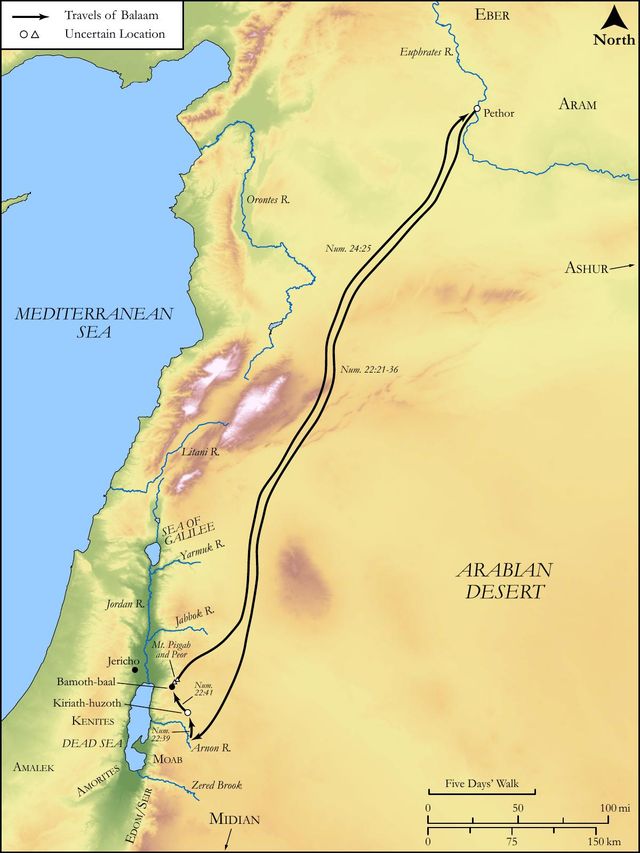
ShowHideBalaam was a non-Israelite diviner or prophet from Pethor in Mesopotamia, widely renowned for his reputed ability to bless or curse effectively. He was summoned by King Balak of Moab to curse the Israelites, whom Balak perceived as a formidable threat. God used Balaam not because Balaam was a faithful servant or a man of integrity, but precisely to demonstrate His absolute and unchallengeable sovereignty. Even a pagan diviner, motivated by greed (as later revealed in 2 Peter 2:15 and Jude 1:11), could be compelled by God to speak His truth against his own will and interests. This highlights that God's plans are not dependent on human cooperation but can even override human will to accomplish His divine purposes.
What does "put in my mouth" signify in this context?
ShowHideThe phrase "put in my mouth" is a powerful and frequently used biblical idiom indicating direct, unmediated divine inspiration and revelation. It means that the words Balaam spoke were not his own thoughts, desires, or interpretations, but were literally given to him by the LORD. This underscores that Balaam was merely a conduit or mouthpiece for God's message, utterly unable to alter, resist, or deviate from the divine utterance. It emphasizes the authoritative, involuntary, and undeniable nature of the prophecy, reinforcing that the message originated solely from God and was delivered precisely as intended.
How does this verse relate to the concept of God's sovereignty?
ShowHideThis verse is a profound and unequivocal testament to God's absolute sovereignty. It demonstrates with striking clarity that God's will cannot be thwarted, manipulated, or circumvented by human schemes, political pressure, or even the supernatural powers of a diviner. Despite Balak's desperate attempts and Balaam's initial willingness to curse Israel for personal gain, God sovereignly intervened and turned the intended curse into an undeniable blessing. This illustrates that God is ultimately in control of all circumstances, individuals, and even their words, ensuring that His purposes for His people and His kingdom will ultimately prevail, as seen throughout the comprehensive biblical narrative.
Christ-Centered Fulfillment
ShowHideNumbers 23:12, with Balaam's compelled utterance of God's unalterable word, profoundly foreshadows the ultimate prophet and the perfect embodiment of God's word: Jesus Christ. Balaam, an unwilling and compromised mouthpiece, was forced to declare a blessing that could not be reversed, demonstrating God's sovereign protection over His people. Christ, however, is not merely a conduit but the very Word made flesh (John 1:14), who perfectly and willingly speaks the Father's will and truth (John 12:49-50). Unlike Balaam, whose integrity was ultimately compromised by greed and a desire for gain, Jesus perfectly fulfilled His divine mandate, declaring blessings that are eternal and curses that are just. The blessing Balaam was compelled to speak for Israel finds its ultimate and everlasting fulfillment in the person and redemptive work of Christ. Through His atoning sacrifice on the cross and His glorious resurrection, Jesus secured an eternal blessing of salvation and reconciliation for all who believe, a blessing that can never be reversed by any opposing force, for "If God is for us, who can be against us?" (Romans 8:31-39). He is the true Lamb of God, whose blessing of salvation and eternal life is the ultimate reversal of the curse of sin and death (Galatians 3:13).