


Numbers 22:38
Bible text: King James Version (1769 Blayney text) · Public domain
Bible text: King James Version with Strong's numbers · Public domain
Bible text: Berean Standard Bible · Public domain
Bible text: American Standard Version (1901) · Public domain
Bible text: World English Bible, Messianic edition · Public domain
Bible text: Geneva Bible (1599) · Public domain
Bible text: Young's Literal Translation · Public domain
- וַיֹּאמֶרvai·Yo·merand he saidH559Conj-w ¦ V-Qal-ConsecImperf-3msVerb Qal Consecutive Imperfect 3rd Singular Masculineוַandיֹּאמֶרhe said
- בִּלְעָםbil·'AmBalaamH1109N-proper-mNoun Proper Masculine
- אֶל'eltoH413PrepPreposition
- בָּלָקba·LakBalakH1111N-proper-mNoun Proper Masculine
- הִנֵּהhi·nehhere!H2009PrtParticle Interjection
- בָאתִיva·tiI have comeH935V-Qal-Perf-1csVerb Qal Perfect 1st Singular common gender
- אֵלֶיךָ'e·Lei·khato youH413Prep ¦ 2msPreposition Definiteאֵלֶיtoךָyou
- עַתָּה'a·TahnowH6258AdvAdverb
- הֲיָכוֹלha·ya·Khol¿ certainly <to able>H3201Interrog ¦ V-Qal-InfAbsVerb Qal Infinitive Absoluteהֲ¿יָכוֹלcertainly <to able>
- אוּכַל'u·Khalam I ableH3201V-Qal-Imperf-1csVerb Qal Imperfect 1st Singular common gender
- דַּבֵּרda·Berto speakH1696V-Piel-InfVerb Piel Infinitive Construct
- מְאוּמָהme·'U·mahanythingH3972N-fsNoun Singular Feminine Absolute
- הַדָּבָרha·da·Varthe wordH1697Art ¦ N-msNoun Singular Masculine Absoluteהַtheדָּבָרword
- אֲשֶׁר'a·SherwhichH834RelParticle Relative
- יָשִׂיםya·Simhe will putH7760V-Qal-Imperf-3msVerb Qal Imperfect 3rd Singular Masculine
- אֱלֹהִים'E·lo·HimGodH430N-mpNoun Plural Masculine Absolute
- בְּפִיbe·Fiin my mouthH6310Prep-b ¦ N-msc ¦ 1csNoun Singular Masculine Constructבְּinפִmouthיmy
- אֹתוֹ'o·To<obj.> itH853DirObjM ¦ 3msParticle Object Indicatorאֹת<obj.>וֹit
- אֲדַבֵּר'a·da·BerI will speakH1696V-Piel-Imperf-1csVerb Piel Imperfect 1st Singular common gender
English is a literal word-by-word gloss of the Hebrew, not the KJV's wording. Why?
This is the original text the KJV's translators worked from — each Hebrew word with its own literal English meaning in this verse, prepared by scholars at Tyndale House, Cambridge. The KJV translates whole sentences, not word by word, so its wording differs: one Hebrew word can become several English words, and the KJV may choose “the LORD” where the gloss reads “Yahweh”. Both are faithful — they answer different questions. For the KJV's own rendering, switch to the KJV text.
Details
See on the biblical-era map
Study this verse
Public-domain commentary
Matthew Henry
From his Commentary on the Whole Bible. Henry comments on passages, not single verses — this entry covers Numbers 22:36–41.
We have here the meeting between Balak and Balaam, confederate enemies to God's Israel; but here they seem to differ in their expectations of the success. 1. Balak speaks of it with confidence, not doubting but to gain his point now that Balaam had come. In expectation of this, he went out to meet him, even to the utmost border of his country (Num 22:36), partly to gratify his own impatient desire to see one he had such great expectations from, and partly to do honour to Balaam, and so to engage him with his utmost power to serve him. See what respect heathen princes paid to those that had but the name and face of prophets, and pretended to have any interest in heaven; and how welcome one was that came with his mouth full of curses. What a shame is it then that the ambassadors of Christ are so little respected by most, so much despised by some, and that those are so coldly entertained who bring tidings of peace and a blessing! Balak has now nothing to complain of but that Balaam did not come sooner, Num 22:37. And he thinks that he should have considered the importunity Balak had used, Did I not earnestly send to thee? (and the importunity of people inferior to kings has prevailed with many against their inclinations), and that he should also have considered Balak's intentions concerning him: Am not I able to promote thee to honour? Balak, as king, was in his own kingdom the fountain of honour, and Balaam should have his choice of all the preferments that were in his gift; he therefore thinks himself affronted by Balaam's delays, which looked as if he thought the honours he prepared not worthy his acceptance. Note, Promotion to honour is a very tempting bait to many people; and it were well if we would be drawn into the service of God by the honour he sets before us. Why do we delay to come unto him? Is not he able to promote us to honour? 2. Balaam speaks doubtfully of the issue, and bids Balak not depend to much upon him (Num 22:38): "Have I now any power at all to say any thing? I have come, but what the nearer am I? Gladly would I curse Israel; but I must not, I cannot, God will not suffer me." He seems to speak with vexation at the hook in his nose and the bridle in his jaws, such as Sennacherib was tied up with, Isa 37:29. 3. They address themselves with all speed to the business. Balaam is nobly entertained over night, a sacrifice of thanksgiving is offered to the gods of Moab, for the safe arrival of this welcome guest, and his is treated with a feast upon the sacrifice, Num 22:40. And the next morning, that no time might be lost, Balak takes Balaam in his chariot to the high places of his kingdom, not only because their holiness (such as it was), he thought, might give some advantage to his divinations, but their height might give him a convenient prospect of the camp of Israel, which was to be the butt or mark at which he must shoot his envenomed arrows. And now Balaam is really as solicitous to please Balak as ever he had pretended to be to please God. See what need we have to pray every day, Our Father in heaven, lead us not into temptation.
Continue studying Numbers 22:38 across the web’s major study libraries — every link below opens this exact verse, chapter, or book on the destination site.
Read & Compare
 BibleGatewayThis verse in more than 200 translations and 70 languages.
 Bible.comThe YouVersion reader — hundreds of translations, reading plans, and highlights.
 ESV.orgCrossway's official English Standard Version reader.
 NET BibleThe NET translation with 60,000+ translators' notes on every rendering decision.
 STEP BibleTyndale House's free study tool — original text, vocabulary, and scholarly resources.
 BibliaLogos Bible Software's free web reader.
 USCCBThe New American Bible (Revised Edition) with the U.S. bishops' study notes.
Commentaries
 BibleHub CommentariesDozens of classic commentaries on this verse, gathered on one page.
 StudyLightMore than 100 commentary sets — the largest collection on the web.
 BibleRefPlain-English commentary on what this verse means, verse by verse.
 Enduring WordDavid Guzik's free commentary on this chapter, widely used by Bible teachers.
 Bible Study ToolsVerse commentary alongside Greek and Hebrew study aids.
Original Language & Research
- BibleHub InterlinearThe verse word by word — original language, transliteration, and English.
- BibleHub LexiconEvery word's original-language definition and Strong's entry.
 Blue Letter BibleDeep-study tools — Strong's numbers, concordance, and word studies.
 SefariaThe Hebrew text with Rashi and centuries of Jewish commentary.
Sermons, Hymns & Audio


TrulyRandomVerse is not affiliated with these sites and doesn’t control their content. They’re linked because they’re genuinely useful.
Summary
Numbers 22:38 captures the pivotal moment of Balaam's arrival before King Balak, where the diviner of Mesopotamia immediately asserts his complete subservience to the divine will. Despite being summoned by Balak to curse the encroaching Israelites, Balaam unequivocally declares that he possesses no independent power or authority to speak; rather, he is compelled to utter only the precise words that God Himself places in his mouth. This declaration sets the theological stage for the entire prophetic narrative, underscoring God's absolute sovereignty over human intentions and even over the utterances of a pagan prophet, ensuring His unthwartable plan for Israel's blessing.
Context
ShowHideLiterary Context
Numbers 22:38 marks a crucial turning point following a dramatic sequence of events. Balaam, a renowned diviner, has been summoned by Balak, King of Moab, to curse the Israelites who are encamped on the plains of Moab, causing great fear. Initially, God explicitly forbids Balaam from going with Balak's envoys, stating, "You shall not go with them; you shall not curse the people, for they are blessed" (Numbers 22:12). However, when Balak sends more prestigious officials and offers greater rewards, Balaam, despite God's renewed conditional permission, demonstrates a desire for personal gain. This leads to the extraordinary episode of God sending an angel to block Balaam's path, an angel visible only to his donkey, which miraculously speaks to him (Numbers 22:22-35). The angel reiterates God's strict command: Balaam may go, but "only the word that I shall speak to you, that you shall speak" (Numbers 22:35). Thus, by the time Balaam arrives before Balak in verse 38, the audience is fully aware of the divine constraint under which he operates, making his immediate declaration of subservience to God's word both a confirmation and a dramatic setup for the unexpected blessings that will follow.
Historical & Cultural Context
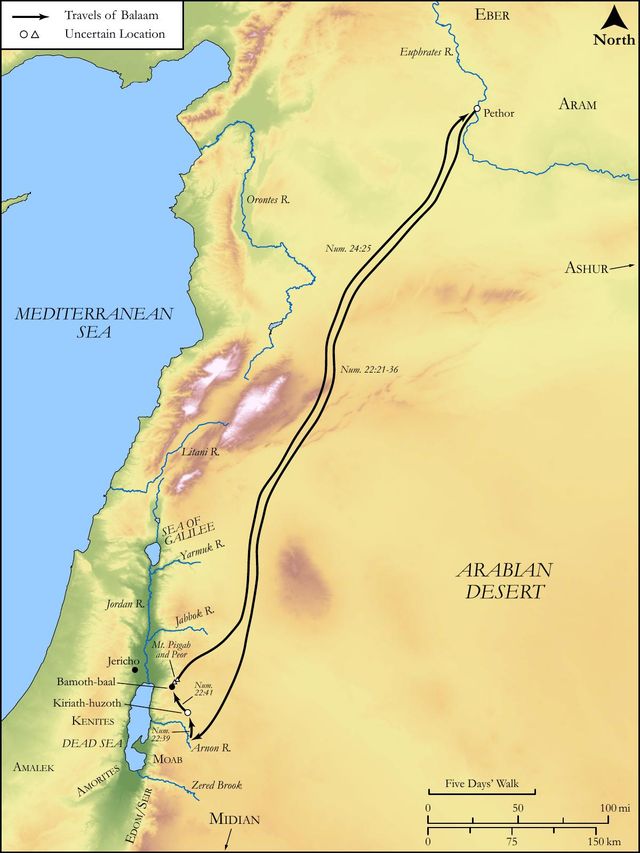
The practice of hiring foreign diviners or prophets to pronounce blessings or curses was a common and significant aspect of diplomacy and warfare among the nations. Kings believed that such pronouncements could influence the outcome of battles or the prosperity of nations. Balak's desperation stemmed from the immense fear of the numerous and powerful Israelite nation, whose recent victories were well-known. Moab, situated east of the Dead Sea, felt directly threatened by Israel's presence. Balaam, from Pethor in Mesopotamia (likely near the Euphrates), was known for his potent blessings and curses, suggesting a widespread reputation. His willingness to travel such a distance for a fee highlights the mercenary nature of some ancient prophetic practices. However, the narrative in Numbers subverts this cultural norm by demonstrating that even a renowned pagan diviner cannot manipulate the divine will of Yahweh, the God of Israel, who maintains absolute control over all human and spiritual powers. This context illuminates the radical nature of Balaam's declaration, as it defies the very expectations of his profession.
Key Themes
ShowHideNumbers 22:38 powerfully introduces and reinforces several overarching themes central to the book of Numbers and the broader Pentateuch. Firstly, it underscores Divine Sovereignty, demonstrating God's absolute control over all circumstances and individuals, even those who might seemingly oppose His will or operate outside His direct covenant. Despite Balak's fervent desire for curses and Balaam's initial inclination for reward, God's purpose for Israel could not be thwarted, illustrating that "many are the plans in a person's heart, but it is the Lord's purpose that prevails" (Proverbs 19:21). Secondly, the verse highlights the nature of Authentic Prophecy and Divine Inspiration. Balaam's statement, "the word that God putteth in my mouth, that shall I speak," defines true prophecy not as the prophet's own opinion or desire, but as a direct, divinely inspired message. This principle is fundamental to understanding how God communicates His will, as seen in Jeremiah's call where God declares, "Behold, I have put my words in your mouth" (Jeremiah 1:9). Finally, the narrative confirms God's Unchanging Purpose and Covenant Faithfulness to His people. God's plan for Israel, which includes blessing them, is unchangeable. No human or spiritual power can overturn His decrees, reinforcing the truth that "God is not a man, that he should lie, nor a son of man, that he should change his mind" (Numbers 23:19).
Exposition and Analysis
ShowHideKey Word Analysis
ShowHideThis term denotes the ability, capacity, or inherent authority to do something. By asking rhetorically, "have I now any power at all to say any thing?", Balaam explicitly denies any personal, independent capability or authority to utter words of his own choosing. He is not merely stating a lack of physical strength, but a complete absence of spiritual or volitional power to deviate from God's directive. This emphasizes his role as a passive instrument, rather than an active agent, in the divine communication.
This versatile verb means "to give," "to place," or "to put." In this context, it signifies a direct, active, and intentional impartation of words by God into Balaam's mouth. It is not merely an influence or a general idea, but a specific, divinely dictated message. This highlights the concept of verbal inspiration, where the very words spoken by the prophet are given by God, ensuring their accuracy, authority, and the fulfillment of God's purpose.
This verb means "to speak," "to say," or "to declare." It implies a direct, verbal communication. The repetition of this verb in the phrase "that shall I speak" emphasizes Balaam's complete submission and compulsion. He is not just receiving a message; he is bound to articulate it precisely as given, without alteration or personal interpretation. This underscores the authoritative nature of the divine utterance that is about to follow.
Verse Breakdown
ShowHide"And Balaam said unto Balak, Lo, I am come unto thee:"
This opening clause establishes the immediate setting: Balaam's arrival and direct address to King Balak. It acknowledges the purpose of his journey – to fulfill Balak's summons. This sets a tone of anticipation, as Balak expects a curse, but Balaam's subsequent words immediately introduce a profound caveat, shifting the narrative's focus from human machinations to divine control.
"have I now any power at all to say any thing?"
This is a rhetorical question, designed to elicit a negative answer and emphatically deny Balaam's personal agency. It's a crucial disclaimer, serving to disabuse Balak of any notion that Balaam's words will be his own or influenced by Balak's desires or payment. It immediately shifts the locus of authority from Balaam to a higher, unseen power, setting the stage for a revelation that transcends human will.
"the word that God putteth in my mouth, that shall I speak."
This is the core declaration of the verse and the narrative's central theological assertion. Balaam states unequivocally that he is merely a conduit for divine revelation. His words are not his own; they are divinely originated and divinely imposed. The phrase "that shall I speak" implies an absolute compulsion and commitment to utter precisely what God dictates, regardless of his own desires or Balak's expectations. This statement effectively pre-empts any attempt by Balak to coerce or bribe Balaam into cursing Israel, establishing God's unassailable sovereignty over the situation and the integrity of the forthcoming prophecies.
Literary Devices
ShowHideNumbers 22:38 employs several potent literary devices that enrich its meaning and dramatic impact. Foreshadowing is prominent, as Balaam's declaration that he can only speak what God puts in his mouth immediately signals that the anticipated curses will not materialize; instead, blessings will follow, much to Balak's dismay. This creates Dramatic Irony, where the audience (and Balaam) knows the outcome of the encounter, while Balak remains tragically oblivious, continuing to expect a curse. The Rhetorical Question, "have I now any power at all to say any thing?", serves to emphasize Balaam's complete lack of autonomy and to highlight the divine control over his speech, drawing the listener's attention to the true source of authority. Furthermore, the verse establishes a stark Contrast between Balak's human will and desperate political maneuvering, and God's sovereign, unchangeable divine will. This tension drives the subsequent narrative, demonstrating the futility of human opposition against God's purposes and magnifying His omnipotence.
Theological and Thematic Connections
ShowHideNumbers 22:38 is a profound testament to the absolute sovereignty of God, demonstrating His unyielding control over all creation, including the hearts and mouths of individuals, even those who are not His covenant people or who harbor intentions contrary to His will. This narrative affirms that God's word is supreme and His purposes cannot be thwarted by human machinations, political power, or even the spiritual forces of darkness. It underscores that true prophetic utterance originates solely from God, making the prophet a vessel rather than the source. This divine control over Balaam's speech ensures the fulfillment of God's covenant promises to Israel, highlighting His faithfulness and the immutability of His blessings despite the machinations of His adversaries.
Reflection and Application
ShowHideNumbers 22:38 offers a powerful and enduring lesson for believers today: God's sovereignty is absolute, and His purposes will prevail, regardless of human opposition or the most formidable challenges we face. In a world that often feels chaotic or controlled by powerful, self-serving interests, this verse reminds us to anchor our trust in the God who can even turn a hired curse into a blessing. For those called to speak on behalf of God, whether in formal ministry, evangelism, or daily conversations, Balaam's declaration serves as a vital reminder of humility and submission. Our words must not be our own opinions, desires for popularity, or attempts to manipulate, but rather faithful echoes of God's revealed truth. This calls us to diligent study of His Word, fervent prayer for divine guidance, and a courageous commitment to speak "only what the Lord speaks," even when it is unpopular or goes against prevailing cultural currents. It challenges us to examine our motivations: are we seeking personal gain or God's glory? Are we truly conduits of His message, or are we subtly injecting our own agendas?
Questions for Reflection
ShowHideFAQ
ShowHideWas Balaam a true prophet of God, or a pagan diviner?
ShowHideBalaam is a complex and paradoxical figure. He was indeed a pagan diviner from Mesopotamia, practicing divination for hire, as the elders of Moab and Midian came to him "with the rewards of divination in their hand." However, the biblical narrative clearly shows that God (Yahweh) directly communicated with him, used him as a mouthpiece, and even intervened supernaturally in his journey. Balaam recognized Yahweh's power and acknowledged His authority in Numbers 22:38 and subsequent chapters. While his words were divinely inspired in these instances, his personal character was flawed, motivated by greed, and he is later condemned for giving counsel to Balak that led Israel into sin (Numbers 31:16; Revelation 2:14). So, he was a pagan diviner whom God sovereignly chose to use as a prophet for a specific purpose, demonstrating that God can use anyone, even an unwilling or morally compromised individual, to accomplish His will.
Why did God allow Balaam to go with Balak, after initially forbidding it?
ShowHideGod's initial prohibition was clear: "You shall not go with them; you shall not curse the people, for they are blessed" (Numbers 22:12). However, when Balaam persisted and the Moabite officials returned with greater offers, God allowed him to go, but with a strict and reiterated condition: "only the word that I shall say to you, that you shall speak" (Numbers 22:20). This permission, despite Balaam's apparent greed, served a higher divine purpose. It demonstrated God's absolute control, turning Balak's attempt to curse into an opportunity to publicly bless Israel and display His sovereignty, even over a reluctant and self-serving prophet. The dramatic intervention of the angel of the Lord and the talking donkey (Numbers 22:22-35) further reinforced this divine constraint, ensuring Balaam understood that his words would be God's, not his own.
Christ-Centered Fulfillment
ShowHideNumbers 22:38, with Balaam's declaration of being a mere conduit for God's words, profoundly foreshadows the ultimate Prophet, Jesus Christ. While Balaam was a flawed and unwilling mouthpiece, bound by divine constraint, Jesus perfectly embodies the principle of speaking only what the Father gives Him to say. Jesus consistently affirmed, "For I have not spoken on my own authority; but the Father who sent me has himself given me a commandment—what to say and what to speak" (John 12:49). He declared, "The words that I speak unto you I speak not of myself: but the Father that dwelleth in me, he doeth the works" (John 14:10). Unlike Balaam, who was motivated by greed and later led Israel astray, Jesus perfectly submitted His will to the Father's, speaking words of truth, life, and salvation (John 6:63; John 6:68). The inability of Balak or any human power to thwart God's blessing on Israel through Balaam's unwilling prophecy powerfully prefigures the ultimate inability of any earthly or demonic power to thwart God's redemptive plan through Christ. Through His death and resurrection, Jesus disarmed the powers and authorities (Colossians 2:15), rendering their curses powerless and securing eternal blessing for all who believe, fulfilling the very essence of God's unchangeable purpose to bless His people.