


Numbers 22:35
Bible text: King James Version (1769 Blayney text) · Public domain
Bible text: King James Version with Strong's numbers · Public domain
Bible text: Berean Standard Bible · Public domain
Bible text: American Standard Version (1901) · Public domain
Bible text: World English Bible, Messianic edition · Public domain
Bible text: Geneva Bible (1599) · Public domain
Bible text: Young's Literal Translation · Public domain
- וַיֹּאמֶרvai·yo·Merand he saidH559Conj-w ¦ V-Qal-ConsecImperf-3msVerb Qal Consecutive Imperfect 3rd Singular Masculineוַandיֹּאמֶרhe said
- מַלְאַךְmal·'Akh[the] angel ofH4397N-mscNoun Singular Masculine Construct
- יְהוָהYah·wehYahwehH3068N-properNoun Proper Title
- אֶל'eltoH413PrepPreposition
- בִּלְעָםbil·'AmBalaamH1109N-proper-mNoun Proper Masculine
- לֵךְlekhgoH1980V-Qal-Imp-2msVerb Qal Imperative 2nd Singular Masculine
- עִם'imwithH5973PrepPreposition
- הָאֲנָשִׁיםha·'a·na·Shimthe menH582Art ¦ N-mpNoun Plural Masculine Absoluteהָtheאֲנָשִׁיםmen
- וְאֶפֶסve·'E·fesand onlyH657Conj-w ¦ N-msNoun Singular Masculine Absoluteוְandאֶפֶסonly
- אֶת'et<obj.>H853DirObjMParticle Object Indicator
- הַדָּבָרha·da·Varthe wordH1697Art ¦ N-msNoun Singular Masculine Absoluteהַtheדָּבָרword
- אֲשֶׁר'a·SherwhichH834RelParticle Relative
- אֲדַבֵּר'a·da·BerI will speakH1696V-Piel-Imperf-1csVerb Piel Imperfect 1st Singular common gender
- אֵלֶיךָ'e·Lei·khato youH413Prep ¦ 2msPreposition Definiteאֵלֶיtoךָyou
- אֹתוֹ'o·To<obj.> itH853DirObjM ¦ 3msParticle Object Indicatorאֹת<obj.>וֹit
- תְדַבֵּרte·da·Beryou will speakH1696V-Piel-Imperf-2msVerb Piel Imperfect 2nd Singular Masculine
- וַיֵּלֶךְvai·Ye·lekhand he wentH1980Conj-w ¦ V-Qal-ConsecImperf-3msVerb Qal Consecutive Imperfect 3rd Singular Masculineוַandיֵּלֶךְhe went
- בִּלְעָםbil·'AmBalaamH1109N-proper-mNoun Proper Masculine
- עִם'imwithH5973PrepPreposition
- שָׂרֵיsa·Rei[the] leaders ofH8269N-mpcNoun Plural Masculine Construct
- בָלָקva·LakBalakH1111N-proper-mNoun Proper Masculine
English is a literal word-by-word gloss of the Hebrew, not the KJV's wording. Why?
This is the original text the KJV's translators worked from — each Hebrew word with its own literal English meaning in this verse, prepared by scholars at Tyndale House, Cambridge. The KJV translates whole sentences, not word by word, so its wording differs: one Hebrew word can become several English words, and the KJV may choose “the LORD” where the gloss reads “Yahweh”. Both are faithful — they answer different questions. For the KJV's own rendering, switch to the KJV text.
Details
See on the biblical-era map
Study this verse
Public-domain commentary
Matthew Henry
From his Commentary on the Whole Bible. Henry comments on passages, not single verses — this entry covers Numbers 22:22–35. His four-level outline is real structure in the source text, so it is rendered as structure.
We have here an account of the opposition God gave to Balaam in his journey towards Moab; probably the princes had gone before, or gone some other way, and Balaam had pointed out where he would meet them, or where they should stay for him, for we read nothing of them in this part of our narrative, only that Balaam, like a person of some quality, was attended with his two men-honour enough, one would think, for such a man, he needed not be beholden to Balak for promotion.
I.Here is God's displeasure against Balaam for undertaking this journey: God's anger was kindled because he went, Num 22:22. Note,
1.The sin of sinners is not to be thought the less provoking to God because he permits it. We must not think that, because God does not by his providence restrain men from sin, therefore he approves of it, or that it is therefore not hateful to him; he suffers sin, and yet is angry at it.
2.Nothing is more displeasing to God than malicious designs against his people; he that touches them touches the apple of his eye.
II.The way God took to let Balaam know his displeasure against him:
An angel stood in the way for an adversary. Now God fulfilled his promise to Israel (Exo 23:22), I will be an enemy to thy enemies. The holy angels are adversaries to sin, and perhaps are employed more than we are aware of in preventing it, particularly in opposing those that have any ill designs against God's church and people, for whom Michael our prince stands up, Dan 12:1; Dan 10:21. What a comfort is this to all that wish well to the Israel of God, that he never suffers wicked men to form an attempt against them, without sending his holy angels forth to break the attempt and secure his little ones! When the prophet saw the four horns that scattered Judah, at the same time he saw four carpenters that were to fray those horns, Zac 1:18, etc. When the enemy comes in like a flood the Spirit of the Lord will lift up a standard against him. This angel was an adversary to Balaam, because Balaam counted him his adversary; otherwise those are really our best friends, and we are so to reckon them, that stop our progress in a sinful way. The angel stood with his sword drawn (Num 22:23), a flaming sword, like that in the hands of the cherubim (Gen 3:24), turning every way. Note, The holy angels are at war with those with whom God is angry, for they are the ministers of his justice. Observe,
1.Balaam had notice given him of God's displeasure, by the ass, and this did not startle him. The ass saw the angel, Num 22:23. How vainly did Balaam boast that he was a man whose eyes were open, and that he saw the visions of the Almighty (Num 24:3, Num 24:4), when the ass he rode on saw more than he did, his eyes being blinded with covetousness and ambition and dazzled with the rewards of divination! Note, Many have God against them, and his holy angels, but are not aware of it. The ass knows his owner, sees his danger, but Balaam does not know, does not consider, Isa 1:3. Lord, when thy hand is lifted up, they will not see, Isa 26:11. Let none be puffed up with a conceit of visions and revelations, when even an ass saw an angel; yet let those be ashamed of their own sottishness, worse than that of the beasts that perish, who, when they are told of the sword of God's wrath drawn against them, while they persist in wicked ways, yet will go on: the ass understood the law of self-preservation better than so; for, to save both herself and her senseless rider,
(1.)She turned aside out of the way, Num 22:23. Balaam should have taken the hint of this, and considered whether he was not out of the way of his duty; but, instead of this, he beat her into the way again. Thus those who by wilful sin are running headlong into perdition are angry at those that would prevent their ruin.
(2.)She had not gone much further before she saw the angel again, and the, to avoid him, ran up to a wall, and crushed her rider's foot, Num 22:24, Num 22:25. How many ill accidents are we liable to in travelling upon the road, from which if we are preserved we must own our obligations to the divine Providence, which by the ministry of angels keeps us in all our ways, lest we dash our foot against a stone; but, if we at any time meet with a disaster, it should put us upon enquiring whether our way be right in the sight of God or no. The crushing of Balaam's foot, though it was the saving of his life, provoked him so much that he smote his ass the second time, so angry are we apt to be at that which, though a present uneasiness, yet is a real kindness.
(3.)Upon the next encounter with the angel, the ass fell down under Balaam, Num 22:26, Num 22:27. He ought to have considered that there was certainly something extraordinary in this; for his ass was not restive, nor did she use to serve him thus: but it is common for those whose hearts are fully set in them to do evil to push on violently, and break through all the difficulties which Providence lays in their way to give check to them and to stop them in their career. Balaam the third time smote his ass, though she had now done him the best piece of service that ever she did him, saving him from the sword of the angel, and by her falling down teaching him to do likewise.
(4.)When all this would not work upon him, God opened the mouth of the ass, and she spoke to him once and again; and yet neither did this move him: The Lord opened the mouth of the ass, Num 22:28. This was a great miracle, quite above the power of nature, and wrought by the power of the God of nature, who made man's mouth, and taught him to speak, for otherwise (since we learn to speak purely by imitation, and therefore those that are born deaf are consequently dumb) the first man would never have spoken, nor any of his seed. He that made man speak could, when he pleased, make the ass to speak with man's voice, Pe2 2:16. Here Mr. Ainsworth observes that the devil, when he tempted our first parents to sin, employed a subtle serpent, but that God, when he would convince Balaam, employed a silly ass, a creature dull and sottish to a proverb; for Satan corrupts men's minds by the craftiness of those that lie in wait to deceive, but Christ has chosen the foolish things of the world to confound the wise. By a dumb ass God rebukes the madness of the prophet, for he will never want reprovers, but when he pleases can make the stones cry out as witnesses to him, Luk 19:40; Hab 2:11.
[1.]The ass complained of Balaam's cruelty (Num 22:28): What have I done unto thee, that thou hast smitten me? Note, The righteous God will not see the meanest and weakest abused; but either they shall be enabled to speak in their own defence or he will some way or other speak for them. If God would not suffer a beast to be wronged, much less a man, a Christian, a child of his own. We cannot open the mouth of the dumb, as God did here, but we may and must open our mouth for the dumb, Pro 31:8; Job 31:13. The ass's complaint was just: What have I done? Note, When we are prompted to smite any with hand or tongue, we should consider what they have done unto us, and what provocation they have given us. We hear it not, but thus the whole creation groans, being burdened, Rom 8:22. It was much that Balaam was not astonished to hear his ass speak, and put to confusion: but some think that it was no new thing to him (being a conjurer) to be thus spoken to by his familiars; others rather think that his brutish head-strong passion so blinded him that he could not observe or consider the strangeness of the thing. Nothing besots men worse than unbridled anger. Balaam in his fury wished he had a sword to kill his ass with, Num 22:29. See his impotency; can he think by his curses to do mischief to Israel that has it not in his power to kill his own ass? This he cannot do, yet he fain would; and what would he get by that, but make himself so much the poorer (as many do), to gratify his passion and revenge? Such was the madness of this false prophet. Here bishop Hall observes, It is ill falling into the hands of those whom the brute-creatures find unmerciful; for a good man regardeth the life of his beast.
[2.]The ass reasoned with him, Num 22:30. God enabled not only a dumb creature to speak, but a dull creature to speak to the purpose. Three things she argues with him from: - First, His propriety in her: Am not I thy ass? Note, 1. God has given to man a dominion over the creatures: they are delivered into his hand to be used, and put under his feet to be ruled. 2. Even wicked people have a title to the possessions God gives to them, which they are not to be wronged of. 3. The dominion God has given us over the creatures is a good reason why we should not abuse them. We are their lords, and therefore must not be tyrants. Secondly, Her serviceableness to him: On which thou hast ridden. Note, It is good for us often to consider how useful the inferior creatures are, and have been, to us, that we may be thankful to God, and tender of them. Thirdly, That she was not wont to do so by him, and had never before crushed his foot, nor fallen down under him; he might therefore conclude there was something more than ordinary that made her do so now. Note, 1. The rare occurrence of an offence should moderate our displeasure against an offender. 2. When the creatures depart from their wonted obedience to us, we should enquire the cause within ourselves, and be humbled for our sin.
2.Balaam at length had notice of God's displeasure by the angel, and this did startle him. When God opened his eyes he saw the angel (Num 22:31), and then he himself fell flat upon his face, in reverence of that glorious messenger, and in fear of the sword he saw in his hand. God has many ways of breading and bringing down the hard and unhumbled heart.
(1.)The angel reproved him for his outrageousness (Num 22:32, Num 22:33): Wherefore hast thou smitten thy ass? Whether we consider it or no, it is certain that God will call us to account for the abuses done to his creatures. Nay, he shows him how much more reason he had to smite upon his breast, and to condemn himself, than to fly out thus against his ass ("Thy way is perverse before me, and then how canst thou expect to prosper?"), and how much wiser his ass was than himself, and how much beholden he was to her that she turned aside; it was for his safety, and not for her own, for had she gone on he had been slain, and she had been saved alive. Note, When our eyes are opened we shall see what danger we are in in a sinful way, and how much it was for our advantage to be crossed in it, and what fools we were to quarrel with our crosses which helped to save our lives.
(2.)Balaam then seemed to relent (Num 22:34): "I have sinned, sinned in undertaking this journey, sinned in pushing on so violently;" but he excused it with this, that he saw not the angel; yet, now that he did see him, he was willing to go back again. That which was displeasing to God was not so much his going as his going with a malicious design against Israel, and a secret hope that notwithstanding the proviso with which his permission was clogged he might prevail to curse them, and so gratify Balak, and get preferment under him. It does not appear that he was sensible of this wickedness of his heart, or willing to own it, but, when he finds he cannot go forward, he will be content (since there is no remedy) to go back. Here is no sign that his heart is turned, but, if his hands are tied, he cannot help it. Thus many leave their sins only because their sins have left them. There seems to be a reformation of the life, but what will this avail if there be no renovation of the heart?
(3.)The angel however continued his permission: "Go with the men, Num 22:35. Go, if thou hast a mind to be made a fool of, and to be shamed before Balak, and all the princes of Moab. Go, only the word that I shall speak unto thee, that thou shalt speak, whether thou wilt or no," for this seems not to be a precept, but a prediction of the event, that he should not only not be able to curse Israel, but should be forced to bless them, which would be more for the glory of God and his own confusion than if he had turned back. Thus God gave him fair warning, but he would not take it; he went with the princes of Balak. For the iniquity of Balaam's covetousness God was wroth, and smote him, but he went on frowardly, Isa 57:17.
Continue studying Numbers 22:35 across the web’s major study libraries — every link below opens this exact verse, chapter, or book on the destination site.
Read & Compare
 BibleGatewayThis verse in more than 200 translations and 70 languages.
 Bible.comThe YouVersion reader — hundreds of translations, reading plans, and highlights.
 ESV.orgCrossway's official English Standard Version reader.
 NET BibleThe NET translation with 60,000+ translators' notes on every rendering decision.
 STEP BibleTyndale House's free study tool — original text, vocabulary, and scholarly resources.
 BibliaLogos Bible Software's free web reader.
 USCCBThe New American Bible (Revised Edition) with the U.S. bishops' study notes.
Commentaries
 BibleHub CommentariesDozens of classic commentaries on this verse, gathered on one page.
 StudyLightMore than 100 commentary sets — the largest collection on the web.
 BibleRefPlain-English commentary on what this verse means, verse by verse.
 Enduring WordDavid Guzik's free commentary on this chapter, widely used by Bible teachers.
 Bible Study ToolsVerse commentary alongside Greek and Hebrew study aids.
Original Language & Research
- BibleHub InterlinearThe verse word by word — original language, transliteration, and English.
- BibleHub LexiconEvery word's original-language definition and Strong's entry.
 Blue Letter BibleDeep-study tools — Strong's numbers, concordance, and word studies.
 SefariaThe Hebrew text with Rashi and centuries of Jewish commentary.
Sermons, Hymns & Audio


TrulyRandomVerse is not affiliated with these sites and doesn’t control their content. They’re linked because they’re genuinely useful.
Summary
Numbers 22:35 serves as the pivotal turning point in the dramatic confrontation between Balaam and the Angel of the LORD, marking God's definitive, albeit strictly conditional, permission for Balaam to proceed to King Balak. This verse emphatically reiterates God's absolute sovereignty over Balaam's prophetic utterances, ensuring that only the divine message, rather than Balak's desired curse, would be delivered. It underscores the profound truth that God's purposes for His people cannot be thwarted by human will or supernatural opposition.
Context
ShowHideLiterary Context
This verse provides the immediate resolution to the intense divine confrontation that began in Numbers 22:22. Earlier in the narrative, God had explicitly forbidden Balaam from accompanying Balak's envoys to curse Israel, stating, "Thou shalt not go with them; thou shalt not curse the people: for they are blessed" (Numbers 22:12). However, after Balak's persistent entreaties and Balaam's repeated inquiry, God granted a conditional permission, stipulating: "only the word which I shall say unto thee, that shalt thou do" (Numbers 22:20). The ensuing dramatic encounter with the Angel of the LORD, culminating in the miraculous speech of Balaam's donkey and the opening of Balaam's eyes to the divine presence, served as a powerful, humbling reinforcement of this non-negotiable divine mandate. Thus, Numbers 22:35 is the Angel's final, direct command, reiterating the precise condition and allowing Balaam to continue his journey, thereby setting the stage for the remarkable prophetic oracles that unfold in Numbers 23 and Numbers 24.
Historical & Cultural Context
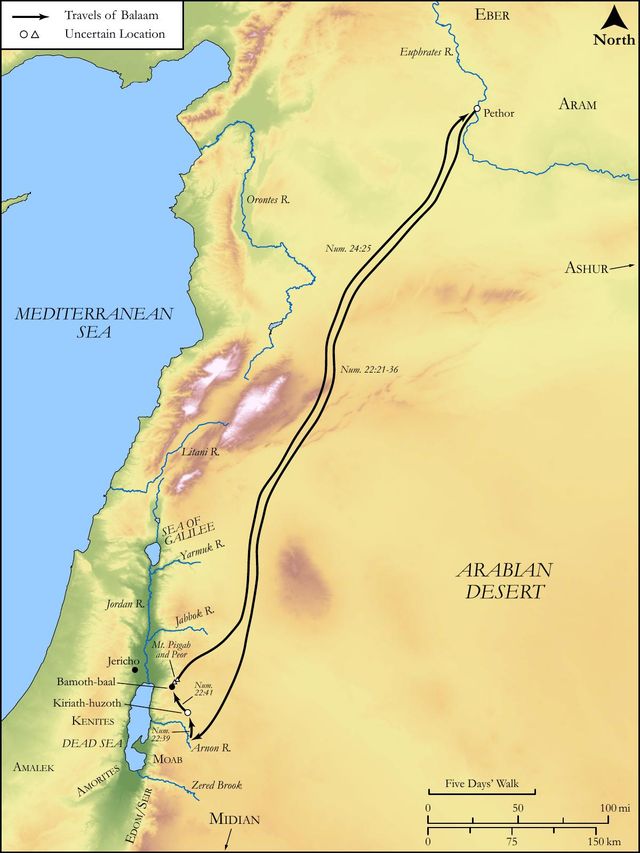
Balaam was a renowned diviner and seer from Pethor, a city in Mesopotamia, a region historically associated with various forms of divination, omens, and prophetic practices. Among the nations, it was a common belief that diviners possessed the power to influence events—including the outcome of battles—through ritual blessings or curses. King Balak of Moab, deeply apprehensive of the vast and powerful Israelite encampment on his border, sought to employ Balaam's services to curse Israel, a strategic maneuver in ancient warfare to weaken an enemy supernaturally. The Israelites, having recently achieved significant victories, posed a formidable threat. This cultural backdrop is crucial for understanding the radical nature of YHWH's control over Balaam. Unlike the pagan deities susceptible to human manipulation or coercion through ritual, YHWH is portrayed as utterly sovereign, dictating the prophet's very words and demonstrating His absolute authority over all powers, whether human, supernatural, or political, thereby protecting His covenant people.
Key Themes
ShowHideThe most prominent theme in Numbers 22:35 is God's absolute sovereignty over human will, speech, and destiny. Despite Balak's desperate attempt to hire Balaam to curse Israel, God ensures that only His divine message will be delivered, powerfully demonstrating His ultimate power to protect His people and execute His preordained plans, even through an unwilling or morally compromised agent. This highlights the profound theme of divine protection of Israel, underscoring God's unwavering commitment to His covenant people, whom no curse can genuinely touch, as later affirmed in Deuteronomy 23:5. Furthermore, the verse emphasizes the true nature of prophecy—it is not merely a human utterance or an act of divination, but the direct, authoritative word of God, a concept consistently reinforced throughout the prophetic literature of the Old Testament (e.g., Jeremiah 1:9). Balaam's conditional obedience, "Go with the men: but only the word that I shall speak unto thee, that thou shalt speak," also brings to the forefront the theme of human agency under divine control, where human actions, particularly those with prophetic or covenantal implications, are ultimately subservient to God's supreme authority.
Exposition and Analysis
ShowHideKey Word Analysis
ShowHideThis significant Old Testament designation refers to a divine messenger, often understood as a pre-incarnate manifestation of God Himself (YHWH) or a divine emissary acting with God's full authority and speaking directly as God. In this narrative, the Angel's direct intervention, confrontation, and authoritative speech underscore the divine origin and absolute nature of the command given to Balaam, leaving no doubt that Balaam is dealing directly with the sovereign will of the Lord, not merely a subordinate spirit. The Angel's role here is to enforce God's ultimate control.
The singular "word" emphasizes that Balaam is to be a mere conduit for a specific, singular divine message, not a source of his own or Balak's desired utterances. This term carries immense theological weight, frequently referring to God's authoritative decree, His creative power, or His prophetic utterance. Its use here highlights the absolute precision and non-negotiable nature of Balaam's mandate: he is to transmit only what God gives him.
This primitive root signifies "to arrange" or "to speak," but also carries connotations of commanding or declaring. The repetition of this verb, both for God's action ("I shall speak unto thee") and Balaam's mandated action ("that thou shalt speak"), underscores the precise and non-negotiable nature of Balaam's role. He is not to interpret, modify, or add to the divine message, but simply to articulate it exactly as given, serving as a direct mouthpiece for God.
Verse Breakdown
ShowHide"And the angel of the LORD said unto Balaam, Go with the men:"
This clause signifies a dramatic reversal of the Angel's previous stance, which involved blocking Balaam's path, and God's earlier prohibition. It grants Balaam explicit permission to continue his journey with Balak's envoys. However, this permission is not a concession to Balaam's stubborn will or desire for reward, but rather an integral part of God's larger, sovereign plan to demonstrate His power. The preceding confrontation served its divine purpose: to humble Balaam, to open his eyes to spiritual realities, and to prepare him for the absolute and strict condition that immediately follows.
"but only the word that I shall speak unto thee, that thou shalt speak."
This is the absolute, non-negotiable, and defining condition that governs Balaam's permission to proceed. It fundamentally transforms Balaam from an independent diviner, who might manipulate spiritual forces for personal gain, into a divinely controlled mouthpiece. His own desires, the king's desperate demands, or any potential personal reward are rendered utterly irrelevant; his speech must be exclusively God's word, without deviation or addition. This clause sets the unbreakable framework for the subsequent prophetic oracles, where Balaam, despite his initial intentions and the immense pressure from Balak, is divinely compelled to bless Israel.
"So Balaam went with the princes of Balak."
This final clause records Balaam's immediate and now fully compliant action. Having been thoroughly humbled, confronted with divine reality, and having his spiritual eyes opened to the Angel of the LORD, Balaam now understands the gravity and inescapable nature of his situation. He proceeds with the Moabite princes, but no longer under the illusion of independent agency or control over his own words. His journey continues, but his mission and every subsequent utterance are now entirely dictated by the divine will, presenting a stark contrast to his earlier eagerness driven by the lure of potential reward.
Literary Devices
ShowHideThe passage employs several potent literary devices that amplify its theological message. Divine Intervention is central, as the Angel of the LORD directly confronts and commands Balaam, highlighting God's active, personal involvement in human affairs and His unwavering determination to protect His covenant people. There is clear Foreshadowing in this verse, as the explicit command that Balaam will speak "only the word that I shall speak unto thee" powerfully sets up the dramatic irony of the subsequent chapters where Balaam, hired and pressured to curse Israel, is repeatedly compelled to utter blessings instead. This also demonstrates profound Irony, as Balaam, a renowned diviner who typically controls his own prophetic utterances and expects payment for them, is now rendered a mere passive instrument, his tongue completely subservient to a higher, irresistible power. The Repetition of the Hebrew root dabar (meaning both "word" and "speak") in the key phrase "only the word that I shall speak unto thee, that thou shalt speak" underscores the absolute nature of the divine mandate and Balaam's complete lack of autonomy in his prophetic role, emphasizing that the message is entirely God's.
Theological and Thematic Connections
ShowHideNumbers 22:35 powerfully articulates the theme of divine sovereignty, asserting God's absolute and unchallengeable control over all circumstances, even the speech of those who might actively oppose His will or seek to thwart His plans. It demonstrates unequivocally that no human scheme, no matter how potent, well-resourced, or supernaturally backed, can ultimately frustrate God's purposes for His chosen people. This verse profoundly underscores that true prophecy is not a human enterprise, a skill to be hired, or a magical incantation, but a divine utterance—the direct communication of God's will, emphasizing His unique ability to communicate His truth and ensure its infallible fulfillment. It transforms Balaam from a pagan diviner into an unwilling, yet divinely compelled, prophet of YHWH, highlighting God's incredible capacity to use even imperfect, flawed, or morally compromised instruments to achieve His holy ends, ultimately turning a potential curse into a profound blessing for Israel.
Reflection and Application
ShowHideThe profound narrative of Balaam, culminating in the divine mandate of Numbers 22:35, offers invaluable lessons for believers today, resonating deeply with our understanding of God's character and our role in His plan. It serves as a powerful and comforting reminder that God's sovereign will ultimately prevails over all human intentions, machinations, and even the most formidable opposition. For those who feel overwhelmed by the forces of evil, the schemes of the ungodly, or the seemingly insurmountable challenges of life, this passage offers immense comfort and assurance: God is unequivocally in control, His plans for His people cannot be thwarted, and He possesses the power to turn intended harm into unexpected blessing. Furthermore, for anyone who speaks on behalf of God, whether in formal ministry, teaching, evangelism, or simply sharing their faith, this verse issues a stark and urgent call to integrity, faithfulness, and unwavering submission to divine truth. We are called to speak "only the word that [God] shall speak," prioritizing divine revelation and truth over personal opinions, popular sentiment, cultural trends, or the desire for human approval and applause. It challenges us to be careful, humble stewards of God's revealed word, diligently ensuring that our words align precisely with His, even when such alignment is uncomfortable, unpopular, or demands personal sacrifice. Finally, God's remarkable use of a deeply flawed and morally compromised character like Balaam reminds us of His incredible grace, boundless patience, and transformative power to work through imperfect instruments. This demonstrates that our usefulness to God is not contingent on our perfection or inherent righteousness, but rather on His sovereign choice, His ability to redeem and direct, and our willingness, however reluctant at times, to submit to His divine word and purpose.
Questions for Reflection
ShowHideFAQ
ShowHideWho is the "Angel of the LORD" mentioned in this verse?
ShowHideThe "Angel of the LORD" (Hebrew: mal'akh YHWH) is a highly significant and mysterious figure in the Old Testament, often understood by theologians as a pre-incarnate appearance of Jesus Christ (a Christophany) or a divine messenger who speaks and acts with the full authority of God Himself, effectively being God in manifestation. In the context of Numbers 22, this Angel is clearly portrayed as a divine being, possessing supernatural knowledge (seeing what Balaam cannot), speaking directly to Balaam, and issuing commands with ultimate, unchallengeable authority. The Angel's direct intervention underscores God's personal, direct involvement in human affairs and the absolute sovereignty of God over Balaam's actions and words. The encounter leaves no doubt that Balaam is confronting the divine presence itself.
Why did God allow Balaam to go with Balak's men after initially forbidding it?
ShowHideGod's initial prohibition in Numbers 22:12 was unequivocal: Balaam was not to curse Israel because they were blessed. However, Balaam's persistence, driven by the lure of greater reward and honor, led him to inquire again. God's subsequent, conditional permission in Numbers 22:20, reiterated and enforced by the Angel in Numbers 22:35, was not a change of mind on God's part but a strategic and sovereign move to demonstrate His absolute control and power. By allowing Balaam to go, God ensured that Balaam would become a public, undeniable witness to His power, unable to curse Israel and compelled instead to bless them. This served multiple divine purposes: it glorified God's name, protected His covenant people, exposed Balaam's mixed motives, and ultimately proved that God can turn even the wicked intentions of humans to serve His divine purposes (Proverbs 16:4). God's permission was an act of sovereign control, not capitulation to Balaam's will.
Christ-Centered Fulfillment
ShowHideNumbers 22:35, with its profound emphasis on God's absolute control over Balaam's words and His unwavering, sovereign protection of Israel, finds its ultimate and most glorious Christ-centered fulfillment in the person and work of Jesus Christ. Jesus Christ is the quintessential "Word" of God, the eternal Logos (John 1:1-3), through whom all things were created and through whom God perfectly and fully reveals Himself. Just as the Angel of the LORD ensured Balaam spoke only God's word, Jesus Himself declared, "For I have not spoken on my own authority, but the Father who sent me has himself given me a commandment—what to say and what to speak" (John 12:49). He is the Prophet par excellence, whose every utterance was in perfect, unblemished alignment with the Father's will, embodying the divine word in human flesh. Furthermore, the divine protection of Israel from Balaam's intended curse powerfully foreshadows Christ's ultimate redemptive work of turning the curse of sin and death into an eternal blessing for all who believe. Through His atoning sacrifice on the cross, Christ became a curse for us, bearing the full weight of God's judgment, "so that in Christ Jesus the blessing of Abraham might come to the Gentiles, so that we might receive the promised Spirit through faith" (Galatians 3:13-14). He, the true Lamb of God, takes away the sin of the world (John 1:29), rendering all curses, all condemnation, and all opposition utterly powerless against those who are in Him, for whom there is now no condemnation (Romans 8:1). Christ's sovereign word and finished work ensure the eternal blessing and protection of His people.