


Numbers 22:18
Bible text: King James Version (1769 Blayney text) · Public domain
Bible text: King James Version with Strong's numbers · Public domain
Bible text: Berean Standard Bible · Public domain
Bible text: American Standard Version (1901) · Public domain
Bible text: World English Bible, Messianic edition · Public domain
Bible text: Geneva Bible (1599) · Public domain
Bible text: Young's Literal Translation · Public domain
- וַיַּעַןvai·Ya·'anand he answeredH6030Conj-w ¦ V-Qal-ConsecImperf-3msVerb Qal Consecutive Imperfect 3rd Singular Masculineוַandיַּעַןhe answered
- בִּלְעָםbil·'AmBalaamH1109N-proper-mNoun Proper Masculine
- וַיֹּאמֶרvai·Yo·merand he saidH559Conj-w ¦ V-Qal-ConsecImperf-3msVerb Qal Consecutive Imperfect 3rd Singular Masculineוַandיֹּאמֶרhe said
- אֶל'eltoH413PrepPreposition
- עַבְדֵי'av·Dei[the] servants ofH5650N-mpcNoun Plural Masculine Construct
- בָלָקva·LakBalakH1111N-proper-mNoun Proper Masculine
- אִם'imifH518PrtParticle Conditional
- יִתֶּןyi·tenhe will giveH5414V-Qal-Imperf-3msVerb Qal Imperfect 3rd Singular Masculine
- לִיlito <the> mePrep-l ¦ 1csSuffix Personal 1st Singular common genderלִto <the>יme
- בָלָקva·LakBalakH1111N-proper-mNoun Proper Masculine
- מְלֹאme·Lo'[the] fullness ofH4393N-mscNoun Singular Masculine Construct
- בֵיתוֹvei·Tohis houseH1004N-msc ¦ 3msNoun Singular Masculine Constructבֵיתhouseוֹhis
- כֶּסֶףKe·sefsilverH3701N-msNoun Singular Masculine Absolute
- וְזָהָבve·za·Havand goldH2091Conj-w ¦ N-msNoun Singular Masculine Absoluteוְandזָהָבgold
- לֹאlo'notH3808NegParticle Negative
- אוּכַל'u·KhalI will be ableH3201V-Qal-Imperf-1csVerb Qal Imperfect 1st Singular common gender
- לַעֲבֹרla·'a·Vorto transgressH5674Prep-l ¦ V-Qal-InfVerb Qal Infinitive Constructלַtoעֲבֹרtransgress
- אֶת'et<obj.>H853DirObjMParticle Object Indicator
- פִּיpi[the] mouth ofH6310N-mscNoun Singular Masculine Construct
- יְהוָהYah·wehYahwehH3068N-properNoun Proper Title
- אֱלֹהָי'e·lo·Haimy GodH430N-mpc ¦ 1csNoun Plural Masculine ConstructאֱלֹהָGodיmy
- לַעֲשׂוֹתla·'a·Sotby doingH6213Prep-l ¦ V-Qal-InfVerb Qal Infinitive Constructלַbyעֲשׂוֹתdoing
- קְטַנָּהke·ta·Naha small [thing]H6996Adj-fsAdjective Singular Feminine Absolute
- אוֹ'oorH176ConjConjunction
- גְדוֹלָהge·do·Laha large [thing]H1419Adj-fsAdjective Singular Feminine Absolute
English is a literal word-by-word gloss of the Hebrew, not the KJV's wording. Why?
This is the original text the KJV's translators worked from — each Hebrew word with its own literal English meaning in this verse, prepared by scholars at Tyndale House, Cambridge. The KJV translates whole sentences, not word by word, so its wording differs: one Hebrew word can become several English words, and the KJV may choose “the LORD” where the gloss reads “Yahweh”. Both are faithful — they answer different questions. For the KJV's own rendering, switch to the KJV text.
Details
See on the biblical-era map
Study this verse
Public-domain commentary
Matthew Henry
From his Commentary on the Whole Bible. Henry comments on passages, not single verses — this entry covers Numbers 22:15–21. His two-level outline is real structure in the source text, so it is rendered as structure.
We have here a second embassy sent to Balaam, to fetch him over to curse Israel. It were well for us if we were as earnest and constant in prosecuting a good work, notwithstanding disappointments, as Balak was in pursuing this ill design. The enemies of the church are restless and unwearied in their attempts against it; but he that sits in heaven laughs at them. Observe,
I.The temptation Balak laid before Balaam.
He contrived to make this assault more vigorous than the former. It is very probable that he sent double money in the hands of his messengers; but, besides that, now he tempted him with honours, laid a bait not only for his covetousness, but for his pride and ambition. How earnestly should we beg of God daily to mortify in us these two limbs of the old man! Those that know how to look with a holy contempt upon worldly wealth and preferment will find it not so hard a matter as most men do to keep a good conscience. See how artfully Balak managed the temptation.
1.The messengers he sent were more, and more honourable, Num 22:15. He sent to this conjurer with as great respect and deference to his quality as if he had been a sovereign prince, apprehending perhaps that Balaam had thought himself slighted in the fewness and meanness of the former messengers.
2.The request was very urgent. This powerful prince becomes a suitor to him: "Let nothing, I pray thee, hinder thee (Num 22:16), no, not God, nor conscience, nor any fear either of sin or shame." 3. The proffers were high: "I will promote thee to very great honour among the princes of Moab;" nay, he gives him a blank, and he shall write his own terms: I will do whatsoever thou sayest, that is, "I will give thee whatever thou desirest, and observe whatever thou orderest; thy word shall be a law to me," Num 22:17. Thus sinners stick at no pains, spare no cost, and care not how low they stoop, for the gratifying either of their luxury or of their malice; shall we then be stiff and strait-handed in our compliance with the laws of virtue? God forbid.
II.Balaam's seeming resistance of, but real yielding to, this temptation.
We may here discern in Balaam a struggle between his convictions and his corruptions.
1.His convictions charged him to adhere to the command of God, and he spoke their language, Num 22:18. Nor could any man have said better: "If Balak would give me his house full of silver and gold, and that is more than he can give or I can ask, I cannot go beyond the word of the Lord my God." See how honourably he speaks of God; he is Jehovah, my God. Note, Many call God theirs that are not his, not truly because not only his; they swear by the Lord, and by Malcham. See how respectfully he speaks of the word of God, as one resolved to stick to it, and in nothing to vary from it, and how slightly of the wealth of this world, as if gold and silver were nothing to him in comparison with the favour of God; and yet, at the same time, the searcher of hearts knew that he loved the wages of unrighteousness. Note, It is an easy thing for bad men to speak very good words, and with their mouth to make a show of piety. There is no judging of men by their words. God knows the heart.
2.His corruptions at the same time strongly inclined him to go contrary to the command. He seemed to refuse the temptation, Num 22:18. But even then he expressed no abhorrence of it, as Christ did when he had the kingdoms of the world offered him (Get thee hence Satan), and as Peter did when Simon Magus offered him money: Thy money perish with thee. But it appears (Num 22:19) that he had a strong inclination to accept the proffer; for he would further attend, to know what God would say to him, hoping that he might alter his mind and give him leave to go. This was a vile reflection upon God Almighty, as if he could change his mind, and now at last suffer those to be cursed whom he had pronounced blessed, and as if he would be brought to allow what he had already declared to be evil. Surely he thought God altogether such a one as himself. He had already been told what the will of God was, in which he ought to have acquiesced, and not to have desired a re-hearing of that cause which was already so plainly determined. Note, It is a very great affront to God, and a certain evidence of the dominion of corruption in the heart, to beg leave to sin.
III.The permission God gave him to go, Num 22:20.
God came to him, probably by an anger, and told him he might, if he pleased, go with Balak's messengers. So he gave him up to his own heart's lust. "Since thou hast such a mind to go, even go, yet know that the journey thou undertakest shall not be for thy honour; for, though thou hast leave to go, thou shalt not, as thou hopest, have leave to curse, for the word which I shall say unto thee, that thou shalt do." Note, God has wicked men in a chain; hitherto they shall come by his permission, but no further that he does permit them. Thus he makes the wrath of man to praise him, yet, at the same time, restrains the remainder of it. It was in anger that God said to Balaam, "Go with them," and we have reason to think that Balaam himself so understood it, for we do not find him pleading this allowance when God reproved him for going. Note, As God sometimes denies the prayers of his people in love, so sometimes he grants the desires of the wicked in wrath.
IV.His setting out in the journey, Num 22:21.
God gave him leave to go if the men called him, but he was so fond of the journey that we do not find he staid for their calling him, but he himself rose up in the morning, got every thing ready with all speed, and went with the princes of Moab, who were proud enough that they had carried their point. The apostle describes Balaam's sin here to be that he ran greedily into an error for reward, Jde 1:11. The love of money is the root of all evil.
Continue studying Numbers 22:18 across the web’s major study libraries — every link below opens this exact verse, chapter, or book on the destination site.
Read & Compare
 BibleGatewayThis verse in more than 200 translations and 70 languages.
 Bible.comThe YouVersion reader — hundreds of translations, reading plans, and highlights.
 ESV.orgCrossway's official English Standard Version reader.
 NET BibleThe NET translation with 60,000+ translators' notes on every rendering decision.
 STEP BibleTyndale House's free study tool — original text, vocabulary, and scholarly resources.
 BibliaLogos Bible Software's free web reader.
 USCCBThe New American Bible (Revised Edition) with the U.S. bishops' study notes.
Commentaries
 BibleHub CommentariesDozens of classic commentaries on this verse, gathered on one page.
 StudyLightMore than 100 commentary sets — the largest collection on the web.
 BibleRefPlain-English commentary on what this verse means, verse by verse.
 Enduring WordDavid Guzik's free commentary on this chapter, widely used by Bible teachers.
 Bible Study ToolsVerse commentary alongside Greek and Hebrew study aids.
Original Language & Research
- BibleHub InterlinearThe verse word by word — original language, transliteration, and English.
- BibleHub LexiconEvery word's original-language definition and Strong's entry.
 Blue Letter BibleDeep-study tools — Strong's numbers, concordance, and word studies.
 SefariaThe Hebrew text with Rashi and centuries of Jewish commentary.
Sermons, Hymns & Audio


TrulyRandomVerse is not affiliated with these sites and doesn’t control their content. They’re linked because they’re genuinely useful.
Summary
Numbers 22:18 records a pivotal declaration by Balaam, a non-Israelite prophet, to the emissaries of Balak, King of Moab. Faced with an offer of immense wealth—"his house full of silver and gold"—to curse the advancing Israelites, Balaam asserts his absolute inability to deviate, either by doing "less or more," from the explicit command of the LORD his God. This statement, while seemingly demonstrating unwavering obedience, stands in stark contrast to Balaam's subsequent actions, yet it powerfully underscores the unchallengeable sovereignty and authority of God's revealed word.
Context
ShowHideLiterary Context
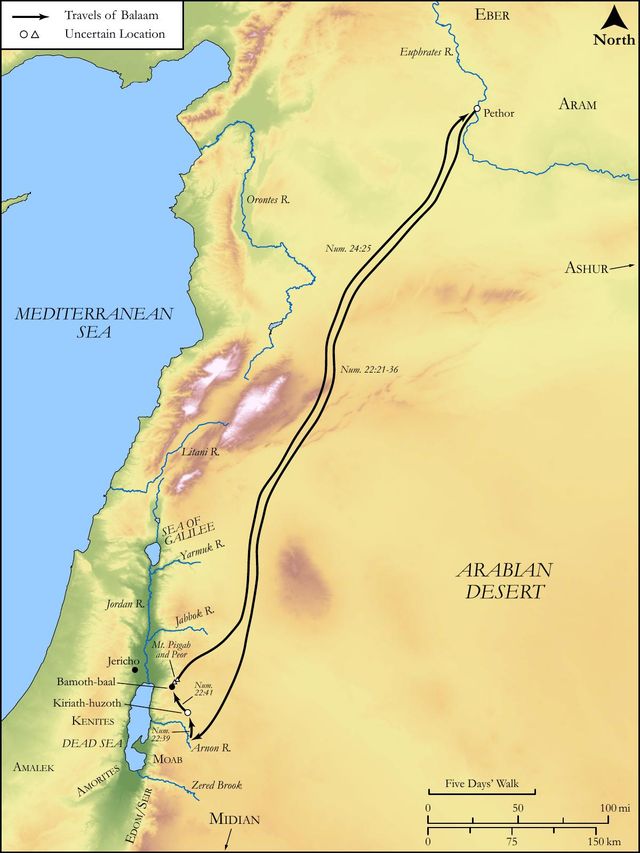
Numbers 22 initiates the complex and enigmatic narrative of Balaam, which spans through Numbers 24 and culminates in his death in Numbers 31:8. Following Israel's decisive victories over the Amorites and Og, they are now encamped on the plains of Moab, directly across from Jericho. This verse is Balaam's response to Balak's second, more prestigious delegation, sent after God had initially forbidden Balaam from going with the first group or cursing Israel (Numbers 22:12). Balaam's declaration here sets up the tension between his stated obedience and his evident desire for the promised rewards, a tension that drives the subsequent narrative and highlights the moral struggle within the prophet.
Historical & Cultural Context
The setting is the plains of Moab, east of the Jordan River, in the last year of Israel's wilderness journey, a time marked by regional conflicts and the rise and fall of various city-states and kingdoms. Kings like Balak often employed diviners or seers, like Balaam, to secure divine favor or curses against enemies, believing such pronouncements held real power and could influence the outcome of battles. The practice of divination and the belief in curses were widespread among the nations. The "house full of silver and gold" was not mere hyperbole but represented the ultimate expression of royal patronage and wealth, a temptation of unparalleled magnitude in that cultural milieu, designed to sway even the most principled individual and secure their allegiance.
Key Themes
ShowHideNumbers 22:18 contributes significantly to several overarching themes within the book of Numbers and the Pentateuch. Primarily, it highlights the absolute sovereignty of Yahweh over all nations and even over the pronouncements of non-Israelite prophets, demonstrating that God's plans for Israel cannot be thwarted by human or demonic machinations. Despite Balaam's later moral compromise and his counsel leading Israel into sin (Numbers 31:16), his initial declaration powerfully underscores the irrevocable nature of God's word and covenant promises to Israel. This verse also introduces the theme of temptation and human fallibility, as Balaam's stated resolve is immediately tested by his subsequent actions, revealing the struggle between divine command and personal desire. Ultimately, it reinforces the divine protection of Israel, showing that even when threatened by powerful enemies and spiritual forces, God's steadfast love and purpose prevail, turning a potential curse into a blessing, as seen in Deuteronomy 23:5.
Exposition and Analysis
ShowHideKey Word Analysis
ShowHideTranslated as "word" in "the word of the LORD," peh literally means "mouth." In this context, it signifies not merely a spoken utterance but the authoritative pronouncement or command that issues forth from God's mouth. Balaam's use of this term emphasizes the direct, divine origin and the binding nature of the message he has received, implying that God's word is not just informative but performative—it carries the power to accomplish what it declares.
This is the sacred, personal covenant name of God, often rendered "LORD" in English translations. Balaam's use of "Yᵉhôvâh" is highly significant, especially coming from a non-Israelite prophet. It indicates a direct, personal encounter and recognition of Yahweh's unique authority and identity as the supreme God, the self-existent One, who is distinct from other deities. This recognition underscores the source of Balaam's prophetic power and the ultimate authority behind the command he cannot transgress.
Translated as "cannot" in "I cannot go beyond," this verb means "to be able" or "to prevail." In its negative form here, it expresses an absolute inability or impossibility. Balaam is not merely stating a reluctance but a fundamental lack of capacity to act contrary to God's word. This highlights the overwhelming power and authority of God's command over any human will or desire, even when faced with immense temptation.
Verse Breakdown
ShowHide"And Balaam answered and said unto the servants of Balak"
This opening clause establishes the setting and the participants in this crucial exchange. Balaam is responding directly to Balak's second, more insistent delegation, which arrived with an even greater offer of reward, underscoring the escalating pressure and temptation he faces. His answer is a formal declaration to those who represent the king's immense power and wealth.
"If Balak would give me his house full of silver and gold"
This is a powerful hypothetical statement, emphasizing the extreme nature of the temptation. "His house full" is a hyperbole, signifying an immeasurable, irresistible fortune, representing the ultimate expression of royal patronage. It highlights the magnitude of the worldly reward being offered and underscores the perceived value of Balaam's prophetic services, setting the stage for the moral dilemma.
"I cannot go beyond the word of the LORD my God"
This is Balaam's central declaration of allegiance and constraint. He asserts an absolute inability to transgress, exceed, or circumvent the divine command. This statement reflects a profound understanding of God's sovereignty and the binding nature of His word, positioning it as the ultimate authority above all earthly inducements, including the king's vast riches.
"to do less or more"
This phrase further emphasizes the precision, immutability, and completeness of God's command. Balaam claims he cannot alter God's word in any way—neither diminishing its scope or power ("less") nor adding to its content or changing its direction ("more"). This speaks to the absolute authority and perfection of divine revelation, implying that God's will is perfect and requires no human modification or embellishment.
Literary Devices
ShowHideNumbers 22:18 is rich in literary devices that amplify its meaning and dramatic tension. The most prominent is Hyperbole, vividly expressed in the phrase "his house full of silver and gold." This exaggeration portrays the immense, almost unimaginable, wealth offered to Balaam, underscoring the extraordinary nature of the temptation he faces and magnifying his apparent resolve. There is also a strong element of Contrast at play, setting the boundless material riches against the unyielding, authoritative "word of the LORD my God." This juxtaposition highlights the fundamental conflict between worldly gain and divine obedience, establishing the moral dilemma at the heart of the narrative. Furthermore, the verse contains Foreshadowing, as Balaam's declaration of unwavering obedience, while seemingly noble, subtly hints at the internal struggle and potential for compromise that will define his character throughout the subsequent chapters, ultimately leading to his downfall despite his initial, correct theological assertion.
Theological and Thematic Connections
ShowHideNumbers 22:18 serves as a foundational text for understanding the absolute sovereignty of God and the unchallengeable authority of His word. Despite Balaam's later moral failings, his initial declaration articulates a profound theological truth: God's will cannot be bought, manipulated, or circumvented by human power or wealth. This verse underscores that God's purposes for His people are immutable and will be accomplished regardless of opposition, demonstrating His faithfulness to His covenant promises. It also highlights the principle that true obedience to God demands prioritizing His commands above all earthly enticements, a theme echoed throughout Scripture, emphasizing that divine revelation is complete and requires no human alteration.
Reflection and Application
ShowHideBalaam's declaration in Numbers 22:18 presents a powerful, albeit complex, model for reflection on our own allegiance and priorities. While Balaam himself ultimately succumbed to temptation, his initial resolve to place God's word above all earthly gain challenges us to examine where our true loyalties lie. In a world that constantly entices with promises of wealth, prestige, and comfort, this verse calls us to a radical commitment: to prioritize God's voice above all competing voices, to value His will above all personal desires, and to obey His commands without reservation or compromise. It reminds us that true spiritual integrity is demonstrated not just in what we say, but in our consistent adherence to God's truth, even when the cost is high or the temptation is immense. Our ultimate security and blessing come from aligning ourselves completely with the unchangeable word of the LORD, recognizing that His perfect will requires neither our additions nor our subtractions.
Questions for Reflection
ShowHideFAQ
ShowHideWas Balaam a true prophet of the LORD, given his declaration?
ShowHideBalaam was undeniably a recipient of divine revelation from Yahweh, as evidenced by his oracles in Numbers 23 and Numbers 24, which are undeniably from God and bless Israel. His statement in Numbers 22:18 strongly suggests a recognition of Yahweh's authority and a genuine, albeit temporary, resolve to obey. However, his character is complex and ultimately flawed. While he could hear from God, he was also driven by greed (2 Peter 2:15) and eventually counseled Balak to entice Israel into idolatry and immorality (Numbers 31:16, Revelation 2:14). So, he was a prophet in the sense that God spoke through him, but not a faithful or righteous one. His story serves as a warning that one can possess spiritual gifts without possessing true spiritual integrity or salvation.
Christ-Centered Fulfillment
ShowHideNumbers 22:18, with Balaam's declaration of absolute submission to "the word of the LORD my God," finds its ultimate and perfect fulfillment in Jesus Christ. While Balaam, despite his profound statement, ultimately faltered and sought to circumvent God's will for personal gain, Jesus perfectly embodied this principle of unwavering obedience. He is the living "Word of God" (John 1:1), who always did what was pleasing to the Father (John 8:29). Unlike Balaam, who was tempted by "silver and gold," Christ rejected all worldly kingdoms and glory offered by Satan (Matthew 4:8-10) to fulfill His divine mission. His life was a seamless demonstration of never going "less or more" than the Father's will, culminating in His obedient sacrifice on the cross (Philippians 2:8). Furthermore, the unchangeable nature of God's word, which Balaam articulated, is perfectly manifested in Christ, for "heaven and earth will pass away, but my words will not pass away" (Matthew 24:35). Jesus is the faithful Prophet, Priest, and King, whose perfect obedience secures salvation where all human efforts, including Balaam's flawed attempts, fall short, demonstrating the true power and authority of God's unyielding purpose.