


Matthew 27:14
- καὶkaiAndG2532CONJConjunction
- οὐκouknotG3756PRT-NNegative Particle Negative
- ἀπεκρίθηapekrithēHe did answerG611V-ADI-3SVerb Aorist Middle Deponent Indicative 3rd Singular
- αὐτῷautōhimG846P-DSMPersonal pronoun Dative Singular Masculine
- πρὸςprostoG4314PREPPreposition
- οὐδὲoudenot evenG3761CONJ-NConjunction Negative
- ἓνhenoneG1520A-ASNAdjective Accusative Singular Neuter
- ῥῆμαrhēmawordG4487N-ASNNoun Accusative Singular Neuter
- ὥστεhōsteso asG5620CONJConjunction
- θαυμάζεινthaumazeinto amazeG2296V-PANVerb Present Active Infinitive
- τὸνtontheG3588T-ASMDefinite article Accusative Singular Masculine
- ἡγεμόναhēgemonagovernorG2232N-ASMNoun Accusative Singular Masculine
- λίανlianexceedinglyG3029ADVAdverb
English is a literal word-by-word gloss of the Greek, not the KJV's wording. Why?
This is the original text the KJV's translators worked from — each Greek word with its own literal English meaning in this verse, prepared by scholars at Tyndale House, Cambridge. The KJV translates whole sentences, not word by word, so its wording differs: one Greek word can become several English words, and the KJV may choose “charity” where the gloss reads “love”. Both are faithful — they answer different questions. For the KJV's own rendering, switch to the KJV text.
Details
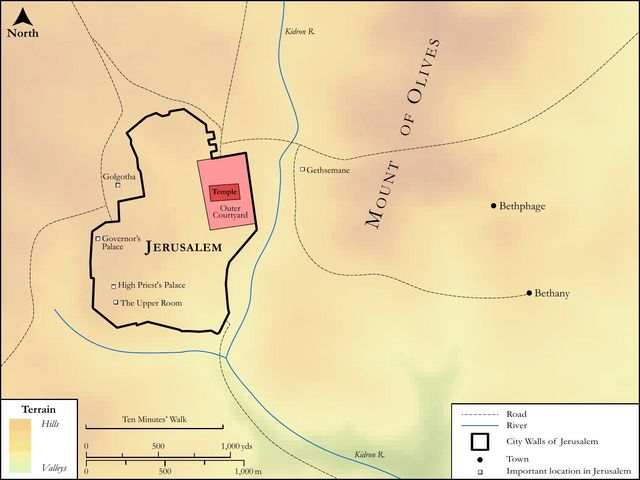
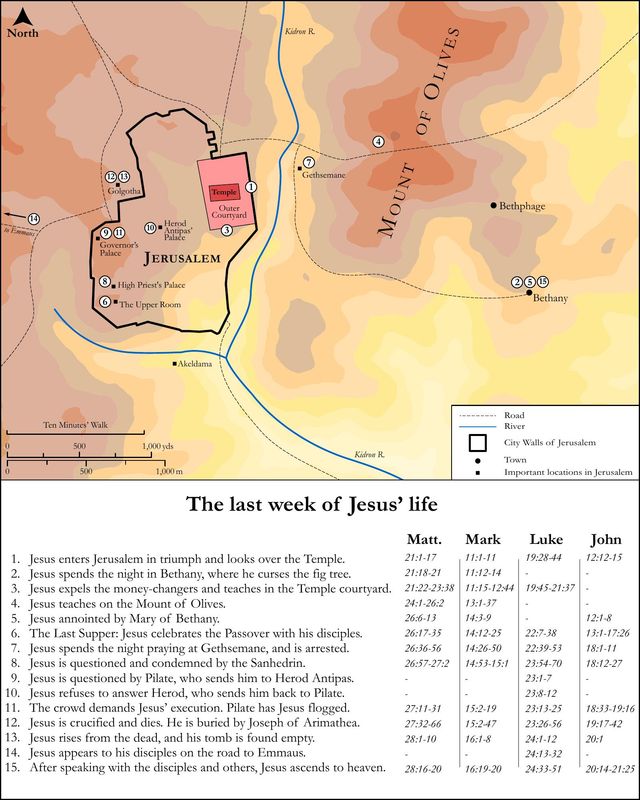
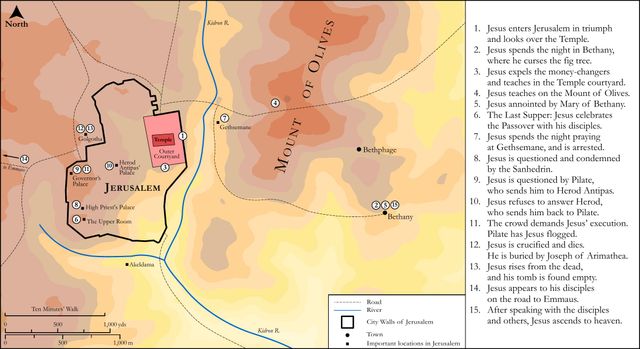
See on the biblical-era map
Study this verse
Historical interpretation
Nine Centuries of Reception
8 surviving comments on this verse. Each one is dated, so this reads as a timeline rather than a list.
Select a marker to jump to its quote. Markers stagger vertically where authors wrote within a few decades of each other.
The ministers and elders of western Jewish literature, who are the sons of those chief priests and elders who accused Jesus, still today adopt and repeat these same allegations against him. On this account, since the sins of their forebears go before them and remain in them, their works suffer "[God's] wrath forever," and they are forsaken along with their entire people "like a tent in the vineyard, like a lodge in a cucumber field and like a city besieged." Just as Jesus "gave no answer" then, neither does he give an answer now to the accusations of the Jewish priests and elders. The Word of God remains silent toward them. Still today they turn a deaf ear to the Word of God, as they previously did to the prophets and to him at the consummation of the ages when he "was made flesh and dwelt among us."
The governor marvelled at His endurance, as knowing that he had power to condemn Him, He yet continued in a peaceful, placid, and immovable prudence and gravity. He marvelled greatly, for it seemed to him a great miracle that Christ, produced before a criminal tribunal, stood thus fearless of death, which all men think so terrible.
Or, when asked by the High Priest whether He were Jesus the Christ, He answered, Thou hast said, because He had ever maintained out of the Law that Christ should come, but to Pilate who was ignorant of the Law, and asks if He were the King of the Jews, He answers, Thou sayest, because the salvation of the Gentiles is through faith of that present confession.
(Hom. Ixxxvi.) Pilate asked Christ that which His enemies were continually casting in His teeth, for because they knew that Pilate cared not for matters of their Law, they had recourse to a public charge.
He acknowledges Himself to be a King, but a heavenly one, as it is more expressly said in another Gospel, My kingdom is not of this world, (John 18:36.) so that neither the Jews nor Pilate were excusable for insisting on this accusation.
He said this out of a wish to release Him, if He should justify Himself in His answer. But the Jews, though they had so many practical proofs of His power, His meekness and humbleness, were yet enraged against Him, and urged on by a perverted judgment. Wherefore He answers nothing, or if He makes any answer He says little, that total silence might not be construed into obstinacy.
(Verse 13 and following) Then Pilate said to him: Do you not hear how many testimonies they speak against you? And he did not respond to him with any word, so that the governor wondered greatly. Now it was customary for the governor to release one prisoner to the people on the solemn day, whom they desired. Indeed, it is a Gentile who condemns Jesus, but he refers the matter to the Jewish people. Do you not hear how many testimonies they speak against you? But Jesus refused to respond, in order to not diminish the accusation from the governor, and to prevent the delay of the usefulness of the cross.
(in loc.) I have lately read in a Hebrew book given me by a Hebrew of the Nazarene sect, an apocryphal Hieremias, in which I find the very words here quoted. After all, I am rather inclined to think that the passage was taken by Matthew out of Zacharias, in the usual manner of the Apostles and Evangelists when they quote from the Old Testament, neglecting the words, and attending only to the sense.
But observe, that to Pilate who asked the question unwillingly He did answer somewhat; but to the Chief Priests and Priests He refused to answer, judging them unworthy of a word; And when he was accused by the Chief Priests and Elders, he answered nothing.
Thus though it is a Gentile who sentences Jesus, he lays the cause of His condemnation upon the Jews.
Or, Jesus would not make any answer, lest if He cleared Himself the governor should have let Him go, and the benefit of His cross should have been deferred.
It might seem remarkable to you, brothers, that the Lord should be accused by the chief priests before the procurator Pilate and should be silent and that he should not refute their wickedness by his response, since indeed a defense which follows quickly is the only way to refute a persistent accusation. It might seem remarkable, I say, brothers, that the Savior should be accused and should remain silent. Silence is occasionally understood as avowal, for when a person does not wish to respond to what is asked of him he appears to confirm what is raised against him. Does the Lord then confirm his accusation by not speaking? Clearly he does not confirm his accusation by not speaking; rather he despises it by not refuting it. For one who needs no defense does well to keep silent, but let one who fears to be overcome defend himself and one who is afraid of being vanquished hasten to speak. When Christ is condemned, however, he also overcomes, and when he is judged he also vanquishes, as the prophet says: “that you should be justified in your words and should vanquish when you are judged.” Why was it necessary for him therefore to speak before being judged, when for him judgment was a complete victory?
. He was brought to Pilate accused of crimes against the state, which is why Pilate asked Him if He had fomented an insurrection or attempted to make Himself king of the Jews. But Jesus said to him, "Thou sayest," giving a most wise answer. For He neither said that He was or that He was not, but He said, somewhere between the two, "Thou sayest." For this could be interpreted either as "I am what you say," or, "I do not say it, but you do." He gave no other answer, however, for He knew that the tribunal was an unjust proceeding. Pilate marveled at the Lord because He scorned death, and because, though He was eloquent and could have said a myriad of things in His own defense, He made no answer and disregarded His accusers. May we also learn from this to say nothing when we are brought before a corrupt court lest we cause a greater stir and provoke those who refuse to hear our defense to condemn us all the more.
Continue studying Matthew 27:14 across the web’s major study libraries — every link below opens this exact verse, chapter, or book on the destination site.
Read & Compare
 BibleGatewayThis verse in more than 200 translations and 70 languages.
 Bible.comThe YouVersion reader — hundreds of translations, reading plans, and highlights.
 ESV.orgCrossway's official English Standard Version reader.
 NET BibleThe NET translation with 60,000+ translators' notes on every rendering decision.
 STEP BibleTyndale House's free study tool — original text, vocabulary, and scholarly resources.
 BibliaLogos Bible Software's free web reader.
 USCCBThe New American Bible (Revised Edition) with the U.S. bishops' study notes.
Commentaries
 BibleHub CommentariesDozens of classic commentaries on this verse, gathered on one page.
 StudyLightMore than 100 commentary sets — the largest collection on the web.
 BibleRefPlain-English commentary on what this verse means, verse by verse.
 Enduring WordDavid Guzik's free commentary on this chapter, widely used by Bible teachers.
 Bible Study ToolsVerse commentary alongside Greek and Hebrew study aids.
Original Language & Research
- BibleHub InterlinearThe verse word by word — original language, transliteration, and English.
- BibleHub LexiconEvery word's original-language definition and Strong's entry.
 Blue Letter BibleDeep-study tools — Strong's numbers, concordance, and word studies.
 CNTR CollationThe earliest Greek manuscripts of this verse, collated letter by letter.
Sermons, Hymns & Audio


TrulyRandomVerse is not affiliated with these sites and doesn’t control their content. They’re linked because they’re genuinely useful.
Summary
Matthew 27:14 captures a profoundly significant moment during Jesus' trial before Pontius Pilate, the Roman governor. In the face of numerous and vehement accusations from the chief priests and elders, Jesus maintained a complete and unwavering silence, offering no defense whatsoever. This extraordinary composure and refusal to speak so astonished Pilate that it elicited a deep sense of marvel from the seasoned Roman authority, highlighting the unique and unparalleled nature of Jesus' character and mission.
Context
ShowHideLiterary Context
This verse is deeply embedded within the climactic Passion Narrative in Matthew's Gospel, immediately following Jesus' unjust condemnation by the Sanhedrin and His delivery to Pontius Pilate, as detailed in Matthew 27:1-2. The chief priests and elders, having failed to secure a death sentence under Jewish law, brought Jesus before the Roman governor, presenting many accusations against Him (Matthew 27:12). Pilate, sensing the underlying malice or perhaps the political motivations of the accusers, directly questioned Jesus about the charges, particularly concerning His claim to be "King of the Jews" (Matthew 27:11). It is in response to these direct questions and the clamor of the accusers that Jesus' profound silence in Matthew 27:14 stands out as a stark and deliberate act, setting the stage for Pilate's subsequent attempts to release Him.
Historical & Cultural Context
The trial of Jesus before Pilate took place within the framework of Roman provincial governance and judicial practice. As the Roman governor (procurator) of Judea, Pilate held ultimate authority, including the power of capital punishment. Roman trials typically involved defendants vigorously defending themselves against accusations, as silence could be interpreted as an admission of guilt. Furthermore, Pilate's primary concern was maintaining Roman order and preventing unrest, especially during the volatile Passover festival. The Jewish leaders, unable to execute Jesus themselves, sought Roman sanction for His death, presenting Him as a political threat to Caesar. Jesus' quiet dignity and refusal to engage in the expected legal defense would have been utterly alien to Pilate's experience with criminals and political agitators, making His silence all the more remarkable and perplexing to the Roman mind.
Key Themes
ShowHideJesus' silence in Matthew 27:14 powerfully contributes to several overarching themes in Matthew's Gospel and the broader biblical narrative. Firstly, it underscores Jesus' Deliberate Submission and Sovereignty. His silence is not a sign of weakness or inability to defend Himself, but a profound act of obedience to the Father's will, demonstrating His sovereign control even in His apparent vulnerability. Secondly, it is a striking Fulfillment of Old Testament Prophecy, particularly the Suffering Servant passages in Isaiah 53. The prophet declared, "He was oppressed and afflicted, yet he did not open his mouth; he was led like a lamb to the slaughter, and as a sheep before its shearers is silent, so he did not open his mouth" (Isaiah 53:7). Jesus' silence thus portrays Him as the innocent Lamb of God, willingly offering Himself for the sins of the world. Thirdly, Pilate's Astonishment highlights the unique and divine nature of Jesus. Pilate, a pragmatic Roman official, was deeply perplexed by a prisoner who defied all expectations of self-preservation, testifying to Jesus' singular character and inner peace in the face of extreme injustice.
Exposition and Analysis
ShowHideKey Word Analysis
ShowHideWhile this word typically means "to respond" or "to answer," its use here in conjunction with a strong negative ("to never a word") emphasizes the absence of any verbal reply. It highlights Jesus' deliberate choice not to engage in a defense, despite the expectation that He would. This is not a failure to answer, but a purposeful non-answer.
G3761 (oudé) + G1520 (heîs) + G4487 (rhēma). This phrase literally translates to "not even one word." The combination of oudé (not even, neither, nor) with heîs (one) and rhēma (word, utterance) creates a powerful and absolute negation. It conveys the complete and utter silence of Jesus, leaving no room for ambiguity. He did not utter a single sound in His defense.
This verb signifies a deep sense of wonder, astonishment, or even awe. It goes beyond mere surprise, indicating that Pilate was profoundly perplexed and taken aback by Jesus' unexpected and uncharacteristic lack of response. The addition of lían (G3029, greatly, exceedingly) intensifies this marvel, indicating an extraordinary level of bewilderment and admiration from the governor.
Verse Breakdown
ShowHide"And he answered him to never a word"
This clause describes Jesus' profound and deliberate silence in the face of Pilate's direct questioning and the numerous accusations leveled against Him by the Jewish leaders. Despite the gravity of the situation and the typical expectation for a defendant to speak in their own defense, Jesus chose to remain utterly silent. This silence was not born of fear or inability, but was a purposeful act, demonstrating His submission to the Father's will and His unwavering resolve to fulfill His mission as the Suffering Servant.
"insomuch that the governor marvelled greatly"
This clause highlights the profound impact of Jesus' silence on Pontius Pilate. The governor, accustomed to the clamor of defendants and accusers in Roman courts, was utterly astonished by Jesus' quiet dignity and refusal to speak. His "great marvel" (Greek: ethaumasen lían) signifies a deep sense of wonder, perplexity, and perhaps even a dawning recognition of Jesus' unique and extraordinary character, setting Him apart from any prisoner Pilate had ever encountered. This astonishment underscores the supernatural composure and divine nature of Jesus.
Literary Devices
ShowHideMatthew employs several literary devices in this verse to emphasize the profound significance of Jesus' silence. The most prominent is Contrast, as Jesus' absolute silence stands in stark opposition to the clamor of His accusers and Pilate's persistent questioning. This contrast highlights Jesus' unique character and sovereign control, refusing to engage in human arguments. There is also a strong element of Fulfillment of Prophecy, as Jesus' silence directly echoes the imagery of the Suffering Servant in Isaiah 53:7, portraying Him as the innocent Lamb led to slaughter. The phrase "never a word" serves as a form of Emphasis or even Hyperbole, underscoring the completeness of Jesus' silence. Finally, Pilate's "great marvel" introduces a subtle Irony, as the powerful Roman governor is left utterly bewildered by the seemingly powerless prisoner, whose composure and lack of self-defense defy all worldly expectations.
Theological and Thematic Connections
ShowHideJesus' profound silence before Pilate is a powerful theological statement, revealing His divine nature and His unwavering commitment to His redemptive mission. It is not an act of weakness or resignation, but rather an expression of sovereign control and deliberate submission to the Father's will. By refusing to defend Himself, Jesus demonstrated that His kingdom was not of this world, and His authority transcended human courts and political machinations. His silence speaks volumes, testifying to His innocence, His willingness to bear the world's sin without protest, and His perfect trust in God's ultimate plan. It underscores the unique nature of His kingship—one established not by force or legal argument, but by sacrificial love and humble obedience, ultimately leading to the salvation of humanity.
Reflection and Application
ShowHideJesus' silence in Matthew 27:14 offers profound and counter-cultural lessons for believers today. In a world that often demands immediate self-defense, public justification, and the last word, Jesus demonstrates the quiet power of restraint and trust in divine sovereignty. His example teaches us that there are times when silence, rather than a verbal defense, is the most potent response, particularly when facing false accusations or injustice. It calls us to cultivate a profound trust in God's ultimate plan and His ability to vindicate, even when circumstances seem overwhelming. By maintaining His dignity and focus on His divine mission, Jesus refused to be drawn into futile arguments or to defend Himself against baseless charges. This challenges us to respond with grace and composure, allowing our character and God's truth to speak for themselves, trusting that God will ultimately judge righteously and that His purposes will prevail, even through our suffering.
Questions for Reflection
ShowHideFAQ
ShowHideWhy did Jesus remain silent before Pilate?
ShowHideJesus' silence before Pilate was a deliberate and multifaceted act, not born of fear or inability to defend Himself. Theologically, it was a profound act of submission to His Father's will, demonstrating His willingness to endure suffering and death as the atoning sacrifice for humanity's sins. His silence also fulfilled Old Testament prophecies, particularly those concerning the Suffering Servant in Isaiah 53:7, who would go "like a lamb to the slaughter" without opening His mouth. Furthermore, His silence underscored the spiritual nature of His kingdom, which was not of this world and therefore did not require a worldly defense (John 18:36). It was a powerful, non-verbal testimony to His innocence and His sovereign control over the entire Passion narrative.
What does Pilate's 'great marvel' signify?
ShowHidePilate's "great marvel" (Greek: ethaumasen lían) signifies his profound astonishment and bewilderment at Jesus' complete silence. As a Roman governor, Pilate was accustomed to defendants vehemently pleading their cases, especially when facing capital charges. Jesus' calm, dignified refusal to speak, despite the dire circumstances and the clamor of His accusers, was utterly unprecedented in Pilate's experience. This reaction highlights Jesus' unique character, His inner peace, and His supernatural composure, which defied all human expectations. It suggests that Pilate perceived something extraordinary and inexplicable about Jesus, contributing to his subsequent attempts to release Him and his declaration of Jesus' innocence (Matthew 27:24).
How does Jesus' silence apply to believers today?
ShowHideJesus' silence offers profound lessons for believers. It teaches us the power of dignified restraint and trust in God's sovereignty when facing injustice or false accusations. Rather than always feeling compelled to defend ourselves, Jesus' example encourages us to commit our cause to God, who judges righteously (1 Peter 2:23). It reminds us that sometimes, silence can be a more powerful witness than words, demonstrating humility, patience, and a reliance on God's ultimate vindication. It calls us to prioritize God's will and eternal purposes over our immediate desire for self-preservation or worldly justification, trusting that God will work all things for good for those who love Him (Romans 8:28).
Christ-Centered Fulfillment
ShowHideJesus' profound silence before Pilate is a pivotal moment in the Christ-centered narrative of redemption, embodying His ultimate fulfillment as the Suffering Servant and the Lamb of God. His refusal to speak was not a sign of weakness, but a powerful demonstration of His sovereign will to lay down His life for the salvation of humanity. Just as John the Baptist proclaimed Jesus to be the "Lamb of God, who takes away the sin of the world", His silence before His accusers perfectly mirrored the prophetic image of a lamb led to slaughter, as foretold in Isaiah 53:7. This deliberate non-defense was an essential step in His atoning work, where He, though innocent, willingly accepted the judgment due to humanity. His silence ultimately paved the way for His crucifixion, resurrection, and exaltation, transforming a moment of apparent defeat into the very means of victory over sin and death, thereby establishing His eternal reign as the Lord of all (Philippians 2:8-11). He endured the cross, despising its shame, for the joy set before Him, becoming the author and perfecter of our faith (Hebrews 12:2).