


Isaiah 8:18
Bible text: King James Version (1769 Blayney text) · Public domain
Bible text: King James Version with Strong's numbers · Public domain
Bible text: Berean Standard Bible · Public domain
Bible text: American Standard Version (1901) · Public domain
Bible text: World English Bible, Messianic edition · Public domain
Bible text: Geneva Bible (1599) · Public domain
Bible text: Young's Literal Translation · Public domain
- הִנֵּהhi·Nehhere!H2009PrtParticle Interjection
- אָנֹכִי'a·no·KhiIH595Pro-1csPronoun Personal 1st Singular common gender
- וְהַיְלָדִיםve·hay·la·Dimand the childrenH3206Conj-w ¦ Art ¦ N-mpNoun Plural Masculine Absoluteוְandהַtheיְלָדִיםchildren
- אֲשֶׁר'a·SherwhomH834RelParticle Relative
- נָתַןna·tanhe has givenH5414V-Qal-Perf-3msVerb Qal Perfect 3rd Singular Masculine
- לִיlito mePrep-l ¦ 1csSuffix Personal 1st Singular common genderלִtoיme
- יְהוָהYah·wehYahwehH3068N-properNoun Proper Title
- לְאֹתוֹתle·'o·Totfor signsH226Prep-l ¦ N-fpNoun Plural Feminine Absoluteלְforאֹתוֹתsigns
- וּלְמוֹפְתִיםu·le·mof·Timand for portentsH4159Conj-w ¦ Prep-l ¦ N-mpNoun Plural Masculine Absoluteוּandלְforמוֹפְתִיםportents
- בְּיִשְׂרָאֵלbe·Yis·ra·'Elin IsraelH3478Prep-b ¦ N-properNoun Proper LocationבְּinיִשְׂרָאֵלIsrael
- מֵעִםme·'Imfrom withH5973Prep-m ¦ PrepPrepositionמֵfromעִםwith
- יְהוָהYah·wehYahwehH3068N-properNoun Proper Title
- צְבָאוֹתtze·va·'otof hostsH6635N-fpNoun Plural Feminine Absolute
- הַשֹּׁכֵןha·sho·Khenwho dwellsH7931Art ¦ V-Qal-Prtcpl-msVerb Qal Participle Singular Masculine Absoluteהַwhoשֹּׁכֵןdwells
- בְּהַרbe·Haron [the] mountain ofH2022Prep-b ¦ N-mscNoun Singular Masculine Constructבְּonהַר[the] mountain of
- צִיּוֹןtzi·YonZionH6726N-properNoun Proper Location
English is a literal word-by-word gloss of the Hebrew, not the KJV's wording. Why?
This is the original text the KJV's translators worked from — each Hebrew word with its own literal English meaning in this verse, prepared by scholars at Tyndale House, Cambridge. The KJV translates whole sentences, not word by word, so its wording differs: one Hebrew word can become several English words, and the KJV may choose “the LORD” where the gloss reads “Yahweh”. Both are faithful — they answer different questions. For the KJV's own rendering, switch to the KJV text.
Details
See on the biblical-era map
Study this verse
Public-domain commentary
Matthew Henry
From his Commentary on the Whole Bible. Henry comments on passages, not single verses — this entry covers Isaiah 8:16–22. His four-level outline is real structure in the source text, so it is rendered as structure.
In these verses we have,
I.The unspeakable privilege which the people of God enjoy in having the oracles of God consigned over to them, and being entrusted with the sacred writings. That they may sanctify the Lord of hosts, may make him their fear and find him their sanctuary, bind up the testimony, Isa 8:16. Note, It is a great instance of God's care of his church and love to it that he has lodged in it the invaluable treasure of divine revelation.
1.It is a testimony and a law; not only this prophecy is so, which must therefore be preserved safely for the comfort of God's people in the approaching times of trouble and distress, but the whole word of God is so; God has attested it, and he has enjoined it. As a testimony it directs our faith; as a law it directs our practice; and we ought both to subscribe to the truths of it and to submit to the precepts of it.
2.This testimony and this law are bound up and sealed, for we are not to add to them nor diminish from them; they are a letter from God to man, folded up and sealed, a proclamation under the broad seal. The binding up and sealing of the Old Testament signified that the full explication of many of the prophecies of it was reserved for the New Testament times. Dan 12:4, Seal the book till the time of the end; but what was then bound up and sealed is now open and unsealed, and revealed unto babes, Mat 11:25. Yet with reference to the other world, and the future state, still the testimony is bound up and sealed, for we know but in part, and prophesy but in part.
3.They are lodged as a sacred deposit in the hands of the disciples of the children of the prophets and the covenant, Act 3:25. This is the good thing which is committed to them, and which they are charged with the custody of, Ti2 1:13, Ti2 1:14. Those that had prophets for their tutors must still keep close to the written word.
II.The good use which we ought to make of this privilege. This we are taught,
1.By the prophet's own practice and resolutions, Isa 8:17, Isa 8:18. He embraced the law ad the testimony, and he had the comfort of them, in the midst of the many discouragements he met with. Note, Those ministers can best recommend the word of God to others that have themselves found the satisfaction of relying upon it. Observe,
(1.)The discouragements which the prophet laboured under. He specifies two: - [1.] The frowns of God, not so much upon himself, but upon his people, whose interests lay very near his heart: "He hides his face from the house of Jacob, and seems at present to neglect them, and lay them under the tokens of his displeasure." The prophet was himself employed in revealing God's wrath against them, and yet grieved thus for it, as one that did not desire the woeful day. If the house of Jacob forsake the God of Jacob, let it not be thought strange that he hides his face from them. [2.] The contempt and reproaches of men, not only upon himself, but upon his disciples, among whom the law and the testimony were sealed: I and the children whom the Lord has given me are for signs and wonders; we are gazed at as monsters or outlandish people, pointed at as we go along the streets. Probably the prophetical names that were given to his children were ridiculed and bantered by the profane scoffers of the town. I am as a wonder unto many, Psa 71:7. God's people are the world's wonder (Zac 3:8) for their singularity, and because they run not with them to the same excess of riot, Pe1 4:4. The prophet was herein a type of Christ; for this is quoted (Heb 2:13) to prove that believers are Christ's children: Behold, I and the children whom God has given me. Parents must look upon their children as God's gifts, his gracious gifts; Jacob did so, Gen 33:5. Ministers must look upon their converts as their children, and be tender of them accordingly (Th1 2:7), and as the children whom God has given them; for, whatever good we are instrumental of to others, it is owing to the grace of God. Christ looks upon believers as his children, whom the Father gave him (Joh 17:6), and both he and they are for signs and wonders, spoken against (Luk 2:34), every where spoken against, Act 28:22.
(2.)The encouragement he took in reference to these discouragements.
[1.]He saw the hand of God in all that which was discouraging to him, and kept his eye upon that. Whatever trouble the house of Jacob is in, it comes from God's hiding his face; nay, whatever contempt was put upon him or his friends, it is from the Lord of hosts; he has bidden Shimei curse David, Job 19:13; Job 30:11.
[2.]He saw God dwelling in Mount Zion, manifesting himself to his people, and ready to hear their prayers and receive their homage. Though, for the present, he hide his face from the house of Jacob, yet they know where to find him and recover the sight of him; he dwells in Mount Zion.
[3.]He therefore resolved to wait upon the Lord and to look for him; to attend his motions even while he hid his face, and to expect with a humble assurance his returns in a way of mercy. Those that wait upon God by faith and prayer may look for him with hope and joy. When we have not sensible comforts we must still keep up our observance of God and obedience to him, and then wait awhile; at evening time it shall be light.
2.By the counsel and advice which he gives to his disciples, among whom the law and the testimony were sealed, to whom were committed the lively oracles.
(1.)He supposes they would be tempted, in the day of their distress, to consult those that had familiar spirits, that dealt with the devil, asked his advice, and desired to be informed by him concerning things to come, that they might take their measures accordingly. Thus Saul, when he was in straits, made his application to the witch of Endor (Sa1 28:7, Sa1 28:15), and Ahaziah to the god of Ekron, Kg2 1:2. These conjurors had strange fantastic gestures and tones: They peeped and muttered; they muffled their heads, that they could neither see nor be seen plainly, but peeped and were peeped at. Or both the words here used may refer to their voice and manner of speaking; they delivered what they had to say with a low, hollow, broken sound, scarcely articulate, and sometimes in a puling or mournful tone, like a crane, or a swallow, or a dove, Isa 38:14. They spoke not with that boldness and plainness which the prophets of the Lord spoke with, but as those who desire to amuse people rather than to instruct them; yet there were those who were so wretchedly sottish as to seek to them and to court others to do so, even the prophet's hearers, who knew better things, whom therefore the prophet warns not to say, A confederacy with such. There were express laws against this wickedness (Lev 19:31; Lev 20:27), and yet it was found in Israel, is found even in Christian nations; but let all that have any sense of religion show it, by startling at the thought of it. Get thee behind me, Satan. Dread the use of spells and charms, and consulting those that by hidden arts pretend to tell fortunes, cure diseases, or discover things lost; for this is a heinous crime, and, in effect, denies the God that is above.
(2.)He furnishes them with an answer to this temptation, puts words into their mouths. "If any go about thus to ensnare you, give them this reply: Should not a people seek to their God? What! for the living to the dead!" [1.] "Tell them it is a principle of religion that a people ought to seek unto their God; now Jehovah is our God, and therefore to him we ought to seek, and to consult with him, and not with those that have familiar spirits. All people will thus walk in the name of their God, Mic 4:5. Those that made the hosts of heaven their gods sought unto them, Jer 8:2. Should not a people under guilt, and in trouble, seek to their God for pardon and peace? Should not a people in doubt, in want, and in danger, seek to their God for direction, supply, and protection? Since the Lord is our God, and we are his people, it is certainly our duty to seek him." [2.] "Tell them it is an instance of the greatest folly in the world to seek for living men to dead idols." What can be more absurd than to seek to lifeless images for life and living comforts, or to expect that our friends that are dead should do that for us, when we deify them and pray to them, which our living friends cannot do? The dead know not any thing, nor is there with them any device or working, Ecc 9:5, Ecc 9:10. It is folly therefore for the living to make their court to them, with any expectation of relief from them. Necromancers consulted the dead, as the witch of Endor, and so proclaimed their own folly. We must live by the living, and not by the dead. What life or light can we look for from those that have no light or life themselves?
(3.)He directs them to consult the oracles of God. If the prophets that were among them did not speak directly to every case, yet they had the written word, and to that they must have recourse. Note, Those will never be drawn to consult wizards that know how to make a good use of their Bibles. Would we know how we may seek to our God, and come to the knowledge of his mind? To the law and to the testimony. There you will see what is good, and what the Lord requires of you. Make God's statutes your counsellors, and you will be counselled aright. Observe,
[1.]What use we must make of the law and the testimony: we must speak according to that word, that is, we must make this our standard, conform to it, take advice from it, make our appeals to it, and in every thing be overruled and determined by it, consent to those wholesome healing words (Ti1 6:3), and speak of the things of God in the words which the Holy Ghost teaches. It is not enough to say nothing against it, but we must speak according to it.
[2.]Why we must make this use of the law and the testimony: because we shall be convicted of the greatest folly imaginable if we do not. Those that concur not with the word of God do thereby evince that there is no light, no morning light (so the word is) in them; they have no right sense of things; they do not understand themselves, nor the difference between good and evil, truth and falsehood. Note, Those that reject divine revelation have not so much as human understanding; nor do those rightly admit the oracles of reason who will not admit the oracles of God. Some read it as a threatening: "If they speak not according to this word, there shall be no light to them, no good, no comfort or relief; but they shall be driven to darkness and despair;" as it follows here, Isa 8:21, Isa 8:22. What light had Saul when he consulted the witch? Sa1 28:18, Sa1 28:20. Or what light can those expect that turn away from the Father of lights?
(4.)He reads the doom of those that seek to familiar spirits and regard not God's law and testimony; there shall not only be no light to them, no comfort or prosperity, but they may expect all horror and misery, Isa 8:21, Isa 8:22.
[1.]The trouble they feared shall come upon them: They shall pass through the land, or pass to and fro in the land, unfixed, unsettled, and driven from place to place by the threatening power of an invading enemy; they shall be hardly bestead whither to go for the necessary supports of life, either because the country would be so impoverished that there would be nothing to be had, or at least themselves and their friends so impoverished that there would be nothing to be had for them; so that those who used to be fed to the full shall be hungry. Note, Those that go away from God go out of the way of all good.
[2.]They shall be very uneasy to themselves, by their discontent and impatience under their trouble. A good man may be in want, but then he quiets himself, and strives to make himself easy; but these people when they shall be hungry shall fret themselves, and when they have nothing to feed on their vexation shall prey upon their own spirits; for fretfulness is a sin that is its own punishment.
[3.]They shall be very provoking to all about them, nay, to all above them; when they find all their measures broken, and themselves at their wits' end, they will forget all the rules of duty and decency, and will treasonably curse their king and blasphemously curse their God, and this more than in their thought and in their bedchamber, Ecc 10:20. They begin with cursing their king for managing the public affairs no better, as if the fault were his, when the best and wisest kings cannot secure success; but, when they have broken the bonds of their allegiance, no marvel if those of their religion do not hold them long: they next curse their God, curse him, and die; they quarrel with his providence, and reproach that, as if he had done them wrong. The foolishness of man perverts his way, and then his heart frets against the Lord, Pro 19:3. See what need we have to keep our mouth as with a bridle when our heart is hot within us; for the language of fretfulness is commonly very offensive.
[4.]They shall abandon themselves to despair, and, which way soever they look, shall see no probability of relief. They shall look upward, but heaven shall frown upon them and look gloomy; and how can it be otherwise when they curse their God? They shall look to the earth, but what comfort can that yield to those with whom God is at war? There is nothing there but trouble, and darkness, and dimness of anguish, every thing threatening, and not one pleasant gleam, not one hopeful prospect; but they shall be driven to darkness by the violence of their own fears, which represent every thing about them black and frightful. This explains what he had said Isa 8:20, that there shall be no light to them. Those that shut their eyes against the light of God's word will justly be abandoned to darkness, and left to wander endlessly, and the sparks of their own kindling will do them no kindness.
Historical interpretation
Four Centuries of Reception
4 surviving comments on this verse. Each one is dated, so this reads as a timeline rather than a list.
Select a marker to jump to its quote. Markers stagger vertically where authors wrote within a few decades of each other.
For unto the angels hath he not put in subjection the world to come, whereof we speak. But one in a certain place testified, saying, What is man, that thou art mindful of him? or the son of man, that thou visitest him? Thou madest him a little lower than the angels; thou crownedst him with glory and honour, and didst set him over the works of thy hands: Thou hast put all things in subjection under his feet. For in that he put all in subjection under him, he left nothing that is not put under him. But now we see not yet all things put under him. But we see Jesus, who was made a little lower than the angels for the suffering of death, crowned with glory and honour; that he by the grace of God should taste death for every man. For it became him, for whom are all things, and by whom are all things, in bringing many sons unto glory, to make the captain of their salvation perfect through sufferings. For both he that sanctifieth and they who are sanctified are all of one: for which cause he is not ashamed to call them brethren, Saying, I will declare thy name unto my brethren, in the midst of the church will I sing praise unto thee. And again, I will put my trust in him. And again, Behold I and the children which God hath given me. [Isaiah 8:17-18] Forasmuch then as the children are partakers of flesh and blood, he also himself likewise took part of the same; that through death he might destroy him that had the power of death, that is, the devil; And deliver them who through fear of death were all their lifetime subject to bondage. For verily he took not on him the nature of angels; but he took on him the seed of Abraham. Wherefore in all things it behoved him to be made like unto his brethren, that he might be a merciful and faithful high priest in things pertaining to God, to make reconciliation for the sins of the people. For in that he himself hath suffered being tempted, he is able to succour them that are tempted.
Not only do we become his brothers but even his children, for he says, “Behold, I and my children, whom God has given me.” Not only do we become his children but also his members and his body. As if the things already mentioned were not enough to prove the love and kindness that he shows toward us, he set down another thing, greater and more intimate than these, when he spoke of himself as our head.
(Verse 18.) Behold, I and my children, whom the Lord has given me, are for signs and wonders in Israel, from the Lord of hosts, who dwells in Mount Zion. The Lord commanded me, saying, 'Bind up the testimony, seal the law among my disciples.' For He has hidden His face from the house of Jacob; therefore, I will wait for Him, and I will hope in my Lord, and not only I, but also the children whom the Lord has given me, namely, other prophets and the sons of prophets, who are not born of the will of the flesh and blood, but of God (John 1:13). About whom the Apostle also spoke: My little children, for whom I am again in the pain of childbirth until Christ is formed in you (Gal. IV, 19). But these children, that is, the prophets, were given as signs and wonders to the people of Israel, according to what we read in Ezekiel: And Ezekiel will be a sign to you (Ezek. XXIV, 24). Also, in Zechariah, the holy men and disciples of the prophets are called observers of wonders, that is, of signs and wonders, because the prophets always preceded the signs of future events (Zech. III, 16). Meanwhile, according to the letter. However, the blessed Apostle in the Epistle, which is written to the Hebrews, teaches (although the Latin custom does not include it among the Canonical Scriptures) that this testimony should be understood as coming from the person of the Lord Savior. Therefore, he does not hesitate to call them brothers, saying: 'I will declare your name to my brothers, in the midst of the church I will praise you' (Hebrews 2:12); And again: 'I will put my trust in him' (Ibid., 13); and again: 'Here am I and the children God has given me.' Therefore, because the boys have shared in flesh and blood, and he himself has likewise become a partaker in the same sufferings (Isaiah 8:18). But how these boys have become a sign and wonder of the wisdom of the world and the pride of the Jews, the same Apostle teaches: who says that the Lord Savior has chosen foolish things and weak things of the world to confound the wise and the strong (1 Corinthians 1). Therefore, the Savior said to the Apostles: Unless you are converted and become like one of these boys, you will not enter the kingdom of heaven (Matthew 18:3). But the boy becomes a preacher of the new Gospel, he puts aside the old man, who is corrupted in the desires of seduction, and he puts on the new man, who is renewed in knowledge according to the image of the Creator. However, the Apostle writes that the Lord of hosts dwells on Mount Zion: 'You have come to Mount Zion and the city of the living God, the heavenly Jerusalem' (Hebrews XII, 22). So I wonder that some of our people understand these two boys of Isaiah, whom he generated from the conception of the prophetess woman, namely Jasub and Emmanuel: the former of whom, in the abjection of the former people, the latter, in the assumption of the nations, has preceded. Whoever receives this, will consequently confirm that the prophet Hosea truly had a prostitute as his wife.
First it must be noted that Matthew’s Gospel uses the text of the Septuagint, not the Hebrew: “Jesus, hearing that John had been handed over, departed to Galilee. Leaving Nazareth, he came and lived in Capernaum, which is near the sea at the end of Zebulun and Naphtali. This was to fulfill what was said through the prophet Isaiah: ‘In the land of Zebulun and Naphtali, by the way of the sea across the Jordan in Galilee of the Gentiles, the people who sat in darkness have seen a great light; upon those who sat in the region of the shadow of death a light has dawned.’ From that moment, Jesus began to preach and to say, ‘The kingdom of heaven approaches.’ ” And the evangelist John reports that Jesus performed his first sign, changing water into wine, when he was invited to attend a wedding in Cana with his disciples: “Jesus performed the first of his signs in Cana of Galilee and revealed his glory, and his disciples believed in him.” Hence, the Septuagint reads, “Drink this first and do it quickly.” For the land of Zebulun and the land of Naphtali were the first to see the miracles of Christ, that they who first saw the Lord perform a sign would be the first to drink the potion of faith. According to the Hebrew, it is also said to be the first time that the [lifting of the] burden of sins was revealed, because the Savior first preached the gospel in the region of these two tribes.…But it calls this sea the lake of Gennesaret, which is formed from the influx of the Jordan. On its shore are situated Capernaum, Tiberias, Bethsaida and Chorazin, in whose regions the Lord spent a great deal of time. He did so to enable the people who sat or walked in darkness to see the light—not a little light as from other prophets but a great light, as from him who said in the Gospel, “I am the light of the world.” And upon those who lived in the region of the shadow of death, a light has dawned. This region lies between death and the shadow of death, I believe, because death belongs to those who directed themselves straight to the underworld with their dead works: “For the soul that sins will die.” But the shadow of death pertains to those who do not depart from life when they sin, for they are still able to do penance if they wish.
Continue studying Isaiah 8:18 across the web’s major study libraries — every link below opens this exact verse, chapter, or book on the destination site.
Read & Compare
 BibleGatewayThis verse in more than 200 translations and 70 languages.
 Bible.comThe YouVersion reader — hundreds of translations, reading plans, and highlights.
 ESV.orgCrossway's official English Standard Version reader.
 NET BibleThe NET translation with 60,000+ translators' notes on every rendering decision.
 STEP BibleTyndale House's free study tool — original text, vocabulary, and scholarly resources.
 BibliaLogos Bible Software's free web reader.
 USCCBThe New American Bible (Revised Edition) with the U.S. bishops' study notes.
Commentaries
 BibleHub CommentariesDozens of classic commentaries on this verse, gathered on one page.
 StudyLightMore than 100 commentary sets — the largest collection on the web.
 BibleRefPlain-English commentary on what this verse means, verse by verse.
 Enduring WordDavid Guzik's free commentary on this chapter, widely used by Bible teachers.
 Bible Study ToolsVerse commentary alongside Greek and Hebrew study aids.
Original Language & Research
- BibleHub InterlinearThe verse word by word — original language, transliteration, and English.
- BibleHub LexiconEvery word's original-language definition and Strong's entry.
 Blue Letter BibleDeep-study tools — Strong's numbers, concordance, and word studies.
 SefariaThe Hebrew text with Rashi and centuries of Jewish commentary.
Sermons, Hymns & Audio


TrulyRandomVerse is not affiliated with these sites and doesn’t control their content. They’re linked because they’re genuinely useful.
Summary
Isaiah 8:18 presents the prophet Isaiah and his children as divinely appointed, living symbols—"signs and wonders"—to the nation of Israel. In a period marked by profound national crisis and spiritual vacillation, their very existence, their names, and their actions served as a tangible, prophetic message from the sovereign LORD of hosts. This message, originating from the God who steadfastly dwells in Jerusalem, urgently called the people to abandon human alliances and place their trust solely in Him. The verse thus encapsulates the profound nature of prophetic ministry, where the prophet's life itself becomes an incarnated word from God, conveying divine warnings, steadfast promises, and ultimate faithfulness.
Context
ShowHideLiterary Context
This verse is strategically situated within a pivotal section of Isaiah (chapters 7-12), often referred to as the "Book of Immanuel." This section primarily addresses King Ahaz of Judah and the nation's critical response to the escalating Syro-Ephraimite and formidable Assyrian threats. Following a divine invitation to trust God fully, as articulated in Isaiah 7:4, King Ahaz stubbornly refused to ask for a sign, prompting God to unilaterally give the profound sign of Immanuel in Isaiah 7:14. Chapter 8 powerfully continues this theme, with Isaiah himself and his children serving as additional, potent prophetic signs. His first son, Shear-Jashub, whose name profoundly means "A remnant shall return," and another son, Maher-shalal-hash-baz, meaning "Swift is the spoil, speedy is the prey," embody both the impending judgment and the enduring hope for Israel. Isaiah 8:18 thus functions as a climactic summary statement, unequivocally declaring that the prophet and his family are not merely messengers but living object lessons, embodying God's multifaceted messages of judgment and salvation to a generation steeped in disbelief.
Historical & Cultural Context
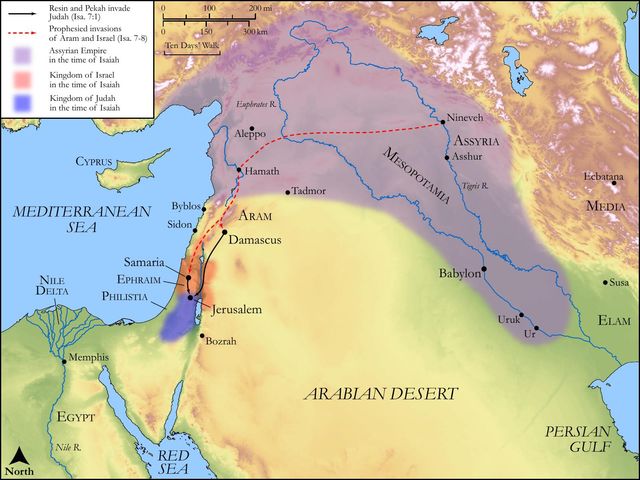
The historical backdrop for Isaiah 8:18 is the tumultuous late 8th century BCE, a period of immense geopolitical instability for both Judah and the northern kingdom of Israel. The northern kingdom (Ephraim) and Syria (Aram) had forged a hostile alliance against Judah, attempting to coerce King Ahaz into their anti-Assyrian coalition. Rather than placing his trust in the LORD, Ahaz gravely contemplated seeking military aid from the burgeoning Assyrian Empire, a decision that would ultimately lead to devastating long-term consequences for Judah's sovereignty. In this charged atmosphere of political intrigue, spiritual apostasy, and national anxiety, prophets like Isaiah served as God's direct, authoritative spokespersons, frequently employing symbolic actions, vivid imagery, and even prophetic names to convey urgent divine messages. The concept of "signs and wonders" was deeply embedded in ancient Israelite understanding, typically referring to miraculous acts of God that authenticated a divine message or messenger, or powerfully portended future events, as vividly demonstrated in the Exodus narrative. Here, however, the "signs" are not necessarily supernatural displays but the very lives and identities of the prophet and his family, serving as a constant, visible, and inescapable reminder of God's active involvement in their national destiny.
Key Themes
ShowHideThis verse powerfully underscores several critical themes prevalent throughout the book of Isaiah. Firstly, Prophetic Authority and Authenticity is paramount; Isaiah and his children are explicitly declared to be "from the LORD of hosts," unequivocally emphasizing the divine origin and authoritative nature of their prophetic witness. This declaration validates their message as God's own. Secondly, the profound theme of Divine Sovereignty and Presence is highlighted by the phrase "which dwelleth in mount Zion." Even amidst the nation's pervasive unfaithfulness and the looming external threats, God's covenant presence in Jerusalem remains steadfast and unyielding, signifying His unwavering control over all of history and His enduring commitment to His covenant people. Thirdly, the verse powerfully reinforces the concept of Embodied Prophecy—the profound idea that God's message is not merely spoken or written but also lived out and visually demonstrated through the prophet's very person and his family. This serves as a continuous, inescapable sermon to a people who struggled to heed God's verbal warnings, urging them to recognize God's sovereign hand in their circumstances and to place their trust in Him alone, a trust that King Ahaz famously lacked, as vividly detailed in Isaiah 7:10-12.
Exposition and Analysis
ShowHideKey Word Analysis
ShowHideDerived from the root yalad, meaning "to bear" or "bring forth," this term refers to "something born, i.e. a lad or offspring." In this specific context, it denotes Isaiah's biological sons, Shear-Jashub and Maher-shalal-hash-baz, whose very names were imbued with prophetic significance. Their inclusion alongside Isaiah underscores that God's prophetic communication extends beyond the prophet himself to his immediate family, making their lives a collective, living sermon to the nation.
Probably stemming from ʼûth (in the sense of appearing), this word signifies "a signal (literally or figuratively), as a flag, beacon, monument, omen, prodigy, evidence, etc." It indicates something that points beyond itself, serving as a powerful indicator or a divine confirmation of a message. Here, Isaiah and his children are not merely pointing to God's actions; their very being is the sign, a visible and tangible testament to God's active presence and unfolding plan for Israel.
From yâphâh, conveying the sense of conspicuousness, this term refers to "a miracle; by implication, a token or omen." Often paired with "signs," it describes something extraordinary, astonishing, or awe-inspiring that commands attention and evokes wonder, frequently associated with divine power or a significant future event. In Isaiah 8:18, it emphasizes the remarkable and attention-grabbing nature of Isaiah's and his children's prophetic role, specifically intended to awaken a complacent or rebellious people to the undeniable reality of God's active hand.
Verse Breakdown
ShowHide"Behold, I and the children whom the LORD hath given me"
This opening clause immediately draws the reader's attention to the prophet Isaiah and his sons. The phrase "whom the LORD hath given me" profoundly underscores the divine origin and sovereign purpose of his children, implying that their very existence and their prophetic names are integral components of God's overarching plan and prophetic communication. This powerfully establishes the prophet and his family as divinely appointed instruments for God's purposes.
"are for signs and for wonders in Israel"
This central declaration precisely defines the unique and crucial role of Isaiah and his children. They are not merely ordinary individuals but are presented as living, walking sermons. As "signs," they powerfully point to God's unwavering truth, His stern warnings, and His faithful promises. As "wonders," their lives and circumstances are intentionally designed to be remarkable and attention-grabbing, compelling the people of Israel to take profound notice of God's active and sovereign hand in their history and their future. This vital role is specifically directed "in Israel," clearly indicating their mission is to the covenant people.
"from the LORD of hosts, which dwelleth in mount Zion."
This concluding phrase firmly establishes the ultimate authority and divine source of this prophetic declaration. "The LORD of hosts" (Yahweh Sabaoth) emphasizes God's omnipotence, His supreme sovereignty, and His absolute control over all creation, including all earthly armies and nations. The specific mention "which dwelleth in mount Zion" highlights God's enduring covenant presence in Jerusalem, which served as both the spiritual and political capital of Judah. This serves as a powerful and reassuring reminder that despite the nation's unfaithfulness and the formidable external threats, God remains steadfastly present and actively involved with His people, and His authoritative word proceeds directly from His holy dwelling place.
Literary Devices
ShowHideIsaiah 8:18 masterfully employs several potent literary devices to convey its profound and multifaceted message. Symbolism is central to the verse, as Isaiah and his children are presented not merely as individuals but as living symbols or object lessons. Their prophetic names and their very presence embody divine messages of impending judgment and ultimate salvation, making God's word tangible and immediate. This is a quintessential form of Embodied Prophecy, where the prophet's entire life itself becomes a dynamic medium for divine communication. The phrase "signs and wonders" functions as a Merism, a figure of speech in which two contrasting or complementary parts represent a comprehensive whole, thereby emphasizing the complete and all-encompassing nature of their prophetic function—they are entirely and wholly God's instruments for revealing His will. Furthermore, the mention of "the LORD of hosts, which dwelleth in mount Zion" utilizes Metonymy, where "Mount Zion" stands in for God's enduring presence, His supreme authority, and His unwavering covenant faithfulness in Jerusalem, serving as a powerful and comforting reminder of His steadfast commitment despite the people's wavering trust.
Theological and Thematic Connections
ShowHideIsaiah 8:18 powerfully articulates the profound theological principle that God frequently uses ordinary human lives as extraordinary vehicles for His divine message. It profoundly underscores the active, personal, and intimate nature of God's communication with humanity, demonstrating that His word is not merely abstract but is often incarnated and made visible in the lives of His chosen servants. This verse highlights God's unwavering presence and supreme sovereignty, even when His people are steeped in unfaithfulness, reminding them that His eternal plan will unfailingly unfold from His holy dwelling place on Mount Zion. The prophet and his family become a constant, visible, and inescapable reminder of God's solemn warnings, His steadfast promises, and His ultimate faithfulness, urgently calling a nation prone to fear and idolatry to place their trust solely and completely in the "LORD of hosts." This profound concept of God using human instruments as "signs" is a recurring and significant theme throughout biblical history, powerfully foreshadowing the ultimate divine sign.
Reflection and Application
ShowHideIsaiah 8:18 offers profound and enduring insights for believers today, powerfully reminding us that our lives, too, are intended to be living testimonies to God's enduring truth and transformative grace. Just as Isaiah and his children were divinely appointed "signs and wonders" to their generation, our actions, our Christ-like character, and even our struggles, when yielded to God, can serve as powerful and compelling demonstrations of God's active work in the world. In a world grappling with pervasive uncertainty, spiritual hunger, and a yearning for meaning, our faithfulness, our resilient hope, and our unwavering trust, all deeply rooted in Christ, can become a clear "sign" pointing others to the sovereign "LORD of hosts." This verse profoundly calls us to embrace our identity as God's beloved children, understanding that we are called to embody His divine presence and His redemptive purposes in our daily lives. It encourages us to live transparently, allowing God's transforming power to be unmistakably evident, thereby becoming a living sermon that powerfully draws others to the One who truly dwells among us. Our lives, graciously given by the LORD, are not merely our own but are intended to be a vibrant witness to His glory and His ongoing, redemptive work in the world.
Questions for Reflection
ShowHideFAQ
ShowHideWhat does "signs and wonders" mean in the context of Isaiah 8:18?
ShowHideIn this verse, "signs and wonders" refers to Isaiah and his children serving as living, embodied prophecies rather than performing miraculous feats. Their very existence, their names (like Shear-Jashub meaning "a remnant shall return," and Maher-shalal-hash-baz meaning "swift is the spoil, speedy is the prey"), and their actions were divinely appointed messages to the nation of Israel. They were visible, tangible indicators of God's active involvement in their history, signaling His warnings of judgment and promises of salvation, designed to capture attention and convey profound spiritual truths to a people struggling to trust God.
How does Isaiah 8:18 relate to the New Testament?
ShowHideIsaiah 8:18 is directly quoted in the New Testament in Hebrews 2:13, where the author applies it to Jesus Christ. The author of Hebrews uses this verse to demonstrate Jesus' full humanity and His profound solidarity with humanity, referring to His disciples as "the children whom God has given" Him. This connection highlights Jesus as the ultimate "sign and wonder"—God incarnate, who perfectly embodies God's message and salvation. Just as Isaiah was a sign to Israel, Jesus is the ultimate sign to all humanity, revealing the Father and bringing many "children" (believers) to glory, fulfilling the prophetic pattern established by Isaiah.
Why is "Mount Zion" specifically mentioned in this verse?
ShowHideMount Zion is mentioned to emphasize the source and stability of the prophetic message. Zion was the location of Jerusalem, the capital of Judah, and specifically where the Temple stood, symbolizing God's dwelling place among His people. By stating that the message comes "from the LORD of hosts, which dwelleth in mount Zion," the verse underscores God's unwavering presence, authority, and covenant faithfulness. Even as the nation faced threats and internal unfaithfulness, God remained steadfastly present in His holy city, reinforcing that His word and plan would proceed from His established throne, providing a secure foundation for trust amidst turmoil.
Christ-Centered Fulfillment
ShowHideIsaiah 8:18 finds its profound and ultimate fulfillment in the person of Jesus Christ, who is the supreme "sign and wonder" sent from the LORD of hosts. The author of Hebrews explicitly applies this verse to Jesus in Hebrews 2:13, stating, "And again, 'I will put my trust in him.' And again, 'Behold, I and the children whom God has given me.'" Here, Jesus is presented as the archetypal Prophet, perfectly embodying God's message and redemptive mission. Like Isaiah, whose very name means "The LORD is salvation," Jesus' very being is salvation incarnate, fulfilling the deepest meaning of God's active presence among His people. He is the Word made flesh, dwelling among us, full of grace and truth, serving as the ultimate and definitive revelation of God's character and His eternal plan. Furthermore, the "children" in this verse are spiritually fulfilled in those whom the Father has graciously given to Jesus—His disciples and all believers who are born of God and become part of His spiritual family (John 1:12-13). Jesus, through His perfect life, atoning death, and glorious resurrection, perfectly demonstrated God's power and boundless love, becoming the ultimate sign of God's redemptive work for all humanity. His followers, united with Him by faith, are called to continue this legacy, becoming living testimonies that powerfully point to the resurrected Christ, the One who truly takes away the sin of the world (John 1:29). Thus, Isaiah 8:18 not only foreshadows Christ's full humanity and His intimate identification with His people but also His unparalleled role as the definitive and saving manifestation of God's presence among us.