


Matthew 13:11
- ὁho<the>G3588T-NSMDefinite article Nominative Singular Masculine
- δὲdeAndG1161CONJConjunction
- ἀποκριθεὶςapokritheisansweringG611V-AOP-NSMVerb Aorist Passive Deponent Participle Nominative Singular Masculine
- εἶπενeipenHe saidG2036V-2AAI-3SVerb 2nd Aorist Active Indicative 3rd Singular
- αὐτοῖς·autoisto themG846P-DPMPersonal pronoun Dative Plural Masculine
- ὅτιhotiBecauseG3754CONJConjunction
- ὑμῖνhuminto youG4771P-2DPPersonal pronoun Dative 2nd Plural
- δέδοταιdedotaiit has been grantedG1325V-RPI-3SVerb Perfect Passive Indicative 3rd Singular
- γνῶναιgnōnaito knowG1097V-2AANVerb 2nd Aorist Active Infinitive
- τὰtatheG3588T-APNDefinite article Accusative Plural Neuter
- μυστήριαmustēriamysteriesG3466N-APNNoun Accusative Plural Neuter
- τῆςtēsof theG3588T-GSFDefinite article Genitive Singular Feminine
- βασιλείαςbasileiaskingdomG932N-GSFNoun Genitive Singular Feminine
- τῶνtōnof theG3588T-GPMDefinite article Genitive Plural Masculine
- οὐρανῶνouranōnheavensG3772N-GPMNoun Genitive Plural Masculine
- ἐκείνοιςekeinoisto themG1565D-DPMDemonstrative pronoun Dative Plural Masculine
- δὲdehoweverG1161CONJConjunction
- οὐounotG3756PRT-NNegative Particle Negative
- δέδοταιdedotaiit has been grantedG1325V-RPI-3SVerb Perfect Passive Indicative 3rd Singular
English is a literal word-by-word gloss of the Greek, not the KJV's wording. Why?
This is the original text the KJV's translators worked from — each Greek word with its own literal English meaning in this verse, prepared by scholars at Tyndale House, Cambridge. The KJV translates whole sentences, not word by word, so its wording differs: one Greek word can become several English words, and the KJV may choose “charity” where the gloss reads “love”. Both are faithful — they answer different questions. For the KJV's own rendering, switch to the KJV text.
Details
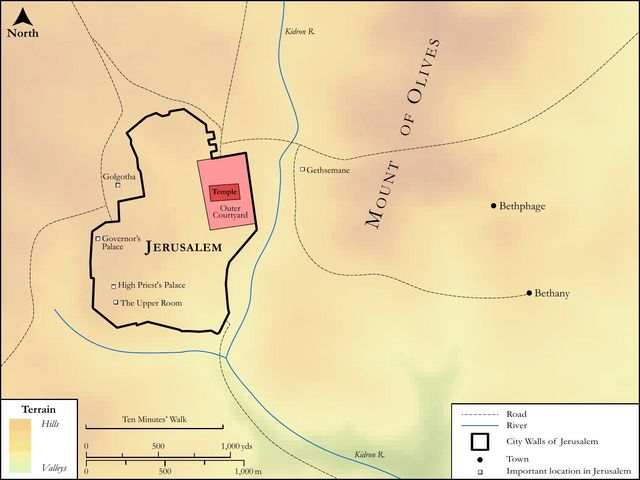
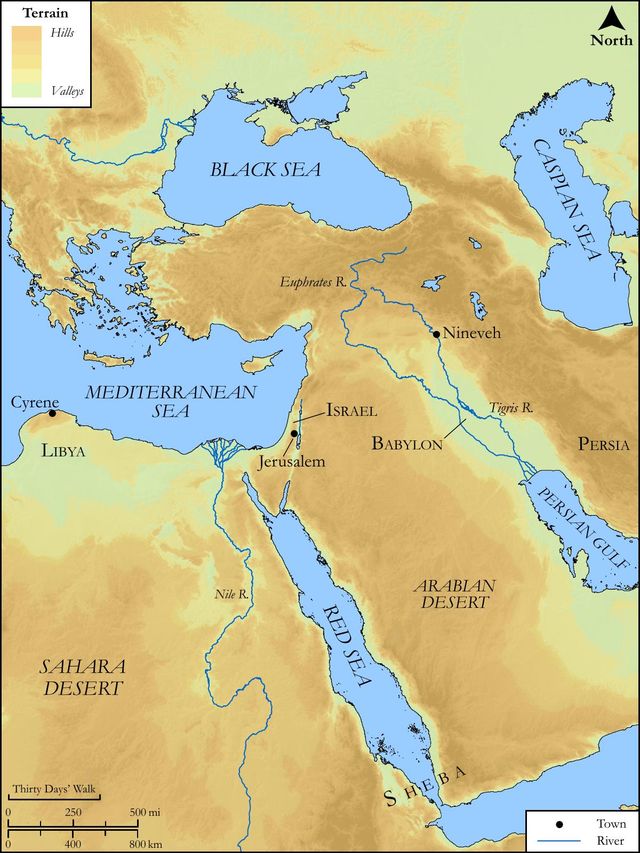
See on the biblical-era map

Study this verse
Public-domain commentary
Matthew Henry
From his Commentary on the Whole Bible. Henry comments on passages, not single verses — this entry covers Matthew 13:1–23. His four-level outline is real structure in the source text, so it is rendered as structure.
We have here Christ preaching, and may observe,
1.When Christ preached this sermon; it was the same day that he preached the sermon in the foregoing chapter: so unwearied was he in doing good, and working the works of him that sent him. Note, Christ was for preaching both ends of the day, and has by his example recommended that practice to his church; we must in the morning sow our seed, and in the evening not withhold our hand, Eccl. xi. 6. An afternoon sermon well heard, will be so far from driving out the morning sermon, that it will rather clench it, and fasten the nail in a sure place. Though Christ had been in the morning opposed and cavilled at by his enemies, disturbed and interrupted by his friends, yet he went on with his work; and in the latter part of the day, we do not find that he met with such discouragements. Those who with courage and zeal break through difficulties in God's service, will perhaps find them not so apt to recur as they fear. Resist them, and they will flee.
2.To whom he preached; there were great multitudes gathered together to him, and they were the auditors; we do not find that any of the scribes or Pharisees were present. They were willing to hear him when he preached in the synagogue (ch. xii. 9, 14), but they thought it below them to hear a sermon by the sea-side, though Christ himself was the preacher: and truly he had better have their room than their company, for now they were absent, he went on quietly and without contradiction. Note, Sometimes there is most of the power of religion where there is least of the pomp of it: the poor receive the gospel. When Christ went to the sea-side, multitudes were presently gathered together to him. Where the king is, there is the court; where Christ is, there is the church, though it be by the sea-side. Note, Those who would get good by the word, must be willing to follow it in all its removes; when the ark shifts, shift after it. The Pharisees had been labouring, by base calumnies and suggestions, to drive the people off from following Christ, but they still flocked after him as much as ever. Note, Christ will be glorified in spite of all opposition; he will be followed.
3.Where he preached this sermon.
(1.)His meeting-place was the sea-side. He went out of the house (because there was no room for the auditory) into the open air. It was pity but such a Preacher should have had the most spacious, sumptuous, and convenient place to preach in, that could be devised, like one of the Roman theatres; but he was now in his state of humiliation, and in this, as in other things, he denied himself the honours due to him; as he had not a house of his own to live in, so he had not a chapel of his own to preach in. By this he teaches us in the external circumstances of worship not to covet that which is stately, but to make the best of the conveniences which God in his providence allots to us. When Christ was born, he was crowded into the stable, and now to the sea-side, upon the strand, where all persons might come to him with freedom. He that was truth itself sought no corners (no adyta), as the pagan mysteries did. Wisdom crieth without, Prov. i. 20; John xiii. 20.
(2.)His pulpit was a ship; not like Ezra's pulpit, that was made for the purpose (Neh. viii. 4); but converted to this use for want of a better. No place amiss for such a Preacher, whose presence dignified and consecrated any place: let not those who preach Christ be ashamed, though they have mean and inconvenient places to preach in. Some observe, that the people stood upon dry ground and firm ground, while the Preacher was upon the water in more hazard. Ministers are most exposed to trouble. Here was a true rostrum, a ship pulpit.
4.What and how he preached.
(1.)He spake many things unto them. Many more it is likely than are here recorded, but all excellent and necessary things, things that belong to our peace, things pertaining to the kingdom of heaven: they were not trifles, but things of everlasting consequence, that Christ spoke of. It concerns us to give a more earnest heed, when Christ has so many things to say to us, that we miss not any of them.
(2.)What he spake was in parables. A parable sometimes signifies any wise, weighty saying that is instructive; but here in the gospels it generally signifies a continued similitude or comparison, by which spiritual or heavenly things were described in language borrowed from the things of this life. It was a way of teaching used very much, not only by the Jewish rabbin, but by the Arabians, and the other wise men of the east; and it was found very profitable, and the more so from its being pleasant. Our Saviour used it much, and in it condescended to the capacities of people, and lisped to them in their own language. God had long used similitudes by his servants the prophets (Hos. xii. 10), and to little purpose; now he uses similitudes by his Son; surely they will reverence him who speaks from heaven, and of heavenly things, and yet clothes them with expressions borrowed from things earthly. See John iii. 12. So descending in a cloud. Now,
I.We have here the general reason why Christ taught in parables.
The disciples were a little surprised at it, for hitherto, in his preaching, he had not much used them, and therefore they ask, Why speakest thou to them in parables? Because they were truly desirous that the people might hear with understanding. They do not say, Why speakest thou to us? (they knew how to get the parables explained) but to them. Note, We ought to be concerned for the edification of others, as well as for our own, by the word preached; and if ourselves be strong, yet to bear the infirmities of the weak.
To this question Christ answers largely, v. 11-17, where he tells them, that therefore he preached by parables, because thereby the things of God were made more plain and easy to them who were willingly ignorant; and thus the gospel would be a savour of life to some, and of death to others. A parable, like the pillar of cloud and fire, turns a dark side towards Egyptians, which confounds them, but a light side towards Israelites, which comforts them, and so answers a double intention. The same light directs the eyes of some, but dazzles the eyes of others. Now,
1.This reason is laid down (v. 11): Because it is given unto you to know the mysteries of the kingdom of heaven, but to them it is not given. That is,
(1.)The disciples had knowledge, but the people had not. You know already something of these mysteries, and need not in this familiar way to be instructed; but the people are ignorant, are yet but babes, and must be taught as such by plain similitudes, being yet incapable of receiving instruction in any other way: for though they have eyes, they know not how to use them; so some. Or,
(2.)The disciples were well inclined to the knowledge of gospel mysteries, and would search into the parables, and by them would be led into a more intimate acquaintance with those mysteries; but the carnal hearers that rested in bare hearing, and would not be at the pains to look further, nor to ask the meaning of the parables, would be never the wiser, and so would justly suffer for their remissions. A parable is a shell that keeps good fruit for the diligent, but keeps it from the slothful. Note, There are mysteries in the kingdom of heaven, and without controversy, great is the mystery of godliness: Christ's incarnation, satisfaction, intercession, our justification and sanctification by union with Christ, and indeed the whole work of redemption, from first to last, are mysteries, which could never have been discovered but by divine revelation (1 Cor. xv. 51), were at this time discovered but in part to the disciples, and will never be fully discovered till the veil shall be rent; but the mysteriousness of gospel truth should not discourage us from, but quicken us in, our enquiries after it and searches into it.
[1.]It is graciously given to the disciples of Christ to be acquainted with these mysteries. Knowledge is the first gift of God, and it is a distinguishing gift (Prov. ii. 6); it was given to the apostles, because they were Christ's constant followers and attendants. Note, The nearer we draw to Christ, and the more we converse with him, the better acquainted we shall be with gospel mysteries.
[2.]It is given to all true believers, who have an experimental knowledge of the gospel mysteries, and that is without doubt the best knowledge: a principle of grace in the heart, is that which makes men of quick understanding in the fear of the Lord, and in the faith of Christ, and so in the meaning of parables; and for want of that, Nicodemus, a master in Israel, talked of the new birth as a blind man of colours.
[3.]There are those to whom this knowledge is not given, and a man can receive nothing unless it be given him from above (John iii. 27); and be it remembered that God is debtor to no man; his grace is his own; he gives or withholds it at pleasure (Rom. xi. 35); the difference must be resolved into God's sovereignty, as before, ch. xi. 25, 26.
2.This reason is further illustrated by the rule God observes in dispensing his gifts; he bestows them on those who improve them, but takes them away from those who bury them. It is a rule among men, that they will rather entrust their money with those who have increased their estates by their industry, than with those who have diminished them by their slothfulness.
(1.)Here is a promise to him that has, that has true grace, pursuant to the election of grace, that has, and uses what he has; he shall have more abundance: God's favours are earnests of further favours; where he lays the foundation, he will build upon it. Christ's disciples used the knowledge they now had, and they had more abundance at the pouring out of the Spirit, Acts ii.. They who have the truth of grace, shall have the increase of grace, even to an abundance in glory, Prov. iv. 18. Joseph—he will add, Gen. xxx. 24.
(2.)Here is a threatening to him that has not, that has no desire of grace, that makes no right use of the gifts and graces he has: has not root, no solid principle; that has, but uses not what he has; from him shall be taken away that which he has or seems to have. His leaves shall wither, his gifts decay; the means of grace he has, and makes no use of, shall be taken from him; God will call in his talents out of their hands that are likely to become bankrupts quickly.
3.This reason is particularly explained, with reference to the two sorts of people Christ had to do with.
(1.)Some were willingly ignorant; and such were amused by the parables (v. 13); because they seeing, see not. They had shut their eyes against the clear light of Christ's plainer preaching, and therefore were now left in the dark. Seeing Christ's person, they see not his glory, see no difference between him and another man; seeing his miracles, and hearing his preaching, they see not, they hear not with any concern or application; they understand neither. Note,
[1.]There are many that see the gospel light, and hear the gospel sound, but it never reaches their hearts, nor has it any place in them.
[2.]It is just with God to take away the light from those who shut their eyes against it; that such as will be ignorant, may be so; and God's dealing thus with them magnifies his distinguishing grace to his disciples.
Now in this the scripture would be fulfilled, v. 14, 15. It is quoted from Isa. vi. 9, 10. The evangelical prophet that spoke most plainly of gospel grace, foretold the contempt of it, and the consequences of that contempt. It is referred to no less than six times in the New Testament, which intimates, that in gospel times spiritual judgments would be most common, which make least noise, but are most dreadful. That which was spoken of the sinners in Isaiah's time was fulfilled in those in Christ's time, and it is still fulfilling every day; for while the wicked heart of man keeps up the same sin, the righteous hand of God inflicts the same punishment. Here is,
First. A description of sinners' wilful blindness and hardness, which is their sin. This people's heart is waxed gross; it is fattened, so the word is; which denotes both sensuality and senselessness (Ps. cxix. 70); secure under the word and rod of God, and scornful as Jeshurun, that waxed fat and kicked, Deut. xxxii. 15. And when the heart is thus heavy, no wonder that the ears are dull of hearing; the whispers of the Spirit they hear not at all; the loud calls of the word, though the word be nigh them, they regard not, nor are at all affected by them: they stop their ears, Ps. lviii. 4, 5. And because they are resolved to be ignorant, they shut both the learning senses; for their eyes also they have closed, resolved that they would not see light come into the world, when the Son of Righteousness arose, but they shut their windows, because they loved darkness rather than light, John iii. 19; 2 Pet. iii. 5.
Secondly, A description of that judicial blindness, which is the just punishment of this. "By hearing, ye shall hear, and shall not understand; what means of grace you have, shall be to no purpose to you; though, in mercy to others, they are continued, yet in judgment to you, the blessing upon them is denied." The saddest condition a man can be in on this side hell, is to sit under the most lively ordinances with a dead, stupid, untouched heart. To hear God's word, and see his providences, and yet not to understand and perceive his will, either in the one or in the other, is the greatest sin and the greatest judgment that can be. Observe, It is God's work to give an understanding heart, and he often, in a way of righteous judgment, denies it to those to whom he has given the hearing ear, and the seeing eye, in vain. Thus does God choose sinners' delusions (Isa. lxvi. 4), and bind them over to the greatest ruin, by giving them up to their own hearts' lusts (Ps. lxxxi. 11, 12); let them alone (Hos. iv. 17); my Spirit shall not always strive, Gen. vi. 3.
Thirdly, The woeful effect and consequence of this; Lest at any time they should see. They will not see because they will not turn; and God says that they shall not see, because they shall not turn: lest they should be converted, and I should heal them.
Note, 1. That seeing, hearing, and understanding, are necessary to conversion; for God, in working grace, deals with men as men, as rational agents; he draws with the cords of a man, changes the heart by opening the eyes, and turns from the power of Satan unto God, by turning first from darkness to light, (Acts xxvi. 18). 2. All those who are truly converted to God, shall certainly be healed by him. "If they be converted I shall heal them, I shall save them:" so that if sinners perish, it is not to be imputed to God, but to themselves; they foolishly expected to be healed, without being converted. 3. It is just with God to deny his grace to those who have long and often refused the proposals of it, and resisted the power of it. Pharaoh, for a good while, hardened his own heart (Exod. viii. 15, 32), and afterwards God hardened it, ch. ix. 12; x. 20. Let us therefore fear, lest by sinning against the divine grace, we sin it away.
(2.)Others were effectually called to be the disciples of Christ, and were truly desirous to be taught of him; and they were instructed, and made to improve greatly in knowledge, by these parables, especially when they were expounded; and by them the things of God were made more plain and easy, more intelligible and familiar, and more apt to be remembered (v. 16, 17). Your eyes see, your ears hear. They saw the glory of God in Christ's person; they heard the mind of God in Christ's doctrine; they saw much, and were desirous to see more, and thereby were prepared to receive further instruction; they had opportunity for it, by being constant attendants on Christ, and they should have it from day to day, and grace with it. Now this Christ speaks of,
[1.]As a blessing; "Blessed are your eyes for they see, and your ears for they hear; it is your happiness, and it is a happiness for which you are indebted to the peculiar favour and blessing of God." It is a promised blessing, that in the days of the Messiah the eyes of them that see shall not be dim, Isa. xxxii. 3. The eyes of the meanest believer that knows experimentally the grace of Christ, are more blessed than those of the greatest scholars, the greatest masters in experimental philosophy, that are strangers to God; who, like the other gods they serve, have eyes, and see not. Blessed are your eyes. Note, True blessedness is entailed upon the right understanding and due improvement of the mysteries of the kingdom of God. The hearing ear and the seeing eye are God's work in those who are sanctified; they are the work of his grace (Prov. xx. 12), and they are a blessed work, which shall be fulfilled with power, when those who now see through a glass darkly, shall see face to face. It was to illustrate this blessedness that Christ said so much of the misery of those who are left in ignorance; they have eyes and see not; but blessed are your eyes. Note, The knowledge of Christ is a distinguishing favour to those who have it, and upon that account it lays under the greater obligations; see John xiv. 22. The apostles were to teach others, and therefore were themselves blessed with the clearest discoveries of divine truth. The watchmen shall see eye to eye, Isa. lii. 8.
[2.]As a transcendent blessing, desired by, but not granted to, many prophets and righteous men, v. 17. The Old-Testament saints, who had some glimpses, some glimmerings of gospel light, coveted earnestly further discoveries. They had the types, shadows, and prophecies, of those things but longed to see the Substance, that glorious end of those things which they could not steadfastly look unto; that glorious inside of those things which they could not look into. They desired to see the great Salvation, the Consolation of Israel, but did not see it, because the fulness of time was not yet come. Note, First, Those who know something of Christ, cannot but covet to know more. Secondly, The discoveries of divine grace are made, even to prophets and righteous men, but according to the dispensation they are under. Though they were the favourites of heaven, with whom God's secret was, yet they have not seen the things which they desired to see, because God had determined not to bring them to light yet; and his favours shall not anticipate his counsels. There was then, as there is still, a glory to be revealed; something in reserve, that they without us should not be made perfect, Heb. xi. 40. Thirdly, For the exciting of our thankfulness, and the quickening of our diligence, it is good for us to consider what means we enjoy, and what discoveries are made to us, now under the gospel, above what they had, and enjoyed, who lived under the Old-Testament dispensation, especially in the revelation of the atonement for sin; see what are the advantages of the New Testament above the Old (2 Cor. iii. 7, &c. Heb. xii. 18); and see that our improvements be proportionable to our advantages.
II.We have, in these verses, one of the parables which our Saviour put forth; it is that of the sower and the seed; both the parable itself, and the explanation of it. Christ's parables are borrowed from common, ordinary things, not from any philosophical notions or speculations, or the unusual phenomena of nature, though applicable enough to the matter in hand, but from the most obvious things, that are of every day's observation, and come within the reach of the meanest capacity; many of them are fetched from the husbandman's calling, as this of the sower, and that of the tares. Christ chose to do thus,
1.That spiritual things might hereby be made more plain, and, by familiar similitudes, might be made the more easy to slide into our understandings.
2.That common actions might hereby be spiritualized, and we might take occasion from those things which fall so often under our view, to meditate with delight on the things of God; and thus, when our hands are busiest about the world, we may not only notwithstanding that, but even with the help of that, be led to have our hearts in heaven. Thus the word of God shall talk with us, talk familiarly with us, Prov. vi. 22.
The parable of the sower is plain enough, v. 3-9. The exposition of it we have from Christ himself, who knew best what was his own meaning. The disciples, when they asked, Why speakest thou unto them in parables? (v. 10), intimated a desire to have the parable explained for the sake of the people; nor was it any disparagement to their own knowledge to desire it for themselves. Our Lord Jesus kindly took the hint, and gave the sense, and caused them to understand the parable, directing his discourse to the disciples, but in the hearing of the multitude, for we have not the account of his dismissing them till v. 36. "Hear ye therefore the parable of the sower (v. 18); you have heard it, but let us go over it again." Note, It is of good use, and would contribute much to our understanding the word and profiting by it, to hear over again what we have heard (Phil. iii. 1); "You have heard it, but hear the interpretation of it." Note, Then only we hear the word aright, and to good purpose, when we understand what we hear; it is no hearing at all, if it be not with understanding, Neh. viii. 2. It is God's grace indeed that gives the understanding, but it is our duty to give our minds to understand.
Let us therefore compare the parable and the exposition.
(1.)The seed sown is the word of God, here called the word of the kingdom (v. 19): the kingdom of heaven, that is the kingdom; the kingdoms of the world, compared with that, are not to be called kingdoms. The gospel comes from that kingdom, and conducts to that kingdom; the word of the gospel is the word of the kingdom; it is the word of the King, and where that is, there is power; it is a law, by which we must be ruled and governed. This word is the seed sown, which seems a dead, dry thing, but all the product is virtually in it. It is incorruptible seed (1 Pet. i. 23); it is the gospel that brings forth fruit in souls, Col. i. 5, 6.
(2.)The sower that scatters the seed is our Lord Jesus Christ, either by himself, or by his ministers; see v. 37. The people are God's husbandry, his tillage, so the word is; and ministers are labourers together with God, 1 Cor. iii. 9. Preaching to a multitude is sowing the corn; we know not where it must light; only see that it be good, that it be clean, and be sure to give it seed enough. The sowing of the word is the sowing of a people for God's field, the corn of his floor, Isa. xxi. 10.
(3.)The ground in which this seed is sown is the hearts of the children of men, which are differently qualified and disposed, and accordingly the success of the word is different. Note, Man's heart is like soil, capable of improvement, of bearing good fruit; it is pity it should lie fallow, or be like the field of the slothful, Prov. xxiv. 30. The soul is the proper place for the word of God to dwell, and work, and rule in; its operation is upon conscience, it is to light that candle of the Lord. Now according as we are, so the word is to us: Recipitur ad modum recipientis—The reception depends upon the receiver. As it is with the earth; some sort of ground, take ever so much pains with it, and throw ever so good seed into it, yet it brings forth no fruit to any purpose; while the good soil brings forth plentifully: so it is with the hearts of men, whose different characters are here represented by four sorts of ground, of which three are bad, and but one good. Note, The number of fruitless hearers is very great, even of those who heard Christ himself. Who has believed our report? It is a melancholy prospect which this parable gives us of the congregations of those who hear the gospel preached, that scarcely one in four brings forth fruit to perfection. Many are called with the common call, but in few is the eternal choice evidenced by the efficacy of that call, ch. xx. 16.
Now observe the characters of these four sorts of ground.
[1.]The highway ground, v. 4-10. They had pathways through their corn-fields (ch. xii. 1), and the seed that fell on them never entered, and so the birds picked it up. The place where Christ's hearers now stood represented the characters of most of them, the sand on the sea-shore, which was to the seed like the highway ground.
Observe First, What kind of hearers are compared to the highway ground; such as hear the word and understand it not; and it is their own fault that they do not. They take no heed to it, take no hold of it; they do not come with any design to get good, as the highway was never intended to be sown. They come before God as his people come, and sit before Him as his people sit; but it is merely for fashion-sake, to see and be seen; they mind not what is said, it comes in at one ear and goes out at the other, and makes no impression.
Secondly, How they come to be unprofitable hearers. The wicked one, that is, the devil, cometh and catcheth away that which was sown.—Such mindless, careless, trifling hearers are an easy prey to Satan; who, as he is the great murderer of souls, so he is the great thief of sermons, and will be sure to rob us of the word, if we take not care to keep it: as the birds pick up the seed that falls on the ground that is neither ploughed before nor harrowed after. If we break not up the fallow ground, by preparing our hearts for the word, and humbling them to it, and engaging our own attention; and if we cover not the seed afterwards, by meditation and prayer; if we give not a more earnest heed to the things which we have heard, we are as the highway ground. Note, The devil is a sworn enemy to our profiting by the word of God; and none do more befriend his design than heedless hearers, who are thinking of something else, when they should be thinking of the things that belong to their peace.
[2.]The stony ground. Some fell upon stony places (v. 5, 6), which represents the case of hearers that go further than the former, who receive some good impressions of the word, but they are not lasting, v. 20, 21. Note, It is possible we may be a great deal better than some others, and yet not be so good as we should be; may go beyond our neighbours, and yet come short of heaven. Now observe, concerning these hearers that are represented by the stony ground,
First, How far they went. 1. They hear the word; they turn neither their backs upon it, nor a deaf ear to it. Note, hearing the word, though ever so frequently, ever so gravely, if we rest in that, will never bring us to heaven. 2. They are quick in hearing, swift to hear, he anon receiveth it, euthys, he is ready to receive it, forthwith it sprung up (v. 5), it sooner appeared above ground than that which was sown in the good soil. Note, Hypocrites often get the start of true Christians in the shows of profession, and are often too hot to hold. He receiveth it straightway, without trying it; swallows it without chewing, and then there can never be a good digestion. Those are most likely to hold fast that which is good, that prove all things, 1 Thess. v. 21. 3. They receive it with joy. Note, There are many that are very glad to hear a good sermon, that yet do not profit by it; they may be pleased with the word, and yet not changed and ruled by it; the heart may melt under the word, and yet not be melted down by the word, much less into it, as into a mould. Many taste the good word of God (Heb. vi. 5), and say they find sweetness in it, but some beloved lust is rolled under the tongue, which it would not agree with, and so they spit it out again. 4. They endure for awhile, like a violent motion, which continues as long as the impression of the force remains, but ceases when that has spent itself. Note, Many endure for awhile, that do not endure to the end, and so come short of the happiness which is promised to them only that persevere (ch. x. 22); they did run well, but something hindered them, Gal. v. 7.
Secondly, How they fell away, so that no fruit was brought to perfection; no more than the corn, that having no depth of earth from which to draw moisture, is scorched and withered by the heat of the sun. And the reason is,
1.They have no root in themselves, no settled, fixed principles in their judgments, no firm resolution in their wills, nor any rooted habits in their affections: nothing firm that will be either the sap or the strength of their profession. Note,
(1.)It is possible there may be the green blade of a profession, where yet there is not the root of grace; hardness prevails in the heart, and what there is of soil and softness is only in the surface; inwardly they are no more affected than a stone; they have no root, they are not by faith united to Christ who is our Root; they derive not from him, they depend not on him.
(2.)Where there is not a principle, though there be a profession, we cannot expect perseverance. Those who have no root will endure but awhile. A ship without ballast, though she may at first out-sail the laden vessel, yet will certainly fail in stress of weather, and never make her port.
2.Times of trial come, and then they come to nothing. When tribulation and persecution arise because of the word, he is offended; it is a stumbling-block in his way which he cannot get over, and so he flies off, and this is all his profession comes to. Note,
(1.)After a fair gale of opportunity usually follows a storm of persecution, to try who have received the word in sincerity, and who have not. When the word of Christ's kingdom comes to be the word of Christ's patience (Rev. iii. 10), then is the trial, who keeps it, and who does not, Rev. i. 9. It is wisdom to prepare for such a day.
(2.)When trying times come, those who have no root are soon offended; they first quarrel with their profession, and then quit it; first find fault with it, and then throw it off. Hence we read of the offence of the cross, Gal. v. 11. Observe, Persecution is represented in the parable by the scorching sun, (v. 6); the same sun which warms and cherishes that which was well rooted, withers and burns up that which wanted root. As the word of Christ, so the cross of Christ, is to some a savour of life unto life, to others a savour of death unto death: the same tribulation which drives some to apostasy and ruin, works for others a far more exceeding and eternal weight of glory. Trials which shake some, confirm others, Phil. i. 12. Observe how soon they fall away, by and by; as soon rotten as they were ripe; a profession taken up without consideration is commonly let fall without it: "Lightly come, lightly go."
[3.]The thorny ground, Some fell among thorns (which are a good guard to the corn when they are in the hedge, but a bad inmate when they are in the field); and the thorns sprung up, which intimates that they did not appear, or but little, when the corn was sown, but afterwards they proved choking to it, v. 7. This went further than the former, for it had root; and it represents the condition of those who do not quite cast off their profession, and yet come short of any saving benefit by it; the good they gain by the word, being insensibly overcome and overborne by the things of the world. Prosperity destroys the word in the heart, as much as persecution does; and more dangerously, because more silently: the stones spoiled the root, the thorns spoil the fruit.
Now what are these choking thorns?
First, The cares of this world. Care for another world would quicken the springing of this seed, but care for this world chokes it. Worldly cares are fitly compared to thorns, for they came in with sin, and are a fruit of the curse; they are good in their place to stop a gap, but a man must be well armed that deals much in them (2 Sam. xxiii. 6, 7); they are entangling, vexing, scratching, and their end is to be burned, Heb. vi. 8. These thorns choke the good seed. Note, Worldly cares are great hindrances to our profiting by the word of God, and our proficiency in religion. They eat up that vigour of soul which should be spent in divine things; divert us from duty, distract us in duty, and do us most mischief of all afterwards; quenching the sparks of good affections, and bursting the cords of good resolutions; those who are careful and cumbered about many things, commonly neglect the one thing needful.
Secondly, The deceitfulness of riches. Those who, by their care and industry, have raised estates, and so the danger that arises from care seems to be over, and they continue hearers of the word, yet are still in a snare (Jer. v. 4, 5); it is hard for them to enter into the kingdom of heaven: they are apt to promise themselves that in riches which is not in them; to rely upon them, and to take an inordinate complacency in them; and this chokes the word as much as care did. Observe, It is not so much riches, as the deceitfulness of riches, that does the mischief: now they cannot be said to be deceitful to us unless we put our confidence in them, and raise our expectations from them, and then it is that they choke the good seed.
[4.]The good ground (v. 18); Others fell into good ground, and it is pity but that good seed should always meet with good soil, and then there is no loss; such are good hearers of the word, v. 23. Note, Though there are many that receive the grace of God, and the word of his grace, in vain, yet God has a remnant by whom it is received to good purpose; for God's word shall not return empty, Isa. lv. 10, 11.
Now that which distinguished this good ground from the rest, was, in one word, fruitfulness. By this true Christians are distinguished from hypocrites, that they bring forth the fruits of righteousness; so shall ye be my disciples, John xv. 8. He does not say that this good ground has no stones in it, or no thorns; but there were none that prevailed to hinder its fruitfulness. Saints, in this world, are not perfectly free from the remains of sin; but happily freed from the reign of it.
The hearers represented by the good ground are,
First, Intelligent hearers; they hear the word and understand it; they understand not only the sense and meaning of the word, but their own concern in it; they understand it as a man of business understands his business. God in his word deals with men as men, in a rational way, and gains possession of the will and affections by opening the understanding: whereas Satan, who is a thief and a robber, comes not in by that door, but climbeth up another way.
Secondly, Fruitful hearers, which is an evidence of their good understanding: which also beareth fruit. Fruit is to every seed its own body, a substantial product in the heart and life, agreeable to the seed of the word received. We then bear fruit, when we practise according to the word; when the temper of our minds and the tenour of our lives are conformable to the gospel we have received, and we do as we are taught.
Thirdly, Not all alike fruitful; some a hundred-fold, some sixty, some thirty. Note, Among fruitful Christians, some are more fruitful than others: where there is true grace, yet there are degrees of it; some are of greater attainments in knowledge and holiness than others; all Christ's scholars are not in the same form. We should aim at the highest degree, to bring forth a hundred-fold, as Isaac's ground did (Gen. xxvi. 12), abounding in the work of the Lord, John xv. 8. But if the ground be good, and the fruit right, the heart honest, and the life of a piece with it, those who bring forth but thirty-fold shall be graciously accepted of God, and it will be fruit abounding to their account, for we are under grace, and not under the law.
Historical interpretation
Eleven Centuries of Reception
9 surviving comments on this verse. Each one is dated, so this reads as a timeline rather than a list.
Select a marker to jump to its quote. Markers stagger vertically where authors wrote within a few decades of each other.
What man, then, of sound mind can possibly suppose that they were ignorant of anything, whom the Lord ordained to be masters (or teachers), keeping them, as He did, inseparable (from Himself) in their attendance, in their discipleship, in their society, to whom, "when they were alone, He used to expound" all things which were obscure, telling them that "to them it was given to know those mysteries," which it was not permitted the people to understand? Was anything withheld from the knowledge of Peter, who is called "the rock on which the church should be built," who also obtained "the keys of the kingdom of heaven," with the power of "loosing and binding in heaven and on earth? " Was anything, again, concealed from John, the Lord's most beloved disciple, who used to lean on His breast to whom alone the Lord pointed Judas out as the traitor, whom He commended to Mary as a son in His own stead? Of what could He have meant those to be ignorant, to whom He even exhibited His own glory with Moses and Elias, and the Father's voice moreover, from heaven? Not as if He thus disapproved of all the rest, but because "by three witnesses must every word be established.
For the Jews not having faith, have lost also the Law which they had; and Gospel faith has the perfect gift, inasmuch as if received it enriches with new fruit, if rejected it subtracts from the riches of ancient possession.
Or, He is speaking of the blessedness of the Apostolic times, to whose eyes and ears it was permitted to see and to hear the salvation of God, many Prophets and just men having desired to see and to hear that which was destined to be in the fulness of times; whence it follows; Verily I say unto you, that many Prophets and just men have desired to see the things that ye see, and to hear the things that ye hear, and have not heard them.
We have good cause to admire the disciples, how, longing as they do to learn, they know when they ought to ask. For they do it not before all: and this Matthew shows by saying, "And they came." And, as to this assertion not being conjecture, Mark hath expressed it more distinctly, by saying, that "they came to Him privately." This then His brethren and His mother should also have done, and not have called Him out, and made a display.
But mark their kindly affection also, how they have much regard for the others, and seek their good first, and then their own. "For why," it is said, "speakest Thou unto them in parables?" They did not say, why speakest thou unto us in parables? Yea, and on other occasions also their kindliness towards men appears in many ways; as when they say, "Send the multitude away;" and, "Knowest thou that they were offended?"
What then saith Christ? "Because it is given unto you," so He speaks, "to know the mysteries of the Kingdom of Heaven, but to them it is not given." But this He said, not bringing in necessity, or any allotment made causelessly and at random, but implying them to be the authors of all their own evils, and wishing to represent that the thing is a gift, and a grace bestowed from above.
It by no means follows, however, because it is a gift, that therefore free will is taken away; and this is evident from what comes after. To this purpose, in order that neither the one sort may despair, nor the other grow careless, upon being told that "it is given," He signifies the beginning to be with ourselves.
"For whosoever hath, to him shall be given, and he shall have more abundance; but whosoever hath not, from him shall be taken away, even that which he seemeth to have."
And although the saying be full of much obscurity, yet it indicates unspeakable justice. For what He saith is like this: When any one hath forwardness and zeal, there shall be given unto him all things on God's part also: but if he be void of these, and contribute not his own share, neither are God's gifts bestowed. For even "what he seemeth to have," so He saith, "shall be taken away from him;" God not so much taking it away, as counting him unworthy of His gifts. This we also do; when we see any one listening carelessly, and when with much entreaty we cannot persuade him to attend, it remains for us to be silent. For if we are still to go on, his carelessness is aggravated. But him that is striving to learn, we lead on, and pour in much.
And well said He, "Even that which he seemeth to have." For he hath not really even this.
Then He also made what He had said more distinct, pointing out the meaning of, "To him that hath, shall be given, but from him that hath not, even that which he seemeth to have, shall be taken away."
"Therefore," saith He, "speak I to them in parables; because they seeing see not."
"It were meet then," one may say, "to have opened their eyes, if they see not." Nay, if the blindness were natural, it were meet to open them; but because it was a voluntary and self-chosen blindness, therefore He said not simply, "They see not," but, "seeing, they see not;" so that the blindness is of their own wickedness. For they saw even devils cast out, and said, "By Beelzebub, prince of the devils, He casteth out the devils." They heard Him guiding them unto God, and evincing His great unanimity with Him, and they say, "This man is not of God." Since then the judgment they pronounced was contrary both to their sight and hearing, therefore, saith He, the very hearing do I take away from them. For they derive thence no advantage, but rather greater condemnation. For they not only disbelieved, but found fault also, and accused, and laid snares. However, He saith not this, for it is not His will to give disgust in accusing them. Therefore neither at the beginning did He so discourse to them, but with much plainness; but because they perverted themselves, thenceforth He speaks in parables.
After this, lest any one should suppose His words to be a mere accusation, and lest men should say, Being our enemy He is bringing these charges and calumnies against us; He introduces the prophet also, pronouncing the same judgment as Himself.
"For in them is fulfilled," saith He, "the prophecy of Esaias, which saith, By hearing ye shall hear, and shall not understand, and seeing ye shall see, and shall not perceive."
Seest thou the prophet likewise, accusing them with this same accuracy? for neither did He say, Ye see not, but "Ye shall see and not perceive;" nor again, Ye shall not hear, but "Ye shall hear and not understand." So that they first inflicted the loss on themselves, by stopping their ears, by closing their eyes, by making their heart fat. For they not only failed to hear, but also "heard heavily," and they did this, He saith,
"Lest at any time they should be converted, and I should heal them;" describing their aggravated wickedness, and their determined defection from Him. And this He saith to draw them unto Him, and to provoke them, and to signify that if they would convert He would heal them: much as if one should say, "He would not look at me, and I thank him; for if he had vouchsafed me this, I should straightway have given in:" and this he saith, to signify how he would have been reconciled. Even so then here too it is said, "Lest at any time they should convert, and I should heal them;" implying that both their conversion was possible, and that upon their repentance they might be saved, and that not for His own glory, but for their salvation, He was doing all things.
For if it had not been His will that they should hear and be saved, He ought to have been silent, not to have spoken in parables; but now by this very thing He stirs them up, even by speaking under a veil. "For God willeth not the death of the sinner, but that he should turn unto Him and live."
For in proof that our sin belongs not to nature, nor to necessity and compulsion, hear what He saith to the apostles, "But blessed are your eyes, for they see, and your ears, for they hear;" not meaning this kind of sight nor hearing, but that of the mind. For indeed these too were Jews, and brought up in the same circumstances; but nevertheless they took no hurt from the prophecy, because they had the root of His blessings well settled in them, their principle of choice, I mean, and their judgment.
Seest thou that, "unto you it is given," was not of necessity? For neither would they have been blessed, unless the well-doing had been their own. For tell me not this, that it was spoken obscurely; for they might have come and asked Him, as the disciples did: but they would not, being careless and supine. Why say I, they would not? nay, they were doing the very opposite, not only disbelieving, not only not hearkening, but even waging war, and disposed to be very bitter against all He said: which He brings in the prophet laying to their charge, in the words, "They heard heavily."
But not such were these; wherefore He also blessed them. And in another way too He assures them again, saying,
"For verily I say unto you, many prophets and righteous men have desired to see those things which ye see, and have not seen them, and to hear those things which ye hear, and have not heard them;" my coming, He means; my very miracles, my voice, my teaching. For here He prefers them not to these depraved only, but even to such as have done virtuously; yea, and He affirms them to be more blessed even than they. Why can this be? Because not only do these see what the Jews saw not, but even what those of old desired to see. For they indeed beheld by faith only: but these by sight too, and much more distinctly.
Seest thou how again He connects the old dispensation with the new, signifying that those of old not only knew the things to come but also greatly desired them? But had they pertained to some strange and opposing God, they would never have desired them.
(Hom, xlv.) Wherein it is worthy admiration, that the disciples who desire to learn of Him, know when they ought to ask Him, for they do not this before the multitude. This Matthew declares, when he says, And they came to him; (Mark 4:10) and Mark more expressly says, that they came to him when he was alone.
And observe moreover their goodness, how great their thought for others, that they enquire about what concerns others, before what relates to themselves. For they say not, 'Why speakest thou to us in parables?' but to them. And he answered and said unto them, Because it is given to you to know the mystery of the kingdom of heaven.
In saying this, He does not imply any necessity or fate, but shows at once, that they, to whom it is not given, are the cause of all their own miseries, and yet that the knowledge of the Divine mysteries is the gift of God, and a grace given from above. Yet this does not destroy free will, as is manifest from what follows, for to prevent that either these should despair, or those be remiss, when they hear that to you it is given, He shows that the beginning of all lays with ourselves, and then He adds, For whoso hath, to him shall be given, and he shall abound; and whoso hath not, from him shall be taken what he hath. As much as to say, Whoso has the desire and the zeal, to him shall be given all those things which are of God; but whoso lacketh these, and does not contribute that part that pertains to him, to him neither are the things which are of God given, but even those things that he hath are taken from him; not because God takes them away, but because he hath made himself unworthy of those that he has. Wherefore we also, if we see any hearkening carelessly, and having exhorted him to attend, he do not heed us, let us be silent; for should we persevere in urging him, his sloth-fulness will be the more charged against him. But him that is zealous to learn, we draw onwards, pouring forth many things. And He well said according to another Evangelist, That which he seemeth to have; (Luke 8:18.) for, in truth, he has not even that he has.
But that what He had said might be made more manifest He adds, Therefore speak I unto them in parables, because seeing they see not, and hearing they hear not, neither do they understand. Had this been a natural blindness, He ought to have opened their eyes; but forasmuch as it is voluntary, therefore He said not simply, 'They see not,' but, Seeing they see not. For they had seen the dæmons going out, and they said, He casts out dæmons by Beelzebub; they heard that He drew all men to God, and they say, This man is not of God. (John 9:16) Therefore because they spake the very contrary to what they saw and heard, to see and to hear is taken from them; for they profit nothing, but rather fall under judgment. For this reason He spake to them at first not in parables, but with much clearness; but because they perverted all they saw and heard, He now speaks in parables.
And that they should not say, He slanders us as an enemy, He brings forward the Prophet declaring the same opinion, as it follows, That there might be fulfilled in them the prophecy of Isaiah, who said, With the hearing ye shall hear and shall not understand, and seeing ye shall see and shall not behold. (Is. 6:9)
This He said because they had taken away their own sight and hearing, shutting their eyes, and hardening their hearts. For not only did they not hear at all, but they heard obtusely, as it follows, The heart of this people is waxed gross, and they have heard hardly with their ears.
Herein He points out how extreme their wickedness, how determined their aversion. Again to draw them towards Him, He adds, And be converted, and I should heal them; which shows that if they would be converted, they should be healed. As if one should say, If he would ask me I would immediately forgive him, this would point out how he might be reconciled; so here when He says, Lest they should he converted and I should heal them, He, shows that it was possible they should be converted, and having done penitence should be saved.
These things then which the Apostles saw and heard, are such as His presence, His voice, His teaching. And in this He sets them before not the evil only, but even before the good, pronouncing them more blessed than even the righteous men of old. For they saw not only what the Jews saw not, but also what the righteous men and Prophets desired to see, and had not seen. For they had beheld these things only by faith, but these by sight, and even yet more clearly. You see how He identifies the Old Testament with the New, for had the Prophets been the servants of any strange or hostile Deity, they would not have desired to see Christ.
(Verse 10, 11.) And the disciples came and said to him, 'Why do you speak to them in parables?' He answered them, 'To you it has been given to know the secrets of the kingdom of heaven, but to them it has not been given. For to the one who has, more will be given, and he will have an abundance, but from the one who has not, even what he has will be taken away. This is why I speak to them in parables, because seeing they do not see, and hearing they do not hear, nor do they understand.' It is necessary to inquire how the disciples approach him while Jesus is sitting in the boat, unless it is understood that they had recently boarded the boat with him and there, standing, were asking about the interpretation of the parable.
We must enquire how they could come to Him at that time when Jesus was sitting in the ship; we may understand that they had at the first entered into the ship, and standing there, made this enquiry of Him.
Or, To the Apostles who believe in Christ there is given, but from the Jews who believed not on the Son of God there is taken away, even whatever good they might seem to have by nature. For they cannot understand any thing with wisdom, seeing they have not the head of wisdom.
This He says of those who were standing on the shore, and separated from Jesus, and who because of the dashing of the waves heard not distinctly what was said.
And that we should not suppose that this grossness of the heart and heaviness of the ears is of nature, and not of choice, He adds the fruit of their own wilfulness, For they have shut their eyes.
If we had not read above that invitation to his hearers to understand, when the Saviour said, He that hath, ears to hear let him hear, we might here suppose that the eyes and ears which are now blessed are those of the body. But I think that those eyes are blessed which can discern Christ's sacraments, and those ears of which Isaiah speaks, The Lord hath given me an ear. (Is. 50:4)
This place seems to be contradicted by what is said elsewhere. Abraham rejoiced to see my day, and he saw it, and was glad. (John 8:56)
But He said not, 'The Prophets and the just men,' but many; for out of the whole number, it may be that some saw, and others saw not. But as this is a perilous interpretation, that we should seem to be making a distinction between the merits of the saints, at least as far as the degree of their faith in Christ, therefore we may suppose that Abraham saw in enigma, and not in substance. But ye have truly present with you, and hold, your Lord, enquiring of Him at your will, and eating with Him.1
These ears to hear, are ears of the mind, to understand namely and do those things which are commanded.
The Evangelist therefore says, came to him, to express that they eagerly enquired of Him; or they might indeed approach Him bodily, though the space between them was small.
To you, I say, who adhere to Me, and believe in Me. By the mystery of the kingdom of heaven, He intends the Gospel doctrine. To them, that is, to them that are without, and who would not believe on Him, the Scribes namely and Pharisees, and to the rest who continue in unbelief, it is not given. Let us then, with the disciples, come unto the Lord with a pure heart, that He may think us worthy to interpret to us the evangelic teaching; according to that, They who draw near to his feet, shall receive of his doctrine. (Deut. 33:3)
He that has a desire to read, shall have given to him power to understand, and whoso has not desire to read, that understanding which by the bounty of nature he seems to have, even that shall be taken from him. Or, whoso has charity, to him shall be given the other virtues also; and from him who has not charity, the other virtues likewise shall be taken away, for without charity there can be nothing good.
And it should be noted, that not only what He spake, but also what He did, were parables, that is, signs of things spiritual, which He clearly shows when He says, That seeing they may not see; but words are heard and not seen.
In all the clauses the word 'not' must be understood; thus; That they should not see with their eyes, and should not hear with their ears, and should not understand with their heart, and should not be converted, and I should heal them.
The heart of the Jews is made gross with the grossness of wickedness, and through the abundance of their sins they hear hardly the Lord's words, because they have received them ungratefully.
Also Isaiah and Micah, and many other Prophets, saw the glory of the Lord; and were thence called 'seers.'
(ap. Anselm.) The disciples understanding that the things which were spoken by the Lord to the people were obscure, desired to hint to Him that He should not speak in parables to them. And his disciples came to him, and said, Why speakest thou to them in parables?
(non occ.) That is; With the hearing ye shall hear words, but shall not understand the hidden meaning of those words; seeing ye shall see My flesh indeed, but shall not discern the divinity.
(ap. Anselm.) so then the eyes of them that see, and will not believe, are miserable, but your eyes are blessed; whence it follows; Blessed are your eyes, for they see, and your ears, for they hear.
(ord.) The mind is called an eye, because it is intently directed upon what is set before it to understand it; and an ear, because it learns from the teaching of another.
Continue studying Matthew 13:11 across the web’s major study libraries — every link below opens this exact verse, chapter, or book on the destination site.
Read & Compare
 BibleGatewayThis verse in more than 200 translations and 70 languages.
 Bible.comThe YouVersion reader — hundreds of translations, reading plans, and highlights.
 ESV.orgCrossway's official English Standard Version reader.
 NET BibleThe NET translation with 60,000+ translators' notes on every rendering decision.
 STEP BibleTyndale House's free study tool — original text, vocabulary, and scholarly resources.
 BibliaLogos Bible Software's free web reader.
 USCCBThe New American Bible (Revised Edition) with the U.S. bishops' study notes.
Commentaries
 BibleHub CommentariesDozens of classic commentaries on this verse, gathered on one page.
 StudyLightMore than 100 commentary sets — the largest collection on the web.
 BibleRefPlain-English commentary on what this verse means, verse by verse.
 Enduring WordDavid Guzik's free commentary on this chapter, widely used by Bible teachers.
 Bible Study ToolsVerse commentary alongside Greek and Hebrew study aids.
Original Language & Research
- BibleHub InterlinearThe verse word by word — original language, transliteration, and English.
- BibleHub LexiconEvery word's original-language definition and Strong's entry.
 Blue Letter BibleDeep-study tools — Strong's numbers, concordance, and word studies.
 CNTR CollationThe earliest Greek manuscripts of this verse, collated letter by letter.
Sermons, Hymns & Audio


TrulyRandomVerse is not affiliated with these sites and doesn’t control their content. They’re linked because they’re genuinely useful.
Summary
In Matthew 13:11, Jesus provides a profound explanation to His disciples regarding His use of parables, stating that the understanding of the "mysteries of the kingdom of heaven" is divinely granted to them, but withheld from others. This verse serves as a crucial interpretive key, revealing God's sovereign discretion in the revelation of spiritual truth and highlighting the distinct spiritual receptivity between those who follow Christ and those who remain outside His inner circle.
Context
ShowHideLiterary Context
This verse immediately follows the Parable of the Sower (Matthew 13:1-9) and the disciples' direct inquiry in Matthew 13:10 as to why Jesus speaks to the crowds in parables. Jesus' response in Matthew 13:11 is not merely an explanation of His teaching method but a theological statement about divine revelation itself. It sets the stage for His subsequent detailed interpretation of the Parable of the Sower to His disciples alone (Matthew 13:18-23) and the further parables that follow, which progressively unveil aspects of the kingdom of heaven. The verse thus acts as a hermeneutical lens for understanding the entire discourse of parables in Matthew 13.
Historical & Cultural Context
Jesus' ministry was conducted within a Jewish context, where prophetic expectation of the Messiah and His kingdom was high. However, the nature of this kingdom often diverged from popular understanding, which anticipated a political, earthly reign. Jesus' parables, particularly those concerning the kingdom, challenged these preconceptions. In the ancient world, parables and riddles were common teaching tools, but Jesus' unique application of them, sometimes to conceal truth from the unreceptive, resonated with Old Testament prophetic traditions, such as Isaiah 6:9-10, which spoke of a people whose hearts had grown dull to God's word. The distinction Jesus makes between "you" (His disciples) and "them" (the crowds) reflects the growing divide between those who genuinely sought spiritual truth and those who were merely curious or resistant.
Key Themes
ShowHideMatthew 13:11 contributes significantly to several major themes within Matthew's Gospel and broader biblical theology. Firstly, it underscores the theme of Divine Sovereignty in Revelation, emphasizing that spiritual understanding is not inherently accessible to all but is a gift "given" by God. This aligns with the idea that God chooses whom He reveals Himself to, as seen in Matthew 11:25-27. Secondly, the verse introduces the crucial theme of The Mysteries of the Kingdom of Heaven. These "mysteries" are not inherently unknowable secrets, but rather truths about God's kingdom that were previously hidden or only partially understood in the Old Testament, now being unveiled through Christ's ministry. This concept is foundational to understanding the progressive nature of God's redemptive plan. Finally, it highlights the Distinction Between Insiders and Outsiders, or those who are receptive to God's truth versus those who are hardened. This theme is further developed in the subsequent verses, where Jesus explains that those who have spiritual ears to hear will be given more understanding, while those who do not will have even what they think they have taken away (Matthew 13:12).
Exposition and Analysis
ShowHideKey Word Analysis
ShowHideThis word signifies a voluntary act of imparting or bestowing. In this context, it points to God's sovereign initiative in granting spiritual insight. Understanding the mysteries of the kingdom is not earned through human effort or intellectual prowess, but is a divine gift. This highlights God's grace in revealing truth to His chosen ones, emphasizing that spiritual illumination originates from Him.
More than mere intellectual apprehension, ginṓskō implies a deep, experiential, and relational knowledge. It speaks of understanding that transforms and engages the whole person, not just the mind. For the disciples, it meant not just hearing the parables but grasping their spiritual significance and their implications for life and the kingdom. This kind of knowing is intrinsically linked to divine enablement.
In the New Testament, a "mystery" is not something mysterious or impossible to comprehend, but rather a truth previously hidden or concealed in God's eternal plan, which is now being revealed through Christ. These are divine truths that require supernatural revelation to be understood. Here, it refers to the nature, principles, and unfolding of God's reign—the kingdom of heaven—which Jesus is inaugurating.
Verse Breakdown
ShowHide"He answered and said unto them"
This phrase establishes the immediate context as Jesus' direct response to His disciples' question in Matthew 13:10. It signifies a deliberate and authoritative pronouncement, setting the tone for a pivotal teaching moment.
"Because it is given unto you to know the mysteries of the kingdom of heaven"
This clause reveals the divine prerogative behind spiritual understanding. The ability to comprehend the profound truths ("mysteries") concerning God's active reign ("kingdom of heaven") is not universal but is a gracious gift ("it is given") specifically bestowed upon the disciples. This highlights their privileged position as recipients of divine revelation, enabling them to grasp truths hidden from the general populace.
"but to them it is not given"
This contrasting clause underscores the spiritual divide. "Them" refers to the broader crowds who heard Jesus' parables but lacked the spiritual receptivity or divine enablement to understand their deeper meaning. This withholding of understanding is not arbitrary but a consequence of their spiritual hardness and unwillingness to truly follow, fulfilling Old Testament prophecies of spiritual blindness for those who reject God's truth.
Literary Devices
ShowHideThe primary literary device at play in Matthew 13:11 is Contrast. Jesus explicitly distinguishes between "you" (His disciples) and "them" (the crowds), highlighting a clear spiritual bifurcation in receptivity to divine truth. This contrast is reinforced by the repeated phrase "it is given" and "it is not given," emphasizing the sovereign distribution of spiritual understanding. Furthermore, the verse functions as a form of Exposition, as Jesus explains the rationale behind His use of parables, which otherwise might appear to obscure rather than clarify. This explanation reveals a deeper theological purpose behind His teaching method. There is also an element of Divine Sovereignty conveyed, as the passive voice "it is given" implicitly points to God as the ultimate giver of understanding, underscoring His control over revelation.
Theological and Thematic Connections
ShowHideMatthew 13:11 is a cornerstone for understanding the nature of divine revelation and human receptivity. It asserts that spiritual understanding is not merely an intellectual exercise but a divinely granted privilege. This principle underscores God's sovereignty in revealing His truth, indicating that He chooses whom He will enlighten, not based on human merit, but on His own wise and gracious purposes. The "mysteries of the kingdom" refer to truths about God's reign that were previously concealed but are now being progressively unveiled through Christ's ministry, culminating in His death and resurrection. This revelation is not for all indiscriminately, but for those who have been given the capacity to receive it, distinguishing between those who are truly committed to Christ and those who remain spiritually indifferent or hostile.
Reflection and Application
ShowHideThis verse challenges us to consider our own posture toward God's truth. Do we approach Scripture and the teachings of Christ with a humble, receptive heart, eager for divine illumination, or with a hardened, indifferent, or even cynical spirit? The ability to grasp the "mysteries of the kingdom" is presented as a gift, reminding us that spiritual understanding is not solely a product of human intellect or effort, but a gracious work of God within us. This should cultivate humility, prompting us to pray for wisdom and discernment, acknowledging our dependence on the Holy Spirit to illuminate God's Word. It also calls us to a deeper commitment to Christ, recognizing that true understanding is often granted to those who are willing to follow Him wholeheartedly. For those who are "given" to know, there is a profound responsibility to steward this revelation, living out the truths of the kingdom and sharing them with a world that often remains spiritually blind.
Questions for Reflection
ShowHideFAQ
ShowHideWhat are the "mysteries of the kingdom of heaven" mentioned in this verse?
ShowHideThe "mysteries of the kingdom of heaven" refer to truths about God's reign that were previously hidden or only partially revealed in the Old Testament, but are now being unveiled through the person and ministry of Jesus Christ. These are not unknowable secrets, but divine truths that require supernatural revelation to be understood. They encompass the nature of God's present spiritual kingdom, its growth, its future culmination, the inclusion of Gentiles, and the principles by which it operates. For example, the parables in Matthew 13 themselves reveal aspects of these mysteries, such as the mixed nature of the kingdom (wheat and weeds, Matthew 13:24-30), its growth from small beginnings (mustard seed, Matthew 13:31-32), and its immense value (pearl of great price, Matthew 13:45-46).
Does this verse imply that God arbitrarily withholds truth from some people?
ShowHideThis verse highlights God's sovereignty in revelation, but it is not arbitrary. The withholding of understanding from "them" is often presented in Scripture as a consequence of their spiritual hardness, unbelief, and unwillingness to truly seek and obey God's truth. Jesus often taught that those who have a receptive heart and genuinely seek Him will find understanding (Matthew 7:7-8), while those who close their eyes and ears to His message will remain spiritually blind (Matthew 13:14-15). Therefore, while God is sovereign in granting understanding, human responsibility in seeking and responding to Him is also a critical factor.
Christ-Centered Fulfillment
ShowHideMatthew 13:11 finds its ultimate Christ-centered fulfillment in Jesus Himself as the embodiment and revealer of the "mysteries of the kingdom of heaven." He is not merely the one who speaks about the kingdom, but the very King and the living manifestation of God's reign. The previously hidden truths of God's redemptive plan, which were veiled in Old Testament prophecies and types, are now openly disclosed through Christ's incarnation, life, teaching, death, and resurrection. As Colossians 1:26-27 declares, the "mystery hidden for ages and generations" is now "Christ in you, the hope of glory." It is through Jesus that the Father is fully revealed (John 1:18), and it is by the Spirit, whom Christ sends, that believers are enabled to "know the things freely given us by God" (1 Corinthians 2:10-12). Thus, the privilege of knowing the kingdom's mysteries is inextricably linked to knowing Christ, for He is the Way, the Truth, and the Life (John 14:6), and the one in whom "are hidden all the treasures of wisdom and knowledge" (Colossians 2:3).