


Judges 8:27
Bible text: King James Version (1769 Blayney text) · Public domain
Bible text: King James Version with Strong's numbers · Public domain
Bible text: Berean Standard Bible · Public domain
Bible text: American Standard Version (1901) · Public domain
Bible text: World English Bible, Messianic edition · Public domain
Bible text: Geneva Bible (1599) · Public domain
Bible text: Young's Literal Translation · Public domain
- וַיַּעַשׂvai·ya·'Asand he madeH6213Conj-w ¦ V-Qal-ConsecImperf-3msVerb Qal Consecutive Imperfect 3rd Singular Masculineוַandיַּעַשׂhe made
- אוֹתוֹ'o·To<obj.> itH853DirObjM ¦ 3msParticle Object Indicatorאוֹת<obj.>וֹit
- גִדְעוֹןgid·'onGideonH1439N-proper-mNoun Proper Masculine
- לְאֵפוֹדle·'e·Fodinto an ephodH646Prep-l ¦ N-msNoun Singular Masculine Absoluteלְintoאֵפוֹדan ephod
- וַיַּצֵּגvai·ya·Tzegand he placedH3322Conj-w ¦ V-Hiphil-ConsecImperf-3msVerb Hiphil Consecutive Imperfect 3rd Singular Masculineוַandיַּצֵּגhe placed
- אוֹתוֹ'o·To<obj.> itH853DirObjM ¦ 3msParticle Object Indicatorאוֹת<obj.>וֹit
- בְעִירוֹve·'i·Roin his cityH5892Prep-b ¦ N-fsc ¦ 3msNoun Singular Feminine Constructבְinעִירcityוֹhis
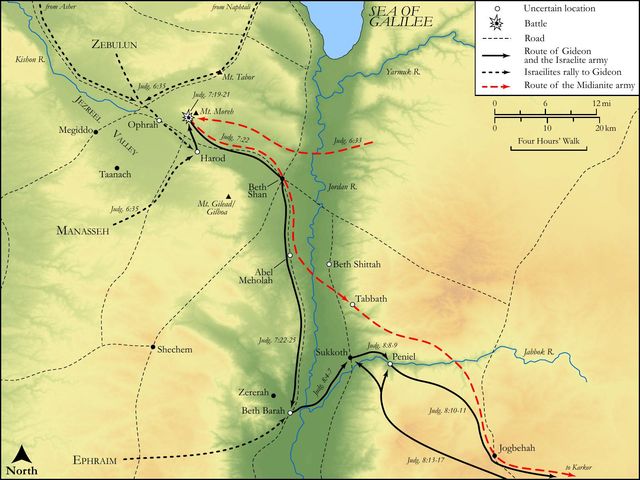
- בְּעָפְרָהbe·'a·fe·Rahin OphrahH6084Prep-b ¦ N-properNoun Proper LocationבְּinעָפְרָהOphrah
- וַיִּזְנוּvai·yiz·Nuand they acted as prostitutesH2181Conj-w ¦ V-Qal-ConsecImperf-3mpVerb Qal Consecutive Imperfect 3rd Plural Masculineוַandיִּזְנוּthey acted as prostitutes
- כָלkholallH3605N-mscNoun Singular Masculine Construct
- יִשְׂרָאֵלYis·ra·'ElIsraelH3478N-properNoun Proper Location
- אַחֲרָיו'a·cha·Ravafter itH310Adj-mpc ¦ 3msAdjective Numerical Plural Masculine Constructאַחֲרָיafterוit
- שָׁםShamthereH8033AdvAdverb
- וַיְהִיvay·Hiand it becameH1961Conj-w ¦ V-Qal-ConsecImperf-3msVerb Qal Consecutive Imperfect 3rd Singular Masculineוַandיְהִיit became
- לְגִדְעוֹןle·gid·'onfor GideonH1439Prep-l ¦ N-proper-mNoun Proper MasculineלְforגִדְעוֹןGideon
- וּלְבֵיתוֹu·le·vei·Toand for his householdH1004Conj-w ¦ Prep-l ¦ N-msc ¦ 3msNoun Singular Masculine Constructוּandלְforבֵיתhouseholdוֹhis
- לְמוֹקֵשׁle·mo·Kesh<into> a snareH4170Prep-l ¦ N-msNoun Singular Masculine Absoluteלְ<into>מוֹקֵשׁa snare
English is a literal word-by-word gloss of the Hebrew, not the KJV's wording. Why?
This is the original text the KJV's translators worked from — each Hebrew word with its own literal English meaning in this verse, prepared by scholars at Tyndale House, Cambridge. The KJV translates whole sentences, not word by word, so its wording differs: one Hebrew word can become several English words, and the KJV may choose “the LORD” where the gloss reads “Yahweh”. Both are faithful — they answer different questions. For the KJV's own rendering, switch to the KJV text.
Details
See on the biblical-era maps

Study this verse
Public-domain commentary
Matthew Henry
From his Commentary on the Whole Bible. Henry comments on passages, not single verses — this entry covers Judges 8:22–28. His three-level outline is real structure in the source text, so it is rendered as structure.
Here is, I. Gideon's laudable modesty, after his great victory, in refusing the government which the people offered him. 1. It was honest in them to offer it: Rule thou over us, for thou hast delivered us, Jdg 8:22. They thought it very reasonable that he who had gone through the toils and perils of their deliverance should enjoy the honour and power of commanding them ever afterwards, and very desirable that he who in this great and critical juncture had had such manifest tokens of God's presence with him should ever afterwards preside in their affairs. Let us apply it to the Lord Jesus: he hath delivered us out of the hands of our enemies, our spiritual enemies, the worst and most dangerous, and therefore it is fit he should rule over us; for how can we be better ruled than by one that appears to have so great an interest in heaven and so great a kindness for this earth? We are delivered that we may serve him without fear, Luk 1:74, Luk 1:75. 2. It was honourable in him to refuse it: I will not rule over you, Jdg 8:23. What he did was with a design to serve them, not to rule them - to make them safe, easy, and happy, not to make himself great or honourable. And, as he was not ambitious of grandeur himself, so he did not covet to entail it upon his family: "My son shall not rule over you, either while I live or when I am gone, but the Lord shall still rule over you, and constitute your judges by the special designation of his own Spirit, as he has done." This intimates, (1.) His modesty, and the mean opinion he had of himself and his own merits. He thought the honour of doing good was recompence enough for all his services, which needed not to be rewarded with the honour of bearing sway. He that is greatest, let him be your minister. (2.) His piety, and the great opinion he had of God's government. Perhaps he discerned in the people a dislike of the theocracy, or divine government, a desire of a king like the nations, and thought they availed themselves of his merits as a colourable pretence to move for this change of government. But Gideon would by no means admit it. No good man can be pleased with any honour done to himself which ought to be peculiar to God. Were you baptized in the name of Paul? Co1 1:13.
II.Gideon's irregular zeal to perpetuate the remembrance of this victory by an ephod made of the choicest of the spoils.
1.He asked the men of Israel to give him the ear-rings of their prey; for such ornaments they stripped the slain of in abundance. These he demanded, either because they were the finest gold, and therefore fittest for a religious use, or because they had had as ear-rings some superstitious signification, which he thought too well of. Aaron called for the ear-rings to make the golden calf of, Exo 32:2. These Gideon begged Jdg 8:24. And he had reason enough to think that those who offered him a crown, when he declined it, would not deny him their ear-rings, when he begged them, nor did they, Jdg 8:25.
2.He himself added the spoil he took from the kings of Midian, which, it should seem, had fallen to his share, Jdg 8:26. The generals had that part of the prey which was most splendid, the prey of divers colours, Jdg 5:30.
3.Of this he made an ephod, Jdg 8:27. It was plausible enough, and might be well intended to preserve a memorial of so divine a victory in the judge's own city. But it was a very unadvised thing to make that memorial to be an ephod, a sacred garment. I would gladly put the best construction that can be upon the actions of good men, and such a one we are sure Gideon was. But we have reason to suspect that this ephod had, as usual, a teraphim annexed to it (Hos 3:4), and that, having an altar already built by divine appointment (Jdg 6:26), which he erroneously imagined he might still use for sacrifice, he intended this for an oracle, to be consulted in doubtful cases. So the learned Dr. Spencer supposes. Each tribe having now very much its government within itself, they were too apt to covet their religion among themselves. We read very little of Shiloh, and the ark there, in all the story of the Judges. Sometimes by divine dispensation, and much oftener by the transgression of men, that law which obliged them to worship only at that one altar seems not to have been so religiously observed as one would have expected, any more than afterwards, when in the reigns even of very good kings the high places were not taken away, from which we may infer that that law had a further reach as a type of Christ, by whose mediation alone all our services are accepted. Gideon therefore, through ignorance or inconsideration, sinned in making this ephod, though he had a good intention in it. Shiloh, it is true, was not far off, but it was in Ephraim, and that tribe had lately disobliged him (v. 1), which made him perhaps not care to go so often among them as his occasions would lead him to consult the oracle, and therefore he would have one nearer home. However this might be honestly intended, and at first did little hurt, yet in process of time,
(1.)Israel went a whoring after it, that is, they deserted God's altar and priesthood, being fond of change, and prone to idolatry, and having some excuse for paying respect to this ephod, because so good a man as Gideon had set it up, and by degrees their respect to it grew more and more superstitious. Note, Many are led into false ways by one false step of a good man. The beginning of sin, particularly of idolatry and will-worship, is as the letting forth of water, so it has been found in the fatal corruptions of the church of Rome; therefore leave it off before it be meddled with.
(2.)It became a snare to Gideon himself, abating his zeal for the house of God in his old age, and much more to his house, who were drawn by it into sin, and it proved the ruin of the family.
III.Gideon's happy agency for the repose of Israel, Jdg 8:28.
The Midianites that had been so vexatious gave them no more disturbance. Gideon, though he would not assume the honour and power of a king, governed as a judge, and did all the good offices he could for his people; so that the country was in quietness forty years. Hitherto the times of Israel had been reckoned by forties. Othniel judged forty years, Ehud eighty - just two forties, Barak forty, and now Gideon forty, providence so ordering it to bring in mind the forty years of their wandering in the wilderness. Forty years long was I grieved with this generation. And see Eze 4:6. After these, Eli ruled forty years (Sa1 4:18), Samuel and Saul forty (Act 13:21), David forty, and Solomon forty. Forty years is about an age.
Historical interpretation
Historical reception
1 surviving comment on this verse from the historical church.
An ephod: A priestly garment which Gedeon made with a good design; but the Israelites, after his death, abused it by making it an instrument of their idolatrous worship.
Continue studying Judges 8:27 across the web’s major study libraries — every link below opens this exact verse, chapter, or book on the destination site.
Read & Compare
 BibleGatewayThis verse in more than 200 translations and 70 languages.
 Bible.comThe YouVersion reader — hundreds of translations, reading plans, and highlights.
 ESV.orgCrossway's official English Standard Version reader.
 NET BibleThe NET translation with 60,000+ translators' notes on every rendering decision.
 STEP BibleTyndale House's free study tool — original text, vocabulary, and scholarly resources.
 BibliaLogos Bible Software's free web reader.
 USCCBThe New American Bible (Revised Edition) with the U.S. bishops' study notes.
Commentaries
 BibleHub CommentariesDozens of classic commentaries on this verse, gathered on one page.
 StudyLightMore than 100 commentary sets — the largest collection on the web.
 BibleRefPlain-English commentary on what this verse means, verse by verse.
 Enduring WordDavid Guzik's free commentary on this chapter, widely used by Bible teachers.
 Bible Study ToolsVerse commentary alongside Greek and Hebrew study aids.
Original Language & Research
- BibleHub InterlinearThe verse word by word — original language, transliteration, and English.
- BibleHub LexiconEvery word's original-language definition and Strong's entry.
 Blue Letter BibleDeep-study tools — Strong's numbers, concordance, and word studies.
 SefariaThe Hebrew text with Rashi and centuries of Jewish commentary.
Sermons, Hymns & Audio


TrulyRandomVerse is not affiliated with these sites and doesn’t control their content. They’re linked because they’re genuinely useful.
Summary
Judges 8:27 chronicles a tragic spiritual misstep by Gideon, Israel's celebrated deliverer. Following his divinely empowered victory over the Midianites and a commendable refusal to establish a dynastic monarchy, Gideon fashioned an unauthorized "ephod" from the vast golden spoils of war. This object, placed in his hometown of Ophrah, swiftly became an illicit focal point of worship, drawing all Israel into spiritual unfaithfulness. Ultimately, this act, born perhaps of misguided piety, proved to be a profound spiritual snare for Gideon himself and his entire household, casting a somber shadow over his otherwise remarkable legacy of faith and deliverance.
Context
ShowHideLiterary Context
Judges 8:27 presents a jarring and tragic pivot in Gideon's narrative. Immediately preceding this verse, Gideon, in a moment of profound theological insight and humility, declares to the eager Israelites that "the Lord shall rule over you" (Judges 8:23). This declaration seemingly affirms his commitment to Yahweh's exclusive sovereignty. However, the very next action recorded is his request for the golden earrings from the Midianite plunder, an immense sum weighing 1,700 shekels (approximately 43 pounds or 19.5 kg). His subsequent fashioning of this gold into an ephod, and its placement in Ophrah, stands in stark and ironic contrast to his earlier pious statement. This act serves as a pivotal moment, marking the transition from Gideon's triumph and apparent spiritual fidelity to a significant spiritual decline that foreshadows the broader apostasy and chaos depicted in the latter chapters of Judges, particularly the destructive reign of Abimelech, Gideon's son, and the pervasive spiritual fragmentation of Israel.
Historical & Cultural Context
The events of Judges 8:27 are situated within the tumultuous period of the Judges, an era characterized by a recurring "cycle of apostasy, oppression, and deliverance" as outlined in Judges 2. During this time, Israel lacked a centralized monarchy or consistent, divinely appointed spiritual leadership, leading to a state where "everyone did what was right in his own eyes" (Judges 21:25). The creation of unauthorized cultic objects was a common deviation from Mosaic law, often reflecting a syncretistic blending of Yahwistic worship with Canaanite religious practices. Gideon's act in Ophrah, his hometown, likely established a local cultic center, further decentralizing worship and drawing people away from the divinely appointed places of worship (like the tabernacle at Shiloh) and the legitimate Levitical priesthood. This contributed significantly to the spiritual fragmentation and moral decay that plagued the nation, demonstrating how easily Israel succumbed to the allure of idolatry despite experiencing God's miraculous deliverance.
Key Themes
ShowHideJudges 8:27 powerfully illuminates several critical themes pervasive throughout the book. Firstly, it highlights the pervasive danger of Idolatry and Spiritual Apostasy. Despite Gideon's initial faithfulness and God's mighty deliverance through him, his creation of the ephod quickly became an object of illicit worship, diverting Israel's devotion from Yahweh. This spiritual unfaithfulness is vividly described as "whoring," a potent biblical metaphor for covenant betrayal. Secondly, the passage underscores the peril of Misguided Piety. Gideon's motivation for creating the ephod is not explicitly stated, but it may have been an attempt to commemorate God's victory, provide a means of seeking divine guidance, or even serve as a legitimate priestly function (though he was not a priest). Regardless of intention, the act was unauthorized and led to profound spiritual corruption, demonstrating that even seemingly good intentions can lead to practices that contradict God's revealed will. Finally, it emphasizes the profound Consequences of Leadership. The actions of a prominent figure, especially a deliverer like Gideon, set a powerful precedent. His personal deviation from God's commands led both the nation and his own household into a spiritual "snare," undermining the very deliverance God had wrought and contributing to the subsequent spiritual and political instability of Israel.
Exposition and Analysis
ShowHideKey Word Analysis
ShowHideIn its legitimate form, the ephod was a sacred garment worn by the high priest, integral to his priestly duties and often associated with the Urim and Thummim for discerning God's will (Exodus 28:6-14). However, Gideon, a non-Levite from the tribe of Manasseh, was not authorized to perform priestly functions. The sheer quantity of gold used (1,700 shekels) strongly suggests that Gideon's ephod was not merely a garment but a substantial cultic image, an elaborate idol, or a replica of the high priestly ephod intended for unauthorized divination. Its placement in Ophrah, outside the designated tabernacle, firmly establishes its illicit nature, transforming it into a rival center of worship and a direct violation of God's commands against graven images and centralized worship.
This verb, derived from a root suggesting wantonness, is used throughout the Old Testament as a powerful metaphor for Israel's spiritual unfaithfulness. It likens their covenant relationship with Yahweh to a marriage, wherein devotion to other gods or objects of worship constitutes spiritual adultery. This strong imagery underscores the severity of their betrayal, portraying their actions as a profound act of disloyalty and rebellion against the exclusive devotion demanded by their covenant with God, as seen in passages like Exodus 34:15-16 and the prophetic book of Hosea. It emphasizes that idolatry is not merely a ritualistic error but a profound breach of a sacred, intimate relationship.
This term denotes a trap or noose, typically used for catching animals, signifying something that leads to ruin, entanglement, or moral downfall. Spiritually, the ephod, initially perhaps a symbol of victory or misguided piety, became a spiritual trap that ensnared Gideon and his household, leading them away from God and ultimately contributing to their demise. It powerfully illustrates how even seemingly innocuous or well-intentioned deviations from God's revealed will can become instruments of destruction, leading to spiritual and often physical consequences.
Verse Breakdown
ShowHide"And Gideon made an ephod thereof, and put it in his city, [even] in Ophrah"
This clause details Gideon's specific and problematic action. The phrase "thereof" refers to the immense quantity of gold (1,700 shekels) he collected from the Midianite plunder. Gideon's decision to fashion this vast amount of gold into an "ephod" is highly significant. While a legitimate ephod was a priestly garment, Gideon, a Manassite, was not from the tribe of Levi and thus had no priestly authority. The sheer volume of gold strongly implies that this was not a simple garment but a large, elaborate cultic object, possibly an idol or a replica of the high priestly ephod intended for unauthorized divination. By placing it in his hometown, Ophrah, Gideon established a rival cultic center, effectively drawing worship away from the divinely designated tabernacle and its legitimate priesthood, an act of profound innovation and deviation from Mosaic law.
"and all Israel went thither a whoring after it"
This powerful and condemnatory statement reveals the immediate and widespread impact of Gideon's unauthorized act. The phrase "went thither a whoring after it" is a strong biblical metaphor for idolatry and spiritual unfaithfulness. It signifies that the Israelites, drawn by the presence of this illicit cultic object in Ophrah, engaged in unauthorized and forbidden worship, effectively committing spiritual adultery against their covenant relationship with Yahweh. This indicates a national relapse into the very idolatry from which Gideon had just delivered them, demonstrating the deep-seated spiritual instability and susceptibility to syncretism that characterized the nation during the turbulent period of the Judges.
"which thing became a snare unto Gideon, and to his house"
The final clause highlights the devastating consequences of Gideon's seemingly pious, yet unauthorized, act. A "snare" implies a trap, something that leads to entanglement, ruin, or spiritual downfall. The ephod, intended perhaps as a memorial to God's victory or a means of seeking divine guidance, ironically became the instrument of his and his family's spiritual and perhaps even physical demise. This is vividly seen in the tragic reign of his son Abimelech, who murdered 69 of Gideon's 70 sons and brought chaos upon Israel (Judges 9:5). This demonstrates that even a great deliverer can fall prey to the consequences of his own misguided actions, and that sin, even if initially subtle or well-intentioned, invariably leads to destructive outcomes for individuals, families, and communities.
Literary Devices
ShowHideJudges 8:27 employs several potent Literary Devices to convey its somber message and underscore the gravity of Gideon's actions. The most prominent is Metaphor, specifically the use of "whoring" to describe Israel's idolatry. This powerful imagery likens the sacred covenant relationship between Yahweh and Israel to a marriage, making Israel's pursuit of other gods or unauthorized cultic objects an act of spiritual adultery, deeply offensive and betraying their sacred vows of exclusive devotion. There is also a strong element of Irony in the passage. Gideon, who commendably refused kingship to uphold God's sole rule (Judges 8:23), paradoxically creates an object that usurps God's place in the hearts of the people, becoming a de facto spiritual king or a rival cultic authority in Ophrah. Furthermore, the verse serves as Foreshadowing, hinting at the subsequent decline of Gideon's family and the broader spiritual chaos and moral decay that will engulf Israel in the latter half of the book of Judges, demonstrating the cyclical nature of sin and its devastating consequences when God's commands are disregarded.
Theological and Thematic Connections
ShowHideJudges 8:27 stands as a stark theological warning against the dangers of unauthorized worship and the persistent human tendency toward idolatry. It underscores that even acts seemingly motivated by piety or a desire to honor God, if not aligned with divine instruction and revealed will, can lead to profound spiritual corruption and national apostasy. The passage highlights God's unwavering expectation of exclusive worship, emphasizing His holy jealousy for His people's devotion, and the severe consequences of spiritual syncretism, where elements of true worship are illicitly blended with foreign or self-devised practices. It powerfully reflects the broader Old Testament theme of Israel's recurring struggle with faithfulness to the covenant, demonstrating how easily they were swayed from true devotion to Yahweh, often by the very leaders God had raised up for their deliverance, revealing the deep-seated brokenness of the human heart apart from God's sustaining grace.
Reflection and Application
ShowHideThe tragic narrative of Judges 8:27 offers profound and enduring lessons for contemporary believers, serving as a potent reminder that our devotion must be exclusively to God, vigilant against anything that subtly or overtly competes for His rightful place in our hearts and lives. This "ephod" can manifest in modern forms as material possessions, career ambition, social status, personal comfort, or even religious practices and traditions that become ends in themselves rather than means to glorify God. Gideon's error underscores that good intentions are insufficient if they lead us outside God's revealed will; true faithfulness is demonstrated through obedience to His commands, not through self-devised worship or spiritual innovations. Furthermore, the passage compels us to consider the far-reaching impact of our spiritual choices, especially for those in positions of influence within families, churches, or communities. It reminds us that personal deviations from God's truth can have communal and generational consequences, urging us to lead with integrity, unwavering commitment to God's Word, and a humble dependence on His guidance, lest we become a "snare" to ourselves or to others.
Questions for Reflection
ShowHideFAQ
ShowHideWhat exactly was Gideon's ephod, and why was it problematic?
ShowHideWhile a legitimate ephod was a sacred garment worn by the high priest for priestly duties and consulting God (e.g., Exodus 28:6-14), Gideon's ephod was problematic for several critical reasons. Firstly, Gideon was not a priest; he was from the tribe of Manasseh, not Levi, and thus lacked any divine authorization to perform priestly functions or create cultic objects. His act was an unauthorized innovation. Secondly, the sheer amount of gold used (1,700 shekels, approximately 43 pounds or 19.5 kg) strongly suggests it was not merely a garment but a substantial, elaborate cultic image or idol, likely intended for unauthorized divination or as a rival center of worship. Its placement in Ophrah, Gideon's hometown, outside the designated tabernacle at Shiloh, further solidified its status as an illicit object that drew Israel into idolatry, becoming a "snare" rather than a blessing and a direct violation of God's commands regarding centralized worship and the prohibition of images.
Why is idolatry described as "whoring" in the Bible?
ShowHideThe Bible frequently uses the vivid and potent metaphor of "whoring" or spiritual adultery to describe idolatry because it views God's covenant relationship with Israel as a sacred marriage. Just as a wife's unfaithfulness to her husband is a profound betrayal of their marital covenant, Israel's devotion to other gods or unauthorized cultic objects is a betrayal of their covenant with Yahweh, who is depicted as their divine Husband. This powerful imagery, seen prominently in prophetic books like Hosea and Jeremiah, emphasizes the depth of God's holy jealousy for His people's exclusive devotion and the severity of their unfaithfulness. It underscores that idolatry is not merely a ritualistic error or a minor transgression, but a profound breach of love, loyalty, and the intimate relationship God desires with His people.
Christ-Centered Fulfillment
ShowHideJudges 8:27, with its tragic account of Gideon's unauthorized ephod leading Israel into idolatry and becoming a snare, powerfully foreshadows the ultimate need for a perfect deliverer and a true spiritual leader. Gideon, despite his initial faithfulness and God-given victories, ultimately failed to provide lasting spiritual guidance, becoming a source of stumbling rather than steadfastness. This narrative points us to Jesus Christ, who is the only one capable of truly freeing humanity from the snare of sin and idolatry. Unlike Gideon's unauthorized ephod, Jesus is the true High Priest who perfectly mediates between God and humanity, not through a golden image or an earthly ritual, but through His own once-for-all sacrifice on the cross. He is the Lamb of God who takes away the sin of the world, breaking the power of idolatry and calling His followers to exclusive devotion to the Father through Him. Where Gideon's act led to spiritual "whoring" and a fractured relationship with God, Christ calls His church to be a pure bride, wholly devoted to Him, fulfilling the covenant promises and ensuring that true worship is directed solely to God through Him, the King of kings and Lord of lords. He is the perfect fulfillment of Israel's need for a faithful leader and the ultimate object of our worship, leading us not into a snare, but into eternal life.