


Judges 20:23
- וַיַּעֲלוּvai·ya·'a·Luand they went upH5927Conj-w ¦ V-Qal-ConsecImperf-3mpVerb Qal Consecutive Imperfect 3rd Plural Masculineוַandיַּעֲלוּthey went up
- בְנֵיve·nei[the] people ofH1121N-mpcNoun Plural Masculine Construct
- יִשְׂרָאֵלYis·ra·'ElIsraelH3478N-properNoun Proper Location
- וַיִּבְכּוּvai·yiv·Kuand they weptH1058Conj-w ¦ V-Qal-ConsecImperf-3mpVerb Qal Consecutive Imperfect 3rd Plural Masculineוַandיִּבְכּוּthey wept
- לִפְנֵיlif·nei<to> beforeH6440Prep-l ¦ N-mpcNoun Plural Masculine Constructלִ<to>פְנֵיbefore
- יְהוָהYah·wehYahwehH3068N-properNoun Proper Title
- עַד'aduntilH5704PrepPreposition
- הָעֶרֶבha·'e·Revthe eveningH6153Art ¦ N-msNoun Singular Masculine Absoluteהָtheעֶרֶבevening
- וַיִּשְׁאֲלוּvai·yish·'a·Luand they enquiredH7592Conj-w ¦ V-Qal-ConsecImperf-3mpVerb Qal Consecutive Imperfect 3rd Plural Masculineוַandיִּשְׁאֲלוּthey enquired
- בַיהוָהba·Yah·wehby YahwehH3068Prep-b ¦ N-properNoun Proper TitleבַbyיהוָהYahweh
- לֵאמֹרle·Mor<to> sayingH559Prep-l ¦ V-Qal-InfVerb Qal Infinitive Constructלֵ<to>אמֹרsaying
- הַאוֹסִיףha·'o·Sif¿ will I repeatH3254Interrog ¦ V-Hiphil-Imperf-1csVerb Hiphil Imperfect 1st Singular common genderהַ¿אוֹסִיףwill I repeat
- לָגֶשֶׁתla·Ge·shetto draw nearH5066Prep-l ¦ V-Qal-InfVerb Qal Infinitive Constructלָtoגֶשֶׁתdraw near
- לַמִּלְחָמָהla·mil·cha·Mahfor <the> battleH4421Prep-l ¦ N-fsNoun Singular Feminine Absoluteלַfor <the>מִּלְחָמָהbattle
- עִם'imwithH5973PrepPreposition
- בְּנֵיbe·Nei[the] descendants ofH1121N-mpcNoun Plural Masculine Construct
- בִנְיָמִןvin·ya·MinBenjaminH1144N-proper-mNoun Proper Masculine
- אָחִי'a·Chimy brotherH251N-msc ¦ 1csNoun Singular Masculine Constructאָחִbrotherיmy
- וַיֹּאמֶרvai·Yo·merand he saidH559Conj-w ¦ V-Qal-ConsecImperf-3msVerb Qal Consecutive Imperfect 3rd Singular Masculineוַandיֹּאמֶרhe said
- יְהוָהYah·wehYahwehH3068N-properNoun Proper Title
- עֲלוּ'a·Lugo upH5927V-Qal-Imp-2mpVerb Qal Imperative 2nd Plural Masculine
- אֵלָיו'e·Lavagainst himH413Prep ¦ 3msPreposition Definiteאֵלָיagainstוhim
English is a literal word-by-word gloss of the Hebrew, not the KJV's wording. Why?
This is the original text the KJV's translators worked from — each Hebrew word with its own literal English meaning in this verse, prepared by scholars at Tyndale House, Cambridge. The KJV translates whole sentences, not word by word, so its wording differs: one Hebrew word can become several English words, and the KJV may choose “the LORD” where the gloss reads “Yahweh”. Both are faithful — they answer different questions. For the KJV's own rendering, switch to the KJV text.
Details
See on the biblical-era maps
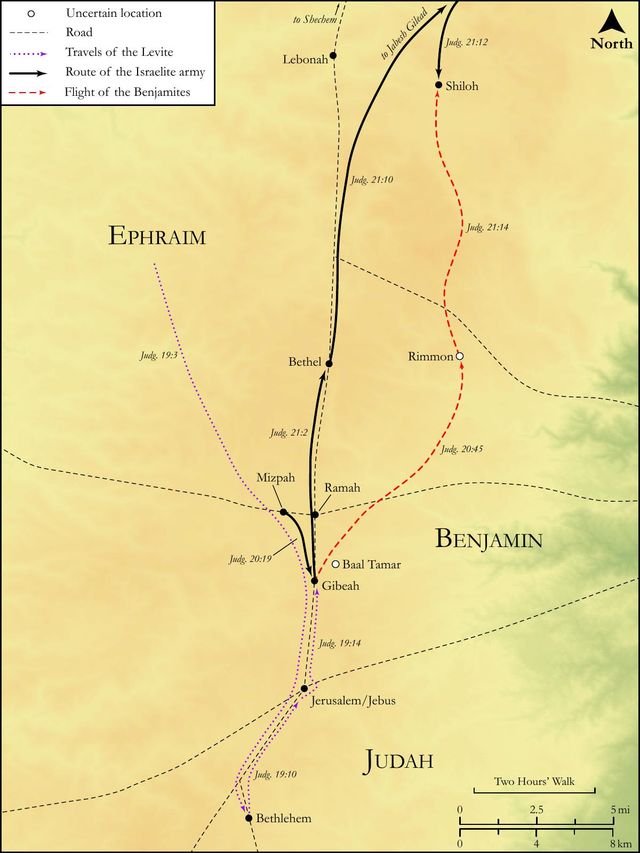
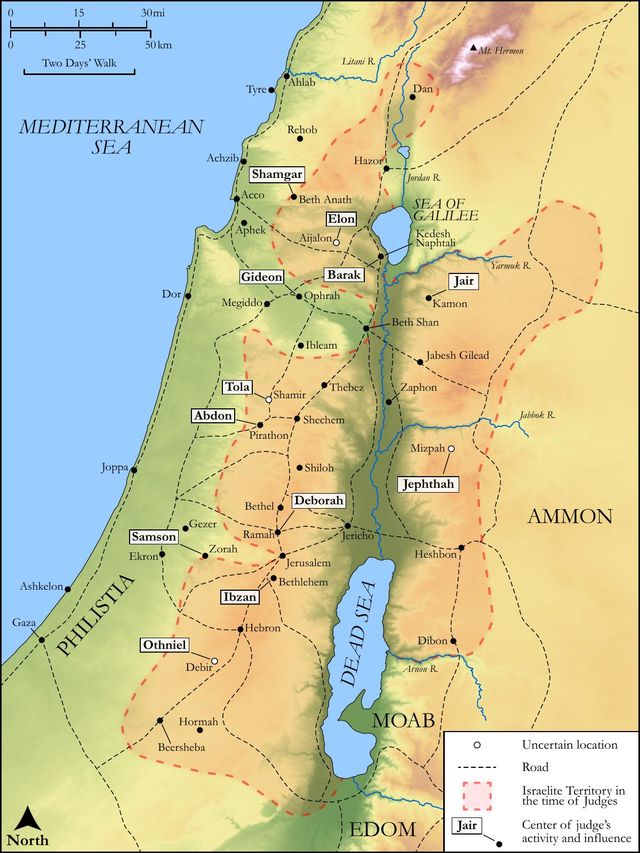
Study this verse
Public-domain commentary
Matthew Henry
From his Commentary on the Whole Bible. Henry comments on passages, not single verses — this entry covers Judges 20:18–25. His two-level outline is real structure in the source text, so it is rendered as structure.
We have here the defeat of the men of Israel in their first and second battle with the Benjamites.
I.Before their first engagement they asked counsel of God concerning the order of their battle and were directed, and yet they were sorely beaten. They did not think it was proper to ask of God whether they should go up at all against Benjamin (the case was plain enough, the men of Gibeah must be punished for their wickedness, and Israel must inflict the punishment or it will not be done), but "Who shall go first?" (Jdg 20:18), that is, "Who shall be general of our army?" for, which soever tribe was appointed to go first, the prince of that tribe must be looked upon as commander-in-chief of the whole body. For, if they had meant it of the order of their march only, it would have been proper to ask, "Who shall go next?" and then, "Who next?" But, if they know that Judah must go first, they know they must all observe the orders of the prince of that tribe. This honour was done to Judah because our Lord Jesus was to spring from that tribe, who was in all things to have the pre-eminence. The tribe that went up first had the most honourable post, but withal the most dangerous, and probably lost most in the engagement. Who would strive for precedency that sees the peril of it? Yet though Judah, that strong and valiant tribe, goes up first, and all the tribes of Israel attend them, little Benjamin (so he is called, Psa 68:27), is too hard for them all. The whole army lays siege to Gibeah, Jdg 20:19. The Benjamites advance to raise the siege, and the army prepares to give them a warm reception (Jdg 20:20). But between the Benjamites that attacked them in the front with incredible fury, and the men of Gibeah that sallied out upon their rear, they were put into confusion and lost 22,000 men, Jdg 20:21. Here were no prisoners taken, for there was no quarter given, but all put to the sword.
II.Before their second engagement they again asked counsel of God, and more solemnly than before; for they wept before the Lord until evening (Jdg 20:23), lamenting the loss of so many brave men, especially as it was a token of God's displeasure and would give occasion to the Benjamites to triumph in the success of their wickedness. Also at this time they did not ask who should go up first, but whether they should go up at all. The intimate a reason why they should scruple to do it, especially now that Providence had frowned upon them, because Benjamin was their brother, and a readiness to lay down their arms if God should so order them. God bade them go up; he allowed the attempt, for, though Benjamin was their brother, he was a gangrened member of their body and must be cut off. Upon this they encouraged themselves, perhaps more in their own strength than in the divine commission, and made a second attempt upon the forces of the rebels, in the same place where the former battle was fought (Jdg 20:22), with the hope of retrieving their credit upon the same spot of ground where they had lost it, which they would not superstitiously change, as if there were any thing unlucky in the place. But they were this second time repulsed, with the loss of 18,000 men, Jdg 20:25. The former day's loss and this amounted to 40,000, which was just a tenth part of the whole army, and the same number that they had drawn out by lot to fetch victuals, Jdg 20:10. They decimated themselves for that service, and now God again decimated them for the slaughter. But what shall we say to these things, that so just and honourable a cause should thus be put to the worst once and again? Were they not fighting God's battle against sin? Had they not his commission? What, and yet miscarry thus!
1.God's judgments are a great deep, and his way is in the sea. Clouds and darkness are often round about him, but judgment and justice are always the habitation of his throne. We may be sure of the righteousness, when we cannot see the reasons, of God's proceedings.
2.God would hereby show them, and us in them, that the race is not to the swift nor the battle to the strong, that we are not to confide in numbers, which perhaps the Israelites did with too much assurance. We must never lay the weight on an arm of flesh, which only the Rock of ages will bear.
3.God designed hereby to correct Israel for their sins. They did well to show such a zeal against the wickedness of Gibeah: but were there not with them, even with them, sins against the Lord their God? Those must be made to know their own iniquity that are forward in condemning the iniquity of others. Some think it was a rebuke to them for not witnessing against the idolatry of Micah and the Danites, by which their religion was corrupted, as they now did against the lewdness of Gibeah and the Benjamites, by which the public peace was disturbed, though God had particularly ordered them to levy war upon idolaters, Deu 13:12, etc.
4.God would hereby teach us not to think it strange if a good cause should suffer defeat fore a while, nor to judge of the merits of it by the success of it. The interest of grace in the heart, and of religion in the world, may be foiled, and suffer great loss, and seem to be quite run down, but judgment will be brought forth to victory at last. Vincimur in praelio, sed non in bello - We are foiled in a battle, but not in the whole campaign. Right may fall, but it shall arise.
Continue studying Judges 20:23 across the web’s major study libraries — every link below opens this exact verse, chapter, or book on the destination site.
Read & Compare
 BibleGatewayThis verse in more than 200 translations and 70 languages.
 Bible.comThe YouVersion reader — hundreds of translations, reading plans, and highlights.
 ESV.orgCrossway's official English Standard Version reader.
 NET BibleThe NET translation with 60,000+ translators' notes on every rendering decision.
 STEP BibleTyndale House's free study tool — original text, vocabulary, and scholarly resources.
 BibliaLogos Bible Software's free web reader.
 USCCBThe New American Bible (Revised Edition) with the U.S. bishops' study notes.
Commentaries
 BibleHub CommentariesDozens of classic commentaries on this verse, gathered on one page.
 StudyLightMore than 100 commentary sets — the largest collection on the web.
 BibleRefPlain-English commentary on what this verse means, verse by verse.
 Enduring WordDavid Guzik's free commentary on this chapter, widely used by Bible teachers.
 Bible Study ToolsVerse commentary alongside Greek and Hebrew study aids.
Original Language & Research
- BibleHub InterlinearThe verse word by word — original language, transliteration, and English.
- BibleHub LexiconEvery word's original-language definition and Strong's entry.
 Blue Letter BibleDeep-study tools — Strong's numbers, concordance, and word studies.
 SefariaThe Hebrew text with Rashi and centuries of Jewish commentary.
Sermons, Hymns & Audio


TrulyRandomVerse is not affiliated with these sites and doesn’t control their content. They’re linked because they’re genuinely useful.
Summary
Judges 20:23 encapsulates a moment of profound national crisis and spiritual resilience for the children of Israel, caught in a devastating civil war against the tribe of Benjamin. Despite enduring two successive and catastrophic defeats that resulted in immense casualties, the Israelite confederacy, humbled and grief-stricken, returns to the tabernacle at Shiloh. There, they engage in deep lamentation and persistently seek divine counsel regarding the continuation of their military campaign. The LORD's unwavering command to "Go up against him" reveals His sovereign purpose, indicating a divine testing of Israel's faith, humility, and resolve amidst the tragic consequences of unaddressed sin within the nation.
Context
ShowHideLiterary Context
This verse is a crucial pivot within the harrowing narrative of civil war detailed in Judges 19-21. The preceding chapter, Judges 19, sets the stage with the horrific crime committed by the men of Gibeah against a Levite's concubine, leading to her brutal death. The Levite's shocking act of dismembering her body and distributing it throughout Israel served as a visceral indictment of the nation's moral decay, galvanizing the other tribes to assemble at Mizpah. Their demand for justice—the surrender of the perpetrators from Gibeah—was met with Benjamin's defiant refusal, escalating the crisis into full-scale war. Judges 20:18 records Israel's initial inquiry to the LORD, receiving permission to attack. However, despite this divine sanction, the Israelite confederacy suffered two consecutive and devastating defeats, losing 22,000 men on the first day and 18,000 on the second (Judges 20:20-21 and Judges 20:22). Judges 20:23 thus marks a critical turning point where, humbled by their staggering losses, they intensify their supplication before God, demonstrating a desperate and persistent need for His continued direction.
Historical & Cultural Context
The era of the Judges (approximately 1400-1050 BC) was characterized by a recurring cycle of apostasy, divine judgment, repentance, and deliverance, famously summarized by the refrain, "In those days there was no king in Israel; everyone did what was right in his own eyes" (Judges 21:25). This period was marked by a lack of centralized leadership, with the tribes operating largely independently, united primarily by their covenant with Yahweh. The tabernacle, containing the Ark of the Covenant, was situated at Shiloh during this time (Judges 18:31 and Judges 20:26), serving as the central location for national worship and seeking divine counsel, often facilitated by the high priest through the Urim and Thummim. The civil war against Benjamin was not merely a military conflict but a profound spiritual crisis, tearing at the very fabric of the Israelite tribal confederacy. The act of "weeping before the LORD until even" was a recognized and significant form of national lamentation and repentance in ancient Israel, signifying deep sorrow, humility, and a desperate appeal for divine intervention, a common practice in ancient Near Eastern cultures for seeking divine favor in times of crisis.
Key Themes
ShowHideJudges 20:23 powerfully contributes to several key themes within the book of Judges and the broader biblical narrative. Firstly, it highlights Perseverance in Seeking God's Will, demonstrating Israel's persistent, albeit painful, commitment to consulting the LORD even after catastrophic setbacks. Their repeated inquiry, "Shall I go up again to battle...?" underscores a deep-seated belief in God's ultimate authority and a desire to act according to His will, even when His initial commands seemed to lead to hardship, echoing the wisdom found in Proverbs 3:6. Secondly, the verse illuminates Divine Sovereignty and Testing. The LORD's consistent answer, "Go up against him," despite Israel's losses, suggests a divine purpose behind their suffering. God may have been testing their resolve, humbling them, or allowing the full gravity of the sin within Israel to be felt before granting victory, reminding us that God's ways are higher than human understanding (Isaiah 55:8-9). Thirdly, the act of "wept before the LORD until even" signifies Humility and Lamentation, a crucial step before God finally granted them victory in the third battle (Judges 20:28). Finally, the poignant addition "my brother" emphasizes the Tragedy of Civil Strife, highlighting the devastating consequences when sin is left unaddressed, tearing apart even the closest bonds within a community and demonstrating the profound moral decay of the era.
Exposition and Analysis
ShowHideKey Word Analysis
ShowHideA primitive root meaning "to weep" or "to bemoan." This word describes a deep, often audible and prolonged lamentation, signifying profound emotional and spiritual distress. It is not merely shedding tears but an outpouring of grief, sorrow, and desperation, frequently associated with repentance, earnest supplication, or mourning. In this context, it indicates a corporate act of national humility and a desperate plea for divine mercy and intervention after devastating losses.
A primitive root meaning "to inquire," "to request," or "to demand." When used in relation to God, it implies seeking divine direction, revelation, or an oracle. In the context of Judges, it often refers to consulting the LORD via the high priest, who would use the Urim and Thummim to discern God's will. Israel's repeated "asking counsel" demonstrates their recognition of God's ultimate authority and their dependence on His guidance, even when His previous answers led to unexpected hardship.
A primitive word meaning "a brother," used in the widest sense of literal relationship and metaphorical affinity or resemblance. Its inclusion in the question, "Shall I go up again to battle against the children of Benjamin my brother?", profoundly emphasizes the familial bond being severed by this internecine conflict. It highlights the deep pain, moral horror, and unnaturalness of fellow Israelites fighting and killing each other, a stark contrast to the ideal of a united people of God.
Verse Breakdown
ShowHide"(And the children of Israel went up and wept before the LORD until even"
This clause describes Israel's solemn pilgrimage to Shiloh, the site of the tabernacle, following their two crushing defeats. Their "going up" signifies a deliberate and reverent act of seeking God's presence at His designated dwelling place. The phrase "wept before the LORD until even" indicates a prolonged period of intense lamentation, fasting, and fervent prayer. This was a corporate expression of profound grief, humility, and perhaps a renewed sense of repentance, acknowledging their desperate state and utter dependence on God's mercy and guidance. It suggests a critical shift from reliance on their own strength and initial zeal to a deeper spiritual posture of brokenness and supplication.
"and asked counsel of the LORD, saying, Shall I go up again to battle against the children of Benjamin my brother?"
Despite having already received divine permission to fight and having suffered catastrophic losses, Israel persists in seeking specific direction for the next engagement. This demonstrates their continued belief in God's ultimate authority and their desperate desire for His explicit approval for the third encounter. The poignant inclusion of "my brother" in their question is a powerful reminder of the familial bond being severed by this conflict, highlighting the deep sorrow, moral dilemma, and profound tragedy inherent in fighting their own kin.
"And the LORD said, Go up against him.)"
God's response is concise, unwavering, and echoes His previous commands. This consistent directive, despite Israel's prior defeats, signifies that God's will had not changed regarding the necessity of confronting Benjamin. It suggests that the previous losses were not a sign of His disapproval of the war itself, but perhaps a means of testing, humbling, or refining Israel, or allowing the full weight of the nation's spiritual decay to be felt before granting victory. It underscores divine sovereignty and purpose even in the midst of human suffering, confusion, and seemingly contradictory outcomes.
Literary Devices
ShowHideThe verse employs several powerful literary devices that amplify its emotional and theological weight. Repetition is evident in the recurring theme of Israel seeking counsel and God's consistent command to "Go up." This repetition emphasizes God's unwavering purpose and Israel's persistent, though painful, obedience, highlighting a divine resolve that transcends immediate human understanding. There is a strong element of Pathos conveyed through the phrase "my brother," which evokes deep sorrow and highlights the unnatural and tragic nature of this civil war. This familial designation underscores the profound brokenness and moral decay within the Israelite community. The narrative also contains elements of Irony, as Israel, despite their numerical superiority and God's initial command, suffers devastating defeats. This ironic outcome serves to humble the nation and reveal that victory is not guaranteed by divine permission alone, but requires a deeper spiritual posture of humility and dependence. Finally, the act of "weeping before the LORD until even" functions as a profound form of Lamentation, a communal expression of grief, repentance, and desperate supplication that is crucial for the narrative's emotional and theological weight, signaling a turning point towards genuine humility and renewed dependence on God.
Theological and Thematic Connections
ShowHideJudges 20:23 offers profound theological insights into God's sovereignty, the nature of divine testing, and the necessity of humility and perseverance in the life of faith. God's consistent command to "Go up," even after two devastating defeats, reveals that His purposes are not always immediately comprehensible to human understanding. He may permit trials and setbacks, not to abandon His people, but to refine their faith, deepen their dependence, and expose underlying sin or self-reliance. Israel's persistent seeking of counsel, coupled with their profound lamentation, demonstrates a vital spiritual discipline: continuing to lean on God even when His path seems arduous or counterintuitive. This passage reminds us that true victory often follows a season of humbling, sorrow, and unwavering trust in God's ultimate plan, even when the immediate circumstances are dire.
Reflection and Application
ShowHideJudges 20:23 provides timeless lessons for believers navigating life's challenges. It teaches us that God's guidance, even when diligently sought, may not always lead to an easy or immediately successful path. Sometimes, the Lord permits trials and setbacks—even "defeats"—to refine our faith, deepen our humility, or teach us essential lessons about our dependence on Him. This passage powerfully calls us to persevere in prayer and seeking God's will, especially when circumstances are grim and our own understanding fails. True faith continues to lean on God's wisdom and authority even when His commands seem to lead through hardship. Furthermore, Israel's profound lamentation and humility before the LORD underscore the spiritual power of genuine sorrow over sin and a desperate plea for divine intervention. Such brokenness can be the very posture that opens the door for clearer direction, renewed strength, and eventual deliverance. It also serves as a stark reminder of the devastating consequences when sin is left unaddressed within a community, tearing apart even the closest bonds and leading to self-inflicted wounds.
Questions for Reflection
ShowHideFAQ
ShowHideWhy did God allow Israel to be defeated twice if He told them to go up to battle?
ShowHideGod's permission for Israel to "Go up" was not a guarantee of immediate, effortless victory, but a directive within His larger sovereign plan. The two initial defeats served multiple purposes. Firstly, they were a profound act of humbling Israel, exposing their self-reliance and perhaps their presumption that God's presence automatically guaranteed success without genuine repentance or spiritual preparedness. Despite their numerical superiority and initial zeal, they had not fully grasped the gravity of the sin in their midst or their own spiritual state. Secondly, these defeats were a form of testing their faith and perseverance. Would they abandon God's command after hardship, or would they press into Him more deeply? Their persistent return to Shiloh and their lamentation in Judges 20:23 demonstrate that they passed this test of endurance. Thirdly, it allowed the full weight of the consequences of sin to be felt by the entire nation, not just Benjamin. The horror of civil war and the immense casualties highlighted the depth of Israel's moral decay. Only after this period of profound lamentation and renewed humility did God promise victory in the third encounter (Judges 20:28). It was not about God changing His mind, but about refining Israel's heart and preparing them for a victory that would truly glorify Him.
Christ-Centered Fulfillment
ShowHideJudges 20:23, set against the backdrop of a broken nation engaged in fratricidal war, powerfully foreshadows the ultimate need for a divine reconciler and a perfect sacrifice. The lamentation of Israel and their desperate seeking of counsel before the LORD point to humanity's inherent inability to resolve its deepest conflicts and sins without divine intervention. This civil strife, where "brother" fought "brother," tragically illustrates the pervasive nature of sin, which alienates humanity from God and from one another. The repeated failures of Israel, despite God's command, highlight the limitations of human effort and the necessity of a greater, more perfect obedience.
Jesus Christ is the true "Wonderful Counselor" (Isaiah 9:6), whose wisdom surpasses all human understanding and whose counsel always leads to ultimate victory. Unlike Israel's temporary and costly victories, Christ's triumph over sin and death was achieved through perfect obedience and self-sacrifice on the cross. He is the ultimate "Lamb of God, who takes away the sin of the world!" (John 1:29), bearing the full weight of humanity's brokenness and rebellion, a far greater sin than that which plagued Benjamin. His suffering and perseverance, even unto death, as described in Hebrews 12:2, lead to eternal victory and reconciliation. Through His atoning work, Christ breaks down the "dividing wall of hostility" (Ephesians 2:14), reconciling not just tribes but all humanity to God and to one another, making "brothers" truly at peace. The weeping of Israel before the LORD finds its ultimate answer in the tears of Christ in Gethsemane (Luke 22:44), a lamentation that secured our salvation and ushered in an era of true peace and divine guidance for all who trust in Him.