


Joshua 7:6
Bible text: King James Version (1769 Blayney text) · Public domain
Bible text: King James Version with Strong's numbers · Public domain
Bible text: Berean Standard Bible · Public domain
Bible text: American Standard Version (1901) · Public domain
Bible text: World English Bible, Messianic edition · Public domain
Bible text: Geneva Bible (1599) · Public domain
Bible text: Young's Literal Translation · Public domain
- וַיִּקְרַעvai·yik·Ra'and he toreH7167Conj-w ¦ V-Qal-ConsecImperf-3msVerb Qal Consecutive Imperfect 3rd Singular Masculineוַandיִּקְרַעhe tore
- יְהוֹשֻׁעַye·ho·Shu·a'JoshuaH3091N-proper-mNoun Proper Masculine
- שִׂמְלֹתָיוsim·lo·Tavhis clothesH8071N-fpc ¦ 3msNoun Plural Feminine Constructשִׂמְלֹתָיclothesוhis
- וַיִּפֹּלvai·yi·Poland he fellH5307Conj-w ¦ V-Qal-ConsecImperf-3msVerb Qal Consecutive Imperfect 3rd Singular Masculineוַandיִּפֹּלhe fell
- עַל'alonH5921PrepPreposition
- פָּנָיוpa·Navhis faceH6440N-mpc ¦ 3msNoun Plural Masculine Constructפָּנָיfaceוhis
- אַרְצָה'Ar·tzah[the] ground towardsH776N-fs ¦ SfxNoun Singular Feminine Absoluteאַרְצָ[the] groundהtowards
- לִפְנֵיlif·Nei<to> beforeH6440Prep-l ¦ N-mpcNoun Plural Masculine Constructלִ<to>פְנֵיbefore
- אֲרוֹן'a·Ron[the] ark ofH727N-mscNoun Singular Masculine Construct
- יְהוָהYah·wehYahwehH3068N-properNoun Proper Title
- עַד'aduntilH5704PrepPreposition
- הָעֶרֶבha·'E·revthe eveningH6153Art ¦ N-msNoun Singular Masculine Absoluteהָtheעֶרֶבevening
- הוּאhu'heH1931Pro-3msPronoun Personal 3rd Singular Masculine
- וְזִקְנֵיve·zik·Neiand [the] elders ofH2205Conj-w ¦ Adj-mpcAdjective Plural Masculine Constructוְandזִקְנֵי[the] elders of
- יִשְׂרָאֵלYis·ra·'ElIsraelH3478N-properNoun Proper Location
- וַיַּעֲלוּvai·ya·'a·Luand they made go upH5927Conj-w ¦ V-Hiphil-ConsecImperf-3mpVerb Hiphil Consecutive Imperfect 3rd Plural Masculineוַandיַּעֲלוּthey made go up
- עָפָר'a·FardustH6083N-msNoun Singular Masculine Absolute
- עַל'alonH5921PrepPreposition
- רֹאשָׁםro·Shamtheir headH7218N-msc ¦ 3mpNoun Singular Masculine Constructרֹאשָׁheadםtheir
English is a literal word-by-word gloss of the Hebrew, not the KJV's wording. Why?
This is the original text the KJV's translators worked from — each Hebrew word with its own literal English meaning in this verse, prepared by scholars at Tyndale House, Cambridge. The KJV translates whole sentences, not word by word, so its wording differs: one Hebrew word can become several English words, and the KJV may choose “the LORD” where the gloss reads “Yahweh”. Both are faithful — they answer different questions. For the KJV's own rendering, switch to the KJV text.
Details
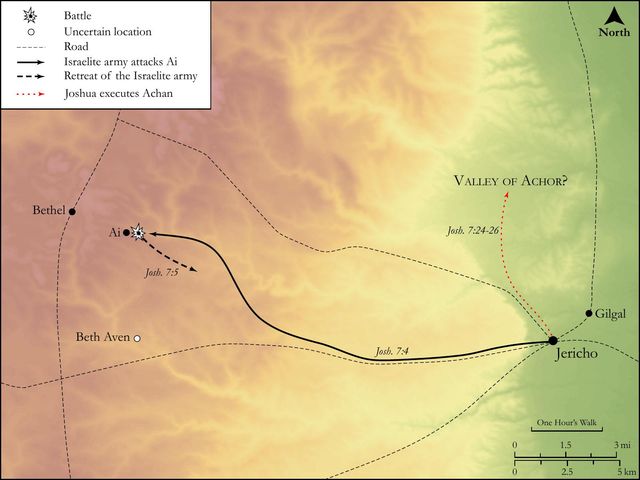
See on the biblical-era map
Study this verse
Public-domain commentary
Matthew Henry
From his Commentary on the Whole Bible. Henry comments on passages, not single verses — this entry covers Joshua 7:6–9. His two-level outline is real structure in the source text, so it is rendered as structure.
We have here an account of the deep concern Joshua was in upon this sad occasion. He, as a public person, interested himself more than any other in this public loss, and is therein an example to princes and great men, and teaches them to lay much to heart the calamities that befal their people: he is also a type of Christ, to whom the blood of his subjects is precious, Psa 72:14. Observe,
I.How he grieved:
He rent his clothes (Jos 7:6), in token of great sorrow for this public disaster, and especially a dread of God's displeasure, which was certainly the cause of it. Had it been but the common chance of war (as we are too apt to express it), it would not have become a general to droop thus under it; but, when God was angry, it was his duty and honour to feel thus. One of the bravest soldiers that ever was owned that his flesh trembled for fear of God, Psa 119:120. As one humbling himself under the mighty had of God, he fell to the earth upon his face, not thinking it any disparagement to him to lie thus low before the great God, to whom he directed this token of reverence, by keeping his eye towards the ark of the Lord. The elders of Israel, being interested in the cause and influenced by his example, prostrated themselves with him, and, in token of deep humiliation, put dust upon their heads, not only as mourners, but as penitents; not doubting but it was for some sin or other that God did thus contend with them (though they knew not what it was), they humbled themselves before God, and thus deprecated the progress of his wrath. This they continued until even-tide, to show that it was not the result of a sudden feeling, but proceeded from a deep conviction of their misery and danger if God were any way provoked to depart from them. Joshua did not fall foul upon his spies for their misinformation concerning the strength of the enemy, nor upon the soldiers for their cowardice, though perhaps both were blameworthy, but his eye is up to God; for is there any evil in the camp and he has not done it? His eye is upon God as displeased, and that troubles him.
II.How he prayed, or pleaded rather, humbly expostulating the case with God, not sullen, as David when the Lord had made a breach upon Uzzah, but much affected; his spirit seemed to be somewhat ruffled and discomposed, yet not so as to be put out of frame for prayer; but, by giving vent to his trouble in a humble address to God, he keeps his temper and it ends well.
1.Now he wishes they had all taken up with the lot of the two tribes on the other side Jordan, Jos 7:7. He thinks it would have been better to have staid there and been cut short than come hither to be cut off. This savours too much of discontent and distrust of God, and cannot be justified, though the surprise and disappointment to one deeply concerned for the public interest may in part excuse it. Those words, wherefore hast thou brought us over Jordan to destroy us? are too like what the murmurers often said (Exo 14:11, Exo 14:12; Exo 16:3; Exo 17:3; Num 14:2, Num 14:3); but he that searches the heart knew they came from another spirit, and therefore was not extreme to mark what he said amiss. Had Joshua considered that this disorder which their affairs were put into no doubt proceeded from something amiss, which yet might easily be redressed, and all set to rights again (as often in his predecessor's time), he would not have spoken of it as a thing taken for granted that they were delivered into the hands of the Amorites to be destroyed. God knows what he does, though we do not; but this we may be sure of, he never did nor ever will do us any wrong.
2.He speaks as one quite at a loss concerning the meaning of this event (v. 8): "What shall I say, what construction can I put upon it, when Israel, thy own people, for whom thou hast lately done such great things and to whom thou hast promised the full possession of this land, when they turn their backs before their enemies" (their necks, so the word is), "when they not only flee before them, but fall before them, and become a prey to them? What shall we think of the divine power? Is the Lord's arm shortened? Of the divine promise? Is his word yea and nay? Of what God has done for us? Shall this be all undone again and prove in vain?" Note, The methods of Providence are often intricate and perplexing, and such as the wisest and best of men know not what to say to; but they shall know hereafter, Joh 13:7.
3.He pleads the danger Israel was now in of being ruined. He gives up all for lost: "The Canaanites will environ us round, concluding that now our defence having departed, and the scales being turned in their favour, we shall soon be as contemptible as ever we were formidable, and they will cut off our name from the earth," Jos 7:9. Thus even good men, when things go against them a little, are too apt to fear the worst, and make harder conclusions than there is reason for. But his comes in here as a plea: "Lord, let not Israel's name, which has been so dear to thee and so great in the world, be cut off." 4. He pleads the reproach that would be cast on God, and that if Israel were ruined his glory would suffer by it. They will cut off our name, says he, yet, as if he had corrected himself for insisting upon that, it is no great matter (thinks he) what becomes of our little name (the cutting off of that will be a small loss), but what wilt thou do for thy great name? this he looks upon and laments as the great aggravation of the calamity. He feared it would reflect on God, his wisdom and power, his goodness and faithfulness; what would the Egyptians say? Note, Nothing is more grievous to a gracious soul than dishonour done to God's name. This also he insists upon as a plea for the preventing of his fears and for a return of God's favour; it is the only word in all his address that has any encouragement in it, and he concludes with it, leaving it to this issue, Father, glorify thy name. The name of God is a great name, above every name; and, whatever happens, we ought to believe that he will, and pray that he would, work for his own name, that this may not be polluted. This should be our concern more than any thing else. On this we must fix our eye as the end of all our desires, and from this we must fetch our encouragement as the foundation of all our hopes. We cannot urge a better plea than this, Lord, What wilt thou do for thy great name? Let God in all be glorified, and then welcome his whole will.
Continue studying Joshua 7:6 across the web’s major study libraries — every link below opens this exact verse, chapter, or book on the destination site.
Read & Compare
 BibleGatewayThis verse in more than 200 translations and 70 languages.
 Bible.comThe YouVersion reader — hundreds of translations, reading plans, and highlights.
 ESV.orgCrossway's official English Standard Version reader.
 NET BibleThe NET translation with 60,000+ translators' notes on every rendering decision.
 STEP BibleTyndale House's free study tool — original text, vocabulary, and scholarly resources.
 BibliaLogos Bible Software's free web reader.
 USCCBThe New American Bible (Revised Edition) with the U.S. bishops' study notes.
Commentaries
 BibleHub CommentariesDozens of classic commentaries on this verse, gathered on one page.
 StudyLightMore than 100 commentary sets — the largest collection on the web.
 BibleRefPlain-English commentary on what this verse means, verse by verse.
 Enduring WordDavid Guzik's free commentary on this chapter, widely used by Bible teachers.
 Bible Study ToolsVerse commentary alongside Greek and Hebrew study aids.
Original Language & Research
- BibleHub InterlinearThe verse word by word — original language, transliteration, and English.
- BibleHub LexiconEvery word's original-language definition and Strong's entry.
 Blue Letter BibleDeep-study tools — Strong's numbers, concordance, and word studies.
 SefariaThe Hebrew text with Rashi and centuries of Jewish commentary.
Sermons, Hymns & Audio


TrulyRandomVerse is not affiliated with these sites and doesn’t control their content. They’re linked because they’re genuinely useful.
Summary
Joshua 7:6 powerfully depicts the profound despair and humble supplication of Joshua and the elders of Israel in the wake of their unexpected and devastating defeat at Ai. This verse captures a pivotal moment of national crisis where the leadership, employing traditional acts of mourning and self-abasement, prostrates itself before the Ark of the LORD. Their prolonged lament until evening underscores the gravity of their distress and their desperate reliance on God for understanding and intervention, as a setback of this magnitude threatened to unravel the entire conquest of Canaan.
Context
ShowHideLiterary Context
Joshua 7:6 immediately follows Israel's perplexing and demoralizing defeat at Ai, where approximately thirty-six men were killed, causing the hearts of the people to "melt and become like water" (Joshua 7:5). This ignominious loss stands in stark contrast to the preceding miraculous, divinely orchestrated victory at Jericho, which had unequivocally established God's power and Israel's invincibility under His direct command (Joshua 6). The actions of Joshua and the elders in verse 6 are a direct, desperate, and deeply spiritual response to this inexplicable catastrophe. Their lament sets the stage for God's subsequent revelation of the hidden sin within the camp—Achan's transgression against the devoted things (Joshua 7:1)—and the ultimate resolution of the crisis. The narrative artfully pivots from human despair and bewilderment to divine disclosure, highlighting the intricate and non-negotiable connection between Israel's obedience to God's covenant and their success in the Promised Land.
Historical & Cultural Context
The actions described in Joshua 7:6—namely, the tearing of clothes, falling prostrate, and applying dust to the head—were deeply ingrained and widely recognized expressions of profound grief, humiliation, and desperate supplication in Israel. Tearing garments (Hebrew: qara') was a public and visceral display of extreme distress, whether in response to death, disaster, or blasphemy, signifying a rupture of internal peace and external order (Genesis 37:34, 2 Samuel 1:11). Falling on one's face (prostration) before a deity or a superior was the ultimate act of humility, submission, and worship, often accompanied by fervent prayer or petition, acknowledging absolute authority. Applying dust or ashes to the head was another common and powerful symbol of mourning, penitence, and self-abasement, signifying one's lowliness, sorrow, and identification with the earth from which humanity came (1 Samuel 4:12, Job 2:12). These actions, performed by Joshua and the elders before the Ark of the LORD, underscore their understanding that the defeat at Ai was fundamentally a theological problem, not merely a military one, thus necessitating immediate divine intervention and revelation.
Key Themes
ShowHideThis verse powerfully contributes to several foundational themes within the book of Joshua and the broader Old Testament narrative. It emphatically highlights the theme of Divine Sovereignty and Israel's Dependence, demonstrating that Israel's success in the conquest was never predicated on their military strength, strategic acumen, or numerical superiority, but solely on God's active presence and unwavering favor. The unexpected and humiliating defeat at Ai shatters any illusion of human autonomy or self-sufficiency, reinforcing the absolute necessity of God's leading and empowerment for any victory. Furthermore, it introduces and underscores the critical theme of Corporate Responsibility and the Consequences of Sin, illustrating how Achan's individual transgression, though seemingly isolated, directly impacted the entire community, leading to national defeat and divine displeasure. Joshua's lament, initially ignorant of the specific sin, exemplifies a leader bearing the profound burden of his people's collective standing before a holy God. Lastly, the scene emphasizes Lament and Supplication in Crisis, showcasing the biblical pattern of faithful leaders and people turning to God in humility and desperation when faced with inexplicable suffering or setbacks, seeking His wisdom, mercy, and intervention. This aligns with the broader biblical tradition of communal lament found throughout the Psalms and vividly expressed in the book of Lamentations.
Exposition and Analysis
ShowHideKey Word Analysis
ShowHideThis verb signifies a forceful and violent tearing or ripping apart, specifically referring to garments. In the context of mourning or distress, it was a dramatic, public, and non-verbal expression of overwhelming grief, horror, or despair. It was not merely a symbolic gesture but a visceral act reflecting an internal rupture of peace and well-being, a visible manifestation of profound shock and anguish.
Meaning "to fall," this verb frequently denotes prostration, whether in an act of worship, humble supplication, or utter collapse due to overwhelming despair or fear. When used in the context of falling "upon his face before the ark of the LORD," it conveys the ultimate posture of humility, submission, and desperate appeal to a higher, divine authority. It signifies a complete surrender of self and an absolute reliance on God's mercy and power.
Referring to dry earth or dust, the act of putting dust upon one's head was a common and deeply symbolic custom in Israel signifying deep mourning, humiliation, and self-abasement. It symbolized a return to one's lowly origins (from dust you came, to dust you shall return) and an acknowledgment of one's utter dependency and vulnerability before God. It was a visible sign of profound sorrow, penitence, and unworthiness.
Verse Breakdown
ShowHide"And Joshua rent his clothes,"
This action immediately communicates Joshua's profound and visceral grief, despair, and bewilderment. As Israel's divinely appointed leader, his public display of sorrow reflects the collective anguish and confusion of the entire nation following their unexpected and humiliating defeat at Ai. It signifies a deep emotional wound and a crisis of understanding regarding God's apparent withdrawal of favor.
"and fell to the earth upon his face before the ark of the LORD"
This clause highlights Joshua's posture of ultimate humility, complete submission, and desperate supplication. By prostrating himself before the Ark of the LORD, the most sacred object symbolizing God's tangible presence, covenant, and throne among His people, Joshua unequivocally acknowledges God's supreme authority and absolute sovereignty. His appeal is directed to the only source of true understanding, deliverance, and restoration.
"until the eventide, he and the elders of Israel,"
The extended duration of their lament—from the time of the news until evening—emphasizes the depth, seriousness, and prolonged nature of their distress. It was not a fleeting moment of sorrow but a sustained period of intense prayer, mourning, and seeking God's face. The inclusion of "he and the elders of Israel" underscores the collective nature of this national crisis and the unified leadership in seeking divine intervention, demonstrating corporate solidarity in spiritual anguish.
"and put dust upon their heads."
This final action reinforces the profound mourning, humiliation, and self-abasement of Joshua and the elders. It is a public and symbolic act of acknowledging their lowliness, their identification with the earth, and the gravity of their situation before a holy God, further emphasizing their desperate plea for divine mercy, revelation, and guidance in the face of their inexplicable defeat.
Literary Devices
ShowHideJoshua 7:6 is rich in Symbolism, where each action carries profound cultural, emotional, and theological meaning. The tearing of clothes, prostration, and application of dust are not merely physical acts but potent, universally understood symbols of intense grief, profound humility, and desperate supplication before a divine power. The scene also powerfully employs Pathos, evoking a strong sense of pity and sorrow for the plight of Joshua and the elders, who are genuinely bewildered and distraught by their defeat, especially after God's clear and miraculous victory at Jericho. There is also an element of Foreshadowing, as the sheer intensity and prolonged nature of their lament hint strongly at a profound underlying cause for the defeat—a cause that is spiritual and covenantal, soon to be revealed as Achan's sin. The collective action of "he and the elders of Israel" also demonstrates Solidarity and unity in their expression of sorrow and dependence on God, highlighting the corporate nature of Israel's covenant relationship.
Theological and Thematic Connections
ShowHideJoshua 7:6 serves as a powerful theological statement about the inviolable nature of God's covenant with Israel and the severe consequences of sin within the community. It unequivocally underscores that Israel's success and divine favor were entirely contingent upon their unwavering obedience and God's faithfulness to His promises, rather than on their own military might or strategic prowess. The unexpected defeat at Ai, and Joshua's subsequent lament, reveal that sin within the community, even if committed by a single individual, carries corporate consequences, disrupting the divine blessing and exposing the entire nation to vulnerability and defeat. This passage teaches that true spiritual leadership involves humble acknowledgment of God's absolute sovereignty, earnest and persistent supplication in times of crisis, and a courageous willingness to identify and confront the spiritual root causes of national distress. It powerfully reminds us that God is holy and cannot tolerate unaddressed sin in the midst of His people, and that genuine repentance begins with a profound recognition of His authority and our own unworthiness.
Reflection and Application
ShowHideJoshua's profound and desperate response to the crisis at Ai provides an enduring and essential model for believers today. When faced with unexpected setbacks, deep confusion, or apparent defeat in our personal lives, families, churches, or communities, our first and most crucial impulse should be to turn to God in humble, earnest, and prolonged prayer. Rather than immediately resorting to human solutions, succumbing to blame, or yielding to despair, we are called to prostrate ourselves before the Lord, acknowledging His supreme sovereignty and seeking His divine wisdom and revelation. Joshua's example reminds us that even when we don't understand the reasons for our struggles—especially when they seem to contradict God's past blessings or promises—God is always present, just, and ready to reveal His truth. Our honest, humble supplication, accompanied by a willingness to identify, confess, and repent of sin, is the indispensable path to receiving His guidance, strength, and ultimate restoration. This passage challenges us to cultivate a deeper, more consistent posture of dependence on God, recognizing that true victory and flourishing flow not from our efforts, but from His manifest presence and our unwavering obedience to His commands.
Questions for Reflection
ShowHideFAQ
ShowHideWhy did Joshua and the elders mourn so intensely, especially after such a great victory at Jericho?
ShowHideTheir intense mourning was a profound and visceral response to the shock, confusion, and theological crisis precipitated by the defeat at Ai. Having just witnessed God's miraculous, unassisted intervention at Jericho, which established Israel's invincibility under divine favor (Joshua 6), the unexpected loss at Ai was not merely a military setback but a terrifying indication that God had withdrawn His presence or favor. For a nation whose identity, success, and very existence were entirely dependent on God's covenant faithfulness, this suggested a catastrophic breach in their relationship with Him. Their actions—renting clothes, prostrating themselves before the Ark of the LORD, and putting dust on their heads—were deeply ingrained traditional expressions of extreme grief, humiliation, and desperate supplication. They signified their profound distress and their urgent plea for God to reveal the cause of His apparent displeasure, understanding that this defeat was not random but had a divine, covenantal explanation that they desperately sought.
Christ-Centered Fulfillment
ShowHideWhile Joshua's lament in Joshua 7:6 is a poignant display of human leadership burdened by the corporate consequences of sin, it ultimately points forward to the perfect intercession and suffering of Jesus Christ. Joshua, though a righteous and faithful leader, could only express sorrow and seek answers; he could not atone for Achan's sin or fully restore Israel's standing before a holy God. Jesus, however, is the ultimate leader and High Priest who not only bore the immense weight of humanity's sin but, astonishingly, "became sin for us, so that in him we might become the righteousness of God" (2 Corinthians 5:21). His agony in Gethsemane (Matthew 26:39), where He fell on His face in prayer, contemplating the cup of God's wrath, far surpasses Joshua's lament, as He willingly embraced the full penalty for the sins of the world. Unlike Joshua, who was ignorant of the specific sin causing the defeat, Jesus perfectly understood the depth of human depravity and willingly offered Himself as the spotless "Lamb of God, who takes away the sin of the world!" (John 1:29). His suffering and death on the cross, where He was "pierced for our transgressions" and "crushed for our iniquities" (Isaiah 53:5), represent the ultimate act of humility, self-abasement, and substitutionary sacrifice, infinitely exceeding the symbolic dust on the head. Through His perfect obedience and atoning sacrifice, Christ secured for us not just temporary relief from defeat, but eternal victory over sin, death, and the grave, providing a permanent and righteous way to stand before God, a privilege Joshua could only desperately seek. He is our compassionate High Priest who "always lives to intercede" for us (Hebrews 7:25), making our access to God sure, certain, and eternally secure, unlike the conditional access through the Ark of the Covenant.