


Joshua 7:7
Bible text: King James Version (1769 Blayney text) · Public domain
Bible text: King James Version with Strong's numbers · Public domain
Bible text: Berean Standard Bible · Public domain
Bible text: American Standard Version (1901) · Public domain
Bible text: World English Bible, Messianic edition · Public domain
Bible text: Geneva Bible (1599) · Public domain
Bible text: Young's Literal Translation · Public domain
- וַיֹּאמֶרvai·Yo·merand he saidH559Conj-w ¦ V-Qal-ConsecImperf-3msVerb Qal Consecutive Imperfect 3rd Singular Masculineוַandיֹּאמֶרhe said
- יְהוֹשֻׁעַye·ho·Shu·a'JoshuaH3091N-proper-mNoun Proper Masculine
- אֲהָהּ'a·Hahalas!H162PrtParticle Interjection
- אֲדֹנָי'a·do·NaiO LordH136N-properNoun Proper Title
- יְהוִהYah·wehYahwehH3069N-properNoun Proper Title
- לָמָהLa·mah<to> why?H4100Prep-l ¦ InterrogPronoun Interrogativeלָ<to>מָהwhy?
- הֵעֲבַרְתָּhe·'a·Var·tahave you brought overH5674V-Hiphil-Perf-2msVerb Hiphil Perfect 2nd Singular Masculine
- הַעֲבִירha·'a·Virat all <brought over>H5674V-Hiphil-InfVerb Hiphil Infinitive Construct
- אֶת'et<obj.>H853DirObjMParticle Object Indicator
- הָעָםha·'Amthe peopleH5971Art ¦ N-msNoun Singular Masculine Absoluteהָtheעָםpeople
- הַזֶּהha·Zeh<the> thisH2088Art ¦ PrtParticle Demonstrativeהַ<the>זֶּהthis
- אֶת'et<obj.>H853DirObjMParticle Object Indicator
- הַיַּרְדֵּןhai·yar·Denthe JordanH3383Art ¦ N-properNoun Proper LocationהַtheיַּרְדֵּןJordan
- לָתֵתla·Tetto giveH5414Prep-l ¦ V-Qal-InfVerb Qal Infinitive Constructלָtoתֵתgive
- אֹתָנוּ'o·Ta·nu<obj.> usH853DirObjM ¦ 1cpParticle Object Indicatorאֹתָ<obj.>נוּus
- בְּיַדbe·Yadin [the] hand ofH3027Prep-b ¦ N-cscNoun Singular common gender Constructבְּinיַד[the] hand of
- הָאֱמֹרִיha·'e·mo·Rithe Amorite[s]H567Art ¦ N-msNoun Gentilic Singular Masculine AbsoluteהָtheאֱמֹרִיAmorite[s]
- לְהַאֲבִידֵנוּle·ha·'a·vi·De·nuto destroy usH6Prep-l ¦ V-Hiphil-Inf ¦ 1cpVerb Hiphil Infinitive Constructלְtoהַאֲבִידֵdestroyנוּus
- וְלוּve·Luand ifH3863Conj-w ¦ PrtParticle Conditionalוְandלוּif
- הוֹאַלְנוּho·'Al·nuwe had been willingH2974V-Hiphil-Perf-1cpVerb Hiphil Perfect 1st Plural common gender
- וַנֵּשֶׁבva·Ne·shevand we had remainedH3427Conj-w ¦ V-Qal-ConsecImperf-1cpVerb Qal Consecutive Imperfect 1st Plural common genderוַandנֵּשֶׁבwe had remained
- בְּעֵבֶרbe·'E·veron [the] other side ofH5676Prep-b ¦ N-mscNoun Singular Masculine Constructבְּonעֵבֶר[the] other side of
- הַיַּרְדֵּןhai·yar·Denthe JordanH3383Art ¦ N-properNoun Proper LocationהַtheיַּרְדֵּןJordan
English is a literal word-by-word gloss of the Hebrew, not the KJV's wording. Why?
This is the original text the KJV's translators worked from — each Hebrew word with its own literal English meaning in this verse, prepared by scholars at Tyndale House, Cambridge. The KJV translates whole sentences, not word by word, so its wording differs: one Hebrew word can become several English words, and the KJV may choose “the LORD” where the gloss reads “Yahweh”. Both are faithful — they answer different questions. For the KJV's own rendering, switch to the KJV text.
Details
See on the biblical-era map
Study this verse
Public-domain commentary
Matthew Henry
From his Commentary on the Whole Bible. Henry comments on passages, not single verses — this entry covers Joshua 7:6–9. His two-level outline is real structure in the source text, so it is rendered as structure.
We have here an account of the deep concern Joshua was in upon this sad occasion. He, as a public person, interested himself more than any other in this public loss, and is therein an example to princes and great men, and teaches them to lay much to heart the calamities that befal their people: he is also a type of Christ, to whom the blood of his subjects is precious, Psa 72:14. Observe,
I.How he grieved:
He rent his clothes (Jos 7:6), in token of great sorrow for this public disaster, and especially a dread of God's displeasure, which was certainly the cause of it. Had it been but the common chance of war (as we are too apt to express it), it would not have become a general to droop thus under it; but, when God was angry, it was his duty and honour to feel thus. One of the bravest soldiers that ever was owned that his flesh trembled for fear of God, Psa 119:120. As one humbling himself under the mighty had of God, he fell to the earth upon his face, not thinking it any disparagement to him to lie thus low before the great God, to whom he directed this token of reverence, by keeping his eye towards the ark of the Lord. The elders of Israel, being interested in the cause and influenced by his example, prostrated themselves with him, and, in token of deep humiliation, put dust upon their heads, not only as mourners, but as penitents; not doubting but it was for some sin or other that God did thus contend with them (though they knew not what it was), they humbled themselves before God, and thus deprecated the progress of his wrath. This they continued until even-tide, to show that it was not the result of a sudden feeling, but proceeded from a deep conviction of their misery and danger if God were any way provoked to depart from them. Joshua did not fall foul upon his spies for their misinformation concerning the strength of the enemy, nor upon the soldiers for their cowardice, though perhaps both were blameworthy, but his eye is up to God; for is there any evil in the camp and he has not done it? His eye is upon God as displeased, and that troubles him.
II.How he prayed, or pleaded rather, humbly expostulating the case with God, not sullen, as David when the Lord had made a breach upon Uzzah, but much affected; his spirit seemed to be somewhat ruffled and discomposed, yet not so as to be put out of frame for prayer; but, by giving vent to his trouble in a humble address to God, he keeps his temper and it ends well.
1.Now he wishes they had all taken up with the lot of the two tribes on the other side Jordan, Jos 7:7. He thinks it would have been better to have staid there and been cut short than come hither to be cut off. This savours too much of discontent and distrust of God, and cannot be justified, though the surprise and disappointment to one deeply concerned for the public interest may in part excuse it. Those words, wherefore hast thou brought us over Jordan to destroy us? are too like what the murmurers often said (Exo 14:11, Exo 14:12; Exo 16:3; Exo 17:3; Num 14:2, Num 14:3); but he that searches the heart knew they came from another spirit, and therefore was not extreme to mark what he said amiss. Had Joshua considered that this disorder which their affairs were put into no doubt proceeded from something amiss, which yet might easily be redressed, and all set to rights again (as often in his predecessor's time), he would not have spoken of it as a thing taken for granted that they were delivered into the hands of the Amorites to be destroyed. God knows what he does, though we do not; but this we may be sure of, he never did nor ever will do us any wrong.
2.He speaks as one quite at a loss concerning the meaning of this event (v. 8): "What shall I say, what construction can I put upon it, when Israel, thy own people, for whom thou hast lately done such great things and to whom thou hast promised the full possession of this land, when they turn their backs before their enemies" (their necks, so the word is), "when they not only flee before them, but fall before them, and become a prey to them? What shall we think of the divine power? Is the Lord's arm shortened? Of the divine promise? Is his word yea and nay? Of what God has done for us? Shall this be all undone again and prove in vain?" Note, The methods of Providence are often intricate and perplexing, and such as the wisest and best of men know not what to say to; but they shall know hereafter, Joh 13:7.
3.He pleads the danger Israel was now in of being ruined. He gives up all for lost: "The Canaanites will environ us round, concluding that now our defence having departed, and the scales being turned in their favour, we shall soon be as contemptible as ever we were formidable, and they will cut off our name from the earth," Jos 7:9. Thus even good men, when things go against them a little, are too apt to fear the worst, and make harder conclusions than there is reason for. But his comes in here as a plea: "Lord, let not Israel's name, which has been so dear to thee and so great in the world, be cut off." 4. He pleads the reproach that would be cast on God, and that if Israel were ruined his glory would suffer by it. They will cut off our name, says he, yet, as if he had corrected himself for insisting upon that, it is no great matter (thinks he) what becomes of our little name (the cutting off of that will be a small loss), but what wilt thou do for thy great name? this he looks upon and laments as the great aggravation of the calamity. He feared it would reflect on God, his wisdom and power, his goodness and faithfulness; what would the Egyptians say? Note, Nothing is more grievous to a gracious soul than dishonour done to God's name. This also he insists upon as a plea for the preventing of his fears and for a return of God's favour; it is the only word in all his address that has any encouragement in it, and he concludes with it, leaving it to this issue, Father, glorify thy name. The name of God is a great name, above every name; and, whatever happens, we ought to believe that he will, and pray that he would, work for his own name, that this may not be polluted. This should be our concern more than any thing else. On this we must fix our eye as the end of all our desires, and from this we must fetch our encouragement as the foundation of all our hopes. We cannot urge a better plea than this, Lord, What wilt thou do for thy great name? Let God in all be glorified, and then welcome his whole will.
Continue studying Joshua 7:7 across the web’s major study libraries — every link below opens this exact verse, chapter, or book on the destination site.
Read & Compare
 BibleGatewayThis verse in more than 200 translations and 70 languages.
 Bible.comThe YouVersion reader — hundreds of translations, reading plans, and highlights.
 ESV.orgCrossway's official English Standard Version reader.
 NET BibleThe NET translation with 60,000+ translators' notes on every rendering decision.
 STEP BibleTyndale House's free study tool — original text, vocabulary, and scholarly resources.
 BibliaLogos Bible Software's free web reader.
 USCCBThe New American Bible (Revised Edition) with the U.S. bishops' study notes.
Commentaries
 BibleHub CommentariesDozens of classic commentaries on this verse, gathered on one page.
 StudyLightMore than 100 commentary sets — the largest collection on the web.
 BibleRefPlain-English commentary on what this verse means, verse by verse.
 Enduring WordDavid Guzik's free commentary on this chapter, widely used by Bible teachers.
 Bible Study ToolsVerse commentary alongside Greek and Hebrew study aids.
Original Language & Research
- BibleHub InterlinearThe verse word by word — original language, transliteration, and English.
- BibleHub LexiconEvery word's original-language definition and Strong's entry.
 Blue Letter BibleDeep-study tools — Strong's numbers, concordance, and word studies.
 SefariaThe Hebrew text with Rashi and centuries of Jewish commentary.
Sermons, Hymns & Audio


TrulyRandomVerse is not affiliated with these sites and doesn’t control their content. They’re linked because they’re genuinely useful.
Summary
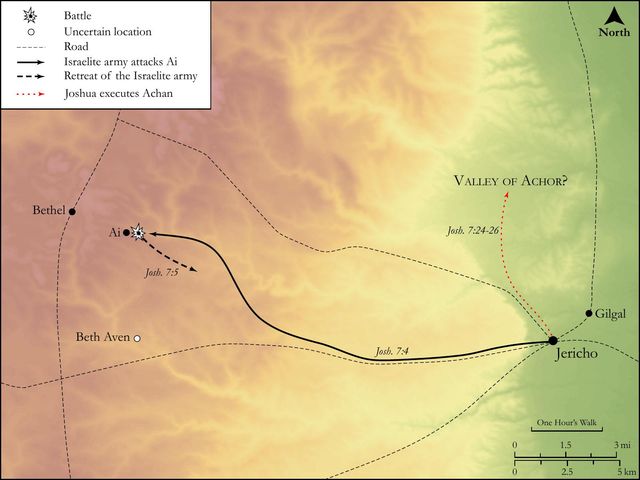
Joshua 7:7 captures a raw, desperate lament from Joshua, Israel's leader, immediately following a humiliating defeat at Ai. Overwhelmed by the unexpected setback after the miraculous victory at Jericho, Joshua pours out his heart to God, questioning the very purpose of their crossing the Jordan River. His words express profound anguish, fear that God has brought them into the Promised Land only to be destroyed by their enemies, and a wistful longing for the perceived safety and simplicity of their past on the other side of the Jordan. This moment reveals the depth of Joshua's burden for his people and his struggle to reconcile God's past faithfulness with the present disaster.
Context
ShowHideLiterary Context
This verse is situated at a critical juncture in the book of Joshua, immediately following the stunning defeat of Israel at Ai in Joshua 7:5. This defeat stands in stark contrast to the preceding miraculous victory at Jericho, where God had displayed His power mightily. The narrative flow of Joshua 7 is designed to highlight the devastating consequences of corporate sin. While Joshua is unaware of the specific transgression, the preceding verses reveal that Achan had disobeyed God's clear command regarding the devoted things from Jericho (Joshua 7:1). Joshua's lament in Joshua 7:7 is followed by God's direct response, revealing the sin and instructing Joshua on how to purify the camp (Joshua 7:10-15). This lament serves as a pivot point, moving the narrative from Israel's inexplicable defeat to the revelation and resolution of the underlying cause.
Historical & Cultural Context
The Israelites had recently crossed the Jordan River, a miraculous event that solidified their faith and God's covenant promises. They were now in Canaan, a land inhabited by various powerful city-states and tribal groups, including the Amorites, who were a dominant force in the region, known for their formidable warriors and fortified cities. For Israel, a nomadic people transitioning into a settled nation, these indigenous groups represented a significant military threat. Joshua's fear of being delivered "into the hand of the Amorites" was a legitimate concern, reflecting the real dangers of conquest in the land of Canaan. The concept of "destroying" or "utterly consuming" (חָרַם, ḥāram) the enemy was part of the divine command for holy war, but Joshua here fears that Israel themselves will be the ones utterly destroyed, reversing their divinely appointed role. His lament also implicitly references the wilderness wanderings, where the people had often longed to return to Egypt or remain in a less challenging environment.
Key Themes
ShowHideJoshua's lament in this verse powerfully contributes to several overarching themes in the book of Joshua and the broader Old Testament. Firstly, it underscores the theme of lament and honest prayer, demonstrating that even great leaders can express profound despair and question God's ways in times of crisis, a pattern seen throughout Scripture (e.g., Jeremiah 12:1, Psalm 13:1). Secondly, it highlights the severe consequences of corporate sin and disobedience. The defeat at Ai, though caused by one man's sin (Joshua 7:1), affected the entire community, illustrating the interconnectedness of the covenant people. Thirdly, the verse touches on the theme of divine sovereignty versus human responsibility. While Joshua questions God's purpose, the narrative reveals that God's plan was not flawed, but rather human disobedience had interrupted its execution. Finally, it emphasizes the vital importance of obedience for success in the conquest and for maintaining God's presence and favor among His people, a lesson that would be repeatedly taught throughout Israel's history.
Exposition and Analysis
ShowHideKey Word Analysis
ShowHideVerse Breakdown
ShowHide"And Joshua said, Alas, O Lord GOD"
This opening phrase immediately establishes the emotional intensity of the scene. Joshua, the strong and courageous leader, is revealed in a moment of utter despair. The interjection "Alas" (אָהָהּ) conveys deep sorrow and distress, a cry of anguish directed towards God. The address "O Lord GOD" (אֲדֹנָי יְהוִה) signifies an appeal to God's ultimate authority and His covenant faithfulness, making Joshua's subsequent questioning all the more striking as it comes from a place of deep respect mixed with profound confusion.
"wherefore hast thou at all brought this people over Jordan, to deliver us into the hand of the Amorites, to destroy us?"
This is a rhetorical question born of pain and bewilderment. Joshua questions God's very purpose for leading them across the miraculously parted Jordan River. He implies that God's actions have led them into a trap, delivering them not to victory but "into the hand of the Amorites" to be "destroyed." This expresses a profound crisis of faith and understanding, as the current defeat at Ai seems to contradict all of God's previous promises and mighty acts on their behalf, suggesting that God's intentions are now malevolent rather than benevolent.
"would to God we had been content, and dwelt on the other side Jordan!"
This concluding wish expresses a longing for a perceived easier past, before the challenges of the conquest. "Content" implies a desire for a simpler, less perilous existence, even if it meant remaining in the wilderness or on the eastern side of the Jordan, away from the immediate dangers of the Canaanite nations. It is a desperate wish for an alternative reality, reflecting the immense pressure Joshua feels and his temporary loss of perspective regarding God's ultimate, unfolding plan for Israel to possess the Promised Land.
Literary Devices
ShowHideJoshua 7:7 is rich with several literary devices that amplify its emotional and theological impact. The most prominent is Lament, a common form of prayer in the Old Testament where an individual or community expresses deep sorrow, distress, and often questions God in the face of suffering or injustice. Joshua's "Alas, O Lord GOD" immediately signals this genre. Closely related is the Rhetorical Question ("wherefore hast thou at all brought this people over Jordan...?"), which is not asked for information but to express a strong emotional statement of confusion, accusation, and despair. This question highlights the seeming contradiction between God's past actions and the present reality. There is also an element of Hyperbole in Joshua's statement, as he exaggerates the situation ("to destroy us") out of intense fear and emotional pain, even though God had not abandoned them but was purifying them. Finally, a subtle Irony is present: Joshua fears being delivered into the hands of the Amorites, yet the true enemy at this moment is not external but internal—the sin within the camp. This irony underscores the spiritual nature of Israel's warfare and the importance of internal purity.
Theological and Thematic Connections
ShowHideJoshua's lament in Joshua 7:7 provides a profound theological lesson on the nature of God's covenant with Israel and the consequences of sin. It demonstrates that God's favor and blessing are conditional upon obedience, even for His chosen people. The defeat at Ai was not an arbitrary act of divine abandonment, but a direct consequence of Achan's sin, which had broken the covenant and "troubled" the camp. This episode powerfully illustrates the corporate solidarity of Israel, where the sin of one can affect the entire community, highlighting the communal responsibility for holiness. Furthermore, it reveals God's commitment to His own holiness and justice, even when it involves painful discipline for His people. Despite Joshua's despair, God's response is not condemnation but a clear path to repentance and restoration, reaffirming His ultimate faithfulness to His promises, even through purification.
Reflection and Application
ShowHideJoshua's raw, honest lament in Joshua 7:7 offers a powerful model for our own spiritual lives. It reminds us that it is not only permissible but often necessary to bring our deepest fears, doubts, and despair before God. He is big enough to handle our questions, our confusion, and our raw emotions, just as He did Joshua's. This passage challenges us to look beyond immediate circumstances and seek God's perspective when facing setbacks, especially after periods of blessing. Often, difficulties are not a sign of God's abandonment but an invitation to examine our hearts, our communities, and our obedience. Just as God revealed Achan's sin to Joshua, He desires to reveal any hidden sin or disobedience that may be hindering our progress or breaking our fellowship with Him. Ultimately, this passage encourages us to trust in God's sovereign plan and His unwavering faithfulness, even when His ways are mysterious or painful, knowing that His ultimate purpose is always our purification and His glory.
Questions for Reflection
ShowHideFAQ
ShowHideWas it wrong for Joshua to question God's purpose in this way?
ShowHideJoshua's lament, while expressing profound despair and questioning God's actions, is not presented as an act of sin but as a genuine, human response to overwhelming crisis. The Bible often portrays God's servants wrestling with Him in prayer, expressing their confusion, pain, and even frustration (e.g., the Book of Job, Psalm 44, Jeremiah 20:7). God does not rebuke Joshua for expressing his raw emotions or for asking "why," but rather responds by revealing the true problem (Achan's sin) and providing a solution. This demonstrates that God welcomes our honest prayers, even our laments and doubts, as long as they are rooted in a desire to understand and ultimately obey Him. It highlights the relational aspect of faith, where dialogue, even questioning, is part of a deepening trust.
Christ-Centered Fulfillment
ShowHideJoshua's lament in Joshua 7:7 foreshadows the profound intercession and purification work of Christ. Joshua, as the leader of Israel, bears the burden of his people's sin and suffering, crying out to God on their behalf. His anguish over the corporate sin that led to defeat points to the ultimate corporate sin of humanity that led to spiritual death. Just as Joshua sought to identify and remove the "troubler" (Achan) from Israel to restore God's favor, Christ, the true and greater Joshua (Jesus, a Greek form of Joshua), became the ultimate "troubler" in the eyes of the world, taking upon Himself the sin of humanity to remove the barrier between God and His people. His cry on the cross, "My God, my God, why hast thou forsaken me?" (Matthew 27:46), echoes Joshua's lament, yet with a divine purpose—to bear the full wrath of God against sin, thereby purifying His new covenant people. Through Christ's sacrifice, the true "accursed thing" (sin) is dealt with, allowing God's people to enter into their spiritual inheritance and conquer the spiritual enemies that once held them captive, not by their own might, but by the power of the Lamb of God who takes away the sin of the world. The victory that seemed lost for Israel in Joshua's day is eternally secured for the church through Christ's perfect obedience and atoning work, leading us into the true promised land of eternal life (Hebrews 4:8-10).