


Joshua 17:2
Bible text: King James Version (1769 Blayney text) · Public domain
Bible text: King James Version with Strong's numbers · Public domain
Bible text: Berean Standard Bible · Public domain
Bible text: American Standard Version (1901) · Public domain
Bible text: World English Bible, Messianic edition · Public domain
Bible text: Geneva Bible (1599) · Public domain
Bible text: Young's Literal Translation · Public domain
- וַיְהִיVay·hiand it belongedH1961Conj-w ¦ V-Qal-ConsecImperf-3msVerb Qal Consecutive Imperfect 3rd Singular Masculineוַandיְהִיit belonged
- לִבְנֵיliv·Neito [the] descendants ofH1121Prep-l ¦ N-mpcNoun Plural Masculine Constructלִtoבְנֵי[the] descendants of
- מְנַשֶּׁהme·na·ShehManassehH4519N-proper-mNoun Proper Masculine
- הַנּוֹתָרִיםha·no·ta·Rimwho remainedH3498Art ¦ V-Niphal-Prtcpl-mpVerb Niphal Participle Plural Masculine Absoluteהַwhoנּוֹתָרִיםremained
- לְמִשְׁפְּחֹתָםle·mish·pe·cho·Tamto their clansH4940Prep-l ¦ N-fpc ¦ 3mpNoun Plural Feminine Constructלְtoמִשְׁפְּחֹתָclansםtheir
- לִבְנֵיliv·Neito [the] descendants ofH1121Prep-l ¦ N-mpcNoun Plural Masculine Constructלִtoבְנֵי[the] descendants of
- אֲבִיעֶזֶר'a·vi·'E·zerAbiezerH44N-proper-mNoun Proper Masculine
- וְלִבְנֵיve·liv·neiand to [the] descendants ofH1121Conj-w ¦ Prep-l ¦ N-mpcNoun Plural Masculine Constructוְandלִtoבְנֵי[the] descendants of
- חֵלֶקChe·lekHelekH2507N-proper-mNoun Proper Masculine
- וְלִבְנֵיve·liv·Neiand to [the] descendants ofH1121Conj-w ¦ Prep-l ¦ N-mpcNoun Plural Masculine Constructוְandלִtoבְנֵי[the] descendants of
- אַשְׂרִיאֵל'as·ri·'ElAsrielH844N-proper-mNoun Proper Masculine
- וְלִבְנֵיve·liv·neiand to [the] descendants ofH1121Conj-w ¦ Prep-l ¦ N-mpcNoun Plural Masculine Constructוְandלִtoבְנֵי[the] descendants of
- שֶׁכֶםShe·khemShechemH7928N-proper-mNoun Proper Masculine
- וְלִבְנֵיve·liv·neiand to [the] descendants ofH1121Conj-w ¦ Prep-l ¦ N-mpcNoun Plural Masculine Constructוְandלִtoבְנֵי[the] descendants of
- חֵפֶרChe·ferHepherH2660N-proper-mNoun Proper Masculine
- וְלִבְנֵיve·liv·Neiand to [the] descendants ofH1121Conj-w ¦ Prep-l ¦ N-mpcNoun Plural Masculine Constructוְandלִtoבְנֵי[the] descendants of
- שְׁמִידָעshe·mi·Da'ShemidaH8061N-proper-mNoun Proper Masculine
- אֵלֶּה'E·lehtheseH428PrtParticle Demonstrative
- בְּנֵיbe·Nei[were] [the] descendants ofH1121N-mpcNoun Plural Masculine Construct
- מְנַשֶּׁהme·na·ShehManassehH4519N-proper-mNoun Proper Masculine
- בֶּןben[the] son ofH1121N-mscNoun Singular Masculine Construct
- יוֹסֵףyo·SefJosephH3130N-proper-mNoun Proper Masculine
- הַזְּכָרִיםha·ze·kha·Rimthe malesH2145Art ¦ Adj-mpAdjective Plural Masculine Absoluteהַtheזְּכָרִיםmales
- לְמִשְׁפְּחֹתָםle·mish·pe·cho·Tamto their clansH4940Prep-l ¦ N-fpc ¦ 3mpNoun Plural Feminine Constructלְtoמִשְׁפְּחֹתָclansםtheir
English is a literal word-by-word gloss of the Hebrew, not the KJV's wording. Why?
This is the original text the KJV's translators worked from — each Hebrew word with its own literal English meaning in this verse, prepared by scholars at Tyndale House, Cambridge. The KJV translates whole sentences, not word by word, so its wording differs: one Hebrew word can become several English words, and the KJV may choose “the LORD” where the gloss reads “Yahweh”. Both are faithful — they answer different questions. For the KJV's own rendering, switch to the KJV text.
Details
See on the biblical-era maps
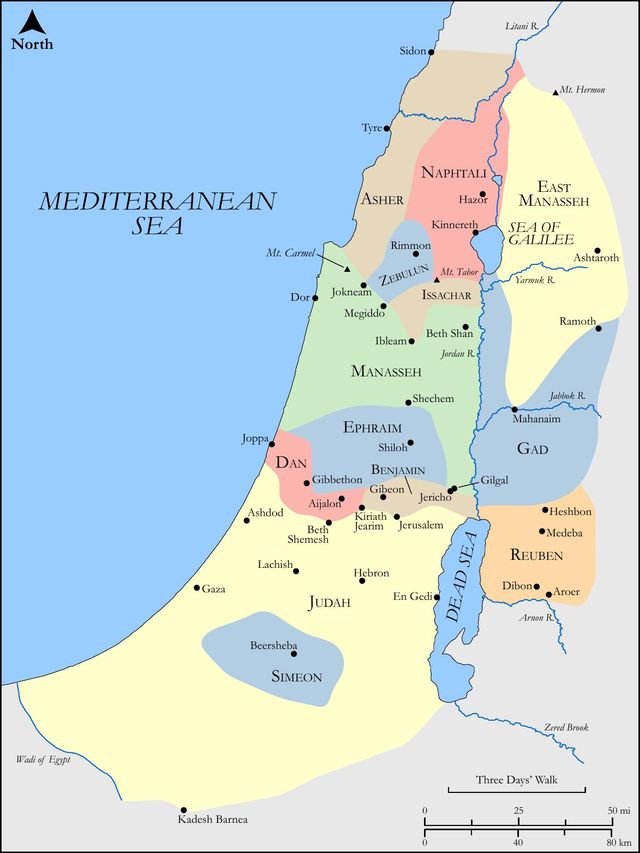
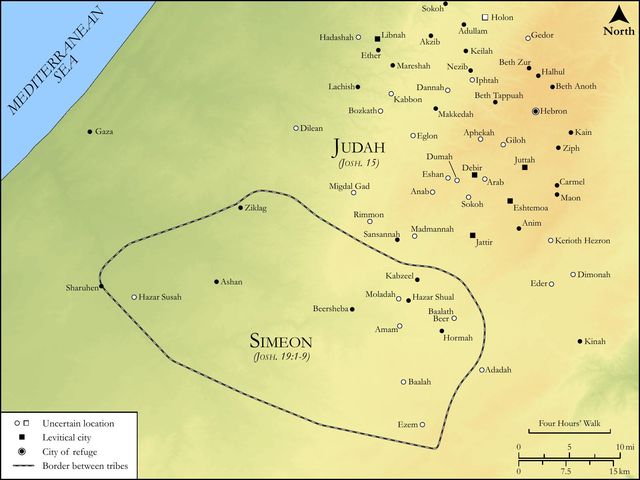
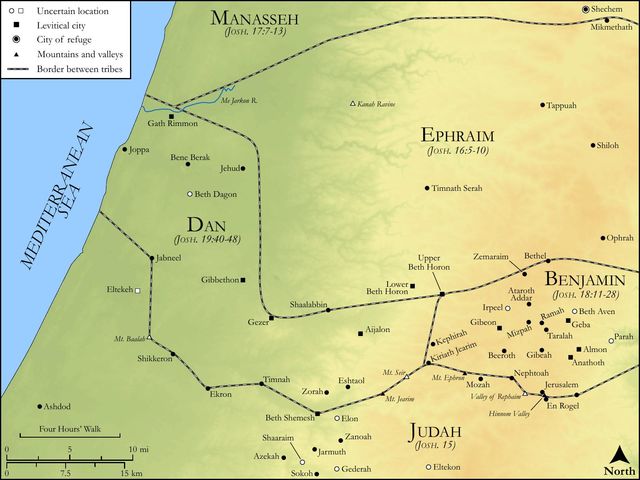
Study this verse
Public-domain commentary
Matthew Henry
From his Commentary on the Whole Bible. Henry comments on passages, not single verses — this entry covers Joshua 17:1–6.
Manasseh was itself but one half of the tribe of Joseph, and yet was divided and subdivided. 1. It was divided into two parts, one already settled on the other side Jordan, consisting of those who were the posterity of Machir, Jos 17:1. This Machir was born to Manasseh in Egypt; there he had signalized himself as a man of war, probably in the contests between the Ephraimites and the men of Gath, Ch1 7:21. His warlike disposition descended to his posterity, and therefore Moses gave them Gileaxdand Bashan, on the other side Jordan, of which before, Jos 13:31. It is here said that the lot came to Manasseh, for he was the first-born of Joseph. Bishop Patrick thinks it should be translated, though he was the first-born of Joseph, and then the meaning is plain, that the second lot was for Manasseh, because, though he was the first-born, yet Jacob had preferred Ephraim before him. See the names of those heads of the families that settled on the other side Jordan, Ch1 5:24. 2. That part on this side Jordan as subdivided into ten families, Jos 17:5. There were six sons of Gilead here named (Jos 17:2), the same that are recorded Num 26:30-32, only that he who is there called Jezeer is here called Abiezer. Five of these sons had each of them their portion; the sixth, which was Hepher, had his male line cut off in his son Zelophehad, who left daughters only, five in number, of whom we have often read, and these five had each of them a portion; though perhaps, they claiming under Hepher, all their five portions were but equal to one of the portions of the five sons. Or if Hepher had other sons besides Zelophehad, in whom the name of his family was kept up, their posterity married to the daughters of Zelophehad the elder brother, and in their right had these portions assigned them. See Num 36:12. Here is, (1.) The claim which the daughters of Zelophehad made, grounded upon the command God gave to Moses concerning them, Jos 17:4. They had themselves, when they were young, pleaded their own cause before Moses, and obtained the grant of an inheritance with their brethren, and now they would not lose the benefit of that grant for want of speaking to Joshua, but seasonably put in their demand themselves, as it should seem, and not their husbands for them. (2.) The assignment of their portions according to their claim. Joshua knew very well what God had ordered in their case, and did not object that they having not served in the wars of Canaan there was no reason why they should share in the possessions of Canaan, but readily gave them as inheritance among the brethren of their father. And now they reaped the benefit of their own pious zeal and prudent forecast in this matter. Thus those who take care in the wilderness of this world to make sure to themselves a place in the inheritance of the saints in light will certainly have the comfort of it in the other world, while those that neglect it now will lose it for ever.
Continue studying Joshua 17:2 across the web’s major study libraries — every link below opens this exact verse, chapter, or book on the destination site.
Read & Compare
 BibleGatewayThis verse in more than 200 translations and 70 languages.
 Bible.comThe YouVersion reader — hundreds of translations, reading plans, and highlights.
 ESV.orgCrossway's official English Standard Version reader.
 NET BibleThe NET translation with 60,000+ translators' notes on every rendering decision.
 STEP BibleTyndale House's free study tool — original text, vocabulary, and scholarly resources.
 BibliaLogos Bible Software's free web reader.
 USCCBThe New American Bible (Revised Edition) with the U.S. bishops' study notes.
Commentaries
 BibleHub CommentariesDozens of classic commentaries on this verse, gathered on one page.
 StudyLightMore than 100 commentary sets — the largest collection on the web.
 BibleRefPlain-English commentary on what this verse means, verse by verse.
 Enduring WordDavid Guzik's free commentary on this chapter, widely used by Bible teachers.
 Bible Study ToolsVerse commentary alongside Greek and Hebrew study aids.
Original Language & Research
- BibleHub InterlinearThe verse word by word — original language, transliteration, and English.
- BibleHub LexiconEvery word's original-language definition and Strong's entry.
 Blue Letter BibleDeep-study tools — Strong's numbers, concordance, and word studies.
 SefariaThe Hebrew text with Rashi and centuries of Jewish commentary.
Sermons, Hymns & Audio


TrulyRandomVerse is not affiliated with these sites and doesn’t control their content. They’re linked because they’re genuinely useful.
Summary
Joshua 17:2 meticulously details the allocation of land inheritance to the western half-tribe of Manasseh, precisely listing the six major male clans who received their portions in the Promised Land. This verse underscores the systematic and family-oriented method of land distribution, highlighting God's unwavering faithfulness in fulfilling His ancient covenant promises to Israel by providing each ancestral unit with its designated territory in Canaan, thereby establishing their identity and future within the land.
Context
ShowHideLiterary Context
Joshua 17:2 is strategically placed within the extensive narrative of the division of the Promised Land among the Israelite tribes, a process that spans from Joshua 13 to Joshua 21. Specifically, this verse follows the description of Ephraim's inheritance and serves as the foundational enumeration for Manasseh's portion west of the Jordan River. While the eastern half of Manasseh had already received its land, as noted in Joshua 13:29-31, chapter 17 focuses on the western half-tribe. This verse sets the stage for the subsequent, unique account of the daughters of Zelophehad (Joshua 17:3-6), whose petition for inheritance challenged the patriarchal norm, further emphasizing the meticulous and just nature of the land distribution. Thus, Joshua 17:2 is crucial for establishing the male lines through which the western Manassite territory was initially apportioned.
Historical & Cultural Context
The division of land in Canaan was a pivotal moment in ancient Israelite history, marking their transition from a nomadic, conquering force to a settled, agrarian society. Land was not merely an economic asset but held profound theological significance as the tangible fulfillment of God's covenant with Abraham (Genesis 12:7). The distribution "by their families" reflects the deeply entrenched patriarchal and tribal structure of Israelite society, where lineage was paramount for identity, social standing, and the transmission of inheritance. The use of "lot" (implied in the KJV's bracketed text and explicitly stated elsewhere, such as Joshua 18:10) indicated divine guidance in the allocation, ensuring that the distribution was perceived as God's sovereign will rather than human favoritism or power dynamics. This meticulous process aimed to establish stable tribal and clan boundaries, laying the groundwork for the nation's long-term social, economic, and religious stability.
Key Themes
ShowHideThe detailed enumeration of clans and their allotted portions in Joshua 17 contributes to several key themes within the book of Joshua and the broader biblical narrative. Firstly, it powerfully demonstrates the Fulfillment of God's Promise to His people. The precise and systematic division of the land, down to individual family units, serves as irrefutable evidence of God's faithfulness in bringing to pass the ancient covenant concerning the land of Canaan. Every family received its rightful inheritance, proving God's meticulous care and reliability. Secondly, the phrase "by their families" underscores the theme of Divine Order and Equity in God's administration; the land was not haphazardly distributed but systematically and justly apportioned to each ancestral line, establishing stability and preventing future disputes. This systematic approach mirrors the principles of the census records in Numbers 26, which provided the basis for this distribution. Thirdly, the focus on specific "male children of Manasseh" highlights the Importance of Family Lineage and Inheritance in Israelite society, where identity, social standing, and economic viability were inextricably linked to one's inherited land and ancestral ties, emphasizing the continuity of God's covenant through generations.
Exposition and Analysis
ShowHideKey Word Analysis
ShowHideTranslated as "families" or "clans," this term refers to the extended family units that formed the subdivisions of a tribe. Its repetition in this verse emphasizes that the land was not merely given to the tribe of Manasseh as a whole, but precisely divided among its constituent ancestral groups. This ensured that the inheritance would be passed down through specific lineages, maintaining the integrity of each family's claim and heritage within the larger tribal framework. The concept of "family" here is broader than the nuclear family, encompassing a patriarchal lineage.
Translated as "children" or "sons," this word denotes a male offspring, but in a wider sense can refer to descendants, members of a group, or even qualities. In this context, it specifically refers to the male descendants who were the heads of the six clans listed. The repeated use of "children of" before each clan name (e.g., "children of Abiezer") underscores the patriarchal nature of Israelite society, where land rights and identity were primarily traced through the male line, a principle that makes the subsequent account of Zelophehad's daughters (Joshua 17:3-6) all the more significant.
Translated as "male," this word specifically designates the male sex, emphasizing that the inheritance was primarily distributed through the male lines of Manasseh. As the "most noteworthy sex" in ancient Israelite patriarchal society, males were typically the recipients of land inheritance, ensuring the continuity of family names and property. This term reinforces the societal structure that governed the land distribution, highlighting the specific individuals through whom the tribal portions were secured.
Verse Breakdown
ShowHide"There was also [a lot] for the rest of the children of Manasseh by their families;"
This opening clause establishes the context for the western half-tribe of Manasseh, distinguishing their inheritance from that of their tribal brethren who had already settled east of the Jordan. The KJV's bracketed "[a lot]" correctly infers the method of distribution, which, throughout the book of Joshua, was determined by casting lots, signifying divine direction and impartiality in the allocation of territory. The phrase "by their families" immediately establishes the fundamental unit of this distribution: not individuals or the tribe as a whole, but the recognized ancestral clans, highlighting the meticulous and lineage-based nature of the inheritance.
"for the children of Abiezer, and for the children of Helek, and for the children of Asriel, and for the children of Shechem, and for the children of Hepher, and for the children of Shemida:"
This is a precise enumeration of the six major clans of Manasseh that were to receive land in the western territory. These names correspond to the descendants of Manasseh's son Machir and grandson Gilead, as detailed in the census of Numbers 26:29-34. The specific listing of each clan underscores the meticulous nature of the land division and God's attention to detail in fulfilling His promises to each family unit within the larger tribal structure, ensuring that every designated heir received their portion.
"these [were] the male children of Manasseh the son of Joseph by their families."
This concluding statement serves as a summary and reiteration, reinforcing that the preceding list comprises the primary male lines of Manasseh through whom the inheritance was secured. It emphasizes the patriarchal basis of the land tenure system and the importance of family and lineage in the Israelite understanding of identity and possession. The reference to Manasseh as "the son of Joseph" further connects this specific inheritance back to the broader patriarchal narratives and God's promises to the descendants of Jacob, linking the present fulfillment to the foundational covenants.
Literary Devices
ShowHideJoshua 17:2 employs several literary devices to convey its message with clarity, emphasis, and theological weight. The most prominent is Enumeration or Cataloging, evident in the precise listing of the six distinct clans: Abiezer, Helek, Asriel, Shechem, Hepher, and Shemida. This detailed roster serves to underscore the meticulousness and divine order of the land distribution, leaving no doubt as to who received their inheritance and highlighting the comprehensive nature of God's provision. Furthermore, Repetition is effectively used with the phrase "by their families," which appears twice in the verse. This repetition serves to highlight the fundamental principle governing the land allocation: it was not a general tribal grant but a specific, lineage-based division, ensuring equity and adherence to ancestral rights, reinforcing the importance of family units. Finally, the overall Precision and Specificity of the language, particularly in naming each clan and identifying them as "male children," functions as a literary device to convey the certainty and fulfillment of God's promises, demonstrating that every detail of His covenant with Israel was being faithfully executed.
Theological and Thematic Connections
ShowHideJoshua 17:2, with its meticulous detailing of tribal inheritance, serves as a powerful testament to God's character and His unwavering commitment to His covenant promises. The precise allocation of land to each family unit of Manasseh reflects God's divine order, justice, and faithfulness, demonstrating that He is a God who remembers His word and meticulously fulfills every detail. This physical inheritance in the Promised Land, secured through divine guidance (the lot) and human administration, foreshadows a greater spiritual inheritance. Just as each clan had a specific, divinely appointed place and portion, so too does God have a unique plan and spiritual inheritance for each believer, ensuring our place within His eternal kingdom and demonstrating His sovereign care for His people across generations.
Reflection and Application
ShowHideThe ancient account of land distribution in Joshua 17:2, while seemingly mundane, offers profound principles for contemporary believers. It reminds us of God's meticulous care, His unwavering faithfulness, and His commitment to fulfilling His promises to His people. Just as each family of Manasseh had a specific, divinely appointed place and portion in the Promised Land, so too does God have a unique plan and spiritual inheritance for each believer today. We are called into a spiritual family, the body of Christ, and each member has a distinct role, purpose, and spiritual endowment within God's kingdom. This verse encourages us to trust in God's ordered provision, to find our identity not in fleeting earthly possessions but in our eternal spiritual heritage in Christ, and to value the unique place He has prepared for us. It invites us to rest in the assurance that the God who meticulously divided land for His ancient people is the same God who sovereignly orchestrates the details of our lives, ensuring our ultimate spiritual inheritance and guiding us to our eternal home.
Questions for Reflection
ShowHideFAQ
ShowHideWhy is the distribution "by families" so important?
ShowHideThe distribution "by families" (clans) was crucial for several reasons. Firstly, it ensured equity and fairness, as the land was apportioned based on the size and needs of each established ancestral unit, preventing disputes and ensuring stability. Secondly, it preserved the lineage and tribal identity, reinforcing the patriarchal structure of Israelite society where identity and inheritance were inextricably linked to one's family line. Thirdly, it reflected God's ordered nature and His covenant faithfulness, as the land was promised to specific descendants of Abraham, Isaac, and Jacob. This method ensured that God's promises were fulfilled to the specific, identifiable groups within Israel, establishing their permanent claim to the land. This emphasis on family units also sets the stage for unique cases, such as the daughters of Zelophehad in Joshua 17:3-6, which further highlights the divine commitment to justice within the established family structures.
What does "the rest of the children of Manasseh" mean?
ShowHide"The rest of the children of Manasseh" refers specifically to the western half-tribe of Manasseh. The tribe of Manasseh, along with Reuben and Gad, had a unique arrangement where a significant portion of their tribe had already settled on the east side of the Jordan River before the main conquest of Canaan. This earlier allocation is detailed in Joshua 13:29-31. Therefore, Joshua 17:2 focuses on the remaining clans of Manasseh who were to receive their inheritance on the west side of the Jordan, within the main body of the Promised Land, completing the tribal land distribution.
Are these the only clans of Manasseh?
ShowHideThe six clans listed in Joshua 17:2 (Abiezer, Helek, Asriel, Shechem, Hepher, and Shemida) are the primary male clans recognized for receiving inheritance in the western territory. These clans are descendants of Machir, Manasseh's only son, and Machir's son Gilead. A more comprehensive list of Manasseh's clans, including Machir and Gilead, is found in the census records of Numbers 26:29-34. The specific listing here highlights those prominent lines that were directly allocated land in the west, serving as the foundational units for the distribution of their tribal portion.
Christ-Centered Fulfillment
ShowHideThe meticulous land distribution to the clans of Manasseh in Joshua 17:2, a profound testament to God's faithfulness in fulfilling His ancient promises, finds its ultimate and most glorious fulfillment in Jesus Christ. The physical inheritance of land in Canaan, though significant as a tangible sign of God's covenant, was but a shadow of the spiritual inheritance secured for believers in the New Covenant. Just as the sons of Manasseh received their designated "lot" by God's decree, so too are believers, through faith in Christ, granted an imperishable, undefiled, and unfading inheritance reserved in heaven (1 Peter 1:4). Jesus is the ultimate "Promised Land," the one in whom all of God's promises find their "Yes" and "Amen" (2 Corinthians 1:20). Through His atoning sacrifice, He has become the mediator of a new covenant, enabling us to receive the promised eternal inheritance (Hebrews 9:15). Our identity and belonging are no longer defined by earthly lineage or territorial claims, but by our adoption as sons and daughters in Christ (Galatians 3:29), making us co-heirs with Him (Romans 8:17). The meticulous care God showed in allocating land to each family of Manasseh pales in comparison to the divine wisdom and boundless love with which He has prepared an eternal dwelling and a spiritual inheritance for every believer, ensuring our place in His kingdom through the redemptive work of the Lamb of God, who makes all things new (Revelation 21:5-7).