


Joshua 17:5
- וַיִּפְּלוּvai·yi·pe·Luand they fellH5307Conj-w ¦ V-Qal-ConsecImperf-3mpVerb Qal Consecutive Imperfect 3rd Plural Masculineוַandיִּפְּלוּthey fell
- חַבְלֵיchav·lei[the] allotted portions ofH2256N-cpcNoun Plural common gender Construct
- מְנַשֶּׁהme·na·ShehManassehH4519N-proper-mNoun Proper Masculine
- עֲשָׂרָה'a·sa·RahtenH6235N-fsNoun Singular Feminine Absolute
- לְבַדle·Vad<to> apartH905Prep-l ¦ N-mscNoun Singular Masculine Constructלְ<to>בַדapart
- מֵאֶרֶץme·'E·retzfrom [the] land ofH776Prep-m ¦ N-fscNoun Singular Feminine Constructמֵfromאֶרֶץ[the] land of
- הַגִּלְעָדha·gil·'Ad<the> GileadH1568Art ¦ N-properNoun Proper Locationהַ<the>גִּלְעָדGilead
- וְהַבָּשָׁןve·ha·ba·Shanand <the> BashanH1316Conj-w ¦ Art ¦ N-properNoun Proper Locationוְandהַ<the>בָּשָׁןBashan
- אֲשֶׁר'a·SherwhichH834RelParticle Relative
- מֵעֵבֶרme·'E·ver[is] from [the] other sideH5676Prep-m ¦ N-mscNoun Singular Masculine Constructמֵ[is] fromעֵבֶר[the] other side
- לַיַּרְדֵּןlai·yar·Denof the JordanH3383Prep-l ¦ N-properNoun Proper Locationלַof theיַּרְדֵּןJordan
English is a literal word-by-word gloss of the Hebrew, not the KJV's wording. Why?
This is the original text the KJV's translators worked from — each Hebrew word with its own literal English meaning in this verse, prepared by scholars at Tyndale House, Cambridge. The KJV translates whole sentences, not word by word, so its wording differs: one Hebrew word can become several English words, and the KJV may choose “the LORD” where the gloss reads “Yahweh”. Both are faithful — they answer different questions. For the KJV's own rendering, switch to the KJV text.
Details
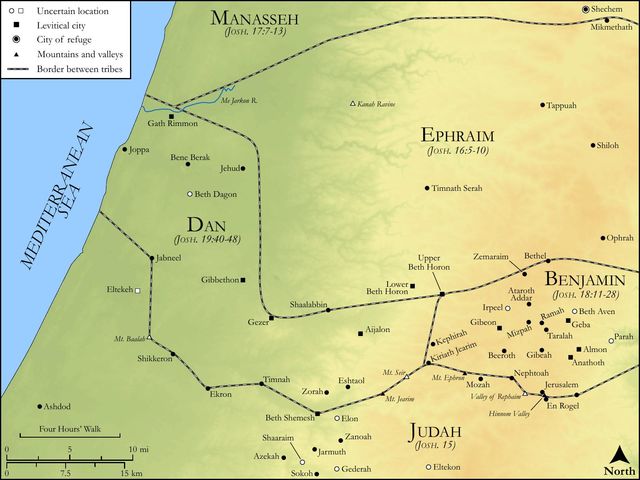
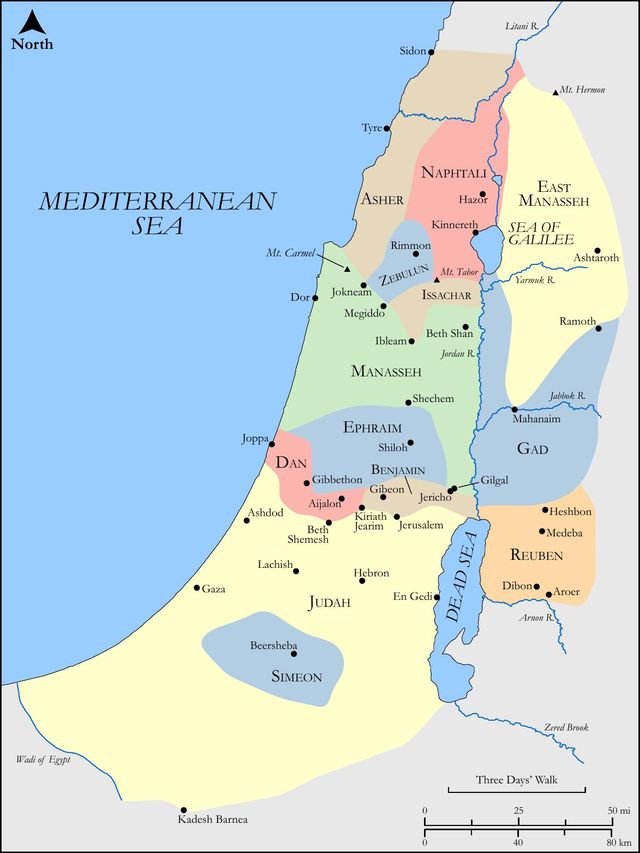
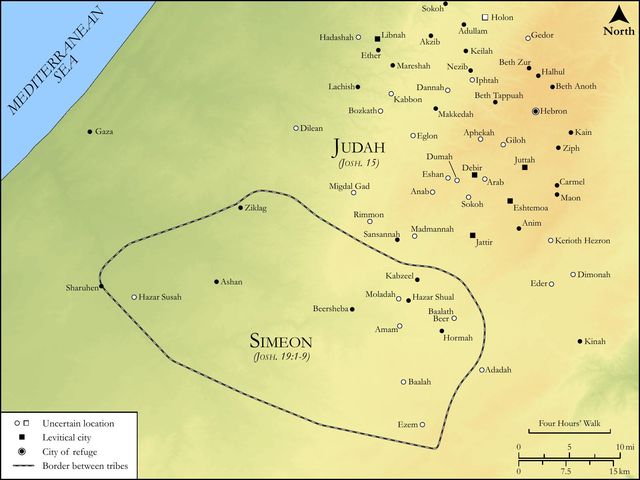
See on the biblical-era map
Study this verse
Public-domain commentary
Matthew Henry
From his Commentary on the Whole Bible. Henry comments on passages, not single verses — this entry covers Joshua 17:1–6.
Manasseh was itself but one half of the tribe of Joseph, and yet was divided and subdivided. 1. It was divided into two parts, one already settled on the other side Jordan, consisting of those who were the posterity of Machir, Jos 17:1. This Machir was born to Manasseh in Egypt; there he had signalized himself as a man of war, probably in the contests between the Ephraimites and the men of Gath, Ch1 7:21. His warlike disposition descended to his posterity, and therefore Moses gave them Gileaxdand Bashan, on the other side Jordan, of which before, Jos 13:31. It is here said that the lot came to Manasseh, for he was the first-born of Joseph. Bishop Patrick thinks it should be translated, though he was the first-born of Joseph, and then the meaning is plain, that the second lot was for Manasseh, because, though he was the first-born, yet Jacob had preferred Ephraim before him. See the names of those heads of the families that settled on the other side Jordan, Ch1 5:24. 2. That part on this side Jordan as subdivided into ten families, Jos 17:5. There were six sons of Gilead here named (Jos 17:2), the same that are recorded Num 26:30-32, only that he who is there called Jezeer is here called Abiezer. Five of these sons had each of them their portion; the sixth, which was Hepher, had his male line cut off in his son Zelophehad, who left daughters only, five in number, of whom we have often read, and these five had each of them a portion; though perhaps, they claiming under Hepher, all their five portions were but equal to one of the portions of the five sons. Or if Hepher had other sons besides Zelophehad, in whom the name of his family was kept up, their posterity married to the daughters of Zelophehad the elder brother, and in their right had these portions assigned them. See Num 36:12. Here is, (1.) The claim which the daughters of Zelophehad made, grounded upon the command God gave to Moses concerning them, Jos 17:4. They had themselves, when they were young, pleaded their own cause before Moses, and obtained the grant of an inheritance with their brethren, and now they would not lose the benefit of that grant for want of speaking to Joshua, but seasonably put in their demand themselves, as it should seem, and not their husbands for them. (2.) The assignment of their portions according to their claim. Joshua knew very well what God had ordered in their case, and did not object that they having not served in the wars of Canaan there was no reason why they should share in the possessions of Canaan, but readily gave them as inheritance among the brethren of their father. And now they reaped the benefit of their own pious zeal and prudent forecast in this matter. Thus those who take care in the wilderness of this world to make sure to themselves a place in the inheritance of the saints in light will certainly have the comfort of it in the other world, while those that neglect it now will lose it for ever.
Continue studying Joshua 17:5 across the web’s major study libraries — every link below opens this exact verse, chapter, or book on the destination site.
Read & Compare
 BibleGatewayThis verse in more than 200 translations and 70 languages.
 Bible.comThe YouVersion reader — hundreds of translations, reading plans, and highlights.
 ESV.orgCrossway's official English Standard Version reader.
 NET BibleThe NET translation with 60,000+ translators' notes on every rendering decision.
 STEP BibleTyndale House's free study tool — original text, vocabulary, and scholarly resources.
 BibliaLogos Bible Software's free web reader.
 USCCBThe New American Bible (Revised Edition) with the U.S. bishops' study notes.
Commentaries
 BibleHub CommentariesDozens of classic commentaries on this verse, gathered on one page.
 StudyLightMore than 100 commentary sets — the largest collection on the web.
 BibleRefPlain-English commentary on what this verse means, verse by verse.
 Enduring WordDavid Guzik's free commentary on this chapter, widely used by Bible teachers.
 Bible Study ToolsVerse commentary alongside Greek and Hebrew study aids.
Original Language & Research
- BibleHub InterlinearThe verse word by word — original language, transliteration, and English.
- BibleHub LexiconEvery word's original-language definition and Strong's entry.
 Blue Letter BibleDeep-study tools — Strong's numbers, concordance, and word studies.
 SefariaThe Hebrew text with Rashi and centuries of Jewish commentary.
Sermons, Hymns & Audio


TrulyRandomVerse is not affiliated with these sites and doesn’t control their content. They’re linked because they’re genuinely useful.
Summary
Joshua 17:5 precisely details the extensive land inheritance granted to the tribe of Manasseh, specifying that ten distinct portions were allotted to them on the west side of the Jordan River, in addition to the significant territories of Gilead and Bashan that half of the tribe had already received on the east side. This verse underscores the meticulous fulfillment of God's promises regarding the division of the Promised Land and highlights Manasseh's unique, bifurcated territorial claim as a large and strategically important tribe within Israel.
Context
ShowHideLiterary Context
Joshua 17:5 is situated within the latter half of the Book of Joshua, specifically chapters 13-19, which meticulously document the division of the land of Canaan among the Israelite tribes following the successful conquest. This section transitions from military campaigns to the administrative and theological implications of settling the Promised Land, emphasizing the fulfillment of God's covenant promises. Chapter 17 focuses entirely on the inheritance of the tribe of Manasseh, a complex allocation due to their large size and the prior settlement of half the tribe east of the Jordan. Immediately preceding this verse, Joshua 17:1-4 outlines the initial allocation to Manasseh's families and, crucially, records the petition of the daughters of Zelophehad, ensuring their right to inherit land among their father's relatives, which directly impacts the number of "portions" mentioned in verse 5. The subsequent verses, Joshua 17:6-13 delineate the specific boundaries and challenges faced by Manasseh in fully possessing their allotted territory, underscoring the ongoing process of occupation even after the initial division.
Historical & Cultural Context
The division of land was a monumental undertaking, reflecting ancient Near Eastern practices of land tenure and tribal inheritance, yet uniquely guided by divine instruction through the casting of lots. The land west of the Jordan River, Canaan proper, was the primary focus of God's promise to Abraham's descendants. However, the tribes of Reuben, Gad, and half of Manasseh had requested and received land east of the Jordan (Transjordan) earlier, as documented in Numbers 32 and reaffirmed in Joshua 13. This prior arrangement created the unique "dual" inheritance for Manasseh. Culturally, land ownership was foundational to Israelite identity, economic stability, and adherence to the covenant, ensuring tribal continuity, providing a base for agricultural sustenance, and preventing the accumulation of land by a few, thereby promoting fairness as mandated by Mosaic Law. The geographical distinction between the fertile plains of Gilead and Bashan (east) and the more varied terrain of central Canaan (west) also played a role in the strategic importance and perceived value of these territories.
Key Themes
ShowHideJoshua 17:5 contributes significantly to several overarching themes within the Book of Joshua and the broader Pentateuch. Foremost is the theme of Divine Faithfulness and Fulfillment, demonstrating God's unwavering commitment to His covenant promises, particularly the grant of land to Israel, as first articulated in Genesis 12:7. The precise and detailed allocation of land, including Manasseh's "ten portions," underscores God's meticulous care in fulfilling His word, proving His reliability in establishing His people in their promised inheritance. Another crucial theme is Tribal Identity and Inheritance. Land was not merely property; it was the physical embodiment of a tribe's identity, its place within the covenant community, and its source of livelihood. Manasseh's unique dual inheritance highlights the complexities of maintaining tribal cohesion across a significant geographical divide, yet also their strength and influence. Lastly, the verse subtly touches upon the theme of Justice and Equity in Distribution, particularly when read in light of the daughters of Zelophehad's petition in Joshua 17:3-4, ensuring that even within the patriarchal system, the rights of women to inherit were upheld, contributing to the "ten portions" that fell to Manasseh and demonstrating the flexibility and fairness of God's law.
Exposition and Analysis
ShowHideKey Word Analysis
ShowHideThis verb (H5307) means "to fall," often in the context of lots being cast. In the ancient world, casting lots was a common method for determining outcomes, believed to be divinely guided. Here, it signifies that the allocation of land to Manasseh was not arbitrary but rather the result of a process believed to be directed by God, ensuring a fair and divinely appointed distribution of territory. This emphasizes the divine sovereignty over the land division.
This term (H2256) literally means "a rope" or "measuring line." By implication, it refers to a "district" or "inheritance" that has been measured out. The use of "ten portions" (עֲשָׂרָה חֲבָלִים, ‘asarah chavalim) explicitly refers to ten distinct, measured land parcels. This highlights the precise and meticulous nature of the land distribution, not just a general area, but specific, demarcated sections, reflecting the detailed accounting for each family unit within the half-tribe of Manasseh, including the five daughters of Zelophehad who received their own measured shares.
This proper noun (H4519) refers to the tribe descended from Manasseh, Joseph's elder son. The name itself means "causing to forget," as named by Joseph in Genesis 41:51. The tribe of Manasseh was uniquely large, leading to its division into two half-tribes, one settling east of the Jordan and the other west. Its prominence in this verse underscores its significant size and the complexity of its inheritance, which spanned both sides of the river, making it one of the most extensive tribal territories.
Verse Breakdown
ShowHide"And there fell ten portions to Manasseh"
This clause describes the outcome of the land allocation process for the half-tribe of Manasseh settling on the west side of the Jordan. The phrase "there fell" implies the casting of lots, a divinely guided method used to determine each tribe's inheritance, as commanded by God (Numbers 26:55-56). The "ten portions" specifically account for the five families descended from Manasseh's son Machir, and then the five daughters of Zelophehad (Joshua 17:2-4), who, through their petition, secured their own distinct inheritances, thereby increasing the number of familial "portions" within the half-tribe. This demonstrates the detailed and equitable nature of the land distribution, reflecting both divine decree and human petition.
"beside the land of Gilead and Bashan"
This crucial phrase clarifies that the "ten portions" allocated in Canaan proper (west of the Jordan) are additional to the territory already possessed by the other half of the tribe of Manasseh. The regions of Gilead and Bashan, located east of the Jordan River, had been conquered and distributed earlier (Numbers 32; Joshua 13:29-31). This underscores Manasseh's unique status as a tribe with a bifurcated inheritance, spanning both sides of the Jordan, reflecting their numerical strength and strategic importance in the newly settled land.
"which [were] on the other side Jordan;"
This final phrase explicitly reiterates the geographical distinction, reinforcing that Gilead and Bashan are located "across the Jordan" from the perspective of the main Israelite camp and the newly distributed land in western Canaan. It serves as a clear geographical marker, preventing any confusion regarding the extent of Manasseh's total inheritance and emphasizing the two distinct geographical components of their tribal territory. This precise demarcation highlights the fulfillment of God's promise to settle His people in the land He had designated for them.
Literary Devices
ShowHideThe verse employs Enumeration and Geographical Specificity to convey precise information about the land distribution. The explicit mention of "ten portions" provides a specific numerical detail, highlighting the meticulous and orderly nature of the inheritance process, which was guided by divine decree and human petition (as seen with Zelophehad's daughters). This numerical detail draws attention to Manasseh's unique situation compared to more general descriptions of other tribal allocations. The use of Geographical Specificity by naming "Gilead and Bashan" and clarifying "on the other side Jordan" serves to orient the reader, distinguishing Manasseh's Transjordan inheritance from their newly acquired territory in Canaan proper. This precision reinforces the historical accuracy and administrative detail of the biblical narrative, underscoring the fulfillment of God's promises in tangible, verifiable ways. The verse also implicitly uses Contrast by juxtaposing the "ten portions" (west) with the "land of Gilead and Bashan" (east), emphasizing the dual nature of Manasseh's extensive and significant inheritance.
Theological and Thematic Connections
ShowHideJoshua 17:5, while seemingly a dry administrative detail, profoundly illustrates God's meticulous faithfulness in fulfilling His ancient covenant promises to Abraham and his descendants. The precise allocation of land, down to "ten portions" for a single half-tribe, demonstrates divine order and commitment to every detail of His word. It underscores that God's promises are not vague assurances but tangible realities, realized with precision and justice, even accommodating specific petitions like those of Zelophehad's daughters. This divine care in distributing physical land foreshadows God's careful provision for His people in all aspects of life, ensuring each receives their rightful inheritance and place within His kingdom. It speaks to a God who is intimately involved in the details of His people's lives and who meticulously brings His redemptive plan to fruition.
Reflection and Application
ShowHideThe meticulous detail of Joshua 17:5, outlining the precise "ten portions" for Manasseh in addition to their Transjordan inheritance, invites us to reflect on the nature of God's providence and faithfulness. Just as God painstakingly divided the land for each tribe, ensuring every family received its due, so too does He orchestrate the details of our lives. This verse reminds us that our "inheritance" – whether spiritual gifts, opportunities, relationships, or even the circumstances of our birth – is not random but part of a divine design. It encourages us to trust in God's sovereign plan, knowing that He is a God of order, justice, and meticulous care, who fulfills His promises with precision. We are called to steward the "portions" He has given us, recognizing them as gifts from His hand, and to live faithfully within the boundaries and blessings He has established for us, just as the tribes were to inhabit and cultivate their allotted lands. This passage encourages us to find peace in God's perfect allocation for our lives, knowing that He provides exactly what we need for His purposes.
Questions for Reflection
ShowHideFAQ
ShowHideWhy did Manasseh receive "ten portions" when other tribes received a single allocation?
ShowHideThe "ten portions" allocated to the half-tribe of Manasseh on the west side of the Jordan reflect a unique situation arising from their tribal structure and a specific legal precedent. Manasseh was a particularly large tribe, and while half of it had already settled east of the Jordan (in Gilead and Bashan), the remaining half on the west side was still substantial. The "ten portions" specifically account for the five sons of Manasseh's son Machir (Joshua 17:2). Crucially, this number was augmented by the successful petition of the five daughters of Zelophehad (Joshua 17:3-4), who, having no brothers, sought and were granted their own inheritance among their father's relatives. This divine ruling, initially given in Numbers 27:1-11, ensured that their family line would not lose its tribal inheritance. Thus, the "ten portions" represent the five original male lines (through Machir) plus the five female lines (Zelophehad's daughters), totaling ten distinct family shares within the western half-tribe of Manasseh. This highlights God's meticulous justice and the flexibility within the Mosaic Law to ensure equitable distribution of the Promised Land, even in complex family situations.
Christ-Centered Fulfillment
ShowHideWhile Joshua 17:5 details a specific land distribution in the Old Testament, its underlying themes find profound Christ-centered fulfillment. The meticulous division of the land by lot, ensuring each tribe received its designated "portion," foreshadows the spiritual inheritance secured for believers in Christ. Just as Israel received a physical inheritance in Canaan, believers receive a spiritual inheritance in Christ, described as "an inheritance that is imperishable, undefiled, and unfading, kept in heaven for you" (1 Peter 1:4). The land was a promise, and Christ is the ultimate fulfillment of all God's promises, the true "Promised Land" in whom all spiritual blessings are found (2 Corinthians 1:20). Manasseh's unique dual inheritance, spanning two territories, can be seen as a faint echo of the believer's dual citizenship – in this world but not of it, with our true citizenship being in heaven (Philippians 3:20). Ultimately, the meticulous care God took in dividing the land for His people in Joshua points to the even greater, more precise, and eternally secure inheritance that Christ has purchased for us through His sacrifice, establishing us as co-heirs with Him in His glorious kingdom (Romans 8:17) and guaranteeing our place in the new heavens and new earth (Revelation 21:1-7).