


Judges 8:2
Bible text: King James Version (1769 Blayney text) · Public domain
Bible text: Berean Standard Bible · Public domain
Bible text: American Standard Version (1901) · Public domain
Bible text: World English Bible, Messianic edition · Public domain
Bible text: Geneva Bible (1599) · Public domain
Bible text: Young's Literal Translation · Public domain
- וַיֹּאמֶרvai·Yo·merand he saidH559Conj-w ¦ V-Qal-ConsecImperf-3msVerb Qal Consecutive Imperfect 3rd Singular Masculineוַandיֹּאמֶרhe said
- אֲלֵיהֶם'a·lei·Hemto themH413Prep ¦ 3mpPreposition Definiteאֲלֵיtoהֶםthem
- מֶהmehwhat?H4100InterrogPronoun Interrogative
- עָשִׂיתִי'a·Si·tihave I doneH6213V-Qal-Perf-1csVerb Qal Perfect 1st Singular common gender
- עַתָּה'a·TahnowH6258AdvAdverb
- כָּכֶםka·Khemlike <the> youPrep-k ¦ 2mpSuffix Personal 2nd Plural Masculineכָּlike <the>כֶםyou
- הֲלוֹאha·Lo'¿ notH3808Interrog ¦ NegParticle Negativeהֲ¿לוֹאnot
- טוֹבTovgoodH2896Adj-msAdjective Singular Masculine Absolute
- עֹלְלוֹתo·le·Lot[are] [the] gleanings ofH5955N-fpcNoun Plural Feminine Construct
- אֶפְרַיִם'ef·Ra·yimEphraimH669N-proper-mNoun Proper Masculine
- מִבְצִירmiv·Tzirmore than [the] grape harvest ofH1210Prep-m ¦ N-mscNoun Singular Masculine Constructמִmore thanבְצִיר[the] grape harvest of
- אֲבִיעֶזֶר'a·vi·'E·zerAbiezerH44N-proper-mNoun Proper Masculine
English is a literal word-by-word gloss of the Hebrew, not the KJV's wording. Why?
This is the original text the KJV's translators worked from — each Hebrew word with its own literal English meaning in this verse, prepared by scholars at Tyndale House, Cambridge. The KJV translates whole sentences, not word by word, so its wording differs: one Hebrew word can become several English words, and the KJV may choose “the LORD” where the gloss reads “Yahweh”. Both are faithful — they answer different questions. For the KJV's own rendering, switch to the KJV text.
Details
See on the biblical-era maps
Study this verse
Public-domain commentary
Matthew Henry
From his Commentary on the Whole Bible. Henry comments on passages, not single verses — this entry covers Judges 8:1–3. His three-level outline is real structure in the source text, so it is rendered as structure.
No sooner were the Midianites, the common enemy, subdued, than, through the violence of some hot spirits, the children of Israel were ready to quarrel among themselves; an unhappy spark was struck, which, if Gideon had not with a great deal of wisdom and grace extinguished immediately, might have broken out into a flame of fatal consequence. The Ephraimites, when they brought the heads of Oreb and Zeeb to Gideon as general, instead of congratulating him upon his successes and addressing him with thanks for his great services, as they ought to have done, picked a quarrel with him and grew very hot upon it.
I.Their accusation was very peevish and unreasonable:
Why didst thou not call us when thou wentest to fight with the Midianites? Jdg 8:1. Ephraim was brother to Manasseh, Gideon's tribe, and had the pre-eminence in Jacob's blessing and in Moses's, and therefore was very jealous of Manasseh, lest that tribe should at any time eclipse the honour of theirs. Hence we find Manasseh against Ephraim and Ephraim against Manasseh, Isa 9:21. A brother offended is harder to be won than a strong city, and their contentions are as the bars of a castle, Pro 18:19. But how unjust was their quarrel with Gideon! They were angry that he did not send for them to begin the attack upon Midian, as well as to follow the blow. Why were they not called to lead the van? The post of honour, they thought, belonged to them. But,
1.Gideon was called of God, and must act as he directed; he neither took the honour to himself nor did he himself dispose of honours, but left it to God to do all. So that the Ephraimites, in this quarrel, reflected upon the divine conduct; and what was Gideon that they murmured against him?
2.Why did not the Ephraimites offer themselves willingly to the service? They knew the enemy was in their country, and had heard of the forces that were raising to oppose them, to which they ought to have joined themselves, in zeal for the common cause, though they had not a formal invitation. Those seek themselves more than God that stand upon a point of honour to excuse themselves from doing real service to God and their generation. In Deborah's time there was a root of Ephraim, Jdg 5:14. Why did not this appear now? The case itself called them, they needed not wait for a call from Gideon.
3.Gideon had saved their credit in not calling them. If he had sent for them, no doubt may of them would have gone back with the faint-hearted, or been dismissed with the lazy, slothful, and intemperate; so that by not calling them he prevented the putting of those slurs upon them. Cowards will seem valiant when the danger is over, but those consult their reputation who try not their courage when danger is near.
II.Gideon's answer was very calm and peaceable, and was intended not so much to justify himself as to please and pacify them, Jdg 8:2, Jdg 8:3. He answers them,
1.With a great deal of meekness and temper. He did not resent the affront, nor answer anger with anger, but mildly reasoned the case with them, and he won as true honour by this command which he had over his own passion as by his victory over the Midianites. He that is slow to anger is better than the mighty.
2.With a great deal of modesty and humility, magnifying their performances above his own: Is not the gleaning of the grapes of Ephraim, who picked up the stragglers of the enemy, and cut off those of them that escaped, better than the vintage of Abiezer - a greater honour to them, and better service to the country, than the first attack Gideon made upon them? The destruction of the church's enemies is compared to a vintage, Rev 14:18. In this he owns their gleanings better than his gatherings. The improving of a victory is often more honourable, and of greater consequence, than the winning of it; in this they had signalized themselves, and their own courage and conduct, or, rather, God had dignified them; for thought, to magnify their achievements, he is willing to diminish his own performances, yet he will not take any flowers from God's crown to adorn theirs with: "God has delivered into your hands the princes of Midian, and a great slaughter has been made of the enemy by your numerous hosts, and what was I able to do with 300 men, in comparison of you and your brave exploits?" Gideon stands here a very great example of self-denial, and this instance shows us,
(1.)That humility of deportment is the best way to remove envy. It is true even right works are often envied, Ecc 4:4. Yet they are not so apt to be so when those who do them appear not to be proud of them. Those are malignant indeed who seek to cast down from their excellency those that humble and abase themselves,
(2.)It is likewise the surest method of ending strife, for only by pride comes contention, Pro 13:10.
(3.)Humility is most amiable and admirable in the midst of great attainments and advancements. Gideon's conquests did greatly set off his condescensions.
(4.)It is the proper act of humility to esteem others better than ourselves, and in honour to prefer one another.
Now what was the issue of this controversy? The Ephraimites had chidden with him sharply (Jdg 8:1), forgetting the respect due to their general and one whom God had honoured, and giving vent to their passion in a very indecent liberty of speech, a certain sign of a weak and indefensible cause. Reason runs low when the chiding flies high. But Gideon's soft answer turned away their wrath, Pro 15:1. Their anger was abated towards him, Jdg 8:3. It is intimated that they retained some resentment, but he prudently overlooked it and let it cool by degrees. Very great and good men must expect to have their patience tried by the unkindnesses and follies even of those they serve and must not think it strange.
Historical interpretation
Historical reception
1 surviving comment on this verse from the historical church.
What could I: A meek and humble answer appeased them; who otherwise might have come to extremities. So great is the power of humility both with God and man.
Continue studying Judges 8:2 across the web’s major study libraries — every link below opens this exact verse, chapter, or book on the destination site.
Read & Compare
 BibleGatewayThis verse in more than 200 translations and 70 languages.
 Bible.comThe YouVersion reader — hundreds of translations, reading plans, and highlights.
 ESV.orgCrossway's official English Standard Version reader.
 NET BibleThe NET translation with 60,000+ translators' notes on every rendering decision.
 STEP BibleTyndale House's free study tool — original text, vocabulary, and scholarly resources.
 BibliaLogos Bible Software's free web reader.
 USCCBThe New American Bible (Revised Edition) with the U.S. bishops' study notes.
Commentaries
 BibleHub CommentariesDozens of classic commentaries on this verse, gathered on one page.
 StudyLightMore than 100 commentary sets — the largest collection on the web.
 BibleRefPlain-English commentary on what this verse means, verse by verse.
 Enduring WordDavid Guzik's free commentary on this chapter, widely used by Bible teachers.
 Bible Study ToolsVerse commentary alongside Greek and Hebrew study aids.
Original Language & Research
- BibleHub InterlinearThe verse word by word — original language, transliteration, and English.
- BibleHub LexiconEvery word's original-language definition and Strong's entry.
 Blue Letter BibleDeep-study tools — Strong's numbers, concordance, and word studies.
 SefariaThe Hebrew text with Rashi and centuries of Jewish commentary.
Sermons, Hymns & Audio


TrulyRandomVerse is not affiliated with these sites and doesn’t control their content. They’re linked because they’re genuinely useful.
Summary
Judges 8:2 presents Gideon's remarkable diplomatic response to the indignant men of Ephraim, who felt slighted for not being called to the initial decisive battle against the Midianites. Following his divinely-empowered victory, Gideon masterfully de-escalates a potentially destructive inter-tribal conflict by rhetorically asking if their "gleaning" of the Midianite princes was not superior to his own clan's "vintage" of the main battle. This profound act of humility, coupled with astute flattery, averted civil strife and showcased Gideon's wisdom in prioritizing unity and peace over personal pride or vindication, allowing him to continue the pursuit of the remaining Midianite kings.
Context
ShowHideLiterary Context
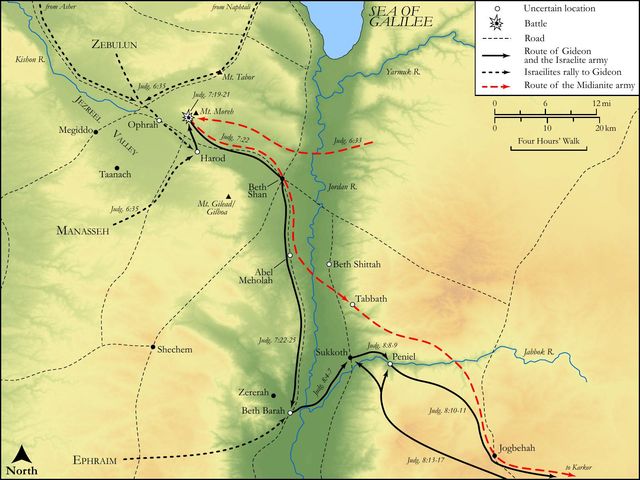
Judges 8:2 is Gideon's immediate and pivotal response to the angry confrontation initiated by the powerful tribe of Ephraim, as detailed in Judges 8:1. This encounter occurs directly after Gideon's astonishing, divinely-orchestrated victory over the Midianites with only 300 men, a narrative climaxing in Judges 7. While Gideon's small force routed the main Midianite army, he had called upon other tribes, including Ephraim, to intercept the fleeing enemy. The men of Ephraim successfully captured and killed the Midianite princes, Oreb and Zeeb, a significant achievement recorded in Judges 7:25. Despite this crucial contribution to the overall campaign, Ephraim felt deeply offended by their exclusion from the initial glory, setting the stage for Gideon's masterful de-escalation that prevents internal conflict and allows the pursuit of the Midianite kings to continue.
Historical & Cultural Context
The period of the Judges (roughly 1200-1000 BC) was characterized by a fragmented Israelite society, lacking central leadership and often plagued by internal divisions and external threats. Tribal identity and honor were paramount. Ephraim, as a prominent and proud tribe descended from Joseph, often asserted its preeminence, a trait that would later lead to conflict with Jephthah in Judges 12. Their indignation stemmed from a profound sense of wounded pride and their perceived right to lead or be centrally involved in major national undertakings. Gideon, from the relatively obscure clan of Abiezer within Manasseh, demonstrated a keen understanding of this delicate tribal dynamic. The agricultural metaphors of "gleaning" and "vintage" were deeply resonant in ancient Israel's agrarian society, where the main harvest (vintage) was the most valuable, and gleaning (collecting leftovers) was typically associated with the poor or overlooked. Gideon's inversion of these terms was a culturally astute and disarming compliment designed to soothe Ephraim's injured pride.
Key Themes
ShowHideGideon's diplomatic reply in this verse illuminates several vital themes. Firstly, it powerfully illustrates the importance of humility and self-effacement in leadership, particularly in resolving inter-tribal or communal disputes. Gideon's willingness to diminish his own achievements to elevate Ephraim's stands in stark contrast to their pride and prevents a potentially devastating internal conflict, underscoring that true strength often lies in vulnerability. Secondly, the narrative highlights the critical value of unity and peacemaking within God's people. In a decentralized and often volatile society, maintaining cohesion was essential for Israel's survival and success against common enemies. Gideon's wisdom prioritizes the collective good over personal vindication or tribal rivalry, demonstrating the fruit of a spirit of reconciliation. Finally, it subtly points to the theme of God's sovereignty working through human wisdom. While God had already secured the victory through Gideon's small army (Judges 7:7), Gideon's subsequent diplomatic skill ensures that human pride and internal strife do not derail the divine purpose or the ongoing mission.
Exposition and Analysis
ShowHideKey Word Analysis
ShowHideFrom H5955, this feminine active participle refers specifically to the grapes left behind after the main harvest, often collected by the poor or gleaners. Symbolically, it denotes a secondary or seemingly less significant effort. In Gideon's rhetoric, he applies this term to Ephraim's crucial pursuit and capture of the Midianite princes, Oreb and Zeeb. By humbly labeling this vital "mop-up" operation as a "gleaning," Gideon artfully diminishes his own primary victory while simultaneously elevating Ephraim's contribution, making their "leftovers" appear more valuable than his own clan's "main harvest."
From H2896, this adjective signifies "good" in the widest sense, encompassing concepts like beautiful, excellent, superior, or more pleasant. Gideon's use of "better" here is a deliberate and masterful act of hyperbole. He does not literally mean Ephraim's contribution was objectively superior in scale to his own initial victory. Instead, he employs this term to flatter Ephraim profoundly, suggesting that their seemingly lesser action carried greater weight or significance, thereby disarming their anger and validating their wounded pride.
From H1210, this term refers to the main, full, and abundant grape harvest, representing the primary, most significant effort or achievement of the season. Gideon applies this to his own clan, Abiezer's, initial and decisive victory over the Midianite army. By rhetorically asking if Ephraim's "gleaning" was "better" than Abiezer's "vintage," Gideon performs a profound act of self-abasement, suggesting his own major accomplishment was overshadowed by Ephraim's secondary one. This diplomatic inversion serves to pacify the proud Ephraimites and prevent inter-tribal conflict.
Verse Breakdown
ShowHide"And he said unto them, What have I done now in comparison of you?"
Gideon's opening is a rhetorical question that immediately disarms the tense situation. Instead of defending himself against Ephraim's accusations or asserting his authority as the victorious general, he humbly asks what his accomplishments could possibly compare to theirs. This question sets a tone of deference and respect, implicitly acknowledging Ephraim's perceived importance and disarming their initial anger by refusing to engage in a defensive or confrontational manner. It shifts the focus from Gideon's perceived slight to Ephraim's self-importance, but in a way that validates, rather than challenges, their pride.
"[Is] not the gleaning of the grapes of Ephraim better than the vintage of Abiezer?"
This rhetorical question is the heart of Gideon's masterful diplomacy, employing a vivid agricultural metaphor deeply familiar to his audience. He compares Ephraim's "gleaning" (their pursuit and capture of the Midianite princes, Oreb and Zeeb, a crucial final act of the battle) to his own clan Abiezer's "vintage" (the initial, main battle victory). By rhetorically suggesting that Ephraim's seemingly secondary action was "better" or more significant than his own primary achievement, Gideon offers an extreme compliment. This profound validation of Ephraim's pride and contribution effectively diffuses their resentment, prevents a tribal conflict, and showcases Gideon's wisdom in prioritizing unity over personal glory.
Literary Devices
ShowHideJudges 8:2 is a profound example of Gideon's rhetorical prowess, employing several key literary devices to achieve a powerful diplomatic outcome. The most prominent device is Metaphor/Analogy, specifically the agricultural comparison of "gleaning" (Ephraim's contribution) to "vintage" (Abiezer's main effort). This analogy, deeply relatable to an agrarian society, vividly conveys Gideon's humble yet flattering point, making his argument both accessible and impactful. Complementing this is Hyperbole, as Gideon's claim that Ephraim's "gleaning" was "better" than his own "vintage" is a deliberate exaggeration, designed not for literal truth but to magnify Ephraim's role and pacify their proud spirit. The verse also opens with a Rhetorical Question ("What have I done now in comparison of you?"), which serves to immediately engage Ephraim, shift the focus from Gideon's defense to Ephraim's perceived superiority, and establish a tone of humility and deference. Finally, there is a subtle yet profound Irony in the victorious general humbling himself before the complaining tribe, a counter-intuitive response that proves to be the most effective strategy for achieving peace and unity within Israel.
Theological and Thematic Connections
ShowHideGideon's response in Judges 8:2 transcends a mere diplomatic maneuver; it embodies profound theological principles of humility, reconciliation, and valuing others above oneself. His willingness to humble himself, even in the flush of victory, reflects a spirit that prioritizes corporate unity and God's greater purpose over personal recognition or tribal pride. This act foreshadows New Testament teachings on peacemaking and considering others better than oneself, demonstrating that true strength in leadership often lies not in asserting power or defending one's reputation, but in self-effacing service and a genuine appreciation for the contributions of all members of the community of faith. It reminds us that God often uses the "lesser" to shame the "greater," and that human pride is a constant barrier to divine work and communal harmony, whereas humility opens pathways for God's blessing and continued mission.
Reflection and Application
ShowHideGideon's exemplary response in Judges 8:2 offers timeless lessons for navigating conflict and fostering healthy relationships in all spheres of life—personal, professional, and spiritual. In a world often characterized by defensiveness, competition, and the relentless pursuit of personal credit, Gideon demonstrates the transformative power of humility and genuine affirmation. His approach teaches us that de-escalation often begins not with justification or counter-accusation, but with empathy, active listening, and a willingness to acknowledge the feelings and contributions of others, even when their criticisms seem unfounded or their pride excessive. By prioritizing peace and unity over personal vindication or the desire to be "right," Gideon illustrates a leadership model rooted in profound wisdom and self-sacrificing love. This narrative urges us to consider how we might diffuse tension and build bridges rather than walls, always seeking the greater good of the community or cause we serve, recognizing that true influence often flows from a posture of humility.
Questions for Reflection
ShowHideFAQ
ShowHideWhy were the men of Ephraim so angry?
ShowHideThe men of Ephraim were a powerful and historically prominent tribe within Israel, often accustomed to taking a leading role in military affairs and national undertakings. They felt deeply insulted and their tribal honor was wounded because Gideon had not initially called them to join the main, decisive battle against the Midianites. Their anger stemmed from a perceived slight to their prestige and importance, despite their crucial and effective role in intercepting and capturing the Midianite princes Oreb and Zeeb later in the pursuit, as described in Judges 7:25. Their pride was wounded by not being involved from the very beginning of what was clearly a significant victory for Israel.
What is the significance of the "gleaning" and "vintage" metaphor?
ShowHideThe metaphor draws from agricultural practices deeply familiar to ancient Israel's agrarian society. "Gleaning" refers to the small amount of grapes left after the main harvest, typically gathered by the poor or gleaners, representing a secondary or less significant effort. "Vintage" refers to the full, abundant, and primary harvest, symbolizing the main and most valuable achievement. By rhetorically stating that Ephraim's "gleaning" (their capture of the Midianite princes) was "better" than Abiezer's "vintage" (Gideon's clan's initial victory), Gideon employs hyperbole to profoundly flatter Ephraim. He is essentially saying that even Ephraim's secondary effort was more significant than his own primary one, effectively disarming their pride and anger. This clever comparison highlights Gideon's diplomatic skill in resolving conflict through humility and affirmation, prioritizing peace over personal credit.
Christ-Centered Fulfillment
ShowHideGideon's humble diplomacy in Judges 8:2, prioritizing unity and peace over personal vindication, profoundly foreshadows the character and redemptive mission of Jesus Christ. While Gideon's act was a strategic human effort to de-escalate tribal conflict, Christ's humility is the very essence of His divine nature and the foundation of His saving work. The Lord Jesus, though He was in the form of God, did not count equality with God a thing to be grasped, but emptied Himself, by taking the form of a servant. He did not come to be served, but to serve, and to give His life as a ransom for many. Where Gideon averted a minor tribal dispute through flattery, Christ bridged the infinite chasm between a holy God and sinful humanity through ultimate self-abasement, becoming obedient to the point of death on a cross. His entire ministry was a "gleaning" of the lost, the lowly, and the broken, which, in God's economy, proved infinitely "better" and more eternally significant than any "vintage" of human accomplishment or glory. He continually uplifted the humble and shamed the proud, demonstrating that true greatness in the Kingdom of God is found in serving others and making peace, ultimately reconciling all things to Himself through the blood of His cross, thereby establishing a unity far greater than any tribal accord.