


Joshua 13:33
Bible text: King James Version (1769 Blayney text) · Public domain
Bible text: Berean Standard Bible · Public domain
Bible text: American Standard Version (1901) · Public domain
Bible text: World English Bible, Messianic edition · Public domain
Bible text: Geneva Bible (1599) · Public domain
Bible text: Young's Literal Translation · Public domain
- וּלְשֵׁבֶטu·le·She·vetand to [the] tribe ofH7626Conj-w ¦ Prep-l ¦ N-mscNoun Singular Masculine Constructוּandלְtoשֵׁבֶט[the] tribe of
- הַלֵּוִיha·le·Vithe Levite[s]H3878Art ¦ N-msNoun Gentilic Singular Masculine AbsoluteהַtheלֵּוִיLevite[s]
- לֹאlo'notH3808NegParticle Negative
- נָתַןna·Tanhe gaveH5414V-Qal-Perf-3msVerb Qal Perfect 3rd Singular Masculine
- מֹשֶׁהmo·ShehMosesH4872N-proper-mNoun Proper Masculine
- נַחֲלָהna·cha·Lahan inheritanceH5159N-fsNoun Singular Feminine Absolute
- יְהוָהYah·wehYahwehH3068N-properNoun Proper Title
- אֱלֹהֵי'e·lo·Hei[the] God ofH430N-mpcNoun Plural Masculine Construct
- יִשְׂרָאֵלYis·ra·'ElIsraelH3478N-properNoun Proper Location
- הוּאhu'heH1931Pro-3msPronoun Personal 3rd Singular Masculine
- נַחֲלָתָםna·cha·la·Tam[was] their inheritanceH5159N-fsc ¦ 3mpNoun Singular Feminine Constructנַחֲלָתָ[was] inheritanceםtheir
- כַּאֲשֶׁרka·'a·Sherjust asH834Prep-k ¦ RelParticle Relativeכַּjustאֲשֶׁרas
- דִּבֶּרdi·Berhe had spokenH1696V-Piel-Perf-3msVerb Piel Perfect 3rd Singular Masculine
- לָהֶםla·Hemto <the> themPrep-l ¦ 3mpSuffix Personal 3rd Plural Masculineלָto <the>הֶםthem
English is a literal word-by-word gloss of the Hebrew, not the KJV's wording. Why?
This is the original text the KJV's translators worked from — each Hebrew word with its own literal English meaning in this verse, prepared by scholars at Tyndale House, Cambridge. The KJV translates whole sentences, not word by word, so its wording differs: one Hebrew word can become several English words, and the KJV may choose “the LORD” where the gloss reads “Yahweh”. Both are faithful — they answer different questions. For the KJV's own rendering, switch to the KJV text.
Details
See on the biblical-era maps
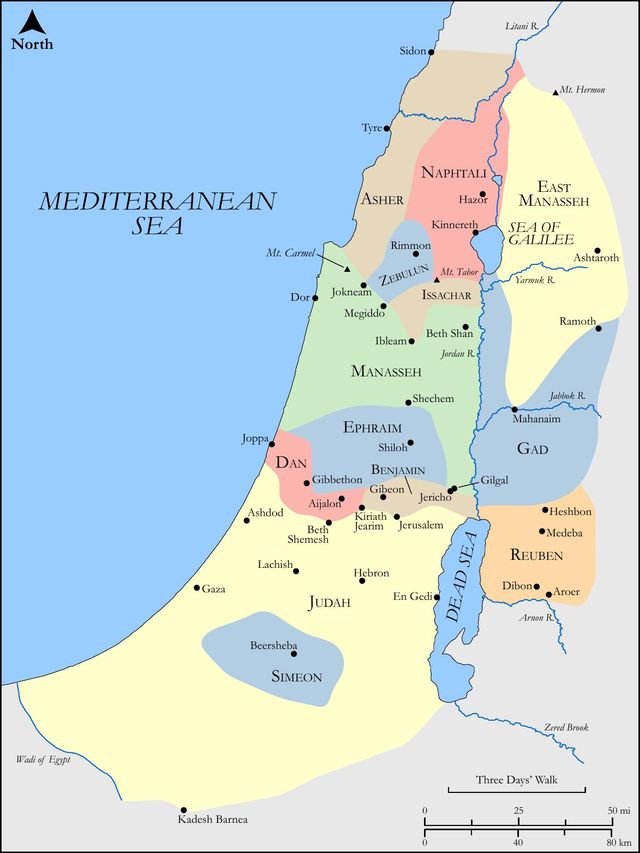
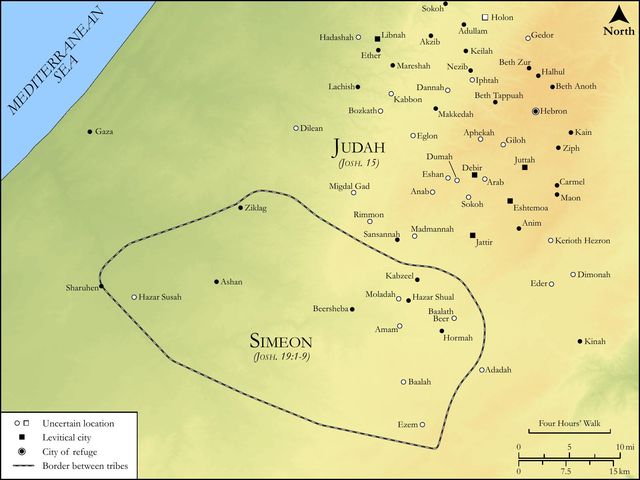
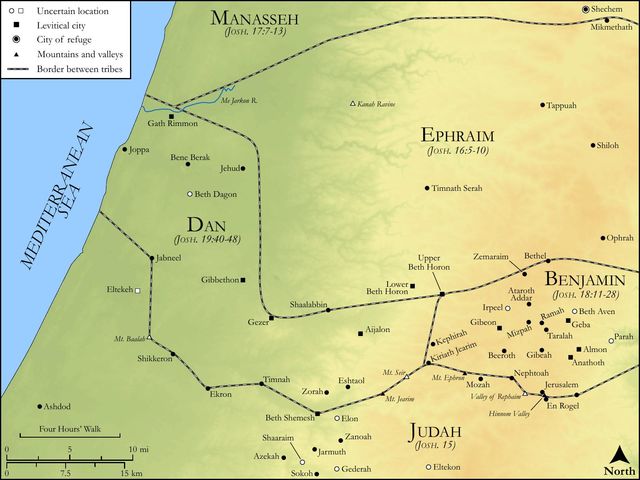
Study this verse
Public-domain commentary
Matthew Henry
From his Commentary on the Whole Bible. Henry comments on passages, not single verses — this entry covers Joshua 13:7–33. His four-level outline is real structure in the source text, so it is rendered as structure.
Here we have, I. Orders given to Joshua to assign to each tribe its portion of this land, including that which was yet unsubdued, which must be brought into the lot, in a believing confidence that it should be conquered when Israel was multiplied so as to have occasion for it (Jos 13:7): Now divide this land. Joshua thought all must be conquered before any must be divided. "No," said, God, "there is as much conquered as will serve your turn for the present; divide this, and make your best of it, and wait for the remainder hereafter." Note, We must take the comfort of what we have, though we cannot compass all we would have. Observe,
1.The land must be divided among the several tribes, and they must not always live in common, as now they did. Which way soever a just property is acquired, it is the will of that God who has given the earth to the children of men that there should be such a thing, and that every man should know his own, and not invade that which is another's. The world must be governed, not by force, but right, by the law of equity, not of arms.
2.That it must be divided for an inheritance, though they got it by conquest.
(1.)The promise of it came to them as an inheritance from their fathers; the land of promise pertained to the children of promise, who were thus beloved for their fathers' sakes, and in performance of the covenant with them.
(2.)The possession of it was to be transmitted by them, as an inheritance to their children. Frequently, what is got by force is soon lost again; but Israel, having an incontestable title to this land by the divine grant, might see it hereby secured as an inheritance to their seed after them, and that God kept this mercy for thousands.
3.That Joshua must not divide it by his own will. Though he was a very wise, just, and good man, it must not be left to him to give what he pleased to each tribe; but he must do it by lot, which referred the matter wholly to God, and to his determination, for he it is that appoints the bounds of our habitation, and every man's judgment must proceed from him. But Joshua must preside in this affair, must manage this solemn appeal to Providence, and see that the lot was drawn fairly and without fraud, and that every tribe did acquiesce in it. The lot indeed causeth contention to cease, Pro 18:18. But, if upon this lot any controversy should arise, Joshua by his wisdom and authority must determine it, and prevent any ill consequences of it. Joshua must have the honour of dividing the land,
(1.)Because he had undergone the fatigue of conquering it: and when, through his hand, each tribe received its allotment, they would thereby be made the more sensible of their obligations to him. And what a pleasure must it needs be to a man of such a public spirit as Joshua was to see the people that were so dear to him eating of the labour of his hands!
(2.)That he might be herein a type of Christ, who has not only conquered for us the gates of hell, but has opened to us the gates of heaven, and, having purchased the eternal inheritance for all believers, will in due time put them all in possession of it.
II.An account is here given of the distribution of the land on the other side Jordan among the Reubenites, and Gadites, and half the tribe of Manasseh. Observe,
1.How this account is introduced. It comes in,
(1.)As the reason why this land within Jordan must be divided only to the nine tribes and a half, because the other two and a half were already provided for.
(2.)As a pattern to Joshua in the work he had now to do. He had seen Moses distribute that land, which would give him some aid in distributing this, and thence he might take his measure; only this was to be done by lot, but it should seem Moses did that himself, according to the wisdom given unto him.
(3.)As an inducement to Joshua to hasten the dividing of this land, that the nine tribes and a half might not be kept any longer than was necessary out of their possession, since their brethren of the two tribes and a half were so well settled in theirs; and God their common Father would not have such a difference made between his children.
2.The particulars of this account.
(1.)Here is a general description of the country that was given to the two tribes and a half, which Moses gave them, even as Moses gave them, Jos 13:8. The repetition implies a ratification of the grant by Joshua. Moses settled this matter, and, as Moses settled it, so shall it rest; Joshua will not, under any pretence whatsoever, go about to alter it. And a reason is intimated why he would not, because Moses was the servant of the Lord, and acted in this matter by secret direction from him and was faithful as a servant. Here we have,
[1.]The fixing of the boundaries of this country, by which they were divided from the neighbouring nations, Jos 13:9, etc. Israel must know their own and keep to it, and may not, under pretence of their being God's peculiar people, encroach upon their neighbours, and invade their rights and properties, to which they had a good and firm title by providence, though not, as Israel, a title by promise.
[2.]An exception of one part of this country from Israel's possession, though it was in their grant, namely, the Geshurites and the Maachathites, Jos 13:13. They had not leisure to reduce all the remote and obscure corners of the country in Moses's time, and afterwards they had no mind to it, being easy with what they had. Thus those who are not straitened in God's promises are yet straitened in their own faith, and prayers, and endeavours.
(2.)A very particular account of the inheritances of these two tribes and a half, how they were separated from each other, and what cites, with the towns, villages, and fields, commonly known and reputed to be appurtenances to them, belonged to each tribe. This is very fully and exactly set down in order that posterity might, in reading this history, be the more affected with the goodness of God to their ancestors, when they found what a large and fruitful country, and what abundance of great and famous cities, he put them in possession of (God's grants look best when we descend to the particulars); and also that the limits of every tribe being punctually set down in this authentic record disputes might be prevented, and such contests between the tribes as commonly happen where boundaries have not been adjusted nor this matter brought to a certainty. And we have reason to think that the register here prescribed and published of the lot of each tribe was of great use to Israel in after-ages, was often appealed to, and always acquiesced in, for the determining of meum and tuum - mine and thine.
[1.]We have here the lot of the tribe of Reuben, Jacob's first-born, who, though he had lost the dignity and power which pertained to the birthright, yet, it seems, had the advantage of being first served. Perhaps those of that tribe had an eye to this in desiring to be seated on that side Jordan, that, since they could not expect the benefit of the best lot, they might have the credit of the first. Observe, First, In the account of the lot of this tribe mention is made of the slaughter, 1. Of Sihon, king of the Amorites, who reigned in this country, and might have kept it and his life if he would have been neighbourly, and have suffered Israel to pass through his territories, but, by attempting to oppose them, justly brought ruin upon himself, Num 21:21, etc. 2. Of the princes of Midian, who were slain afterwards in another war (Num 31:8), and yet are here called dukes of Sihon, and are said to be smitten with him, because they were either tributaries to him, or, in his opposition to Israel, confederates with him, and hearty in his interests, and his fall made way for theirs not long after. 3. Of Balaam particularly, that would, if he could, have cursed Israel, and was soon after recompensed according to the wickedness of his endeavour (Psa 28:4), for he fell with those that set him on. This was recorded before (Num 31:8), and is here repeated, because the defeating of Balaam's purpose to curse Israel was the turning of that curse into a blessing, and was such an instance of the power and goodness of God as was fit to be had in everlasting remembrance. See Mic 6:5. Secondly, Within the lot of this tribe was that Mount Pisgah from the top of which Moses took his view of the earthly Canaan and his flight to the heavenly. And not far off thence Elijah was when he was fetched up to heaven in a chariot of fire. The separation of this tribe from the rest, by the river Jordan, was that which Deborah lamented; and the preference they gave to their private interests above the public was what she censured, Jdg 5:15, Jdg 5:16. In this tribe lay Heshbon and Sibmah, famed for their fruitful fields and vineyards. See Isa 16:8, Isa 16:9; Jer 48:32. This tribe, with that of Gad, was sorely shaken by Hazael king of Syria (Kg2 10:33), and afterwards dislodged and carried into captivity, twenty years before the general captivity of the ten tribes by the king of Assyria, Ch1 5:26.
[2.]The lot of the tribe of Gad, Jos 13:24-28. This lay north of Reuben's lot; the country of Gilead lay in this tribe, so famous for its balm that it is thought strange indeed if there be no balm in Gilead, and the cities of Jabesh-Gilead and Ramoth-Gilead which we often read of in scripture. Succoth and Penuel, which we read of in the story of Gideon, were in this tribe; and that forest which is called the wood of Ephraim (from the slaughter Jephthah made there of the Ephraimites), in which Absalom's rebellious army was beaten, while his father David lay at Mahanaim, one of the frontier-cities of this tribe, Jos 13:26. Sharon, famous for roses, was in this tribe. And within the limits of this tribe lived those Gadarenes that loved their swine better than their Saviour, fitter to be called Girgashites than Israelites.
[3.]The lot of the half-tribe of Manasseh, Jos 13:29-31. Bashan, the kingdom of Og, was in this allotment, famous for the best timber, witness the oaks of Bashan - and the best breed of cattle, witness the bulls and rams of Bashan. This tribe lay north of Gad, reached to Mount Hermon, and had in it part of Gilead. Mispeh was in this half-tribe, and Jephthah was one of its ornaments; so was Elijah, for in this tribe was Thisbe, whence he is called the Tishbite; and Jair was another. In the edge of the tribe stood Chorazin, honoured with Christ's wondrous works, but ruined by his righteous woe for not improving them.
[4.]Twice in this chapter it is taken notice of that to the tribe of Levi Moses gave no inheritance (Jos 13:14, Jos 13:33), for so God had appointed, Num 18:20. If they had been appointed to a lot entire by themselves, Moses would have served them first, not because it was his own tribe, but because it was God's; but they must be provided for in another manner; their habitations must be scattered in all the tribes, and their maintenance brought out of all the tribes, and God himself was the portion both of their inheritance and of their cup, Deu 10:9; Deu 18:2.
Continue studying Joshua 13:33 across the web’s major study libraries — every link below opens this exact verse, chapter, or book on the destination site.
Read & Compare
 BibleGatewayThis verse in more than 200 translations and 70 languages.
 Bible.comThe YouVersion reader — hundreds of translations, reading plans, and highlights.
 ESV.orgCrossway's official English Standard Version reader.
 NET BibleThe NET translation with 60,000+ translators' notes on every rendering decision.
 STEP BibleTyndale House's free study tool — original text, vocabulary, and scholarly resources.
 BibliaLogos Bible Software's free web reader.
 USCCBThe New American Bible (Revised Edition) with the U.S. bishops' study notes.
Commentaries
 BibleHub CommentariesDozens of classic commentaries on this verse, gathered on one page.
 StudyLightMore than 100 commentary sets — the largest collection on the web.
 BibleRefPlain-English commentary on what this verse means, verse by verse.
 Enduring WordDavid Guzik's free commentary on this chapter, widely used by Bible teachers.
 Bible Study ToolsVerse commentary alongside Greek and Hebrew study aids.
Original Language & Research
- BibleHub InterlinearThe verse word by word — original language, transliteration, and English.
- BibleHub LexiconEvery word's original-language definition and Strong's entry.
 Blue Letter BibleDeep-study tools — Strong's numbers, concordance, and word studies.
 SefariaThe Hebrew text with Rashi and centuries of Jewish commentary.
Sermons, Hymns & Audio


TrulyRandomVerse is not affiliated with these sites and doesn’t control their content. They’re linked because they’re genuinely useful.
Summary
Joshua 13:33 serves as a crucial parenthetical clarification within the detailed account of Israel's land distribution, specifically delineating the unique status of the tribe of Levi. Unlike the other tribes who received a territorial inheritance, the Levites were explicitly excluded from such an allotment, in accordance with Moses's earlier divine command. Instead, their inheritance was declared to be the LORD God of Israel Himself, signifying their distinct role as a priestly and ministerial tribe whose sustenance, security, and identity were derived directly from divine provision and their sacred service to the covenant God.
Context
ShowHideLiterary Context
Joshua chapter 13 marks a significant pivot in the book of Joshua, transitioning from the narratives of conquest to the meticulous division of the Promised Land among the Israelite tribes. The chapter opens by noting Joshua's advanced age and the considerable land yet to be subdued, yet God commands the distribution to proceed, emphasizing divine faithfulness over complete military victory. It then proceeds to detail the territories assigned to the tribes of Reuben, Gad, and the half-tribe of Manasseh on the east side of the Jordan River. Amidst this precise geographical and tribal allocation, Joshua 13:33 functions as a vital explanatory note, interrupting the otherwise continuous flow of land assignments. This strategic placement underscores the exceptional and non-negotiable nature of the Levites' inheritance, setting them apart from all other tribes whose identity and future were intrinsically linked to their specific territorial possession.
Historical & Cultural Context
In ancient Israelite society, land inheritance (Hebrew: naḥălâ) was fundamental to a tribe's and family's identity, economic stability, and social standing. It represented the tangible fulfillment of God's covenant promises to Abraham, Isaac, and Jacob, providing a permanent dwelling place for His people in the land He had sworn to them. Each family's portion of land was considered an inalienable possession, intended to be passed down through generations. However, the tribe of Levi was divinely set apart for sacred service from the time of the Exodus, specifically for the care of the Tabernacle and later the Temple, mediating between God and the people. Their sustenance was to come from the tithes and offerings of the other tribes, as meticulously detailed in texts such as Numbers 18. This unique arrangement ensured their full devotion to their priestly and ministerial duties without the distractions of agricultural labor or land management, thereby emphasizing their complete dependence on God's direct provision through the offerings of the people.
Key Themes
ShowHideJoshua 13:33 powerfully articulates several profound theological themes. Firstly, it highlights the theme of Divine Provision and Radical Dependence, demonstrating that God Himself is the ultimate and all-sufficient source of security, sustenance, and blessing, particularly for those dedicated to His service. Secondly, it underscores the Uniqueness and Sanctity of the Levitical Calling, emphasizing their distinct separation for sacred duties, which superseded any earthly or material possessions. This special status was not a disadvantage but a profound spiritual privilege, signifying their direct and intimate relationship with, and reliance upon, the Lord. Thirdly, the verse reinforces the theme of Obedience to Divine Command, as Moses's actions regarding the Levites' inheritance were in direct fulfillment of God's earlier, explicit instructions given to Israel, ensuring the proper order and spiritual health of the entire Israelite community, as previously commanded in Deuteronomy 10:9.
Exposition and Analysis
ShowHideKey Word Analysis
ShowHideThe Hebrew word נַחֲלָה (nachălâh) primarily refers to an inherited possession, often a landed estate or patrimony, signifying a tangible, physical portion of the Promised Land. For the other Israelite tribes, their nachălâh was a specific territory that provided economic stability and identity. However, in the context of the Levites, its application is profoundly spiritual and metaphorical. Instead of a physical plot of ground, their nachălâh was the very presence, sustenance, and covenant relationship with "the LORD God of Israel," transforming the concept from a material asset to a relational and spiritual one, emphasizing God as their ultimate security and source of blessing.
This composite phrase combines the covenant name of God, YHWH (H3068, the personal, revealed name of God, often translated "LORD"), with Elohim (H430, the generic term for God, here in construct with "Israel," signifying the God of Israel, H3478). The combination emphasizes God's covenant faithfulness, His supreme authority, and His specific, intimate relationship with His chosen people. To declare that "the LORD God of Israel was their inheritance" means that the Levites' entire identity, security, sustenance, and future were inextricably bound up in their direct relationship with the covenant-keeping, self-existent God of Israel. It implies an all-sufficient divine provision that transcends any earthly possession or material wealth.
The Hebrew word דָּבַר (dâbar) is a primitive root meaning "to speak," "to arrange," or "to command." In this context, "as he said unto them" refers to God's explicit verbal instructions given through Moses concerning the Levites' unique status and provision. This emphasizes the divine origin and authoritative nature of the Levites' inheritance arrangement. It was not a human invention or a pragmatic solution, but a direct utterance from God, highlighting His sovereign will and the importance of obedience to His revealed word in the structuring of Israelite society and worship.
Verse Breakdown
ShowHide"But unto the tribe of Levi Moses gave not [any] inheritance"
This opening clause immediately sets the tribe of Levi apart from the other tribes whose territorial allotments are the primary subject of Joshua 13. It highlights Moses's adherence to a specific divine command that predated the conquest and land division. The absence of a territorial inheritance for Levi was not an oversight, a punishment, or a disadvantage, but a deliberate act in accordance with God's unique and sacred plan for this tribe, emphasizing their distinct calling and separation for exclusive service to the Lord.
"the LORD God of Israel [was] their inheritance"
This is the profound theological core of the verse. It declares that Levi's portion, their security, their sustenance, their very identity, and their future resided not in land or material wealth, but in their direct, covenantal relationship with the sovereign, covenant-keeping God of Israel. This statement elevates their status, implying a profound spiritual privilege far surpassing any earthly possession. Their needs would be met through the offerings and tithes brought to the Lord by the other tribes, which the Levites, as ministers, would administer and live from, making God their ultimate provider and all-sufficient portion.
"as he said unto them"
This concluding phrase serves as an authoritative affirmation and theological anchor. It confirms that Moses's action of not allotting land to the Levites was not arbitrary but was in direct obedience to God's explicit instructions given earlier to the Levites and to the nation of Israel (e.g., Numbers 18:20-24 and Deuteronomy 10:9). This reinforces the divine origin, immutable nature, and enduring validity of the Levites' unique status and provision, underscoring the theme of divine faithfulness and the paramount importance of adhering to God's revealed will.
Literary Devices
ShowHideThe verse effectively employs several literary devices to convey its profound and unique message. Parenthesis is evident as the verse interrupts the detailed geographical listing of tribal inheritances in Joshua 13, drawing specific and immediate attention to the exception made for the tribe of Levi. This interruption underscores the unique, divinely ordained, and non-negotiable nature of the Levites' situation. Contrast is central to the verse's meaning, highlighting the stark difference between the material, territorial inheritance of the other tribes and the spiritual, divine inheritance of Levi. This contrast serves to emphasize the distinct calling, purpose, and provision for the priestly tribe, elevating their spiritual privilege above any earthly gain. Furthermore, Symbolism is at play, where "land" symbolizes earthly security, material wealth, and tangible provision, while "the LORD God of Israel" symbolizes ultimate spiritual security, divine presence, and all-sufficient, transcendent provision. The verse thus uses these devices to powerfully communicate that true inheritance and security are found not in what is seen, but in the unseen reality of God Himself.
Theological and Thematic Connections
ShowHideJoshua 13:33 encapsulates a profound theological truth that extends far beyond the specific historical context of the Levites: the ultimate source of an individual's or a community's security, identity, and provision is God Himself, not material possessions, earthly status, or human achievements. This principle directly challenges the human tendency to seek fulfillment, stability, and worth in tangible assets, redirecting focus to a radical and unwavering dependence on the divine. For the Levites, their lack of land was not a deprivation but a profound spiritual privilege, freeing them to devote themselves fully to sacred service and serving as a living testament to God's faithfulness to sustain those who prioritize His kingdom. This truth resonates throughout the entirety of Scripture, continually reminding believers that true wealth, lasting satisfaction, and enduring security are found fundamentally in a vibrant relationship with God, and His very presence is the most valuable and enduring inheritance.
Reflection and Application
ShowHideThe unique inheritance of the Levites, where "the LORD God of Israel was their inheritance," serves as a powerful and counter-cultural paradigm for believers today, profoundly challenging our contemporary values and priorities. In a world that often equates security with accumulated wealth, prestigious status, or extensive property, Joshua 13:33 calls us to re-evaluate where our true security, satisfaction, and fulfillment genuinely lie. It serves as a profound reminder that our deepest needs—for meaning, purpose, belonging, and ultimate provision—are met not by what we possess in this life, but by who possesses us: the living, covenant-keeping God. This verse encourages a posture of radical dependence on God, inviting us to find our contentment, joy, and peace in His abiding presence and His faithful provision, rather than striving incessantly for earthly inheritances that are fleeting. For those in vocational ministry, it is a direct and encouraging affirmation that their true reward, sustenance, and ultimate security come directly from the Lord Himself. For all believers, it is an urgent invitation to live with an eternal perspective, consciously prioritizing spiritual devotion and service to God over the accumulation of worldly goods, trusting implicitly that when God is our singular focus and our greatest treasure, He promises to meet our needs in ways that truly matter for eternity.
Questions for Reflection
ShowHideFAQ
ShowHideWhy didn't the Levites receive land like the other Israelite tribes?
ShowHideThe Levites did not receive a territorial land inheritance like the other Israelite tribes because they were uniquely set apart by God for exclusive sacred service to Him and to the entire nation of Israel. Their primary and divinely appointed role was to minister in the Tabernacle, and later the Temple, serving as priests, teachers of the Law, and guardians of the divine commandments. This sacred calling required their full and undivided devotion, freeing them from the responsibilities of agriculture or land management that occupied the other tribes. Instead of land, God Himself was declared their inheritance, meaning their sustenance, security, and provision came directly from the offerings and tithes brought by the other tribes to the Lord, which the Levites, in turn, received as their portion. This unique arrangement is meticulously detailed in passages like Numbers 18:20-24 and Deuteronomy 10:9. Their lack of a physical land inheritance was therefore not a disadvantage but a profound spiritual privilege, signifying their complete dependence on and exclusive devotion to the Lord, who faithfully provided for their every need.
Christ-Centered Fulfillment
ShowHideJoshua 13:33, with its profound declaration that "the LORD God of Israel [was] their inheritance," finds its ultimate and perfect Christ-centered fulfillment in the New Covenant. While the Levites' unique inheritance pointed to a spiritual reality and a radical dependence on God for provision, Christ Himself is the supreme and eternal inheritance for all believers. Just as the Levites were set apart for sacred service and lived in radical dependence on God's provision through the offerings of the people, so too are believers in Christ called to a life of consecrated service, finding their ultimate security, sustenance, and identity not in earthly possessions but exclusively in Jesus Christ. Ephesians 1:11 powerfully declares that "in him we have obtained an inheritance," signifying that all spiritual blessings, the very presence of God, and eternal life are ours through our union with Christ. He is not merely a means to an inheritance, but the inheritance itself—our portion, our life, our all-sufficiency, and our eternal dwelling. Furthermore, the Levitical priesthood, which necessitated their unique provision and separation, perfectly foreshadowed the perfect, eternal, and unchangeable priesthood of Christ. Unlike the Levitical priests, who had an earthly lineage and needed earthly provision, Christ, our great High Priest, has no earthly lineage or need for earthly inheritance, but ministers directly in the heavenly sanctuary, having offered Himself as the perfect sacrifice (as profoundly explained in Hebrews 7:11-19). Through Christ, all believers become part of a "royal priesthood" (1 Peter 2:9), inheriting not a plot of land, but the very life, Spirit, and eternal presence of God, thereby experiencing the ultimate fulfillment of God being our glorious and everlasting inheritance.