


Job 24:14
Bible text: King James Version (1769 Blayney text) · Public domain
Bible text: Berean Standard Bible · Public domain
Bible text: American Standard Version (1901) · Public domain
Bible text: World English Bible, Messianic edition · Public domain
Bible text: Geneva Bible (1599) · Public domain
Bible text: Young's Literal Translation · Public domain
- לָאוֹרla·'orto the lightH216Prep-l ¦ N-fsNoun Singular Feminine Absoluteלָto theאוֹרlight
- יָקוּםya·Kumhe risesH6965V-Qal-Imperf-3msVerb Qal Imperfect 3rd Singular Masculine
- רוֹצֵחַro·Tze·acha murdererH7523V-Qal-Prtcpl-msVerb Qal Participle Singular Masculine Absolute
- יִקְטָלyik·tolhe killsH6991V-Qal-Imperf-3msVerb Qal Imperfect 3rd Singular Masculine
- עָנִי'a·Ni[the] poorH6041Adj-msAdjective Singular Masculine Absolute
- וְאֶבְיוֹןve·'ev·Yonand [the] needyH34Conj-w ¦ Adj-msAdjective Singular Masculine Absoluteוְandאֶבְיוֹן[the] needy
- וּבַלַּיְלָהu·va·Lay·lahand in the nightH3915Conj-w ¦ Prep-b ¦ N-msNoun Singular Masculine Absoluteוּandבַin theלַּיְלָהnight
- יְהִיye·Hihe isH1961V-Qal-Imperf-3msVerb Qal Imperfect 3rd Singular Masculine
- כַגַּנָּבkha·ga·Navlike <the> thiefH1590Prep-k ¦ N-msNoun Singular Masculine Absoluteכַlike <the>גַּנָּבthief
English is a literal word-by-word gloss of the Hebrew, not the KJV's wording. Why?
This is the original text the KJV's translators worked from — each Hebrew word with its own literal English meaning in this verse, prepared by scholars at Tyndale House, Cambridge. The KJV translates whole sentences, not word by word, so its wording differs: one Hebrew word can become several English words, and the KJV may choose “the LORD” where the gloss reads “Yahweh”. Both are faithful — they answer different questions. For the KJV's own rendering, switch to the KJV text.
Details
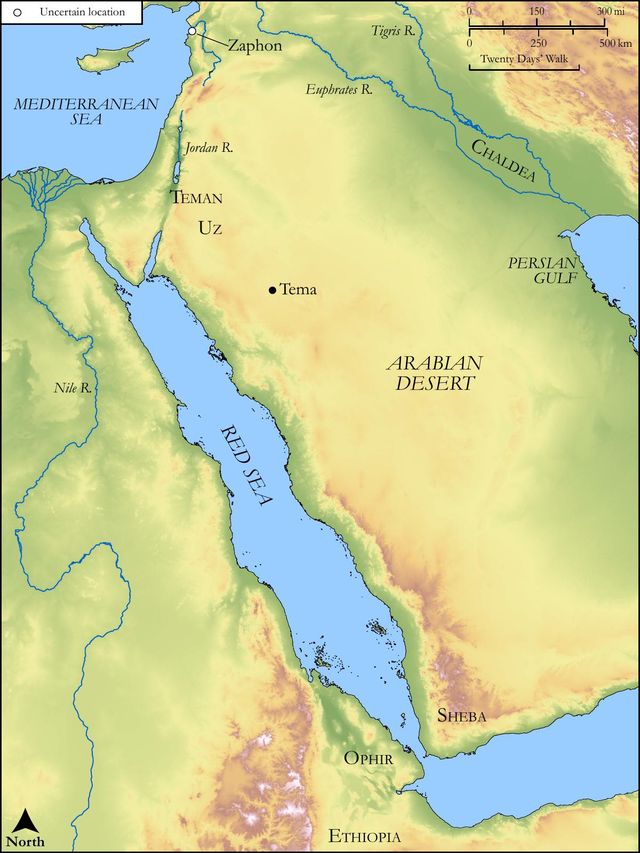
See on the biblical-era map
Study this verse
Public-domain commentary
Matthew Henry
From his Commentary on the Whole Bible. Henry comments on passages, not single verses — this entry covers Job 24:13–17. His two-level outline is real structure in the source text, so it is rendered as structure.
These verses describe another sort of sinners who therefore go unpunished, because they go undiscovered. They rebel against the light, Job 24:13. Some understand it figuratively: they sin against the light of nature, the light of God's law, and that of their own consciences; they profess to know God, but they rebel against the knowledge they have of him, and will not be guided and governed, commanded and controlled, by it. Others understand it literally: they have the day-light and choose the night as the most advantageous season for their wickedness. Sinful works are therefore called works of darkness, because he that does evil hates the light (Joh 3:20), knows not the ways thereof, that is, keeps out of the way of it, or, if he happen to be seen, abides not where he thinks he is known. So that he here describes the worst of sinners, - those that sin wilfully, and against the convictions of their own consciences, whereby they add rebellion to their sin, - those that sin deliberately, and with a great deal of plot and contrivance, using a thousand arts to conceal their villanies, fondly imagining that, if they can but hide them from the eye of men, they are safe, but forgetting that there is no darkness or shadow of death in which the workers of iniquity can hide themselves from God's eye, Job 34:22. In this paragraph Job specifies three sorts of sinners that shun the light: - 1. Murderers, Job 24:14. They rise with the light, as soon as ever the day breaks, to kill the poor travellers that are up early and abroad about their business, going to market with a little money or goods; and though it is so little that they are really to be called poor and needy, who with much ado get a sorry livelihood by their marketings, yet, to get it, the murderer will both take his neighbour's life and venture his own, will rather play at such small game than not play at all; nay, he kills for killing sake, thirsting more for blood than for booty. See what care and pains wicked men take to compass their wicked designs, and let the sight shame us out of our negligence and slothfulness in doing good.
Ut jugulent homines, surgunt de nocte latrones,
Tuque ut te serves non expergisceris? -
Rogues nightly rise to murder men for pelf;
Will you not rouse you to preserve yourself?
2.Adulterers. The eyes that are full of adultery (Pe2 2:14), the unclean and wanton eyes, wait for the twilight, Job 24:15. The eye of the adulteress did so, Pro 7:9. Adultery hides its head for shame. The sinners themselves, even the most impudent, do what they can to hide their sin: si non caste, tamen caute - if not chastely, yet cautiously; and after all the wretched endeavours of the factors for hell to take away the reproach of it, it is and ever will be a shame even to speak of those things which are done of them in secret, Eph 5:12. It hides its head also for fear, knowing that jealousy is the rage of a husband, who will not spare in the day of vengeance, Pro 6:24, Pro 6:25. See what pains those take that make provision for the flesh to fulfil the lusts of it, pains to compass, and then to conceal, that provision which, after all, will be death and hell at last. Less pains would serve to mortify and crucify the flesh, which would be life and heaven at last. Let the sinner change his heart, and then he needs not disguise his face, but may lift it up without spot.
3.House-breakers, Job 24:16. These mark houses in the day-time, mark the avenues of a house, and on which side they can most easily force their entrance, and then, in the night, dig through them, either to kill, or steal, or commit adultery. The night favours the assault, and makes the defence the more difficult; for the good man of the house knows not what hour the thief will come and therefore is asleep (Luk 12:39) and he and his lie exposed. For this reason our law makes burglary, which is the breaking and entering of a dwelling-house in the night time with a felonious intent, to be felony without benefit of clergy.
And, lastly, Job observes (and perhaps observes it as part of the present, though secret, punishment of such sinners as these) that they are in a continual terror for fear of being discovered (Job 24:17): The morning is to them even as the shadow of death. The light of the day, which is welcome to honest people, is a terror to bad people. They curse the sun, not as the Moors, because it scorches them, but because it discovers them. If one know them, their consciences fly in their faces, and they are ready to become their own accusers; for they are in the terrors of the shadow of death. Shame came in with sin, and everlasting shame is at the end of it. See the misery of sinners - they are exposed to continual frights; and yet see their folly - they are afraid of coming under the eye of men, but have no dread of God's eye, which is always upon them: they are not afraid of doing that which yet they are so terribly afraid of being known to do.
Historical interpretation
Historical reception
3 surviving comments on this verse. Each one is dated, so this reads as a timeline rather than a list.
Select a marker to jump to its quote. Markers stagger vertically where authors wrote within a few decades of each other.
He says this again to his friends with a bit of hesitation, If afflictions entirely derive from sins, why did he who observes all that happens on earth allow them to go without being visited by him? “And they took no notice,” that is, the iniquitous took no notice of the fact that they were not visited. Indeed it is believed and taught about divine visitation, “The Lord reproves the one he loves, as a father checks a well-loved son.”
72. Whereas the murderer in the killing of his neighbours is wont to come upon them chiefly in the silence of the night, why is it that he is said in this place to ‘rise with the light’ in order to ‘kill the poor and needy,’ whilst ‘in the night’ he is described ‘to be as a thief?’ Now forasmuch as the letter in the bare words alone is not consistent with itself, we are called back for the investigating the hidden meanings of the Spirit. In Holy Scripture the ‘morning’ is sometimes used to be put for the coming of the Lord’s Incarnation, sometimes for the coming of the henceforth dreadful and searching Judge, sometimes for the prosperity of the present life. Thus the coming of the Lord’s Incarnation proved a ‘morning,’ as the Prophet saith, The morning cometh, and also the night; [Is. 21, 12] in that both the beginnings of the new light shone forth in the appearing of our Redeemer, and yet the shades of their misbelief were not cleared off from the hearts of the persecutors. Again, by the ‘morning’ the coming of the Judge is denoted. Whence it is said by the Psalmist, Early I will destroy all the wicked of the land. [Ps. 101, 8] As also when personating the Elect, he says, In the morning will I stand in Thy presence, and will look up. [Ps. 5, 3] Again, by the ‘morning’ this life’s prosperity is represented. as where it is said by Solomon, Woe to thee, O land, when thy King is a child, and thy princes eat in the morning. [Ecc. 10, 16] For whereas the morning is the first part of the day and the evening the last, we ought not ever to be regaled by this life’s prosperity which goes first, but by those things which at the end of the day, that is at the termination of the world, follow after. Thus those ‘eat in the morning,’ who by this world’s successes are lifted up, and whilst they passionately interest themselves with present things, pay no heed to the things of the future. For whosoever hateth his brother is a murderer. [1 John 3, 15] So the ‘murderer rises up with the earliest dawn,’ in that every wicked man is set up in the glory of the present life, and bears down the life of those, who whilst they thirst after the glory to follow, as it were anxiously look out to be filled in the evening. For the bad man in this world whilst seizing on the dignity of transitory power spreads himself out the more cruelly for the enacting of what is evil, in proportion as there is no man he loves in the bowels of charity. For as often as in the thoughts of his heart he is maddened against the good, so often does he kill the life of the innocent.
73. And if, God ordaining it, he suddenly lose the glory of the power he has gotten, he changes his place but not his disposition, for he directly falls away to that, which is subjoined, And in the night is as a thief. For in the night of his tribulation and sunkenness, though he has no power to put forth the hand of cruelty, yet to those whom he sees to be empowered, he recommends counsels of wickedness, and goes about hither and thither, and prompts whatever things he is able toward the injuring of the good. And he is rightly called ‘as a thief,’ because in all those very evil counsels of his he dreads lest he should be caught out. He then that towards the poor and needy is a murderer in the morning, in the night like a thief is hidden out of sight, in that every bad man, who in this life’s prosperity by bearing down kills the life of the humble, being in adversity and abasement, by evil counsels does mischief in a concealed way, and what he is unable to accomplish by himself, that he puts in practice by attaching himself to the powerful ones of this world.
And so it is well said, “If the morning suddenly appears, it is to them even as the shadow of death.” For “the morning” is the mind of the righteous, which, leaving behind the darkness of sin, now breaks out into the light of eternity. As it is also said of the holy church, “Who is she that looks forth as the morning?” Therefore, in the same measure that every righteous person shining with the light of righteousness in this present life is reared to a height with honors, so the same measure of the darkness of death comes before the eyes of the wicked, in that they who remember that they have done bad things are in fear of being corrected. They always desire to be free in their iniquities, to live free from correction and to delight from sin. Its fatal mirth is itself appropriately described in the words that are directly introduced: “And they walk so in darkness, as in the light.” For with an evil mind they delight in deeds of wickedness. Through their sin they are day by day being dragged to punishment and are full of assurance. Hence it is said by Solomon that “there are wicked people who are as secure as if they had done the deeds of righteous.” Concerning them it is written that they “rejoice to do evil and delight in the most wicked doings.” Thus “they walk in darkness as in the light,” in that they delight in the night of sin as if the light of righteousness were spread around them.…“He is light on the face of the water.” From the plural number he returns to the singular, because most frequently one person begins what is bad, and numbers follow after by imitating him, but the fault is primarily his, whom the bad people follow after being furnished examples of wickedness; and hence the sentence frequently returns to him who was the leader in sin. Now the surface of water is carried here and there by the breath of air. Not being steadied with any stability it is put in motion everywhere. And so the mind of the wicked is “lighter than the surface of water,” in that every breath of temptation that touches it, draws it in without any retarding resistance. For if we imagine the unstable heart of any bad person, what do we discover but a surface of water set in the wind?
Continue studying Job 24:14 across the web’s major study libraries — every link below opens this exact verse, chapter, or book on the destination site.
Read & Compare
 BibleGatewayThis verse in more than 200 translations and 70 languages.
 Bible.comThe YouVersion reader — hundreds of translations, reading plans, and highlights.
 ESV.orgCrossway's official English Standard Version reader.
 NET BibleThe NET translation with 60,000+ translators' notes on every rendering decision.
 STEP BibleTyndale House's free study tool — original text, vocabulary, and scholarly resources.
 BibliaLogos Bible Software's free web reader.
 USCCBThe New American Bible (Revised Edition) with the U.S. bishops' study notes.
Commentaries
 BibleHub CommentariesDozens of classic commentaries on this verse, gathered on one page.
 StudyLightMore than 100 commentary sets — the largest collection on the web.
 BibleRefPlain-English commentary on what this verse means, verse by verse.
 Enduring WordDavid Guzik's free commentary on this chapter, widely used by Bible teachers.
 Bible Study ToolsVerse commentary alongside Greek and Hebrew study aids.
Original Language & Research
- BibleHub InterlinearThe verse word by word — original language, transliteration, and English.
- BibleHub LexiconEvery word's original-language definition and Strong's entry.
 Blue Letter BibleDeep-study tools — Strong's numbers, concordance, and word studies.
 SefariaThe Hebrew text with Rashi and centuries of Jewish commentary.
Sermons, Hymns & Audio


TrulyRandomVerse is not affiliated with these sites and doesn’t control their content. They’re linked because they’re genuinely useful.
Summary
Job 24:14 powerfully articulates Job's profound lament over the pervasive injustice he observes in the world, directly challenging the simplistic retribution theology espoused by his friends. This verse presents a chilling tableau of unpunished wickedness, depicting a murderer operating brazenly in daylight and a thief preying stealthily under the cover of night, both targeting the most vulnerable members of society—the poor and needy. It encapsulates Job's deep distress over the apparent moral disorder and the perplexing delay of divine justice in the face of overt evil, serving as a poignant indictment of a world where wickedness often goes unchecked.
Context
ShowHideLiterary Context
Job 24:14 is situated within Job's final and most extensive discourse (chapters 21-27), serving as his culminating rebuttal to the rigid theological framework of his friends. Throughout this section, Job vehemently refutes their insistence that suffering is always a direct consequence of sin and that the wicked are invariably punished in this life. Chapters 21 and 24 are particularly critical, as Job presents empirical evidence that contradicts their dogma: the wicked often prosper, live long lives, and die peacefully, while the righteous frequently endure immense suffering. Chapter 24 specifically details various forms of injustice and oppression—such as moving boundary stones, stealing livestock, exploiting the poor, and committing violence—that appear to go unaddressed by either human or divine justice in the immediate term. Verse 14 serves as a particularly vivid and disturbing example of this moral chaos, underscoring Job's central argument that the observable reality of the world does not align with his friends' simplistic theology of immediate retribution.
Historical & Cultural Context
The setting of the book of Job is the ancient Near East, a region where societal structures often left the poor and vulnerable without adequate protection. Concepts of justice were deeply intertwined with the divine order, yet the practical realities frequently diverged sharply. The "poor and needy" (Hebrew: ani v'evyon) were a distinct and often exploited class, reliant on the ethical standards of the community and, ideally, divine protection, as outlined in Mosaic Law (for example, the commands regarding lending to the poor in Deuteronomy 15:7-11). Murder and theft were considered capital offenses in many ancient legal codes, yet their continued prevalence, especially against the defenseless, indicated a profound breakdown of both human and divine order from Job's perspective. The imagery of the murderer acting "with the light" (daylight) and the thief operating "in the night" reflects common criminal practices but also highlights the audacity and opportunism of the wicked, who exploit both visibility and concealment to achieve their nefarious ends. This context emphasizes the profound moral outrage Job expresses at the pervasive nature of injustice.
Key Themes
ShowHideThis verse powerfully contributes to several key themes in the book of Job. Foremost is the problem of suffering and divine justice, as Job grapples with the perplexing question of why God permits such overt wickedness to flourish without immediate intervention. It underscores the theme of pervasive injustice and moral disorder, directly challenging the simplistic notion of a perfectly ordered, immediately retributive cosmos. The specific targeting of "the poor and needy" highlights the biblical theme of the oppression of the vulnerable, a recurring lament and condemnation throughout the Old Testament prophetic tradition (for instance, the denunciations of injustice in Amos 2:6-7). Furthermore, the verse illustrates the audacity and versatility of wickedness, showing how evil adapts to its environment, operating both openly and covertly. Job's lament in this chapter, particularly in this verse, reflects a profound cry for divine intervention, expressing the deep frustration of a righteous man who witnesses the apparent triumph of evil and questions the timing and nature of God's justice.
Exposition and Analysis
ShowHideKey Word Analysis
ShowHideA primitive root meaning "properly, to dash in pieces, i.e. kill (a human being), especially to murder." This term specifically denotes a killer acting with malicious intent and premeditation, distinguishing it from accidental homicide. Its use here emphasizes the deliberate and heinous nature of the crime, not a crime of passion or misadventure. The "murderer rising with the light" suggests a brazenness, a shocking lack of fear of discovery or consequence, implying a societal breakdown where such acts can occur openly.
(ʻânîy), meaning "depressed, in mind or circumstances; afflicted, humble, lowly, needy, poor," and H34 (ʼebyôwn), meaning "destitute; beggar, needy, poor (man)." This is a common biblical pairing, emphasizing those who are truly destitute, defenseless, and dependent. They are often overlooked, lacking social, economic, or legal protection, making them prime targets for exploitation. The specific mention of these victims underscores the moral depravity of the perpetrators, who prey on the most vulnerable rather than seeking to harm those who could retaliate or defend themselves.
Meaning "illumination or (concrete) luminary (in every sense, including lightning, happiness, etc.); bright, clear, [phrase] day, light (-ning), morning, sun." In this context, "light" refers to daylight, the time when actions are typically visible and accountable. The murderer's operation "with the light" is therefore deeply ironic and disturbing, as it signifies a blatant disregard for societal norms and divine judgment, acting openly when such deeds should be hidden.
Verse Breakdown
ShowHide"The murderer rising with the light"
This clause paints a chilling picture of a killer who operates not under the typical cover of darkness, but brazenly in broad daylight. "Rising with the light" suggests an intentional, perhaps even routine, act committed at the beginning of the day, implying a shocking lack of fear of discovery or consequence, and a profound defiance of moral and social norms.
"killeth the poor and needy"
This specifies the victims of the murderer. The "poor and needy" represent the most vulnerable and defenseless members of society, those without means or power to protect themselves. Their victimization highlights the extreme cruelty and moral bankruptcy of the perpetrator, who targets those least able to resist or seek justice, further emphasizing the depth of the injustice.
"and in the night is as a thief"
This transitions to another form of wickedness, illustrating the versatile and opportunistic nature of evil. While the murderer acts openly, the wicked individual (now described more broadly) exploits the traditional cover of darkness for theft. The comparison "is as a thief" suggests a stealthy, deceptive, and predatory nature, operating under concealment to take what is not theirs, further emphasizing the pervasive and adaptable nature of wickedness that Job observes in the world.
Literary Devices
ShowHideJob 24:14 employs several powerful literary devices to convey its message of pervasive injustice and moral disorder. Juxtaposition is starkly evident in the contrast between the murderer acting "with the light" (day) and the wicked individual operating "in the night" (darkness), highlighting the dual nature of wickedness—both brazenly public and covertly hidden. This creates a sense of ubiquitous evil that adapts to its circumstances, leaving no time or place safe. Metonymy is present in "the light" and "the night," which stand in for "daytime" and "nighttime," respectively, emphasizing the specific temporal settings of these crimes. The phrase "is as a thief" functions as a simile, drawing a direct comparison between the night-time activities of the wicked and the known characteristics of a thief, emphasizing stealth, deceit, and illicit gain. The verse also utilizes pathos by focusing on the "poor and needy" as victims, evoking a strong emotional response of pity and outrage at their exploitation and defenselessness. The overall effect is a vivid tableau of moral decay, illustrating Job's profound distress over the apparent absence of immediate divine justice.
Theological and Thematic Connections
ShowHideJob 24:14 stands as a profound theological challenge, confronting the simplistic retribution theology prevalent in Job's time and often echoed in human experience. It forces a grappling with the uncomfortable reality that evil often appears to prosper, and the righteous, particularly the vulnerable, frequently suffer without immediate divine intervention. This raises fundamental questions about God's justice, sovereignty, and the timing of His judgment. The verse highlights the tension between God's perfect righteousness and the apparent disorder of the world, prompting a deeper reflection on the nature of divine justice, which, from a biblical perspective, is ultimately assured but may not always manifest according to human expectations or timelines, often operating according to a divine timetable beyond human comprehension.
Reflection and Application
ShowHideJob 24:14 serves as a sobering reminder that the world is often not as it should be, and that injustice, violence, and exploitation are deeply entrenched realities. It compels us to confront the uncomfortable truth that wickedness can operate with impunity, preying on the most vulnerable, and that divine justice, while certain, may not always be immediately apparent in our temporal experience. This verse calls us not to despair, but to cultivate a robust faith that acknowledges the brokenness of the world while holding fast to the ultimate sovereignty and righteousness of God. It challenges us to move beyond simplistic explanations for suffering and to develop a compassionate heart for those who are oppressed, inspiring us to be agents of justice and mercy in a world that desperately needs them, even as we trust in God's perfect timing and ultimate vindication for all wrongs.
Questions for Reflection
ShowHideFAQ
ShowHideDoes Job 24:14 suggest that God is indifferent to injustice?
ShowHideNo, Job 24:14 does not suggest God is indifferent, but rather expresses Job's profound perplexity and lament over the apparent delay or absence of divine intervention in the face of overt evil. Job is struggling with the discrepancy between his understanding of God's justice and the observable reality of the world. The book of Job as a whole, and the broader biblical narrative, consistently affirm God's ultimate justice and His deep concern for the oppressed (for example, Psalm 9:7-9). Job's lament is a human cry of anguish and a profound wrestling with faith, not a theological statement of God's character. It highlights the mystery of God's ways and the limits of human understanding regarding His timing and methods of justice.
Christ-Centered Fulfillment
ShowHideWhile Job 24:14 powerfully articulates the problem of unpunished evil and the suffering of the innocent in the Old Testament, it finds its ultimate resolution and hope in the person and work of Jesus Christ. The "murderer rising with the light" and the "thief in the night" represent the destructive forces of sin and evil that Jesus came to decisively overcome. Jesus Himself identified the devil as a "murderer from the beginning" and a "liar" (John 8:44), and warned that "the thief comes only to steal and kill and destroy" (John 10:10). In stark contrast to the perpetrators of injustice, Jesus declared, "I came that they may have life and have it abundantly" (John 10:10). His crucifixion, though a profound act of human injustice, was God's ultimate answer to the problem of evil, where the innocent Lamb of God took upon Himself the sins of the world, including those of murderers and thieves, offering forgiveness and redemption to all who believe. Furthermore, Christ's future return promises the final and decisive judgment of all evil, where every hidden thing will be brought to light (Luke 12:2-3) and perfect justice will prevail, establishing a new heavens and new earth where righteousness dwells (2 Peter 3:13). Thus, the lament of Job 24:14 foreshadows the deep human need for a Savior who would not only suffer with the oppressed but also decisively conquer the powers of darkness and bring about a world of perfect justice and lasting peace.